
OEM / ODM · Leather & PU · China & Cambodia
Approve the drape, not just the outline.
A hobo bag gets much of its character from how the body folds and hangs. That shape depends on the leather temper, lining, reinforcement, and strap arrangement together. Hoplok develops custom leather and PU hobo bags for brands, supported by sourcing, sample development, and manufacturing teams in China and Cambodia.
Provide the intended empty and loaded silhouette, the items the bag must carry, and a reference for the hand-feel. These details help us discuss a suitable construction before sample making. The product image shows a style reference from our existing bag range, not a fixed specification for every order.
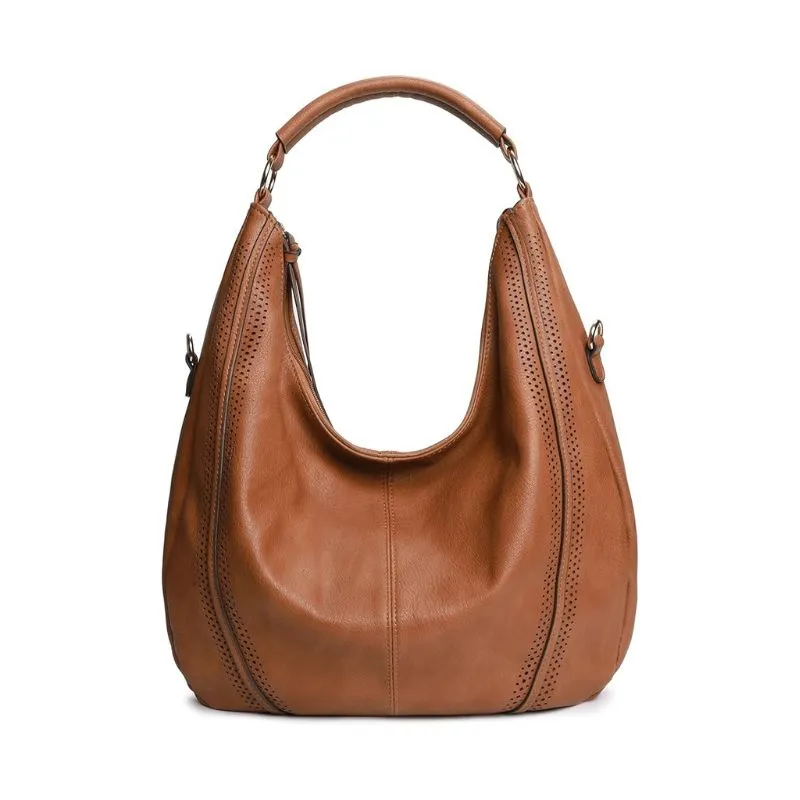
Confirm the style and color allocation with our team. Sampling, tooling, production timing, and pricing are quoted against your design and order requirements.
Control softness without losing the intended shape
A crescent outline alone does not define a hobo. The opening can collapse differently depending on where the strap connects, and a firm lining can change the drape of a soft shell. Decide which parts should remain structured: the base, the opening, or only the attachment points. Where a design uses perforation, weaving, or decorative panels, include the backing and lining requirements so the effect is reviewed in the complete bag.
- Drape reference
- Desired empty and loaded shape, reference swatch, and acceptable structure.
- Body dimensions
- Width, height, depth, base profile, and opening dimensions.
- Handle and strap
- Handle drop, width, attachment construction, and optional long-strap details.
- Lining and closure
- Lining weight and material, pocket layout, zipper or magnetic closure.
- Finish and branding
- Surface texture, edge treatment, decorative work, logo position, and hardware finish.
Material selection and finish development
Select the leather and lining as a pair, then review their behavior in the sample. A soft feel on a small swatch does not show how a full bag will hang. PU constructions can also be developed, but they need their own material and pattern review. ProPelli, our LWG Gold-rated leather finishing facility, develops finishes on crust leather received from partner tanneries.
See our leather sourcing and finishing capabilities and design and sample development process.
What to check before approving the sample
- Compare the sample’s empty and loaded silhouette with the approved reference.
- Check whether the opening remains accessible when the bag is worn on the shoulder.
- Review the base and strap attachment reinforcement without flattening the intended folds.
- Inspect lining behavior, pocket position, closure function, and the appearance of decorative details.
Record agreed materials, measurements, construction details, branding, and any test requirements in the approved specification. Confirm revisions before bulk production. Our quality control page explains the broader inspection process.
Hobo Bags: development questions
Can a hobo bag hold its shape without a rigid body?
The amount and location of reinforcement can be reviewed during development. Identify which areas must stay defined and which should drape, then assess the complete sample with the intended contents.
Can I specify a perforated or textured surface?
Share the desired pattern, scale, and placement. We will review the material, backing, lining, and construction needed for that effect before confirming the sample approach.
Why is a finished bag sample necessary for this style?
A swatch can establish color and hand-feel, but it cannot show the interaction of panel size, strap tension, lining, and loading. The finished sample is the reference for approving the hobo silhouette.