
Private label · Leather & PU · Brand and retail orders
Develop the carrying system around the bag your collection needs.
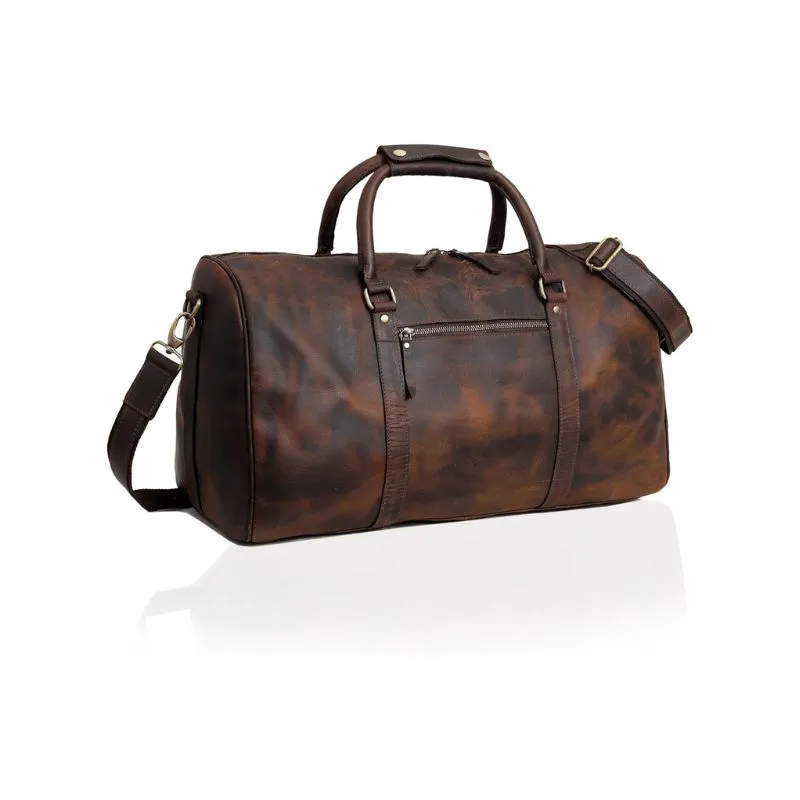
Hoplok manufactures custom duffle and weekender bags for brands and retailers. Start with the intended contents, finished dimensions and carrying options. Those choices determine the pattern, material use, handle attachments, shoulder strap and packing approach that need to be quoted together.
Send a drawing or reference sample with your material, color and quantity requirements. Specify whether the bag is a compact overnight style, a structured travel bag or another duffle format; a style photograph alone does not define capacity or construction.
Bag sampling takes 3–4 weeks; bulk production takes 60–90 days. Confirm the quantity split by style and color, material availability, sample revisions and transport separately in the quotation.
Build a quotation brief that covers the complete bag
- Dimensions and shape
- Finished length, height and depth, opening size, base shape and any requested volume measurement method.
- Body and lining
- Leather or PU reference, thickness and backing, surface finish, lining, internal pockets and reinforcement areas.
- Carrying components
- Handle drop, grip construction, shoulder-strap length and width, attachment hardware and adjustment range.
- Access and compartments
- Zipper route, opening clearance, inside organization and any separate compartment shown in the design.
- Branding and packing
- Logo artwork and location, hardware finish, labels, protective bags, retail packing and carton requirements.
Evaluate the sample with its intended contents
Check the sample as a complete bag. Load the intended contents, close the zipper and review how the base, handles and strap behave. Agree any load, repeated-use or transport assessments before making carrying-capacity or durability claims.
- Measure the finished bag using defined reference points, including handles or external pockets where the specification requires them.
- Check zipper access and whether packing the bag places unwanted tension on seams or the opening.
- Inspect handle and strap attachment reinforcement, hardware orientation and contact with the body.
- Compare color, texture, edge finish, lining and logo placement with the approved references.
- Review the packed sample for crushing, folding marks and rubbing between hardware and the bag surface.
A material test result does not establish the load capacity of an assembled bag. The quality and order documentation should identify the tested construction, method and agreed acceptance criteria.
Coordinate the finish, strap and production reference
Discuss the body finish together with handles, strap, edge treatment and hardware. An approved color chip cannot show every effect on a folded panel or reinforced seam. Record which physical sample and material reference govern the order.
Hoplok’s ProPelli facility in Cambodia finishes crust leather received from partner tanneries; it is not an upstream tannery. Its valid LWG Gold facility rating is separate from finished-bag performance testing. See our leather sourcing and finishing process and strap specification guidance.
Questions to resolve before sampling
Can a duffle bag be designed for carry-on use?
Provide the exact dimensional and weight constraints required for the intended use. Review the packed sample, including handles and external fittings, against those requirements. Do not assume one duffle design meets every airline’s baggage rules.
Can we add a shoe compartment or a trolley sleeve?
Include the feature in your drawing and explain how it will be used. The development review should confirm space, access, reinforcement and compatibility before the sample is approved.
How should several sizes or colors be ordered?
List quantities for each style, size and color. Confirm how minimums, material preparation and shared components apply to the proposed order; do not assume every variation can be combined under one minimum.