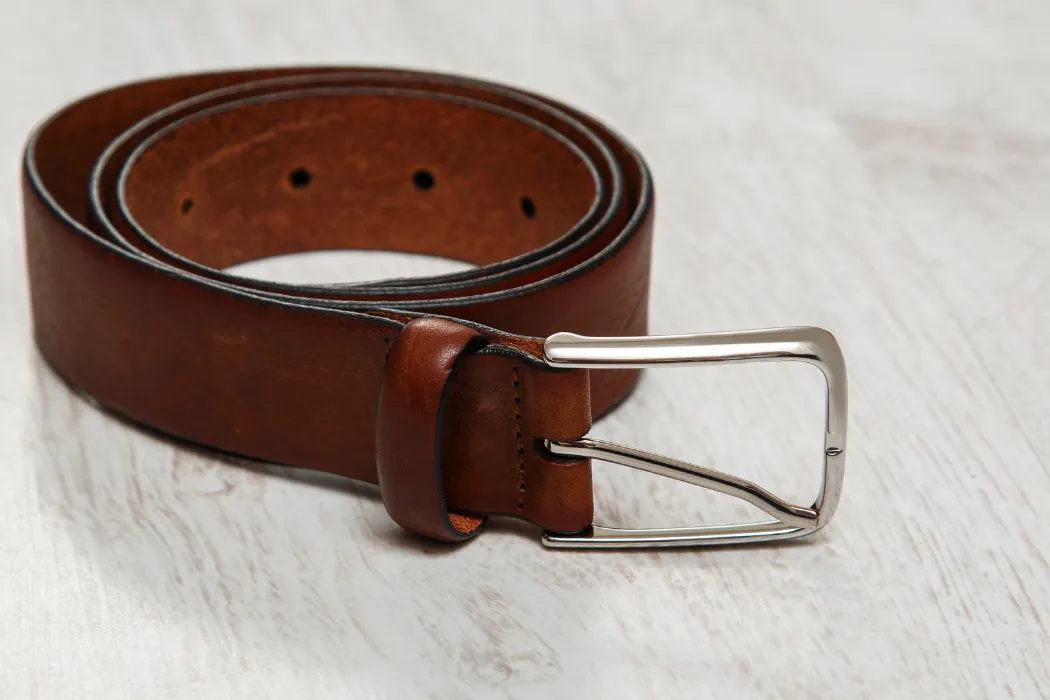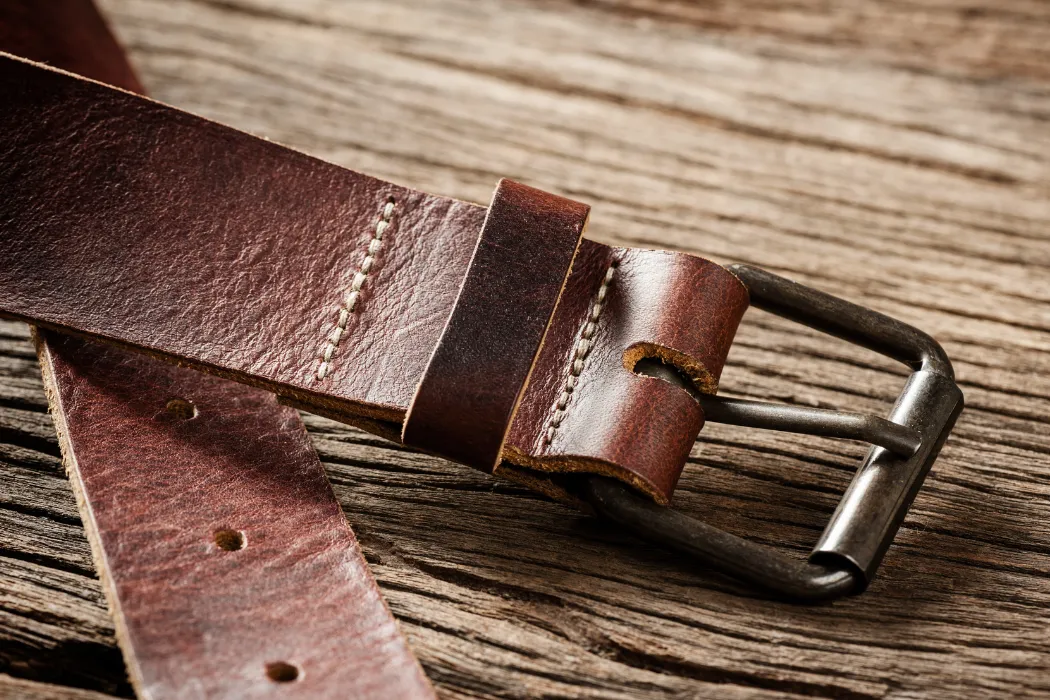
No, branded wallet and belt sets are not inherently more durable than non-branded alternatives. In fact, the opposite is often true. Durability is determined by material physics (e.g., Full-Grain vs. Bonded Leather) and construction methods (e.g., Saddle Stitching vs. Gluing), not by the logo embossed on the front. Many luxury fashion houses prioritize “aesthetics” and “status,” utilizing delicate calfskins or coated canvases that may only have a functional lifespan of 3-5 years. In contrast, heritage brands focused on craftsmanship often use thick, vegetable-tanned leathers engineered to last 20+ years.
It is a common consumer paradox: Why does a designer gift set costing $500 begin to peel and crack after just one year of daily use, while a utilitarian work belt costing $80 remains intact for a decade? The answer lies in the manufacturing choices made long before the price tag was applied.
This article takes you inside the factory to strip away the marketing and examine the Bill of Materials (BOM). We will audit the real difference between a “Fashion Set” designed for a holiday display and a “Heritage Set” designed for a lifetime of use, teaching you how to identify true industrial-grade quality regardless of the brand name.
Why Do Some “Luxury” Sets Fail So Quickly? (The Material Reality)
Many branded sets fail prematurely because they utilize “Genuine Leather” (split leather) or “Bonded Leather” instead of full-grain hides. These materials are heavily processed, painted, and embossed to achieve a flawless surface finish, but they lack structural integrity. True durability is found only in “Full-Grain” leather, which retains the animal’s natural, dense fiber structure. While a “Genuine Leather” belt typically cracks in 6-12 months of daily wear, a full-grain alternative is engineered to last 20+ years.
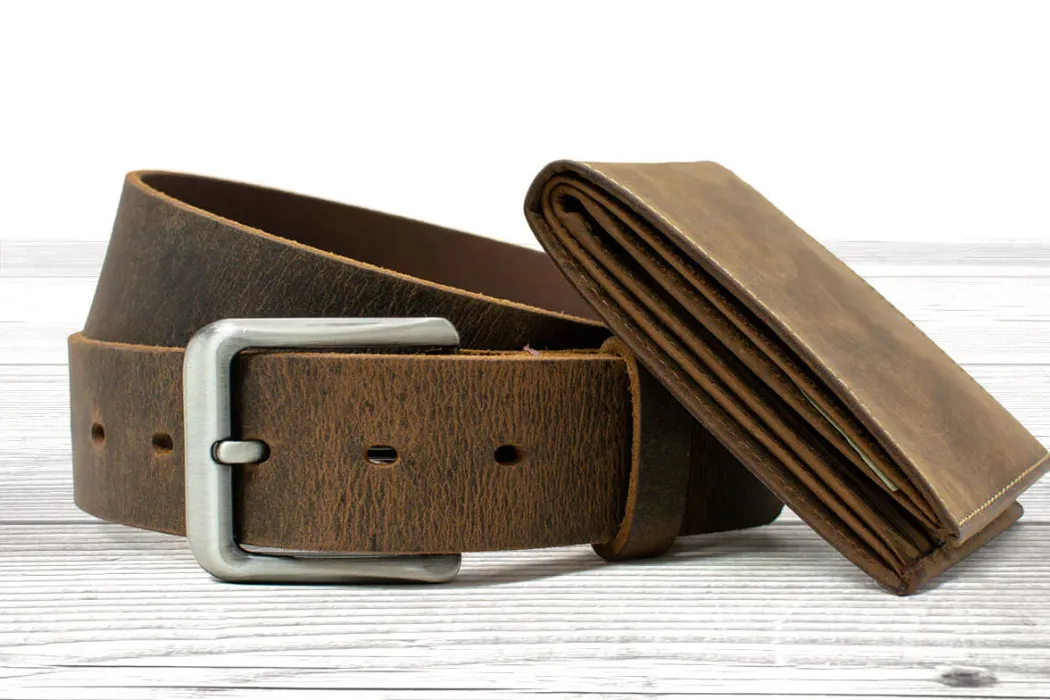
The “Genuine Leather” Label: A Warning Sign
The term “Genuine Leather” is the single most deceptive grade in the industry. It does not mean “great quality”; it technically means “at least it’s not plastic.”
- Composition: It is made from the bottom “split” layer of the hide, which has loose, weak fibers. Because it has no natural grain surface, manufacturers apply a thick layer of polyurethane (PU) paint and emboss a fake leather texture onto it.
- The Failure Mode: This material fails the “Bend Test.” When you bend a strap of Genuine Leather, the painted topcoat stretches and cracks because it is not chemically bonded to the fibers underneath. Once this coating cracks (often within 1 year), the belt looks ruined and cannot be repaired.
Full-Grain vs. Top-Grain: Strength vs. Aesthetics
Even high-end designer brands often choose Top-Grain over Full-Grain, prioritizing a “flawless look” over maximum durability.
- Top-Grain (The Designer Choice): The very top millimeter of the hide is sanded off (“buffed”) to remove natural scars or bug bites. This creates a pristine, uniform surface that luxury customers expect. However, sanding removes the toughest, densest fibers, reducing the leather’s lifespan to roughly 5-10 years.
- Full-Grain (The Heritage Choice): The surface is left completely intact. It retains the full density of the collagen fibers. While it may show natural markings, it is virtually indestructible and develops a patina rather than wearing out. This is the only material for a “buy-it-for-life” product.
The “Filler” Problem in Belts
A major hidden issue in fashion “gift sets” is the construction of the belt strap itself. A durable belt is a single, solid piece of leather (a “strap”). A fashion belt is often a “sandwich.”
To save money, manufacturers will use a paper-thin layer of leather (0.8mm) for the top, a core made of cardboard, foam, or fiberboard for thickness, and a cheap liner on the back. The edges are then sealed with thick paint to hide the layers.
Manufacturer’s Insight (Hoplok): We see this “sandwich” construction constantly in mass-market gift sets. The cost to manufacture a “sandwich” belt is often $3.00 – $5.00 because it uses scraps and filler. In contrast, a solid, single-piece strap of 3.5mm – 4.0mm vegetable-tanned leather costs 3x to 4x more in raw materials alone. The “sandwich” belt will delaminate (split apart) once the glue fails, usually after a few months of humidity and bending. At Hoplok, for our durability-focused clients, we only manufacture solid, single-strap belts that simply cannot delaminate because there are no layers to separate.
What is the “Gift Box Trap” in Manufacturing?
The “Gift Box Trap” refers to a common manufacturing strategy where branded wallet and belt sets are produced as separate, lower-quality SKUs specifically for the holiday gifting market. To hit attractive impulse-buy price points like $99 or $149, brands often substitute the Full-Grain leather found in their core product lines with thinner “Genuine Leather” and replace solid hardware with cheap plated zinc. These sets are engineered to look impressive in the packaging but often sacrifice structural integrity, leading to degradation within 1-2 years of use.
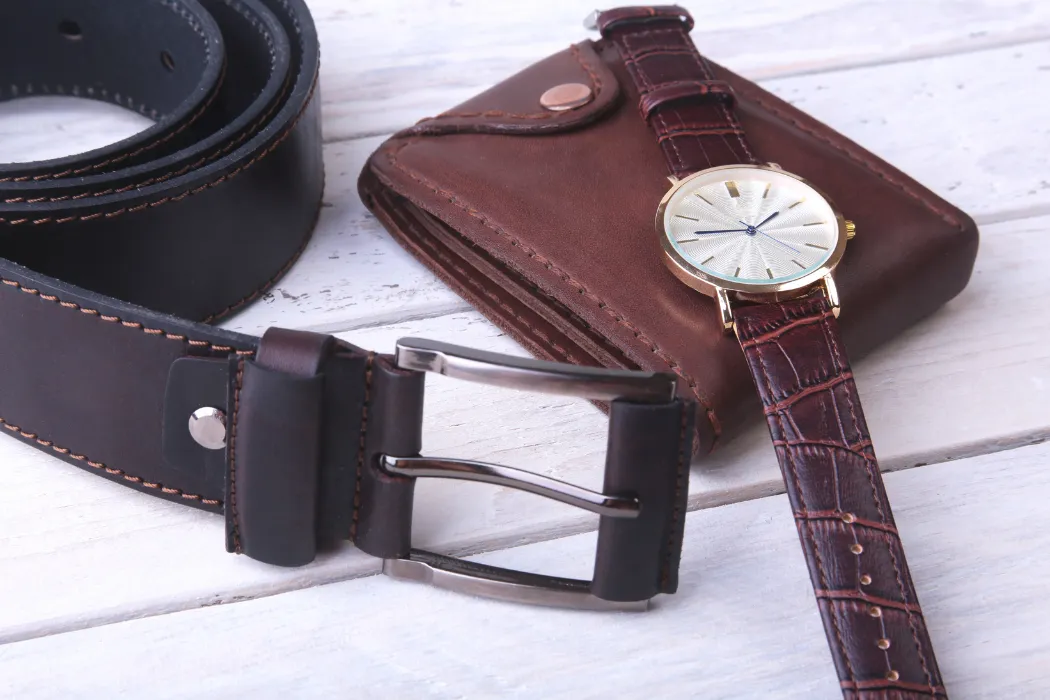
Designing for Price Point vs. Designing for Life
In manufacturing, every product starts with a “Target BOM” (Bill of Materials) cost.
For a “Heritage” brand selling a belt for $150, the goal is durability. They might spend $30-$40 on raw materials (thick leather, brass buckle) to ensure the customer returns in 20 years.
For a “Fashion” brand selling a holiday gift set for the same $150, the goal is margin and shelf appeal. They allocate a huge portion of the budget to the fancy box and packaging. To keep the profit margin high, the actual cost of the belt and wallet must be driven down to $15-$20. This forces the factory to use shortcuts: thinner leather, cardboard fillers, and spray-painted edges.
Hardware Shortcuts: Plated Zinc vs. Solid Brass
The most common shortcut in a gift set is the belt buckle.
- The “Gift Set” Buckle: It is almost always made of Zinc Alloy (a cheap pot metal) that is electroplated with a thin layer of nickel or gold. It feels light and hollow. Under daily friction, this plating rubs off in 6-12 months, revealing the dull grey metal underneath. Worse, zinc is brittle and the prong often snaps.
- The Durable Buckle: A durable belt uses Solid Brass or Stainless Steel. These metals are solid all the way through. They never lose their color (they just develop a patina) and are virtually impossible to break. However, a solid brass buckle costs 5x to 10x more than a zinc one, which is why it’s rarely found in mass-market gift boxes.
The Cost Breakdown: Fashion Set vs. Heritage Set
This table exposes the stark difference in value between a mass-market gift set and a specialist item, even when the retail price is identical.
| Component | Fashion Brand Gift Box ($150 Retail) | Heritage Brand Item ($150 Retail) |
|---|---|---|
| Leather Type | “Genuine” / Split (Coated) | Full-Grain (Veg-Tanned) |
| Thickness | 2.5mm (often with filler) | 3.5mm – 4.0mm (Solid single strap) |
| Buckle Material | Plated Zinc Alloy (Lightweight) | Solid Brass / Steel (Heavy) |
| Edge Finish | Thick Edge Paint (Peels) | Hand Burnished (Polished) |
| Est. Lifespan | 1 – 3 Years | 15 – 20+ Years |
Which Construction Details Indicate True Durability?
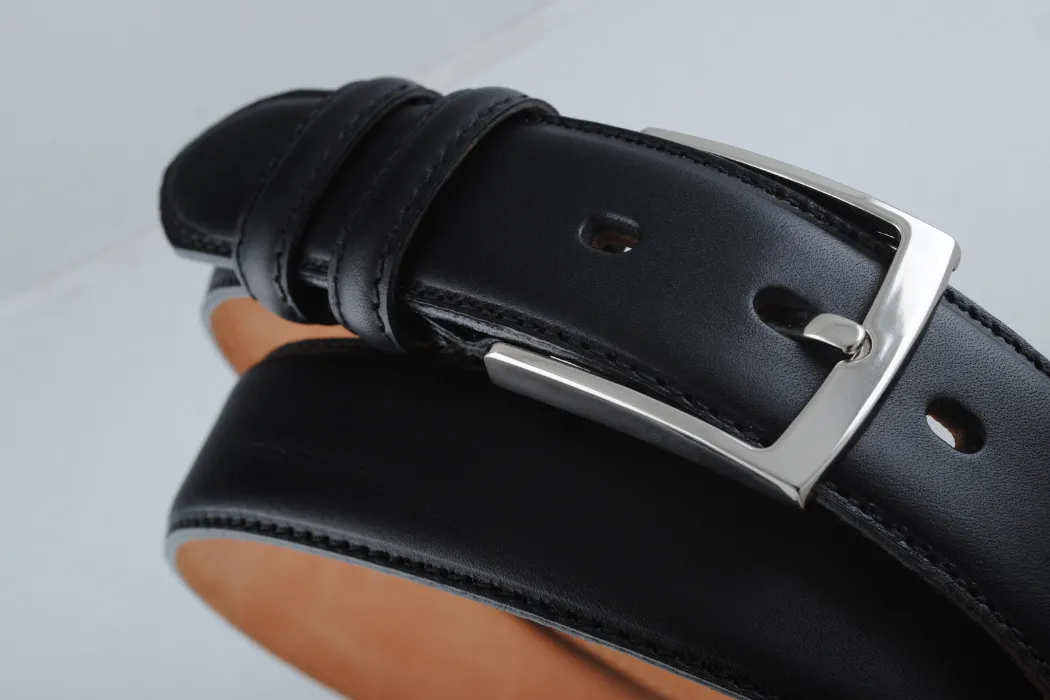
To accurately judge durability without testing the product for years, you must inspect three specific manufacturing details: 1. Stitching (look for thick bonded nylon thread, not thin cotton); 2. Edge Finishing (seek a “burnished” or polished edge rather than a thick layer of “edge paint” that peels); and 3. Belt Holes (oval holes distribute stress better than round ones). These construction specs are far more reliable indicators of lifespan than a luxury brand logo.
Stitching: Nylon vs. Cotton and SPI (Stitches Per Inch)
The thread holds the entire product together. In cheap gift sets, brands often use thin cotton-poly blend thread because it is cheaper and works faster in high-speed machines. However, cotton absorbs moisture and rots over time. A durable belt must use Bonded Nylon thread (typically size #69 or #138), which has high tensile strength and is rot-resistant.
Furthermore, examine the Stitches Per Inch (SPI). More stitches are not always better.
- High SPI (10-12 stitches per inch): This looks very refined and is common in dressy “gift box” wallets. However, placing holes this close together on leather acts like a perforation line on a stamp. Under stress, the leather will tear along this dotted line.
- Ideal SPI (5-7 stitches per inch): This spacing allows for enough material between holes to maintain structural integrity while keeping the seam tight.
Edge Finishing: Why Paint Peels and Burnishing Lasts
The edge of a belt or wallet is the highest friction point. It rubs against belt loops and pockets thousands of times a year.
- Edge Paint (The Cheap Fix): Most fashion brands use “Edge Paint”—a thick, rubberized acrylic coating painted over the raw edge. It looks smooth and perfect in the box. However, because it is a surface coating, it will inevitably crack and peel off in long strips after 6-12 months of flexing.
- Burnishing (The Durable Fix): This is a mechanical process used on vegetable-tanned leather. The edge is sanded and then rubbed vigorously with a wood or canvas wheel. The friction heat (approx. 120°F / 50°C) melts the natural collagen fibers and waxes, fusing them into a solid, sealed surface. It cannot peel because it is part of the leather itself.
Manufacturer’s Insight (Hoplok): Achieving a perfect burnished edge takes time. At our facility, we use specialized high-speed burnishing wheels combined with natural gum tragacanth to seal our full-grain belts. While painting an edge takes seconds on a conveyor, proper burnishing is a multi-pass process that ensures the edge remains smooth for 10+ years.
The “Lining” Test for Wallets
Open the wallet and pull at the lining of the billfold compartment.
- Polyester/Nylon Lining: If it feels like crinkly paper or thin satin, it is a cheap synthetic. This is the first thing to tear, usually within 2 years.
- Leather Lining: A durable wallet will be lined with leather (often pigskin or split cowhide) or a heavy-duty canvas. Leather-on-leather construction is thicker but virtually indestructible. If a brand uses a full leather lining, they are prioritizing longevity over cost-saving.
How Do “Designer” Brands Compare to “Specialist” Brands? (Case Studies)
When shopping for durability, it is critical to distinguish between Designer Brands (like Gucci or Louis Vuitton) and Specialist Heritage Brands (like Saddleback Leather or Nicks Boots). Designer brands sell status and design, utilizing softer, delicate leathers suited for occasional use, with typical warranties of 1-2 years. Specialist brands sell tool-grade durability, utilizing thick full-grain leathers and heavy-duty hardware, often backed by Lifetime or 100-Year Warranties. They serve fundamentally different purposes.
The Designer Priority: Prestige & Trend
For a luxury fashion house, the priority is the runway aesthetic and the logo. The engineering is focused on refinement, not ruggedness.
- Materials: They often use Calfskin or Lambskin. These are incredibly soft and luxurious to the touch but have low abrasion resistance. A key rubbing against a lambskin wallet will leave a permanent scratch. Alternatively, they use Coated Canvas (PVC-coated cotton), which is durable against water but can crack at the fold points after 3-5 years.
- Use Case: These items are designed for the boardroom, dinner parties, or light urban travel. They are not engineered to withstand the sweat, friction, and pressure of daily heavy use or outdoor work.
The Specialist Priority: Over-Engineering
Specialist brands—often small workshops or heritage companies—engineer their products to fail after the owner dies. They use materials that are often too thick or stiff for the mass market but offer unmatched longevity.
- Case Study (Saddleback Leather Co.): Famous for their slogan “They’ll Fight Over It When You’re Dead,” they use thick, full-grain boot leather and line it with pigskin (tougher than cowhide). They offer a 100-Year Warranty because the physics of their construction (no breakable parts like zippers or snaps) guarantees survival.
- Case Study (Tanner Goods / Anvil Hide): Brands like these use 10-12 oz Vegetable-Tanned Bridle Leather. This leather is stiff and waxy, designed originally for horse reins. It requires a “break-in” period of several months but will virtually never crack or stretch out.
Brand Archetype Comparison Matrix
This matrix helps B2B buyers and consumers align their expectations with the type of manufacturer they are choosing.
| Brand Type | Typical Material | Typical Warranty | Best Use Case |
|---|---|---|---|
| Luxury Fashion House (e.g., Gucci, LV) |
Coated Canvas, Thin Calfskin | 1 – 2 Years | Status, Formal Events, Light Use |
| Heritage Specialist (e.g., Saddleback, Filson) |
Thick Full-Grain, Bridle | Lifetime / 100-Year | Daily Abuse, Work, Travel |
| Mall / Fast Fashion (e.g., Gift Sets) |
Genuine Leather, Bonded | None / 30 Days | Seasonal Style, Gifting (Disposable) |
| Custom Workshop (e.g., Small Artisans) |
Veg-Tan, Shell Cordovan | Maker’s Guarantee | Collectors, Enthusiasts |
Can You Find Durable Branded Sets? (What to Look For)
Yes, durable branded sets exist, but finding them requires shopping by the “Spec Sheet,” not the advertising campaign. To identify a set that will last 20+ years, you must ignore the logo and look for three specific technical keywords: “Full-Grain Vegetable Tanned Leather” (for the strap), “Solid Brass Hardware” (for the buckle), and “Saddle Stitched” (for the construction). Conversely, vague terms like “Genuine Leather,” “Real Leather,” or “Imported Materials” are almost always red flags for low-grade, chemically processed products designed to fail in 1-2 years.
Decoding the “Specs”: Keywords That Matter
Product descriptions are legal documents. Brands are specific when they can be, and vague when they have to be. Learning to read these labels allows you to think like a sourcing manager.
- The Good Keywords: Look for “Full-Grain,” “Top-Grain,” “Vegetable-Tanned,” “Aniline,” and “Solid Brass.” These terms indicate specific, high-cost raw materials. A brand using these expensive components will always brag about them.
- The Bad Keywords: Be wary of “Genuine Leather,” “Bonded Leather,” “Coated Leather,” or “Man-Made Materials.” Also, watch out for hardware described as “Gold-Tone” or “Silver-Tone.” This is code for “Zinc Alloy,” meaning the buckle is made of cheap pot metal with a microscopic layer of color that will rub off.
The “Heft” Test and The “Smell” Test
If you are shopping in person, your senses are better detectors than the price tag.
- The Heft Test: Quality is heavy. A solid brass buckle weighs 3x to 4x more than a hollow zinc buckle. Full-grain leather is dense and heavy. If a $150 gift box feels surprisingly light in your hand, it is likely made of split leather with cardboard fillers and zinc hardware. Put it back.
- The Smell Test: Authentic, high-quality leather (especially vegetable-tanned) smells rich, earthy, and like oak. It has a pleasant, organic aroma. Cheap, mass-market leather smells like chemicals, plastic, or glue. This acrid smell comes from the heavy polyurethane coatings and industrial adhesives used to bond the “sandwich” layers together.
How Should Brands Plan Their Wallet & Belt Collections?
For B2B brand managers, the key to a successful accessories line is transparency and alignment with your target price point. If you are targeting the mass-market holiday gift segment ($50-$100 retail), use high-grade Top-Grain leather and focus on the unboxing experience, but be honest about the materials. If you are targeting the “Heritage” or “Buy-It-For-Life” market ($150+), you must use Full-Grain leather and offer long-term warranties. Attempting to pass off cheap, composite materials as premium luxury is the fastest way to generate returns and permanently damage brand reputation.
Defining Your “Quality Tier”
A successful product line requires a clear strategy. You cannot build a “forever” belt for a $20 BOM cost. Brands should segment their collections into clear quality tiers:
- Entry Tier (Gifting/Promo): Focus on “Genuine Leather” or high-quality PU. The selling point here is style and packaging. Use plated hardware but ensure the plating thickness is at least 0.5 microns to prevent immediate tarnishing.
- Mid-Tier (Fashion Standard): Use Top-Grain leather. This provides the uniform look customers want without the high cost of full-grain. Use stainless steel hardware if possible. This is the sweet spot for most fashion brands.
- Top Tier (Heritage/Premium): Use Full-Grain Vegetable-Tanned leather. The hardware must be Solid Brass. The selling point is durability and patina. This tier justifies a premium price and builds long-term brand equity.
Manufacturer’s Insight (Hoplok): Custom Manufacturing for Durability. At Hoplok, we help brands go beyond standard sourcing by customizing leather recipes at our ProPelli tannery. We can increase the oil and fat content during the fatliquoring process to improve natural water resistance, or use a special high-pressure vacuum drying process to compact the fiber density. This allows us to engineer specific durability traits into the leather itself, creating a unique, high-performance material that competitors cannot simply buy off the shelf, boosting durability without necessarily skyrocketing the cost.
Frequently Asked Questions (People Also Ask)
1. Do expensive belts last longer?
It depends on where the money is going. If the high price comes from a famous logo or marketing, the answer is likely no; you are buying status, not longevity. If the high price comes from the materials—specifically Full-Grain Vegetable-Tanned Leather and Solid Brass hardware—then yes, an expensive belt will last significantly longer (decades vs. months) than a cheap one.
2. Is Louis Vuitton canvas more durable than leather?
In terms of scratch and water resistance, yes. Louis Vuitton’s coated canvas (which is PVC-coated cotton) is incredibly tough against surface abrasion and rain. However, in terms of structural longevity, full-grain leather is superior. Coated canvas cannot be conditioned and will eventually crack at the fold points after 5-10 years, whereas maintained leather can last a lifetime without cracking.
3. What is the strongest leather for a belt?
The strongest leather for a belt is Vegetable-Tanned Bullhide or Bridle Leather. Bullhide is naturally thicker and denser than standard cowhide. Bridle leather is hot-stuffed with waxes and oils, making it weather-resistant and incredibly stiff, designed originally for equestrian gear. A single strap of this leather is virtually unbreakable.
4. Why does my reversible belt break?
Reversible belts break for two reasons: Mechanism and Construction. The twisting hinge on the buckle is a moving mechanical part that eventually snaps under stress. Furthermore, reversible belts are made of two thin layers of leather glued back-to-back. This bonding often fails (delaminates) due to the constant twisting motion, causing the layers to split apart.
5. How long should a good wallet last?
A high-quality wallet made from full-grain leather with nylon stitching should last at least 10 years of daily use. It should not fall apart; it should simply develop a patina. If a wallet peels, cracks, or tears within 1-3 years, it was likely made of low-grade “Genuine” or bonded leather.
6. Can you repair a branded wallet?
If it is made of real leather, yes. A cobbler can re-stitch a leather seam or re-dye a scuffed corner. However, if the wallet is made of coated canvas (like LV) or has a faux leather lining that is peeling, it typically cannot be repaired. Once the plastic coating cracks, the material is at the end of its life.
Conclusion: Durability is a Choice, Not a Brand Name
Ultimately, a logo is just ink or metal; it has no structural strength. The lifespan of a wallet or belt set is determined strictly by physics, not prestige. Durability is the result of specific manufacturing choices: using Full-Grain leather instead of split, casting Solid Brass instead of zinc, and utilizing bonded nylon stitching instead of cotton. A $500 gift set made of “Genuine Leather” will inevitably fail faster than a $100 set made of honest, full-grain materials.
For consumers, the lesson is to stop buying the “box” and start buying the “specs.” Trust your hands and eyes—look for the rough fiber on the edge, feel the weight of the buckle, and smell for the earthiness of tannins. Real quality cannot be faked.
For brand managers, this presents a strategic fork in the road. You must decide whether you are manufacturing “Fast Fashion” (high margin, low lifespan, high returns) or “Long-Term Assets” (lower margin, decade-long lifespan, high brand loyalty). You cannot have both in the same product.
Hoplok Leather is the manufacturing engine behind brands that choose durability as a core value. With our integrated supply chain—from our own ProPelli tannery processing raw hides to our final assembly lines—we ensure that the “specs” match the promise. We don’t just sell products; we build legacies. Contact Hoplok Leather today to get a quote and start prototyping a high-durability wallet and belt collection that will stand the test of time.