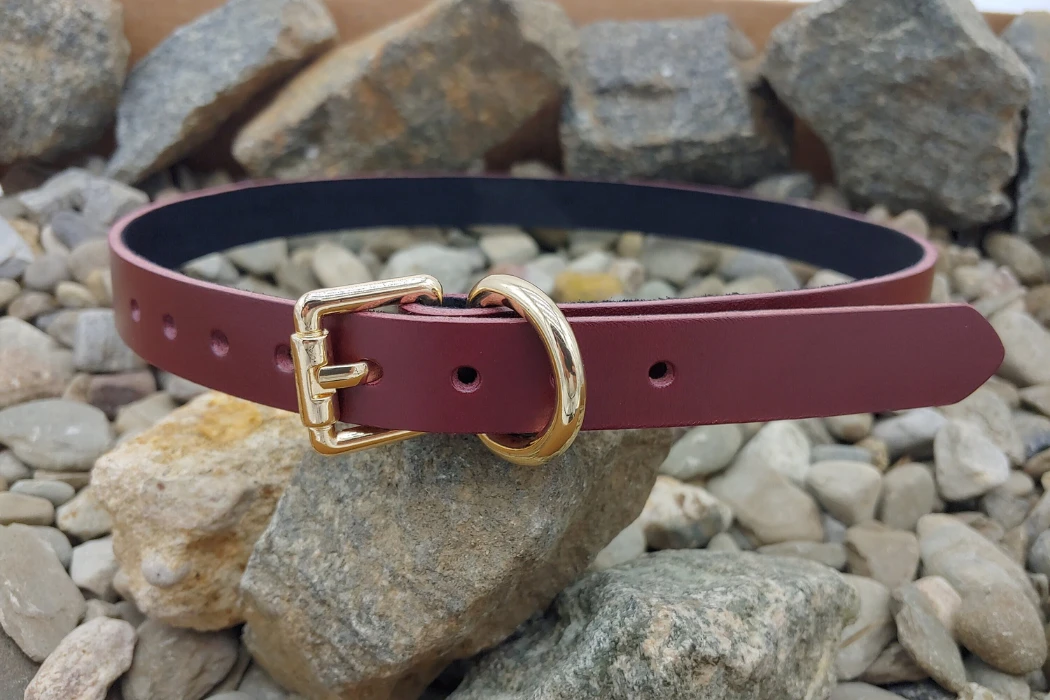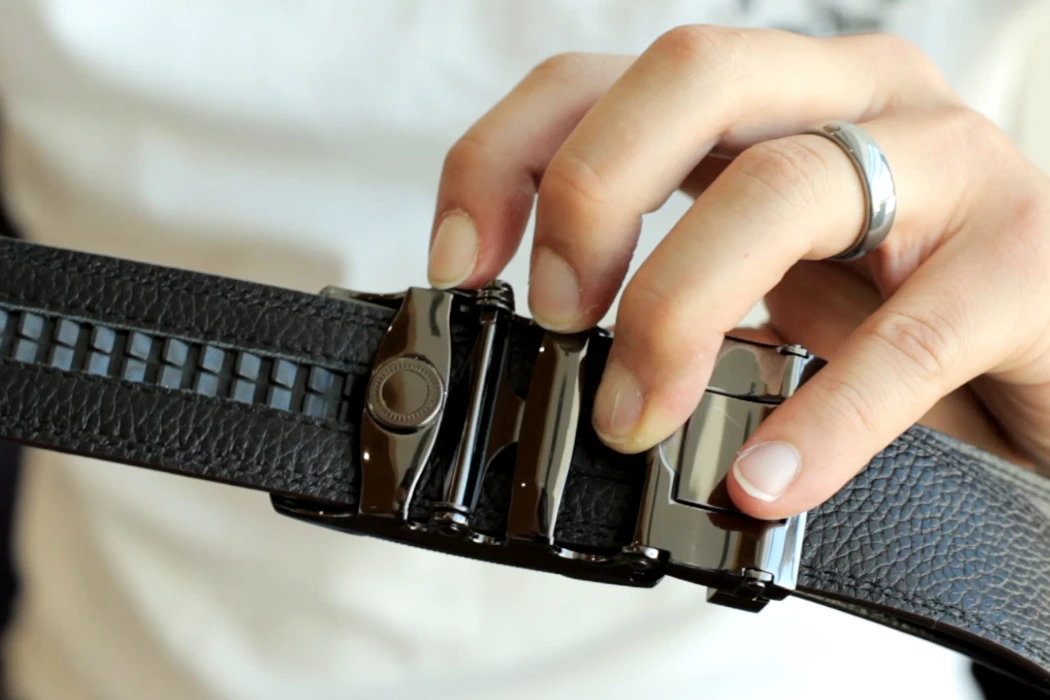
Leather for belts should be specified by hide layer, tannage, finish and cutting requirements. “Full-grain” answers only part of that brief. The leather also needs to work as a long strap, fold around the buckle and hold the intended edge and surface appearance in the finished construction.
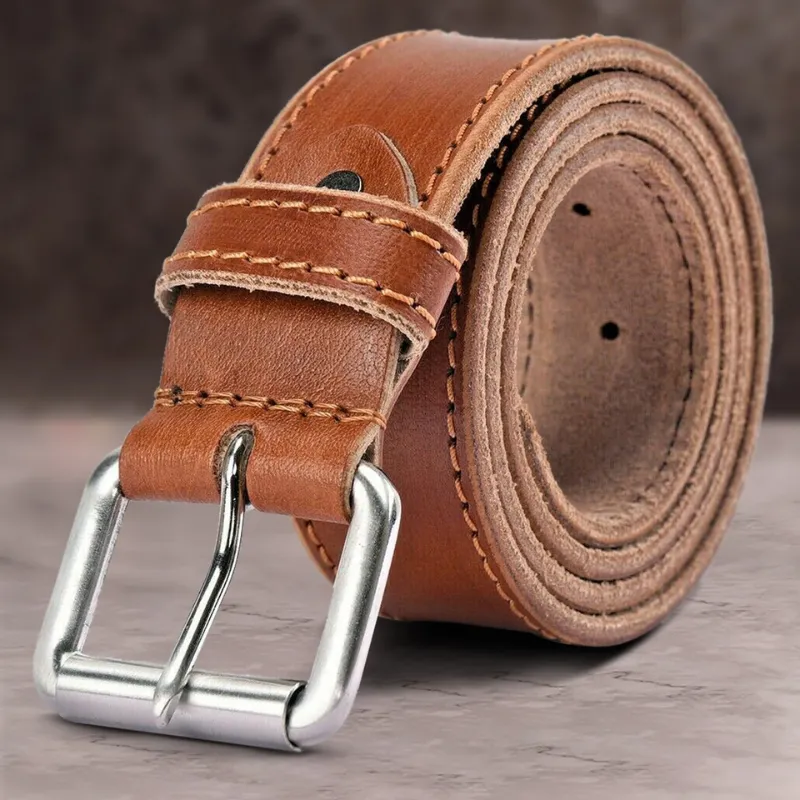
Grain leather, corrected grain and split leather
Full-grain leather retains the original grain surface. It can suit collections that accept natural marks and variation, but the term is not a guarantee of strength or service life. Define which marks are allowed on the visible strap and which areas must be excluded during cutting.
Corrected-grain leather has a modified surface, often combined with a controlled finish. This can help achieve an intended appearance across a collection. Split leather comes from a layer separated from the grain-bearing portion and needs to be specified with its finish and construction. “Genuine leather” does not identify a fixed quality tier. See the LWG terminology glossary for these distinctions.
The outer face is only one part of a belt
A strap may use one leather layer or a laminated construction with a face, backing and other components. Both approaches need a complete specification. A full-grain face does not make an unspecified filler or lining disappear from the product’s composition.
Request a cross-section and bill of materials. Record where reinforcement, stitching or adhesive is used and how the buckle attachment is assembled. Thickness at the buckle fold may differ from the main strap because of skiving and stacked layers. Approve those details on the sample rather than judging only a loose leather strip.
Whole hides, sides and named cuts
| Supply description | Relevance to a belt order | Question for the supplier |
|---|---|---|
| Whole hide or side | Offers a range of positions and usable lengths | Which areas will be used for straps? |
| Shoulder | A named hide section that must fit the pattern | Does its usable length cover the size range? |
| Butt or bend | A section often considered for strap cutting | What dimensions and variation are supplied? |
| Belly areas | May differ in stretch, handle and usable quality | Are these included or excluded by the cutting standard? |
A cut name does not ensure every strip is suitable. Inspect the actual material, including loose areas, scars and the direction in which straps are cut. Ask the factory to price the pattern and size range using the agreed usable-area standard. Total hide area is not the same as saleable strap yield.
What does tannage change?
Vegetable tanning, chrome tanning and other tanning combinations create different leather articles, but their names alone cannot specify belt performance. A vegetable-tanned article may be selected for a firm handle or developing appearance; a chrome-tanned article may be selected for a different handle and finish. Those characteristics must be checked on the proposed material, not assumed for the whole category.
Confirm whether the strap will be cut-edge, painted, folded, stitched or otherwise finished. Trial the intended edge process and buckle fold. Tannage is also separate from the environmental evidence behind a sourcing claim; avoid treating one process name as automatic proof of sustainability.
Match the surface to the collection
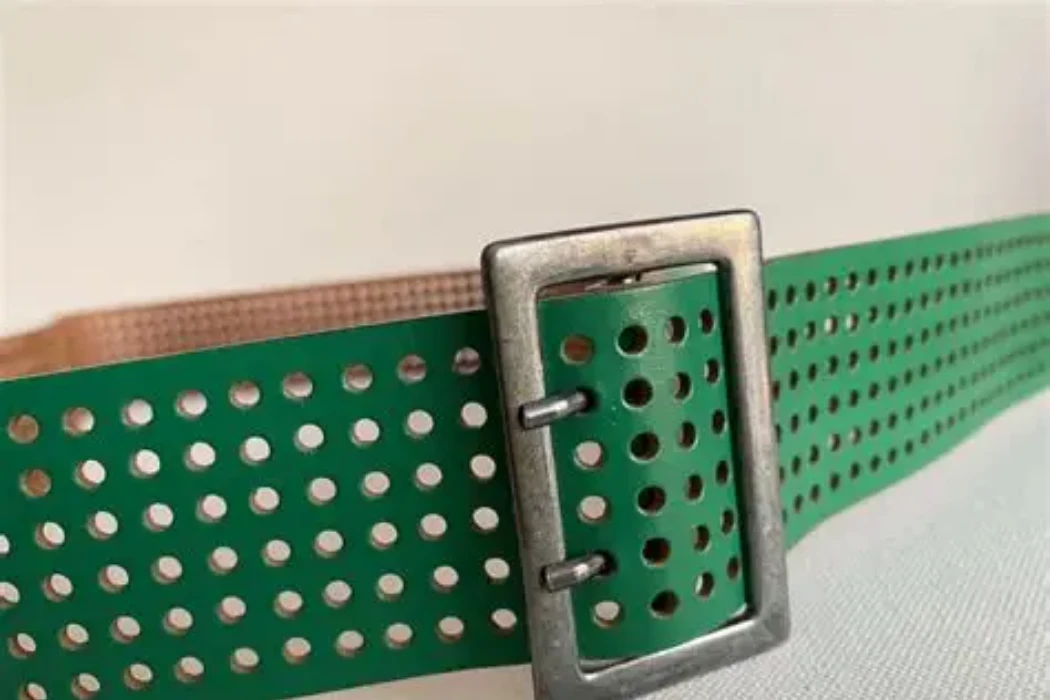
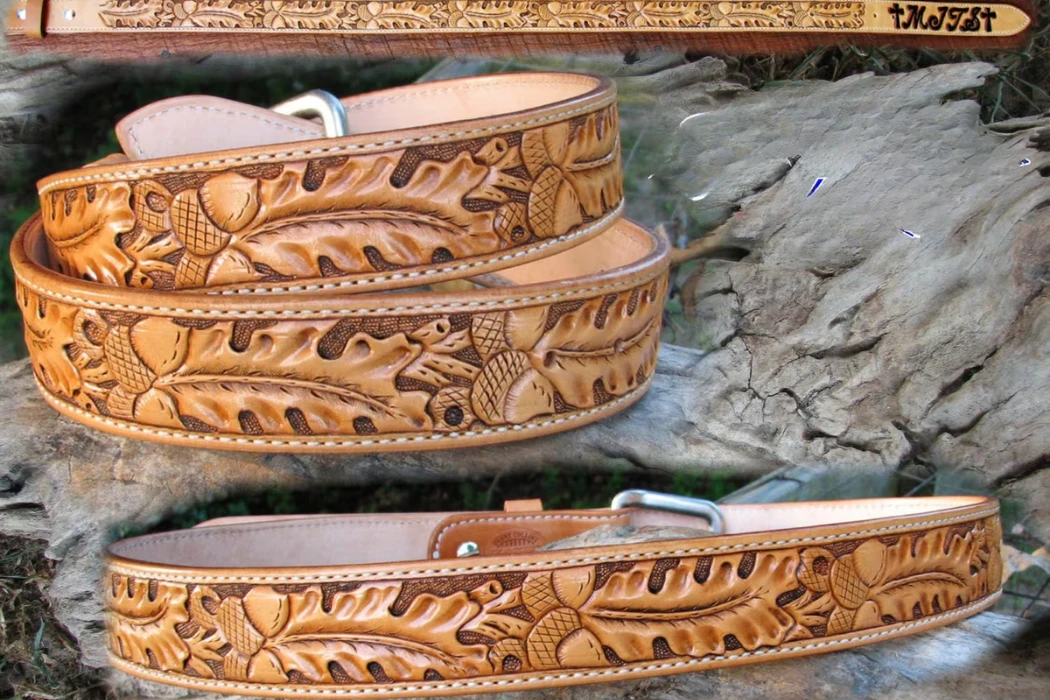
A lightly covered natural surface, a smooth pigmented finish and an embossed texture can create very different belt lines. Choose the visible variation the brand will accept, then assess how the surface behaves at holes, loops and repeated bends. A textured finish does not reveal the underlying layer by itself.
For a reversible belt, approve both faces and their contact behaviour. For a dark strap, include contact with light clothing in the assessment. For an appearance-led collection, define gloss and colour tolerances using an approved reference and acceptable boundary samples.
Build the approval around a finished strap
Provide the strap width, size measurement method, hole layout, buckle design and edge detail. Compare prototypes using the proposed layers, thread and hardware. Examine hole deformation, buckle-fold behaviour, surface transfer and edge appearance under the agreed product tests.
If the leather changes after approval, review whether a new prototype or testing is needed. A substitution with the same colour and nominal thickness can still alter handle, yield or the assembled belt. Keep the material article reference with the approved sample and purchase order.
Request a belt leather proposal
Send the drawing, target appearance, construction, size range, quantity and delivery market. Hoplok’s confirmed minimum order is 300 pieces for leather belts and 1,000 for PU belts. Belt samples typically take 2–3 weeks; bulk production takes 60–90 days. The project quotation should confirm its scope and schedule.
Use the custom leather belt enquiry to connect those requirements with sampling. For application-based selection, the belt leather comparison guide explains how to choose between suitable proposals.