Leather consumption per belt starts with the cutting area of all leather components, divided by the agreed cutting yield. Use a trial layout for the actual hide selection and size mix; a fixed waste percentage can understate or overstate the material budget.
This guide explains the calculation and the records buyers should request: purchased area, accepted cutting area, defect allowances and the size mix. Facility certification is reviewed separately from material grade and cutting yield.
Net Area vs. Gross Area: The Hidden Cost
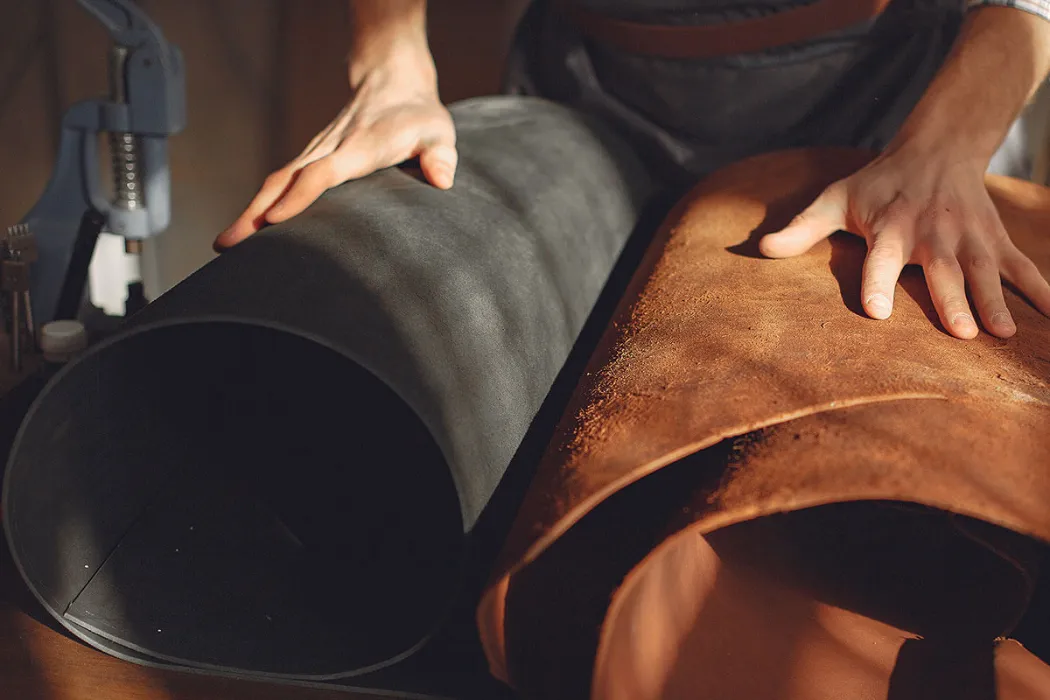
Gross area is the total leather hide you buy; net area is what’s actually usable for belts. This gap is a hidden cost that directly impacts your final price per unit.
Defining Usable (Net) vs. Purchased (Gross) Leather
For this calculation, gross area is the purchased area charged to the order. Net cutting area is the summed area of acceptable leather blanks. Include the buckle fold, trimming allowances, keepers and any leather lining in the patterns before measuring them. Keep later assembly losses separate so that waste is not counted twice.
Where Finishing Control Fits
Hoplok’s ProPelli facility finishes externally sourced crust leather. It is a finishing operation rather than a tannery; the received hide shape and natural defects still affect cutting yield.
- Review the incoming leather article, lot and usable-area criteria before approving it for the belt design.
- A finish can change the appearance of some surface marks, but it cannot make every damaged or loose area suitable for a long strap.
- ProPelli has a valid LWG Gold rating. LWG certification concerns the audited facility and scope; it does not grade hide defects or guarantee cutting yield.
The Yield Formula for Belt Straps
Cutting yield = accepted blank area ÷ purchased area. Express it as a decimal for consumption calculations, or multiply by 100 for a percentage. Gross consumption per belt = net cutting area per belt ÷ yield. Use the same area unit throughout.
Key Variables in the Calculation
| Variable | Impact on Yield |
|---|---|
| Gross Hide Area | The starting point. This is the total square footage you pay for before any deductions for waste. |
| Unusable Areas | Exclude areas that fail the agreed firmness, thickness or appearance requirements; do not reject a region solely by its name. |
| Defect Rate | Map disallowed scars, holes and other marks before nesting the required size mix. |
| Cutting Pattern Waste | The empty space between nested belt strap patterns. Tighter, more efficient nesting directly improves yield. |
How Premium Sourcing Improves Usable Area
Compare materials with the same trial cutting plan and appearance requirements. A higher visual grade may offer more usable space, but the outcome depends on the position of defects and the required blank lengths.
Full grain describes the retained natural grain surface; it is not a yield guarantee. A corrected surface may suit different appearance allowances, while structural damage must still be excluded.
Ask for the trial’s purchased area, accepted blank count by size and rejected areas. These records make the material comparison reproducible.
Scale Your Brand with Premium Custom Belts
Impact of Hide Shape: Sides vs. Double Butts
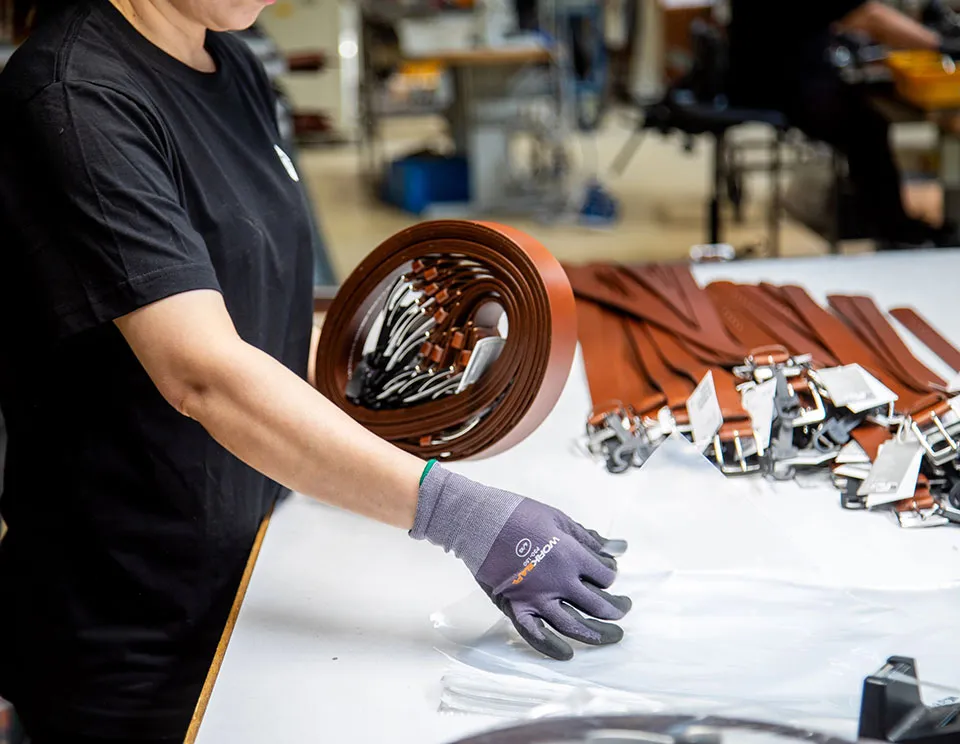
Double butts and sides offer different cutting shapes. Compare their price per accepted strap, not only price per area, using the actual belt lengths and defect map.
Yield Efficiency: The Geometry of Hide Cuts
A more regular cutting shape can make long parallel strap layouts easier. Measure whether the selected double butt has enough uninterrupted length for the largest size before estimating the number of blanks.
A side includes an irregular outline and areas that may differ in firmness. Plot the required blanks and exclude only areas outside the agreed specification; there is no fixed waste penalty for every side.
Sourcing Strategy for Maximizing Usable Area
Compare the cost of cleaner cutting stock with the reduction in rejected blanks. LWG certification does not establish a higher visual grade or fewer natural scars.
For a ProPelli-finished material, agree the finish and acceptable surface marks before the cutting trial. Finishing and cutting evidence should remain separate in the costing record.
Defect Rate: How Scars Reduce Yield
Defect loss is the area excluded by the agreed acceptance rules. It varies with the actual lot and the placement of long strap patterns; use measured trial results rather than an industry-wide percentage.
Yield can materially affect the leather cost of a custom leather belt order. A defect near the middle of an otherwise suitable strip can prevent a long blank even when its own area is small.
Common Defects to Map
Agree which natural marks are acceptable for the design and where. Map disallowed marks before cutting, including:
- Scars from injuries
- Scratches from branches or fences
- Insect bites
- Brand marks from the ranch
- Holes or thin spots
Record defect exclusion and layout loss separately where practical. If the measured final yield already includes both, do not add another generic waste allowance to the purchase quantity.
How Leather Grade Affects Usable Area
A lightly finished full-grain design may expose natural markings that an opaque or embossed finish makes less visible. The buyer’s appearance allowance, not the label alone, determines which blanks are acceptable.
Surface correction does not remove holes, loose structure or every scar. Approve representative samples and written defect rules before using a grade name to forecast usable area.
Nesting Software: CAD vs. Manual Cutting
CAD nesting can help compare layouts, but any saving must be measured for the actual hide, defect map and pattern set. Manual cutting may also be appropriate; no universal saving percentage is assumed.
Compare Layouts on the Same Inputs
Use the same hide outlines, defect exclusions, size mix and spacing rules in a comparison. Otherwise a reported saving may reflect different inputs rather than better nesting.
- Material use: Compare purchased area per accepted blank, including the agreed allowances.
- Throughput: Measure setup, marking, cutting and sorting time together for the trial.
- Quality: Check that an efficient layout still respects grain direction, defects and dimensional requirements.
Records Worth Requesting
The useful deliverable is the approved cutting plan and its result. A software name or machine specification does not establish the accepted yield of your belt order.
- Cost control: Record the material price, area used and accepted count for the trial.
- Production records: Agree how the approved material, cutting plan, order version and production status will be recorded and communicated for the project.
- Change control: Revisit the layout when the size mix, hide article or defect allowance changes.
Calculating Price Per Square Foot vs. Per Belt
Multiply gross leather consumption per belt by the quoted price per area unit. Add other materials, hardware, processing, inspection and packaging separately to build the factory cost comparison.
The Core Calculation: From Hide Cost to Belt Cost
Use the supplier’s actual area unit and currency. Calculate each leather layer separately if the face and lining use different materials, prices or yields.
Illustrative arithmetic, not a Hoplok quote: suppose all leather patterns for one belt total 0.60 sq ft and trial cutting yield is 80% (0.80). Gross consumption is 0.60 ÷ 0.80 = 0.75 sq ft. At an assumed $8 per sq ft, leather cost is $6.00 per belt. These illustrative inputs demonstrate the formula; replace them with your approved patterns, trial yield and supplier quote.
How Leather Grade Affects Per-Belt Pricing
Compare the same layer, thickness, finish and acceptance rules. “Genuine leather” is not a separate low-price grade, and published price bands do not establish the cost of the material in your order.
Ask for material options priced against the same quantity and construction. Keep facility evidence, material quality and commercial price as separate comparison fields.
Negotiating Yield Requirements with Factories
Set a yield target from the approved trial, with a defined measurement method and size mix. Agree how out-of-spec hides, changed specifications and reusable offcuts will be treated.
Establishing Realistic Baselines for Leather Yield
There is no single maximum yield for every belt order. Required lengths, hide dimensions, pattern spacing, natural defects and appearance allowances all change the result.
Before you even talk numbers, the most critical step is agreeing on clear definitions. Both you and the factory must be perfectly aligned on what constitutes ‘usable material’ and what level of natural defects is acceptable for your product. Without this shared understanding, any negotiation is pointless.
How Process Control Maximizes Material Use
For Hoplok proposals involving ProPelli finishing, confirm the incoming article, finish reference and acceptable variation. Recheck the cutting plan if the material lot or product specification changes.
Request trial records and an agreed variance process. A yield commitment should identify its inputs and exclusions; it should not depend on an unverified ISO certification or a promise to maximize every hide.
Frequently Asked Questions
What is leather cutting yield and how is it calculated?
For the method used here, cutting yield is accepted blank area divided by purchased leather area, multiplied by 100%. Record the definition and included losses so both parties calculate the same result.
What is the formula for calculating leather consumption per belt?
Gross leather consumption per belt equals the net cutting area of its leather components divided by the yield expressed as a decimal. Calculate different face and lining materials separately.
What is the average cutting waste for leather belts?
There is no reliable single waste rate for every belt. Establish it from trial cutting with the actual patterns, size mix, hide selection and defect rules.
How can leather cutting efficiency be improved?
Efficiency can be improved by using computerized cutting systems with nesting software to optimize pattern layouts, selecting high-quality leather with fewer defects, and relying on experienced cutters who can make real-time adjustments to avoid flawed sections.
Why is leather yield often low?
Long strips can be difficult to place around an irregular outline or a defect. Restrictive appearance allowances and a size mix requiring many long belts can also reduce accepted yield.
Final Thoughts
A useful material comparison shows both price per area and measured consumption per accepted belt. Finishing control and facility certification can support supplier evaluation, but neither removes the need for a cutting trial.
Send Hoplok the design, size quantities, leather-layer requirements and appearance reference. Ask the quotation to state its consumption assumptions and the trial evidence needed to confirm them.