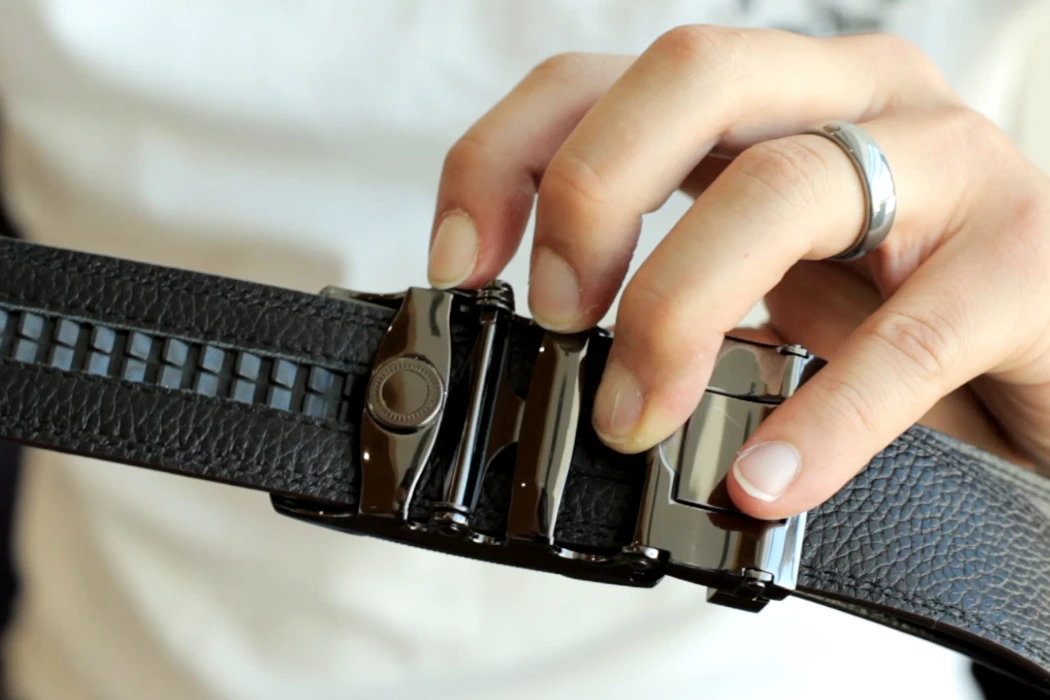
Canvas and webbing offer fabric-based options for casual fashion belts. Their woven structure can create a different handle and appearance from leather, but price, weight and production time depend on the complete construction. For wholesale buying, compare the strap, end treatment, stitching and buckle as one product.
Webbing is narrow woven material that may use cotton, polyester, nylon or other fibers. Canvas describes a fabric construction, often cotton or a blend, rather than a single fiber specification. A canvas belt may be made from narrow tape or from wider fabric cut, folded and sewn into a strap. Confirm which construction is being quoted.
This guide breaks down how these belts are made, which materials and hardware options buyers should compare, and how to set fair MOQ and sizing standards for a wholesale order. Buyers researching canvas or webbing options will find clear, practical answers below.
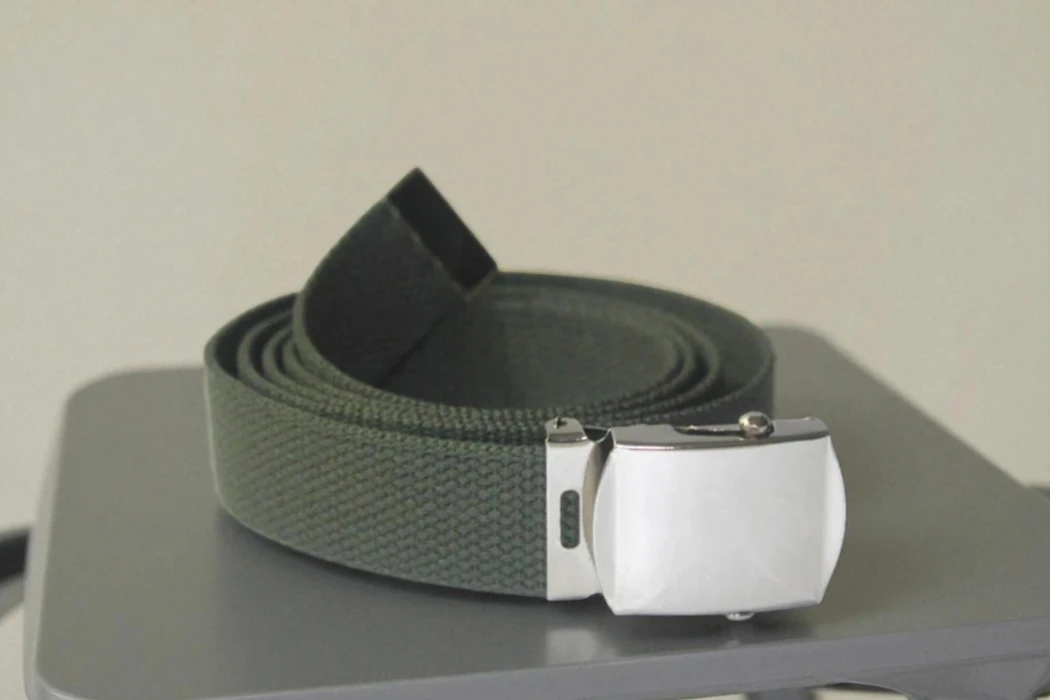
What Makes Canvas and Webbing Belts Different From Leather Belts?
Leather straps and woven fabric straps start from different material forms. Narrow webbing can arrive at the required width, while a fabric belt may need folding, lining or edge stitching. Compare the actual process and material consumption; a woven belt is not automatically lighter, cheaper or quicker to produce.
Material Composition and Weave Structure
The starting material sets every belt apart before a single stitch gets sewn.
- Leather: Specify the hide material, finish, thickness and any layered construction needed for the intended strap.
- Webbing: Specify the fiber, weave, width, thickness and finish of the continuous tape, including whether the belt manufacturer buys or weaves it.
- Weave: Plain, twill and herringbone constructions create different visual structures. Grip and abrasion resistance need checks on the actual tape.
- Canvas: Confirm fiber composition, fabric mass per area and belt construction. If a supplier quotes ounces, state whether the unit is per square yard or per linear yard at a specified width.
Fiber, weave, density, coating and finishing all affect the handle. Approve the actual material rather than ranking these inputs in isolation.
Weight, Flexibility and Durability Compared to Leather
Weight and flex come down to how each material behaves under daily wear.
- Leather handle: Firmness and change with wear depend on the leather, finish, thickness and belt construction.
- Webbing handle: Some tapes are supple and others stiff. Assess bending through the selected buckle and comfort on the intended clothing.
- Moisture: Compare water uptake, drying and dimensional change for the actual materials if these properties matter. Storage and cleaning instructions remain relevant for both leather and fabric belts.
- Wear appearance: Leather finishes may develop patina or other wear, while woven straps may abrade, fade or fray. The fiber, finish and edge construction determine which changes need attention.
Use the intended wearing conditions to choose test priorities. A climate or style label alone does not establish the best material.
Cost Efficiency for Casual and Outdoor Brands
Cost differences start well before a belt ever reaches the sewing table.
- Material price: Compare current prices for equivalent usable strap lengths and specified quality. Fiber, weave, dyeing and finishing can change the cost substantially.
- Width and yield: Narrow tape can reduce width-cutting operations, but roll ends, defects, pattern alignment and cut lengths still create loss. Confirm the exact width and usable quantity.
- Leather yield: Hide shape, defects, cutting direction and the required strap length affect consumption. Use the supplier’s nesting and yield assumptions in the comparison.
- Assembly cost: Include cutting, end finishing, stitching, hardware and packing for each design. A folded canvas belt and a simple sealed synthetic tape do not require the same operations.
A useful quotation separates material, hardware, assembly and customization costs. That makes it easier to identify savings without weakening the approved construction.
Casual Fashion Use Cases
Choose the brief by appearance, fit and normal wearing conditions. This guide covers fashion accessories rather than tactical, protective or load-bearing equipment.
- Utility-inspired fashion: A robust-looking weave and buckle can create a utilitarian style. Appearance does not establish a safety rating or gear-carrying capacity.
- Outdoor casual clothing: Check the intended weight, moisture exposure, adjustment and cleaning requirements on a fitted sample.
- Streetwear brands often pair canvas webbing with metal D-rings or slide buckles to build a casual, utilitarian look.
- Leather alternatives: Compare fabric and leather samples when choosing the surface, structure and styling of a casual collection.
Knowing which category a brand targets makes it much easier to choose between canvas, webbing, or leather from the start.
How Are Webbing Belts Made From Raw Material to Finished Product?
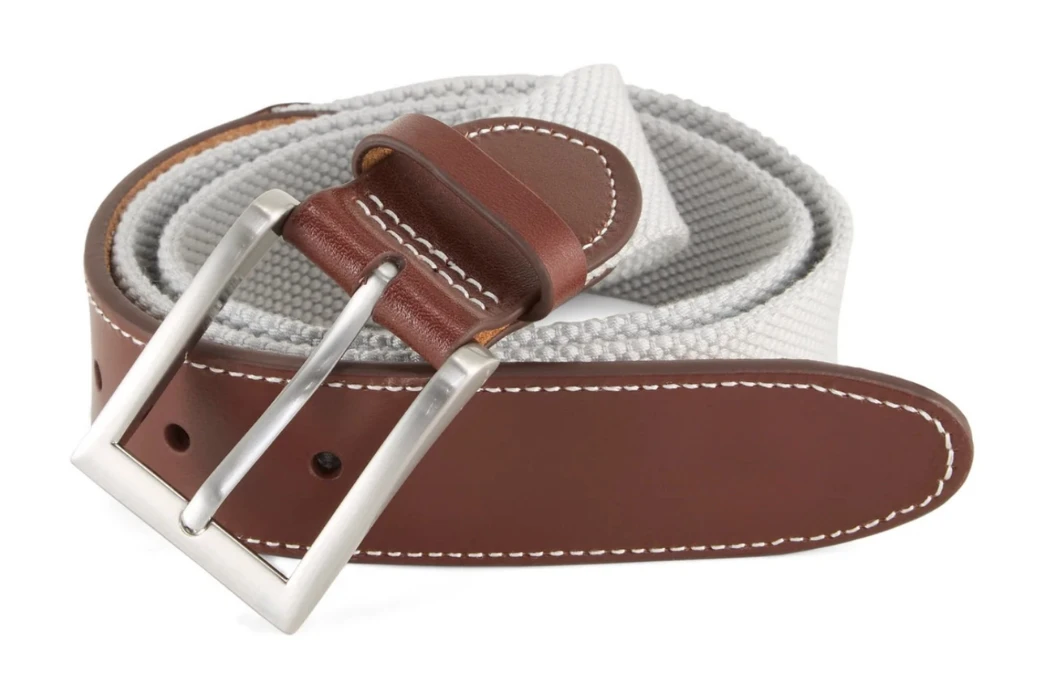
A manufacturer may purchase finished tape or arrange custom weaving, then cut it to the specified lengths. The end treatment must match the fibers: compatible thermoplastic yarns may be heat cut, while cotton needs another finish. The buckle attachment and stitching are then assembled and checked against the approved sample and quality plan.
Weaving the Webbing Tape
Establish whether the offered tape is stock material or a custom woven order, and identify the material supplier and production route.
- Weaving route: Different loom systems produce narrow fabrics. Request a representative tape sample and the available construction rather than selecting by an assumed universal machine type.
- Yarn specification: Record fiber type, yarn size and construction. Yarn size alone does not establish the strength of the finished webbing.
- Width: State the finished width and tolerance required by the buckle and garment loops. Confirm stock availability or custom weaving needs.
- Density and handle: Compare the actual weave density and finishing with the approved sample. A change can affect stiffness, thickness and sewing behavior.
Keep the approved tape specification linked to the order. Material substitution should trigger review of fit, stitching and performance.
Cutting and Heat-Sealing the Edges
Once the tape comes off the loom, it still needs to become individual belt lengths.
- Cutting: Select a mechanical or heat-cutting process compatible with the fibers and finishes. Verify cut length and end quality on trials.
- Synthetic ends: Some thermoplastic webbing can be cut and sealed with suitable heat. Follow the material and equipment guidance; no single temperature range applies to all fibers, and excessive heat can create hard, sharp or damaged ends.
- Cotton canvas tape cannot heat-seal the same way, so factories fold and stitch the raw edge instead, or bind it with tape.
- Approve the end treatment for appearance, fraying and repeated movement through the buckle, including after the agreed care process.
Cutting and sealing turn a long roll of tape into a clean, ready-to-assemble belt blank.
Hardware Attachment and Bar-Tack Stitching
Hardware attachment is where a plain strap starts to function as an actual belt.
- Workers loop the webbing through a D-ring, slide buckle, or side-release buckle, then fold and stitch it in place.
- Attachment stitching: Define the tack or seam geometry, stitch count, thread and position. A bar tack is not fully specified by a generic stitches-per-inch value. JUKI’s bartacking documentation illustrates selection by pattern, stitch count and sewing size.
- Thread: Match fiber, size, finish and needle to the webbing and required seam behavior. Bonded nylon is one option, but it is not automatically more abrasion resistant than every polyester thread.
- Reinforcement: Position additional tacks or seams where the design needs them. Test the assembly; adding more needle holes does not always improve retention.
Strong stitching at the hardware points matters as much as the webbing material itself for long-term durability.
Final Inspection Steps
The inspection plan should define which checks apply during production and at final acceptance, together with the sample size and decision rules.
- Visual inspection catches uneven color, twisted webbing, or misaligned stitching before it reaches a customer.
- Material strength: ASTM D6775 addresses breaking strength and elongation of textile webbing, tape and braided material. ASTM D751 concerns coated fabrics and should not be used as the default method for every uncoated belt tape.
- Assembly checks: Define the buckle attachment and slip tests separately from the tape test. State the load, setup, duration and allowed movement for the intended fashion belt.
- Dimension checks confirm the belt’s length and width sit within the agreed tolerance before final packing.
Record results and corrective actions. Inspection helps identify problems but does not guarantee that no defective unit can reach a customer.
Which Webbing and Canvas Materials Should Buyers Compare?
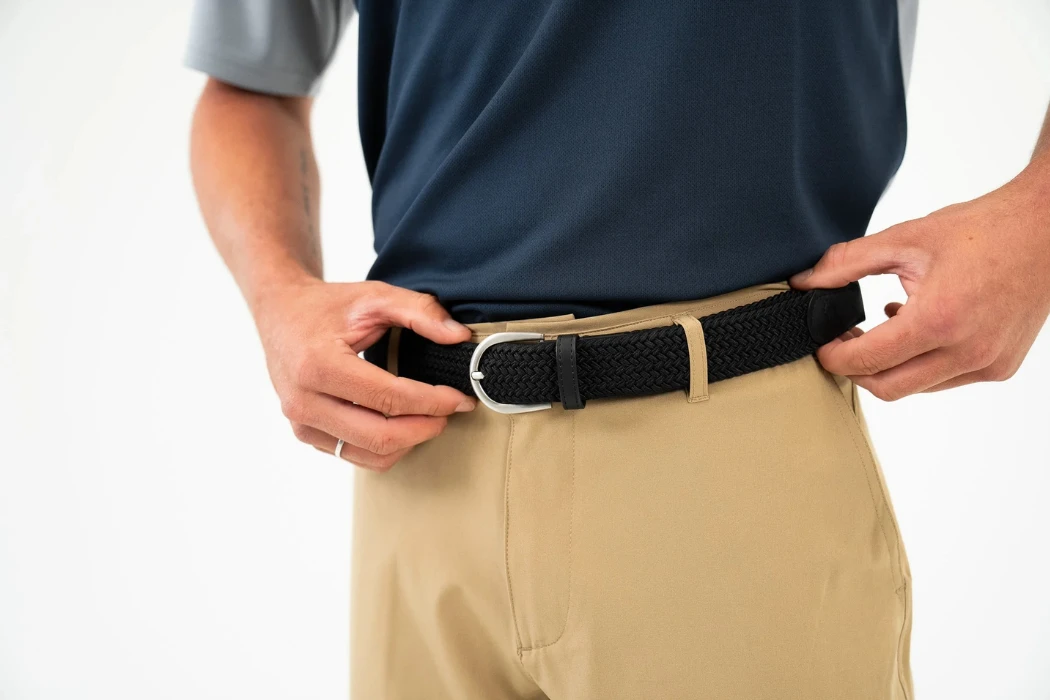
Compare cotton, polyester and nylon options through their complete construction and supplied performance data. Fiber names, denier and fabric mass describe different inputs; none independently establishes the strength, stretch, drying rate or price of a finished belt.
Cotton Canvas vs Polyester Webbing vs Nylon Webbing
Each material brings its own mix of strength, feel, and price to the table.
- Cotton: Review handle, moisture uptake, drying, shrinkage and color change under the proposed care method.
- Polyester: Review the tape’s elongation, abrasion and relevant light or moisture exposure results, including any finish or coating.
- Nylon: Review the actual tape’s strength, extension and response to moisture. Compare with other materials under the same test conditions.
- Cost: Obtain comparable quotations for the required weave, width, color, performance and quantity. There is no fixed cost ranking across all cotton, polyester and nylon webbing.
| Material | Material specification | Performance evidence | Quotation basis |
|---|---|---|---|
| Cotton Canvas | Fiber/blend, weave and mass per area | Care, shrinkage and assembly tests | Specified tape/fabric and finishing |
| Polyester Webbing | Yarn, weave, width and thickness | Breaking, extension and relevant aging tests | Specified tape and finishing |
| Nylon Webbing | Yarn, weave, width and thickness | Breaking, extension and relevant aging tests | Specified tape and finishing |
No single material wins outright, so the right choice depends on climate, budget, and how much stretch resistance a belt design needs.
Understanding Denier and GSM Numbers
Denier and GSM look like technical jargon, but they answer a simple question: how heavy is this material?
- Denier: Yarn linear density expressed as grams per 9,000 meters. A higher value means more mass for the same length, not automatically greater strength or a particular finished-tape thickness.
- Yarn comparison: Compare fiber, yarn construction and linear density together. Use the finished tape’s test results when evaluating its suitability for a belt.
- GSM: Grams per square meter, a mass-per-area measure that can describe fabric or tape. Narrow tape may also be quoted by mass per length; record the width when comparing those units.
- Unit conversion: One ounce per square yard is approximately 33.91 GSM, so 10 oz/yd² is about 339 GSM. Ounces per linear yard cannot be converted without knowing the width. This arithmetic is not a recommended belt-weight range.
Neither number alone predicts belt quality, but both help buyers compare raw material weight across different suppliers on equal terms.
Weave Patterns: Plain, Twill and Herringbone
The weave pattern decides how a belt looks and feels just as much as the fiber choice does.
- Plain weave: Alternating over-and-under interlacing gives a simple woven structure. Approve the actual surface and handle.
- Twill: Creates a diagonal pattern. Abrasion resistance depends on the yarn and complete construction, so it should be tested rather than inferred from the pattern.
- Herringbone: Reverses the twill direction to create a zigzag visual effect. It can be used as a style choice in casual belts.
- Customization: Ask how pattern changes affect loom setup, yarn requirements, lead time and minimum order. The effect depends on the supplier’s stock and process.
Buyers picking a weave pattern should weigh visual style against production complexity, since fancier weaves are not always the strongest option.
Which Buckle and Hardware Systems Work Best on Casual Belts?
Ring, friction and side-release systems are options for casual belts. Each must match the strap width, thickness and surface so it holds and adjusts as intended. Specify the material and finish separately from the buckle mechanism and evaluate the assembled sample.
D-Ring and O-Ring Systems
Ring systems rely on a defined routing of the strap and friction between the components. Confirm the intended threading and tail retention.
- Double D-ring: The strap passes through both rings and returns through one to form a friction closure. Validate its routing, retention and usable adjustment range with the actual tape.
- O-ring layouts: Specify the number of rings and the threading or knot arrangement. A single loose ring does not automatically lock like a double D-ring closure.
- Clearance: Match the ring’s internal dimensions and section to the actual strap width and thickness, including folded or finished ends.
- Validation: Simple hardware still needs checks for deformation, joins, sharp edges and slippage. The absence of moving parts does not establish a failure or warranty rate.
Approve the fitted sample with its threading instructions. A closure should remain usable at both ends of the intended adjustment range.
Slide/Friction Buckles vs Plastic Side-Release Buckles
These two buckle families solve the same problem in very different ways.
- Slide or friction buckles use a center bar or set of teeth to pinch the webbing, and pulling the strap adjusts the length.
- Plastic side-release buckles use two interlocking pieces that snap together, and push tabs release the belt in a single motion.
- Plastic material: Confirm the buckle maker’s resin grade, dimensions and intended application. The word “plastic” does not establish strength or repeated-release performance.
- Friction buckles need proper webbing tension to stay locked, while side-release buckles depend on the plastic tabs holding up over repeated use.
Compare release effort, adjustment and retention on fitted samples. Select the mechanism that meets the fashion-belt brief and the buyer’s cost target.
Metal Plating and Corrosion Resistance
Select base metal and finish for the intended contact and exposure conditions. An unplated option may be suitable where the material and appearance requirements support it.
- Common base metals for buckles include zinc alloy, brass, and stainless steel, each offering a different balance of weight and cost.
- Finish system: Names such as nickel, gunmetal or black oxide do not fully describe the coating stack or performance. Request the actual specification and test evidence.
- Stainless steel: Confirm the grade and finish, then assess the required corrosion behavior. Do not assume a material label guarantees performance in every humid or coastal condition.
- Salt spray: ASTM B117 describes operation of salt-spray apparatus; it does not prescribe one exposure time or pass threshold for fashion buckles. Agree the procedure and acceptable change for the selected hardware.
Also check rubbing against the strap, sharp edges and applicable restricted-substance requirements. Corrosion testing alone does not cover every hardware risk.
| Buckle Type | Function | Design consideration | Cost comparison |
|---|---|---|---|
| D-Ring / O-Ring | Loop-through friction closure, no moving parts | Casual fashion belts with approved routing | Compare material, size, finish and quantity |
| Slide / Friction Buckle | Adjustable grip via a center bar or teeth | Casual adjustable belts | Compare material, design, finish and quantity |
| Side-Release Buckle (Plastic) | Two-piece snap-and-release closure | Casual belts requiring a release mechanism | Compare resin, tooling and quantity |
How Do Buyers Set MOQ, Sizing and QC Standards for Wholesale Orders?
Wholesale specifications should define the wearing range, measurement points, components and quality plan. There is no universal size chart shared by every brand. Confirm quantities by style, color and size and obtain the supplier’s applicable minimums before placing the order.
Defining Adult and Children’s Size Ranges
Measure the intended wearing position and garment loops, then create a project size chart. State the relationship between a retail size label and the belt’s measured dimensions.
- Wearing range: Do not add a fixed amount to every waist measurement. Define the buckle reference point, usable adjustment range and required tail through the keeper.
- Labels: If using letter sizes and numeric sizes, document their mapping for the brand. “Medium” does not have one universal inch measurement.
- Children’s ranges: Establish fit from the intended age group and garment program. Applicable children’s-product requirements also need a separate market review.
- Adjustment: Friction and ring closures may adjust without holes, while other designs use a defined hole layout. Test the actual closure through its usable range.
| Category | Fit requirement | Production measurement |
|---|---|---|
| Women’s Belts | Brand-specific wearing range | Approved reference points and usable adjustment |
| Men’s Belts | Brand-specific wearing range | Approved reference points and usable adjustment |
| Kids’ Belts | Age/garment-specific fit study | Approved range and market requirements |
| Unisex / shared uniform range | Fit coverage agreed for the actual users | Consistent units, tolerance and label mapping |
Approve the chart and a size set before bulk cutting. Category names alone cannot establish fit across different users or regions.
MOQ Considerations for New Casual Brands
Minimum order quantity depends on more than just the total belt count.
- Custom hardware, like a molded logo buckle, usually raises MOQ because tooling costs need enough volume to spread out.
- Dye lots for canvas or webbing color often carry their own minimum, so ordering many small color runs can push total MOQ higher than expected.
- Size split: Ask whether several sizes can share a style minimum and whether any per-size minimum applies. Record the agreed assortment in the quotation.
- Stock options: Stock hardware and colors may reduce setup or minimums, but availability and repeat-order continuity still need confirmation.
New brands can often keep MOQ manageable early on by sticking to stock hardware and common colors, then customizing further as order volume grows.
Key QC Tests (Tensile Strength, Colorfastness, Buckle Function)
Choose tests for the material and closure, with agreed acceptance criteria. The following checks are a starting point for a fashion-belt quality plan.
- Breaking and elongation: Use a method suited to the tape, such as ASTM D6775, and define separate seam and complete-belt requirements where necessary.
- Colorfastness tests check rubbing, washing, and light exposure, commonly following standards in the ISO 105 series.
- Buckle function: Use a defined retention and repeated-operation procedure with agreed loading, cycle count and permitted change. Check the complete strap and attachment.
- Dimension checks confirm belt length, width, and hole spacing all sit within the tolerance a buyer agreed to upfront.
Keep records by material code and production batch. Review the plan if the strap, buckle, stitching or care instructions change.
Frequently Asked Questions
What is the difference between a canvas belt and a webbing belt?
Canvas describes a woven fabric construction, often cotton or a blend. Webbing describes narrow woven material that can use cotton, nylon, polyester or other fibers. A belt may use cotton webbing or a strap assembled from wider canvas fabric, so confirm the fiber and construction rather than treating the names as mutually exclusive.
What is webbing belt material made of?
Webbing may be woven from nylon, polyester, cotton or other fibers. Request the actual yarn, weave, width, thickness and finish, then evaluate the assembled fashion belt against its requirements.
Is nylon webbing waterproof?
A nylon-webbing description does not establish waterproofing. Water uptake, drying and finished-belt behavior depend on the tape, coating and assembly. Confirm the intended exposure and care instructions and request relevant test evidence.
What GSM is a good weight for a canvas belt?
There is no single GSM that defines a good canvas belt. Consider fiber, weave, layers, width, stiffness and buckle fit. Confirm the unit basis when comparing ounce specifications and approve the complete construction.
How do you clean a canvas or webbing belt?
Follow the care instructions validated for the complete belt, including its hardware, dye, lining and any leather trim. If washing is permitted, confirm the method and assess color, shrinkage and hardware after the care trial before printing the label.
What is the standard width for a webbing belt?
Specify width from the garment loops and buckle clearance, then confirm the supplier’s available tape sizes. Include a tolerance and check the finished ends and folds as well as the flat strap.
Are webbing belts strong enough for daily and outdoor use?
An appropriately specified construction can suit ordinary fashion wear, but denier alone does not prove strength. Evaluate the tape, seams and buckle together. This does not qualify the belt for tactical, protective or load-bearing use.
Can webbing belts be customized with logos or colors?
Options may include custom woven or dyed tape, labels, printing and branded hardware. Confirm each process with the supplier and approve a physical color and logo sample; a color reference alone does not guarantee a match across materials or batches.
Conclusion
Canvas and webbing belt sourcing requires a clear material description, suitable end treatment, a compatible buckle and an agreed fit and quality plan. To discuss a fabric-based or mixed-material design alongside Hoplok’s custom belt options, send the specification and quantities and confirm project acceptance, material sourcing, available processes and schedule before ordering.