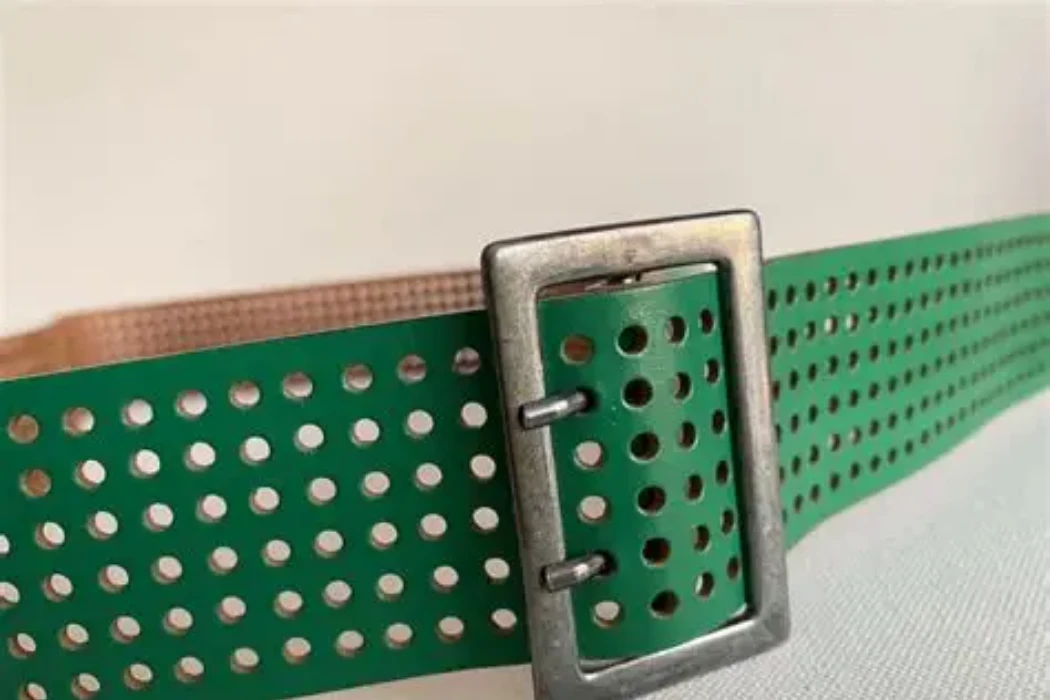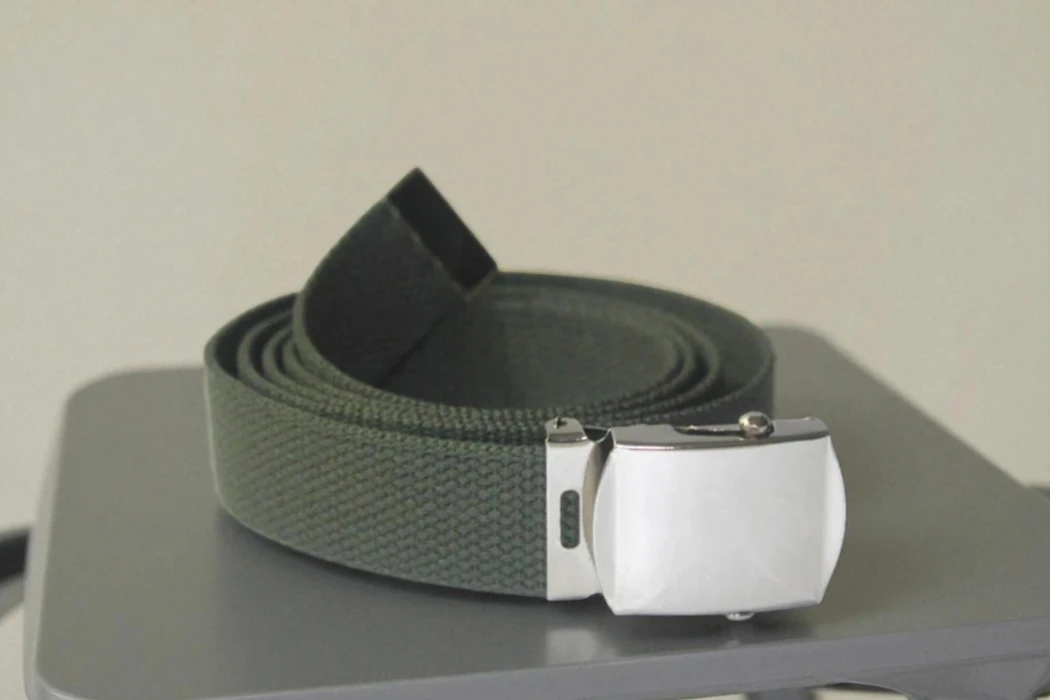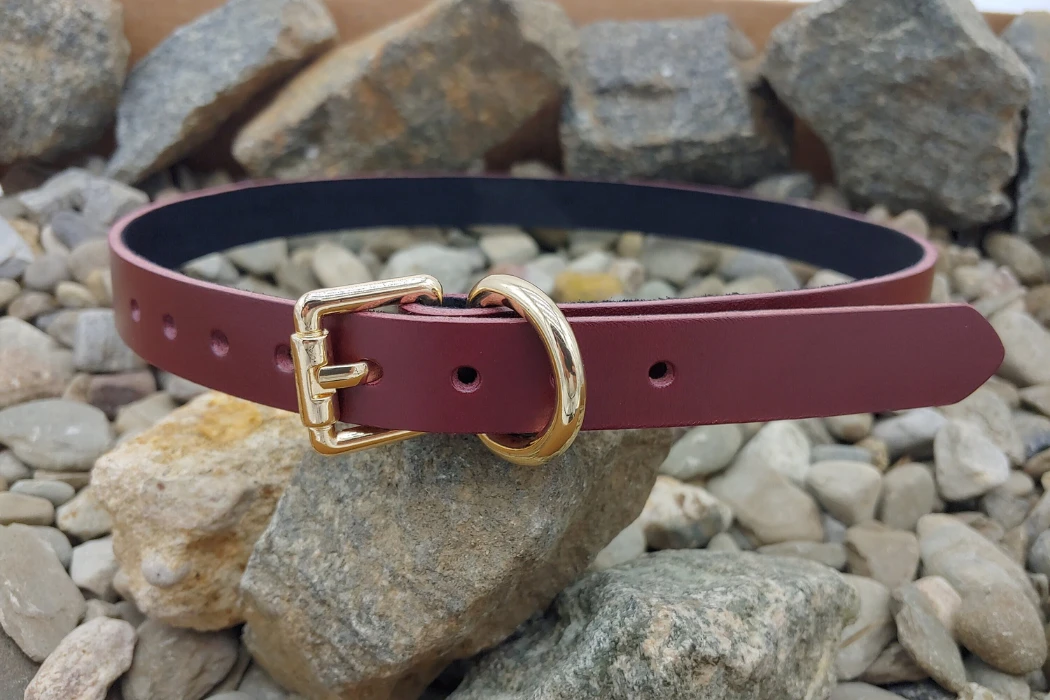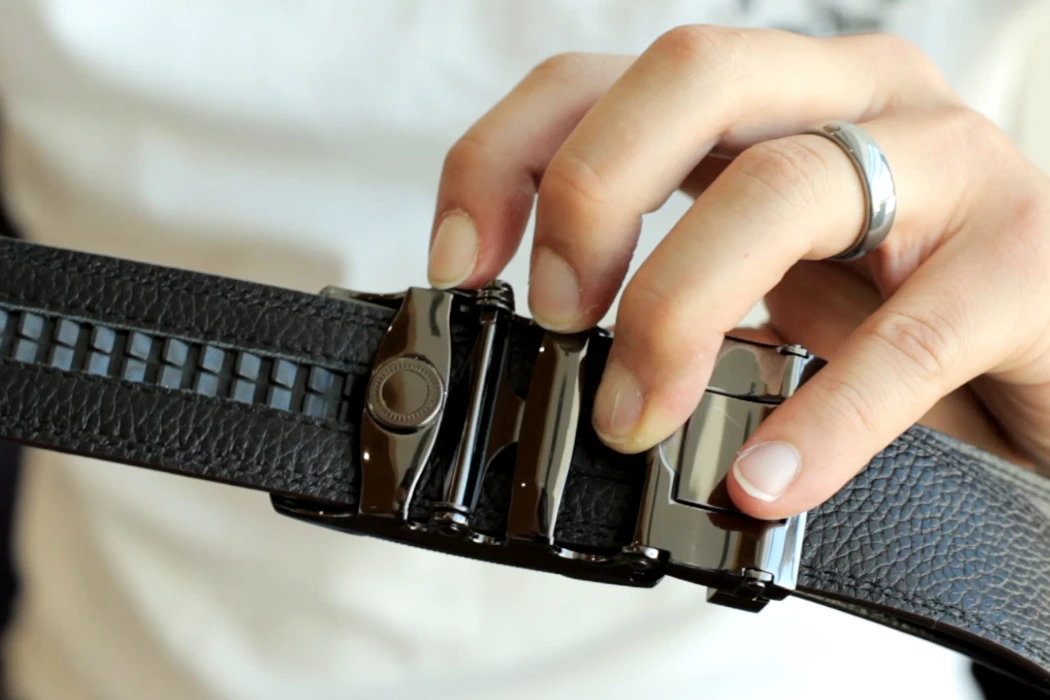
A ratchet belt uses a toothed track and a compatible locking buckle to adjust without traditional pin holes. The track, buckle and strap attachment must work together. Fine adjustment is a design feature, while retention, release and durability still need verification on the finished product.
For fashion-belt buyers, the key questions are component compatibility, strap construction, sizing, wear testing and the production specification. This guide explains those decisions without assigning a fixed service life or a universal set of tolerances.
What Is a Ratchet Belt and How Does the Automatic Buckle Work?
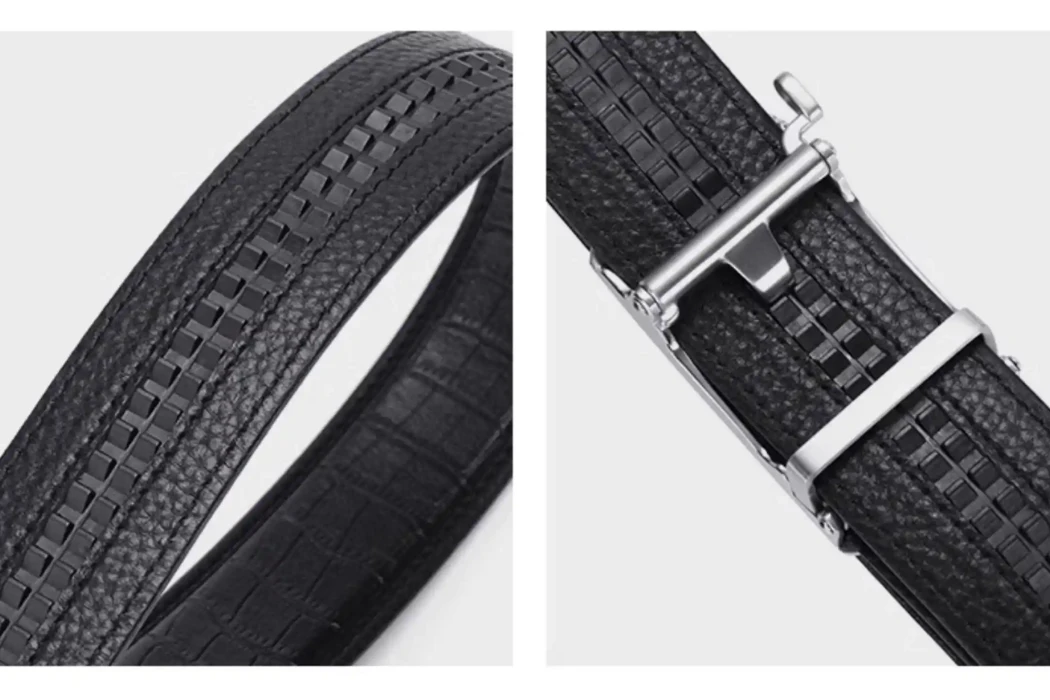
In a common design, a spring-loaded catch or pawl engages teeth on a track fitted along the back of the strap. The mechanism allows tightening and holds the selected position until the release control disengages it. The exact catch, spring and release arrangement varies by buckle.
Keep the track distinct from the strap
Do not assume that the teeth are cut directly into leather. The track can be a separate component secured into the strap construction. For example, Anson describes a track sewn into the back of its strap. Identify the offered track’s material, profile and attachment method rather than borrowing a generic construction description.
Define the adjustment range
Tooth pitch and the usable length of the track determine the available adjustment positions together with the buckle geometry. A smaller step can provide finer adjustment, but it does not automatically create a wider total fit range. Track count and pitch are product specifications, not universal values.
| Feature | Ratchet system | Pin-and-hole system |
|---|---|---|
| Engagement | Compatible catch and toothed track | Pin engaging a selected hole |
| Adjustment step | Specified track pitch | Specified hole spacing |
| Usable range | Validated track and buckle combination | Validated first-to-last usable hole range |
| Release | Design-specific lever or button | Disengage the pin from the hole |
| Wear checks | Track, catch, release and strap attachment | Holes, pin and strap attachment |
Inspect all the components
The visible housing is only part of the buckle. Ask about the locking part, spring, release control, pivots and the connection to the fixed end of the strap. Track attachment and supporting layers matter too. A belt can slip or jam for several reasons, so do not attribute every failure to one loose pawl.
Assess comfortable operation, clothing clearance and the required holding performance on the actual combination. A ratchet mechanism should not be described as incapable of accidental loosening or as automatically more durable than a pin buckle.
Which Material and Hardware Specifications Matter?
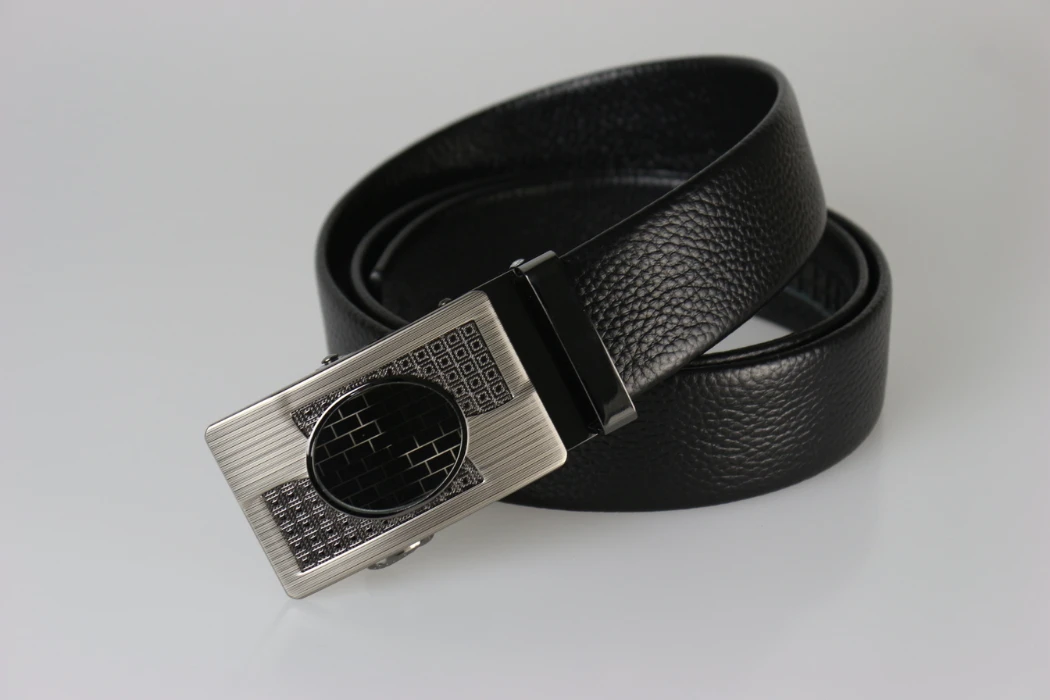
Separate the decorative strap material from the toothed track, reinforcement and buckle mechanism. A full-grain strap face does not identify the track material or establish the quality of the internal mechanism. Request a component drawing or bill of materials for the proposed construction.
Strap construction and track attachment
Lined, folded-edge, stitched and other strap constructions can be used where they suit the design. Specify the face, lining, core, reinforcement and local thickness at the track and buckle connection. There is no universal leather-layer or finished-strap thickness for all ratchet hardware.
Review how the track is attached and how the strap bends around it. Check for movement, delamination, exposed edges or stitch damage after relevant handling. Edge paint or burnishing is a finish choice, not a guarantee against water ingress or every form of wear.
Buckle materials
Identify the base alloy and finish of the housing separately from the catch, spring and other internal parts. Zinc alloy, brass and stainless steel vary by grade and processing. Their price, mass and corrosion behaviour depend on the actual component, so compare the offered specification and test evidence rather than an assumed premium hierarchy.
| Component | Information to obtain |
|---|---|
| Strap face and lining | Material article, finish, thickness and construction |
| Toothed track | Material, profile, pitch, usable length and attachment |
| Buckle housing | Alloy, dimensions and decorative finish |
| Locking and release parts | Materials, mating geometry and operating requirements |
| Fixed-end connection | Attachment design and permissible strap thickness |
| Completed belt | Size range, appearance and acceptance criteria |
Finish and contact requirements
State the required colour and appearance separately from corrosion, rubbing and chemical requirements. PVD is a deposition process, not a guarantee of better scratch resistance in every application. A decorative finish name such as gunmetal does not reliably disclose its composition.
Confirm relevant skin-contact requirements for the intended product and market. “Nickel-free plating” is not enough to establish the release behaviour of the complete component, and stainless steel should not automatically be marketed as allergy-free.
How Should the Track and Buckle Be Matched?
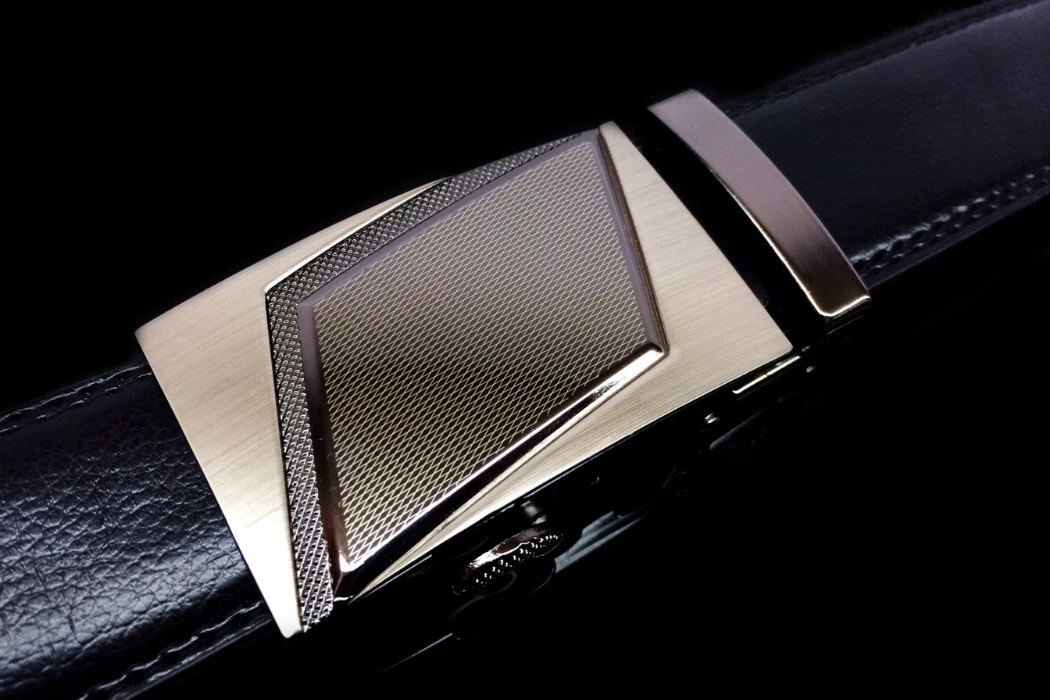
Start from a compatible component set or develop a documented mating design. Teeth, catch geometry, strap clearance and release travel must function together. Do not assume that a buckle works with any strap of the same visible width.
Specify the track profile
Obtain the track drawing, material and manufacturing specification. State the pitch, tooth form and relevant tolerances with the component supplier. Values such as ±0.1 mm are not a universal ratchet standard, and cutting teeth into a leather strap is not the default manufacturing method.
Develop the strap assembly
Confirm the track position and attachment to the actual layer stack. Establish the bonding or stitching process for the materials used, including any curing requirements. Check that assembly steps do not distort the track or obstruct engagement. A smooth outside appearance alone does not prove a sound internal joint.
Assemble and review the buckle
Use the intended catch, spring, pivots and release parts. Confirm the relevant assembly controls with the hardware supplier. Evaluate engagement, holding and release throughout the usable range. A universal ±0.05 mm tolerance for every internal part is neither necessary nor established here.
Validate finished size and operation
Define the measurement origin and the usable range on the assembled belt. Check the ends of the adjustment range, tail position, keeper or buckle guidance and the intended garment loops. Use the approved retail label mapping rather than assuming that a regional trouser size is a direct belt dimension.
- Check a matched buckle and track at the intended strap thickness.
- Confirm secure engagement at the specified positions.
- Evaluate release operation under the agreed conditions.
- Check fixed-end attachment and any trimming feature.
- Keep the component revisions and approved sample together.
Set development tests and production inspection separately. An inspection plan may include sampled checks and other controls; it should state what is checked and how defects are handled rather than implying that every supplier performs the same final calibration.
Which Durability and Compliance Checks Should Buyers Specify?
A ratchet design is not automatically compliant or proven durable. Agree the product requirements, methods, acceptance criteria and documentation before testing. Mechanical function, decorative finish and chemical restrictions need separate consideration.
Retention and repeated operation
Assess the fixed-end connection, track attachment and locking engagement using a defined fixture and loading method. For repeated-operation testing, specify the action, conditions, cycle count and observations. Check for slipping, tooth or catch wear, damaged springs, sticking controls and material separation. Choose criteria for the product; there is no universal 50 kg holding requirement or 5,000–10,000-cycle acceptance rule.
A development result is evidence for the tested sample under its stated conditions. It does not establish years of service, a load-bearing safety rating or a promise that the mechanism will always feel new.
Corrosion and finish behaviour
Where salt-fog exposure is specified, identify the method, specimen condition, duration and evaluation criteria. ASTM B117-26 provides a controlled corrosive environment and cautions against predicting natural-environment performance from stand-alone results. It does not prescribe a universal 24-, 48- or 72-hour belt requirement.
Nickel release for relevant EU skin-contact parts
ECHA’s guidance reproduces REACH Annex XVII Entry 27: relevant parts intended for direct and prolonged skin contact must not release nickel above 0.5 µg/cm²/week. For covered articles with a non-nickel coating, the coating must maintain the limit for at least two years of normal use. Assess the actual contact conditions and applicable test methods; a finish supplier’s “nickel-free” description does not remove that assessment.
Other requirements depend on the market, materials and intended age group. For example, CPSC lead guidance addresses children’s products; it should not be applied as a blanket claim that every adult belt is CPSIA-certified. Obtain a product-specific requirements review and reports covering the supplied components.
| Check | Define before testing |
|---|---|
| Locking retention | Fixture, direction, loading, condition and failure criteria |
| Repeated operation | Action sequence, conditions, cycle count and acceptance |
| Strap and track assembly | Relevant flexing, attachment and material checks |
| Corrosion | Method, exposure and evaluation criteria |
| Finish and colour transfer | Relevant contact and care conditions |
| Chemical requirements | Market, age group, materials, contact scope and methods |
Review report identity and scope against the final bill of materials. Significant changes to the track, buckle, coating or construction may require renewed approval. Passing a selection of tests does not prove universal suitability across every climate or use.
How Should MOQ, Branding and Size Customization Be Quoted?
Separate the finished belt from custom tooling
Hoplok’s minimum orders are 300 genuine-leather belts or 1,000 PU belts. Confirm how colours, buckle finishes and sizes are allocated within the quote. A custom buckle or track can introduce separate tooling and component conditions; using existing components may simplify development but does not automatically waive the finished-product minimum.
Specify the branding result
Provide artwork, dimensions and location, then confirm a process suited to the metal or strap. A raised logo may be formed in tooling or applied as a separate feature; laser marking and other methods have different effects. Approve the finished result and relevant wear checks rather than treating every metal marking method as a permanent engraving.
Approve the size mapping
Specify strap width, assembled thickness, track dimensions and the compatible buckle. Keep retail labels distinct from measured dimensions. For a trim-to-fit program, define the allowed cutting location and range, attachment procedure and instructions on the approved product.
Adult, petite and children’s assortments need their own validated fit brief. A smaller tooth pitch does not alone reduce the number of required sizes, and gender or region does not define a universal strap width. Confirm the proposed range with samples.
Set repeat-order controls
Record tooling ownership, component references, approved finishes and permitted substitutions. Include sample development, tooling, testing, packing and shipping assumptions in the quotation so repeat orders can be compared on the same basis.
What Width Should the Strap and Track Be?
There is no single width for every system. Strap width and the width of the toothed insert are different dimensions. Specify both with the buckle’s clearance and the intended garment loops, then confirm the assembled fit. Do not assume that a retail inch label is an exact measurement or that equal strap widths establish cross-brand compatibility.
How Many Adjustment Positions Are Needed?
Set the usable range and adjustment step for the design, then confirm the number of usable positions with the matched buckle. The count is not universally 35–40, and increasing the overall strap length does not automatically require more track teeth. The location and length of the track must support the intended size range.
Can a Ratchet Belt Be Cut Shorter?
Only if the particular design is intended for trimming. Anson’s instructions, for example, trim the raw strap end that attaches to the removable buckle. This is not a direction to cut the decorative tip or toothed track. Follow the supplied construction-specific instructions and confirm the allowed trimming range; cutting cannot be reversed.
Can One Ratchet Belt Cover Several Waist Sizes?
It can cover the validated adjustment range of its strap and buckle combination. Fine steps improve the available positions within that range but do not by themselves make it wider than a pin-buckle belt. Define the usable minimum and maximum and align them with the brand’s retail size guidance.
How Long Does a Ratchet Buckle Last?
Service life varies with the components, construction, use and care. Review representative repeated-operation and retention results for the specified product. A cycle count alone cannot establish a guaranteed number of calendar years or a lifetime warranty.
Can Buyers Make an Airport-Friendly Claim?
Do not promise that a metal buckle will pass screening without removal. Screening outcomes and procedures are outside the buckle specification. Any travel-oriented product claim needs a defined basis, and wearer instructions should defer to the screening requirements in use.
Should Buyers Choose a Leather or PU Strap?
Compare the actual face material, lining, track, reinforcement and assembly against the price and product brief. Neither “genuine leather” nor “PU” describes the complete mechanism. Approve appearance, flexing, attachment and finish performance on the assembled belt instead of assuming a universal durability ranking.
How Is the Buckle Released?
Use the lever, button or other release control specified for the exact buckle. Its position and motion vary between designs. Provide clear instructions and validate comfortable engagement and release on the sample; do not force a mechanism that is jammed or incorrectly assembled.
For a Hoplok custom ratchet belt project, send the matched hardware reference, strap material, intended fit range, branding and market requirements. Confirm component feasibility and sample performance before bulk approval. Belt sampling generally takes 2–3 weeks and bulk production 60–90 days excluding shipping, subject to the project quotation.