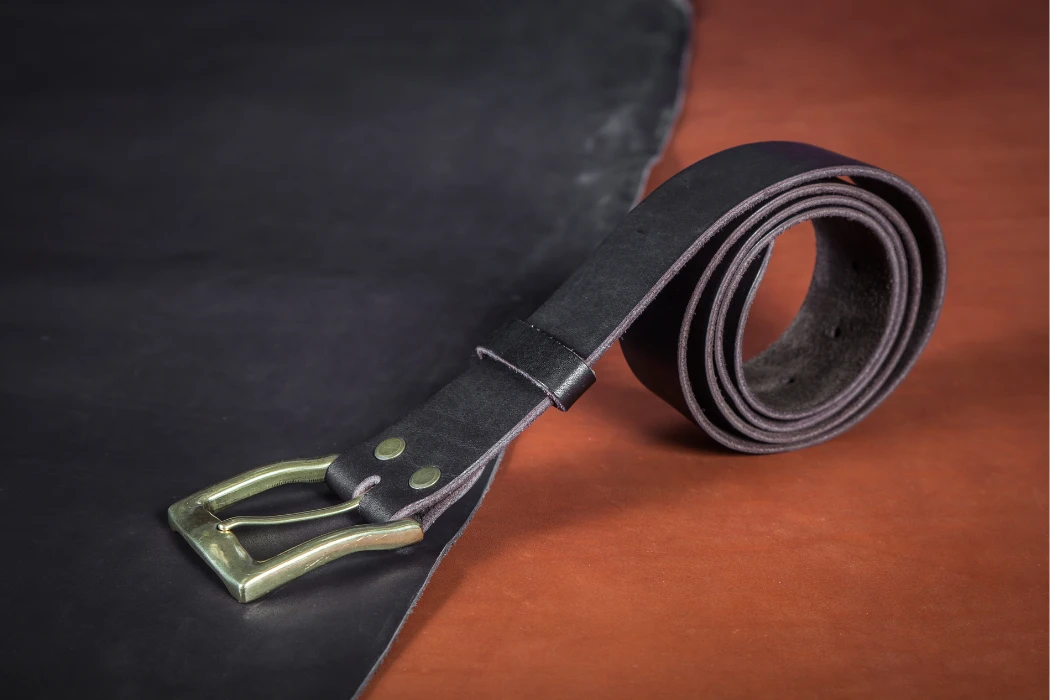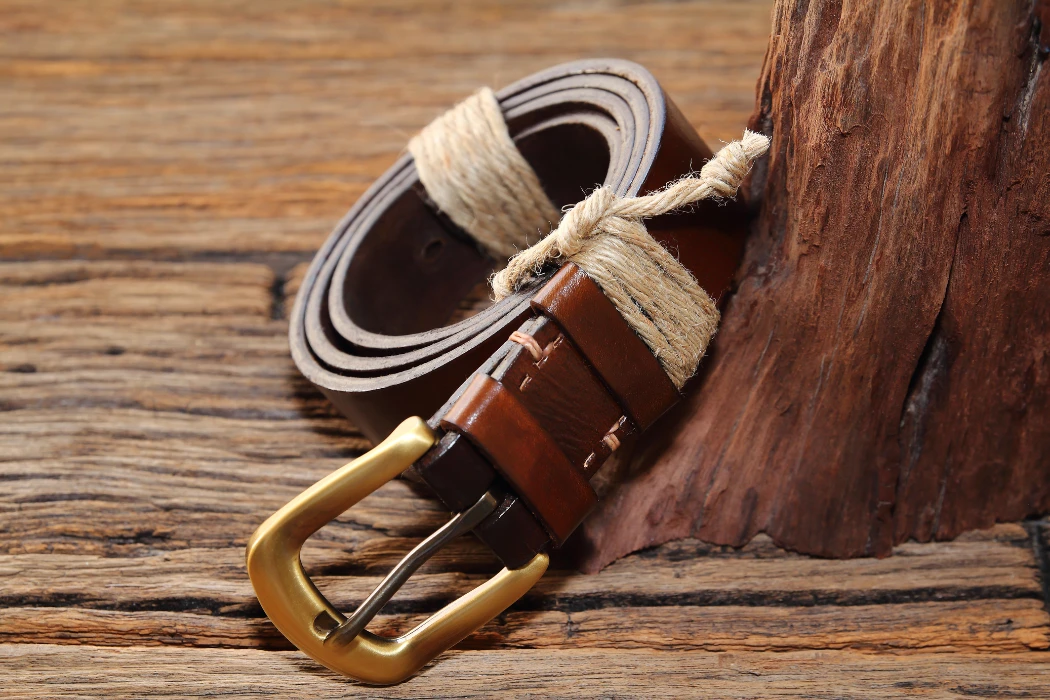
Sourcing managers often face a difficult trade-off: satisfying the growing consumer demand for “eco-friendly” products while maintaining the durability standards expected of their brand. This confusion is particularly common when evaluating cost-effective leather options, where vague marketing terms often obscure the material’s true technical properties.
The fundamental difference lies in structural integrity. Virgin leather is a natural material derived from a single, solid animal hide, preserving the original fiber network for maximum strength. Recycled leather, technically known as bonded leather, is an engineered composite. It is produced by shredding tannery offcuts into fibers and reconstructing them using a latex or polyurethane binder to form a continuous sheet.
Previously, bonded leather was viewed solely as a cheap, lower-tier substitute. Today, however, the landscape has shifted with the adoption of the Global Recycled Standard (GRS). This certification provides a transparent framework for verifying recycled content and chemical compliance, effectively turning industrial byproducts into a legitimate, sustainable material choice for specific mid-tier and budget accessory collections.
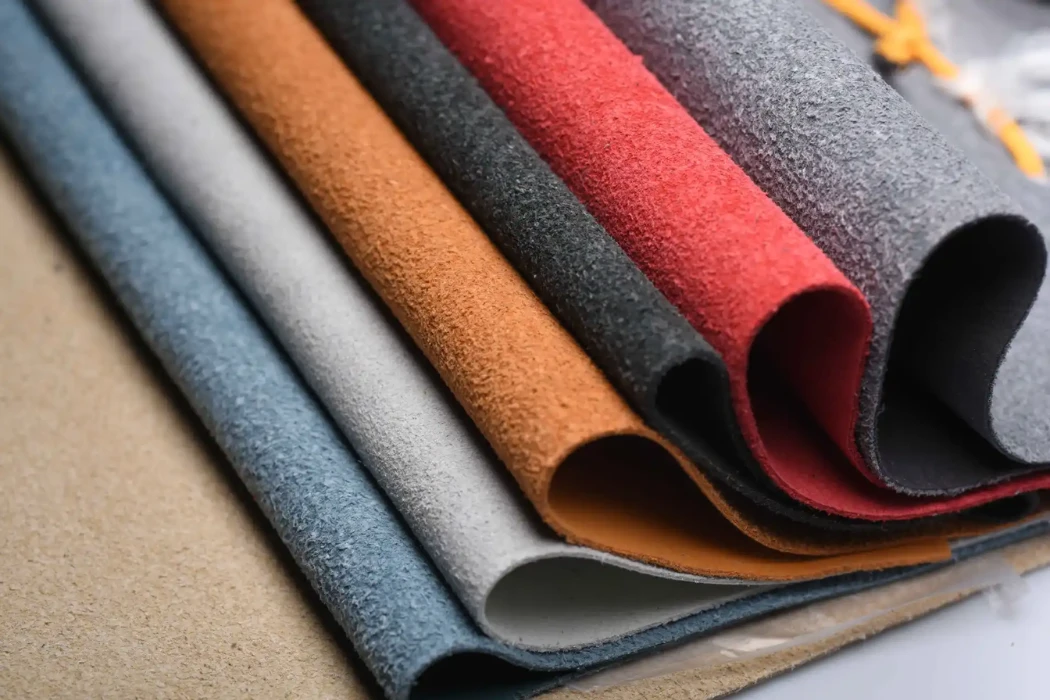
What Exactly Is Recycled Leather and How Is It Manufactured?
Recycled leather, often referred to in the industry as bonded leather, is technically an engineered composite material rather than a natural skin. It is produced by collecting solid leather waste, grinding it into a fibrous pulp, and mixing it with a binding agent to form a continuous roll. Think of it as the “particle board” of the leather industry: it uses real wood (leather) fibers, but the structure is man-made.
The Mechanical Breakdown: From Scraps to Fiber
The process begins at the tannery with “pre-consumer” waste. These are the scraps, trimmings, and shavings that fall to the factory floor during the cutting and splitting of virgin hides. Instead of sending this waste to a landfill, manufacturers collect it for processing.
- The raw material typically consists of wet blue trimmings or finished leather scraps.
- Industrial hammermills shred these solid pieces into fine, cotton-like fibers.
- This fiber pulp is then cleaned to remove any residual tanning chemicals or impurities.
This stage is crucial because it turns waste into a uniform raw material, ready to be repurposed into a new sheet.
The Bonding Process: Binders and PU Coatings
Once the fibers are prepared, they lack the natural collagen network that gives virgin leather its strength. To restore structure, manufacturers must add a bonding agent.
- The leather fibers are mixed with a binder, usually natural latex or polyurethane (PU).
- This mixture is extruded onto a mesh or paper backing to create a solid sheet.
- A final layer of PU coating is applied to the surface to emboss a grain texture and seal the material.
The result is a material that looks and smells like leather but offers the cutting efficiency of a synthetic roll.
Understanding GRS 4.0 Requirements
Not all bonded leather is sustainable. To ensure the material is truly eco-friendly, brands should look for the Global Recycled Standard (GRS) 4.0 certification. This standard verifies the chain of custody and chemical safety.
- 20% Minimum Recycled Content: The product must contain at least 20% verified recycled material to qualify.
- Chemical Restrictions: The binders and coatings used must comply with strict chemical limits, such as REACH and Prop 65.
- Chain of Custody: Every step of the supply chain must be tracked via Transaction Certificates (TC).
Without GRS certification, there is no guarantee that the “recycled” claim is accurate or that the binders used are free from harmful substances.
How Does the Durability Compare Between Virgin and Recycled Options?
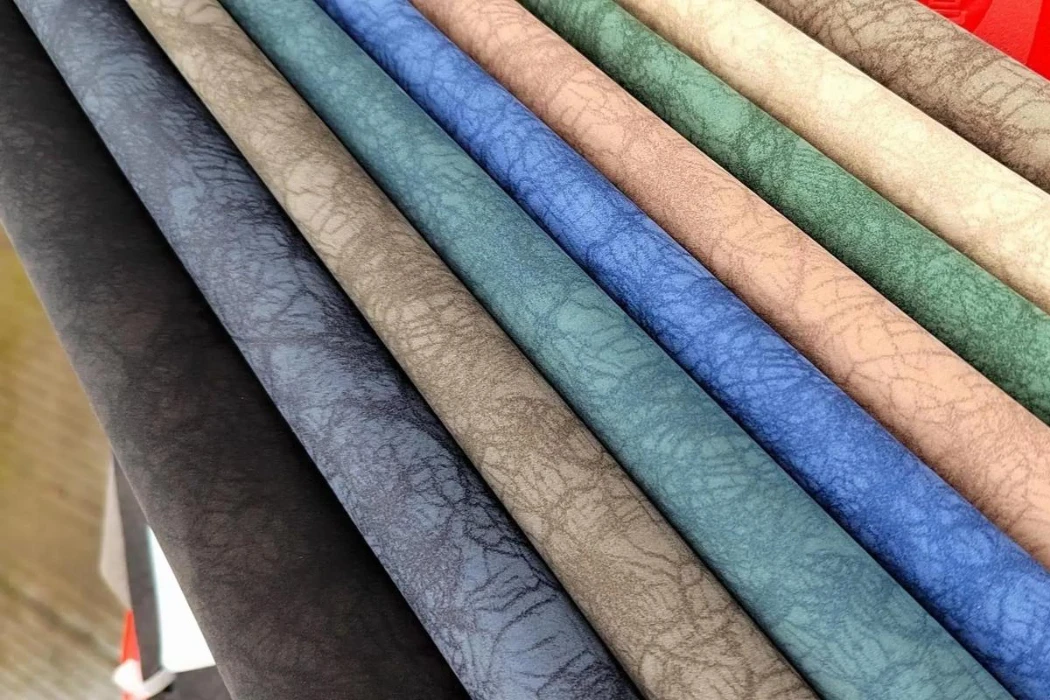
When switching from virgin to recycled leather, the most common concern for buyers is longevity. While GRS-certified bonded leather is far superior to the “cardboard-like” options of the past, it does not possess the same bi-directional strength as a natural hide. The difference lies in the fiber structure: virgin leather is an interwoven mesh of collagen, while recycled leather is a glued aggregate.
Tensile Strength and Tear Resistance
Tensile strength refers to how much force a material can withstand before breaking. Virgin leather excels here because its fibers are naturally interlocked.
- Virgin Hide: Offers high tensile strength in all directions due to the natural grain structure.
- Recycled Leather: Strength is determined by the binder quality and fiber density. While modern PU binders are strong, the material is more prone to tearing at stress points, such as belt holes or bag straps, if not reinforced properly.
For high-stress items like narrow belts, manufacturers often use a “sandwich” technique, adding a nylon reinforcement layer to compensate.
Flex Testing and Crack Resistance
Flex resistance measures a material’s ability to bend repeatedly without cracking. This is critical for belts and shoe uppers.
- The Risk: Lower-quality bonded leather can delaminate or crack after repeated flexing because the surface coating may detach from the fiber base.
- The Solution: High-quality GRS options use microfiber-reinforced bases or advanced PU coatings designed to withstand 20,000+ flex cycles without failure.
However, unlike virgin leather, which softens and develops a patina over time, recycled leather tends to maintain its original stiffness until it eventually wears down.
Aging Characteristics: Patina vs. Peeling
The visual aging process is the most noticeable difference for the end consumer.
- Virgin Leather: Absorbs oils and sunlight, developing a unique “patina” that many consumers value as a sign of quality.
- Recycled Leather: Being sealed with a synthetic coating, it does not absorb oils. It will look exactly the same in year one as day one, but eventually, the surface layer may begin to peel or flake off after 2-3 years of heavy use.
| Performance Metric | Virgin Full-Grain Leather | GRS Recycled (Bonded) Leather |
|---|---|---|
| Tensile Strength | Extremely High (Natural Fiber Mesh) | Moderate (Dependent on Binder) |
| Flex Resistance | Excellent (>100,000 cycles) | Good (20,000 – 50,000 cycles) |
| Tear Strength | High Resistance | Moderate (Prone to tear at stitch holes) |
| Aging | Develops Patina, Softens | Maintains Look, Risk of Peeling |
| Lifespan | 10+ Years | 2 – 5 Years |
Why Are Brands Switching to GRS Recycled Leather for Budget Lines?
For decades, luxury brands dismissed bonded leather. However, the rise of “Eco-Budget” collections has changed the calculus. Sourcing managers are now finding that GRS-certified bonded leather offers a unique intersection of sustainability stories and manufacturing efficiency that virgin hide cannot match.
Cutting Waste and Maximizing Yield
One of the biggest hidden costs in leather manufacturing is waste. A virgin hide is irregularly shaped, with scars, tick bites, and brand marks that must be cut around.
- The Reality of Virgin Hide: A typical cowhide has a “cutting yield” of only 60-70%. The rest is scrap.
- The Advantage of Recycled Rolls: Bonded leather comes in uniform, rectangular rolls (often 1.4m wide). This allows for automated nesting and cutting, achieving yields of 90-95%.
This efficiency doesn’t just save money on material; it drastically reduces the labor time required for manual inspection and cutting.
The “Eco-Budget” Sweet Spot
Brands often struggle to find materials that are both cheap and sustainable. Synthetic (PU) leather is cheap but essentially plastic. Virgin leather is natural but expensive and resource-intensive.
- Carbon Footprint: Using leather waste prevents it from decomposing in landfills (releasing methane) or being incinerated.
- Cost Structure: GRS bonded leather typically costs 30-50% less than low-grade split leather, yet it allows brands to market a “Leather” product (subject to regional labeling laws) rather than a “Synthetic” one.
Marketing the Circular Economy
Modern consumers love a redemption story. Using GRS materials allows brands to legally claim “Recycled Content” on their care labels.
- The Claim: Instead of hiding the material’s origin, transparent brands highlight it: “Made with 50% recycled leather fibers, diverting waste from landfills.”
- The Compliance: Because of the GRS chain of custody, this marketing is audit-proof, protecting the brand from “greenwashing” accusations.
| Metric | Virgin Hide Manufacturing | GRS Recycled Roll Manufacturing |
|---|---|---|
| Material Form | Irregular Shape (Animal outline) | Uniform Roll (Rectangular) |
| Cutting Yield | 60% – 75% | 90% – 95% |
| Defect Rate (Material) | High (Scars, veins, branding) | Near Zero (Uniform surface) |
| Handling Labor | High (Manual inspection required) | Low (Automated cutting possible) |
| Cost Efficiency | Baseline | 30% – 50% Savings |
What Are the Manufacturing Limitations You Must Know?
While GRS recycled leather offers significant cost and sustainability benefits, it behaves differently than virgin hide on the production line. Understanding these physical limitations is critical to preventing product returns and ensuring your design is viable.
Edge Finishing Challenges
One of the most distinct features of virgin leather is its ability to have a “raw edge” that looks natural and premium. Bonded leather, however, reveals its internal fibrous structure when cut.
- The Constraint: You generally cannot use a “raw edge” finish with bonded leather, as the cross-section looks like pressed cardboard rather than skin.
- The Workaround: Designers must use Edge Paint (Inking) or a Folded Edge (Turned Edge) construction to hide the core material. This adds a step to the manufacturing process but is essential for a polished look.
Thickness and Stiffness Constraints
Virgin leather can be split down to paper-thin layers (0.6mm) while retaining tensile strength. Bonded leather relies on its bulk for integrity.
- Splitting Limits: Bonded leather typically cannot be split thinner than 1.0mm – 1.2mm without losing structural stability and tearing during assembly.
- Drapability: It is inherently stiffer than virgin hide. It does not “drape” or slouch well, making it unsuitable for soft hobo bags or unstructured garments. It excels in rigid applications where structure is desired.
Suitable Product Categories
Given these properties, GRS recycled leather is not a universal substitute. It performs best in specific product categories.
- Best Applications: Rigid belts, structured tote bags, laptop cases, book covers, and desk accessories.
- Avoid For: Soft slouchy handbags, gloves, unlined garments, or intricate woven designs that require high tensile strength on narrow strips.
How Do You Verify GRS Certification to Avoid Greenwashing?
In the current market, simply labeling a product as “recycled” is no longer sufficient. With increasing scrutiny from regulators (like the EU’s Green Claims Directive) and savvy consumers, brands must have concrete proof of their sustainability claims. The Global Recycled Standard (GRS) is the gold standard for this verification.
The Transaction Certificate (TC)
The most important document in the GRS system is the Transaction Certificate (TC). A supplier cannot simply claim they are GRS certified; they must provide a TC for every specific shipment of material.
- What it is: A legal document issued by a certification body (like Control Union or Intertek) verifying that a specific batch of goods changed ownership from one certified entity to another.
- The Rule: If your supplier refuses to provide a TC for your specific order, you cannot legally claim the product is GRS certified, even if the factory holds a scope certificate.
Tracking the Supply Chain
GRS verification is not just about the final product; it is about the entire chain of custody.
- Scope Certificates (SC): Every facility in the supply chain—from the recycling plant that shreds the waste to the tannery that forms the roll, and finally to the factory that stitches the bag—must hold a valid Scope Certificate.
- Mass Balance: The system tracks the volume of incoming recycled material versus outgoing finished product to ensure no non-recycled material is secretly swapped in.
Chemical Compliance (REACH & Prop 65)
Sustainability is not just about waste reduction; it is also about chemical safety. Because bonded leather relies heavily on binders and coatings, there is a risk of restricted substances like phthalates or solvent residues.
- GRS 4.0 Chemical Requirements: To achieve certification, the chemical inputs (binders, pigments, coatings) must meet strict hazard criteria.
- Dual Compliance: High-quality GRS leather will also meet REACH (EU) and California Prop 65 (USA) standards, ensuring the product is free from harmful levels of lead, cadmium, and restricted azo dyes.
Frequently Asked Questions (FAQ)
Is bonded leather considered “real” leather?
Technically, yes, because it contains real leather fibers. However, in many jurisdictions (like the USA and UK), it cannot be sold simply as “Genuine Leather” without a qualifier like “Bonded Leather” or “Recycled Leather” because the structural integrity is man-made.
Does GRS recycled leather peel over time?
Low-quality bonded leather is notorious for peeling. However, high-grade GRS options use advanced PU coatings designed to last 2-5 years. While it will eventually degrade faster than virgin hide, modern formulations are far more durable than the cheap “cardboard” belts of the past.
Is virgin leather more sustainable than recycled leather?
It depends on the metric. Virgin leather lasts longer (reducing replacement needs) but has a higher carbon footprint and water usage. GRS recycled leather diverts waste from landfills and has a lower immediate environmental impact, making it a “circular” choice for budget-conscious lines.
What is the percentage of leather in bonded material?
To qualify for GRS certification, the material typically needs at least 20% recycled content. Most high-quality commercial bonded leathers contain between 50% to 60% leather fiber, with the remainder being binders and coating.
Can you emboss logos on recycled leather?
Yes, recycled leather takes heat embossing very well because of its uniform surface. The results are often cleaner and more consistent than on virgin hide, where natural grain variations can affect logo clarity.
Is recycled leather cheaper than PU (Synthetic) leather?
Generally, no. Recycled leather is usually more expensive than standard PU (plastic) leather but significantly cheaper than virgin leather. It sits in the “premium middle,” offering a leather scent and hand-feel that PU cannot match.
Conclusion
Choosing between virgin and GRS recycled leather is not just a question of quality—it is a strategic decision about your brand’s price point, sustainability goals, and product lifecycle.
For heritage goods meant to last a decade, virgin hide remains the king. However, for fashion-forward collections where cost efficiency, yield, and certified circularity are paramount, GRS bonded leather is an engineered solution that no longer requires a compromise on aesthetics.
If your brand is looking to navigate these complex material choices, Hoplok Leather Goods provides the expertise you need. With our own GRS-compliant supply chain and vertically integrated finishing facility, we help global brands manufacture both premium virgin and certified recycled leather goods that meet strict international compliance standards.