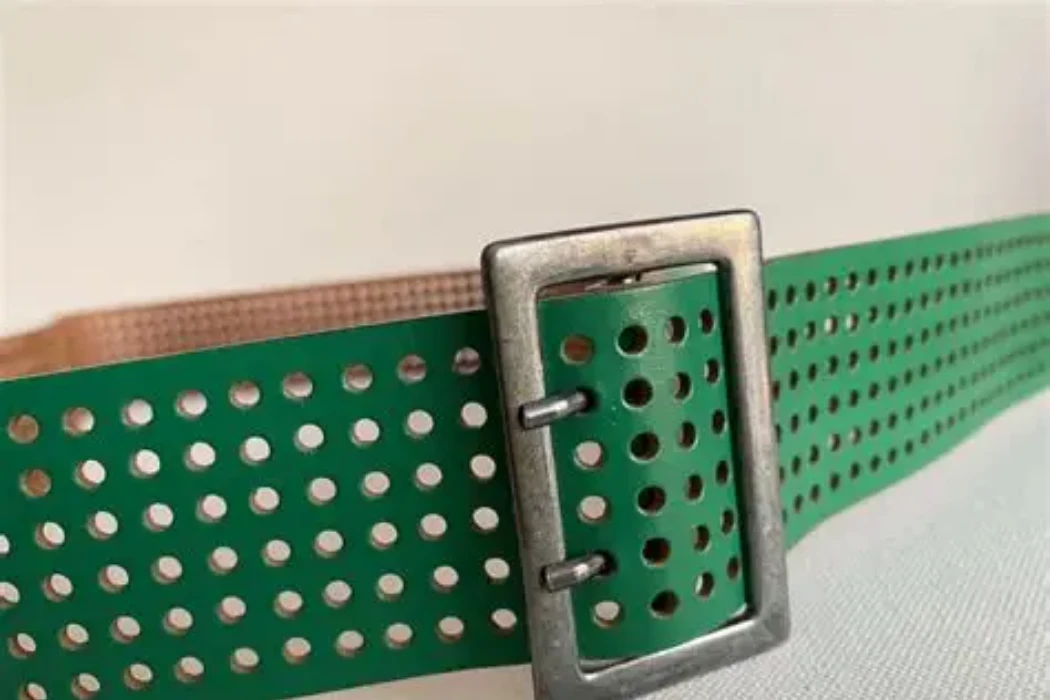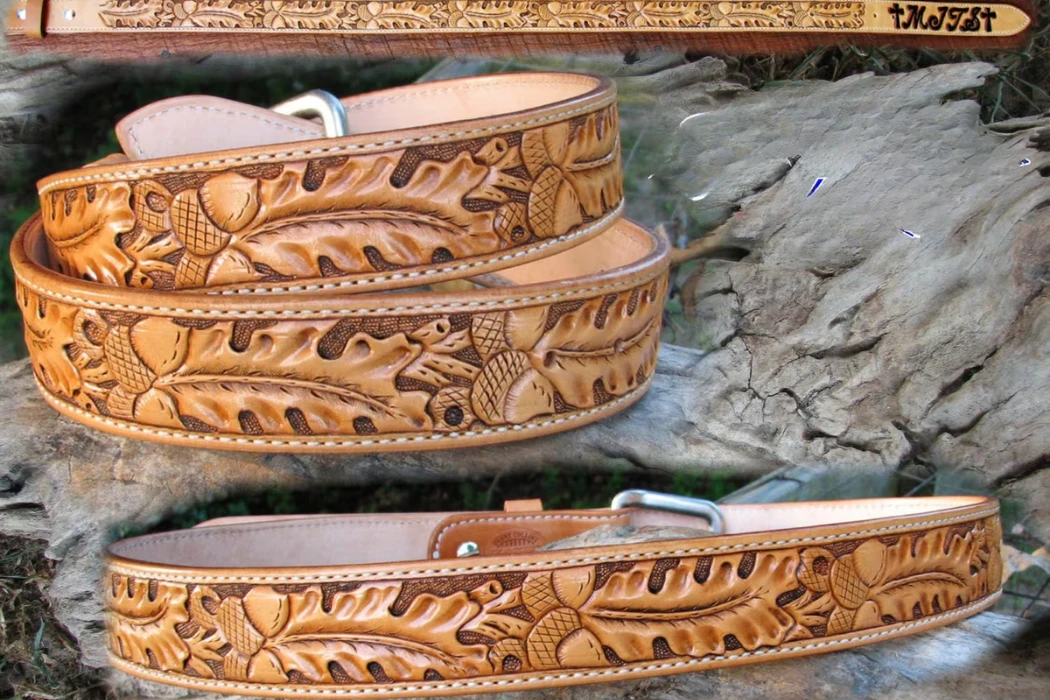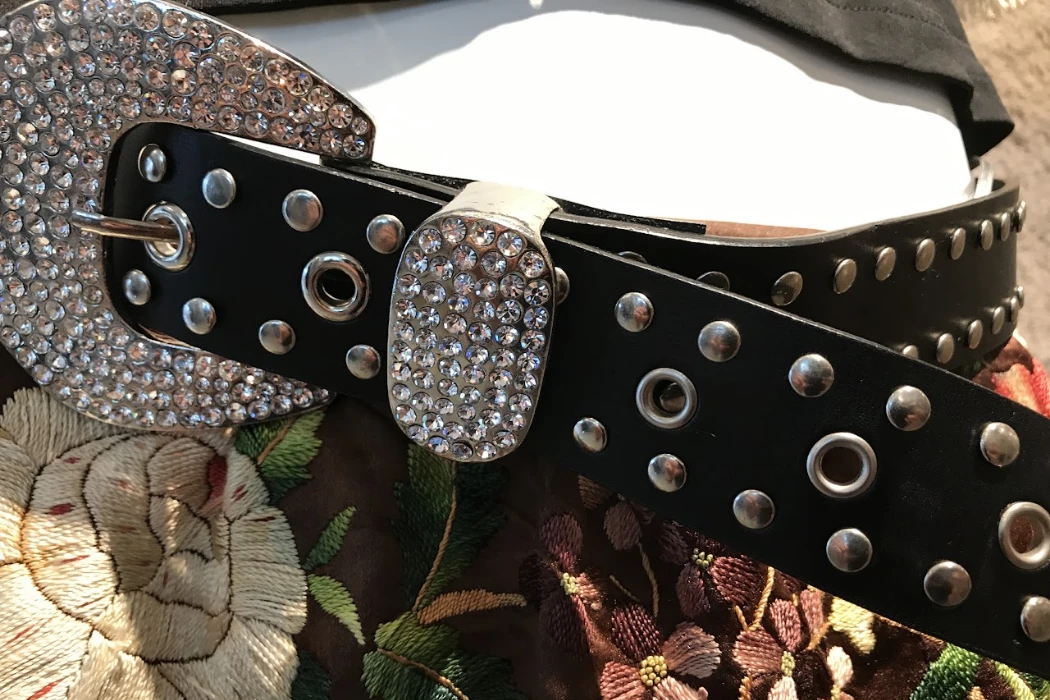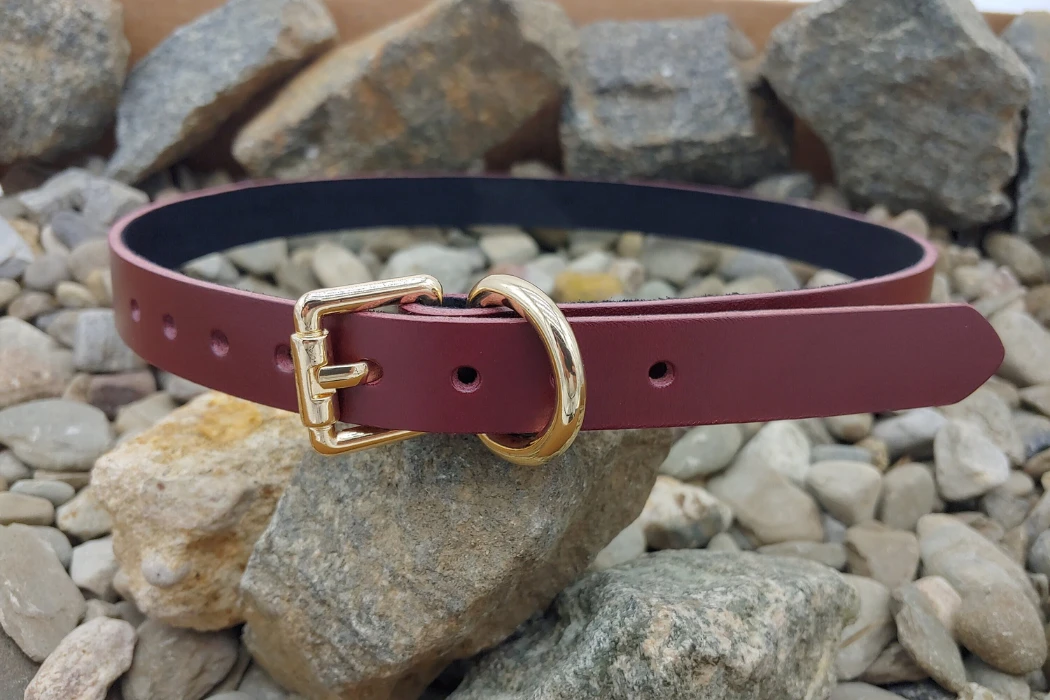
Two belt samples can look similar in a photograph yet differ in feel, colour transfer and response to bending. The finish matters, together with the leather substrate, thickness and assembled construction. It does not determine a fixed percentage of performance or cost.
A buyer needs a finish reference that can be sampled, approved and repeated. Names such as aniline, pigmented, pull-up or patent describe different surface features; they do not establish a guaranteed lifespan or a universal price tier.
This guide covers six finish groups: aniline; semi-aniline and pigmented; pull-up; suede and nubuck; embossed textures; and patent. Some descriptions overlap on the same material. Use them alongside the leather specification and the belt construction plan.
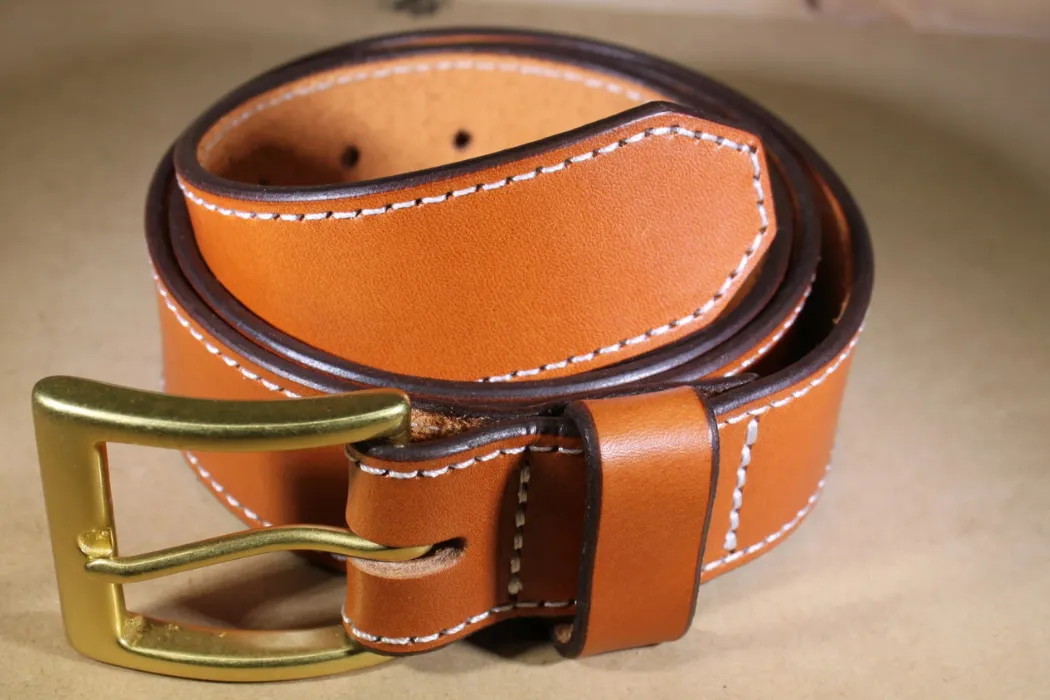
What Is Aniline Leather and What Should Buyers Approve?
Aniline leather retains a visible natural grain, with no surface coating or a non-pigmented coating. It should not be described as necessarily having no protective finish. The LWG definitions separate aniline and semi-aniline by their finish description, rather than by fixed strength or cost rankings.
Dyeing and surface appearance
Dyeing and surface finishing are separate parts of the material description. Aniline does not guarantee complete through-dyeing or an identical colour at every cut edge. Inspect an offcut and specify whether edge colour or full dye penetration matters to the design.
- Approve the visible grain, gloss, colour and allowed natural variation.
- Identify the leather article and thickness separately from the finish.
- Ask whether a non-pigmented protective treatment is present.
- Check the cut edge if it will remain visible on the finished belt.
Hand feel and ageing
Some aniline articles offer the feel and changing appearance sought for natural-looking ranges. Tannage, thickness and temper also matter, so do not assume every aniline sample is soft. There is no universal instant body-temperature response or fixed three-to-six-month patina schedule.
Show buyers a representative appearance range instead of promising that every natural mark will improve with wear. A stain, cut or finish fault should not automatically be reclassified as desirable character. Agree the boundary between accepted variation and a defect before production.
Staining, rubbing and light exposure
Evaluate the actual article for its intended contact and use. Do not infer a five-second absorption time, a yearly light-fastness loss or zero water resistance from the name. Where light exposure or colour transfer is important, ask the laboratory for an appropriate method and agree acceptance criteria.
| Approval point | Aniline offer | Semi-aniline alternative |
|---|---|---|
| Visible grain | Review the natural surface and variation | Review how visible the grain remains under the light pigment |
| Protection | Confirm any non-pigmented treatment | Confirm the complete finish system |
| Performance | Evaluate the actual material | Compare using the same relevant exposure |
| Cost | Quote the agreed selection and construction | Quote the same design and quantities |
A stricter cosmetic selection may affect availability and cost. A claim that only 5% of all hides can be used is not an adequate purchasing basis; ask for the supplier’s actual selection and cutting assumptions.
Why Consider Semi-Aniline and Pigmented Finishes?
A semi-aniline finish uses some pigment while leaving the natural grain visible. A pigmented finish conceals the natural grain or surface with a pigment-containing finish. Pigmentation is not the same operation as mechanically correcting the grain, and a pigmented offer should state its substrate separately.
Define the finished appearance
Approve colour, gloss, grain pattern and feel on the intended leather. A protective finish may help meet an agreed appearance or cleaning requirement, but “pigmented” does not mean waterproof, scratch-proof or identical across all batches. Neither a universal coating thickness nor an 80% market-share claim is needed to specify the product.
Ask for suitable finish testing
The leather-specific ISO 11644:2022 addresses finish adhesion within its scope. It is not a test for every uncoated or napped article. Ask the laboratory to confirm suitability for the proposed finish instead of substituting an informal tape pull or assuming ASTM D3359 is the required leather method.
- Use a defined leather rubbing test where colour transfer matters.
- Agree the exposure and assessment for flexing or surface damage.
- Record the sample version, conditioning and acceptance criteria.
- Review a material or finish change before relying on an earlier test report.
Manage yield and colour consistency
Pigment can conceal some cosmetic variation; it cannot repair every structural defect. Cutting yield depends on the actual selection, strap lengths, direction and defect rules. Review the supplier’s cutting plan instead of applying a fixed 85–90% assumption.
Retain a physical colour master and approve a range of acceptable variation. If instrumental colour measurement is used, agree the instrument settings, method and tolerance. A Delta E below 1.0 is not guaranteed by pigmentation and does not make batches visually identical under every light source.
Specify care from the approved article
Evaluate cleaning on the actual finish before issuing care instructions. Avoid blanket “zero conditioning” guidance, aggressive cleaners or assumed water resistance. A laboratory result for rubbing does not establish years of pristine appearance.
How Does Pull-Up Leather Create a Changing Colour Effect?
Pull-up describes a colour-lightening effect when certain leathers are bent or stretched, associated with displacement of oils and waxes. The Horween glossary distinguishes this effect from the process term hot stuffing. Neither term establishes a universal tanning recipe.
Ask what the supplier means by oil-tanned
Commercial “oil-tanned” descriptions can refer to an oily or waxy article without identifying its complete tannage. Request the actual base leather and processing description. Do not assume all pull-up leather is vegetable tanned, hot stuffed at 50–60°C or made 15–20% heavier.
Approve the pull-up range
Compare the resting colour and the colour change when the strap is bent in a repeatable way. Review whether the surface is matte, glossy, waxy or dry to the touch. Keep the approved article reference: the same colour name on a different base may produce a different effect.
- Inspect the buckle fold and hole area after agreed handling.
- Check transfer onto representative light-coloured contact materials.
- Assess any finish changes after approved cleaning or care.
- Record acceptable surface marking rather than promising self-healing.
Scuffs and care
Some light marks can become less visible with suitable care, but oil and wax do not repair cuts or structural damage. Do not promise that every scratch can be rubbed away or that the leather will remain flexible for decades. Follow the supplier’s tested care guidance and trial it on a sample first.
Interpret Crazy Horse as a supplier article description
“Crazy Horse” is a commercial name used for different leather articles; it does not establish the species, a mandatory nubuck base or one surface texture. It is not evidence that the material is horsehide. Request species, grain treatment and finish explicitly.
| Question | Pull-up offer | Crazy Horse-labelled offer |
|---|---|---|
| What is the effect? | Approve the bending colour change | Ask whether pull-up is part of the specification |
| What is the base? | Identify species and grain or split construction | Identify the same details; do not infer nubuck |
| What is the surface? | Approve gloss, texture and touch | Approve against the actual article |
| What must it withstand? | Use agreed product checks | Use the same relevant checks |
The design choice includes appearance, transfer risk and care requirements. It should not rest only on a “heritage” or “rugged” marketing label.
How Should Buyers Compare Suede and Nubuck Belts?
Nubuck has a napped grain-side surface. Suede has a napped flesh or split surface. These descriptions identify how the surface is presented; they do not give a fixed strength ratio or make nubuck automatically water-resistant.
Separate the surface from the strap construction
Request the exact material, thickness and temper, then review whether the design uses a single strip, lining or reinforcement. There is no rule that only nubuck can be unlined or that every suede belt requires PU backing. Construction needs depend on the proposed material and intended belt.
Control nap and colour direction
Approve a physical nap reference and inspect samples in consistent lighting and orientation. Brushing or reversing the direction can change the visual impression. Specify how straps should be cut and presented so the appearance is intentional across a range.
The finisher should establish a suitable buffing process for the actual leather. A generic 280–320 grit prescription does not define the finished nap. Ask for the result—texture, consistency and acceptable marks—rather than importing an unsupported production recipe.
Test where the belt works
Review hole behaviour, buckle folds, seams and any bonded interfaces. Check rubbing and transfer on the napped surface and relevant contact materials. Water and abrasion performance should be demonstrated for the selected article; a surface name does not establish a waterproof claim.
| Decision | Nubuck proposal | Suede proposal |
|---|---|---|
| Surface | Napped grain side | Napped flesh or split surface |
| Assembly | Confirm the proposed complete build | Confirm the proposed complete build |
| Appearance | Approve nap, colour range and brushing response | Approve the same relevant attributes |
| Cost | Include material, lining, labour and finish | Compare on equivalent design assumptions |
Compare final belt cost rather than assuming suede material is always 40–50% cheaper. Lining and assembly may change the quotation, and the material itself still needs a defined supplier reference.
How Are Crosshatch and Crocodile-Look Textures Specified?
Embossing presses a pattern into a suitable surface. For a crocodile or snake look, specify an embossed conventional leather or suitable synthetic substrate and describe it accurately. Hoplok does not offer real exotic-skin programmes.
Approve the pattern and process result
Request a pattern reference, repeat size, orientation and required depth or visual relief. Trial it on the actual proposed material and finish. Plate design, material response and equipment affect the process; there is no universal temperature, press tonnage or dwell time for all leather embossing.
Review the sample after subsequent colouring, topcoating, cutting and assembly. Pattern clarity on a flat swatch does not prove it will remain unchanged at a buckle fold. Where retention matters, include it in the agreed handling or flexing assessment.
Evaluate cosmetic correction without hiding structural defects
An embossed pattern can make some surface variation less prominent. It does not justify cutting through weak areas or treating the entire hide as usable. Require the same relevant structural and appearance criteria, and ask for a cutting plan based on the actual strap dimensions.
Specify crosshatch finishes without a durability legend
A Saffiano-style crosshatch is a recognisable texture, but supplier constructions and coatings vary. Do not use an unsupported patent story, “indestructible” claim or assumption that every crosshatch finish includes the same hard wax. Approve the actual texture and surface system.
- Record pattern scale and direction on the belt.
- Confirm whether the base is grain leather, split leather or synthetic.
- Assess rubbing, flexing and finish adhesion where applicable.
- Use scratch- or water-resistance claims only when supported by the agreed product evidence.
Embossing is an appearance choice that still requires functional verification. It is not a substitute for material identification or an automatic route to lower cost.
Is Patent Leather Suitable for the Intended Belt?
Patent leather is characterised by its mirror-like finish over a leather substrate. A similar gloss can also be produced on synthetic material. Identify the base and finish separately rather than deciding composition from shine alone.
Review the glossy surface and its base
Ask for the supplier article, coating description and actual sample. The term does not require one universal curtain-coating process, fixed coating thickness or opaque split-leather base. Specify acceptable gloss, surface smoothness, contamination and colour variation.
A glossy face is not proof that the complete belt is impermeable. Holes, cut edges, seams and the reverse side still matter. Check cleaning and transfer behaviour on the finished construction, especially where the surface contacts packaging or other materials.
Define flex and temperature requirements
Review the buckle fold and adjustment holes under the intended conditions. If low-temperature performance is required, agree the temperature, conditioning, test method and failure criteria with the supplier and laboratory. Do not assume all patent coatings crack below 5°C or are safe down to −10°C because of a coating label.
A cycle count from an unrelated material is not a pass mark. Specify an appropriate test and inspect for cracking, lifting or other agreed defects. Test results do not translate directly into a number of years of wear.
Compare leather and synthetic patent constructions
A patent leather face may be combined with a different lining; a fabric-backed component does not prove that every layer of the belt is synthetic. Obtain the bill of materials and an authorised cross-section. Neither a leather nor synthetic face alone establishes hole strength.
- Approve the complete edge construction and its compatibility with the surface.
- Check attachment points and buckle operation on the finished belt.
- Avoid load claims such as “50 kg” without a defined, relevant test.
- Issue care instructions for the actual article; do not assume scratches can be repaired.
Choose patent for the required appearance when the proposed construction passes the agreed checks. There is no need to promise unmatched water resistance or universally shorter service life.
Which Finish Fits the Buyer Brief?
Write the required appearance and use conditions before selecting a finish label. Natural-looking, uniform and high-gloss ranges can each use more than one construction. Retail price alone does not determine the correct finish or excuse a weak specification.
Natural-looking and heritage ranges
Review aniline, pull-up or other appropriate articles for the intended colour variation and feel. Show representative marks and handling changes during approval. Keep defect criteria explicit; not every flaw should be called patina.
Consistent dress and uniform ranges
Compare semi-aniline, pigmented or embossed options against a physical colour and surface reference. State acceptable variation and relevant cleaning or transfer requirements. A uniform appearance needs process control; it is not guaranteed by a finish name.
Fashion textures and gloss
For patent or embossed ranges, approve texture scale, gloss, colour and the finished edge. Trend-led products still need material disclosure and functional checks. Do not assign an unsupported five-year lifespan to a finish intended for a shorter fashion cycle.
| Finish group | Appearance decision | Evidence to request |
|---|---|---|
| Aniline | Visible natural grain and accepted variation | Actual finish description and relevant exposure checks |
| Semi-aniline / pigmented | Coverage, colour and gloss | Colour approval and applicable rubbing/adhesion checks |
| Pull-up | Resting colour and bending effect | Transfer, handling and care evaluation |
| Suede / nubuck | Nap and direction | Material identification and construction checks |
| Embossed | Pattern scale and retention | Trial on the actual substrate and assembled belt |
| Patent | Gloss and smoothness | Flexing, transfer and temperature checks where required |
Include the material article, approved sample, colour range, test requirements and quotation assumptions in the order. If the supplier proposes a finish substitution, compare it against these references before approving the change.
Frequently Asked Questions
Does aniline leather scratch easily?
Scratch response varies by leather and any non-pigmented finish. Evaluate the actual article and agree acceptable appearance. Some marks may become less visible with suitable care, but aniline does not mean self-repairing.
What is the difference between full-grain and embossed leather?
Full grain concerns retention of the grain surface without corrective removal. Embossing concerns an applied pattern. They describe different attributes, so ask for both the substrate and its surface treatment rather than treating the words as a complete material specification.
How can a buyer distinguish patent leather from a synthetic glossy material?
Request the bill of materials and supplier article reference, with an authorised cross-section if needed. A belt may combine different face and lining materials. Shine, smell or backing appearance alone is not enough to establish the full composition.
Which leather finish lasts the longest?
No finish label establishes the longest life. Compare the proposed materials under relevant agreed tests and in the finished belt. Scratch, colour-transfer, flexing and water-response requirements address different behaviours.
Why might a belt finish crack?
Possible causes include finish compatibility, material or process variation and the way the assembled belt is stressed. Identify which layer failed and investigate the actual sample. Cracking does not by itself prove bonded leather, and full grain can also be damaged.
Can vegetable-tanned leather be embossed?
Suitable vegetable-tanned articles can be embossed, as can other suitable leathers. Trial the pattern on the intended material and approve depth, clarity and retention. Tannage alone does not establish the best result or a permanent impression.
Approve the Finish as Part of the Belt
A useful finish specification connects the desired appearance to a named material, approved samples and product-specific checks. It also records the construction and edge treatment so a successful swatch is not mistaken for a fully approved belt.
Hoplok’s ProPelli facility in Cambodia finishes externally sourced crust leather; it does not tan raw hides. Its valid LWG Gold certification is facility-specific and does not certify every finished product. Proposed pull-up, embossed or other finish options should be confirmed through material trials and sample approval.
For a custom belt quotation, send the design, finish reference, colour range, quantity and destination. Hoplok’s stated MOQ is 300 leather belts or 1,000 PU belts, with style and colour allocation confirmed at quotation. Belt sampling typically takes 2–3 weeks and bulk production typically 60–90 days from agreed start conditions; shipping is additional.