The global leather industry is undergoing a massive structural shift right now. Brands are no longer just asking for the lowest price per square foot. Instead, the demand has pivoted sharply toward “compliant fashion” where traceability is the primary currency. If a brand cannot prove the origin of its materials, it risks losing access to premium markets like Europe and North America.
This is where the Leather Working Group (LWG) standards intersect with advanced material science. It is not enough to simply buy leather from a certified trader anymore. True sustainability requires a deep technical understanding of how crusts from Italy or Brazil are finished. It involves minimizing chemical inputs while maintaining the durability that consumers expect from genuine leather.
Achieving this level of control is almost impossible with a fragmented supply chain. The most successful manufacturers today are those who have vertically integrated their operations. By owning the finishing process, a factory can directly control chemical outputs and reduce waste. This technical capability is what separates a standard assembler from a modern material solution provider.
Why is the Leather Working Group (LWG) Certification the New Industry Baseline?
Simply put, the LWG audit is the global standard for environmental compliance in leather manufacturing. It acts like a “nutrition label” for leather, telling buyers exactly how much water, energy, and chemical input was used to produce a hide. Without this certification, a brand cannot credibly claim their products are sustainable.
The rigorous audit protocol explained
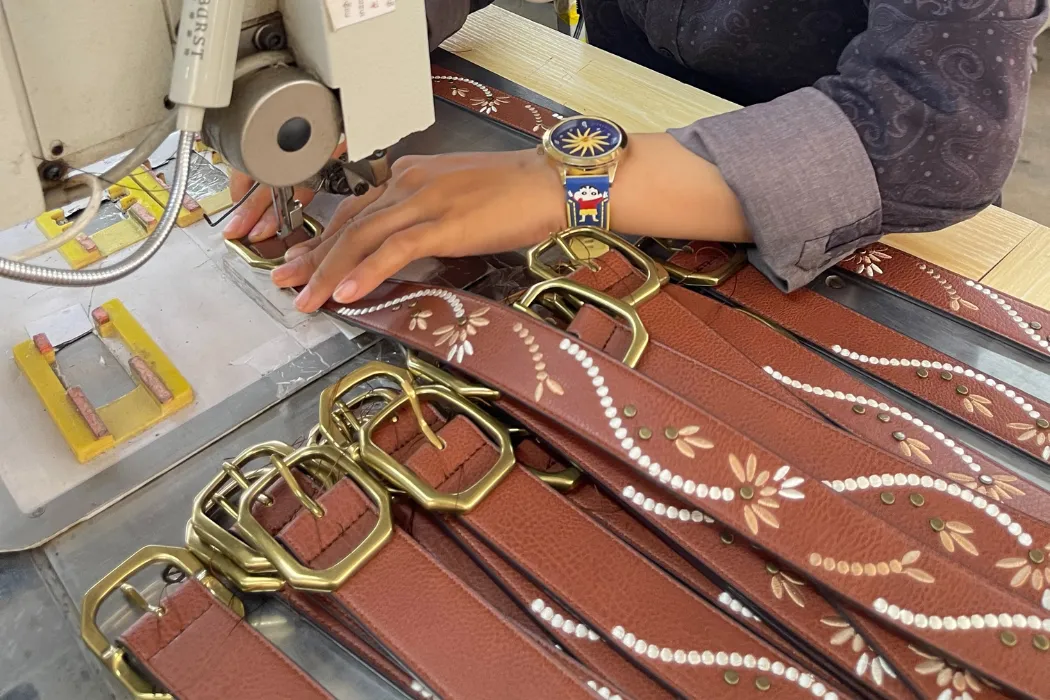
The LWG audit does not just look at the finished leather belt. It investigates every pipe and machine in the tannery. The auditors spend days measuring inputs and outputs to calculate the environmental footprint of production.
- Water Usage: They measure exactly how many liters of water are used per square foot of leather.
- Chemical Management: They verify that no restricted substances, like Hexavalent Chromium, are released into the environment.
- Energy Efficiency: They track electricity consumption to ensure the factory is reducing its carbon footprint over time.
- Traceability: They check if the raw hides can be traced back to the slaughterhouse to prevent deforestation.
This data is critical because it removes the guesswork. A buyer knows that a certified factory follows strict environmental protocols.
Decoding the medals: Gold, Silver, and Bronze
Not all certified tanneries are equal. The LWG assigns a score from 0 to 100 based on the audit results. This score determines the medal rating, which helps buyers choose the right supplier for their specific sustainability goals.
| Medal Rating | Minimum Score | What It Means for Buyers |
|---|---|---|
| Gold Rated | 85% | The highest standard. Excellent traceability and minimal environmental impact. Required by top-tier luxury brands. |
| Silver Rated | 75% | Strong environmental performance. Good chemical management but may lack full traceability. |
| Bronze Rated | 65% | Meets basic environmental standards. A safe choice, but less efficient than Gold or Silver facilities. |
| Audited | N/A | The facility was inspected but did not score high enough for a medal. Better than uncertified, but risky for major brands. |
Most global brands now set a minimum requirement of Silver or Gold for their belt programs. This ensures their supply chain is robust and defensible.
Why retailers enforce this mandate
Retailers are not asking for these certificates just to be nice. They are protecting themselves from legal and reputational risk. New laws in the EU and US will soon penalize companies that cannot prove their supply chain is clean.
- Risk Mitigation: If a toxic chemical is found in a belt, the retailer faces massive fines and recalls.
- Consumer Trust: Shoppers are scanning QR codes to see where their products come from.
- Market Access: Many department stores will refuse to stock a brand that uses uncertified leather.
Because of this pressure, the demand for LWG-certified hides has exploded. It is no longer an “optional extra” but a fundamental ticket to play in the global market.
How Does Vertical Integration in Leather Finishing Reduce Environmental Waste?
There is a hidden inefficiency in the traditional leather supply chain: transport and redundancy. Normally, a factory buys finished leather from a tannery thousands of miles away. If the color is slightly off, the leather is rejected, shipped back, or chemically stripped and refinished. This creates a massive carbon footprint.
The “Crust to Finish” efficiency model
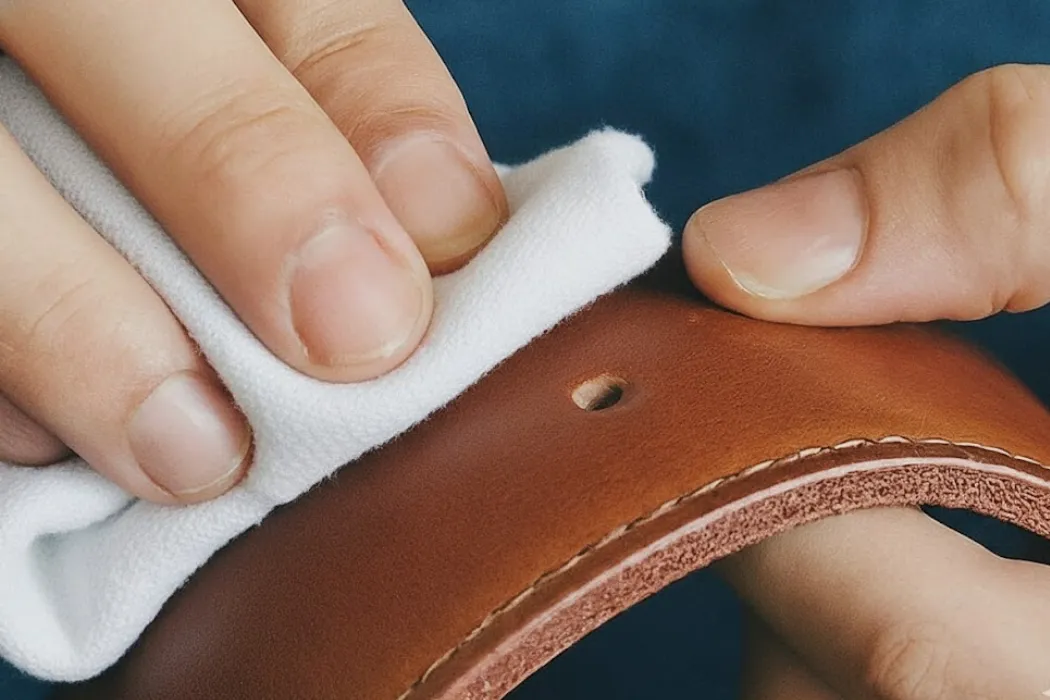
Vertical integration solves this by moving the finishing stage inside the manufacturing ecosystem. Instead of buying finished hides, the factory purchases “crusts”—semi-processed leather that is stable but uncolored—directly from LWG partner tanneries in regions like Italy, Brazil, or Argentina. The final aesthetic steps happen just meters away from the cutting table.
- Reduced Shipping Weight: Crusts are lighter and more compact to ship than finished leather, which often requires heavy protective packaging to prevent scratches during transit.
- Zero Re-Finishing: Because the color and texture are applied in-house, the “rejection rate” drops to near zero. If a shade needs adjusting, it is tweaked instantly on the machine, not after a trans-oceanic voyage.
- Chemical Precision: In-house finishing facilities, such as those modeled after the Pro Pelli system, use precise digital dispensers to mix stains. This ensures that only the exact amount of chemical needed for the order is created, eliminating waste.
This approach transforms the manufacturer from a passive buyer into an active material scientist. It allows for the creation of specific effects like oil tanned, crazy horse, or vintage washed finishes without the environmental cost of shipping samples back and forth across the globe.
Managing chemical outputs directly
When a factory owns the finishing line, they own the responsibility for the chemicals. This transparency is a massive advantage for compliance.
Advanced in-house facilities utilize modern machinery to control the application of finishes. For example, automated spray lines ensure an even coat with minimal overspray, unlike manual hand-spraying which can be inconsistent and wasteful. Furthermore, by integrating mechanical finishing techniques—like tumbling in drums for a broken-in effect—manufacturers can achieve soft, high-character leather using physical action rather than heavy chemical softeners.
This closed-loop system provides the ultimate reassurance to brands: the leather on their belt was finished under the same roof where it was cut, by a team that is accountable for every gram of chemical used.
What Are the Real Technical Differences Between “Vegan” and “Sustainable” Leather?
There is widespread confusion between these two terms. “Vegan” simply means the material contains no animal products; it does not guarantee environmental safety. In the mass market, 90% of “vegan leather” is actually Polyurethane (PU) or PVC—essentially plastic. True sustainable leather focuses on two different metrics: longevity and the responsible use of a food industry by-product.
Marketing often hides the chemical reality of synthetic belts behind green buzzwords. While bio-based innovations (like mushroom or cactus leather) exist, they are currently too expensive for most high-volume retail programs.
- Composition: Standard vegan leather is usually a polyester fabric backing coated with a layer of Polyurethane (PU).
- Hydrolysis: In humid climates, PU coatings break down rapidly. A synthetic belt often cracks and peels within 1 to 2 years.
- End of Life: Because they are plastic-based, these belts do not biodegrade. Instead, they break down into harmful microplastics that persist in the ecosystem.
Unless a brand is paying a premium for lab-grown bio-materials, choosing “vegan” usually means choosing a disposable petrochemical product.
Why durability is the ultimate sustainability metric
The most eco-friendly belt is the one you do not need to replace every year. We must look at the “Lifecycle Assessment” (LCA) of the product, not just its raw material.
| Material Type | Typical Lifespan | Base Component | Environmental Reality |
|---|---|---|---|
| Full Grain Leather (LWG) | 10+ Years | Cowhide (Natural Protein) | High durability reduces consumption. Hides are a waste product of the food industry. |
| Recycled (Bonded) Leather | 2-4 Years | Leather Scraps + Latex Glue | Uses factory waste, but the heavy glue content makes it stiff and prone to cracking over time. |
| High-Grade PU (Vegan) | 1-3 Years | Petrochemicals (Plastic) | Cruelty-free, but creates microplastic waste and requires frequent replacement. |
If a consumer buys five cheap PU belts in a decade versus one high-quality leather belt, the “vegan” choice has generated five times the manufacturing emissions and landfill waste.
The “By-Product” argument explained
It is crucial to understand where leather comes from. No cow is raised solely for its skin; the value of the hide is too low to support the cost of raising the animal.
- Waste Diversion: Hides are a by-product of the meat and dairy industries. If they are not tanned, they are discarded.
- Methane Prevention: Rotting hides in landfills release methane, a potent greenhouse gas. Tanning preserves this material.
- Upcycling: Leather manufacturing effectively upcycles a waste stream into a functional, durable material.
Therefore, purchasing leather from LWG-certified sources helps manage global food waste, turning a potential environmental hazard into a long-lasting consumer good.
Can Vegetable-Tanned Leather Meet High-Volume Retail Demands?
Yes, but with significant caveats regarding lead time and cost. Vegetable tanning is a slow, organic process utilizing tree tannins that takes 30 to 60 days, compared to the 1 to 3 days required for chrome tanning. While it yields a robust, eco-friendly leather that develops a rich patina, its stiffness and price point usually limit it to premium collections rather than mass-market fast fashion programs.
The chemistry of speed: Chrome vs. Vegetable agents
The fundamental difference lies in the chemical agent used to stabilize the protein structure of the hide, which dictates the speed of production.
- Chrome Tanning: Utilizes mineral chromium salts (usually Chromium III). This method is incredibly efficient, turning a raw hide into stable leather in under 72 hours. It results in a soft, pliable material that holds uniform color well.
- Vegetable Tanning: Relies on natural tannins found in tree bark (like Chestnut or Quebracho). This traditional method is chemically gentle but operationally slow, often requiring the hides to soak in pits for 4 to 6 weeks.
- Batch Consistency: Because veg-tanning is organic, slight variations in color between batches are common, whereas chrome tanning delivers near-perfect uniformity for large retail orders.
For a retailer ordering 100,000 belts for a holiday rush, the swift turnaround of chrome tanning is often a logistical necessity. However, for “Never Out of Stock” (NOOS) programs where lead time is less critical, veg-tan offers a superior quality narrative.
Physical behavior and the “Patina” factor
Beyond the timeline, the physical characteristics of vegetable-tanned leather require different manufacturing considerations compared to softer chrome leathers.
- Temper and Feel: Veg-tan is characteristically firm and rigid. This makes it ideal for sturdy, single-layer belts that do not require lining, but it can be difficult to stitch on high-speed automated sewing machines without prior conditioning.
- The Patina Effect: Unlike chrome leather, which stays the same color forever, veg-tan absorbs body oils and UV light. A light tan belt will darken to a rich mahogany over 6 to 12 months of use.
- Water Sensitivity: Veg-tan is hydrophilic (loves water). If an untreated veg belt gets wet, it may watermark or stiffen, whereas chrome leather is naturally more water-resistant.
Brands must educate their customers: the color change of a vegetable-tanned belt is not a defect, but a hallmark of authentic, high-quality leather. It is a “living” material that tells a story over time.
How Do Advanced Finishing Technologies Lower Chemical Usage?
The final aesthetic of a leather belt—its gloss, color, and texture—depends on the “finishing” stage. Traditionally, this involved heavy spraying of solvent-based chemicals. Today, advanced manufacturers are adopting cleaner technologies that significantly reduce Volatile Organic Compounds (VOCs) and chemical runoff.
The shift from solvents to water-based systems
Older tanneries often relied on solvent-based stains because they dried fast and covered imperfections easily. However, these solvents release harmful fumes. The modern industry standard has shifted to water-based finishes.
- Reduced Emissions: Water-based systems release steam rather than toxic solvents during the drying process, creating a safer environment for workers and the atmosphere.
- Thinner Layers: These finishes are naturally thinner, allowing the leather’s grain to show through. This forces manufacturers to use higher-quality hides since they cannot hide defects under thick plastic-like paint.
- Bio-Polymers: Leading facilities are now experimenting with biological polymers (derived from plants) to replace petrochemical binders in the finish mixture.
While water-based finishes require more precise application and longer drying tunnels, the result is a product that meets strict international safety standards like REACH (Europe) and Prop 65 (California).
Mechanical vs. Chemical finishing techniques
Another way to reduce chemical load is to use physics instead of chemistry. Machines can often achieve the same texture that used to require harsh additives.
| Desired Effect | Old Chemical Method | New Mechanical Method | Environmental Benefit |
|---|---|---|---|
| Soft / Broken-in Feel | Soaking in heavy softeners and silicone oils. | Dry Milling (Tumbling): Rotating hides in large drums for hours to naturally loosen fibers. | Eliminates silicone waste; uses zero water or chemicals. |
| High Gloss / Shine | Spraying thick layers of lacquer or varnish. | Glazing / Ironing: Using high-pressure glass rollers or heat presses to polish the surface. | Achieves shine through friction and heat, reducing the need for plastic topcoats. |
| Vintage / Distressed Look | Applying “crackle” paints that artificially peel. | Hand-Boarding & Buffing: Physically manipulating the grain to create natural texture. | Creates a permanent, authentic texture without relying on unstable chemical coatings. |
By investing in machinery like dry milling drums and glazing jacks, a factory can produce premium, character-rich leather with a fraction of the chemical footprint of a traditional facility.
Automated precision spraying
In the past, workers would hand-spray leather hides, leading to inconsistent coverage and massive overspray (waste). Modern facilities use computer-controlled spray lines. These machines scan the shape of the hide and trigger the spray guns only when leather is directly underneath.
This technology reduces chemical waste by up to 30%. It ensures that the finish lands on the product, not on the factory floor or in the air filtration system. For high-volume orders, this efficiency translates into tons of saved chemical inputs annually.
Why is Supply Chain Traceability the Next Big Hurdle for Belt Manufacturers?
For decades, the leather trade was opaque. A brand bought a finished belt and rarely asked questions about the cow’s origin. That era is over. With the introduction of strict laws like the EU Deforestation Regulation (EUDR), traceability has moved from a “nice-to-have” feature to a legal requirement for market entry.
The end of “mystery leather”
The new regulations are clear: if you cannot prove that your leather did not contribute to deforestation, you cannot sell it in Europe. This places an immense burden on the manufacturer to track the raw material upstream, far beyond the factory gates.
- Geolocation Data: Brands now require the GPS coordinates of the farm where the cattle were raised. This is particularly critical for hides sourced from Brazil or Amazonian regions.
- Chain of Custody: Every step must be documented. The slaughterhouse, the wet-blue tannery, and the finishing plant must all be linked by a digital paper trail.
- Customs Seizures: If a shipment arrives in the US or EU without this proof, it can be seized. The financial risk of non-compliance is now higher than the cost of the goods themselves.
This reality forces brands to abandon spot-market buying. They must build long-term relationships with transparent suppliers who can provide data, not just product.
Validating origins: Italy, Korea, and beyond
Different origins carry different risks and reputations. A competent manufacturer manages a diverse supply chain to balance quality and compliance. For instance, sourcing crusts from Italy offers high traceability standards by default, while hides from Nigeria or Pakistan require more rigorous third-party verification to ensure ethical standards are met.
Manufacturers with global networks now use centralized systems to aggregate this data. When a belt is shipped, it is not just a fashion accessory; it is a data carrier. The “Product Passport” of the future will tell the consumer exactly where the leather was born, tanned, and finished.
In this new landscape, ignorance is not a defense. The manufacturer’s role has expanded. They are no longer just sewing leather; they are the guardians of the brand’s legal safety.
Frequently Asked Questions
Q: What does “LWG Gold Rated” actually mean?
A: It signifies that a tannery has scored 85% or higher on the Leather Working Group audit. This confirms they adhere to the strictest global standards for water usage, energy consumption, and chemical management. It is currently the highest environmental credential in the industry.
Q: Is vegan leather better for the environment than real leather?
A: Generally, no. While “vegan” sounds eco-friendly, 90% of these materials are made from Polyurethane (PU) or PVC plastics. They have a short lifespan (1–3 years) and contribute to microplastic pollution. Responsibly sourced leather is a food industry by-product that lasts 10+ years.
Q: What is the difference between bonded leather and full-grain leather?
A: Full-grain leather uses the entire hide structure, offering maximum strength. Bonded leather is essentially “leather particle board”—scraps ground into dust and glued together with latex. Bonded leather peels quickly; full-grain does not.
Q: Why does vegetable-tanned leather change color over time?
A: This process is called “patina.” Because vegetable tanning uses natural tree tannins instead of chemical sealants, the leather reacts to sunlight and body oils. This darkening is not a defect; it is proof of the material’s authenticity and lack of plastic coatings.
Q: Can a manufacturer use LWG leather but still fail compliance?
A: Yes. Buying LWG leather is only the first step. If the factory uses toxic glues, uncertified edge paints, or non-compliant metal buckles during assembly, the final belt will fail chemical testing (like REACH or Prop 65).
Q: How does the new EU Deforestation Regulation (EUDR) affect belt buying?
A: It requires brands to prove that the cattle were not raised on deforested land. Suppliers must now provide geolocation data for the farms. If a manufacturer cannot provide this “chain of custody,” the goods may be blocked at EU customs.
Conclusion: The Future of Compliant Manufacturing
The era of buying belts based solely on price is ending. Today, the value of a leather product is defined by its data: the chemical transparency of its finish, the efficiency of its production, and the traceability of its origin. Brands that ignore these technical realities risk obsolescence in a regulated global market.
For global buyers seeking this level of material integrity, Hoplok Leather offers a proven solution. By vertically integrating the supply chain through our Pro Pelli finishing facility, we provide more than just manufacturing capacity—we deliver the compliance, speed, and technical precision required to build a future-proof accessory brand.