A Q4 belt launch needs a schedule that covers development, production, inspection, transport and retailer receiving. A late component or missed approval can consume the buffer before a holiday delivery date, even when the final assembly work is on schedule.
Peak demand can affect material and hardware availability, factory capacity and freight bookings. Forecast core styles early and confirm each dependency in writing. In-house leather finishing can improve coordination, but it still relies on incoming crust and other external supplies.
The sections below separate sourcing, manufacturing and transport risks and show how to build a workable Q4 calendar. No factory structure can guarantee that seasonal delays will never occur.
Why Do Q4 Belt Orders Experience Longer Lead Times?
Some Q4 orders encounter competing demand for materials, machinery, labor or freight space. The effect varies by supplier and route; brands do not all order on the same date and global hide supply does not automatically shrink every fourth quarter. Identify which stages constrain the actual belt program rather than applying a generic peak-season delay.
Raw Material Sourcing Bottlenecks
List each leather or PU material, finish, lining and hardware item with an approved supplier, required quantity and confirmed availability date. Custom finishes may need development and processing time that cannot be compressed safely. Check crust availability separately from finishing capacity, and allow time to reject or replace a batch that does not meet the approved specification.
High-Volume Factory Capacity Constraints
Hoplok’s stated monthly capacity ranges are 600,000–800,000 PU belts and 200,000–300,000 genuine leather belts. These are capacity figures, not an available production slot or a guarantee for every construction. Braiding, stitching, edge treatment, hardware and the style mix can change the work required. Confirm order-specific allocation and milestones.
Logistics and Global Shipping Delays
Ask the forwarder about booked sailings, space, transshipment, customs documentation and destination delivery. A blank sailing is a canceled sailing or omitted scheduled service, not necessarily a vessel skipping a port because it is full. Compare current freight options and a route-specific contingency; neither a triple airfreight rate nor a fixed two-to-three-week delay should be assumed.
How Does Vertical Integration Speed Up Belt Manufacturing?
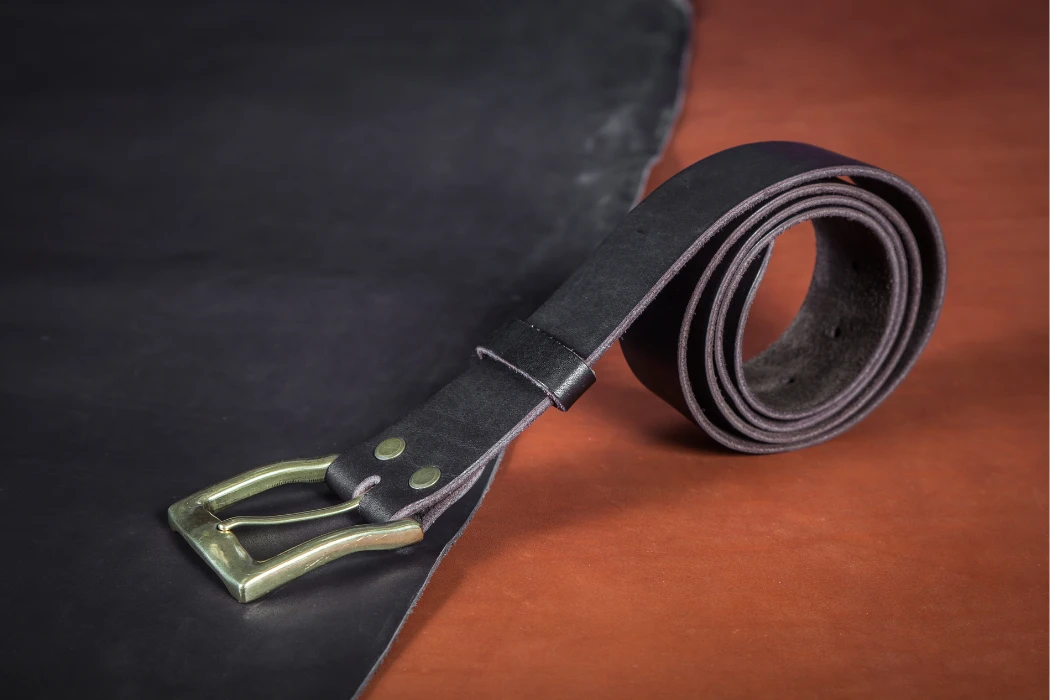
An owned finishing operation can coordinate leather processing with belt assembly more directly. It does not eliminate supplier, transport or approval dependencies. Hoplok’s ProPelli finishes externally sourced crust leather; it is not a tannery converting raw hides into leather.
The Advantage of In-House Leather Finishing
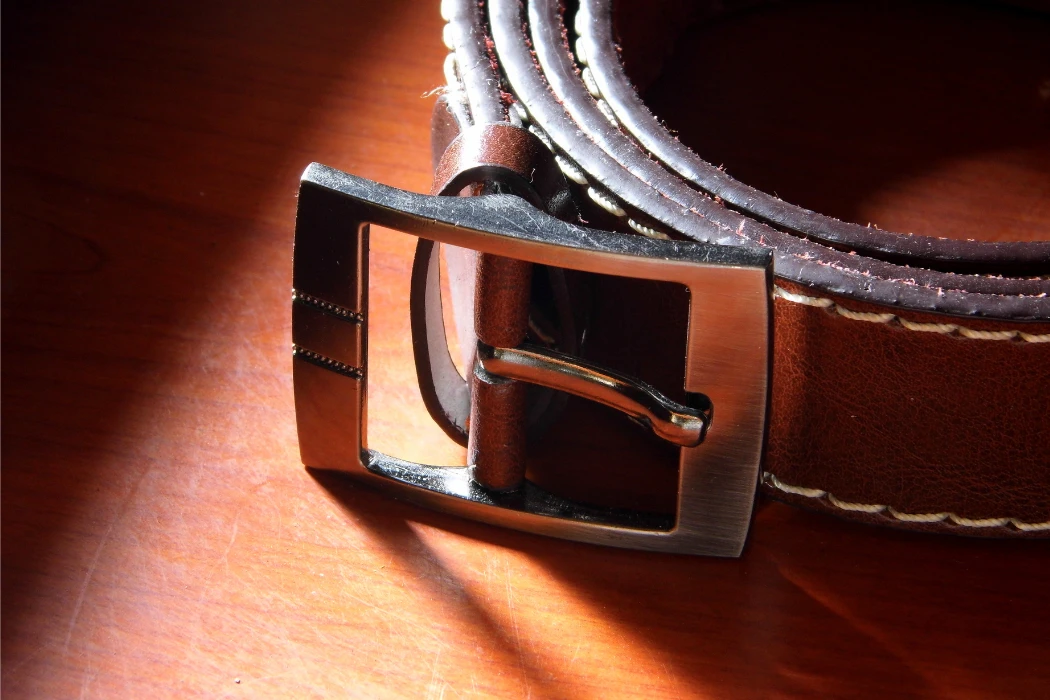
Finishing and assembly teams can coordinate material requirements and resolve questions around an approved finish. Color and hand feel still need a physical reference, agreed tolerance and sample approval. Confirm available output and any corrective-work schedule rather than promising immediate matching or a universal monthly finishing volume.
Managing External Crust and Component Dependencies
In-house finishing changes which processing stages are controlled directly, but incoming crust, chemicals and other components remain dependencies. Ask what approved material is available, whether it is reserved for the order, and who bears unused-stock costs.
| Stage | External Processing Arrangement | In-House Finishing Arrangement |
|---|---|---|
| Material availability | Confirm finished-leather supply date | Confirm incoming or reserved crust |
| Finish approval | Supplier trials and physical sample review | Internal trials and physical sample review |
| Corrections | Agree supplier replacement or rework plan | Confirm internal rework capacity and material suitability |
| Bulk schedule | Order-specific confirmation | Hoplok planning range: 60–90 days |
What Role Does Dual-Country Manufacturing Play in Peak Season?
An approved second location can offer a planning alternative, but moving work requires available capacity, compatible materials, technical approval and a revised schedule. It does not automatically accelerate delivery or change duty treatment. Select the production site before committing the retail launch wherever possible.
Balancing Complex Designs and High Volume Production
Allocate designs according to each site’s equipment, staff capability, approvals and confirmed workload. Avoid assuming that every complex style belongs in China or that Cambodia only makes simple products. A shared tech pack supports coordination, but each receiving production line may still need sample or first-piece checks.
Mitigating Tariff and Supply Chain Risks
Compare delivered cost using the actual manufacturing origin, classification, destination and shipment date. Origin rules concern production and qualifying transformation, not merely the shipping route. Confirm duty treatment with the importer’s customs adviser.
A second site can help evaluate recovery options after a disruption, but a transfer still needs materials, capacity, retailer approval and a site-specific compliance review.
| Planning Decision | Evidence Needed | Schedule Effect |
|---|---|---|
| Allocate a style | Approved specification and site capability | Confirmed production slot |
| Reserve materials | Quantity, ownership and availability record | Input dates included in the calendar |
| Change production site | Buyer approval, material transfer and trial requirements | Revised schedule before commitment |
| Compare origin options | Classification and customs-origin review | Include documentation and transport time |
When Should Buyers Finalize Designs and Order Samples?
Work backward from the retailer’s required receipt date. Deduct receiving and transport time, inspection and correction allowances, confirmed bulk production, and sample review. Hoplok belt sampling is planned at 2–3 weeks and bulk production at 60–90 days. The resulting order date depends on the actual route and approvals; July or August is not a universal cutoff.
Forecasting High-Volume Core Belt Styles Early
Identify likely repeat styles and share a forecast with size and color quantities. Distinguish forecast demand from committed orders, and agree the conditions for reserving capacity or materials. Set the core-versus-seasonal allocation from sales evidence and available capital rather than a fixed 80/20 rule.
Standardizing Hardware and Leather Textures
Sharing approved buckles and compatible materials can reduce the number of separate developments and purchases. Confirm actual stock and whether the combined volumes qualify for one order. Do not replace a specified component without approval simply to shorten the schedule; appearance, fit and performance may change.
Planning the Belt Sampling Schedule
For Hoplok belts, plan 2–3 weeks for sampling and confirm what is included. Provide complete dimensions, construction, hardware, artwork and finish references. Allow separate time for shipping, buyer review and revisions. Existing materials may simplify development, but they do not establish a guaranteed expedited sample date.
How Can Brands Ensure Quality During Rushed Q4 Production?
Keep the approved inspection and test requirements in the calendar even when the delivery date is close. Agree hold points and who may approve a correction or deviation. Catching a problem during production can leave more recovery options than discovering it after packing, but inspection is not a guarantee that every unit is defect-free.
Implementing Strict Multi-Stage Quality Control
Check incoming materials against their specification, first pieces against the approved sample, and production dimensions and workmanship against agreed tolerances. Include the buckle attachment, edges and finish variation in the inspection plan. Record defects and corrective action so the same issue is not repeated through the rest of the order.
Mandatory Testing for Tensile Strength and Color Fastness
Agree the relevant strength, rub-fastness, flexing and buckle-function methods, conditioning and acceptance criteria. A passing result applies to the tested sample under those conditions; it does not prove that dye will never transfer or a strap can withstand any load. Reserve time for reports and any repeat tests before the shipment release.
| Inspection Phase | Key Elements | Decision |
|---|---|---|
| Incoming materials | Material identity, thickness, color and hardware | Release, quarantine or replacement |
| In-line checks | Dimensions, stitching, attachment and edges | Continue or correct the process |
| Performance tests | Agreed rub, strength, flex and buckle checks | Evaluate against specified limits |
| Pre-shipment review | Quantity, labeling, packaging and inspection results | Authorize release or corrective work |
Frequently Asked Questions
Use the confirmed order calendar to resolve timing questions; generic lead-time comparisons can conceal the actual critical path.
How early should brands place Q4 belt orders?
Calculate backward from the required warehouse receipt date using sampling, review, 60–90 days of Hoplok bulk production, inspection, transport and receiving allowances. Confirm capacity before making the retail commitment.
What is the average lead time for bulk belt production?
Hoplok plans bulk production at 60–90 days, subject to the order specification, materials and approvals. In-house finishing does not convert that planning range into a 15–20-day guarantee.
Can buyers speed up custom leather belt sampling times?
Complete specifications and approved or available components can reduce avoidable revisions. Hoplok belt sampling is planned at 2–3 weeks; ask for an order-specific schedule rather than promising a universal fast-track period.
How does global leather sourcing affect belt lead times?
Imported crust or finished leather introduces supplier, transport and approval dependencies. In-house finishing can coordinate a later processing stage but does not remove those upstream requirements.
What are the most common delays in Q4 belt manufacturing?
Review material and hardware availability, late design approvals, capacity allocation, inspection corrections and freight bookings. Their relative importance depends on the order; track the actual critical-path dates.
How do manufacturers handle sudden Q4 volume spikes?
They assess available materials, equipment and labor against existing commitments, then propose a feasible quantity and schedule. Any alternate-site or split-shipment plan requires the buyer’s agreement and relevant approvals.
Does ordering PU belts take less time than genuine leather belts?
Not necessarily. PU and genuine leather involve different material supply and processing steps, while custom hardware, style complexity and available capacity may control either schedule. Confirm the actual order lead time rather than inferring it from monthly capacity.
Securing Your Peak Season Belt Inventory
For a Q4 launch, work backward from the required delivery date and allow time for sample review, production and shipping. Hoplok belt sampling takes 2–3 weeks, with bulk production lead times of 60–90 days. Minimum orders are 300 genuine leather belts or 1,000 PU belts. Confirm material availability, tooling and the production schedule with the quotation. Share your launch date, specification and quantities for a custom leather belt production review.