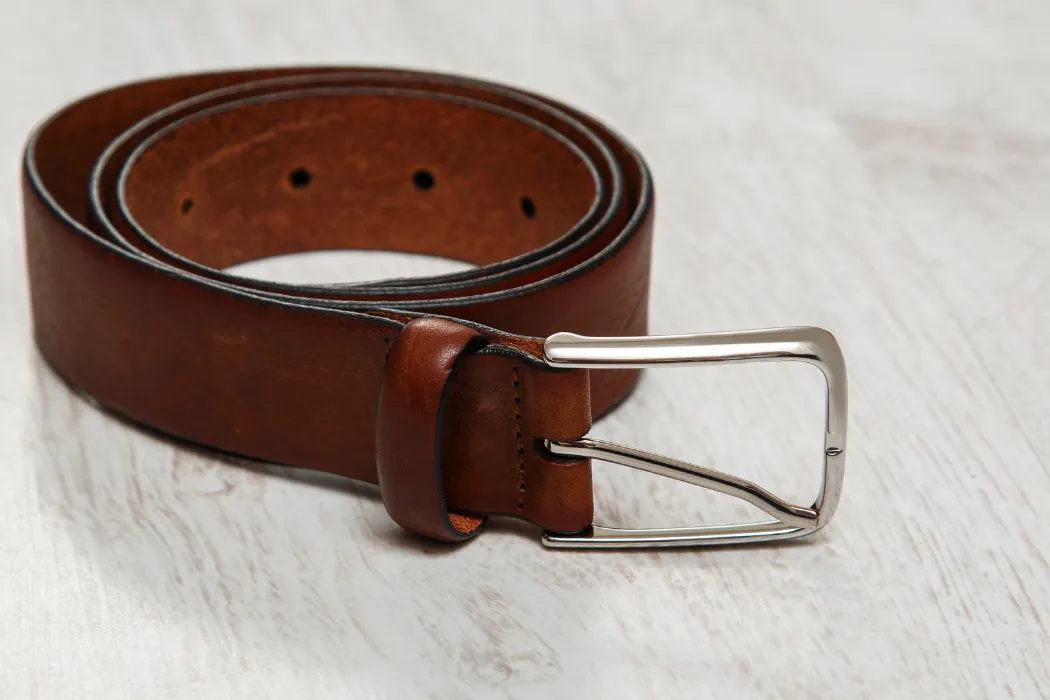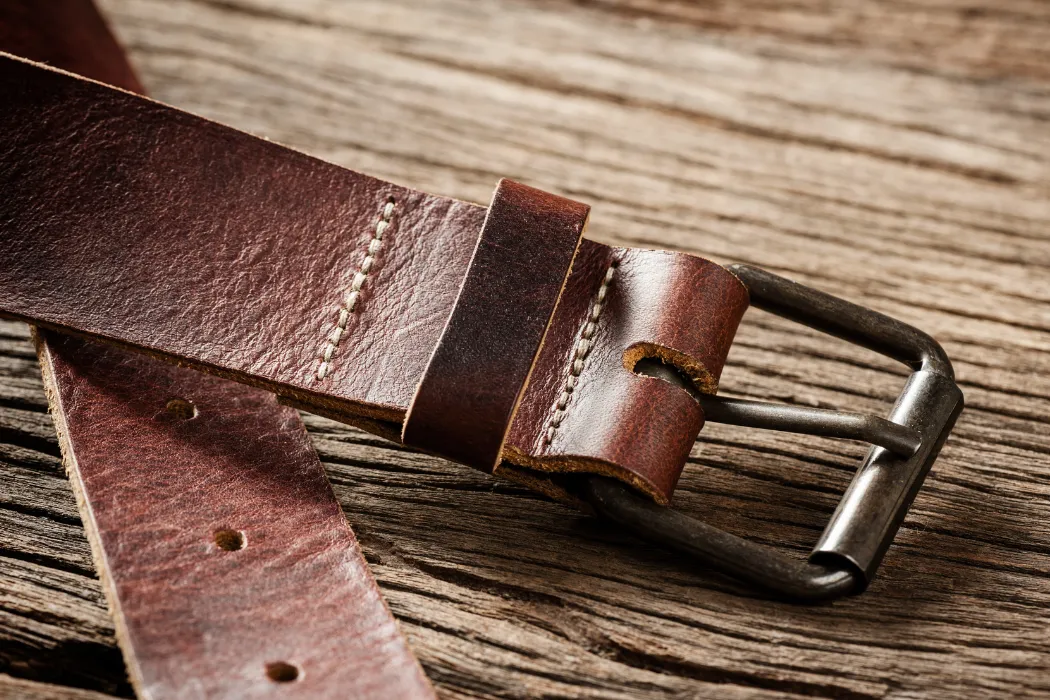
Buying leather belts is often confusing for retailers and sourcing managers. Two belts can look identical on a screen, yet one cracks after a month while the other lasts for years. This vital difference rarely comes from the hide itself, but rather the leather finish.
A finish is the specific dye, wax, or protective coating applied to the raw crust surface. It effectively determines 90% of a belt’s water resistance, scratch durability, and final production cost. Choosing the wrong specification leads to high customer returns and a damaged brand reputation.
Simple aniline dyes offer a luxurious, soft hand feel but stain very easily. Conversely, pigmented finishes provide uniform color and high durability but can feel stiff or plastic-like. Between these two extremes lie popular options like semi-aniline, oil-tanned (pull-up), and embossed textures. Each serves a specific market purpose. This guide breaks down the six essential manufacturing finishes—from the raw “naked” look of aniline to the high-gloss armor of patent leather—so you can specify the exact material your customers need.
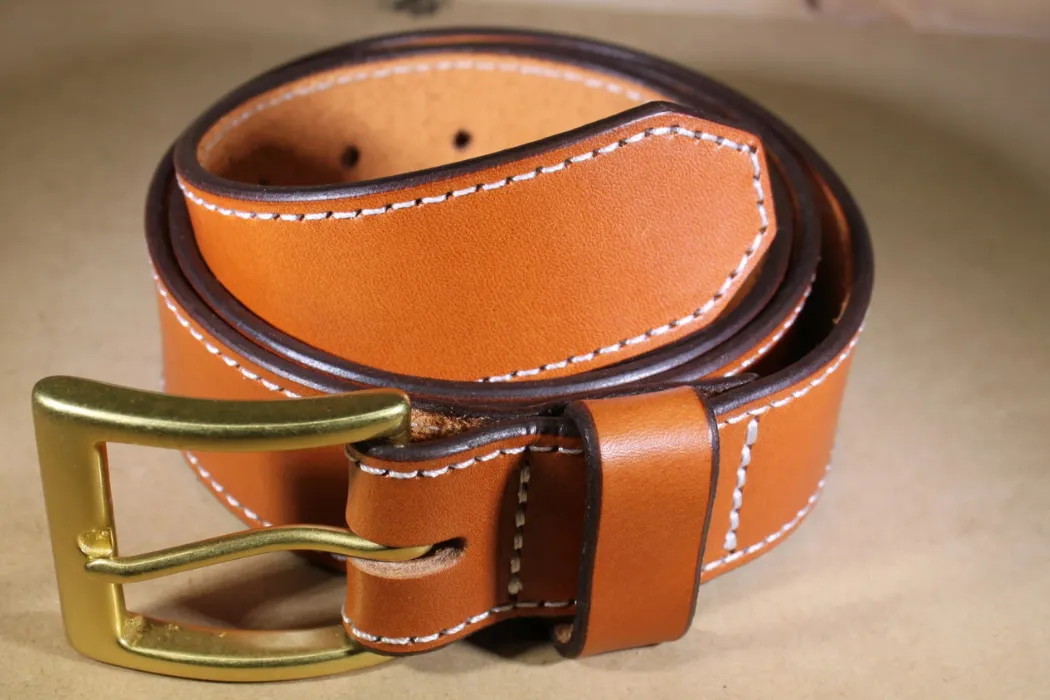
What Is Aniline Finish and Why Is It So Soft?
Aniline finish is the most natural and luxurious treatment available in belt manufacturing. It uses transparent, soluble dyes that penetrate deep into the leather fibers without leaving a surface coating. Because it lacks a protective polymer layer, the leather remains incredibly soft and warm to the touch, but it also leaves all natural markings visible. This finish requires the highest quality “Grade A” raw hides, making it the most expensive option for premium brands.
The “Naked” Dyeing Process
Unlike standard leathers that are sprayed with paint, aniline hides are tumbled in large drums containing translucent dyes that soak completely through the material. This process is chemically designed to preserve the original structure of the skin.
- 100% Penetration: The soluble dye colors the entire cross-section of the hide, ensuring the color remains consistent even if the strap is cut or scratched.
- Zero Pigment: No opaque polymers, fillers, or plastic topcoats are used, meaning the leather thickness remains natural (typically 3.5mm to 4.0mm for belts) and the grain is real.
- Selection Rate: Only the top 5% of global raw hides are clean enough for this process because insect bites, barbed wire scratches, or branding marks cannot be hidden.
This “naked” technique preserves the original grain pattern, ensuring that no two belts look exactly the same and validating the high cost of the raw material.
Breathability and Patina Development
The primary technical advantage of aniline leather, beyond its aesthetic, is its breathability and unique thermal conductivity properties that cannot be replicated by synthetics.
- Open Pores: Under a microscope, the hair follicles remain completely unblocked, allowing moisture and air to pass through freely.
- Thermal Feel: The leather adjusts to body temperature instantly upon contact, unlike pigmented leather which acts as an insulator and feels cold (often a 15-20% difference in perceived warmth).
- Patina Development: With daily wear, the porous surface absorbs natural body oils and sunlight, causing the color to darken and enrich within 3 to 6 months.
For consumers, this creates an emotional connection to the product as it visibly ages and improves with use, creating a “lived-in” vintage appeal.
The Technical Risks: Staining and Fading
While aesthetically superior, the lack of a protective topcoat creates specific durability challenges that buyers must understand before specifying this finish.
- Water Absorption: A single water droplet will absorb into the surface in less than 5 seconds, causing a temporary dark spot that requires drying time.
- UV Light Fastness: Without protective pigments, aniline dyes are sensitive to sunlight and may fade by 1-2 grades on the Blue Wool Scale over a year of exposure.
- Permanent Staining: Oil or grease stains penetrate deep into the fiber structure and are often impossible to remove without professional cleaning.
Brands must educate customers that these are natural characteristics of the material, not manufacturing defects, to avoid unnecessary returns.
| Feature | Aniline (Natural) | Semi-Aniline (Protected) |
|---|---|---|
| Surface Look | 100% Natural, Visible Pores | Uniform, Slight Pigment |
| Scratch Resistance | Low (Scratches easily) | Medium (Resists light marks) |
| Water Resistance | None (Absorbs instantly) | Moderate (Beads up) |
| Cost Basis | High (Requires Grade A Hides) | Medium-High (Grade B Hides) |
Why Do Brands Choose Semi-Aniline and Pigmented Finishes for Daily Wear?
Semi-aniline and pigmented finishes are the “workhorses” of the leather belt industry, representing over 80% of the global retail market. Brands choose these finishes because they solve the two biggest problems of natural leather: inconsistency and fragility. By adding a technical topcoat, manufacturers can deliver a belt that is uniform in color, resistant to scratches, and significantly more affordable, all while retaining the structural integrity of real leather.
The Engineering of the Protective Topcoat
Unlike naked aniline leather, these finishes involve applying a precise multi-layer coating system to the surface of the crust. This is not just “paint”; it is a complex chemical bonding process designed to flex with the belt.
- Semi-Aniline: A light layer of pigment is applied to even out the color, followed by a thin, clear protective seal. The coating is microscopic (less than 0.05mm), so some natural pores remain visible, balancing durability with a soft hand feel.
- Pigmented (Corrected Grain): A heavier, opaque polymer layer is applied to completely cover the surface. This creates a standardized “canvas” that hides all underlying imperfections, effectively sealing the leather against the elements.
- Adhesion Testing: To ensure this coating doesn’t peel, it must pass the “Tape Test” (ASTM D3359), where strong adhesive tape is applied and ripped off without removing the finish.
This engineered surface provides the “armor” needed for belts that face daily abrasion against belt loops and denim.
Solving the “Yield” Problem for Cost Efficiency
For high-volume production, relying on perfect hides is economically impossible. Pigmented finishes allow factories to utilize Grade B and Grade C hides, which dramatically lowers the unit cost without sacrificing strength.
- Yield Rate: Aniline production often wastes 40% of a hide due to scars. Pigmented finishing allows for 85-90% cutting yield because surface blemishes are buffed out and covered.
- Color Consistency: Pigmented finishes guarantee a Delta E (color difference) of less than 1.0 between batches. A black belt produced in January will perfectly match one produced in December.
- Scalability: This method supports massive retail programs where 50,000+ units must look identical on the shelf.
This efficiency is why pigmented leather is the standard spec for mid-market fashion brands and corporate uniforms.
Performance Metrics: Scratch and Water Resistance
While purists argue that pigmented leather feels “colder” or “stiffer,” its performance data makes it the superior choice for functional accessories.
- Wet/Dry Rub Test: Pigmented belts typically withstand 500+ cycles on the ISO 11640 rub test without color transfer, compared to less than 50 cycles for some aniline leathers.
- Water Repellency: The polymer surface creates a hydrophobic barrier. Water beads up and rolls off rather than soaking in, preventing the warping and staining common in natural finishes.
- Maintenance: These belts require zero conditioning. A simple wipe with a damp cloth removes dirt, making them ideal for the “low maintenance” modern consumer.
Ultimately, brands sacrifice a small amount of tactile softness to gain a product that remains pristine for years of daily use.
How Does Pull-Up and Oil-Tanned Leather Create a Vintage Look?
Pull-up leather is defined not by what is on top, but by what is inside. This dynamic finish is created by impregnating the leather with heavy oils and waxes that remain mobile within the fiber structure. When the belt is bent or stretched, these oils move away from the pressure point, creating a lighter “burst” of color. This mechanical reaction gives the belt an instant distressed, vintage appearance that appeals to the casual and denim markets.
The “Hot Stuffing” Technique
Unlike surface-coated leathers, Pull-Up and Oil-Tanned leathers undergo a rigorous process called “Hot Stuffing.” This occurs in heated drums where the leather is tumbled with specific mixtures of oils, waxes, and fats.
- Temperature Control: The drums are heated to approximately 50-60°C to liquefy the heavy waxes (like paraffin or tallow) so they can penetrate deep into the dermis.
- Weight Increase: This saturation is so intense that the final weight of the leather increases by 15-20%. This gives oil-tanned belts a distinctively heavy, substantial hand feel compared to standard leathers.
- Water Resistance: Because the fibers are already saturated with oil, they naturally repel water. However, they are not “sealed” like pigmented leather, so prolonged exposure can still leave marks.
This internal lubrication ensures the fibers stay flexible for decades, preventing the dry cracking often seen in cheaper belts.
The “Self-Healing” Property and Maintenance
One of the most unique selling points of oil-tanned leather is its ability to “heal” itself. While it scratches easily, these marks are rarely permanent.
- Friction Repair: Light scratches can be removed simply by rubbing the area briskly with your thumb. The heat generated by friction causes the internal oils to melt and flow back to the surface, filling in the mark.
- Patina Acceleration: Unlike pigmented leather which stays the same color, oil-tanned leather absorbs exposure. Scuffs, body oils, and sunlight blend together to create a rich, multi-tonal patina within weeks.
- The “Crocking” Risk: Buyers must be aware of “crocking”—the transfer of color or oil onto clothing. Due to the high oil content, fresh oil-tanned belts can stain light-colored trousers if the excess oil is not properly buffed off before shipping.
This “living” nature makes it perfect for rugged, casual styles, but less suitable for strict corporate dress codes where uniformity is required.
Distinguishing Pull-Up from Crazy Horse
While both rely on oils, there is a technical difference in the base material that affects the final texture.
- Pull-Up: Typically uses a smooth Top Grain base. The finish feels waxy, glossy, and has a strong “drag” (friction) when you run your hand across it.
- Crazy Horse: Despite the name, this is cow leather. It uses a buffed Nubuck base before adding the wax. This creates a matte, velvety surface that distresses much faster and looks more rugged/western.
Choosing between them is purely an aesthetic decision: do you want a glossy vintage look (Pull-Up) or a matte, rustic look (Crazy Horse)?
| Characteristic | Pull-Up Leather | Crazy Horse Leather |
|---|---|---|
| Base Material | Top Grain (Smooth Surface) | Nubuck (Buffed/Sanded Surface) |
| Tactile Feel | Waxy, Glossy, High Drag | Matte, Velvety, Soft |
| Visual Effect | Color lightens when bent (Burst) | Scratches turn lighter instantly |
| Primary Style | Smart Casual / Heritage | Rugged / Western / Outdoor |
Which Is Better for Belts: Suede or Nubuck?
Although they both feature a fuzzy, velvet-like texture, Suede and Nubuck are opposites in terms of structure and strength. Nubuck is created by sanding the outer surface of the hide (Top Grain), making it tough and water-resistant. Suede is created by sanding the inner surface (Split Leather), making it softer but significantly weaker. For belt manufacturing, this distinction is critical: Nubuck can often function as a single layer, while Suede almost always requires a backing material to prevent stretching.
Top Grain (Nubuck) vs. Split Leather (Suede)
The difference lies in which layer of the hide is used. Hides are typically split into two layers: the top “grain” and the bottom “corium.”
- Nubuck (Top Grain): This uses the dense, outer grain layer. It retains the full tensile strength of the hide. The fibers are tight and vertical, offering superior durability.
- Suede (Split): This uses the lower corium layer where the fibers are looser and horizontal. While soft, it lacks the structural integrity of the grain, resulting in 30-40% less tensile strength.
- Durability: Because Nubuck retains the grain, it withstands abrasion far better than suede, which can bald or pill over time with heavy friction.
Therefore, Nubuck is a premium material suitable for heavy-duty use, while suede is better suited for fashion-focused, low-stress applications.
Sanding Processes: Outer Surface vs. Inner Flesh
The signature “nap” (the fuzzy texture) is achieved through precise mechanical sanding, but the approach differs for each material.
- Nubuck Process: The hair side is lightly buffed with fine-grit sandpaper (typically 280-320 grit) to open the fibers. This creates a very short, fine nap that feels like velvet.
- Suede Process: The flesh side (or a split surface) is sanded with coarser paper. This produces a longer, shaggier nap that is softer to the touch but absorbs dirt more easily.
- Defect Removal: The sanding process on Nubuck also serves to hide minor surface imperfections, allowing for a cleaner final appearance on Grade B hides.
This technical difference explains why Nubuck feels smoother and more uniform, while Suede has a more rustic, “hairy” texture.
Tensile Strength Considerations for Belts
For belts, the most critical factor is the ability to resist stretching (elongation) under tension. This is where the choice between Suede and Nubuck dictates the construction method.
- Single Layer Construction: Only Nubuck is strong enough (typically 2.8mm – 3.2mm thick) to be used as a single strip of leather without deforming.
- Lined Construction: Suede is too stretchy to be used alone. It must be glued and stitched to a backing material (usually PU or a vegetable-tanned liner) to provide the necessary structure.
- Cost Implications: While Suede raw material is 40-50% cheaper than Nubuck, the additional labor required to line and stitch it narrows the final price gap.
Brands must decide if they want the prestige of a single-piece strap (Nubuck) or the plush feel of a lined strap (Suede).
| Feature | Nubuck (Premium) | Suede (Standard) |
|---|---|---|
| Raw Material | Top Grain (Outer Layer) | Split Leather (Inner Layer) |
| Tensile Strength | High (Can be unlined) | Low (Must be lined) |
| Texture Nap | Fine, Short, Velvet-like | Longer, Softer, Shaggy |
| Water Resistance | Moderate (Can be waxed) | Low (Soaks easily) |
How Are Embossed Textures Like Saffiano and Crocodile Created?
Embossed leather is a triumph of modern engineering, allowing brands to achieve exotic looks like crocodile, snake, or the famous “Saffiano” cross-hatch without the ethical concerns or exorbitant costs of exotic skins. By using high-pressure hydraulic plates to permanently stamp a pattern onto cowhide, manufacturers can mask surface defects and create a uniform, highly durable product that maximizes material utilization.
The Hydraulic Plate Technology
The embossing process is not a surface treatment; it is a structural modification of the leather fiber network using immense heat and pressure.
- Heat Control: The metal plates are heated to between 90°C and 110°C. This specific range softens the collagen fibers in the dermis without burning them, making the skin pliable enough to accept the mold.
- Extreme Pressure: A hydraulic press exerts 200-300 tons of vertical pressure for 5-10 seconds. This permanently compresses the fibers into the negative shape of the plate.
- Retention: Because the fibers are compressed under heat, the pattern “sets” as it cools, ensuring the texture does not fade even after years of stretching and bending.
This industrial capability allows a single tannery to produce hundreds of different “looks” from the same base material simply by changing the metal plates.
The Economic Logic: Correcting Imperfections
For B2B buyers, the primary advantage of embossing is not just aesthetics, but “yield management”—the ability to turn lower-grade hides into premium-looking products.
- Defect Masking: A busy pattern like Crocodile or Lizard effectively camouflages insect bites, healed scars, and wrinkles that would cause a hide to be rejected for Smooth Aniline production.
- Grade Utilization: This allows factories to use Grade C and Grade D hides, which are structurally sound but visually imperfect.
- Yield Rate: By using the entire surface area of the hide (excluding holes), cutting yields can reach 85-90%, compared to 60% for smooth leathers where every scratch must be avoided.
This massive efficiency gain is why embossed belts are the backbone of affordable fast-fashion accessories.
Case Study: The Saffiano Standard
Saffiano leather, originally patented by Prada, represents the pinnacle of functional embossing. It combines a mechanical pattern with a chemical finish.
- The Pattern: A distinct diagonal cross-hatch print is pressed into the leather.
- The Finish: Crucially, a hard wax or resin is applied during the pressing. This seals the surface, making it virtually scratch-proof and water-repellent.
- Durability Profile: Saffiano belts can withstand rain, keys, and daily abrasion better than almost any other leather type, making them the industry standard for “indestructible” luxury goods.
When specifying Saffiano, buyers are paying for this unique combination of high durability and uniform, recognizable prestige.
Is Patent Leather Durable Enough for Daily Use Belts?
Patent leather is defined by its mirror-like gloss, achieved through a heavy plastic coating (polyurethane or acrylic) applied over real leather. While it offers unmatched water resistance and high-fashion appeal, it is structurally rigid. This lack of flexibility makes it prone to cracking at the belt holes, making it better suited for formal occasions than daily wear.
The High-Gloss Varnishing Process
The signature shine of patent leather is not a polish; it is a permanent “curtain coating” of liquid plastic poured directly onto the hide, creating a seal that is completely impermeable.
- Coating Thickness: The top layer is typically 0.15mm – 0.25mm thick, which is significantly thicker than the coating on semi-aniline leather. This thickness creates the depth required for a glass-like reflection.
- Clean Room Environment: Manufacturing must occur in dust-free zones. A single microscopic dust particle trapped in the varnish will create a visible “pimple,” causing the entire hide to be downgraded.
- Base Material: Because the coating is opaque, manufacturers often use split leather or heavily corrected grain, as the natural surface is completely obscured.
This process essentially laminates the leather, protecting the core but sacrificing all breathability.
Flex Testing and Crack Resistance
The primary quality concern with patent belts is “cold cracking,” where the coating shatters like glass when bent in low temperatures.
- Bally Flex Test: While standard leather can withstand 50,000+ flex cycles, many patent coatings begin to micro-crack after just 10,000 cycles if the formulation is too hard.
- Temperature Sensitivity: Standard patent coatings become brittle below 5°C. For winter collections, brands must specify “Cold Crack Resistant” PU, which remains flexible down to -10°C.
- Scuff Permanence: Unlike oil-tanned leather which heals, a scratch on patent leather is a permanent dent in the plastic layer that cannot be buffed out.
For B2B orders, specifying the correct “temper” (softness) of the coating is critical to preventing returns due to cracking at the buckle holes.
The “Plastic” Look vs. Real Leather Core
Buyers often ask: “If it looks like plastic, why not just use cheap synthetic vinyl?” The answer lies in structural strength.
- Tensile Strength: A synthetic vinyl belt will stretch and eventually tear at the adjustment holes under tension. A patent leather belt uses the fiber core to hold its shape under 50kg+ of force.
- Edge Finishing: Real patent leather can be edge-painted and burnished for a luxury finish, whereas synthetic patent often melts or peels at the edges.
- Market Perception: Despite the synthetic feel, genuine patent leather remains the standard for formal tuxedos and high-end women’s fashion, offering a longevity that PVC cannot match.
It effectively provides the structural reliability of leather with the high-impact visual of vinyl.
Which Finish Should You Choose for Your Market?
Choosing the right finish is not about finding the “best” leather, but matching the material’s properties to your customer’s expectations. A rugged, self-healing Crazy Horse belt is perfect for a denim brand but would be considered “defective” by a corporate uniform buyer who expects zero scuffs. Conversely, a pristine Pigmented belt offers the uniformity required for mass retail but lacks the soul and patina that luxury buyers demand. Sourcing managers must balance three competing factors: aesthetics, durability, and cost.
High-End & Heritage Markets: Prioritizing “Soul”
For brands positioned in the luxury or heritage sectors ($80+ retail price point), the goal is to offer a product that improves with age. Here, imperfections are features, not bugs.
- Recommended Specs: Full Grain Aniline or Vegetable Tanned Pull-Up.
- The Trade-off: These finishes require Grade A hides, driving up costs. However, the customer base is educated enough to accept natural markings and understands that a scratch adds character.
- Marketing Angle: Focus on terms like “Patina,” “Full Grain,” and “Natural Aging.”
The primary risk here is not durability, but educating the consumer on why the leather changes color.
Mass Market & Corporate Wear: Prioritizing Uniformity
For high-volume retail chains or uniform suppliers ($30-$60 retail price point), the priority is consistency. A customer returning to buy the same belt two years later expects it to look exactly the same.
- Recommended Specs: Pigmented (Corrected Grain) or Saffiano Embossed.
- The Trade-off: You sacrifice the “warm” leather touch for a polymer coating. However, this ensures the belt is waterproof, scratch-resistant, and identical across 50,000 units.
- Marketing Angle: Focus on terms like “Scratch Resistant,” “Easy Care,” and “Durable.”
This choice protects margins by allowing the use of Grade C hides while minimizing returns due to “defects.”
Fast Fashion & Trends: Prioritizing Visual Impact
For fashion-forward brands where the look is paramount and the product lifecycle is short, structural integrity must be balanced with aggressive costing.
- Recommended Specs: Deeply Embossed (Croc/Snake) or Patent Leather on Split backing.
- The Trade-off: These finishes maximize the yield of lower-grade hides. While less durable in the long term (5+ years), they offer the high-gloss or exotic aesthetic that drives impulse purchases.
- Marketing Angle: Focus on “Style,” “Texture,” and “Trend.”
The goal is to deliver a million-dollar look at a mass-market price.
| Finish Type | Durability (Scratch/Water) | Cost Index (1-5) | Best Market Application |
|---|---|---|---|
| Aniline | Low / Low | 5 (Highest) | Luxury Dress Belts |
| Semi-Aniline | Medium / Medium | 4 | Premium Retail Brands |
| Pigmented | High / High | 2 | Corporate / Workwear / Uniforms |
| Pull-Up / Oil | Medium / Low | 4 | Casual Denim / Heritage Styles |
| Crazy Horse | Medium / Medium | 3 | Rugged / Outdoor / Vintage |
| Nubuck | Medium / Medium | 4 | Premium Casual / Timberland Style |
| Saffiano | Very High / Very High | 3 | Luxury Daily Wear (Scratch Proof) |
| Patent | Low (Crack Risk) / High | 3 | Formalwear / High Fashion |
Frequently Asked Questions
Does aniline leather scratch easily?
Yes. Because it lacks a protective topcoat, aniline leather is very susceptible to scratching. However, light scratches can often be buffed out with a dry cloth or will blend into the patina over time.
What is the difference between full-grain and embossed leather?
Full-grain leather uses the natural, unaltered surface of the hide, showing original markings. Embossed leather uses heat and pressure to stamp a new pattern (like alligator or Saffiano) onto the surface, often covering imperfections.
How do I tell if a belt is patent leather or plastic?
Check the back and the edges. Real patent leather will have a fibrous leather backing or a raw suede underside. If the back is fabric or smooth vinyl, the entire belt is synthetic.
Which leather finish lasts the longest?
Pigmented (Corrected Grain) leather is technically the longest-lasting in terms of maintaining its original appearance, as the polymer coating protects the leather from water, stains, and scratches.
Why does my leather belt crack?
Belts usually crack for two reasons: poor quality “bonded” leather (scraps glued together) or a finish that is too thick and brittle (like cheap patent). High-quality full-grain leather typically stretches rather than cracks.
Can you emboss vegetable-tanned leather?
Yes, vegetable-tanned leather is actually the best candidate for embossing because its firm structure holds the impression of the stamp more clearly and permanently than chrome-tanned leather.
Final Thoughts: The Balance of Beauty and Durability
Understanding leather finishes is the difference between a product that builds brand loyalty and one that destroys it. There is no single “best” finish—only the right finish for your specific price point and customer use case. While Aniline offers unmatched luxury, it requires a careful owner. Pigmented leather may lack romance, but it delivers the consistency required for global retail.
For brands seeking to navigate these technical specifications without the guesswork, Hoplok Leather offers a distinct advantage. Through our self-owned Pro Pelli finishing facility in Cambodia, we don’t just buy leather; we engineer the exact finish—from custom pull-up oils to specific Saffiano embossments—that aligns with your brand’s aesthetic and durability standards. Whether you need 50,000 uniform belts or a capsule collection of vintage leather, we provide the manufacturing precision to bring your vision to market.