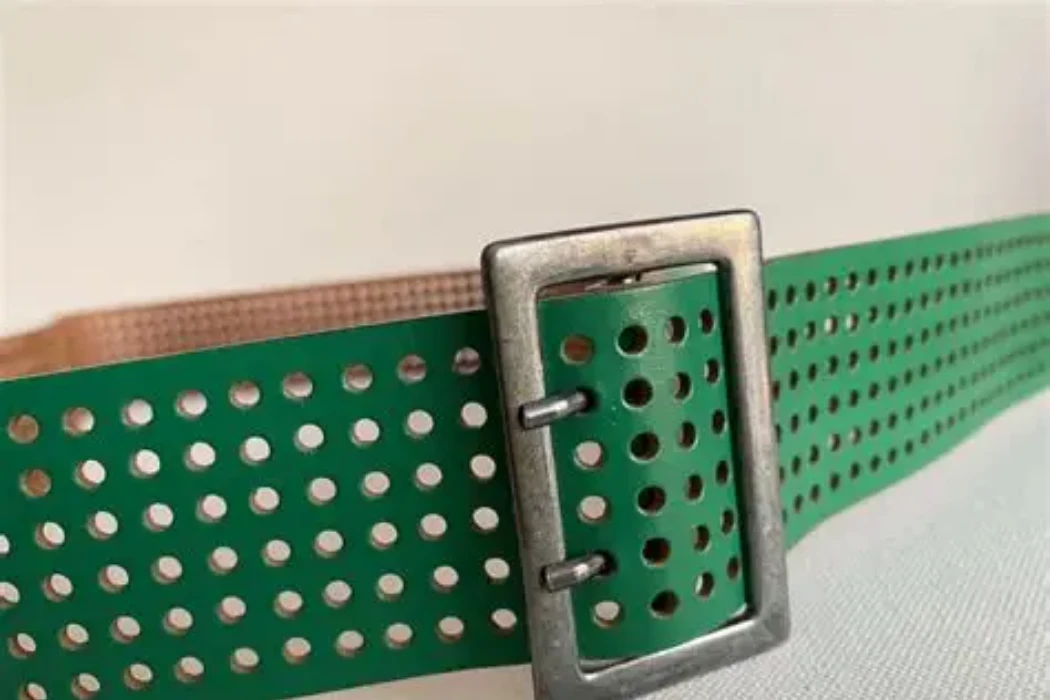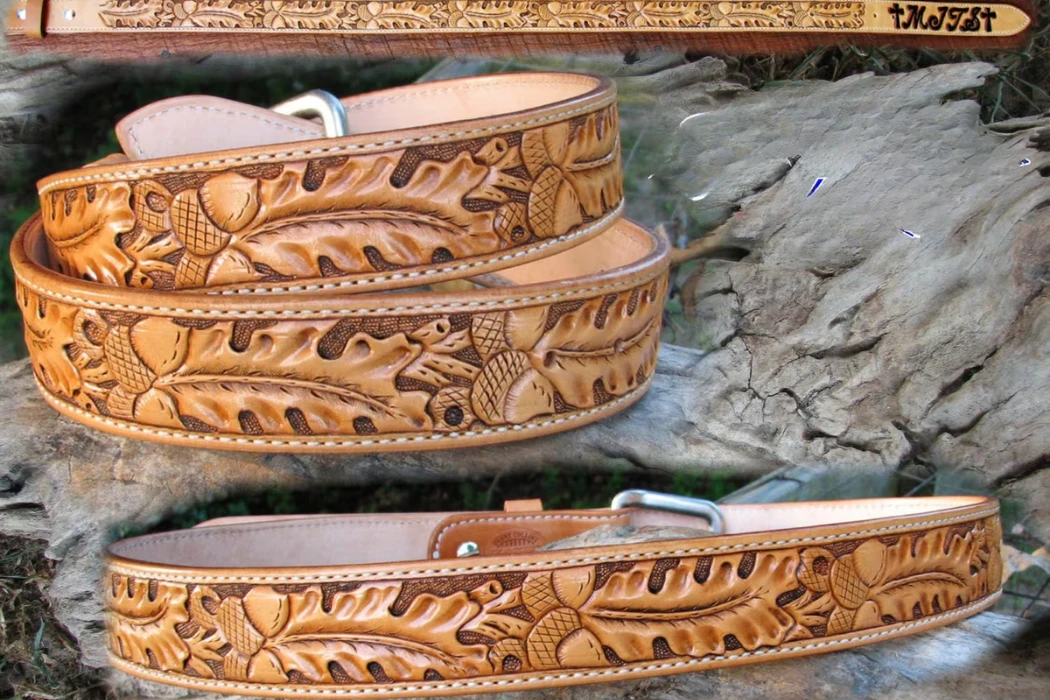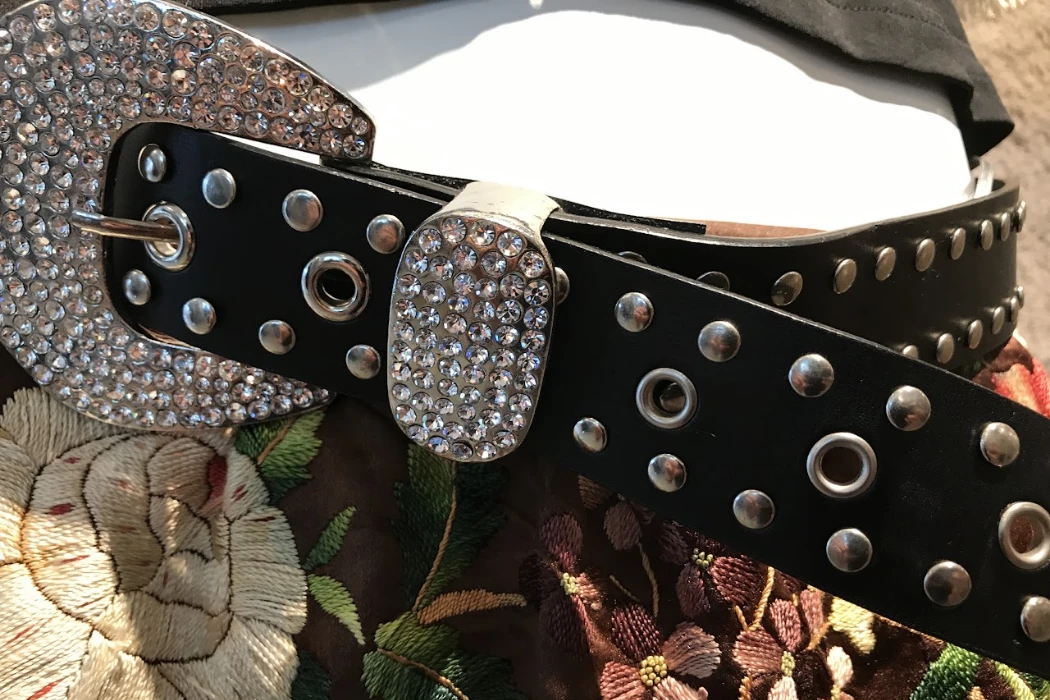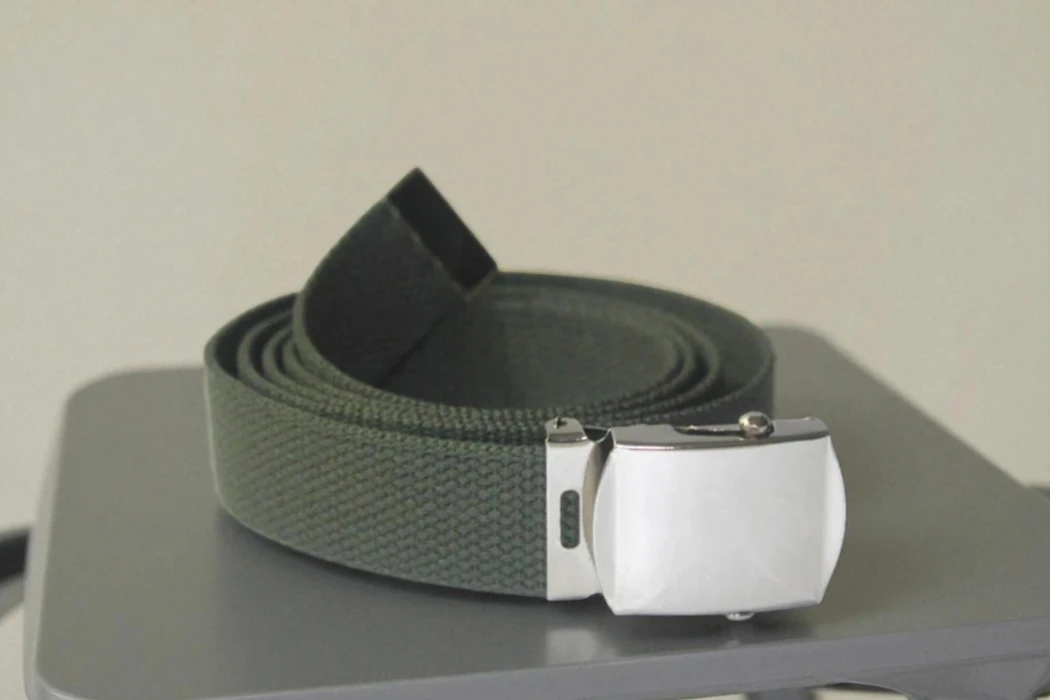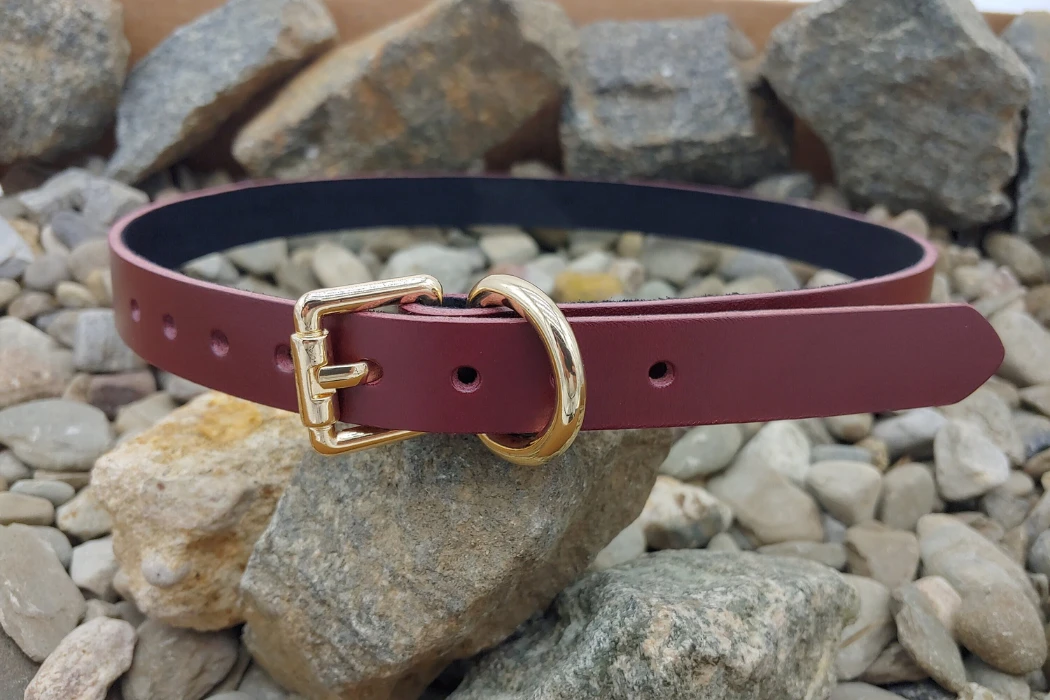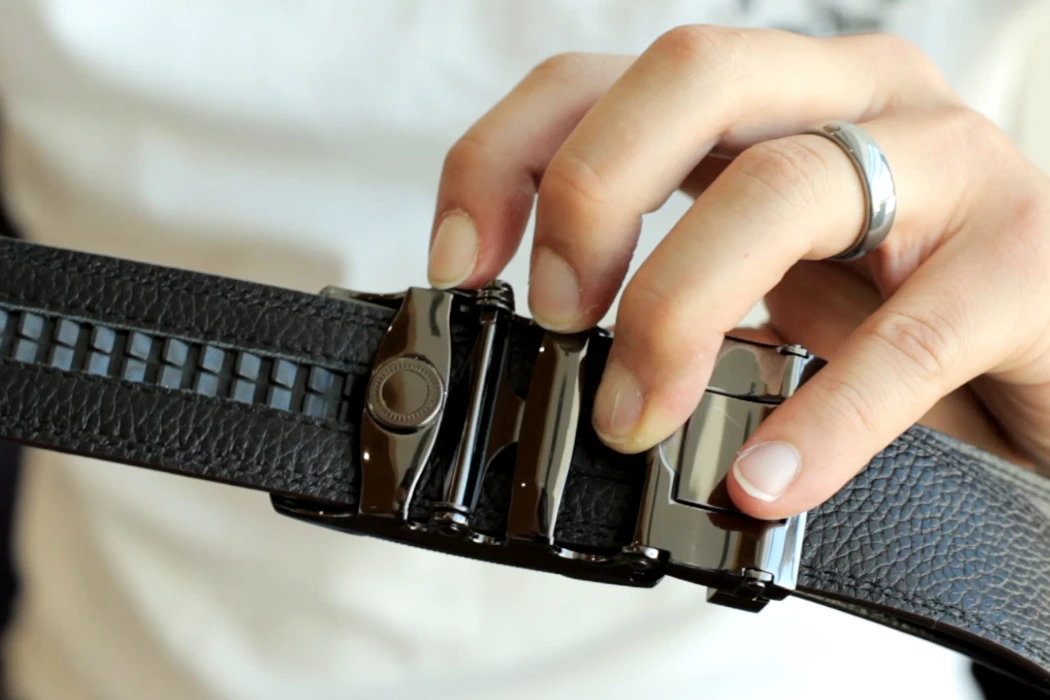
To clean a leather belt, begin with the care instructions for its actual finish. Remove loose dust with a soft cloth, use only an approved cleaning method, let it dry naturally and inspect the holes, edges and buckle attachment. A stiff strap, a stain and a structural crack are different problems; one conditioning routine will not solve all three.
For brands and retailers, belt care is also an after-sales specification. The instructions supplied with the product should match the leather or PU construction and distinguish routine maintenance from repair or replacement.
Check the belt before using a cleaner
- Identify the leather finish or PU specification from the product record. “Full grain” or “genuine leather” alone does not tell you which care product is compatible.
- Check the face, lining, edge paint and stitching separately. They may respond differently to a cleaner.
- Inspect the wearing holes, buckle fold and keeper. Deep cracks, tearing, loose attachment hardware or delamination require assessment.
- Check whether the buckle is removable and whether the manufacturer permits removal. Do not dismantle a sewn or riveted assembly as part of ordinary cleaning.
Routine cleaning for an approved smooth-leather belt
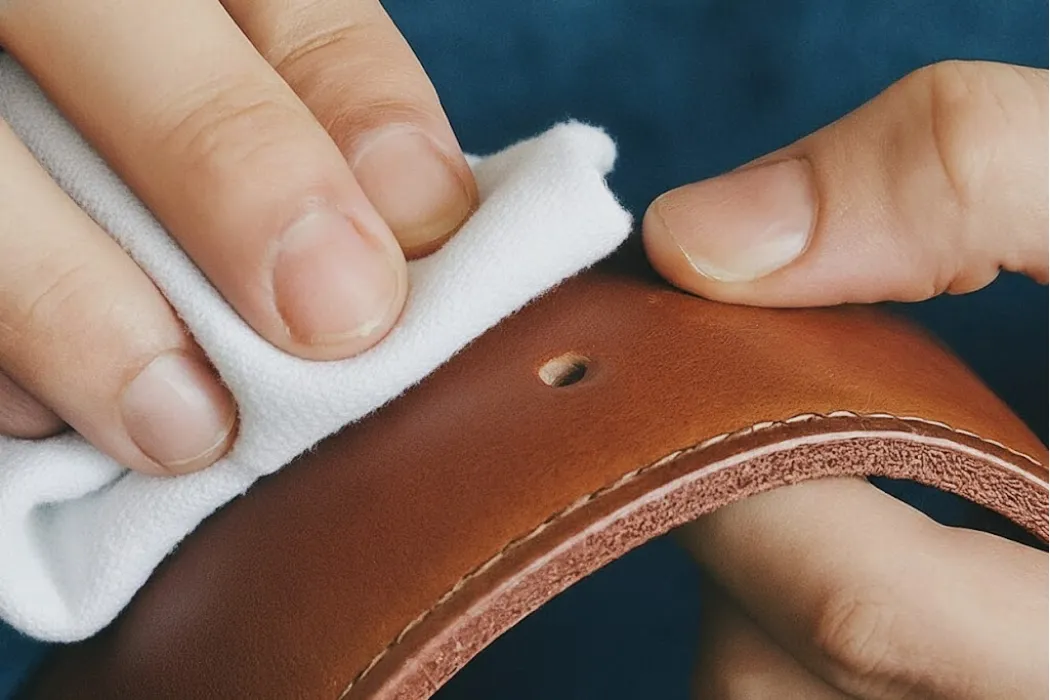
- Lay the unfastened belt on a clean surface and gently remove loose dust with a soft cloth.
- If cleaning beyond dusting is needed, check the approved cleaner’s directions. Test it on a concealed area of the same finish and let the test dry fully before comparing colour, gloss and feel.
- Use the specified amount and application method. Avoid saturating holes, edges, stitching or the buckle fold.
- Remove residue as instructed by the cleaning-product supplier. Do not assume that every cleaner requires rinsing or that a wet cloth is suitable for every finish.
- Allow natural drying away from radiators, hairdryers and direct sunlight.
- Condition only if the belt’s care instructions call for it, using the approved product and amount. Repeated heavy coats can leave residue or alter appearance.
Care-product exclusions matter. For example, Coach’s own cleaner directions exclude some leather types. A product marketed as “leather cleaner” should therefore not be assumed suitable for every strap.
How care differs by surface
| Surface | Practical care boundary |
|---|---|
| Smooth finished leather | Use the routine above only with a method approved for the finish and colour. |
| Suede or nubuck | Use its approved brush or specialist care method; do not apply ordinary smooth-leather creams. |
| Natural, absorbent leather | Ask the supplier for care limits. Liquids can leave visible changes. |
| Patent, printed or metallic finish | Check rubbing and cleaner compatibility; preserving gloss or decoration is part of the task. |
| PU belt | Follow its coating-specific instructions. Leather conditioner does not repair a peeling coating or separated layers. |
How to soften a stiff leather belt
First decide whether the firmness is an intended material characteristic, a change after exposure, or a defect. A new structured strap may feel firmer than a different construction without being faulty. Compare it with the approved sample. An older belt that becomes hard after getting wet needs assessment of both the surface and its flexibility.
If the material supplier recommends a conditioner for that leather, test a small amount first, follow the instructions and reassess after drying. Do not promise a fixed softening time or a return to the original feel. Normal gentle use may change how a belt feels, but forcing it over a table edge, tightly reverse-rolling it or stretching it is not an appropriate general care instruction.
Do not use alcohol followed by petroleum jelly, cooking oils, hot water or a hairdryer as a brand’s softening procedure. These are uncontrolled treatments for a finished product and can change colour, gloss, finish or construction. A conditioner cannot reconnect torn leather fibres or restore a cracked load-bearing section.
What should a buyer specify instead of “make it softer”?
Supply a reference sample and describe the desired feel and bending behaviour. Review the material, thickness, lining, reinforcement and finish together. Compare the revised sample’s shape, buckle operation and hole condition as well as its softness. Keep the approved sample for later production comparisons.
Stains and odours: when routine care is not enough
Blot a fresh surface spill gently and record what caused it. Do not scrub ink, grease or paint across the strap. Avoid escalating through household solvents or acids. Use the material-specific stain response guide to determine when to seek an assessment.
If a belt has a persistent musty smell or visible mould, separate it from clean stock and review storage conditions. Do not hide the problem with fragrance or publish a blanket vinegar or alcohol recipe. For customer claims, request images, the product code, storage and exposure details, and a record of products already used.
Cleaning the buckle and checking the hardware
Start with a separate soft dry cloth. Confirm whether a buckle is solid metal, plated, coated or deliberately antiqued before using a polish. A product that removes tarnish can also change an intentional finish. Keep any approved metal-care product off the leather and edge paint.
Check that the prong, keeper and attachment operate properly. Missing screws, spreading cracks around a hole or a loose buckle are repair questions, not a reason to apply more conditioner. Do not return a structurally damaged belt to ordinary use until it has been assessed.
Storage and everyday handling
Store the belt dry, without sharp folds, in a ventilated location away from heat and sunlight. A loose roll or supported hanging arrangement should avoid pressing the buckle into the leather. Do not pack a damp belt into closed storage. Keep abrasive or colour-transferring surfaces away from pale finishes.
Clean when the article needs it, following the approved directions; do not assign the same weekly deep-cleaning or monthly conditioning schedule to every belt. Dyeing, recolouring and tear repair should not appear on a routine consumer care card.
A care-card checklist for private-label orders
| Before launch | Approval record |
|---|---|
| Material and finish | Leather or PU reference, colour, lining, edge and buckle finish |
| Routine method | Permitted cloth, cleaner, amount, residue removal and drying |
| Conditioning | Whether it is appropriate and the specific approved product |
| Limits | Stains, cracks, peeling, loose fittings and when to contact customer service |
| Validation | Finished sample checked against an untreated reference, with findings recorded |
This proposed checklist helps align product development and after-sales teams. It is not a claim of a standard test result for every belt. Agree the material checks and acceptance criteria as part of the quality-control plan.
Develop the belt and its care instructions together
For Hoplok private-label belts, confirmed minimums are 300 pieces for leather and 1,000 for PU. Belt sampling takes 2–3 weeks; bulk lead time is 60–90 days. Confirm how the order is split across styles, colours and sizes in the quotation.
Send the intended finish, reference belt and customer-care requirements through the contact page. For fit-related returns, use the separate belt measurement and size-chart guide; cleaning or forced stretching will not correct a mistaken size specification.