Yes, a full-grain leather backpack is absolutely worth the investment. While the upfront cost is higher, its dense fiber structure provides unmatched tear and puncture resistance, allowing it to last 15 to 25+ years with proper care. In contrast, cheaper “Genuine Leather” or synthetic backpacks typically suffer from strap failure or surface peeling within just 2 to 3 years. When you calculate the “Cost Per Use” over a decade, a high-quality full-grain bag is actually the more economical choice.
A backpack is the single most stressed item in the leather goods world. Unlike a wallet that sits in a pocket, a backpack must carry a dynamic load of 10-20 lbs (4.5-9 kg) daily, while enduring sweat, rain, abrasion, and constant flexing. Why is it that some backpacks become cherished heirlooms passed down to the next generation, while others end up in a landfill after a single year of commuting?
This guide goes beyond simple shopping advice. Writing from a manufacturer’s perspective, we will analyze the economics of “durability.” We will teach you how to identify the right leather grade, why the stitching on the straps matters more than the leather itself, and reveal the engineering secrets that separate a fashion accessory from a piece of lifelong gear.
Why Are Full-Grain Backpacks Considered a “Buy It For Life” Asset?
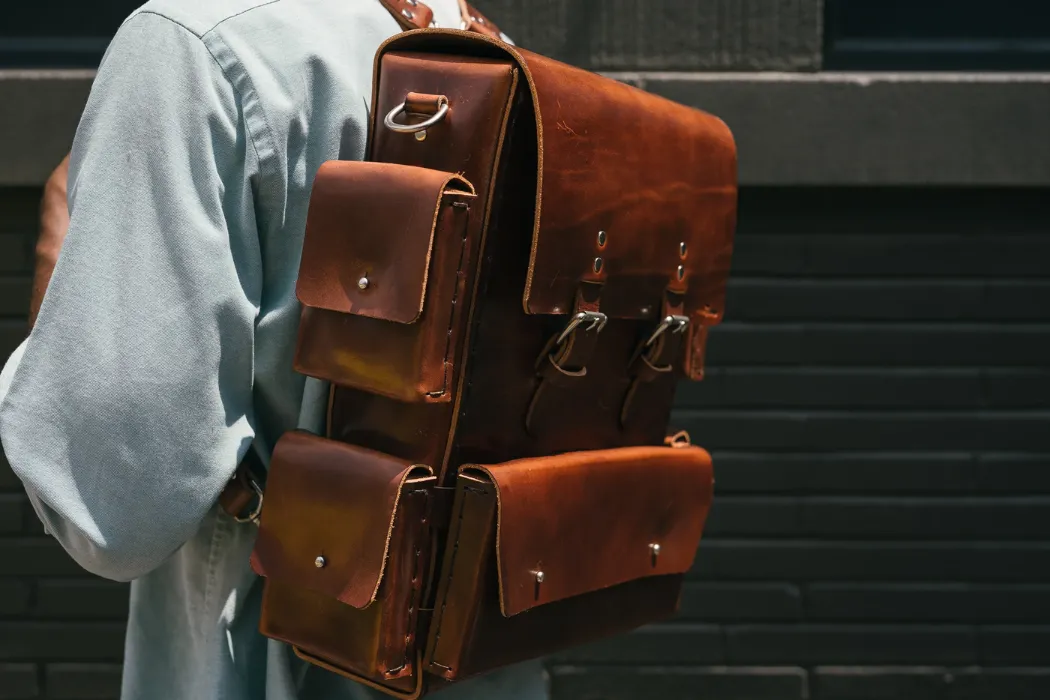
Full-grain backpacks earn the “Buy It For Life” (BIFL) status because they utilize the hide’s topmost layer, which contains the densest, strongest vertical fibers. This grants them three distinct advantages over all other materials: 1. Superior Tensile Strength, allowing them to withstand strap loads of 50+ lbs (22 kg) without tearing; 2. Self-Healing Capabilities, where minor scratches buff out rather than becoming permanent damage; and 3. Patina Development, meaning the material aesthetically improves over decades of use rather than degrading like plastic or bonded leather.
The Physics of Full-Grain: Fiber Density & Tear Strength
To understand durability, you must look at the microscopic structure of the hide. The skin of a cow is composed of collagen fibers.
- The “Grain” Layer: In full-grain leather, the fibers are tightly interlocked and run vertically. This creates a dense, solid mat that is incredibly resistant to tearing. This is critical for backpack straps, which are under constant tension. A full-grain strap can support heavy loads for years without stretching out or snapping.
- The “Split” Layer: Lower-quality leathers (like “Genuine Leather”) have had this top grain sliced off. What remains is a loose, horizontal fiber structure that is weak and prone to tearing under stress. This is why cheap backpack straps often snap at the adjustment holes.
The “Patina” Factor: Aging Gracefully vs. Looking Worn
This is the primary aesthetic argument for investment. Synthetic materials (nylon, PU, or painted leather) start looking “old” the moment they are scratched. The damage is permanent and subtracts from the value.
Full-grain leather is organic. It reacts to its environment in a positive way:
- Oxidation: Sunlight darkens the tannins in the leather.
- Oils: It absorbs natural oils from your hands.
- Friction: Daily use polishes high points and darkens low points.
This process creates Patina—a rich, glossy protective layer that makes a 10-year-old bag look more valuable than a brand new one. It transforms “wear and tear” into “character.”
Breathability: Why It Matters for Your Back
A common complaint with synthetic backpacks (especially PU or vinyl) is “swamp back”—the excessive sweating caused by the bag blocking airflow.
Full-grain leather, specifically vegetable-tanned varieties, is highly porous. It retains the natural hair follicles of the animal, allowing air and moisture vapor to pass through the material. While it is not as breathable as a specialized mesh, it is significantly better than a plastic-coated “Genuine Leather” bag, which acts like a heat seal against your body. For a daily commuter carrying a bag for 1-2 hours a day, this breathability is a major comfort factor.
How Do I Choose the Right Leather Grade for Daily Use?
To choose a durable leather backpack, you must first identify the leather grade. Full-Grain Leather is the gold standard, offering maximum durability and a lifespan of 20+ years, though it is heavier. Top-Grain Leather is sanded for a uniform finish; it is lighter and more stain-resistant but has a slightly reduced lifespan of 10-15 years. You should avoid “Genuine Leather” and Bonded Leather at all costs, as these low-grade materials lack the structural integrity to handle daily loads, often peeling or tearing within 1-2 years.
Full-Grain vs. Top-Grain: Durability vs. Uniformity
For a daily driver, the choice usually comes down to these two top tiers. It is a trade-off between character and perfection.
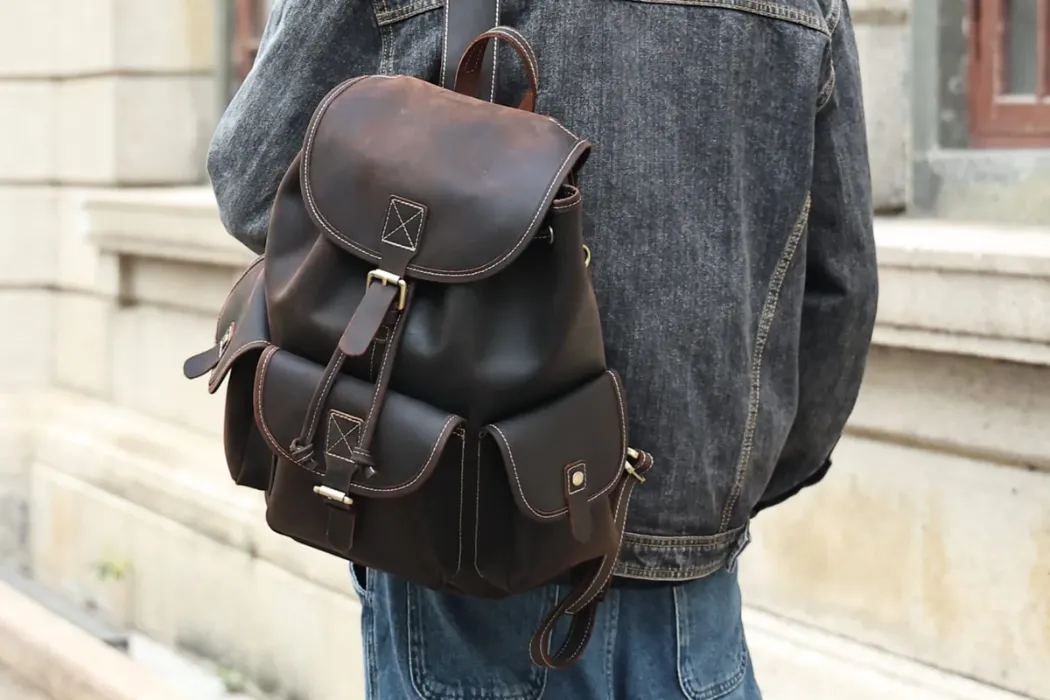
- Full-Grain (The Workhorse): This grade leaves the outer surface of the hide untouched. It retains 100% of the natural grain and fiber strength. Because it hasn’t been sanded, it may show natural markings like bug bites or healed scars. This is the choice for maximum ruggedness.
- Top-Grain (The Designer Choice): This grade has had the very top layer (roughly 0.5mm) sanded off (“buffed”) to remove imperfections. It is then stamped with a uniform grain pattern. While this makes the leather thinner, lighter, and more resistant to stains (due to protective coatings), it removes the toughest fibers, reducing its ultimate tear strength compared to full-grain.
Avoiding the “Genuine Leather” Trap
In the context of a backpack, “Genuine Leather” is a structural liability. Backpacks are unique because they hang from straps that are under constant tension. “Genuine Leather” (or split leather) is made from the loose, fibrous bottom layer of the hide.
Because it lacks the tight, vertical grain structure of the top layer, it has very low tear strength. Under the weight of a laptop and books (approx. 15 lbs), the stitching holes on a Genuine Leather strap will stretch and eventually tear through like perforated paper. The painted surface coating will also crack at flex points (like the flap) within 6-12 months.
Leather Grade Comparison for Backpacks
This table breaks down the performance differences you can expect from each grade.
| Leather Grade | Avg. Lifespan | Tear Strength | Typical Price (Retail) |
|---|---|---|---|
| Full-Grain | 15 – 25+ Years | High (Natural fibers intact) | $300 – $600+ |
| Top-Grain | 10 – 15 Years | Medium-High (Sanded surface) | $200 – $450 |
| Genuine / Split | 2 – 3 Years | Low (Loose fibers) | $80 – $150 |
| Bonded / Faux | < 1 Year | Very Low (Glued scraps) | $40 – $80 |
What Construction Details Ensure a Backpack Can Handle Heavy Loads?
Even the highest quality full-grain leather is useless if the construction fails. To ensure a backpack can withstand daily loads of 15-20 lbs (7-9 kg), you must inspect the stress points. Look for specific reinforcements like metal rivets and high-density bar-tack stitching where the straps meet the bag body. Ensure the manufacturer uses bonded nylon thread (which resists rot and high tension) rather than cotton. Finally, verify that all hardware is made of solid brass or stainless steel, avoiding brittle zinc alloy clips that can snap under pressure.
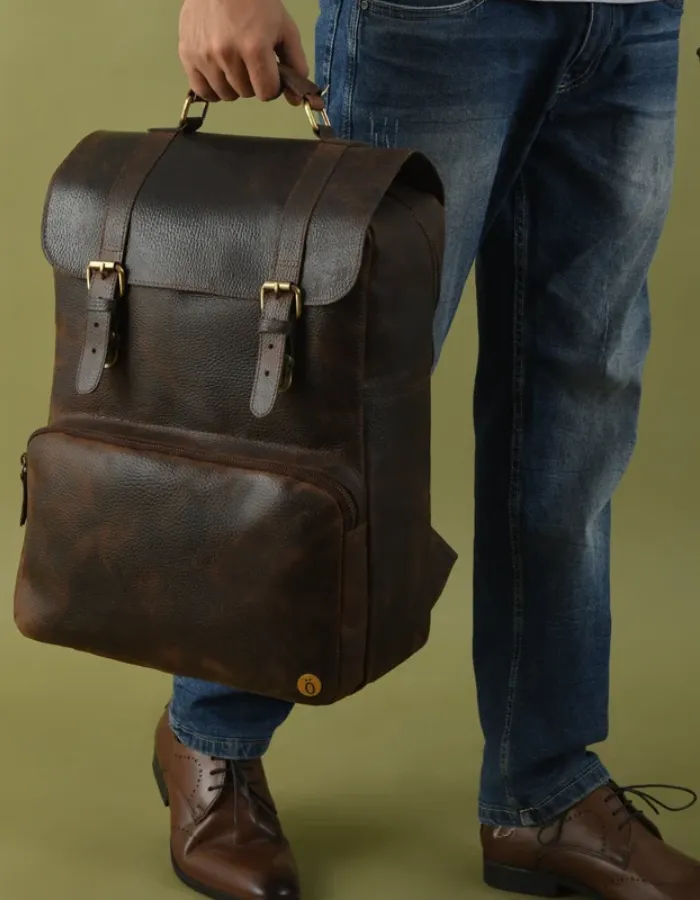
Reinforced Stress Points: Rivets and Bar Tacks
The strap attachment point is the number one failure zone for backpacks. As you walk, the dynamic load bounces, multiplying the force on the stitching. A simple single-stitch line will eventually tear through the leather.
- Rivets: Look for metal rivets driven through the strap and the bag body. A rivet acts as a mechanical anchor, clamping the layers of leather together with extreme force. It prevents the layers from separating even if the thread fails.
- Bar Tacks: This is a dense series of zig-zag stitches, often used in mountaineering gear. A bar tack concentrates hundreds of stitches into a small area (0.5 inch), creating a reinforcement point that is stronger than the surrounding material.
The Hardware Test: Solid Brass vs. Cheap Pot Metal
A backpack relies on buckles, clips, and zippers to function. If a clip breaks, the bag is useless.
- Buckles & Clips: Avoid “Zinc Alloy” (pot metal). It is lightweight and brittle. Under the stress of a heavy bag, the prong of a zinc buckle can snap. Solid Brass or Stainless Steel hardware may bend under extreme force (like being run over by a car), but it will rarely snap. It provides a safety factor essential for carrying laptops or gear.
- Zippers: The industry standard for durability is YKK. For a main compartment, look for a #8 or #10 size zipper. Anything smaller (like a #5) is dress-wear grade and may separate or jam when the bag is overstuffed.
Lining Quality: Why Nylon Beats Cotton
The lining is the skeleton of the bag. If the lining tears, keys and pens get lost inside the bag’s structure. While cotton feels nice, it absorbs moisture and stains easily. Ideally, a durable backpack should be lined with:
- High-Denier Nylon or Canvas: Materials like 400D Nylon or heavy duck canvas are tear-resistant and protect the leather from internal spills (like a leaking pen or water bottle).
- Pigskin: For ultra-luxury durability, pigskin lining is incredibly tough and has a higher abrasion resistance than cowhide.
Manufacturer’s Insight (Hoplok): Engineering for Load Capacity. At Hoplok, we don’t guess; we test. We subject every backpack prototype to a static load test of 20kg+ (44 lbs) to ensure structural integrity. Furthermore, we use computerized pattern sewing machines to apply reinforced “Box-X” stitching and bar tacks at every shoulder strap connection point, ensuring the joint is mechanically stronger than the leather hide itself.
Does the Tanning Process Affect Durability? (Veg-Tan vs. Chrome)
Yes, the tanning process fundamentally dictates the mechanical properties of the leather. Vegetable-Tanned (Veg-Tan) leather is thicker, stiffer, and structurally rigid, making it the ideal choice for heavy-duty, boxy backpacks that need to hold their shape and develop a rich patina. Chrome-Tanned leather is softer, more flexible, and water-resistant, making it superior for “slouchy” comfort backpacks or travel bags that need to be lightweight. Neither is “better,” but they serve different engineering purposes based on how the bag will be used.
Vegetable-Tanned: The Structural Choice
Vegetable tanning is the traditional method using natural tannins (from tree bark). It creates a leather that is firm and boardy, similar to wood. This is the material of choice for “Heritage” backpacks.
- Structure: A veg-tan backpack will stand upright on the floor even when empty. It protects contents (like a laptop) by creating a hard shell.
- The Break-In: Durability here comes with stiffness. A new veg-tan backpack will feel rigid against your back for the first 3-6 months. However, as the fibers loosen with heat and friction, it molds to your body shape like a custom shoe.
- Patina: Veg-tan is the only leather that dramatically changes color, darkening and glossing over time.
Chrome-Tanned: The Comfort Choice
Chrome tanning uses mineral salts to preserve the hide. This process (used for 90% of global leather) results in a softer, more pliable material that does not rely on “breaking in.”
- Ergonomics: Because the leather is soft from day one, a chrome-tanned backpack will drape and conform to your back immediately. It is generally lighter than veg-tan.
- Water Resistance: Chrome-tan is naturally more resistant to water spots and heat. If you are commuting in rainy climates (like Seattle or London), a treated chrome-tan bag requires less babying than a veg-tan one.
Combination Tanned: The Best of Both Worlds?
For the ultimate investment-grade backpack, many premium brands (like those using Horween Chromexcel) utilize Combination Tanning (or “Combo-Tan”).
This process starts with a chrome tan for softness and heat resistance, then “re-tans” the hide with vegetable tannins to add body, firmness, and the ability to patina. The result is a leather that is thick and durable like veg-tan, but rich and oily like chrome-tan. It offers the structural integrity needed for a heavy load without the painful break-in period. While this leather is often 20-30% more expensive per square foot, it creates a product with virtually zero compromises.
What Are the Downsides? (Weight, Cost, and Maintenance)
Full-grain leather backpacks are not perfect. The primary downsides are substantial weight (often 3-5 lbs / 1.4-2.3 kg when empty), a high initial cost (typically $300+), and the requirement for regular maintenance. Additionally, unlike soft nylon bags, a new full-grain backpack requires a significant break-in period before it becomes comfortable. These are trade-offs for longevity, not flaws, but they must be considered before purchasing.
The Weight Factor: Can Your Back Handle It?
Density equals durability, but it also equals weight. A standard 15-liter nylon backpack weighs about 1.0 – 1.5 lbs. A full-grain leather backpack of the same size, made from 4-5 oz hides with solid brass hardware, often weighs 3.5 – 5.0 lbs (1.6 – 2.3 kg) before you put a single item inside.
For a daily commute, this extra weight is noticeable. If you have back problems or need an ultralight travel setup, full-grain leather is likely the wrong choice. The heavy structure is designed to protect the contents and survive abuse, not to be weightless.
The Maintenance Commitment
Synthetic bags are “buy and forget.” Full-grain leather is “buy and maintain.” To get 20 years out of a bag, you must treat it like skin.
- Conditioning: You must apply a quality leather cream or oil (like mink oil) every 3 to 6 months. Without this, the leather will dry out and eventually crack.
- Water Protection: While naturally resistant, leather is not waterproof. It requires occasional treatment with a wax or spray to repel heavy rain. If you neglect this, the leather can stain or stiffen.
The “Break-In” Period
A brand new, high-quality full-grain backpack will feel stiff, rigid, and potentially uncomfortable on your shoulders for the first 2-4 weeks of use. This is similar to breaking in a pair of Goodyear-welted boots. The thick fibers need heat, friction, and movement to loosen up and mold to your body shape. Once broken in, it becomes incredibly comfortable, but the initial stiffness can be a surprise to first-time buyers accustomed to soft, unstructured synthetic bags.
The Financial Case: Is It Worth the Upfront Cost?
From a purely financial perspective, a full-grain leather backpack is a superior long-term investment. While the initial price tag of $400+ can be a barrier, the “Cost Per Year” (CPY) calculation reveals that it is significantly cheaper than buying multiple low-quality replacements. A full-grain bag used for 20 years costs just $20/year. In contrast, purchasing an $80 “Genuine Leather” or synthetic bag that fails every 2 years results in a 20-year cost of $800. Investing in quality is actually the strategy for saving money.
Calculating “Cost Per Year” (CPY)
The math of durability is simple but often ignored. Let’s break down the lifetime cost of ownership for a daily commuter.
- Scenario A (The Cheap Bag): You buy a stylish $80 backpack made of “Genuine Leather” or fashion nylon. After 18 months, the strap tears or the PU coating peels. You replace it. Over 10 years, you buy roughly 5 bags. Total cost: $400 (plus the hassle of shopping and waste).
- Scenario B (The Investment Bag): You buy a $400 full-grain leather backpack. It lasts the entire 10 years (and likely 10 more). Total cost: $400.
At the 10-year mark, the costs are equal. However, at year 11, the cheap bag cycle continues to cost money, while the investment bag is effectively “free.” Furthermore, the cheap bag looked “new” for only a few months before degrading. The investment bag looked better every single year as it developed a patina.
Resale Value: An Asset, Not a Consumable
Unlike synthetic bags which become worthless trash once worn, a high-quality full-grain leather backpack retains residual value. Heritage brands (like Saddleback or Filson) have a robust secondary market.
A well-maintained, 5-year-old full-grain backpack can often be resold for 40-60% of its original retail price because buyers value the broken-in patina. A 5-year-old synthetic bag has a resale value of zero. When you buy full-grain, you are buying a depreciating asset, not a consumable good.
10-Year Cost Analysis
This table illustrates the long-term financial impact of your material choice.
| Backpack Type | Initial Price | Replacement Freq. | 10-Year Total Cost |
|---|---|---|---|
| Full-Grain Leather | $400 – $600 | 0 (Lasts 15+ years) | $400 – $600 |
| Genuine Leather | $80 – $120 | Every 2 Years | $400 – $600 |
| Canvas / Synthetic | $50 – $80 | Every 1.5 Years | $330 – $530 |
Frequently Asked Questions
1. Is full-grain leather waterproof?
No, it is water-resistant, but not waterproof. Full-grain leather is porous. While it can handle light rain, heavy saturation will soak into the fibers, potentially causing water spots or stiffening as it dries. To make it suitable for all-weather commuting, you must treat it with a hydrophobic spray or a beeswax cream every 3-6 months.
2. How heavy is a leather backpack?
It is heavy. A quality full-grain backpack with solid brass hardware typically weighs between 3.5 to 5.5 lbs (1.6 to 2.5 kg) when empty. This is roughly 3x heavier than a standard nylon backpack. Buyers must consider this “base weight” if they plan to carry heavy tech gear.
3. Will leather dye stain my clothes?
It is possible, especially with new bags. This is called “crocking.” It happens when excess dye transfers from the leather to lighter clothing (like a white shirt) due to friction or humidity. High-quality, drum-dyed leather with a proper topcoat minimizes this risk, but unsealed aniline leathers or suede are more prone to transfer.
4. What is the best leather thickness for a backpack?
For the main body of the bag, the ideal weight is 4-5 oz (1.6-2.0 mm). This provides structure without being overly rigid. However, the straps—which bear the load—should be significantly thicker, often 8-9 oz (3.2-3.6 mm), or reinforced with a non-stretch backing to prevent snapping.
5. How do I protect my leather backpack from rain?
Prevention is key. Apply a high-quality leather waterproofer (spray or wax) before you ever use the bag. If the bag does get soaked, wipe off excess water immediately and let it air dry at room temperature. Never use a hair dryer or heater, as this will cook the collagen fibers and cause the leather to crack.
6. Can I fix a broken zipper on a leather bag?
Yes. This is a major advantage of leather. Because the material is strong enough to be re-stitched, a cobbler can remove a broken zipper and sew in a new one without destroying the bag’s structure. In contrast, repairing a zipper on a nylon or canvas bag often compromises the fabric’s integrity.
Conclusion: Buying a Future Heirloom
Is a full-grain leather backpack worth the investment? If you view a backpack as a disposable tool for carrying things, the answer is no. But if you view it as a long-term asset that protects your gear and evolves with your life, the answer is a resounding yes. The math is clear: paying $400 for a bag that lasts 25 years is infinitely cheaper than paying $80 every two years for landfill fodder.
Ultimately, durability is not an accident; it is a manufacturing choice. It is the result of selecting dense Full-Grain hides, specifying Solid Brass hardware, and paying for the extra labor of reinforced stitching. It is the difference between a product that wears out and a product that wears in.
Hoplok Leather partners with brands that choose to build legacies, not just products. With direct access to premium full-grain hides via our ProPelli tannery and a factory floor equipped for heavy-duty construction, we engineer backpacks that withstand the 20kg+ loads of modern life. Contact Hoplok Leather today to develop a backpack collection that your customers will be proud to carry for a lifetime.