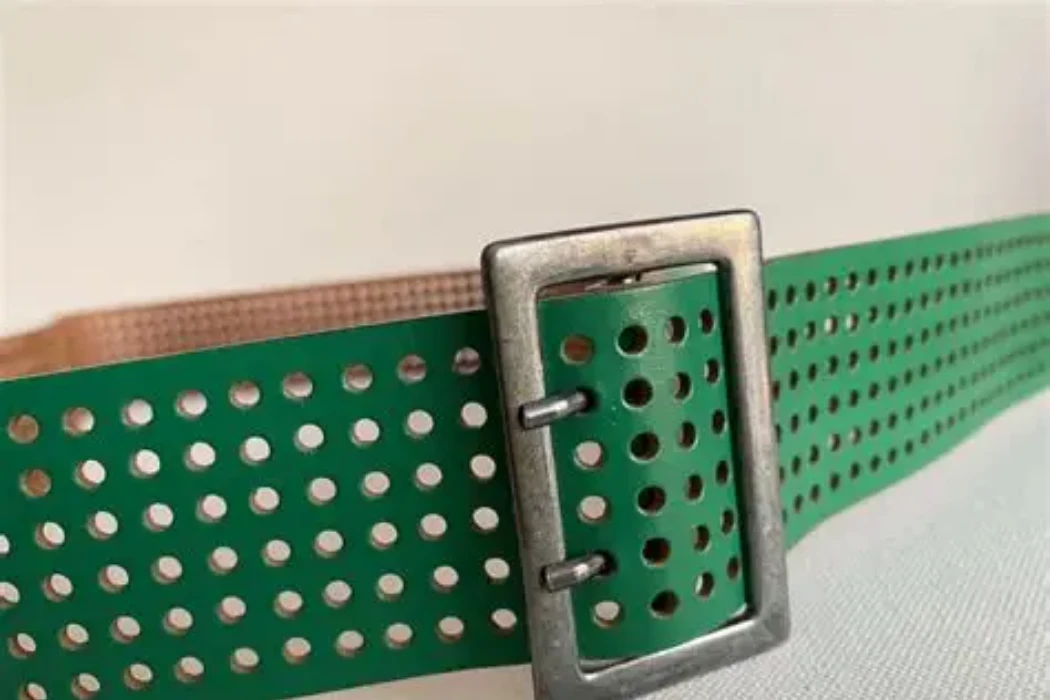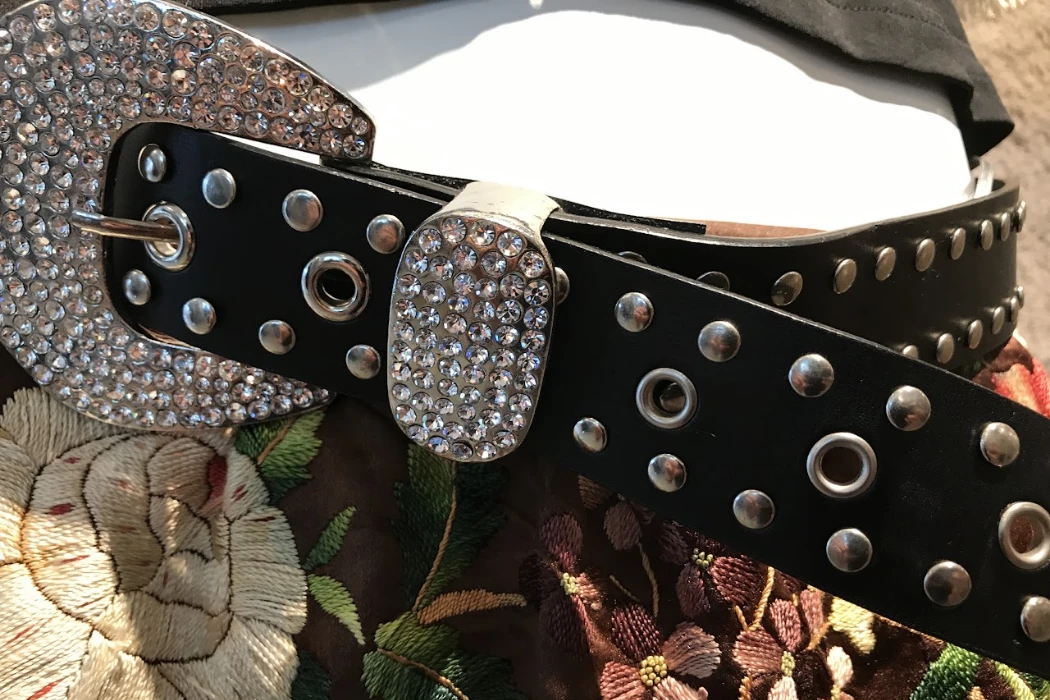
A recycled-content claim and a material specification answer different purchasing questions. A bag or belt material may contain recovered leather fibers, yet its strength, finish and manufacturing behavior still need evaluation. Buyers should establish the construction and composition before comparing price, performance or environmental claims.
In this guide, “virgin leather” means newly produced hide or skin leather with its fibrous structure retained, rather than a reconstituted fiber composite. It does not mean full-grain, full-thickness or uncoated leather. “Recycled leather” is a broader term than bonded leather: Textile Exchange distinguishes recovered leather retaining its structure from recycled leather-fiber materials. The comparison below focuses on the latter, often sold as bonded or reconstituted material.
A leather-fiber composite can suit a particular accessory specification, but certification does not make it stronger or establish its environmental superiority. GRS addresses verified recycled content and specified processing requirements. The buyer still needs composition disclosure, applicable chemical evidence and finished-product testing.
What Exactly Is Recycled Leather and How Is It Manufactured?
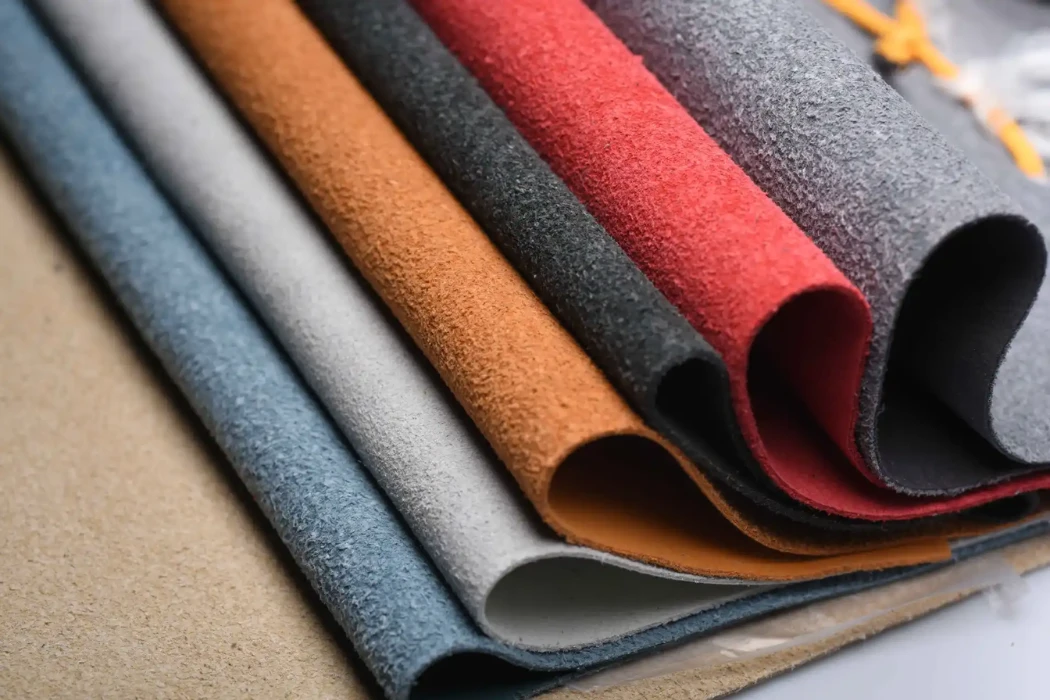
Reconstituted leather-fiber material is made from leather that has been broken into fibers, particles or pieces and formed into a new material. Depending on the product, it may contain binders, backing and surface coatings. It should not be confused with a continuous piece of hide leather or with every possible form of recycled leather.
The Mechanical Breakdown: From Scraps to Fiber
Recovered inputs can include qualifying production scraps and other accepted leather waste. Ask which input is used and how its recycled status is documented. Not every internal scrap or reused process input automatically qualifies under the same recycled-content rules.
- Confirm the input category and source, including whether it is a tanning, splitting, finishing or cutting residue accepted by the applicable standard.
- Mechanical processing breaks the material down for the selected manufacturing route. Equipment and particle or fiber size vary by producer.
- Sorting and preparation should control contamination. Processing leather waste does not automatically remove every tanning chemical or make the resulting material chemically compliant.
Request a material description that identifies the recovered fraction and the finished construction. A general “made from scraps” statement is insufficient to establish content percentage or performance.
The Bonding Process: Binders and PU Coatings
Breaking down leather changes its original structure. The resulting sheet obtains its properties from the fibers or particles, any binder, the backing and the finishing system together.
- Binder: Ask for the binder type and proportion where present. Do not assume every material uses the same latex or polyurethane formulation.
- Sheet formation: Production may form a sheet or combine leather fibers with another substrate. Confirm whether a reinforcement or backing is part of the supplied material.
- Surface: A coating or embossed finish may provide the intended appearance. Identify its composition and thickness where relevant to the specification; a PU topcoat is not universal.
Roll or sheet supply can simplify layout planning, but appearance and odor do not verify leather content. Inspect the actual construction and supplier documentation.
Understanding GRS Content and Claim Requirements
Textile Exchange’s GRS guidance separates business-to-business certification use from consumer labeling. Certification is evidence for defined requirements, not an unrestricted “eco-friendly” guarantee or a finished-product safety approval.
- Content thresholds: GRS can be used for B2B products containing at least 20% recycled content; consumer-facing GRS labeling requires at least 50%, alongside the applicable claim requirements. These thresholds are not a universal leather-fiber recipe.
- Processing requirements: GRS includes social, environmental and chemical-use criteria. It does not automatically establish compliance with every destination-market product restriction.
- Traceability: Check the applicable certification scope and transaction evidence for the material and order. The certificate must correspond to the claimed supply route and product.
Verify the current standard and claims policy before approval. Textile Exchange’s Materials Matter transition becomes effective on December 31, 2026; all Tier 4 audits move to that standard from December 31, 2027, and claims and labels transition by June 30, 2029. Apply the published transition policy to the actual organization and shipment rather than assuming GRS ends immediately.
How Does the Durability Compare Between Virgin and Recycled Options?
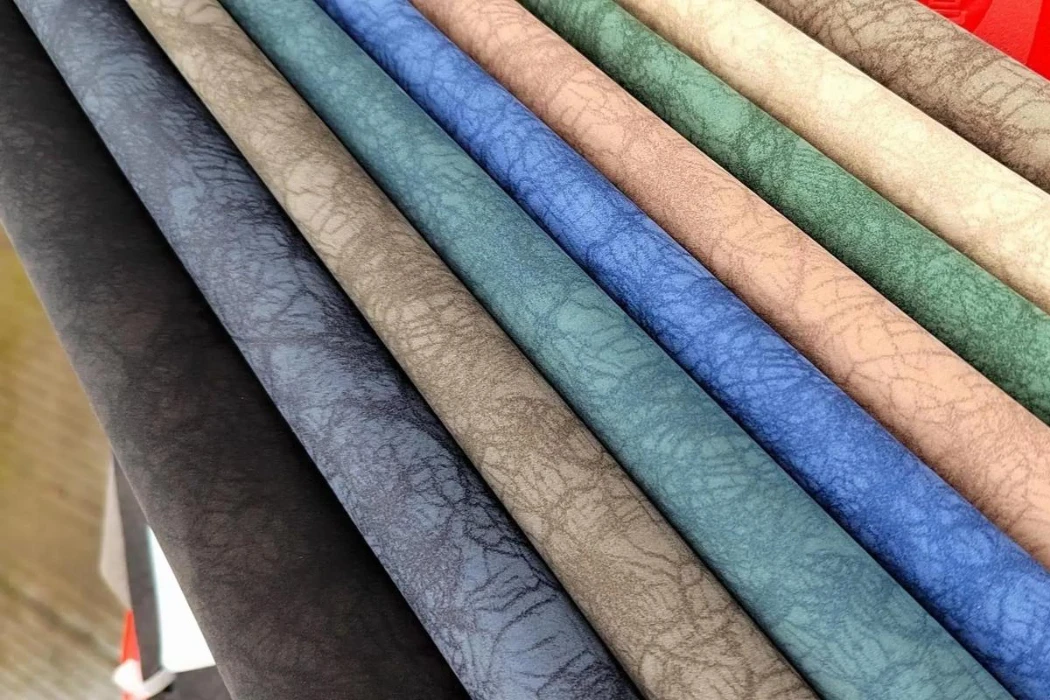
Compare samples using the same intended use and test conditions. GRS does not grade durability, and hide leather itself varies by species, hide area, thickness, tanning and finish. A comparison of two unspecified category names cannot establish a lifespan or strength ratio.
Tensile Strength and Tear Resistance
Tensile testing assesses behavior under a defined pulling test. Tear and seam tests investigate different failure modes. Keep the method, specimen direction, thickness, conditioning and units with each reported result.
- Hide leather: Properties can vary with direction and location in the hide. An intact fiber structure does not imply equal strength in every direction or a universal pass value.
- Leather-fiber composite: Assess the whole construction, including binder, backing and coating. Check holes, stitching and attachment areas on the finished design rather than relying on a material-name ranking.
A reinforcement may be appropriate for a belt or strap, but nylon is not a mandatory solution. Its material, attachment and effect on handle should be specified and tested as part of the assembly.
Flex Testing and Crack Resistance
Flex testing evaluates behavior under a defined repeated-bending procedure. Select a relevant method and acceptance criteria for the proposed material and application.
- Failure modes: Inspect for cracking, delamination, fiber damage or changes in appearance. Record where and how failure occurs.
- Test evidence: Request the actual material report and test conditions. GRS does not establish a minimum of 20,000 flex cycles or prove that a microfiber backing is present.
Recheck the finished article at folds and attachment points. A flat material result does not by itself establish how a sewn bag handle or fastened belt will behave.
Aging Characteristics: Patina vs. Peeling
Compare the expected visual changes and the acceptable wear pattern for the intended product.
- Hide leather: Patina depends on the tanning and finish as well as use and care. Some finishes show visible aging; others are intended to maintain a more consistent surface.
- Leather-fiber composite: Surface wear depends on its formulation, finish and exposure. It may change color, crack or peel, but there is no universal date at which this occurs or guarantee of an unchanged first year.
| Performance Metric | Specified Hide Leather | Specified Leather-Fiber Composite |
|---|---|---|
| Tensile Strength | Test by thickness, location and direction | Test the complete substrate and backing |
| Flex Resistance | Relevant method and acceptance criteria | Relevant method and acceptance criteria |
| Tear Strength | Check tear and attachment areas | Check tear and attachment areas |
| Aging | Finish- and use-dependent changes | Finish- and use-dependent changes |
| Lifespan | No universal number of years | No universal number of years |
Why Consider Recycled Leather-Fiber Materials for an Accessory Line?
A buyer may consider recovered content, regular sheet format, a particular appearance or the quoted cost. These benefits need evidence for the specific material. A GRS label alone does not establish better yield, lower price or reduced life-cycle impact.
Cutting Waste and Maximizing Yield
Material use contributes to the cost of leather belt production. Compare cutting layouts using the same part dimensions and appearance requirements, including defects and unusable edges.
- Hide layout: Shape, natural marks, thickness variation and directional requirements can limit usable area. Obtain yield from the proposed pattern and selected material grade.
- Roll or sheet layout: Regular dimensions can help nesting, but usable width, defects, direction, repeat patterns and edge losses still matter. Do not assume a fixed 90–95% yield.
Compare actual usable output and inspection effort. Automated cutting is possible with suitable hide leather as well as roll materials; regular format does not eliminate inspection.
Comparing Cost and Environmental Evidence
Obtain like-for-like quotes for the intended construction and performance. Hide leather, PU-coated materials and leather-fiber composites each cover a range of formulations, prices and uses.
- Environmental comparison: Recovered input is one attribute. A lower carbon or water-impact claim needs a relevant assessment with compatible boundaries, allocation, expected use and end-of-life assumptions. Waste diversion alone does not establish the complete result.
- Cost comparison: Include material yield, reinforcement, edge finishing, testing and rejected output. There is no universal 30–50% saving versus split leather, and a lower price does not authorize an unqualified leather label.
Marketing the Circular Economy
Use a specific, supported composition claim and the required certification wording. Keep recycled-content verification separate from other material and facility claims. Certification claims and legal product descriptions serve different purposes.
- Content statement: State the actual verified proportion and what it applies to—for example, a specified component rather than the whole bag. Do not invent a 50% recipe or a landfill-diversion statement without supporting evidence.
- Approval: Check certification-claim rules and destination-market advertising requirements. No certificate makes every marketing statement “audit-proof.”
| Metric | Virgin Hide Manufacturing | Leather-Fiber Sheet or Roll |
|---|---|---|
| Material Form | Hide or skin shape | Confirm supplied format and dimensions |
| Cutting Yield | Validate with actual patterns and selection | Validate with actual patterns and usable width |
| Defect Rate (Material) | Inspect against agreed natural-mark allowance | Inspect for substrate and finish defects |
| Handling Labor | Depends on material and cutting process | Depends on material and cutting process |
| Cost Efficiency | Obtain comparable finished-output cost | Obtain comparable finished-output cost |
What Are the Manufacturing Limitations You Must Know?
Check the proposed composite during cutting, sewing, folding and finishing before approving substitution. The objective is a usable construction, not a blanket claim that every recycled material is cheaper or behaves alike.
Edge Finishing Challenges
A cut edge exposes the material cross-section. Its appearance and performance depend on the substrate, thickness and finishing process for either hide leather or a composite.
- Edge specification: Review the exposed edge against the design brief. A bonded material is not automatically prohibited from an exposed-edge design if its appearance and performance are acceptable.
- Construction options: Painted, wrapped or turned edges may be suitable. Trial adhesion, folding and flex behavior rather than assuming one treatment is essential or universally compatible.
Thickness and Stiffness Constraints
Thickness, flexibility and strength depend on the supplied grade. Neither hide leather nor bonded material retains a guaranteed strength merely because it can be made thin.
- Splitting and skiving: Confirm whether the specific material can tolerate the proposed operation. There is no universal 1.0–1.2 mm lower limit for all composites.
- Drape: Assess a sample in the intended panel size and construction. Backing, binder, coating and thickness affect stiffness, so do not categorize every recycled material as rigid.
Suitable Product Categories
Select applications from prototype results. A material that suits a supported panel may not suit an exposed strap or tightly folded corner.
- Potential uses: Structured panels, small accessories or belt constructions may be candidates where the selected material and assembly meet the brief. These are development options, not categorical approvals.
- Areas needing trials: Soft bags, narrow strips, heavily folded parts and load-carrying handles require particular attention to drape, tear, flex and attachment performance. Do not approve or exclude them solely by the recycled-content label.
How Do You Verify GRS Certification to Avoid Greenwashing?
Substantiate the exact recycled claim and verify the supplier’s certification evidence. Also review the destination’s applicable advertising and composition rules; a proposed law or general market trend should not be described as an enacted requirement.
The Transaction Certificate (TC)
A scope certificate identifies certified activities and products; transaction evidence supports the movement of claimed material. Review both under the current scheme rules rather than treating a supplier’s logo as order-level proof.
- Transaction evidence: Check the issued document, parties, product, composition, quantity and relevant shipment details through the certification body’s verification route.
- Order approval: If the required evidence is missing or inconsistent, resolve it before approving the certification claim. A scope certificate alone does not demonstrate the content of an arbitrary shipment.
Tracking the Supply Chain
Map the claimed material from the accepted recovered input through the relevant processing and trading stages. Confirm certification and documentation requirements for each party’s actual role.
- Scope review: Check current validity, covered materials, processes, sites and any applicable subcontractor arrangements. A composite-sheet producer should not automatically be called a tannery.
- Reconciliation: Review incoming quantities, production records and claimed output under the chain-of-custody rules. Volume accounting alone cannot rule out every substitution or prove the composition of a finished item.
Chemical Compliance (REACH & Prop 65)
Assess the actual fibers, binders, coatings and other components against the destination requirements. “Recycled” does not mean free of restricted substances.
- GRS chemical criteria: Obtain evidence relevant to the certified process and current standard. Do not substitute a recycled-content certificate for the product test report required by the buyer.
- Market requirements: REACH restrictions depend on the substance and application. California Proposition 65 concerns exposure and warnings, not a universal material certification. Neither is automatically satisfied by GRS status.
Frequently Asked Questions (FAQ)
Is bonded leather considered “real” leather?
It contains leather fibers but is not equivalent to hide leather. For covered US products, FTC Leather Guides §24.2(f) state that such a composite should not be represented as leather; when specified bonded or reconstituted terms are used, disclose the percentages of leather fibers and non-leather substances. Check the rules for the destination and product.
Does GRS recycled leather peel over time?
Peeling or other damage can occur depending on the surface system and use, but GRS does not predict wear life. Request relevant flex, adhesion and aging evidence for the actual material and finished construction.
Is virgin leather more sustainable than recycled leather?
Neither category is universally preferable on every environmental measure. Compare documented impacts and expected useful service for the same function. Recycled content alone does not establish lower overall impact or longer life.
What is the percentage of leather in bonded material?
Ask for the exact composition of the supplied material and the basis of the percentages. GRS recycled-content thresholds do not define a universal leather-fiber percentage, and content in one component is not automatically the content of the whole article.
Can you emboss logos on recycled leather?
Some materials accept embossing or debossing, but confirm the substrate and coating response through trials. Approve the tool and processing conditions with the supplier; heat is not suitable for every surface.
Is recycled leather cheaper than PU (Synthetic) leather?
Prices overlap and depend on specification, order size and required performance. Compare current quotes and finished-product cost rather than relying on a universal PU–bonded–hide price ladder.
Conclusion
Choose from a complete material specification: composition, usable format, finish, test performance, quote and evidence for the proposed claim. Evaluate a production-representative sample before changing the bill of materials.
An intact hide material and a leather-fiber composite can serve different design briefs. Avoid promising decades of service, a fixed saving or certified circularity from the category name alone.
For custom belts or leather-goods development, share the target construction, composition and claim requirements with Hoplok. Confirm material availability, certification scope and transaction evidence for the actual project. Hoplok’s ProPelli operation finishes externally supplied crust leather; it does not establish an automatically GRS-certified supply chain for every product.