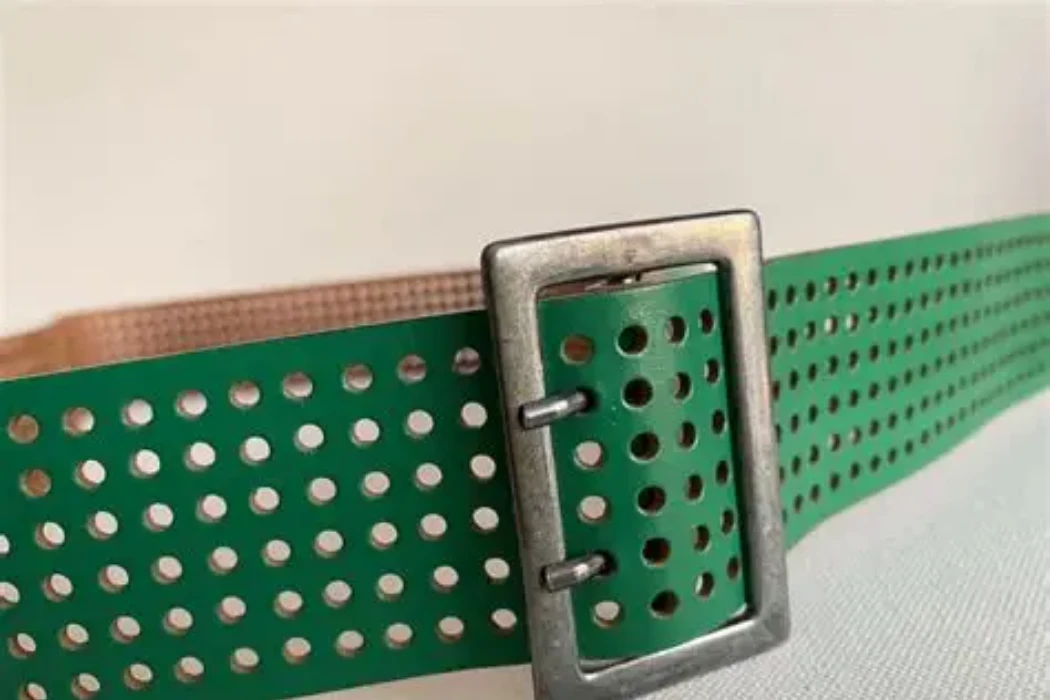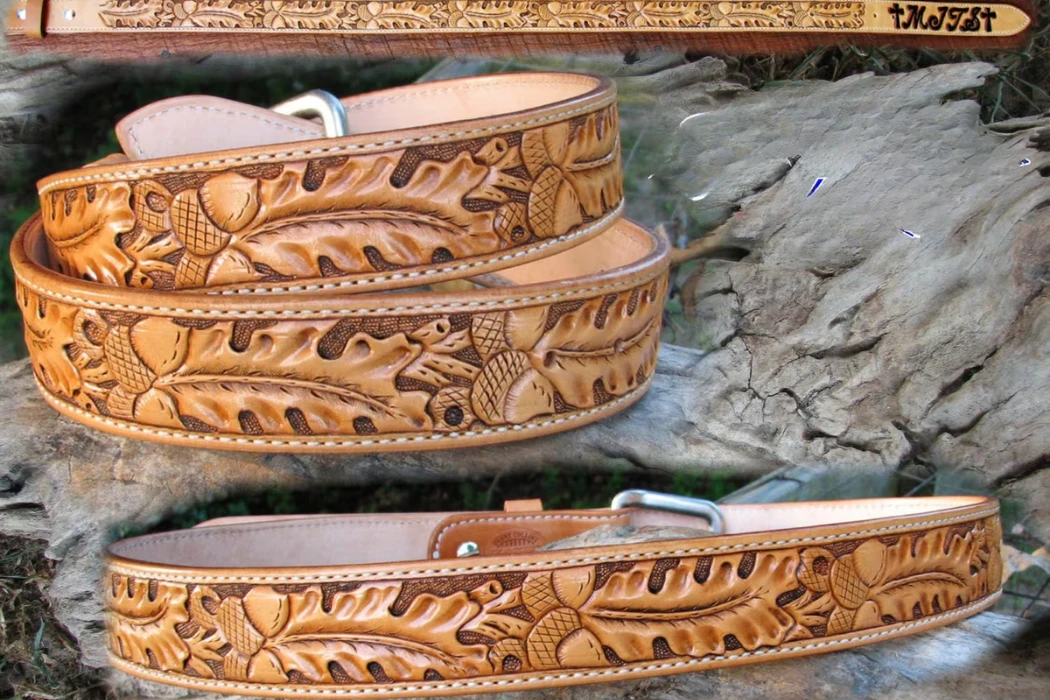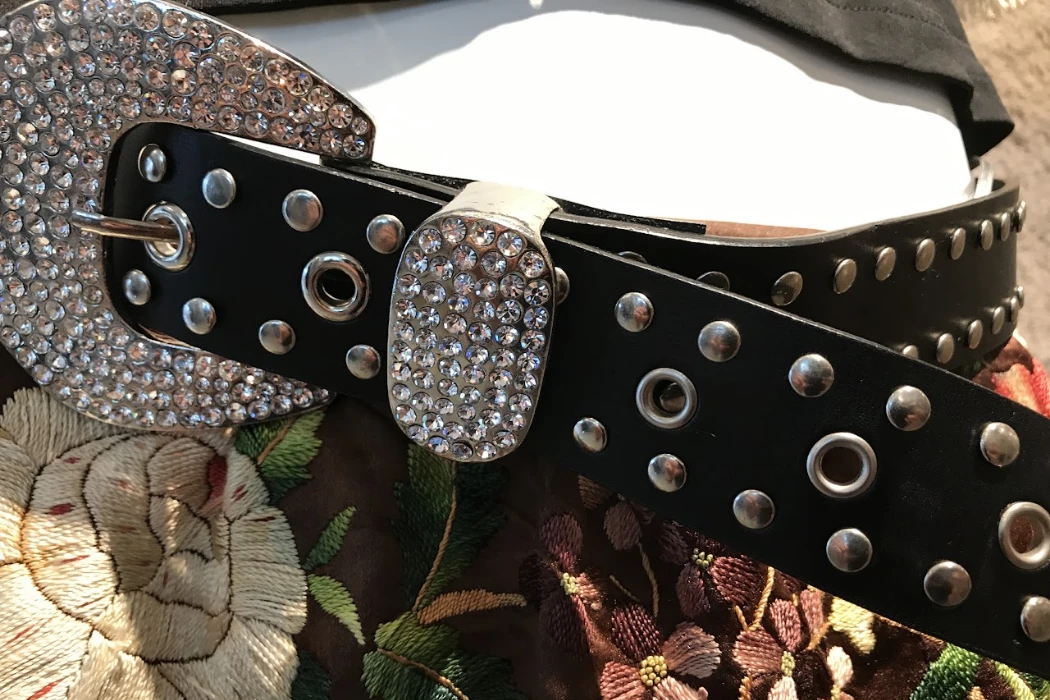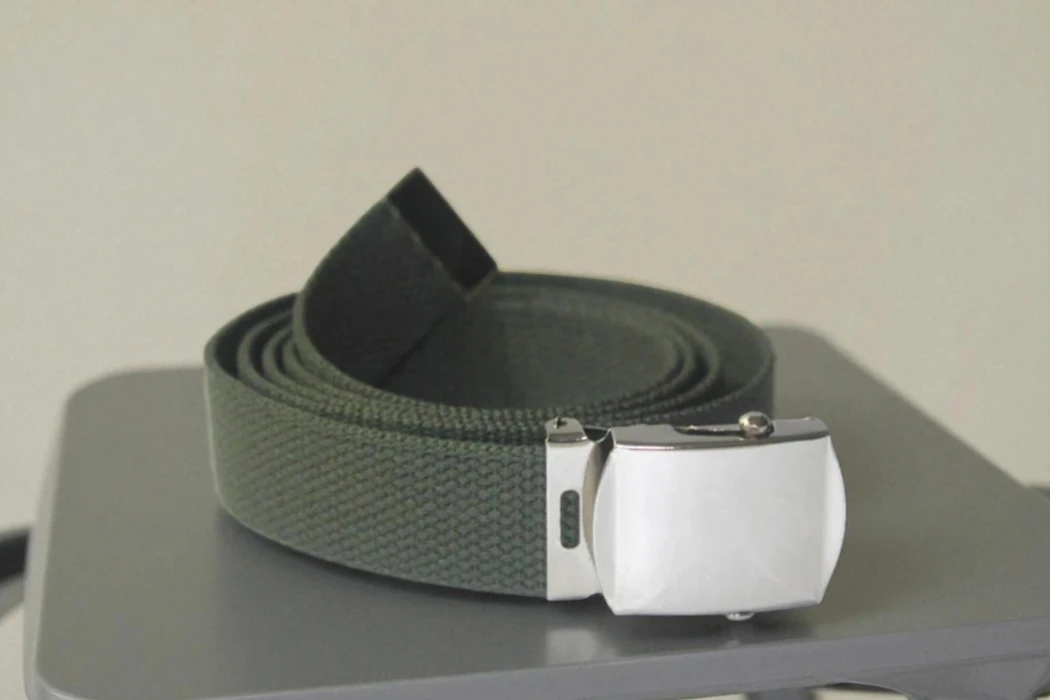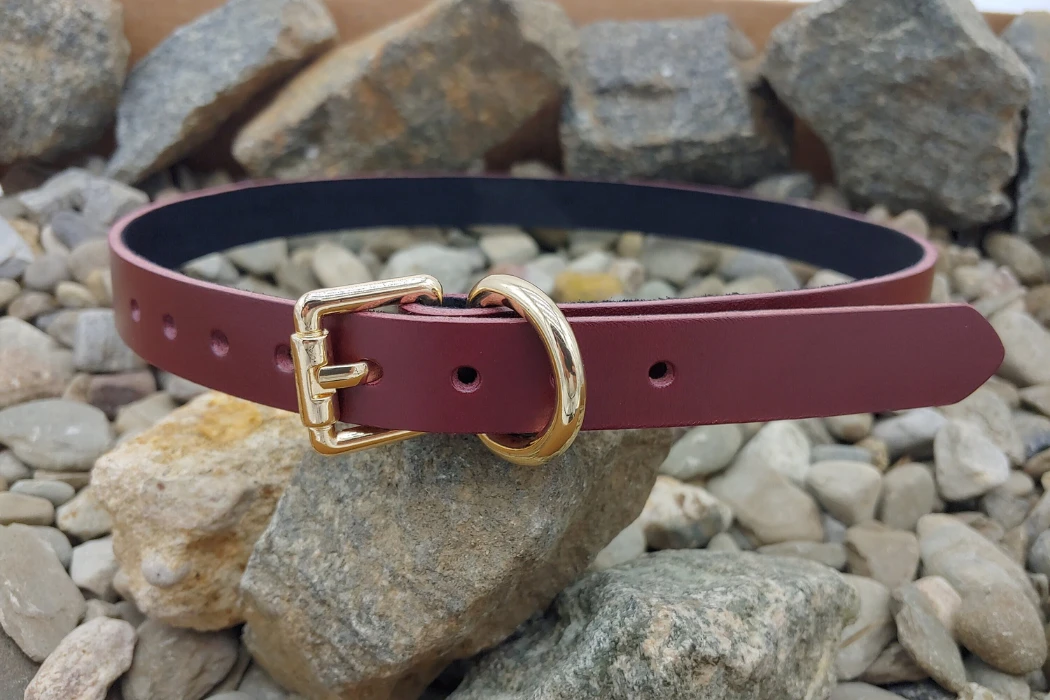
A leather belt combines a strap, buckle, attachment and edge construction. For a sourcing team, the challenge is to make these parts work together through repeated fastening, bending and contact with clothing. A good-looking sample is the starting point; the purchase specification must also describe how the finished product will be evaluated.
“Premium” is a positioning claim, not a single engineering standard. Buyers can make it meaningful by defining the material, construction, dimensions, appearance limits and performance tests for their intended use. Those requirements should be agreed before bulk production so that approval does not depend on a subjective comparison at shipment.
This guide follows the belt from material selection to export planning. It explains where a technical specification is useful, which claims require supporting evidence, and how to connect material tests with checks on the complete belt. It covers ordinary fashion belts; these checks do not qualify a belt for safety or load-bearing use.
What Distinguishes the Material Grades in Belt Manufacturing?
Leather descriptions identify different aspects of the material, including grain retention, the layer used and the finish. Full-grain retains the original grain surface; split leather comes from a lower layer after splitting. Trade use of “top-grain” varies, so a buyer should ask whether the surface has been corrected or buffed. None of these labels alone guarantees the strength of a finished belt.
Full-Grain vs. Top-Grain: Grain Retention and Durability
Leather structure matters, but the belt also depends on hide selection, thickness, cutting direction, processing, holes, joins and hardware. Compare the supplied material and the assembled construction rather than assigning performance from a grade name.
- Full-grain leather: Retains the original grain surface without corrective buffing. It is not the epidermis, which is removed in leather making. Natural markings can remain visible, and some finishes develop patina. Specify thickness and test the intended construction; full-grain leather can still wear or suffer damage.
- Corrected-grain leather: Has a surface that has been mechanically corrected to achieve the intended appearance, often followed by finishing or embossing. If a supplier calls it top-grain, clarify the processing. There is no universal percentage by which correction reduces belt strength.
A heritage design may favor visible natural grain, while a formal collection may prioritize uniform color and a smooth finish. Either choice needs an approved appearance sample and appropriate mechanical checks.
Split Leather & Bonded Leather: Cost-Effective Engineering
When the top grain is separated from the hide, the remaining fibrous bottom layer is known as “split” leather.
- Split leather: Does not retain the original grain surface. It may be used with a coating or other construction to achieve the intended appearance and handle. Check coating adhesion, bending behavior and the strength of the actual belt; the term does not establish a fixed service life.
- Bonded leather material: Combines leather fibers or particles with binders. Composition and construction vary, so request the declared leather content, binder and backing details. Test tear behavior and layer adhesion instead of assuming a universal leather percentage or failure rate.
These materials can serve different price and appearance targets. A lower purchase price is useful only when the approved construction also meets the buyer’s performance, labeling and returns requirements.
Synthetic Alternatives: PU and Vegan Technologies
Modern manufacturing also utilizes non-animal materials that mimic leather properties for specific market segments.
- PU-coated materials: Often combine a polyurethane surface with a textile or other backing. The formulation, backing and assembled belt determine performance. Request flex, abrasion and adhesion results with the method, conditions and acceptance criteria; there is no universal flex-cycle rating for PU belts.
- Animal-free and plant-based alternatives: May contain several polymers, plant-derived ingredients and backing layers. Obtain the complete composition and evidence for the specific claim. For PU-containing constructions, evaluate humidity and heat aging where relevant; formulation affects hydrolysis resistance.
For a non-leather belt, coating adhesion is one checkpoint alongside backing strength, hole deformation, edge wear, buckle attachment and chemical requirements. Test the finished combination rather than approving only a surface swatch.
| Leather Grade | Material verification | Appearance to approve | Cost comparison | Design consideration |
|---|---|---|---|---|
| Full-Grain | Confirm grain retention and thickness | Natural markings and finish-dependent patina | Current material and cutting-yield quote | Visible-grain casual or formal designs |
| Corrected grain (confirm trade description) | Confirm correction and finish system | Agreed uniformity and texture | Current material and finishing quote | Smooth or embossed collections |
| Split (Coated) | Confirm split, coating and backing | Check flexing and coating adhesion | Current construction quote | Designs validated with the selected coating |
| Bonded | Confirm fiber, binder and backing content | Check surface and layer durability | Current construction quote | Programs supported by composition and performance evidence |
How is the Physical Anatomy of a Belt Constructed?
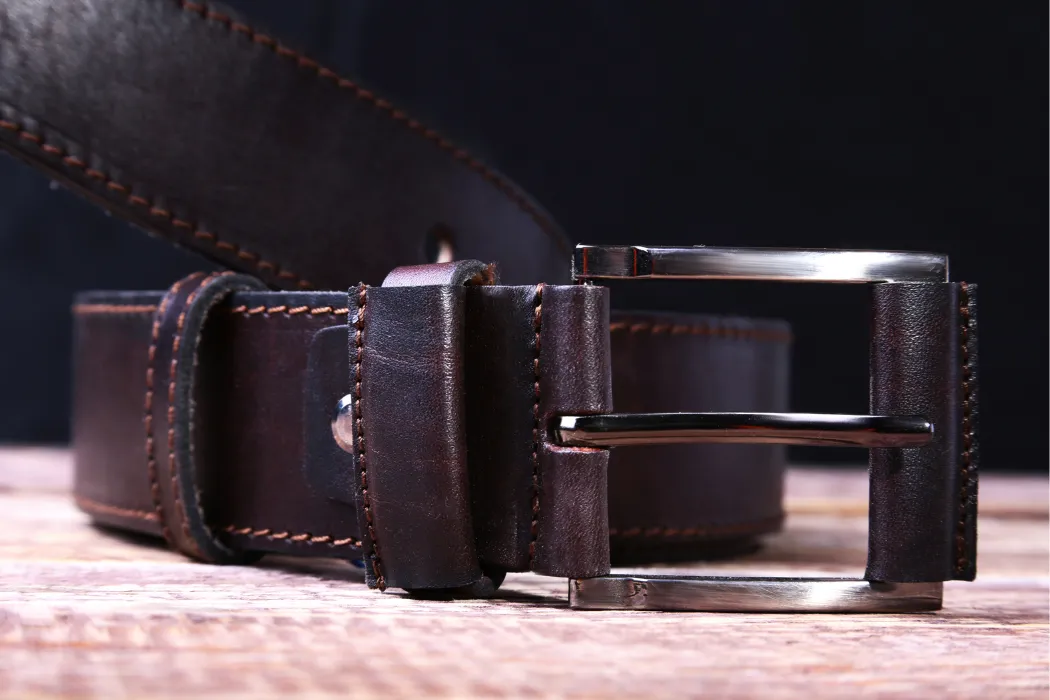
Belts may use a single strap or a layered construction. A layered belt can combine a face, lining and optional insert to create a particular profile. Each interface introduces an adhesion or stitching requirement, so the drawing should show the complete cross-section and the areas reinforced around the buckle and holes.
Layering Mechanics: The “Sandwich” Structure
A raised dress-belt design may use three layers, but this is a design choice rather than a definition of premium quality. For a layered construction, document the role of each part:
- Face: The visible material supplies the intended color, grain and surface behavior. Its contribution to strength depends on the complete construction.
- Optional insert: A selected filler creates the raised or bombé profile. Specify its composition, thickness, stiffness and termination points so that the buckle fold and tip remain workable.
- Lining: The underside contacts clothing and can be leather, PU-coated material or another specified material. Select adhesive, surface preparation, curing and pressing conditions for the actual layers. Heat activation is appropriate for some systems, not a universal requirement.
Sizing Engineering: Precision Geometry
Define sizing on a dimensioned drawing. A size label is useful only when buyer and supplier use the same buckle reference point, hole position and unit of measurement.
- Size reference: State whether the measurement begins at the buckle fold, pin bearing point or another marked datum. If the nominal size ends at the middle hole, that is the third hole in a five-hole layout and the fourth in a seven-hole layout.
- Hole spacing: Specify the center-to-center distance and tolerance on the drawing. One-inch spacing is an option, not a mandatory industry rule; the required adjustment range and buckle geometry should determine the layout.
- Tip length: Dimension the distance from the final adjustment hole to the tip and check the tail through the keeper on a fitted sample. Assess both the smallest and largest intended wearing positions.
Edge Mechanics: Turned, Feathered and Cut Edges
Edges experience rubbing and repeated bending. The edge profile and finish should be approved together with the strap and buckle fold, where the construction may be thicker.
- Cut edge: Exposes the section of the strap or layers. Depending on the material and design, it may be burnished, painted or otherwise finished. For painted edges, approve the preparation, coating system, drying and flex behavior; coat count alone does not establish quality.
- Turned and feathered edges: A turned edge folds a thinned face material around the construction. A feathered profile tapers toward the edge; the terms should not be treated as interchangeable. A cross-section sample helps confirm the intended result. Turned edges still need checks for fold cracking, adhesion and stitching.
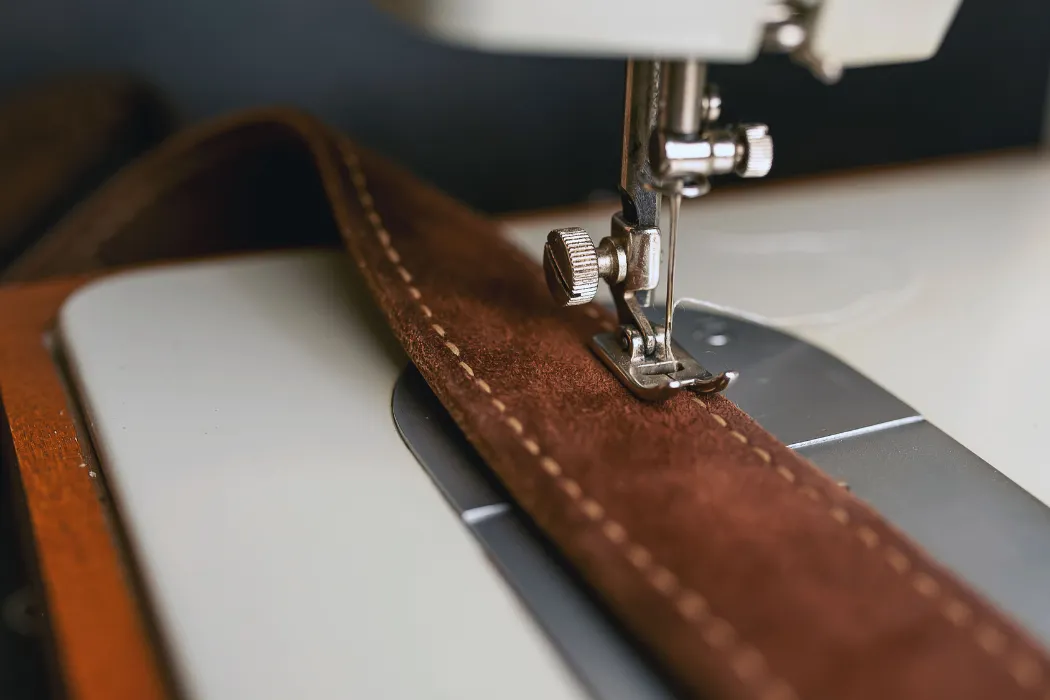
Specify stitch type, thread, needle, stitch spacing and edge distance together. A lower stitch count is not the same as loose thread tension, and a higher count can leave less material between needle holes. Approve the seam appearance and test the actual material stack.
Why are Finishing Techniques Critical for Aesthetics and Durability?
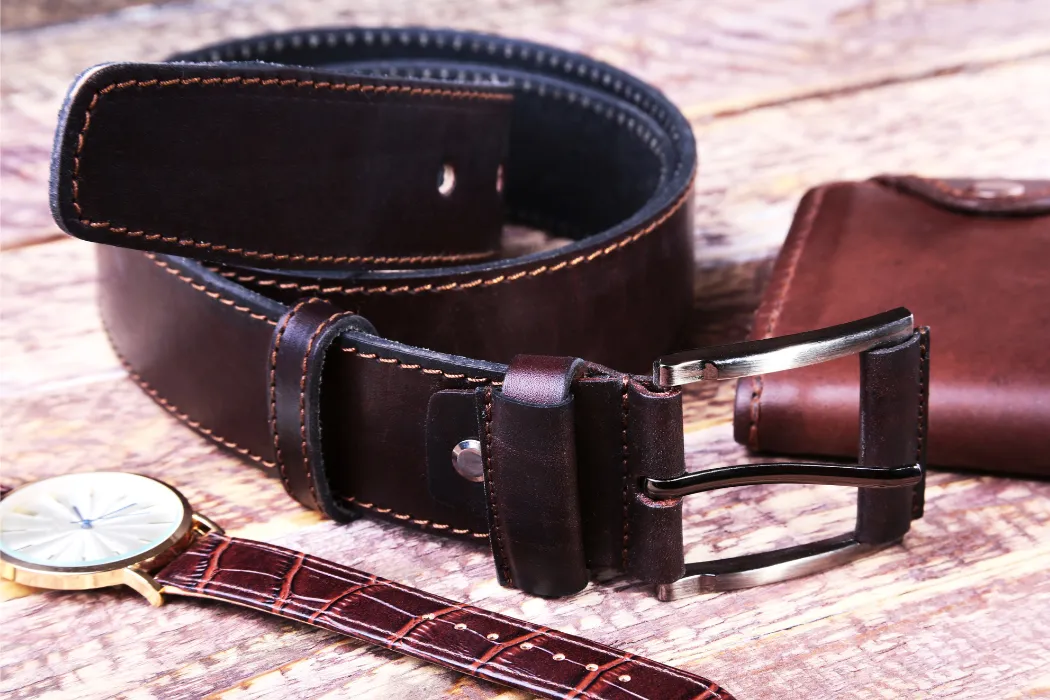
Crust leather is leather awaiting final finishing, often after retanning and dyeing. Finishing can adjust color, touch, gloss and surface protection through the selected mechanical and chemical processes. The finish sample and production recipe should be linked to the intended belt construction.
Mechanical Finishing: Friction and Heat
Mechanical finishing can change gloss and smoothness. Its effect depends on the leather and existing finish system; a glossy appearance alone does not identify the coating composition or durability.
- Glazing: Mechanical action with a suitable glazing tool can compact and polish the surface. Approve the gloss, touch and bending appearance on the actual leather. Glazing does not guarantee that every applied finish will resist peeling.
- Heat polishing or ironing: Controlled heat and pressure can alter smoothness and gloss. Select settings through material trials and equipment guidance, then check for scorching, finish transfer and unwanted hardening. Do not infer waterproofing from a polished appearance.
Oil and Wax Effects
Some of the most desirable premium finishes are dynamic, meaning they change appearance as the belt is used.
- Pull-up effect: Some oil- or wax-finished leathers lighten locally when bent or stretched. Rubbing may redistribute the effect, but not every scratch disappears. Approve both the original appearance and the acceptable change after flexing and handling.
- Crazy Horse: A trade description often used for a waxy, distressed appearance, rather than a standardized species or performance grade. Confirm the base leather, finish and care instructions. Compare scratch visibility, color transfer and feel with the approved sample.
Texture Engineering: Tumbling vs. Embossing
Texture can be mechanically added to create softness or specific patterns.
- Milling or tumbling: Controlled drum processing can soften leather and develop its grain character. Results depend on the leather and process. Specify the desired hand and appearance rather than assuming every milled leather has the same pebble texture.
- Embossing: A patterned plate or roller can create geometric or animal-inspired textures on a specified base material. Select pressure, temperature and dwell time for that material and verify definition after bending. An embossed crocodile pattern does not imply crocodile skin.
| Finish Type | Engineering Technique | Visual Characteristic | Primary Benefit |
|---|---|---|---|
| Glazed / Smooth | Controlled mechanical polishing | High shine, flat surface | Approved gloss and smoothness; test surface resistance |
| Pull-Up / Oiled | Selected oil/wax finish | Color bursts when bent | Color movement and depth; approve rub behavior |
| Crazy Horse | Specified distressed or waxy finish | Matte, rugged, vintage | Characterful appearance; verify wear behavior |
| Milled / Tumbled | Controlled drum processing | Softness and grain effect depend on leather | Approved handle and bending behavior |
How Does Hardware Selection Impact Longevity?
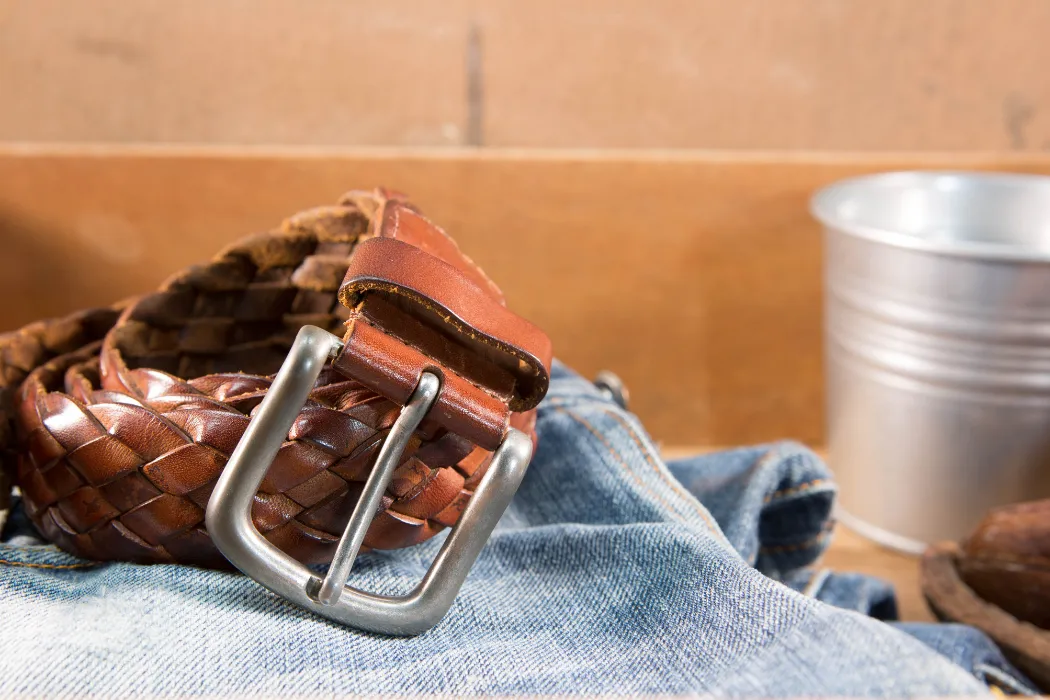
The buckle, pin and attachment carry repeated fastening loads. Select their geometry, material and finish as a system: a strong frame does not compensate for a weak pin or a poorly reinforced fold. Include functional checks and, where appropriate, destructive assembly testing in the purchase specification.
Buckle Materials: The Metallurgy of Durability
The base metal, manufacturing process, section thickness and surface finish all affect buckle performance. Identify the alloy and finish separately in the bill of materials.
- Zinc alloy: Die casting can produce detailed shapes and logos. Inspect casting quality and test the actual buckle; porosity, thin sections and finish defects need investigation. Confirm the protective and decorative finish rather than assuming every zinc buckle uses the same plating.
- Brass: Can provide the desired weight, appearance and patina. Confirm the alloy, surface treatment and restricted-substance requirements. Brass is not automatically lead-free, and its price relative to other hardware depends on the design and current quotation.
- Stainless steel: Confirm the grade and fabrication method. It may be cast, formed or machined, and may be supplied with or without an added finish. It is not indestructible or automatically hypoallergenic; assess nickel release where the product’s contact conditions make that requirement applicable.
Corrosion testing: If salt-spray testing is specified, agree the method, exposure, sample preparation and acceptable change. Test duration is not a universal commercial or marine grade, and accelerated corrosion exposure does not translate directly into years of use.
Functionality: Mechanical Complexity vs. Risk
Adding moving parts to a buckle increases utility but introduces new failure points.
- Roller buckles: A rolling cylinder can reduce friction as the strap moves through the frame. Check clearance, free movement and surface condition with the selected strap; it does not eliminate every source of scuffing.
- Reversible buckles: Add a swivel or other turning mechanism. Check rotation, locking, looseness and function after the agreed repeated-use test. Performance depends on the particular design and assembly, not a fixed number of rotations for the category.
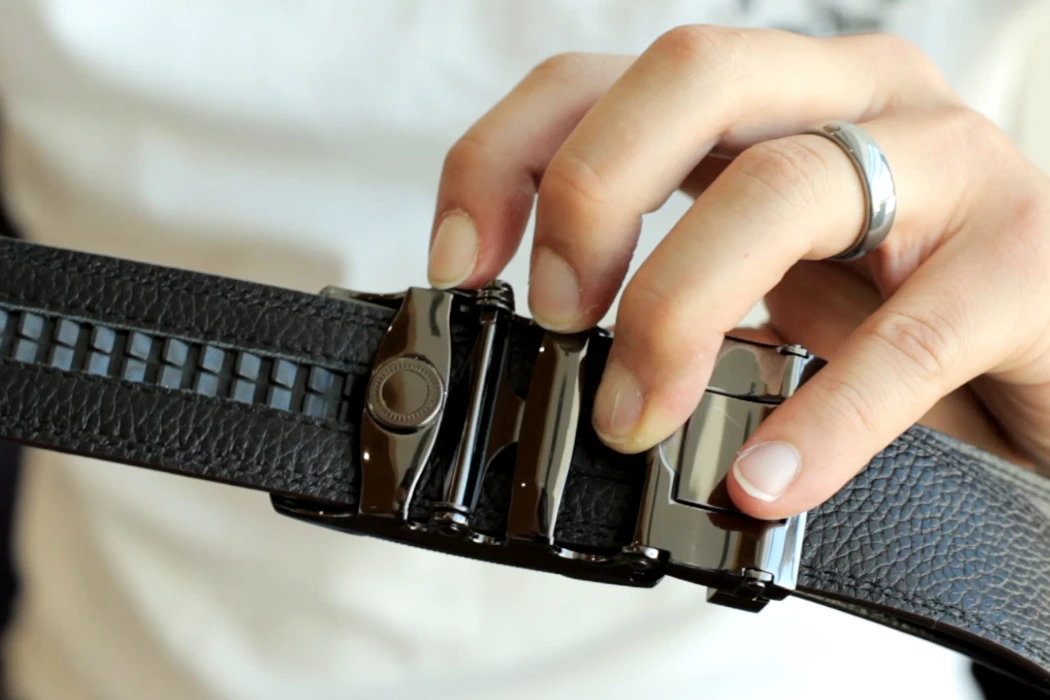
- Ratchet buckles: Engage a track in the strap to provide incremental adjustment. Confirm the actual increment, track attachment, release operation and holding performance. Compare the usable adjustment range with the target size system.
Attachment Systems: Maintenance and Repair
How the buckle connects to the strap dictates whether the belt is serviceable.
- Stitched fold: Can give a clean attachment. Buckle replacement may require removing and resewing the fold, subject to the remaining material and hole condition; a broken buckle does not automatically make the entire belt unusable.
- Rivets: Provide a mechanical attachment when the rivet size, setting and material stack are matched. Verify retention and inspect the surrounding material. Replacement may require tools and can damage the fold if performed poorly.
- Chicago screws: A threaded post and screw can allow buckle replacement. Agree assembly torque and resistance to loosening. If a thread-locking product is selected, confirm material compatibility and the required future removability.
How Do Compliance Standards & Sustainability Shape Production?
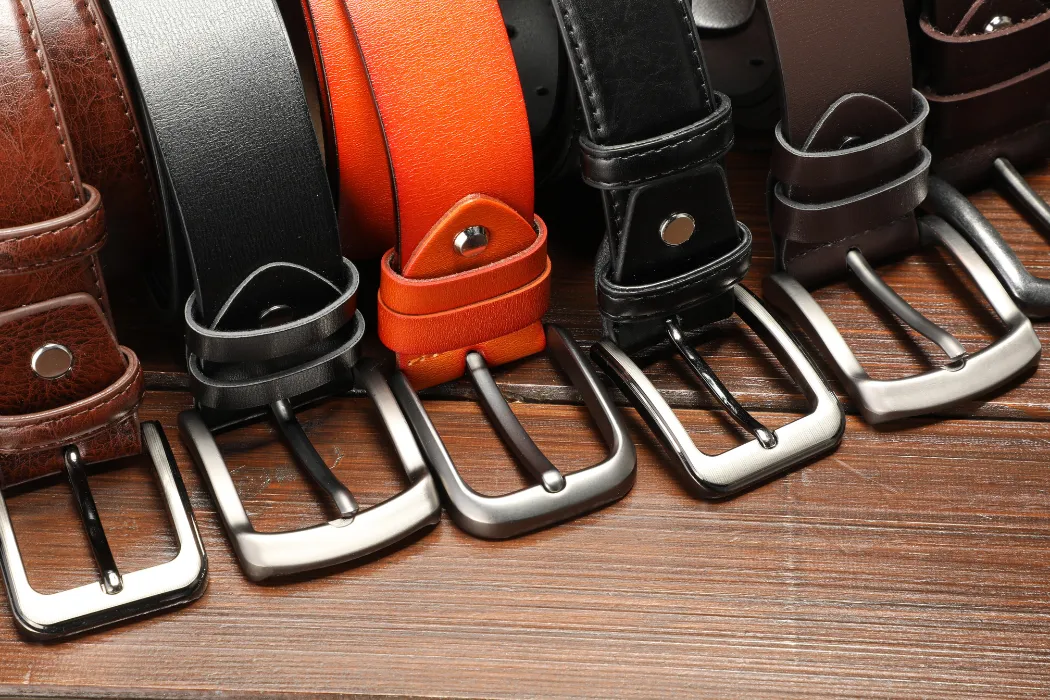
Compliance planning starts with the destination market, age group, materials and product claims. Identify the applicable legal requirements and retailer specifications before ordering components. A report should identify the tested material or finished product and the relevant batch; an unrelated supplier certificate is insufficient.
Chemical Safety: The Invisible Engineering
A restricted-substances specification should state which components and limits apply. “Chemical-free” or a blanket requirement that no restricted substance exists at any concentration is not a workable substitute for the applicable rules.
- EU REACH: Restrictions have defined scopes. For example, leather articles or leather parts coming into contact with skin must not contain chromium VI at concentrations of 3 mg/kg or more of the leather’s dry weight. Other restrictions, including certain azo colorants, depend on their specific entries. Use the current ECHA restriction information to establish the test list.
- US requirements: CPSIA requirements for children’s products differ from general adult-product requirements. CPSC identifies a 100 ppm total-lead limit for accessible components of children’s products and a separate 90 ppm limit for covered paint and similar coatings. California Proposition 65 concerns warnings for specified exposures; it is not a universal 90 ppm hardware limit. Determine the product-specific obligations before testing.
Material Traceability: The LWG Standard
Environmental claims need evidence whose scope matches the statement. Facility-level auditing, material traceability and product performance answer different questions.
- Leather Working Group: LWG assesses leather manufacturing facilities under its applicable standards. Check the named facility, rating, validity and scope, and follow LWG claims guidance. A facility rating does not by itself certify the finished belt or establish complete chain of custody.
- Traceability file: Link the purchase documents, material supplier and finishing site to the project. If another sustainability scheme is claimed, request its current standard, certificate or audit scope and the evidence supporting the exact wording used to customers.
Social Compliance: Ethical Risk Management
A buyer may require a social audit as part of supplier approval. Review the site covered, audit date, findings and corrective actions against the buyer’s policy; do not treat all audit systems as pass/fail certificates.
- SMETA / Sedex: SMETA is an audit methodology, not a certification or a simple pass/fail result. Review the applicable audit scope and corrective-action report, and verify that the audit was conducted through the authorized audit arrangements.
- amfori BSCI: An assessment framework for working conditions with a rating system. Confirm the actual site report, validity and remediation status rather than accepting a generic “BSCI certified” statement.
| Standard | Primary Region | Critical Checkpoint | Business Impact |
|---|---|---|---|
| REACH | European Union | Applicable REACH entries and component scopes | Legal requirements for placing the covered product on the market |
| CPSIA / Prop 65 | USA | Child-product/component limits; California exposure assessment | Determine obligations for the actual product and market |
| LWG facility assessment | Global | Named facility, scope, rating and validity | Support only claims permitted by the evidence and scheme rules |
| SMETA / BSCI | Global | Social / Labor Audit | Buyer-specific supplier approval and corrective actions |
What Quality Control Tests Must a Belt Pass?

Quality control combines incoming-material checks, process checks and finished-product inspection. Separate destructive test samples from visual inspection and define when each is taken. The sample plan, defect definitions and acceptance rules should be agreed before inspection; testing cannot guarantee that every shipped unit will behave identically.
Physical Stress Testing: Simulating Failure
Laboratory tests apply controlled stresses that help compare materials or identify weaknesses. A few hours of accelerated testing do not automatically represent a known number of years of wear.
- Tensile and assembly strength: ISO 3376 addresses leather tensile strength and elongation using specified specimens. A complete-belt pull test must separately define the grips, loading, buckle engagement and failure criteria. Set the acceptance value for the intended fashion-belt design rather than treating one force as a universal standard.
- Hole deformation: Evaluate the selected hole size, pin geometry, material stack and loading conditions. Record elongation, tearing or permanent distortion. Do not assume a tanning method alone determines resistance.
- Flex testing: Choose a method suited to the leather, coating or finished edge being assessed. State the specimen preparation, cycle count, conditions and permitted change. An agreed flex result supports comparison, not a guaranteed service life.
Chemical Fastness: Protecting the Consumer
Color transfer can stain clothing even when the belt remains structurally sound. Include the face, lining and relevant edges in the fastness assessment.
- Wet and dry rubbing: ISO 11640 is a leather color-fastness method using wool felt. Agree the conditions, number of rubs and acceptance grades for each surface. A textile crocking method should not be substituted without agreement, and a grade does not guarantee zero transfer under every wearing condition.
- Adhesion: Select a procedure appropriate to the face coating, edge paint or hardware finish. Tape testing may be useful for a specified system, but a single cross-cut procedure is not suitable for every flexible edge. Record preparation and failure mode before making the agreed acceptance decision.
Visual Inspection: Natural vs. Defective
Visual QC requires trained judgment to separate nature from negligence.
- Natural characteristics: Growth marks, scars and grain variation may be acceptable within agreed appearance zones. Assess their condition and location; visible markings alone neither prove authenticity nor establish structural soundness.
- Manufacturing defects: Cuts, loose or skipped stitches, uneven edges and layer separation need classification by severity and location. Define which defects require repair, rejection or a lot-level decision in the inspection plan.
| Test Name | Methodology | Acceptance basis | Prevention Goal |
|---|---|---|---|
| Tensile Pull | Leather specimen or defined complete-belt pull | Buyer-agreed force, elongation and failure criteria | Prevent snapping under tension |
| Crocking (Rub) | ISO 11640 for leather; agreed alternative where appropriate | Specified wet/dry conditions and grades | Prevent dye transfer to clothes |
| Salt Spray | Corrosion Chamber | Agreed exposure and corrosion criteria | Prevent buckle rusting |
| Adhesion | Procedure selected for the coating or interface | Agreed extent and type of permitted change | Prevent edge paint falling off |
How Do Manufacturing Locations Influence Supply Chain Strategy?
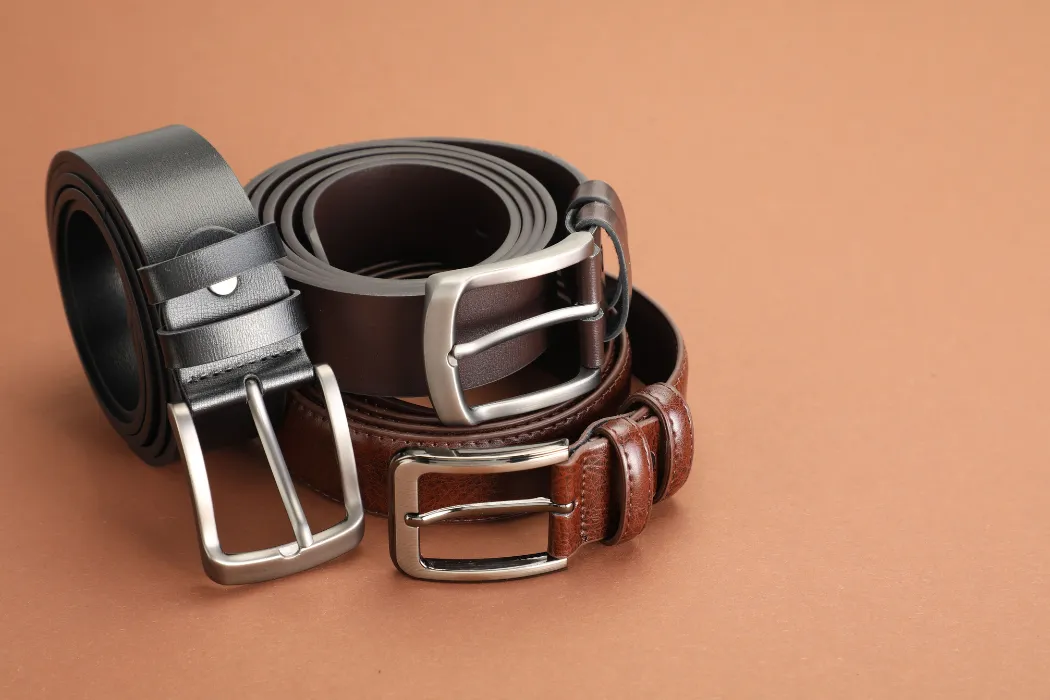
Manufacturing location can affect logistics, component access, lead time and duty treatment. Compare the actual facilities and routes offered for the order. A two-country option is useful only when the allocation, material movement, origin documentation and delivery responsibilities are clear.
China: Confirm Development and Component Access
For a China-based proposal, identify where development, component sourcing and production will take place. Review samples of comparable construction and the route for resolving material or hardware changes.
- Development capability: For mixed materials, braiding or studded designs, ask the proposed site to demonstrate the relevant construction and explain any subcontracted operations. Capability should be verified at facility level rather than inferred from a city or country.
- Sample schedule: Hoplok’s current belt-sampling guidance is 2–3 weeks. Confirm the starting information, material availability, custom hardware and revision rounds before fixing a launch date. The location alone does not guarantee a shorter development cycle.
Cambodia: Confirm Allocation and Import Treatment
For a proposed Cambodia production route, check the assigned site, order volume, material readiness and shipping plan. Long runs and repeat orders still need capacity reservations and an approved specification.
- Capacity: Hoplok reports monthly leather-belt capacity of 200,000–300,000 across its operations. This is not an allocation promise for one facility or customer. Request the available production window for the actual order.
- Duty treatment: Confirm the tariff classification, destination, qualifying origin and current trade rules with the importer or customs adviser. Manufacturing in Cambodia does not automatically establish preferential duty eligibility. The EU explains the role of rules of origin in determining origin and preferences.
Vertical Integration: Coordinating Leather Finishing
A belt manufacturer with a leather finishing facility can coordinate the finish with product development. Finishing purchased crust leather is a separate operation from upstream tanning; the presence of a finishing facility does not make it a tannery.
- Finishing coordination: A finishing operation can process purchased crust to an approved color and effect. Verify the upstream supplier, material specification, trial approval and batch records. Do not assume a particular source country or an exact match without the order evidence.
- ProPelli is Hoplok’s leather finishing facility in Cambodia. It receives crust leather from partner tanneries, specializes in belt leather and other leather finishing, and holds a current LWG Gold rating. This arrangement supports coordination of the material finish with product development; upstream tanning remains part of the supply chain, and the project quotation should confirm the material schedule.
| Decision | China proposal | Cambodia proposal |
|---|---|---|
| Operations | Confirm development, sourcing and production sites | Confirm production, finishing and subcontracted operations |
| Order allocation | Confirm SKU quantities, MOQ and available window | Confirm SKU quantities, MOQ and available window |
| Landed cost | Compare quote, freight, duties and handling | Compare quote, freight, duties and origin eligibility |
| Continuity | Agree material reorders and specification control | Agree material reorders and specification control |
Frequently Asked Questions (FAQ)
What is the difference between “Genuine Leather” and “Full-Grain”?
“Genuine leather” describes real leather, not a universally defined low grade. Full-grain is more specific: it retains the original grain surface without corrective buffing. For either description, request the layer, finish and construction details needed for the belt.
Why do some leather belts crack after a few months?
Cracking can involve the leather itself, a coating, edge paint or a layered interface. Repeated bending, unsuitable material or processing, aging and care conditions can contribute. Full-grain is not immune; inspect the failure location and test the proposed replacement construction.
How long does it take to develop a custom belt collection?
Hoplok’s belt samples generally require 2–3 weeks, and bulk production generally requires 60–90 days. Confirm material readiness, approvals and order details; shipping and customs time should be scheduled separately.
Can a belt be both sustainable and affordable?
A project can balance cost with specific environmental priorities, but no material name guarantees both. Compare composition, cutting yield, verified facility information, durability and the evidence behind each claim. An LWG facility rating does not automatically make a particular belt sustainable.
Conclusion: The Engineer’s Choice
A useful belt specification connects the material and appearance to the construction, tests and inspection decisions. It also states which evidence the supplier must provide and how changes will be approved. This gives purchasing and quality teams a shared basis for accepting the order.
Hoplok develops custom leather and PU belt programs across its China and Cambodia operations, with ProPelli supporting leather finishing. Current starting MOQs are 300 for leather belts and 1,000 for PU belts, subject to project confirmation. Send the design, quantity, target market and required delivery date to confirm the material, construction, testing scope and production schedule.