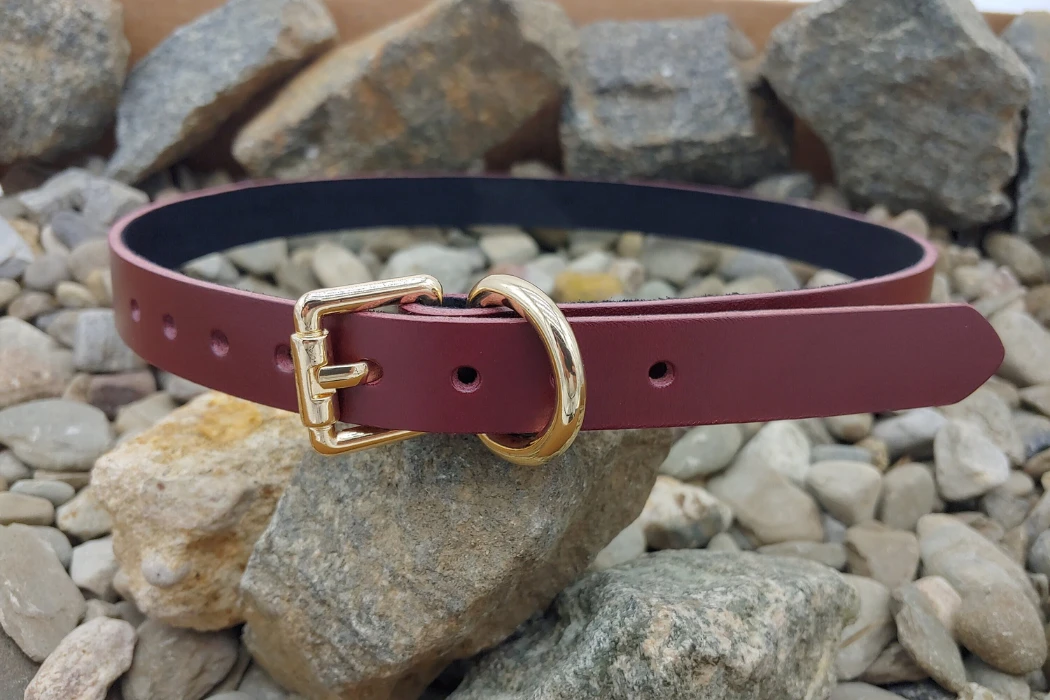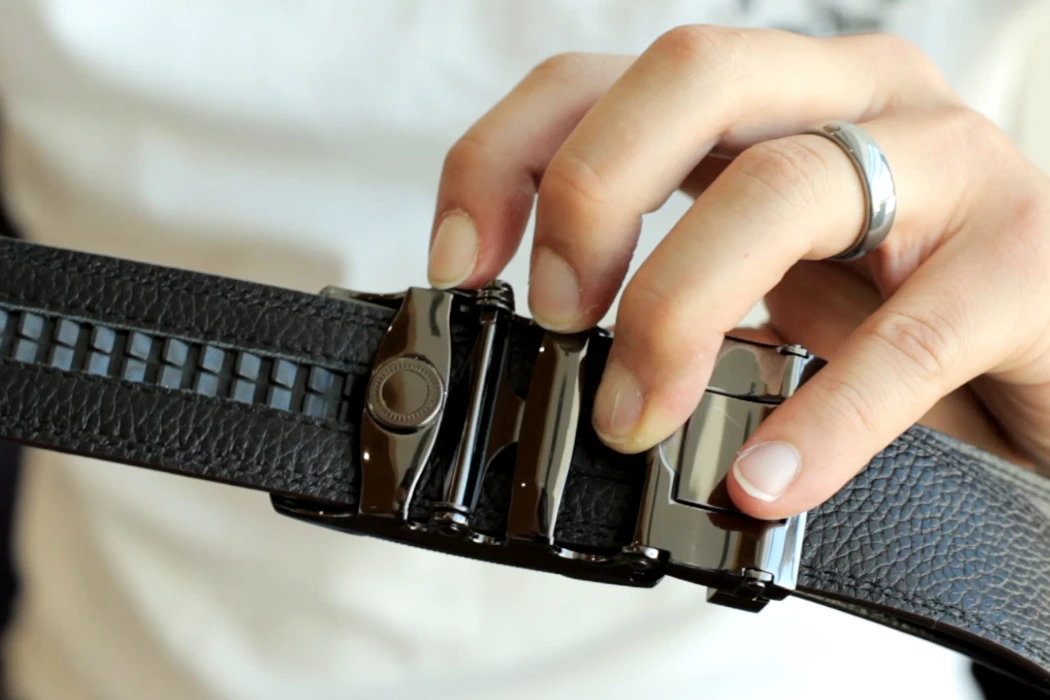
Wholesale leather belt sourcing requires a repeatable product specification, a realistic production plan and a complete delivered-cost comparison. A factory’s country does not by itself establish its certifications, available capacity or tariff treatment.
This article covers factory evaluation, product quality, packaging, logistics and payment terms. Compare suppliers against the same approved specification and verify the import assumptions for the actual product and destination.

Why Source Wholesale Belts from Cambodia?
Cambodia can be considered as part of a belt sourcing program when the proposed factory, material flow and delivery plan fit the order. Evaluate the named facility rather than assuming all factories share the same audits, quality systems or capacity.
Review the supplier’s evidence
- Identify the legal supplier, production address and work allocated to that facility.
- Request current audit or certification records relevant to the buyer’s requirements and check their scope and validity.
- Ask which materials are imported and where finishing, cutting and assembly take place.
- Review an approved sample, the production inspection plan and the documentation that will accompany shipment.
A national standards framework or a country-level social-compliance program is not evidence that a particular belt factory is ISO-certified or has passed a specific social audit.
Confirm capacity and timing for the order
Hoplok’s stated company monthly capacity is 200,000–300,000 leather belts and 600,000–800,000 PU belts. These figures are not a reserved slot for a new order. Confirm the selected factory, line allocation and material readiness.
For Hoplok belts, sampling takes 2–3 weeks and bulk production takes 60–90 days. Include customer approvals and transport in the replenishment plan. Compare the total route and operating requirements alongside cost; do not infer a 15–20-day manufacturing cycle from the sourcing country.
How much duty can you save?
Calculate a saving only after confirming the relevant rates. A country name or a general GSP reference is not sufficient: origin, product classification, entry date and program conditions all matter.
For US imports, confirm the complete HTS classification, origin, customs value and entry date, including any applicable Chapter 99 duties. Check the current US tariff schedule.
| Worksheet input | Evidence to retain |
|---|---|
| Classification | Material and construction description, full national code and any relevant ruling |
| Origin | Processing locations, material records and applicable origin assessment |
| Duty treatment | Current base and additional duties, or verified preference conditions |
| Delivered cost | Quote, freight, clearance and costs not already included |
Do not treat Poland, Italy or Cambodia as a universal zero-duty origin, or assign one combined percentage to every Chinese leather belt. Check the particular shipment and destination independently.
Separate customs charges from service fees
Ask the broker to identify applicable government fees, brokerage and any bond charges. Fees can change and a broker’s commercial charge is not a tariff rate. Keep the fee quote with the landed-cost calculation.
How should you evaluate wholesale belt quality?
Agree the material, thickness, finished dimensions and acceptable appearance before comparing samples. A leather trade name or facility rating does not establish a universal durability result.
Inspect the complete belt
Check the edges, stitching, holes and buckle attachment against the approved construction. Confirm the measurement reference and size marking. Assess the strap while fastened as well as flat, because layers and hardware interact during use.
Specify tests without inventing pass limits
Ask a suitable laboratory to identify methods for the selected material and intended use. Record the specimen, conditioning, method edition, units and acceptance criteria. Tensile, rubbing, flex and finish-adhesion results are meaningful only with those details.
A test-method number does not impose a universal belt thickness, pH, strength or service life. If a destination standard or retailer protocol applies, identify its scope and current requirements explicitly in the quality agreement.
Keep audit and product evidence separate
Review the relevant facility’s current audit documents. LWG explains that its certification does not guarantee the absence of restricted-substance failures in a final product. Inspect and test the actual product as agreed rather than treating a facility rating as a product pass.
Elevate Your Brand with Custom Leather Belts
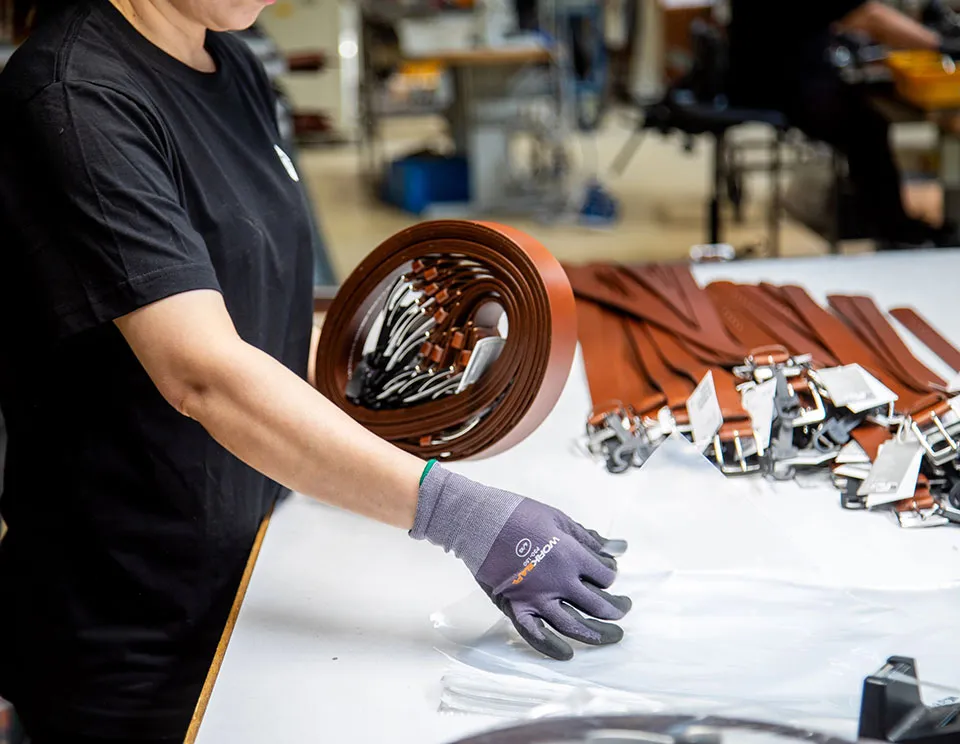
What Are the Best Retail Packaging Options?
Choose packaging from the belt’s actual dimensions, retail presentation and transport route. It should protect the strap and buckle while carrying the approved product information.
Match the pack to the sales channel
- A protective sleeve or bag can suit a belt that will be displayed separately at retail.
- A folding carton or gift box can provide additional presentation space but changes material cost and carton volume.
- Separators or covers may be needed to prevent buckle-to-strap contact. Validate these on a packed sample.
- Confirm how the retailer wants size, SKU and barcode information displayed.
Prepare label artwork for the actual product and destination with the importer. Material descriptions, origin marking and retailer instructions are separate requirements; a general HS heading does not determine every label.
Approve the master carton
Record the pack quantity, gross weight, carton dimensions and assortment. Evaluate the package for the actual distribution route and moisture exposure. There is no universal twenty-belt carton, strap size or packaging certification for wholesale belts.
Use the approved packing specification to compare quotes and to check the shipment. Changing the box or insert after approval can change carton volume, handling and freight cost.
Stock vs. Made-to-Order?
Stock describes existing inventory; made-to-order describes when production starts. Neither term determines the leather type, workmanship or service life.
When stock can help
Existing inventory may suit a buyer who accepts the available design and assortment. Ask for current stock quantities, size distribution, condition, lot consistency and the time required for any relabeling or repacking. Confirm availability before making a delivery promise.
When custom production fits
Made-to-order production allows the buyer to agree materials, measurements, hardware, branding and packing before manufacturing. It can use leather or synthetic materials and can involve mechanized processes; it is not necessarily handmade or made to each wearer’s exact measurements.
- Compare samples using the same functional and appearance checks.
- Request composition and construction details for either route; stock can be full-grain and custom production can use coated or split materials.
- Evaluate any sustainability claim with relevant evidence rather than the stock/custom label.
- For Hoplok custom belts, plan MOQ 300 leather or 1,000 PU, samples 2–3 weeks and bulk production 60–90 days.
Keep the decision focused on specification control, inventory risk and the actual delivery plan. A guaranteed lifespan cannot be assigned to either ordering route.
What is the Best Way to Ship?
Compare complete freight quotes for the actual packed volume, required arrival date and named delivery point. Agree the Incoterms® rule, insurance and customs responsibilities separately.
Understand where risk transfers
Under FOB, risk transfers when the goods are on board the vessel at the named port of shipment. It is a sea or inland-waterway rule. ICC guidance notes that FCA may be more appropriate where containerized cargo is handed to a carrier before loading.
Under CIF, the seller arranges the specified freight and insurance, but risk transfers at shipment rather than on arrival. Under DAP, the seller bears risk to the named destination with goods ready for unloading; import clearance remains with the buyer. Confirm the exact rule and place in the contract.
Compare the complete route
- Obtain carton counts, dimensions and gross weight before comparing air, LCL and FCL quotes.
- List origin and destination charges, clearance, inland delivery, insurance and any costs excluded from the quote.
- Agree appropriate moisture protection and handling for the shipment.
- Prepare consistent commercial invoices, packing lists and origin documentation as applicable.
Ask the importer or compliance provider which requirements apply to the intended user and destination. Children’s product rules should not be described as universal requirements for every adult belt. Allow time for customs and final delivery; no transport mode guarantees clearance without delay.
Which Payment Terms (T/T vs L/C) are Best?
Choose payment terms by assessing the transaction, counterparties, bank costs and document requirements. Hoplok’s payment percentages and accepted instruments must be confirmed in the written quotation.
Bank transfer
A T/T payment is a bank transfer. The contract must specify each payment amount, trigger and due date; there is no mandatory 30/70 split or universal clearing time. Review how a deposit, inspection and shipment release affect each party’s exposure.
Letter of credit
A documentary letter of credit provides a bank undertaking subject to its terms and complying documents. The International Trade Administration explains that banks deal in documents rather than goods. It does not replace inspection or guarantee that the physical shipment meets the buyer’s quality requirements.
- Have the relevant banks review the proposed instrument, issuing-bank acceptability, expiry and presentation requirements.
- Agree which documents the supplier can actually provide and ensure their wording matches the transaction.
- Obtain the actual issuance, confirmation, amendment and discrepancy charges where applicable.
- Keep quality claims and remedies in the sales contract and inspection plan.
Compare the total cost and operational burden of the available options. Fixed bank-fee percentages, settlement times or preferences based solely on order size are not reliable substitutes for the proposed transaction terms.
How to Negotiate with Suppliers?
Negotiate from a defined specification and a credible order plan. Savings should come from a documented change in cost or risk, with any effect on quality, assortment or delivery made explicit.
Make quotations comparable
- Issue the same material, size breakdown, buckle specification, logo artwork and packing requirements to each supplier.
- Separate one-time development and tooling charges from recurring unit cost.
- Ask suppliers to identify which assumptions change when quantity, color mix or delivery splits change.
- Record the agreed inspection criteria and what is included in the price.
Use evidence from the proposed program
Hoplok’s MOQ is 300 leather belts or 1,000 PU belts. Discuss an assortment against those confirmed minimums rather than promising a reduction to 150 pieces. Ask for a revised quotation when the order assumptions change.
A forecast can help a supplier assess material purchasing and production allocation, but it does not guarantee a discount or credit extension. Quantify possible savings from fewer variants, shared hardware or simpler packaging using actual quotations.
For repeat business, compare recorded delivery performance, accepted quantities and claim handling over an agreed period. Set targets suitable for the program; invented sector-wide percentages or anonymous low-price deals provide no evidence about the supplier’s ability to serve the order.
Why Partner with Hoplok?
Hoplok coordinates material finishing and finished-goods assembly through its China and Cambodia facilities. ProPelli is Hoplok’s leather finishing facility in Cambodia. It receives crust leather from partner tanneries, specializes in belt leather and other leather finishing, and holds a current LWG Gold rating. Confirm the facility, material specification and required product testing for the order; facility audit status does not establish a universal defect rate.
| Core Strength | Technical Capability | Measured Advantage |
|---|---|---|
| Material finishing and assembly | ProPelli finishes crust from partner tanneries; product assembly is allocated to the agreed factory | Confirm material, facility and order requirements |
| Facility documentation | ProPelli holds current LWG Gold for leather finishing; review other records by facility and scope | Keep audit evidence separate from product test and inspection results |
| Company monthly belt capacity | 200,000–300,000 leather belts; 600,000–800,000 PU belts | Confirm available allocation for the proposed order |
Proven Manufacturing and Vertical Integration
Hoplok operates four facilities covering 19,000 m²: HongDing in Dongguan (5,000 m², belts), Hoplok in Cambodia (4,000 m², bags), Hongcen Max in Cambodia (5,000 m², belts), and ProPelli in Cambodia (5,000 m², leather finishing). Ask which facility will handle your order and how sample approvals, material specifications and inspections will be coordinated.
ProPelli is Hoplok’s LWG Gold-rated leather finishing facility in Cambodia. It specializes in belt leather and other finishes applied to crust leather from partner tanneries. This arrangement connects leather sourcing, finish development, and belt assembly while retaining the upstream tannery as part of the supply chain.
Hoplok’s stated monthly capacity is 200,000–300,000 leather belts and 600,000–800,000 PU belts. Confirm the available production allocation for the proposed order. Coordinate the order’s materials, approvals and production slot with the intended replenishment schedule.
Standards, Compliance, and Quality Performance
Review Hoplok’s relevant facility records and the agreed product inspection results separately. ProPelli holds a current LWG Gold rating for leather finishing; this rating does not establish a fixed defect percentage for finished belts.
For the proposed Hoplok belt, agree the relevant test methods and acceptance criteria with the buyer and testing provider. A draft regional specification does not establish mandatory limits for all destinations or a standing Hoplok test guarantee.
Record the order’s inspection plan, defect categories, sampling basis and release decision. Agree packaging and labeling for the product and destination. Confirm which results apply to the selected components and finished belt.
Final Thoughts
Evaluate Cambodia proposals on the factory’s actual records, approved samples, production allocation and verified delivered cost. Country-level descriptions cannot establish a particular supplier’s compliance, quality or tariff advantage.
For a Hoplok order, connect the approved materials and construction with the responsible facility, inspection requirements and delivery plan. Calculate landed cost from the actual quotation and verified import assumptions. Evaluate quality from the relevant sample and order evidence rather than a universal defect-rate claim.
Frequently Asked Questions
What is the HS Code for leather belts?
HS heading 4203.30 covers belts and bandoliers of leather or composition leather. Confirm the complete destination code for the actual construction with the importer or customs broker; a PU-coated textile belt may require a different classification.
What is the import duty rate for belts from China to USA?
Confirm the full HTS code, origin and expected entry date, then check the base and any additional duties in the current US tariff schedule. There is no single rate for every belt shipment.
How does sourcing from Cambodia save on tariffs?
Manufacturing origin can affect tariff treatment, but a saving requires verification of the applicable origin rule and current measures. Compare landed costs after that review.
What is the standard packaging for wholesale belts?
Agree individual protection, pack quantities, assortment, carton dimensions and markings for the particular product, retailer and route. Approve a packed sample rather than assuming a standard carton quantity.
Can I mix sizes and colors in a bulk order?
Submit the requested assortment for a quotation. Confirm quantities, material minimums, packing and any added costs; a predefined dozen-pack is not a universal factory rule.
Which Incoterms (FOB vs DDP) are best for belt imports?
Choose the rule that matches the transport and the parties’ ability to manage customs and delivery. DDP requires the seller to handle import obligations, which must be feasible in the destination. FOB is for sea or inland-waterway shipment; consider FCA for appropriate container handovers.