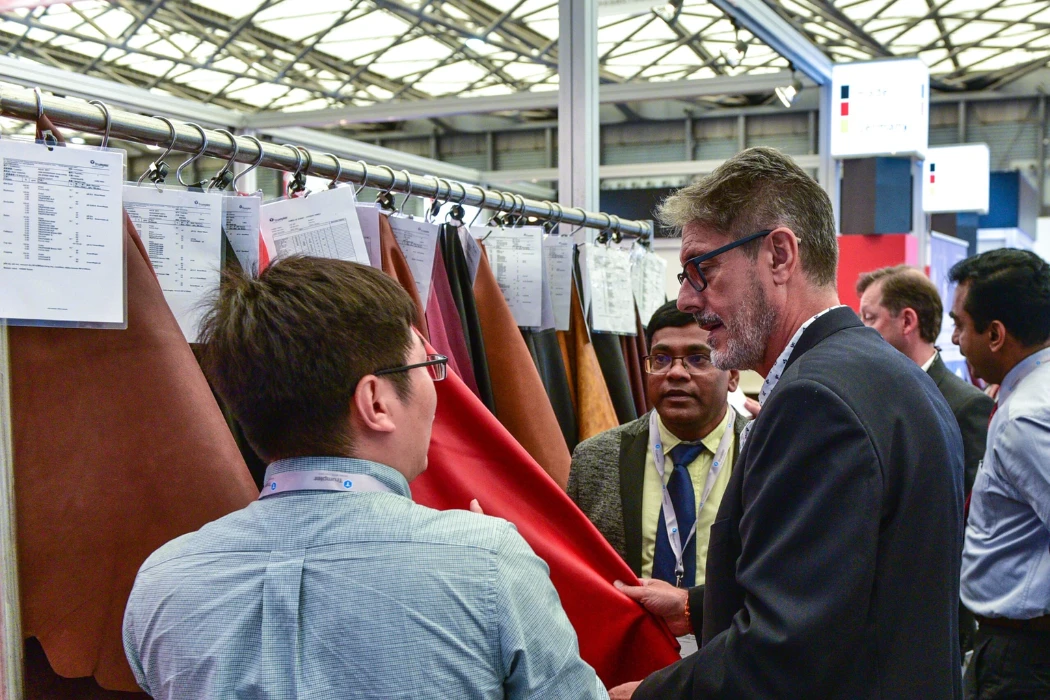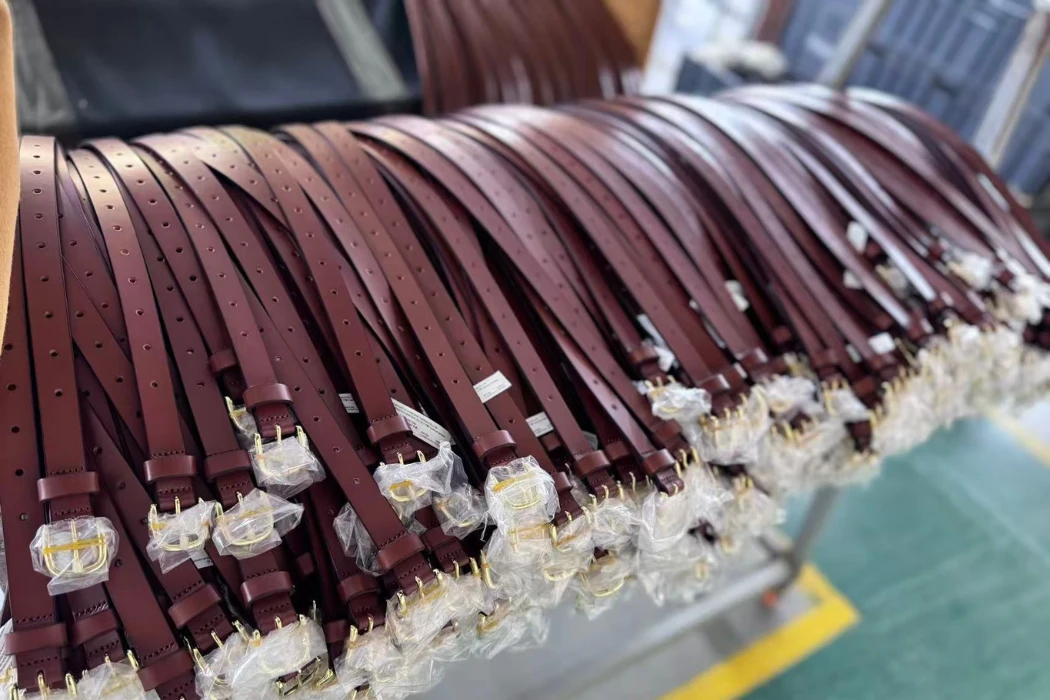
In high-volume leather belt manufacturing, material yield and edge precision dictate your final costs. When scaling production, even a one percent drop in scrap saves massive amounts of money. The cutting room is exactly where this efficiency begins. For decades, factories relied entirely on manual mechanical methods, but digital technology has recently transformed how thick leather hides are processed.
The industry primarily uses two systems to cut belts: hydraulic clicker presses and CNC (Computer Numerical Control) cutters. A clicker press uses extreme physical force to push a custom steel rule die through the leather. In contrast, a CNC system uses a computer-guided oscillating blade to slice the hide based on a digital file. Both methods have different setup requirements, mechanical workflows, and material yield outcomes.
Choosing the right equipment depends on your production scale, specific width tolerances, and long-term tooling budget. This guide breaks down the technical differences between clicker presses and CNC systems. By comparing their mechanics, scrap rates, and costs, production teams can determine which cutting technology best fits their high-volume manufacturing lines.
What Are the Core Differences Between Clicker Presses and CNC Systems?
The Mechanics of a Hydraulic Clicker Press
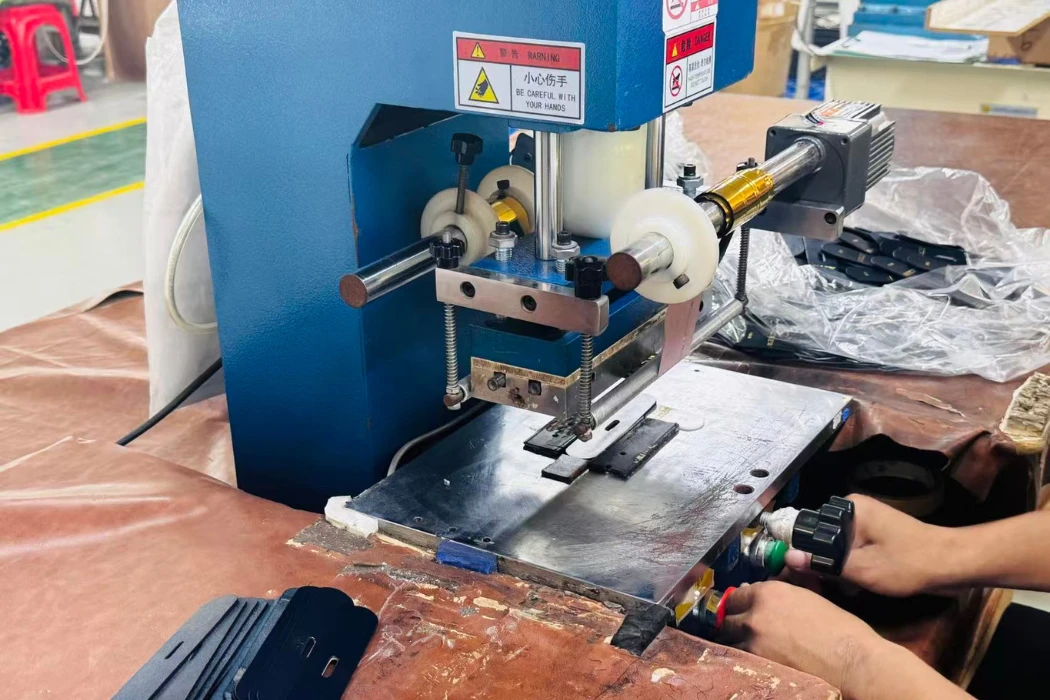
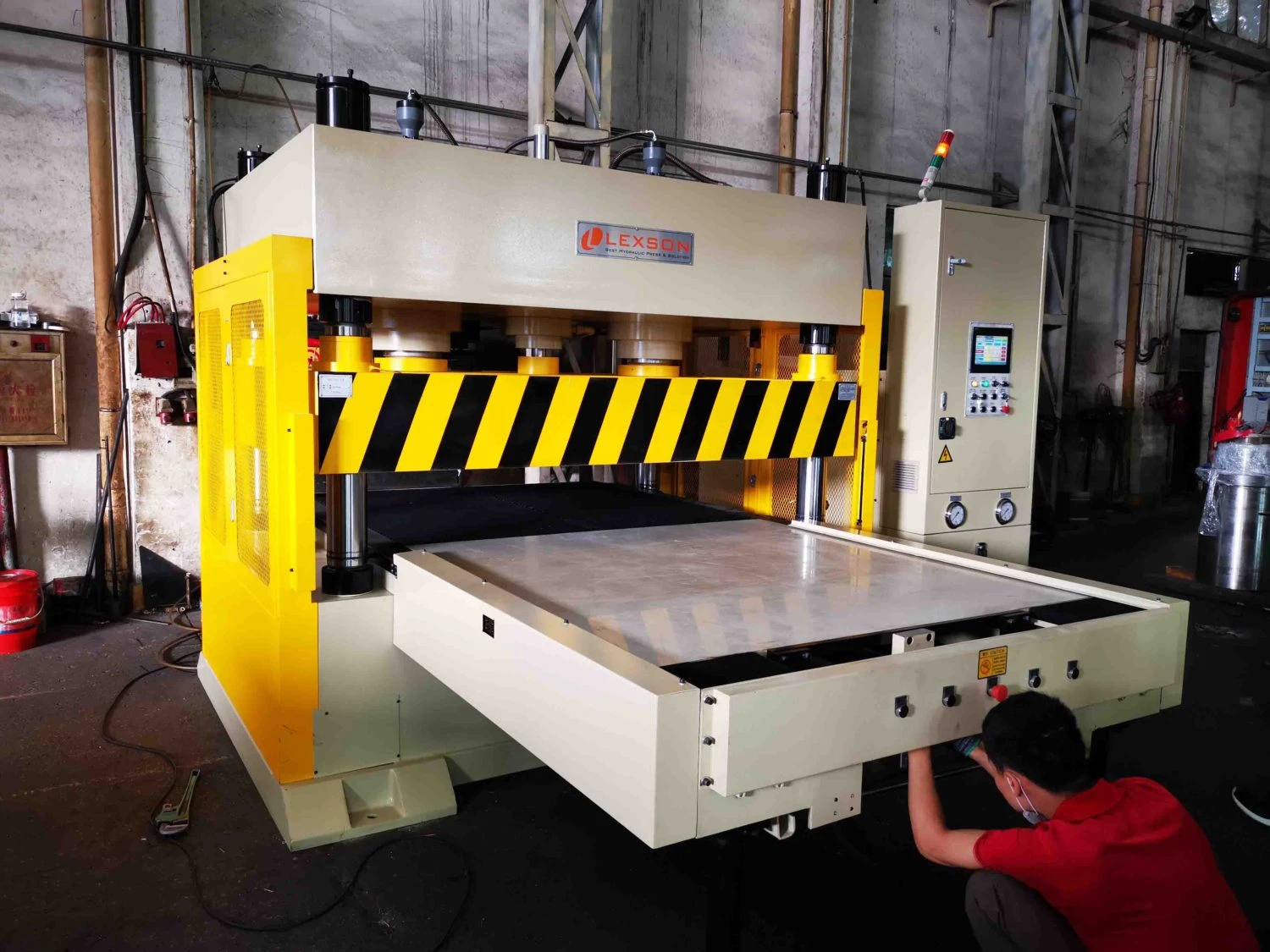
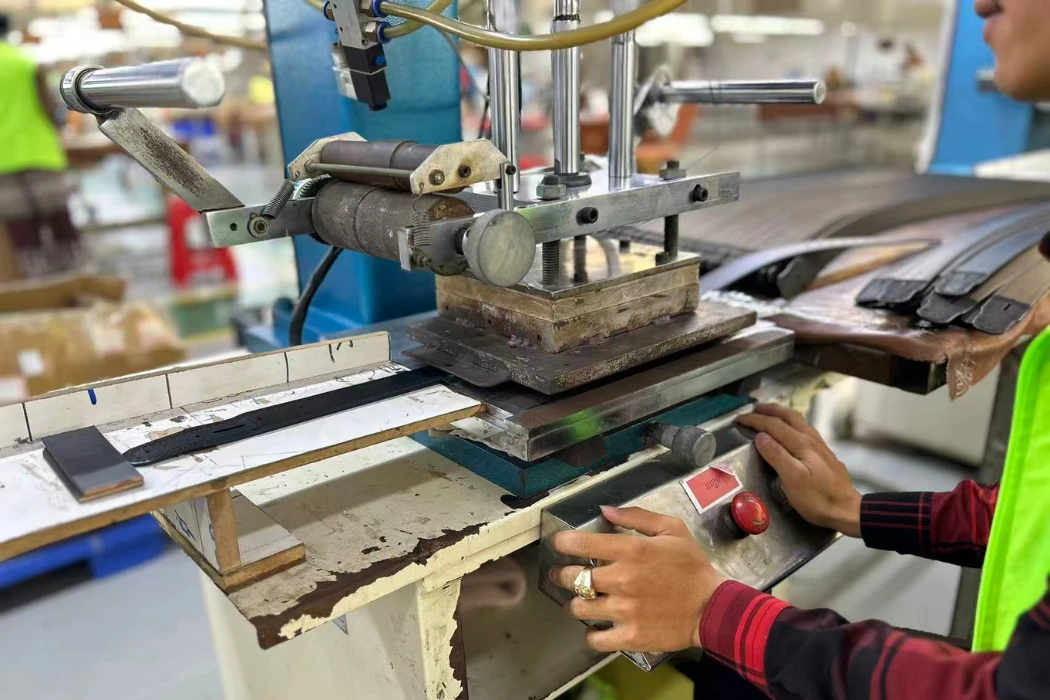
A hydraulic clicker press is a powerful machine that uses blunt physical force to cut leather.
- It requires a custom-made steel rule die, which is a sharp metal cookie cutter shaped exactly like your belt.
- The operator places the leather on a cutting board, sets the die on top, and pulls a lever.
- The press pushes down with immense pressure, often exceeding 20 tons, to stamp out the shape instantly.
Because it stamps the entire shape at once, this method is extremely fast per cut but lacks digital flexibility.
How CNC Digital Cutting Technology Works
CNC (Computer Numerical Control) systems take a completely different approach by replacing physical dies with software and moving blades.
- A computer reads a CAD digital file to understand the exact belt dimensions.
- A mechanized arm moves rapidly over the leather hide, using an oscillating blade vibrating at 10,000 RPM to slice through the material.
- A strong vacuum system pulls the leather flat against the cutting bed so it does not shift during the cut.
Then, the blade glides through the leather smoothly, which creates incredibly clean edges without needing heavy downward pressure.
Setup Time and Workflow Comparison
The workflow for these two machines differs greatly when starting a new production batch.
- A clicker press requires a human to physically find, carry, and lock a 5-pound steel die into place.
- Changing a physical die takes about 3 to 5 minutes between different belt styles.
- A CNC cutter only needs an operator to load a new digital file, which takes less than 30 seconds.
So, CNC systems win on setup speed, but clicker presses still cut simple repetitive shapes faster once the machine is fully set up.
How Do Cutting Methods Impact Leather Scrap Rates?
Manual Nesting with Steel Rule Dies
When using a clicker press, a human operator decides exactly where to place the die on the hide.
- Operators rely on visual inspection to avoid natural defects like scars, bug bites, and wrinkles.
- Manual placement usually leaves physical gaps of 3mm to 5mm between each belt cut to prevent overlapping.
- Human fatigue throughout a long shift naturally leads to less efficient layouts and more wasted material.
Because humans cannot perfectly calculate complex geometry on the fly, traditional die cutting creates a higher percentage of unusable leather scrap.
Digital Nesting Algorithms in CNC
CNC systems completely solve this human error issue by using advanced digital nesting software.
- A high-resolution camera scans the entire leather hide to map out its exact outer shape and mark any internal defects.
- The computer algorithm then calculates the tightest possible layout, safely reducing the gaps between cuts to just 1mm to 2mm.
- The software can automatically rotate and interlock belt shapes to maximize the number of straps extracted from a single hide.
Therefore, the machine’s mathematical precision ensures every usable square inch is converted into a product, which drops the scrap rate significantly.
Material Yield Percentage Differences
The financial difference between manual and digital nesting becomes obvious when you look at the raw production data.
- Standard clicker press operations typically achieve a material yield of 65% to 75%.
- CNC digital nesting consistently pushes the material yield up to 80% to 85%.
- This 10% to 15% improvement means factories save hundreds of square feet of expensive leather on every large order.
Ultimately, while both methods produce great belts, the digital system pays for itself over time by drastically reducing raw material waste.
| Cutting System | Typical Material Yield | Average Gap Between Cuts | Nesting Method |
|---|---|---|---|
| Hydraulic Clicker Press | 65% – 75% | 3mm – 5mm | Manual Human Visual |
| CNC Digital Cutter | 80% – 85% | 1mm – 2mm | Algorithmic Camera Scan |
Which System Offers Better Dimensional Tolerance for Belts?
The Importance of Exact Strap Widths
A belt must fit perfectly into its metal buckle hardware, making width tolerance a critical manufacturing metric.
- If a belt is just 1.0mm too wide, it will scrape against the buckle and peel the edge paint.
- If it is 1.0mm too narrow, the strap will slide loosely and feel cheap to the customer.
- Thick leathers, typically between 3mm and 5mm thick, naturally resist cutting and push back against the blade.
Therefore, the cutting machine must hold absolute dimensional stability throughout the entire production run.
Clicker Press Tolerance and Die Deflection
Hydraulic presses face physical challenges when maintaining exact dimensions on thick hides.
- Standard steel rule dies generally hold a tolerance of +/- 0.5mm to 1.0mm during high-speed runs.
- When the press hits dense leather, the physical steel die can temporarily bend or deflect by 0.2mm.
- As the plastic or metal cutting board underneath wears down over time, the cut angle can slightly shift.
So, while a press is highly efficient, minor physical variations will always occur during the stamping process.
CNC System Precision Metrics
Digital cutting systems eliminate physical deflection by using high-frequency oscillating blades.
- A CNC machine operates with a mechanical positioning accuracy of +/- 0.1mm across the entire cutting bed.
- The software continuously adjusts the blade angle, compensating for the exact 4mm thickness of heavy leather.
- The heavy vacuum system holds the material completely flat, preventing the hide from shifting during the cut.
As a result, digital cutters guarantee that the first belt and the thousandth belt match the buckle hardware perfectly.
Do Maintenance and Tooling Costs Affect Your Bottom Line?
Steel Rule Die Creation and Physical Storage
Traditional die cutting requires a physical tool for every single belt size and style.
- Creating a single custom steel rule die costs between $50 and $150.
- If you produce 100 different belt styles in 5 sizes each, you must buy and store 500 individual physical dies.
- Physical steel dies eventually dull after thousands of hits and must be manually re-sharpened or replaced entirely.
Over time, storing and maintaining this massive physical inventory drains factory space and increases hidden costs.
CNC Blade Replacement and Software Upgrades
Digital cutting systems shift the financial burden from physical inventory to software and replaceable blades.
- Instead of custom dies, CNC machines use universal tungsten carbide blades that cost around $15 to $30 each.
- A single blade can cut thousands of belts before needing a quick swap, which takes just 1 minute.
- Digital files cost nothing to store, allowing you to keep thousands of belt patterns on a single 1-terabyte hard drive.
So, while the initial machine costs more, the daily running expenses are much lower because you eliminate custom tooling.
Long-Term Cost Breakdown
When planning a manufacturing budget, you must calculate both the upfront investment and the daily operational expenses.
- A hydraulic clicker press is cheap upfront, usually costing between $3,000 and $8,000, but requires constant die purchases.
- A professional CNC leather cutting system demands a high initial investment of $30,000 to $80,000.
- However, CNC systems recoup this cost quickly through 15% better material yield and zero die fabrication fees.
Therefore, high-volume production lines usually save money with digital cutters, while small boutique shops still benefit from the low startup cost of a clicker press.
| Cost Category | Hydraulic Clicker Press | CNC Digital Cutter |
|---|---|---|
| Initial Machine Cost | $3,000 – $8,000 | $30,000 – $80,000 |
| Tooling Cost Per Style | $50 – $150 (Physical Die) | $0 (Digital CAD File) |
| Consumable Maintenance | Re-sharpening or replacing full dies | $15 – $30 (Replacement Blade) |
| Storage Space Needed | High (Physical Shelving Racks) | Zero (Computer Hard Drive) |
Can Your Production Volume Dictate the Right Cutting Technology?
Best Uses for Low Volume and Custom Runs
Small batch production requires low upfront costs and immediate flexibility over maximum material yield.
- A boutique brand making just 50 to 200 belts per month can easily afford the cheap physical dies.
- When buying only 10 to 20 leather hides, the minor waste from a clicker press does not severely hurt profits.
- Operators can train on a mechanical press in just a few days without needing computer software skills.
So, manual presses make financial sense for small workshops testing new styles or handling custom orders.
Scaling for High-Volume Global Retail
Large retail orders demand mathematical efficiency and absolute consistency to protect profit margins.
- When a factory processes 10,000 to 50,000 belts a month, a high scrap rate costs thousands of dollars in wasted leather.
- CNC machines guarantee the exact 0.1mm tolerance across every single unit, preventing buckles from failing.
- Digital files allow operators to switch between dozens of different size lengths in just seconds.
Because of this, global brands rely heavily on digital cutters to handle massive, complex production runs efficiently.
Implementing Hybrid Cutting Floors
Many advanced manufacturing facilities choose to mix both technologies on the same production floor to optimize speed.
- Engineers use CNC machines to cut the main long belt straps, ensuring perfect width and high material yield.
- Then, they use small clicker presses to stamp out the tiny leather belt loops, which are only 10mm to 15mm wide.
- This allows the expensive digital cutter to focus on the large parts while the cheap press handles the simple pieces rapidly.
Ultimately, this hybrid workflow perfectly balances the extreme stamping speed of the press with the unmatched precision of the digital cutter.
Frequently Asked Questions About Leather Belt Cutting
Are CNC machines faster than clicker presses for leather belts?
Not always. A CNC machine takes longer per individual cut because the blade must travel the entire perimeter. However, it eliminates manual die-placement time. For pure stamping speed of one simple shape, a clicker press is faster, but CNC wins in overall workflow efficiency.
What is the average lifespan of a leather cutting die?
A standard steel rule die can strike the leather between 10,000 and 20,000 times before the blade becomes dull. After that, it must be manually sharpened or replaced entirely to prevent ragged, tearing leather edges.
Can CNC machines cut thick vegetable-tanned bridle leather?
Yes. Heavy-duty CNC systems use specialized oscillating tungsten blades. These blades vibrate rapidly and easily slice through 4mm to 6mm thick vegetable-tanned leather without stalling or deflecting.
How much leather is wasted when using a clicker press?
Factories typically lose 25% to 35% of the hide as scrap when using manual clicker presses. This happens primarily because human operators must leave larger safety gaps between cuts to avoid overlapping the dies.
Do you need a skilled operator to run a CNC leather cutter?
Yes. While the machine physically does the cutting, the operator must understand CAD software. They also need to calibrate the blade depth and know how to read the natural grain direction of the leather hide.
Which cutting method produces cleaner belt edges?
CNC cutting produces slightly cleaner edges because the vibrating blade slices smoothly through the fibers. A clicker press uses extreme crushing force, which can sometimes slightly compress the edge of very thick leather.
Conclusion
In high-volume leather belt manufacturing, choosing between a hydraulic clicker press and a CNC digital cutter comes down to your operational priorities. Manual presses offer cheap setup for simple tasks, while CNC systems deliver perfect 0.1mm tolerances and save 15% more raw material. For global brands, reducing scrap and ensuring identical hardware fitment is non-negotiable. If you are building a scalable retail program and need a partner that utilizes both hybrid cutting floors and advanced digital nesting, Hoplok Leather Goods provides the exact manufacturing solutions to protect your margins and deliver premium quality.