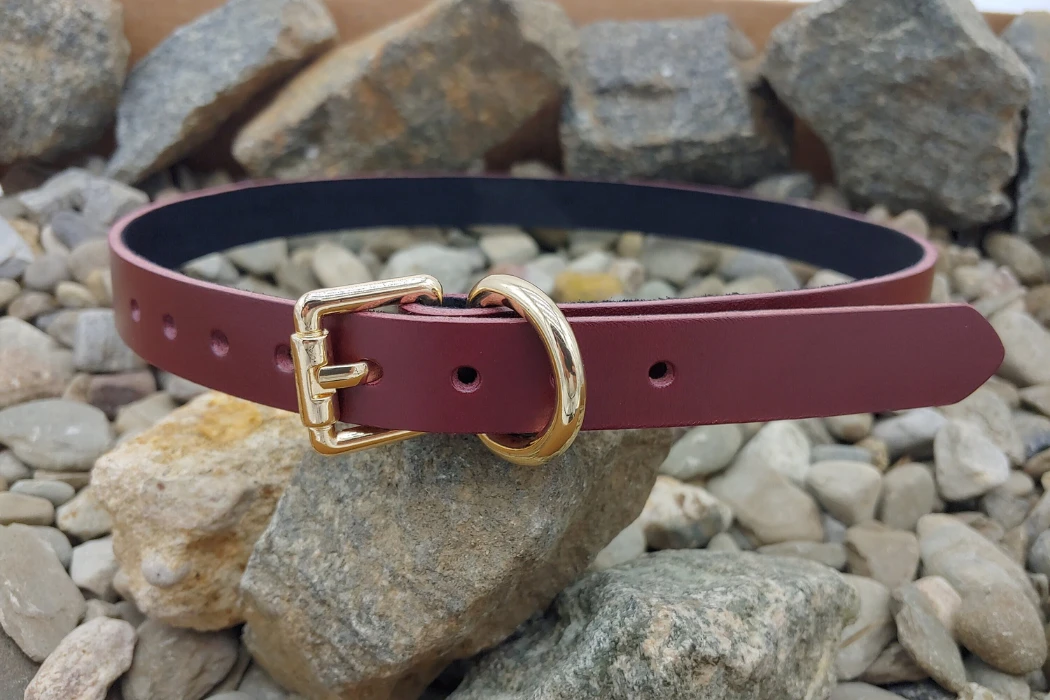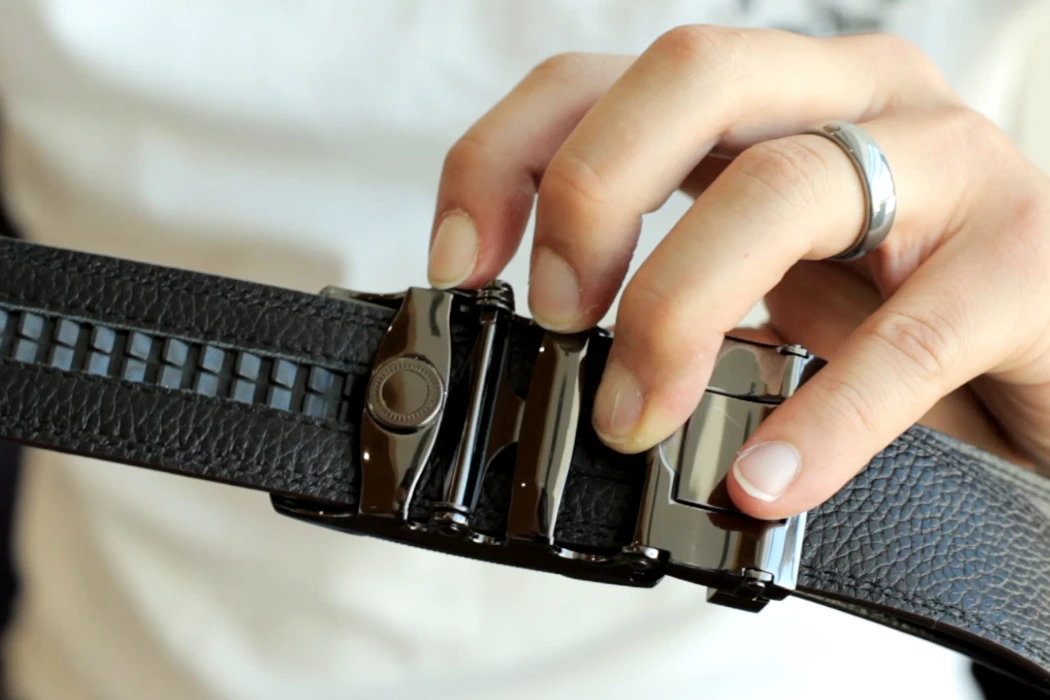
For a bag buyer, “full-grain versus top-grain” is an incomplete material specification. The terms can overlap, while the finish, thickness and construction often explain more about the bag’s appearance and performance. Clarifying what the supplier means prevents comparisons between materials that were never equivalent.
Full-grain describes retention of the original grain surface, not the entire thickness of a hide. “Top-grain” is used inconsistently in retail descriptions and is not a fixed second-quality grade. This guide compares full-grain with corrected-grain options where suppliers use top-grain to mean a buffed surface, then explains the evidence needed for a bag purchase.
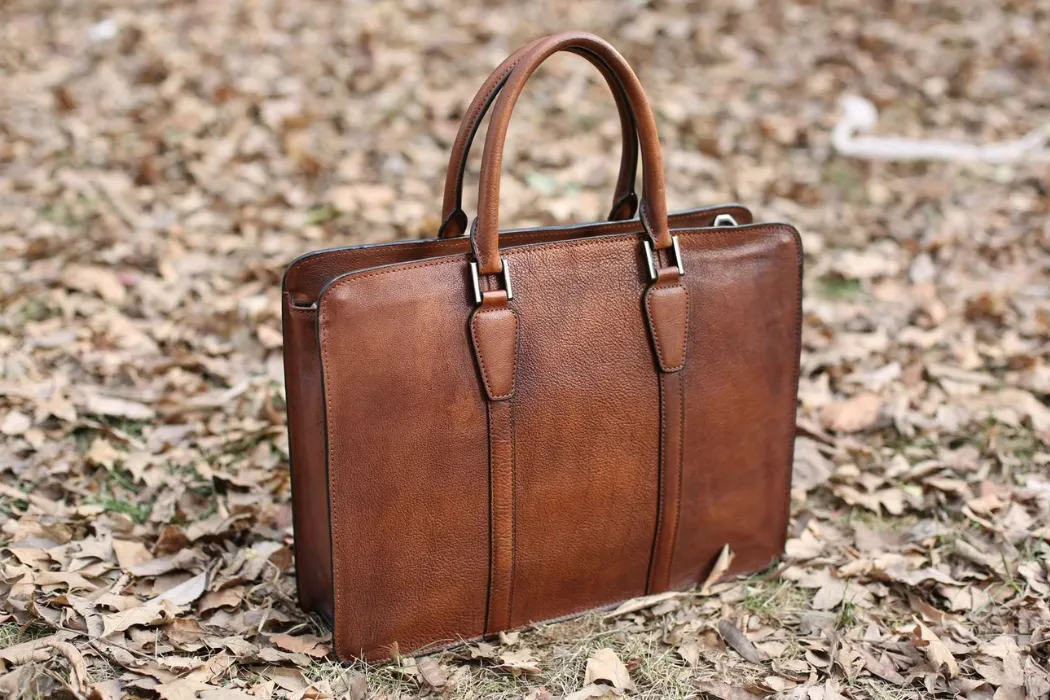
Full-Grain vs. Top-Grain: Quick Comparison for Retail Buyers
Full-grain retains the original grain surface without its removal by buffing, snuffing or splitting. The Leather Research Laboratory notes that top-grain can mean the same as full-grain. Ask whether the offered material is full-grain, corrected-grain or a coated split, and specify its finish separately. Neither a price tier nor a guaranteed life follows from the words alone.
Structural Integrity and Aesthetic Evolution
A full-grain material retains its original grain surface after normal leather preparation. Corrected-grain leather has surface modification to achieve the intended appearance. These descriptions do not establish a universal strength ratio, and full-grain leather may still be split from the flesh side to achieve its specified thickness.
- Appearance: Natural character and visible aging depend on the finish and use. Full-grain can have a protective finish; top-grain does not automatically mean a non-aging coating.
- Material properties: Compare the supplied thickness, tanning, finish and test results. Do not infer breathability or tensile strength from the surface term alone.
Performance Specifications: Weight, Durability, and Maintenance
For procurement, evaluate the actual leather together with the bag pattern, reinforcement and hardware. Weight, handle, maintenance and tested performance need separate requirements.
- Weight: Measure the material mass and finished-bag weight. Full-grain is not automatically 10% heavier, and surface correction does not establish the final thickness.
- Care: Protective finishes can affect stain and water behavior on either surface category. Obtain care guidance for the selected leather.
- Yield: Assess the cutting layout, usable areas and agreed mark allowance. Surface correction can alter appearance but does not remove every defect or guarantee a fixed yield.
Approve a material sample and a finished-bag sample that demonstrate the intended look. Record which variations are acceptable across the body, handles and paired panels.
Understanding Full-Grain: Features, Pros & Cons
Full-grain leather can come from different animal hides or skins. Its defining feature is retention of the original grain surface, not a fixed bovine grade, thickness, tensile value or lifespan. The selected leather must still suit the bag’s structure and finish requirements.
The Unbroken Grain: Structural Integrity and Natural Aesthetics
The grain surface is exposed during leather preparation after removal of hair and associated epidermis. Full-grain does not retain the animal’s epidermis, and it does not mean that the hide has received no tanning, thickness adjustment or finish.
- The finish can influence moisture exchange, feel and appearance. An open-looking surface is not a guaranteed breathability result.
- Natural marks can be visible, depending on selection and finish. Agree where marks are acceptable and which defects should be excluded.
- Specify the thickness and tolerance for each component. There is no universal full-grain bag-leather thickness range.
Mechanical Performance and B2B Quality Benchmarks
Use tests that address the proposed bag and its materials. A leather test report supports a defined property; it does not qualify the bag for aviation, marine, fire-safety or load-bearing equipment use.
- Tensile and elongation: ISO 3376 covers leather tensile strength and percentage extension. A standalone “90 N” is a force, not a complete tensile-strength specification, and “ISO 3376-2” is not the cited method.
- Stitch tear: ISO 23910 measures stitch tear resistance of leather. Set a justified acceptance criterion; a material test does not guarantee that every bag seam or handle attachment will hold.
- Flex: ISO 5402-1 is a leather flexometer method. Specify conditions and acceptance criteria rather than assigning every full-grain leather 50,000 crack-free cycles.
- Bag assembly: Evaluate the handle and strap attachments, seams, closures and intended carrying conditions separately. Ordinary leather bags do not acquire fire-safety approval from their material name.
- Elongation interpretation: Extension at break and dimensional change during ordinary use are different observations. Agree which property matters and retain the test conditions with the result.
Full-grain material still needs selection, cutting and finishing control. Hide size and usable area vary; neither a 55–60-square-foot hide requirement nor stain resistance from “natural density” is universal.
Understanding Top-Grain: Features, Pros & Cons
“Top-grain” should be clarified in the purchase specification. If the supplier means corrected-grain leather, confirm the degree of surface correction, finish, backing if any, and thickness. It is not automatically a second-best quality or a material with one fixed thickness range.
Characteristics and Surface Treatment of Top-Grain Leather
Correction can reduce visible surface irregularities before finishing. It does not mean that every natural mark is removed or that all top-grain leather follows the same process.
- Surface description: Ask whether buffing, embossing or other correction is used. Distinguish corrected-grain from a finished split leather.
- Thickness: Specify the actual millimeter value and tolerance required for the component. Thickness is separate from grain terminology.
- Finish: Define color, gloss, grain appearance and permissible variation against physical references. Embossing or a topcoat does not guarantee perfect matching.
Technical Trade-offs: Durability, Breathability, and Maintenance
Compare the corrected and full-grain candidates at suitable thickness and construction. Their coatings, tanning and backing may differ as much as their surface preparation.
- Moisture behavior: A coating can influence permeability, but the result is material-specific. Use relevant test evidence if breathability matters to the application.
- Shape retention: Assess the leather and reinforcement under the intended loading. Buffing alone cannot predict how much a handle or panel will stretch.
- Maintenance: Check cleanability and stain response on the actual finish with the supplier’s care instructions.
- Aging: Color, gloss and surface wear can change with use. Neither corrected-grain nor full-grain is guaranteed to remain static or develop a particular patina.
A corrected-grain material can meet a demanding bag specification, and a full-grain material can be unsuitable for a particular construction. Approve performance and appearance rather than a universal quality ladder.
Scale Your Brand with Premium Custom Leather Bags
Develop the material, construction and finish for your bag brief. Hoplok operates four facilities across China and Cambodia, including ProPelli leather finishing. Confirm material availability, facility certification scope and the quality plan for the actual order.
Start Your Custom Collection →
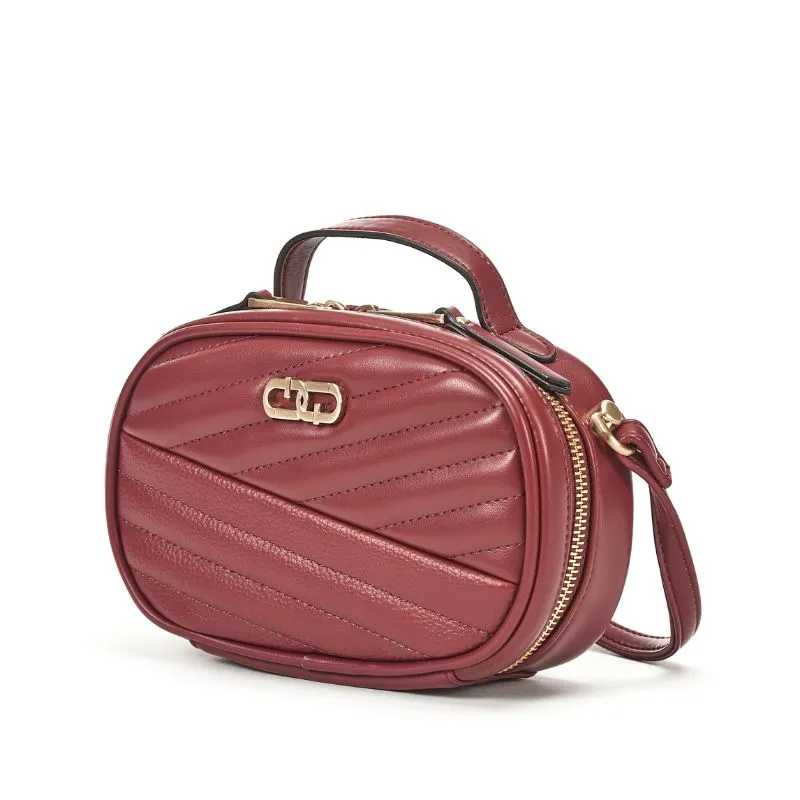
Head-to-Head Analysis: Durability in High-Use Scenarios
Durability is a property of the selected material and complete bag under its intended use. Compare handles, folds, edges and closures as well as the body leather. Neither surface description promises decades of service.
| Durability Factor | Full-Grain Leather | Corrected-Grain Option |
|---|---|---|
| Structural Integrity | Verify the selected leather and bag construction | Verify the selected leather and bag construction |
| Surface Wear | Finish-specific scratching and wear behavior | Finish-specific scratching and wear behavior |
| Tensile Strength | Test the relevant specimen and direction | Test the relevant specimen and direction |
Structural Integrity: Fiber Density and Tensile Strength
The material’s fiber structure is relevant, but strength also depends on hide area, processing, thickness and condition. A material tensile result does not establish the maximum load of a bag with seams and hardware.
For a corrected-grain candidate, review the actual surface treatment and test report. Avoid assuming that every corrected material stretches more than every full-grain material. Finished-handle testing is especially useful where the reinforcement and attachment carry part of the load.
Surface Resilience and Environmental Degradation
Inspect and test the finish against the handling conditions the customer will encounter. Compare the same color and construction where possible.
- Abrasion and scratches: Assess the actual finish; an exposed full-grain surface can also mark. A surface category is not a scuff-resistance claim.
- Moisture and aging: Confirm care, rubbing and exposure requirements without treating patina as proof of breathability or protection.
- Certification: LWG certification concerns facilities and their defined scope. It does not guarantee a finished-bag defect rate below 1% or replace incoming and final-product inspection.
Keep the test names and units correct: ISO 3376 addresses tensile strength and extension; ISO 3377-2 addresses double-edge tear. Neither is a universal bag pass specification. Ask the laboratory to identify the appropriate current method and report the material, conditioning and direction. Avoid transferring unrelated upholstery criteria to fashion bags.
Which Grade Offers Better Color Fastness and Finish Consistency?
Colorfastness and finish consistency are separate from whether the original grain surface was retained. Compare dry and wet rubbing, relevant exposure behavior and batch variation for the actual leather finish.
Corrected-Grain Leather: Specifying a Consistent Finish
Where the brief calls for uniformity, use an approved range of samples and measurable appearance criteria. Surface correction is one production option, not a guarantee that every panel will be identical.
- Confirm the intended correction and grain pattern, including the visibility allowed for natural marks.
- Assess pigment, dye and topcoat performance with a relevant colorfastness procedure, such as ISO 11640 rubbing with wool felt. The method does not set one pass grade for all bags.
- Agree a batch shade range and the panel-pairing rules for the actual brand. Do not attribute an exact-match policy to named retailers without their specification.
- Validate cleaning and stain response on a finished sample. A protective coating still needs suitable care.
Full-Grain Leather: Aging Dynamics and Patina Development
A full-grain surface retains the original grain after the epidermis is removed during preparation. The hide’s natural variation and the applied finish both influence the final appearance.
- Natural grain and uptake variation may remain visible. Agree an acceptable range instead of expecting identical dye response.
- Full-grain can be finished in different ways; it does not necessarily lack a protective coating.
- Some finishes develop a changing sheen or tone with use. Evaluate an aged reference if that effect is part of the product promise.
- Check chemical requirements separately from facility certification. LWG status does not establish automatic REACH or CPSIA compliance for the bag.
Choose the finish and variation allowance from the design brief. A uniform full-grain finish or a visibly characterful corrected finish may be possible; the sample and specification resolve the purchasing decision.
How Do Production Costs Differ Between These Leather Grades?
Compare current quotations for equivalent species, thickness, finish, usable area and order quantity. There is no universal full-grain versus top-grain price band or percentage premium. Material price per area alone also excludes cutting yield and construction cost.
Raw Material Yield and Processing Intensity
Selection affects usable output. Full-grain does not mean that all natural marks are prohibited, and correction does not make every hide area suitable. The acceptance map for visible panels can influence yield substantially.
- Usable output: Run the actual bag pattern against the proposed material selection, including handles, paired panels and directional requirements.
- Comparable quote: Record the leather article, finish, thickness, unit of sale, quantity, currency and delivery basis. Avoid mixing retail hide prices with bulk production costs.
- Processing: Include any development, finishing, reinforcement and cutting operations in the comparison. Do not apply one universal finishing surcharge.
Tanning Methods and Regional Pricing Variances
Tanning and finishing affect handle, appearance and cost, but are separate from full-grain status. Both vegetable and chrome processes can produce different leather types, including full-grain options.
- Tanning route: Confirm the selected process and leather properties. A tanning-stage duration is not the full order-to-finished-material lead time.
- Origin: Compare the actual tannery or finisher’s article and commercial terms. A country label does not establish a fixed price or performance premium.
- Evidence cost: Include the required certification documentation and testing in the quote without assigning a universal LWG percentage surcharge.
For the bag program, compare cost per acceptable finished item. A furniture supplier’s internal price grades do not define bag-leather quality or a transferable price increment.
Market Positioning: Which Grade Fits a Luxury vs. Premium Label?
Both full-grain and corrected-grain options can serve different price and design positions. Neither label grants a luxury status or a 10-, 15- or 20-year service life. The bag’s execution, appearance and verified performance need to support its marketing.
| Leather Grade | Design Position to Evaluate | Key Characteristics |
|---|---|---|
| Full-Grain | Natural grain where the design calls for it | Original grain retained; finish and thickness separately specified |
| Corrected-Grain | Controlled surface appearance where required | Surface correction disclosed; finish and construction verified |
| Leather-Fiber Composite | Separate material and composition decision | Not equivalent to hide leather; disclose actual composition |
Full-Grain Leather: A Design Option for Natural Character
A full-grain surface may fit a bag brief that values visible grain and individual character. Specify the component thickness and finish separately; full-grain is not a statement that the complete hide thickness remains in the bag.
If changing appearance is part of the offer, approve an appropriate material and care guidance. Natural marks can be acceptable design features, but they do not prove authenticity, a financial investment value or a guaranteed lifetime.
Corrected-Grain Leather: A Design Option for Surface Consistency
A corrected surface may help achieve a desired grain pattern and appearance range. Define that range using the chosen material, rather than assigning the whole category to a fixed market tier.
Assess the candidate for the same attachment, flex, surface and care requirements as other materials. A polished appearance does not establish a particular lifespan or eliminate the need for testing.
How Does the Tanning Method Influence Long-Term Patina Development?
Patina is the visible change a material develops through use and exposure. Tanning, dyes, oils, waxes, coatings, handling and care all contribute; tanning alone does not determine its timing or appearance.
Vegetable-Tanned Options and Visible Aging
Vegetable tanning uses plant-derived tanning agents. Some resulting finishes show pronounced darkening or changes in sheen, while others are more protected. The process does not make finished leather a living material.
- Ask for the actual finish specification and examples of its expected appearance in use.
- Do not infer patina timing from a generic tanning duration. Development and production schedules are separate planning inputs.
- Light, oils and handling can change color, sometimes unevenly. Deliberate UV exposure is not a reliable care method or a guarantee of attractive aging.
Chrome Tanning: Chemical Stability and Color Retention
Chrome tanning stabilizes the hide using chromium-based tanning chemistry. The later finishing stages also affect color, flexibility and appearance; the process does not “lock” a bag permanently in its original condition.
Chrome-tanned leather is available in varied handles and finishes. It can age and change appearance, and it is not automatically waterproof or incapable of patina. Approve the specific article rather than selecting from a universal aging hierarchy.
The Verdict: Choosing the Best Material for Your Bag Collection?
Select full-grain where retention of the original grain matters to the brief, and evaluate corrected-grain where its specified appearance is suitable. In either case, verify the finish, construction, cost and test requirements before approval.
| Comparison Aspect | Full-Grain Leather | Corrected-Grain Candidate |
|---|---|---|
| Durability | Verify material and bag performance | Verify material and bag performance |
| Appearance | Original grain; finish-specific variation | Specified correction and appearance range |
| Aging | Depends on tanning, finish, use and care | Depends on tanning, finish, use and care |
| Market Tier | Set from the finished product offer | Set from the finished product offer |
Selection Criteria: Durability vs. Immediate Aesthetic Appeal
Translate the brief into material and assembly criteria. Include the intended contents, carrying arrangement, appearance range and care expectations so the factory can propose comparable candidates.
- Confirm full-grain status separately from thickness, finish and backing. The surface description does not promise generations of service.
- For corrected-grain options, document the surface treatment and acceptable visual range rather than requiring undefined perfection.
- Test water or stain behavior where relevant. Full-grain and corrected-grain names cannot rank water resistance.
- Treat scratches and patina separately. Oils or waxes may disguise some marks on certain finishes, but leather does not biologically heal damage.
Strategic Implementation: Aligning Leather Grade with Brand Tier
Compare a small set of suitable samples with the same bag design and quality requirements. The decision should account for visible results, usable output and total production cost.
- Natural-character brief: Assess the grain and approved mark allowance with the full bag construction, including paired panels and handles.
- Uniform-appearance brief: Assess the proposed correction and finish against a realistic batch reference range and surface tests.
- Finishing scope: Hoplok’s ProPelli operation finishes externally supplied crust leather. Confirm the actual source and finish; it does not justify an unverified Italy/Brazil sourcing claim.
- Schedule: Hoplok bag samples take 3–4 weeks and stated bulk production takes 60–90 days. Confirm readiness conditions and include approval and shipping in the launch plan.
Final Thoughts
The useful comparison is between specified materials, not an assumed quality ladder. Clarify grain terminology, examine the finish and prototype the bag before accepting strength, cost or maintenance claims.
For a custom leather bag program, prepare the design, component requirements, appearance references and quality brief. Share them with Hoplok to compare material and construction options, then verify the selected sample and supporting evidence before bulk approval.
Frequently Asked Questions
What is the best leather for luxury handbags?
There is no universal best leather for a luxury bag. Full-grain, corrected-grain and other suitable leather constructions can serve different designs. Evaluate appearance, handle, finish and complete-bag performance against the intended offer.
Is full-grain leather actually better than top-grain?
Not as a blanket rule. The terms can overlap, and “top-grain” needs clarification. A full-grain label does not establish twice the strength, greater breathability or a guaranteed longer life than a specified corrected-grain alternative.
Why do some leather bag handles crack over time?
Possible causes include material or finish fatigue, unsuitable construction, overstress, exposure or care products. Inspect where the failure occurs—surface, leather, edge coating or attachment—before attributing it to leather grade or inadequate conditioning.
How can I identify a high-quality leather bag?
Review the material disclosure, workmanship, seams, edges, lining, hardware and relevant test results. Grain pattern, thickness or a painted edge alone cannot establish quality or authenticity. A bag does not need one universal water-vapor-permeability value.
Why is full-grain leather significantly more expensive?
It is not always more expensive. Selection, finish, usable area, origin, order size and commercial terms affect the quote. Compare equivalent specifications rather than assuming a fixed tanning duration or REACH surcharge.
How often should I condition a leather bag?
Follow the maker’s instructions for the specific finish. Some surfaces need little or no conditioner, and oils, waxes or lanolin can alter color or appearance. Test an approved product discreetly; do not use a fixed six-month treatment schedule for every bag. Store clean and dry under the maker’s guidance.