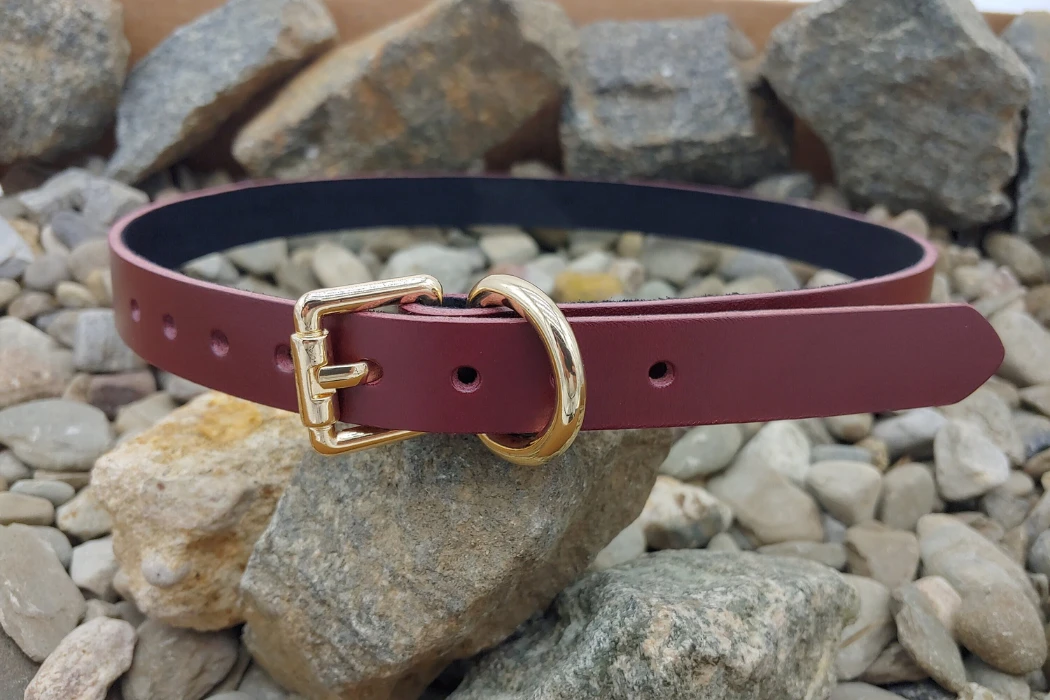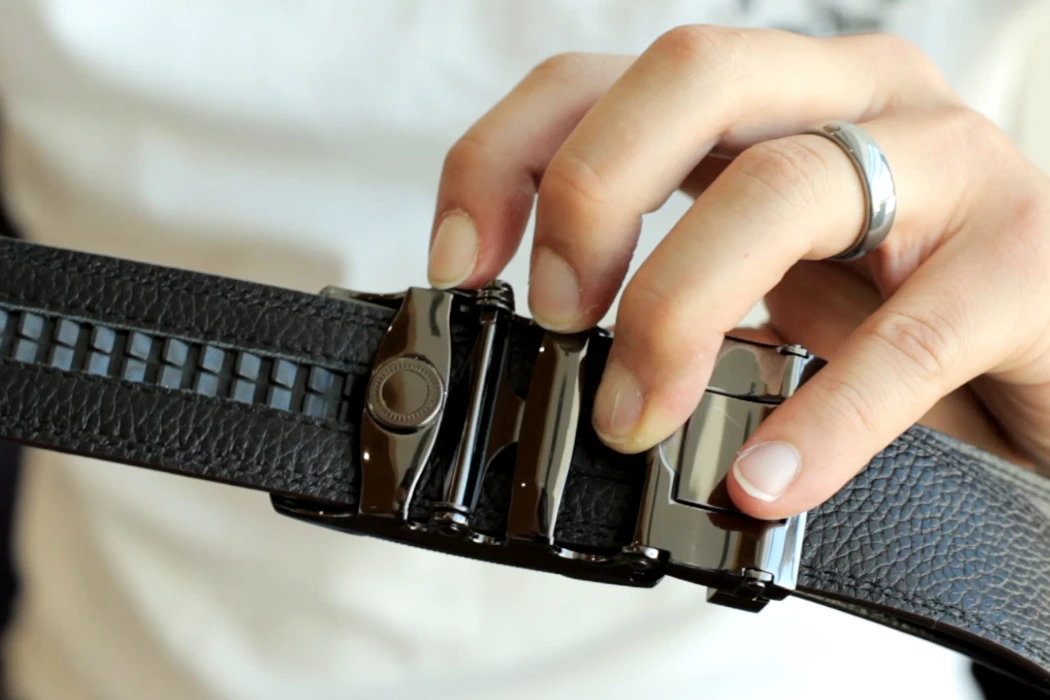
Leather-belt production usually combines skilled work with machinery at different stages. Cutting, skiving, sewing, finishing and hardware assembly can each use different levels of mechanisation. A factory’s equipment can support repeatability and output, but it does not guarantee identical materials, zero defects or automatic compliance.
For sourcing managers, the useful comparison is whether the proposed process can meet the approved design, tolerances, appearance and order schedule. This guide explains the production stages and the evidence to request when comparing craft-based and more automated belt programs.
How Do Craft-Based and Automated Processes Differ?
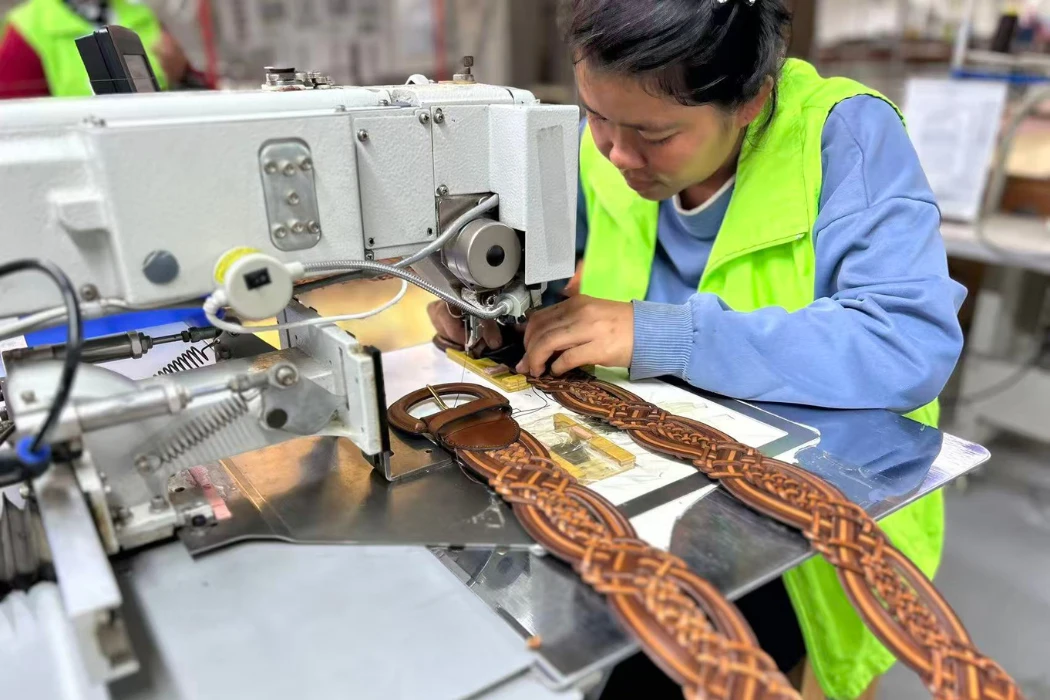
Hand tools, operator-guided machines and programmable equipment can coexist in one factory. A hydraulic cutting press is mechanised equipment, but that does not necessarily mean the material layout, loading or inspection is automated. Describe the actual process rather than assigning quality from the label “handmade” or “automated.”
Cutting
Hand cutting and strap cutters depend on suitable guides and operator control. Die cutting uses a physical tool, while digital knife or other suitable systems follow a program. Material placement, blade condition, calibration and inspection still affect the result. A machine specification is not a guarantee of a universal ±0.1 mm tolerance on every leather strap.
Sewing
Industrial sewing can assist repeatable stitch formation, and some systems control patterns or other settings. The needle, thread, tension, support and material handling still need development and checking. Neither machine sewing nor hand stitching guarantees that loose loops, skipped stitches or breakage cannot occur.
Edge finishing
Burnished, painted, folded and other edges need processes suited to the material and desired appearance. Machinery can assist application or polishing, but preparation, coat sequence and drying or curing remain relevant. An edge treatment is not a universal waterproof seal or a promise against peeling.
| Comparison | Useful buyer question |
|---|---|
| Output | What capacity is available for this construction and order? |
| Dimensions | Which tolerances are validated and how are they measured? |
| Appearance | What variation is acceptable against the reference sample? |
| Changeovers | Which tools, settings and trials change with the style? |
| Sampling | What development and approval steps determine the schedule? |
| Quality control | How are defects detected, recorded and contained? |
Evaluate samples and the process that produced them. Avoid assuming that a craft workshop always has one defect rate or that an automated line can deliver any quantity without material or scheduling limits.
What Are the Main Belt Manufacturing Steps?
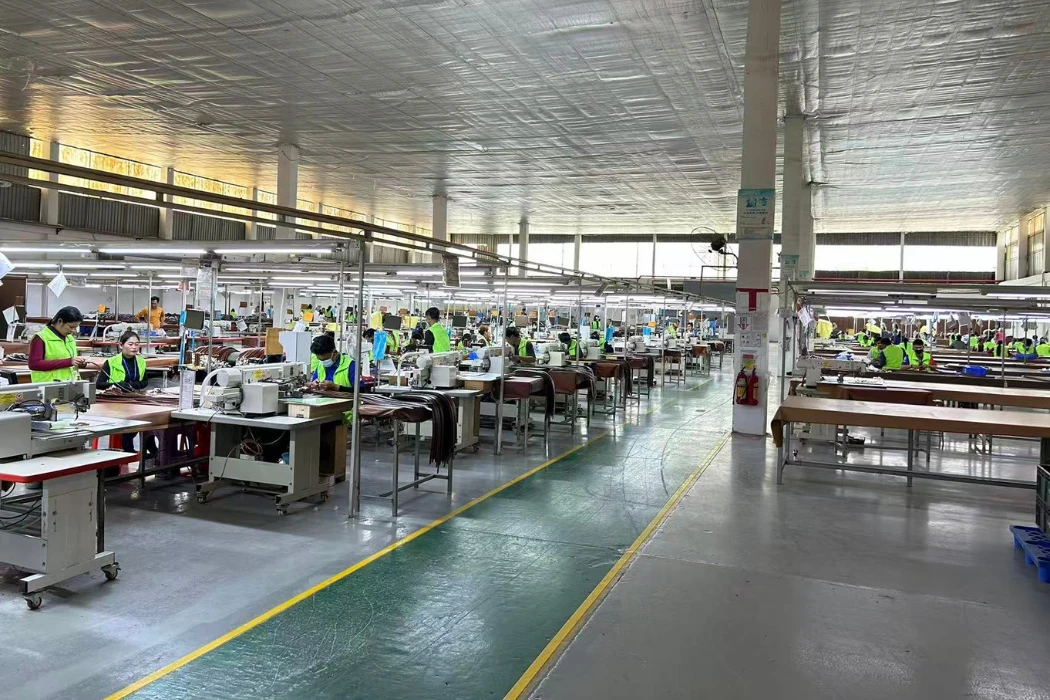
A fashion-belt assembly process starts with specified leather or synthetic materials and components. It does not necessarily begin with raw hides. The sequence varies for a single-layer strap, lined construction, braid or decorative style.
Material review and thickness preparation
Check the material article, finish, usable areas and required thickness. Splitting can adjust overall thickness, while local skiving reduces selected areas such as a fold. Neither operation can repair every weak area or make an already thin section thicker. Define targets and tolerances for the actual construction.
Layout and cutting
Place parts with regard to usable area, natural features, direction and appearance requirements. Select the cutting system for the material and pattern. Comelz’s NEK system illustrates that digitisation, defect or quality-area marking and manual or automatic nesting are distinct functions. Equipment can support planning, but it does not remove the need for material criteria.
Skiving, bonding and edge preparation
Define the permitted skived areas and remaining thickness. Develop bonding, lining and reinforcement where used. Keep the adhesive process and required cure separate from edge-paint drying. A fixed one-millimetre buckle-fold thickness is not appropriate for every material or attachment.
Sewing and hardware assembly
Set the seam construction and required appearance on samples. Attach buckles, keepers or other hardware using tools suited to the components. Hole geometry and spacing should come from the product drawing. Operations may be separate rather than occurring simultaneously on one continuous conveyor.
Final checks and packing
Review dimensions, appearance, function and agreed sampled performance checks. Handle rejects and rework according to the approved process. Confirm packing protection and labels before the order is released.
Ask which stages the supplier performs at the proposed facility and which components or operations come from elsewhere. An equipment photograph alone does not establish a complete production route.
How Can Machinery Support Consistent Quality?
Controlled equipment can make a repeatable operation easier to maintain, but natural material variation and process changes still exist. Define the target, measurement method and acceptable variation before comparing suppliers. “Exactly the same” is not a useful substitute for an inspection specification.
The linked production video is an illustration of a process, not evidence of a stated tolerance, output, defect rate or certification for a buyer’s order.
Dimensional control
State the width, overall length, thickness and local construction dimensions with tolerances. Check the measuring method and the material condition. A programmed width still needs verification after relevant operations; neither the cutting tool nor the machine display proves the final dimension on its own.
Hole placement
Use a drawing or approved pattern to control position, shape and spacing. Review tooling condition and alignment. An accurately placed hole can still elongate or tear under unsuitable loading or material conditions, so dimensional accuracy is not the same as attachment durability.
Stitch and edge appearance
Approve seam placement, stitch appearance and acceptable edge variation. Verify settings after a material or thread change and inspect the actual output. A drying tunnel does not make every finish cure instantly or eliminate the possibility of bubbles, cracking or poor adhesion.
| Control area | Evidence to request |
|---|---|
| Dimensions | Approved drawing, tolerances and measurement records |
| Hole layout | Pattern, tooling reference and sample inspection |
| Seams | Approved construction, settings and appearance criteria |
| Edges | Material-compatible process and finished samples |
| Defects | Recorded categories, investigation and corrective action |
| Changes | Review of material, tool and process revisions |
Assess defect rates only from records with a clear definition, period, product mix and inspection basis. No below-one-percent factory rate or zero-defect result is asserted here.
How Does Leather Finishing Affect the Belt?
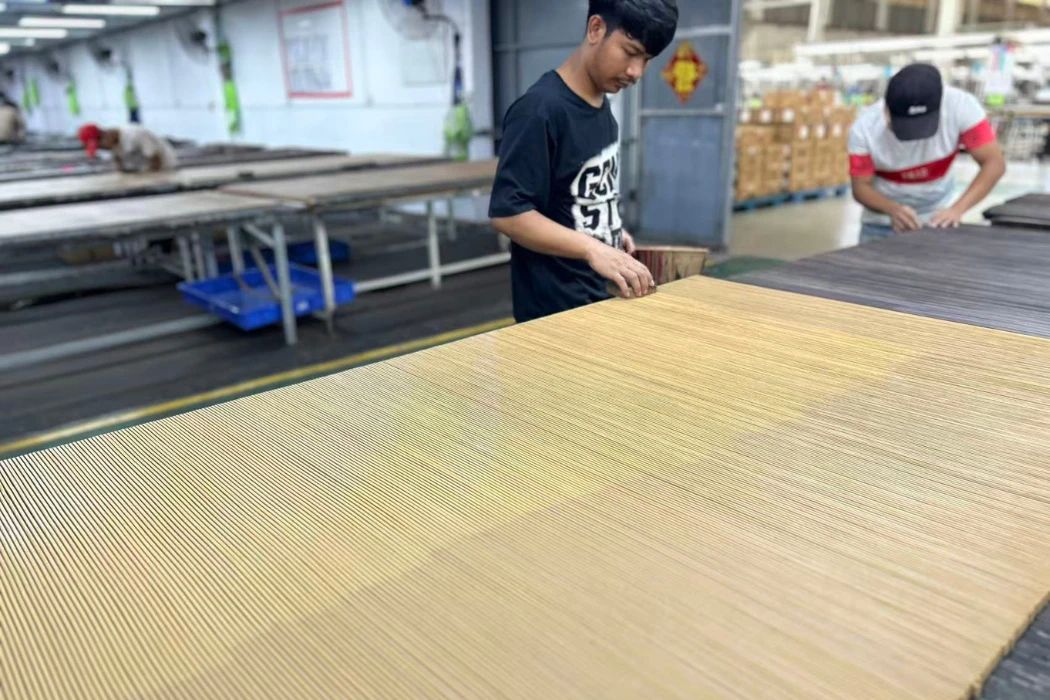
Tanning converts hide into leather; leather finishing adjusts properties such as colour, handle, texture and surface appearance after earlier processing. Crust is already tanned leather, not raw animal hide. The required finishing route depends on the leather article and product brief.
Review the incoming article
Identify the crust or finished leather, tannage and previous processing where relevant. Check usable areas, thickness and appearance. Do not assume all crusts are dyed, uniformly absorbent or require the same stretching and tumbling sequence.
Develop colour and surface effect
Spraying, coating, polishing, embossing, tumbling and other operations may be used where suitable. The process must match the material and finish system. No universal polishing temperature, instant colour cure or guaranteed water resistance follows from automation.
Approve pull-up and vintage appearance
Pull-up describes a colour change when suitable leather is flexed or stretched, commonly associated with oils or waxes. The exact effect depends on the article. Vintage or distressed appearance can be developed through different treatments; it does not require one universal wire-brushing or wax-injection recipe.
Retain the approved colour and appearance range and review the finished material for the intended belt construction. A swatch should be identified by article and finish rather than treated as proof of a factory’s daily square-foot output.
Hoplok’s finishing scope
ProPelli in Cambodia is a 5,000 m² leather-finishing facility processing externally sourced crust. Its current LWG Gold status applies to that facility scope. It is not a raw-hide tannery, and its status does not certify every finished belt or all Hoplok factories.
How Should Custom Designs Be Developed for Production?
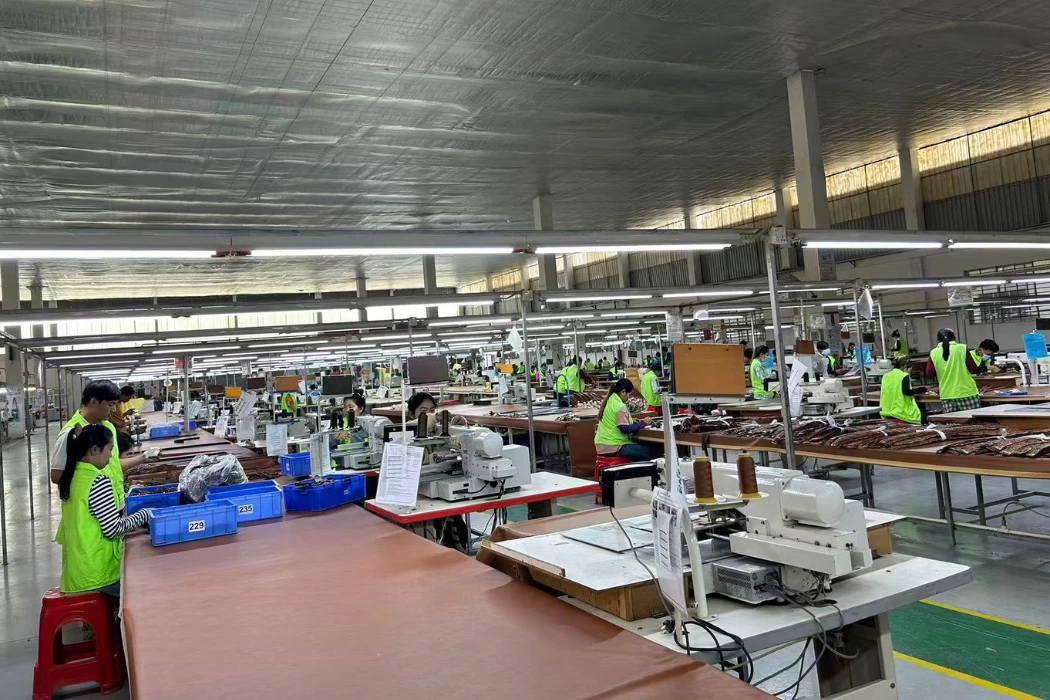
Customisation depends on the available materials, tooling, equipment and skills. A programmable operation may simplify some changes, but new hardware, widths or decorative patterns can still require tools, fixtures, setup and samples. A physical cutting die cannot be resized merely by typing a new dimension into its press.
Custom hardware
Confirm the buckle and attachment drawing, material, finish, mating parts and required setting tools. Validate fit and function with the strap. Changing from one buckle type to another may change the fold, reinforcement, clearance and testing; it is not necessarily an instant changeover.
Logos and texture
Specify the artwork, dimensions, location and desired appearance. Develop stamping, embossing or another marking method on the actual material. A press does not guarantee identical depth on all hides. Crocodile-style embossing can be a decorative effect on conventional leather; it should not be represented as genuine exotic skin.
Width and size range
Agree the required dimensions and compatible hardware, then review the size set. Confirm tool and guide adjustments and any effect on throughput or material yield. No unrestricted width range or changeover without lost production time is established here.
Braided and detailed constructions
A process may combine cut components with hand-guided assembly or other operations. Confirm feasibility and the intended appearance through samples. The presence of automated equipment elsewhere in a factory does not mean every braid or decorative feature is automatically made by machine.
| Change | What to review |
|---|---|
| Buckle or hardware | Attachment, clearance, tools and function |
| Logo or texture | Artwork, tooling and material response |
| Width or length | Pattern, guides, size mapping and hardware fit |
| Construction | Layer stack, sewing, edges and relevant tests |
| Material or finish | Process compatibility and appearance approval |
How Should Environmental Claims Be Evaluated?
Automation can support process control, but it does not establish a lower environmental impact on its own. Evaluate the actual materials, energy, chemicals, waste and outputs using a defined scope. Manual and automated processes should be compared on equivalent products and boundaries.
Material yield
Nesting software can assist part placement, but yield depends on hide quality, usable zones, pattern, direction and appearance requirements. Ask for a clearly defined yield measure and records for comparable production. Do not assume every digitised hide achieves more than 85% utilisation or that all offcuts avoid landfill.
Finishing and emissions
Review the selected finish system, application process and relevant controls. Automated spraying does not inherently capture all overspray or prevent every discharge. Confirm the facility’s evidence and actual control arrangements rather than inferring them from a conveyor or spray booth.
Certification and test scope
Verify the named entity, site, activity and validity of any certificate or audit supplied. A material or product test must cover the relevant sample and requirements. Automation does not automatically establish REACH compliance, children’s product compliance, an ISO certificate or the use of a particular environmental assessment system.
Use a supported, specific claim when communicating an environmental attribute. Neither a facility rating nor a machine purchase proves that the complete belt is safe for every use or has no environmental impact.
Frequently Asked Questions
How are genuine leather belts manufactured?
The route depends on the construction. Specified tanned leather is reviewed and prepared, cut and assembled with the required edges, seams and hardware. Some belts are single-layer, while others use lining or reinforcement. Belt assembly does not necessarily start from raw hides.
What machinery is used in a belt factory?
Possible equipment includes cutting, splitting, skiving, sewing, pressing and finishing machines. Ask which equipment and operations are used for the proposed design rather than assuming one universal automated line.
How are belt edges finished?
The method can include painting, burnishing, folding or another approved construction. Match the process to the materials and appearance brief, then check the result. No machine guarantees that an edge can never peel.
What is the difference between full-grain and split leather?
Full-grain retains the original grain surface; split leather comes from a separated hide layer. Finish and construction vary within both categories. Split leather is not always PU-coated, and the name alone does not establish belt durability.
How are holes punched evenly?
A defined layout, suitable tooling, alignment and inspection can control position. Manual and mechanised processes can both use guides. Approve the actual dimensional result and relevant performance.
Can a factory make braided belts?
Confirm the proposed braid, material and assembly method through samples. Cutting and assembly may use different levels of mechanisation; equipment presence alone does not establish every design capability.
How long does a Hoplok belt order take?
Belt sampling generally takes 2–3 weeks and bulk production 60–90 days, excluding shipping. Confirm material readiness, approvals, tooling and the project schedule in the quotation; automation does not reduce every order to a universal short lead time.
Choose a Process That Meets the Approved Belt Brief
Compare suppliers through the actual production route, approved samples, tolerances, quality records and available schedule. Equipment can support repeatable work, while material selection, skilled setup and inspection remain part of the result.
For Hoplok custom belt manufacturing, share the design, material, hardware, size range and intended market. Minimum orders are 300 genuine-leather belts or 1,000 PU belts. Confirm which operations and facility will handle the project and what sample and test evidence will support approval.
Hoplok’s stated monthly belt capacities are 200,000–300,000 genuine-leather belts and 600,000–800,000 PU belts. These are production-capacity ranges, not an allocation or delivery promise for an individual order. Confirm the capacity available for the selected construction and schedule.