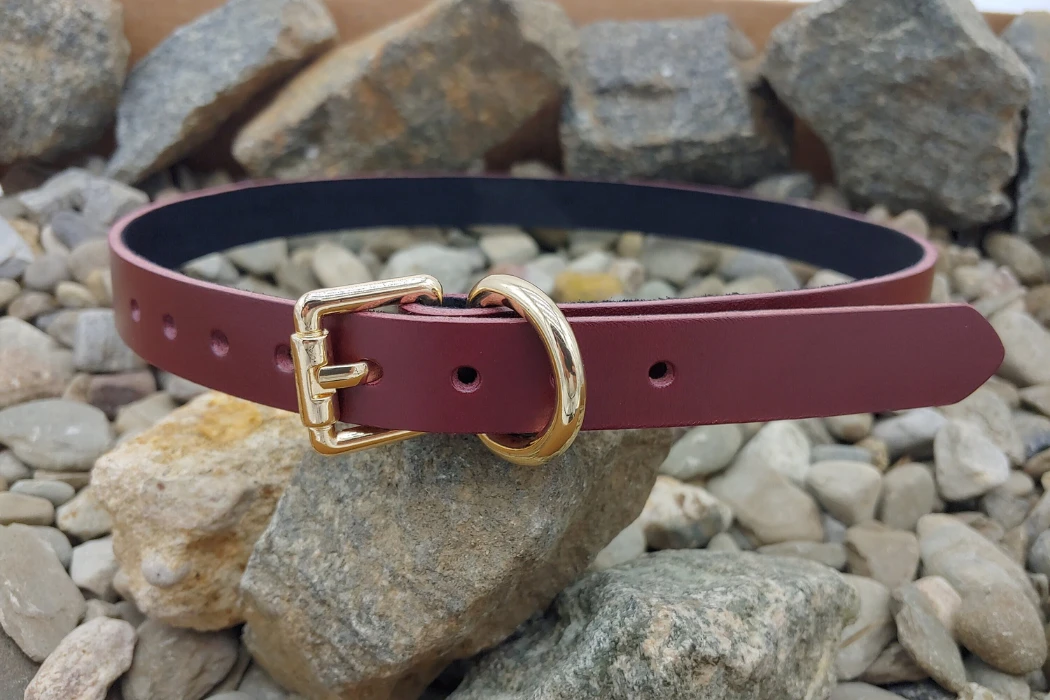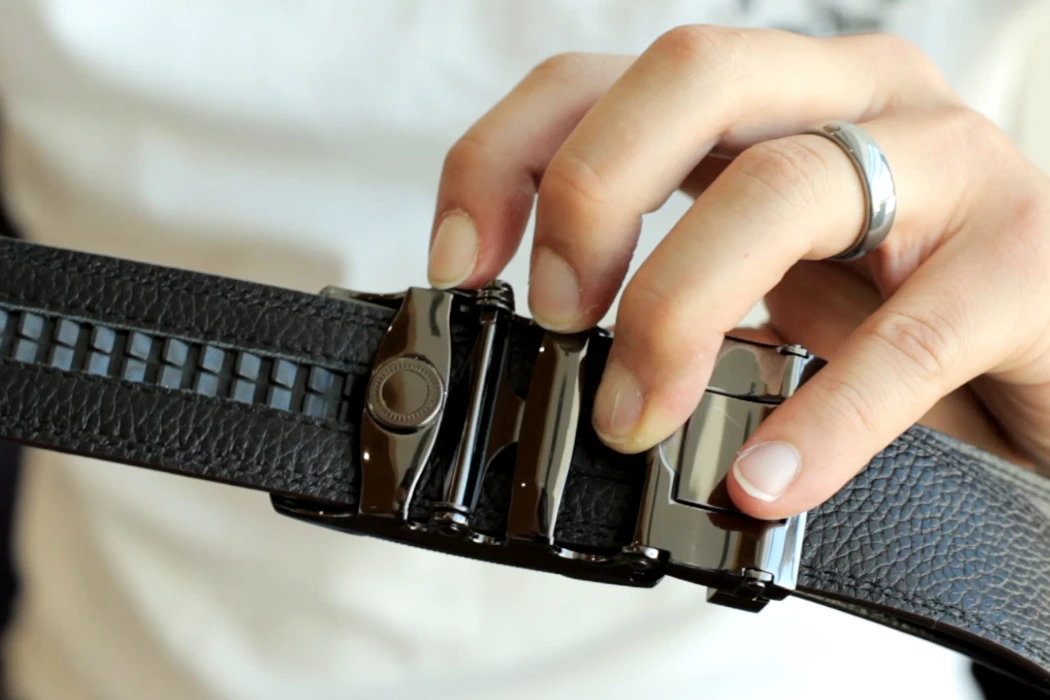
Edge paint and burnishing create different appearances at a leather belt’s edge. Choosing between them involves the leather’s temper, thickness, layer construction and the finish your brand wants. A neat edge must also remain acceptable after the belt bends and rubs against clothing.
This comparison explains application, wear, leather compatibility, labour and aesthetics. Use it to specify an edge finish and compare samples; neither method provides a universal lifespan or protection guarantee.
What is Edge Painting (The Modern Look)?
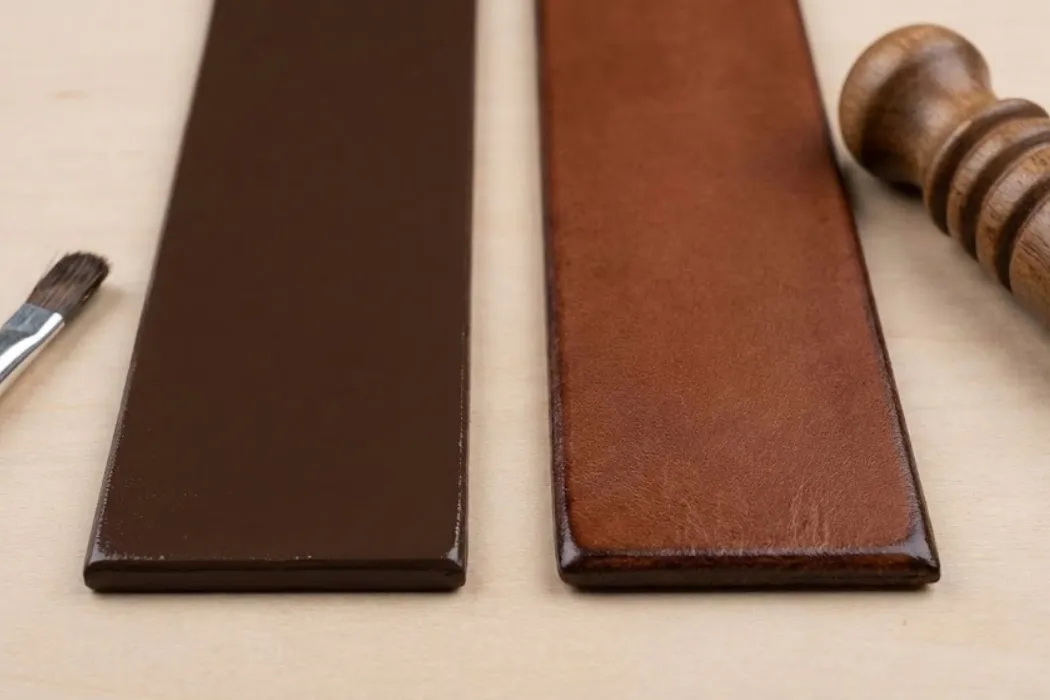
Edge painting applies a formulated coating to a prepared leather edge. It can create a consistent coloured border. Surface preparation, coating selection, drying and the belt construction determine the result.
The Principles of a Clean, Modern Finish
A painted edge can hide the visual transitions between layers and create a clean colour line. The target is an even surface without loose fibres, gaps, runs or unwanted paint on the face. Coating the edge does not make the complete belt waterproof.
Brands can choose a matching or contrasting colour, rounded or flatter profile, and a gloss level suited to the collection. Approve these features on the actual belt: a narrow swatch does not show the finish around the tip, keeper and buckle fold.
Specifying Smoothly Painted Edges
For a Hoplok enquiry, include the edge appearance in the sample specification: colour reference, profile, visible-fibre limits and acceptable variation. The approved sample should define the target rather than an undefined promise of a perfectly flawless surface.
Ask for the paint system to suit the actual leather and any bonded layers. Review adhesion and repeated bending after the finish has dried as required by its supplier. The paint name alone does not demonstrate crack resistance.
What is Burnishing (The Natural Look)?
Burnishing smooths and compacts loose edge fibres through controlled friction and pressure. It can use water, gum or another suitable finishing compound. The resulting polish depends on the leather and preparation; it is not a waterproof seal.
How Friction Smooths an Edge
The edge is first prepared so the cut is even and any layers are aligned. A suitable tool then smooths the fibres. The process should be controlled to avoid distorting, scorching or overworking the edge. It does not require one universal tool speed or temperature.
Finishing compounds can assist the process. Tandy’s gum-tragacanth guidance, for example, describes a burnishing compound for vegetable-tanned leather. That is a product-specific application, not proof that every leather or compound behaves the same way.
Specifying Burnished Edges
A burnished sample should have the agreed edge profile, colour and smoothness. Check the full length, tip, holes and buckle fold. A firm leather that compacts cleanly may suit the method, but the grain label alone does not establish suitability.
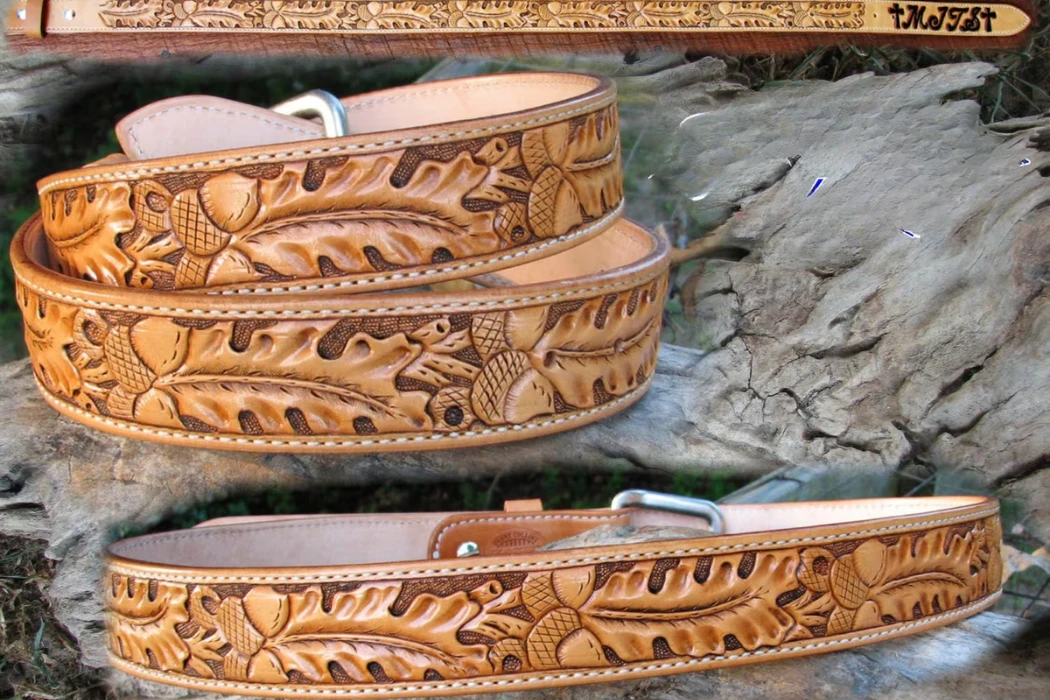
Burnishing can leave more of the underlying leather’s character visible. Dye or finishing compounds may still be present, so record the complete process and care guidance. The natural appearance does not mean the edge is maintenance-free or immune to damage.
Compare Edge Finishes on Your Belt Sample
Durability Face-Off: Which One Cracks First?
Both finishes can wear. Painted edges may crack, lift or abrade if the system or application is unsuitable. Burnished edges may scuff, roughen or split with the leather. Compare representative samples rather than assuming one always fails first.
How Each Finish Can Wear
Edge paint forms a coating over the prepared edge. Its behaviour depends on adhesion, flexibility, coat thickness, drying and the movement of the layers underneath. Contamination, unsuitable preparation or an incompatible formulation can contribute to cracking or peeling. Inspect the buckle fold and other areas that experience repeated bending.
Burnishing smooths the leather fibres, often with an added compound. Wear can dull the finish or expose fibres again, and the leather or any added finish can still crack or separate. A burnished edge has no thick paint film when made without one, but that does not make the complete edge failure-proof.
Matching Edge Treatment to Leather for a Lasting Finish
Material compatibility matters alongside preparation and construction. A soft or loose edge may not compact into the desired burnish; a layered belt may show uneven interfaces. Edge paint can be considered in those cases, provided the coating adheres and flexes appropriately. It is not automatically the correct answer for every soft leather.
A firm vegetable-tanned leather is a useful candidate for burnishing, but tanning method alone does not decide the finish. Compare a prepared sample for smoothness, colour and wear. If the intended construction is unsuitable for either exposed-edge treatment, review a folded or bound edge with the manufacturer.
Leather Compatibility: Veg Tan vs. Chrome
Tanning affects leather, but temper also depends on retanning, softening, finishing and thickness. Firm vegetable-tanned leather often suits burnishing; evaluate the actual leather rather than dividing all vegetable and chrome leathers into rigid categories.
How Tanning Affects Leather Structure
Vegetable tanning uses plant-derived tannins. It is possible to obtain different handles through further processing, so not every vegetable-tanned hide is equally firm. For burnishing, the practical question is whether the cut edge compacts evenly and retains the approved appearance.
Chrome tanning uses chromium salts as part of its tanning system. Subsequent processing can produce different handles and densities. A soft chrome-tanned edge may need a coating or another construction, but the tanning label is not a universal prohibition on burnishing.
Matching Our Leathers to Your Edge Style
Match the selected leather, its edge preparation and the desired appearance during sampling. Keep certification separate from this technical choice: LWG certification has a defined facility and activity scope; it does not certify that a leather will burnish well or that every finished belt is certified.
For a coloured painted edge, approve the coating on the exact leather, lining and adhesive combination. An oil-rich surface or an uneven laminated edge may need different preparation. Document the successful sample process before applying it to the production order.
Cost Comparison: Labor Hours per Edge
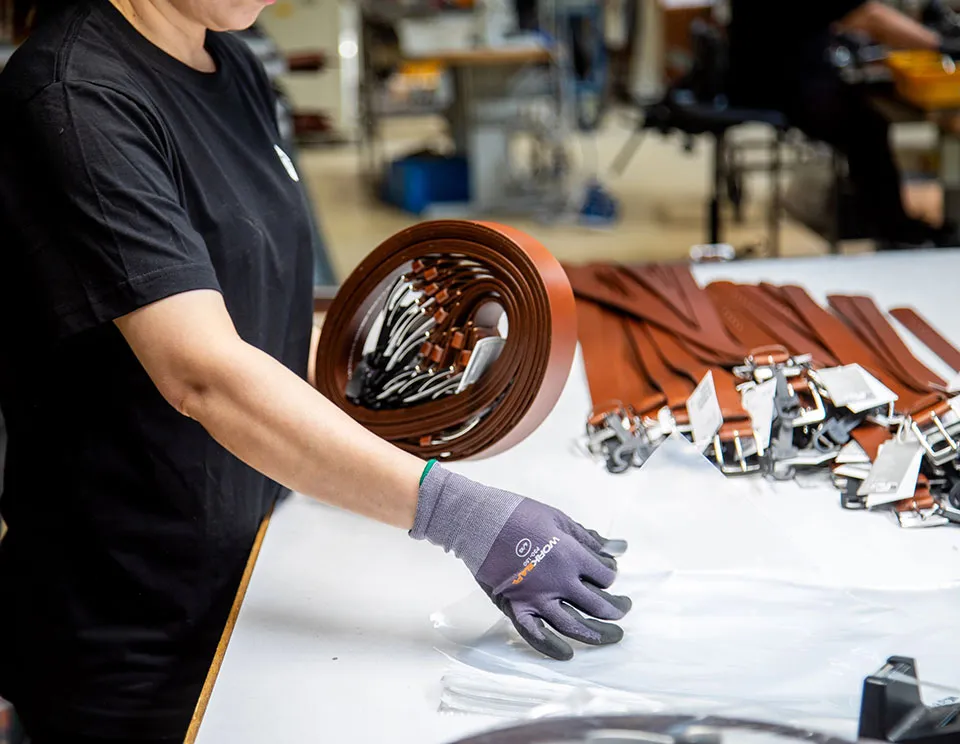
Neither method is always faster or cheaper. The labour depends on edge preparation, length, number of passes or coats, drying, handling, tooling and the agreed finish quality. Compare equivalent quotations after sampling.
Labor Factors: Painting vs. Burnishing
Edge-paint systems may include base preparation, coating, drying and sanding or further coats. Giardini’s application guidance illustrates a staged process. The exact sequence and drying conditions must follow the selected product; do not assume one coating count for all belts.
Burnishing also requires cutting, levelling and, where specified, bevel preparation before the smoothing stage. A compatible leather can make the process efficient; difficult layer interfaces or repeated finishing passes can add labour. The required edge profile and acceptance sample affect the cost.
Optimizing Edge Finishing Costs
Request painted and burnished options on the same construction when both are feasible. Compare their appearance, handling and agreed wear checks as well as price. Confirm whether a material or construction change is included in either quote.
Hoplok operates manufacturing facilities in China and Cambodia. Project allocation should be confirmed in the quotation. The selected facility and price depend on the confirmed material, construction, process and production plan.
Aesthetics: Colour Lines and Natural Edges
Painted edges can create a controlled colour line; burnished edges can emphasise the leather’s cut surface. Both can be neat and refined. Their suitability for formal or casual belts depends on the complete design.
The Minimalist Appeal of Clean Lines
A painted border can suit custom dress and fashion belts, particularly where matching or contrasting colour is part of the brief. Check that edge thickness and sheen remain consistent around the tip and near stitching. It is a design option rather than a mandatory finish for all formal belts.
The Character of a Burnished Edge
Burnishing can complement a natural or vintage-style leather belt. The desired result is still a controlled, comfortable edge, not exposed rough fibres. Oil-rich or pull-up finishes require a trial to confirm colour, compaction and the behaviour of any burnishing compound.
The Verdict: When to Use Which?
Consider burnishing when the actual leather and layer construction compact cleanly and the visible edge suits the design. Consider edge paint when a controlled colour coating is wanted and the system adheres and flexes correctly. Approve either choice on the complete belt.
| Criteria | Choose Burnishing (Natural Finish) | Choose Edge Painting (Modern Look) |
|---|---|---|
| Ideal material | Leather whose prepared edge compacts cleanly; confirm temper and layer alignment. | A compatible leather or layered construction with a paint system that adheres and flexes appropriately. |
| Final aesthetic | Visible leather character with the approved polish, profile and colour. | A controlled coating colour, gloss and edge profile. |
| Product direction | Natural or vintage-style fashion belts when the sample meets the brief. | Dress or fashion belts where a matching or contrasting colour border is desired. |
| Approval focus | Fibre stability, rubbing, bending and appearance at tips and folds. | Adhesion, drying, bending, rubbing and colour consistency. |
Frequently Asked Questions
What is the main difference between edge painting and burnishing?
Edge painting adds a formulated coating to the prepared edge. Burnishing smooths and compacts fibres with friction and pressure, often using a suitable compound. The processes create different appearances, but neither alone makes a belt waterproof or sets its durability.
Why does edge paint crack over time?
Possible contributors include incompatible paint, unsuitable preparation, contamination, inadequate drying, excessive coat thickness or movement between bonded layers. Inspect the actual failure and application records rather than assuming all edge paint eventually cracks for the same reason.
Which edge finish is better for vegetable-tanned leather?
Either may be suitable. A firm vegetable-tanned edge can burnish well, while paint allows a controlled colour border. Compare the leather, construction and desired look on samples; edge painting is not universally faster than burnishing.
Can chrome-tanned leather be burnished?
It depends on the particular leather’s temper, edge structure and finishing method. Some soft edges do not compact satisfactorily. Sample the material and consider paint or another edge construction if the result does not meet the specification.
Is edge paint more durable than a burnished edge?
There is no universal winner. Compare adhesion or fibre stability, repeated bending, rubbing and appearance on the same construction. Painted coatings can lift or crack, while burnished leather can scuff, roughen or crack; neither method is immune to wear.
Final Thoughts
The edge specification belongs in the technical pack with the material, layer construction, profile, colour and acceptance reference. Review it at sampling so visual approval and functional checks address the same finished belt.
For a Hoplok belt quotation, send the leather reference, dimensions, quantity and desired edge appearance. Confirmed minimums are 300 leather belts or 1,000 PU belts. Belt samples typically take 2–3 weeks and bulk production 60–90 days, with project details confirmed in the quotation. Contact the team to review feasible edge options.