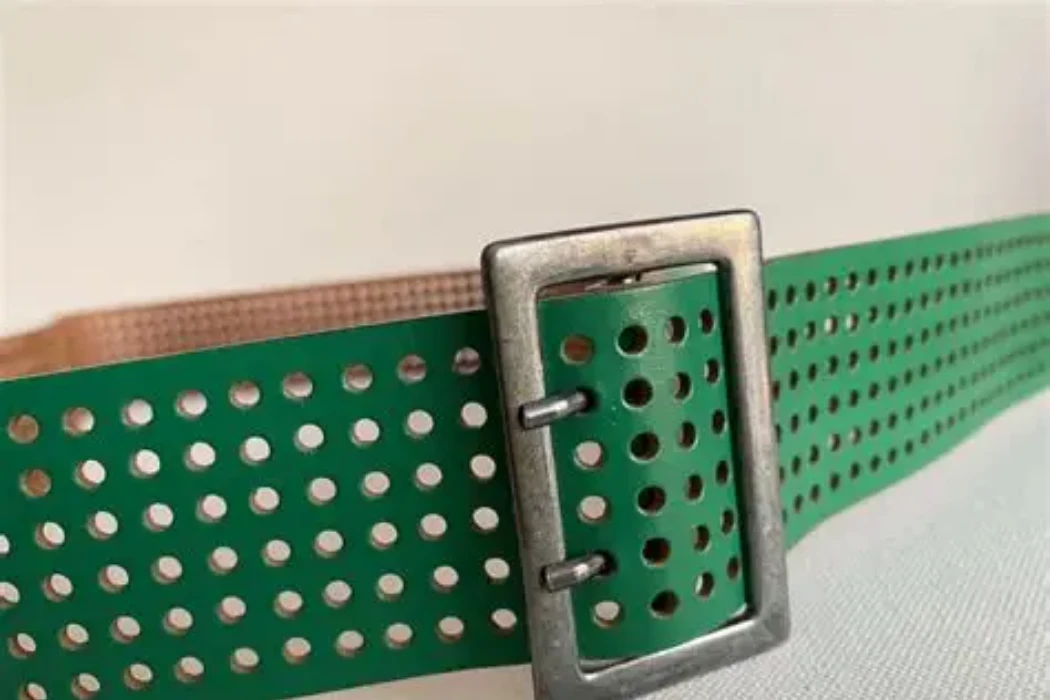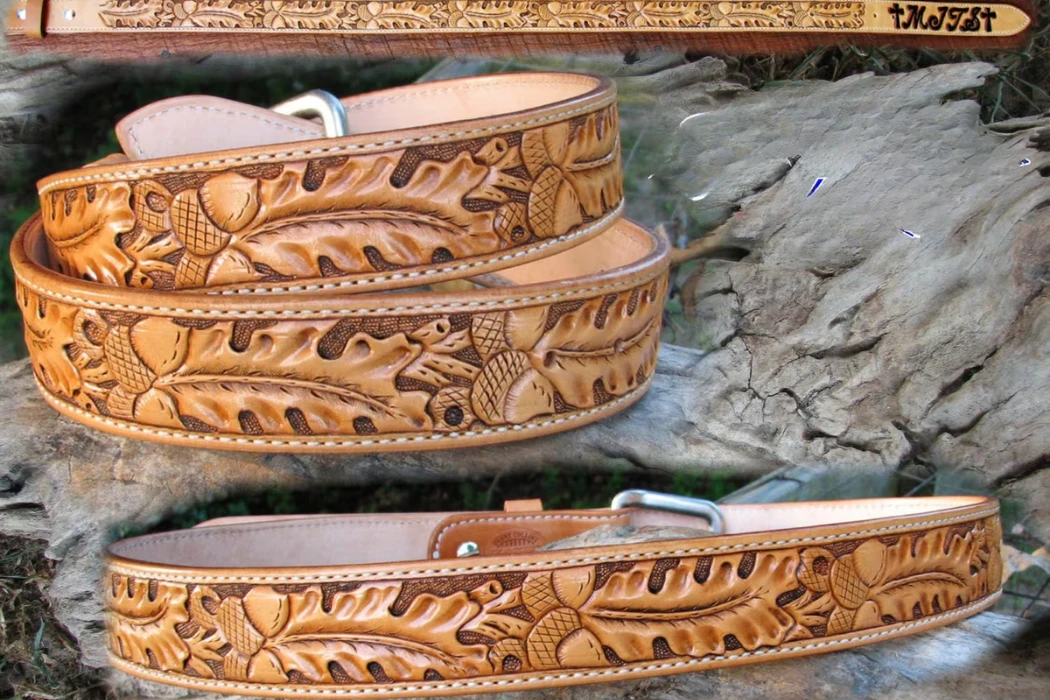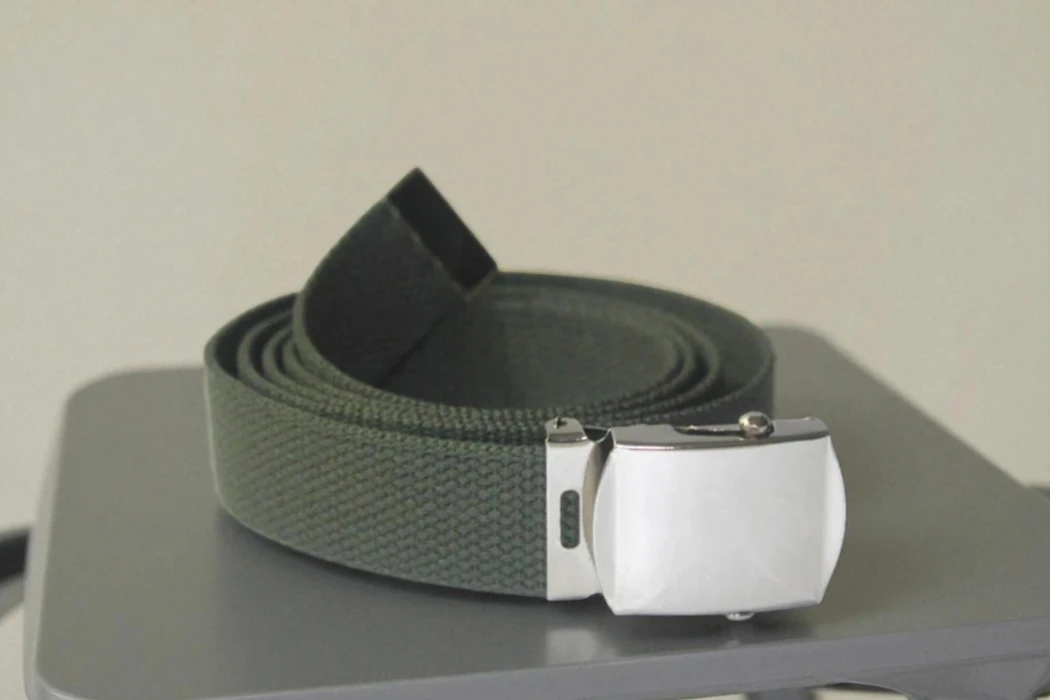
Finding a leather-goods manufacturer in the USA starts with a distinction: some search results are contract factories, some are brands selling their own goods, and others supply leather, tools or components. A US headquarters does not establish where a particular bag or belt is made.
This directory covers 25 companies connected with the US leather-goods market and identifies their purchasing role. It is a starting point for due diligence, not a tested quality ranking. Public service descriptions support the shortlist; production capacity, pricing and acceptance of a new project need confirmation directly with the company.
For a private-label RFQ, begin with explicitly stated development services such as Odin Leather Goods, Cut and Stitch, Portchester USA and Softline Brand Partners. Keep brand references and material suppliers in their appropriate roles. Hoplok, discussed separately below, manufactures in China and Cambodia.
When Does US Leather-Goods Manufacturing Fit a Project?
Domestic production can make visits, sample exchanges and communication easier for a US buyer. The benefit depends on the actual factory, its material supply and available production slot. It does not establish superior workmanship, lower risk or faster delivery by itself.
Access to the production team
A nearby workshop can be valuable when a pattern needs repeated fitting or construction changes. Confirm that the people handling your sample also control the bulk process, and agree how revisions are documented. A showroom visit is different from a production audit.
Materials and construction
Choose leather, lining, thread, hardware and edge treatment for the intended product. A domestic tannery may be convenient, while other projects use imported materials. Inspect a representative assembled sample and define the acceptable natural variation before approving the leather.
Ethical and environmental evidence
Ask about the specific facility’s working conditions, chemical controls and subcontracting. US location, vegetable tanning and a sustainability slogan are not substitutes for records. Review audit scope, dates and corrective actions alongside material traceability.
Delivery and collaboration
Compare the complete route from material ordering through sampling, production, inspection and delivery. A US assembly operation may still depend on imported leather or hardware. Local shipping can shorten one stage without removing upstream purchasing or customs dependencies.
American Heritage and Manufacturing Origin Are Different
Heritage can explain a company’s design language and long-standing product categories, but buyers need present-day production evidence. Horween is a Chicago tannery; Mitchell identifies its current workshop in Thiensville; other US brands describe international manufacturing. These are different supply-chain roles.
Check origin at SKU and operation level
Ask where leather is tanned, parts are cut, sewing occurs and the product is assembled. Imported materials and outsourced stages may affect how an origin claim can be worded. Record the evidence for the actual item, not only the supplier’s corporate address.
Use the appropriate origin claim
The FTC’s Made in USA guidance applies an “all or virtually all” standard to unqualified US-origin claims. A statement about design location is different from a claim about manufacture. Have the intended labeling supported before it appears on a product or sales page.
Treat heritage as context
A founding year, historical workshop photograph or archive product does not establish current capacity, ownership of every production stage or willingness to accept OEM work. Ask for recent comparable samples and the facility that would actually fulfill your order.
Key Factors to Check Before Shortlisting a Manufacturer
Capacity and minimum quantities
Confirm MOQ by style, material, color and hardware finish. Separate the factory’s assembly minimum from a tannery or hardware supplier’s minimum purchase. Ask whether the quoted production slot depends on receipt of materials and final sample approval.
Quality control and material sourcing
Request the material specification, tolerances, approved sample procedure and inspection plan. Full-grain describes retained grain; it does not by itself specify temper, thickness, rub resistance or the suitability of a bag handle. Evaluate material and construction together.
Customization and commercial role
Ask whether the offer is wholesale branded goods, logo personalization, white-label stock or original-pattern OEM. Establish who creates and owns patterns, dies and hardware molds, and which changes require new samples or revised prices.
Audits and product compliance
Review any certificate against its facility name, scope and validity. A quality-management certificate is not a product test report. Social audits and material testing answer different questions; select testing for the product, destination and buyer requirements rather than treating one document as universal approval.
Pricing and logistics
Request an itemized quotation for development, materials, assembly, tooling, testing, packaging and delivery. Imported inputs can remain part of a domestic production route. Compare equivalent specifications and agreed delivery terms without assuming a fixed domestic or overseas price advantage.
| Decision | US production route | Overseas production route |
|---|---|---|
| Factory access | Check visit access and the actual production location | Arrange local inspection or a remote review backed by records |
| Schedule | Check material availability and factory capacity | Check the same factors, then add the confirmed transport route |
| Quality | Use agreed samples, tolerances and inspections | Use the same acceptance criteria |
| Origin and imports | Check imported content and appropriate origin wording | Confirm country of origin and applicable import documentation |
| Communication | Confirm the technical contact and revision process | Confirm the technical contact, working hours and revision process |
Step-by-Step Guide to Qualifying a US Manufacturing Lead
1. Define the purchasing task
Prepare a tech pack with dimensions, materials, construction details, hardware, artwork and packaging. State planned quantities and destination. Say explicitly whether US production is required or whether you are comparing multiple origins.
2. Screen the business model
Use the directory to identify companies that publicly offer the service you need. Confirm current availability directly. A supplier directory, retail review or attractive product photograph is a lead source rather than evidence that a factory will accept your project.
3. Develop and assess a sample
Compare the sample with the drawing and material specification. Review seams, handle attachment, closures, edge finish, dimensions and color variation. Record revisions in a dated approval file. A good prototype is necessary, but it does not prove that a whole production lot will be consistent.
4. Verify the facility
Review the named production site, machinery relevant to your construction, material storage and inspection process. Where necessary, arrange a visit or qualified local audit. Ask how subcontracting is controlled and whether any operation will move after approval.
5. Agree the production terms
Document specifications, permitted variation, inspection stages, defect handling, tooling ownership, payment milestones and delivery responsibility. Use a schedule that shows material approval and production dependencies rather than only a final dispatch date.
6. Control changes and reorders
Keep the approved sample and bill of materials tied to the order revision. Require approval for substitutions. On reorders, check that leather, lining, plating and manufacturing location remain consistent with what was approved.
25 US Leather-Goods Companies by Buyer Role
The order below is for reference, not a score. “Lead” means the company publicly describes a relevant business service; it does not mean Hoplok has audited or purchased from it. “Brand reference” means its own products can inform market research, while an outside-label service remains to be confirmed.
The website images are historical page illustrations, not proof of current prices, offers, factory locations or certifications. Consult the linked official information for the company’s present offer.
1. Horween Leather Company
Buyer role: Material supplier. Location context: Chicago tannery.
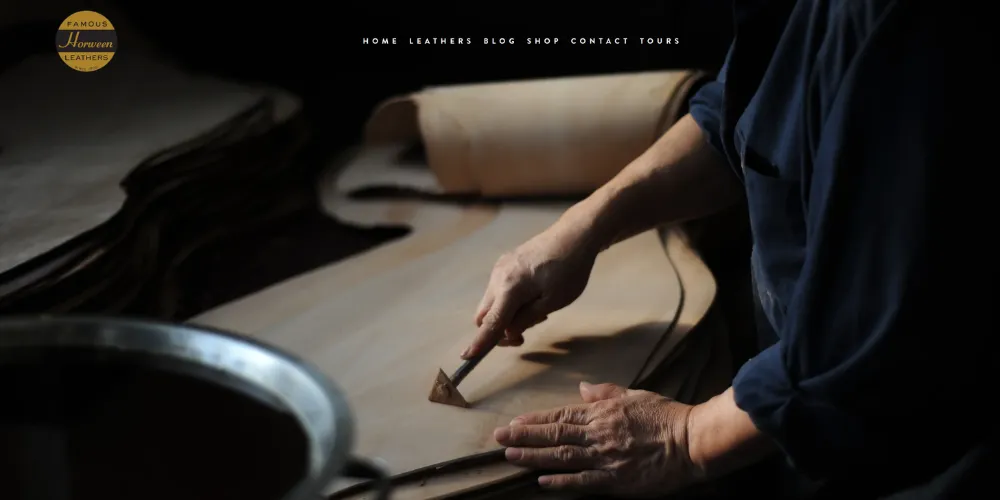
Horween identifies Chicago as its home and traces its tanning business to 1905. Its role in a sourcing project is supplying leather; a tannery listing does not identify a factory that will cut, stitch and assemble your finished bags or belts.
Procurement check: Ask for the specific leather article, thickness range, available colors and supply route. Your finished-goods maker still needs to approve cutting yield, edge behavior and the completed construction. Buying a named tannery leather alone does not establish finished-product quality.
Official company or product information
2. Tanner Goods
Buyer role: Brand reference. Location context: Origin stated by product.
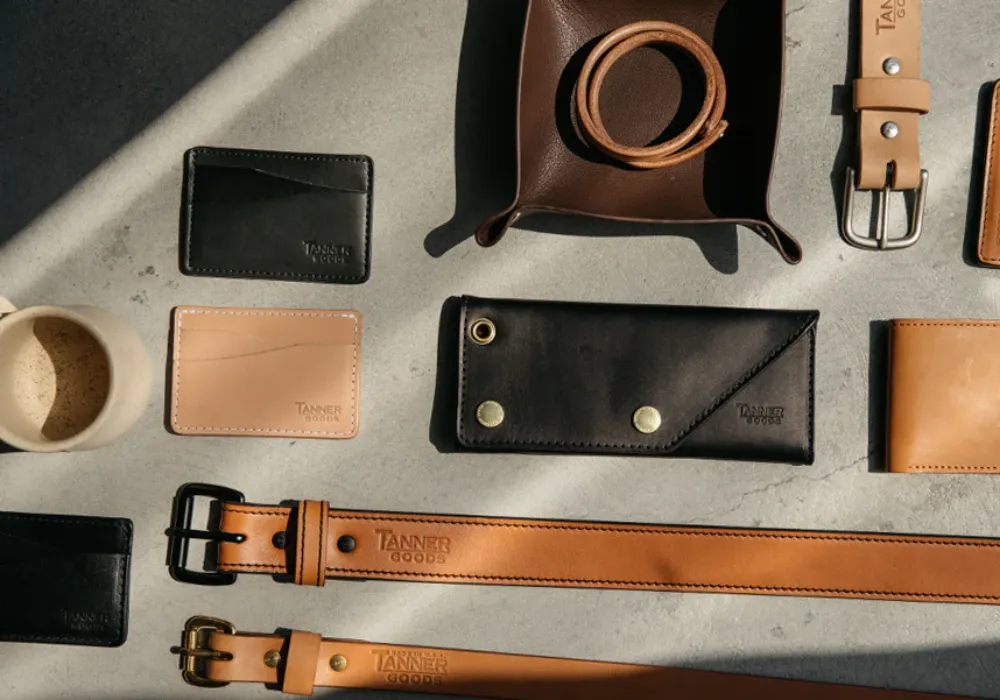
Tanner Goods offers wallets, belts and accessories under its own brand. Its Workman Wallet page identifies vegetable-tanned bridle leather, burnished edges and US manufacture. Those details make the specific wallet a useful construction reference; they are not evidence of an open private-label service.
Procurement check: Separate ordering branded merchandise from commissioning your own pattern. Check the origin statement on each chosen SKU, and ask the company directly about any proposed wholesale or collaboration arrangement.
Official company or product information
3. Allen Edmonds
Buyer role: Brand reference. Location context: Origin stated by product.
Allen Edmonds sells footwear and leather accessories. Its Manistee belt is described as handcrafted in America with imported materials. This qualified statement is more useful to a buyer than assuming that every accessory is made in the same facility as the shoes.
Procurement check: Use the belt as a reference for shoe-and-belt color coordination or brogue detail. Obtain the actual country of manufacture for the SKU being purchased; neither the footwear construction method nor a US office establishes an accessory OEM capability.
Official company or product information
4. Saddleback Leather
Buyer role: Brand reference. Location context: Mexico production disclosed.
Saddleback sells leather bags, belts and related goods. Its Italian Casual Belt page explicitly says the Italian leather is assembled into belts at its factory in Mexico. The company is therefore an example of why an American brand should not automatically appear on a US factory shortlist.
Procurement check: Study its bag or belt construction when developing a product brief, but verify the production location for the proposed order. A retail warranty describes contractual coverage; it is not a measured service-life result or evidence of an available private-label program.
Official company or product information
5. Filson
Buyer role: Brand reference. Location context: Some products use qualified US-origin claims.
Filson’s Rugged Twill Tote Bag combines cotton twill with bridle-leather handles. The product page identifies US manufacture with imported material. It is a useful reference for combining fabric panels and leather components, rather than evidence that a whole brand range is domestic.
Procurement check: For a comparable design, specify each material separately and test the handle attachment, seam construction and color transfer together. Confirm any wholesale or custom service directly; a retail product listing does not offer third-party manufacturing.
Official company or product information
6. Red Wing Shoes
Buyer role: Brand reference. Location context: Check the selected accessory.
Red Wing’s accessory range includes leather belts. The Style 96520 page identifies S.B. Foot leather and a brass buckle, giving buyers a concrete material-and-hardware reference. A footwear manufacturer’s expertise should not be treated as evidence that it accepts outside belt production.
Procurement check: Request the current specification and origin for the accessory being sourced. If benchmarking the product, assess the complete belt rather than assuming that a leather used in footwear will meet every belt requirement without changes.
Official company or product information
7. Coach
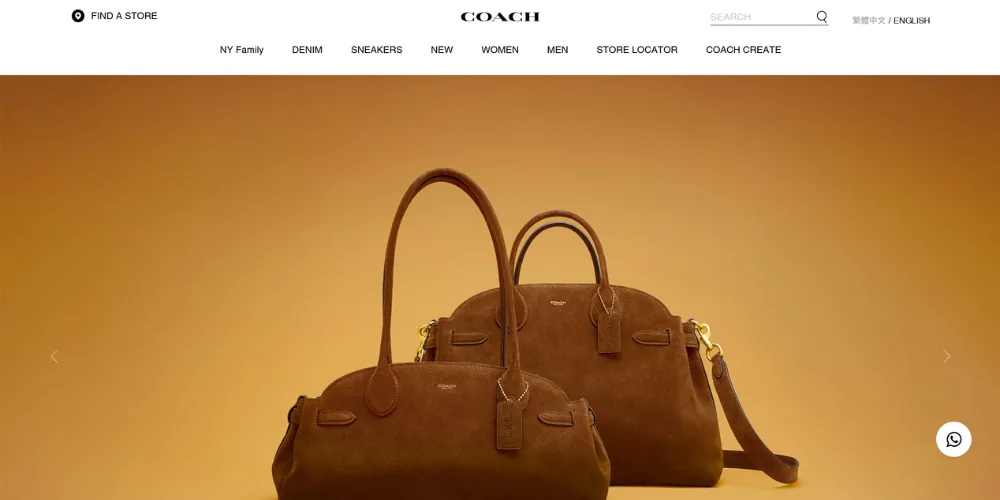
Buyer role: Brand reference. Location context: New York brand identity.
Coach describes itself as a global fashion house founded in New York in 1941, with handbags, wallets and other categories. That history establishes the brand’s identity; it does not establish a US factory for a buyer’s proposed product or a public OEM offer.
Procurement check: Use official product information to understand assortment, silhouettes and merchandising. Obtain production-origin information at product level, and develop original patterns and hardware rather than treating branded designs as an authorization to reproduce them.
Official company or product information
8. Duluth Pack
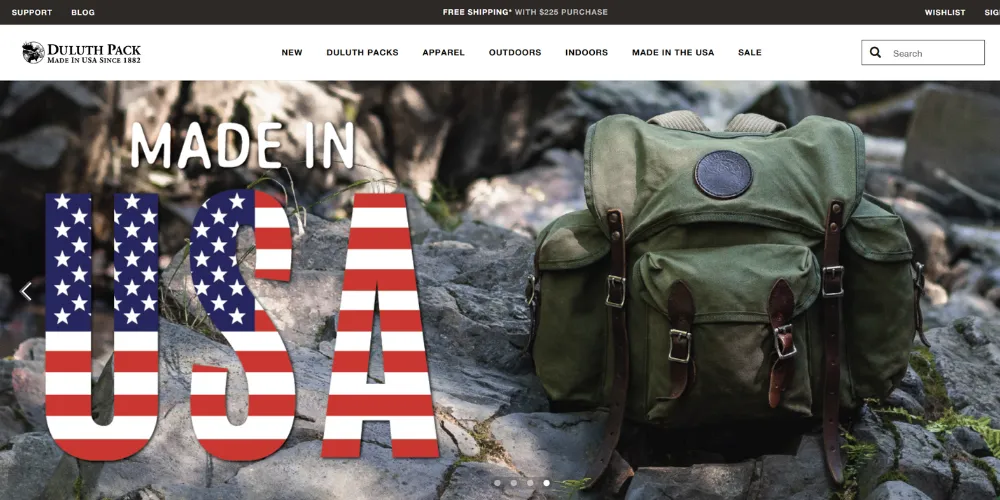
Buyer role: Brand/manufacturer reference. Location context: Minnesota-made collection.
Duluth Pack publishes a separate collection of goods it manufactures in Minnesota, including canvas and leather bags. That collection is a more precise starting point than extending a Made in USA statement to every item sold through its store.
Procurement check: For a branded wholesale or custom inquiry, identify the exact product and ask which modifications are available. For your own bag development, evaluate canvas weight, leather reinforcement and assembly as a system. Retail warranty wording does not replace a bulk-order quality agreement.
Official company or product information
9. Bosca
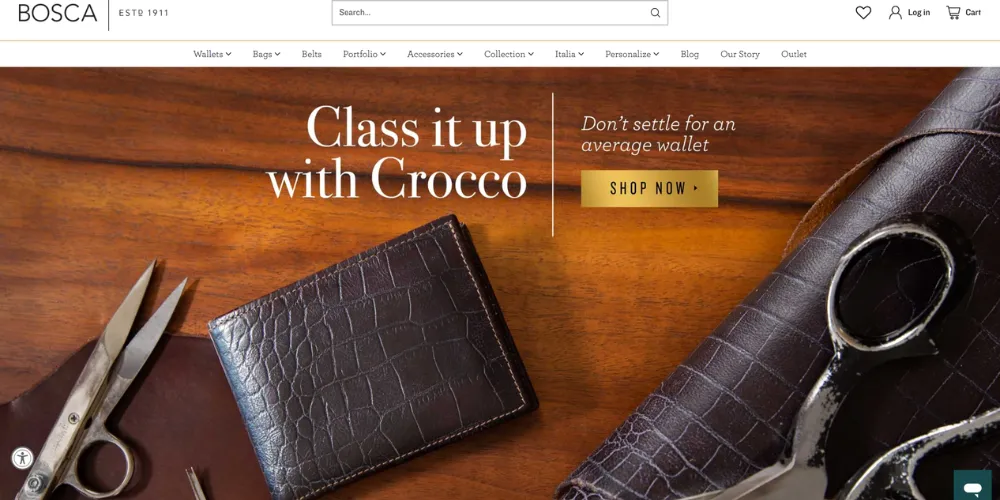
Buyer role: Brand reference. Location context: Italian leather; confirm assembly origin.
Bosca’s catalog includes wallets, card cases, bags and belts, and emphasizes Italian leathers. Leather origin and final assembly origin are separate facts. The catalog supports its role as a finished-goods brand, not an assumption that it operates a US contract factory for unrelated labels.
Procurement check: Clarify whether your inquiry concerns branded stock, corporate gifts or original development. Ask for product-level country-of-origin documentation and the current leather description before using an Italian-material statement in your own sales copy.
Official company or product information
10. Jack Georges
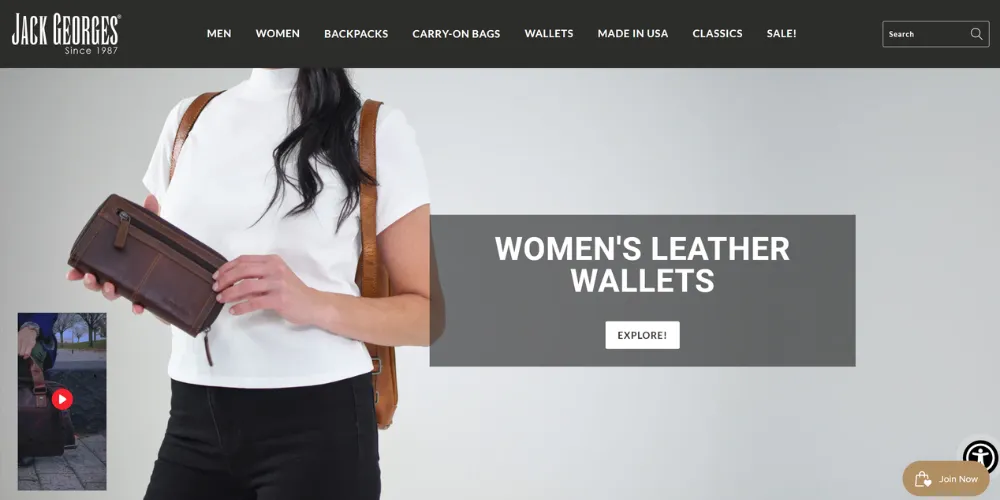
Buyer role: Brand/manufacturer reference. Location context: Passaic, New Jersey headquarters.
Jack Georges identifies its headquarters in Passaic, New Jersey, and says design, sourcing and sampling take place there. It describes production through in-house operations or controlled joint ventures and offers a distinct Made in USA range. Confirm the assembly site for the particular collection.
Procurement check: Choose from the relevant collection and verify the production site for that model. Corporate gifting, wholesale supply and third-party OEM development are different services; confirm the one your project needs before treating the company as an eligible contract bidder.
Official company or product information
11. Moore & Giles
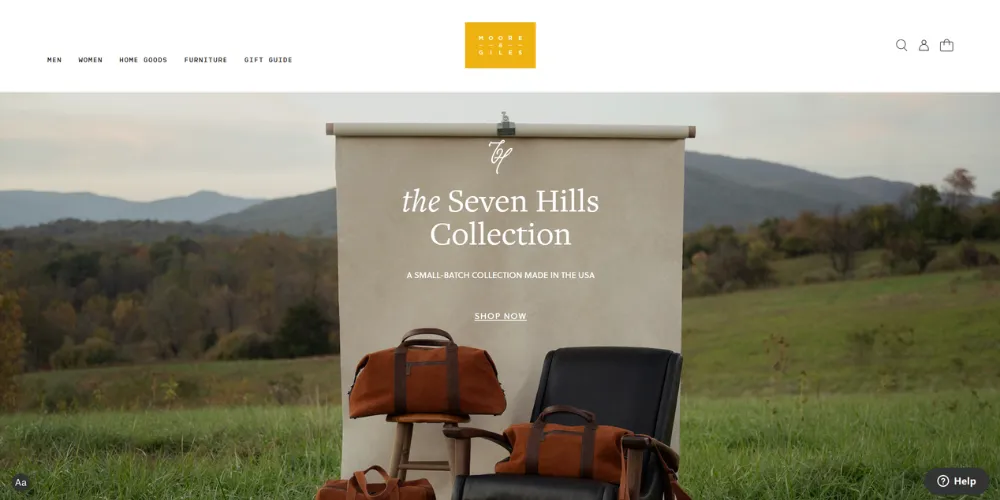
Buyer role: Material supplier and brand. Location context: US and international tannery relationships.
Moore & Giles works with tanneries and also develops finished goods. Its Seven Hills collection account identifies Horween and Hermann Oak as tanning partners for that collection. This supports a materials-and-product-development role, rather than describing Moore & Giles itself as the tannery.
Procurement check: Specify whether you need upholstery or accessory leather, a branded finished item, or a development service. Collection-specific sourcing should not be generalized to every leather or bag in the range. Verify assembly origin and an available OEM service separately.
Official company or product information
12. Ghurka
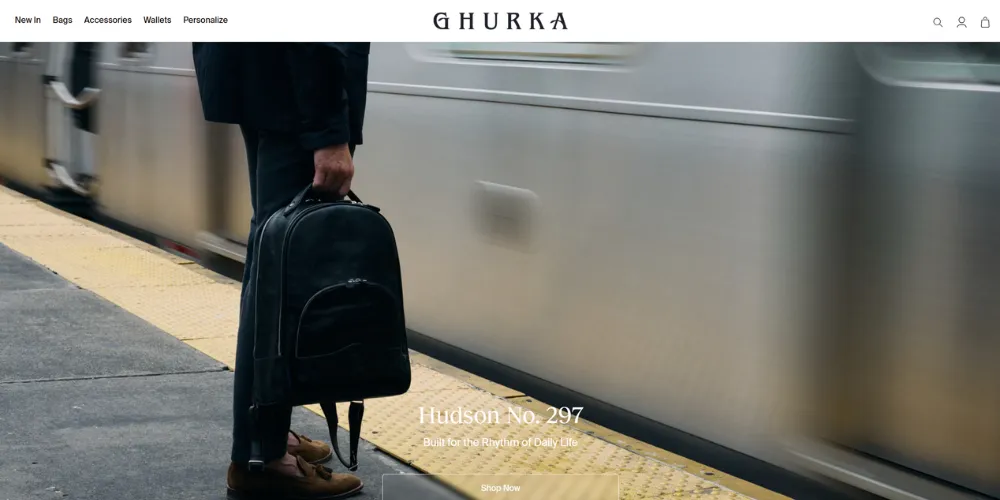
Buyer role: Brand reference. Location context: USA, Italy, Spain and South Africa.
Ghurka’s own story identifies leather-goods craftsmanship in the USA, Italy, Spain and South Africa. Its travel and business bags are useful brand references, but the company’s American heritage does not make the entire collection US-manufactured.
Procurement check: Request origin for the individual bag or accessory. For a development brief, describe the functional need—capacity, access, carrying options and repairable components—without copying protected branding or assuming that the brand offers an outside-label production line.
Official company or product information
13. Tandy Leather
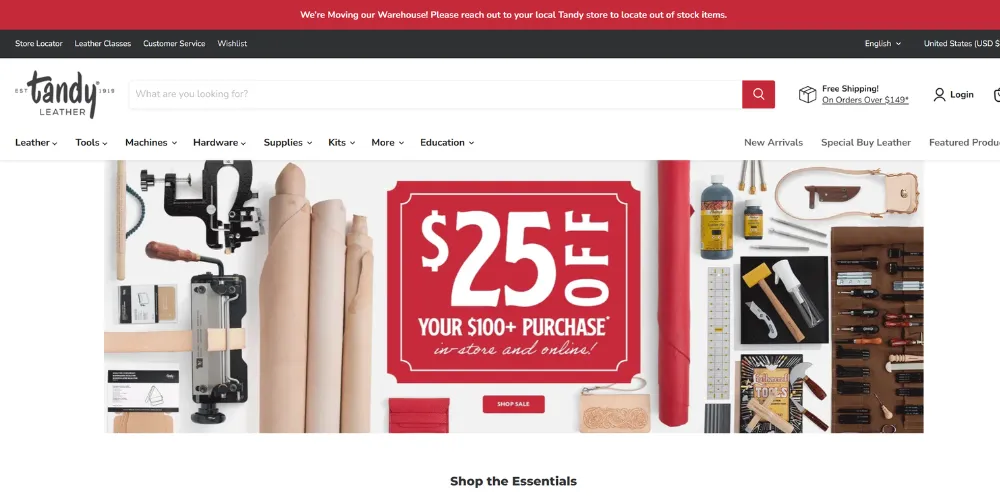
Buyer role: Craft materials and tools. Location context: Supply source; verify item origin.
Tandy supplies leatherworking tools and project resources; its hand-tool catalog includes cutting, edge-finishing, hole-punching and stitching equipment. It serves a different purchasing need from a factory delivering completed private-label bags.
Procurement check: Consider it for workshop tooling, sample-room supplies or product-development materials. Confirm stock, specification and replenishment for each item. Buying a kit or tool does not arrange pattern development, bulk assembly, product testing or finished-goods quality control.
Official company or product information
14. Ralph Lauren
Buyer role: Brand reference. Location context: Selected bags made in Italy.
The Soft Ricky 18 Calfskin Bag page states that the bag is made in Italy. This is a specific example of a US fashion brand using overseas leather-goods production. It should be a brand-positioning reference, rather than a claim of US bag manufacturing.
Procurement check: Review material descriptions and functional features for market research. A retail collection is not an invitation to buy OEM capacity or reproduce a signature design. Establish your own specification and seek a factory that explicitly accepts outside development.
Official company or product information
15. Odin Leather Goods
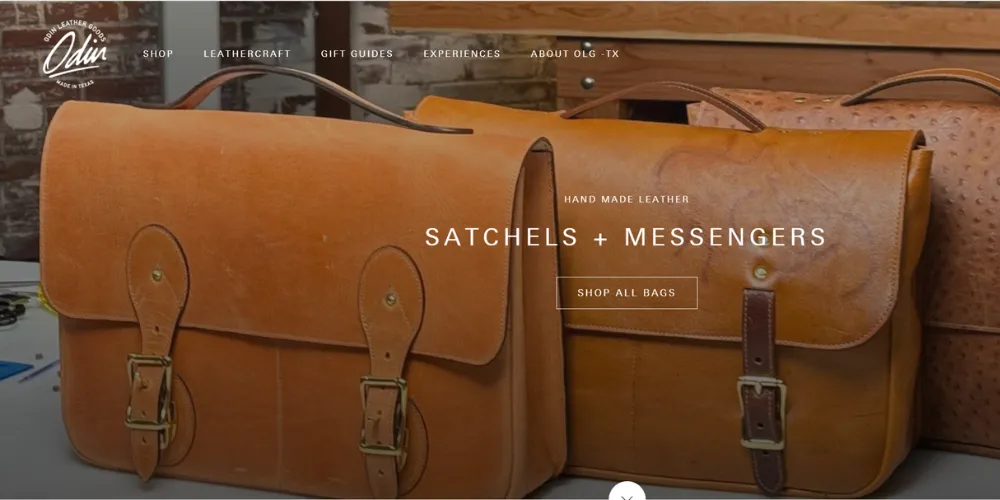
Buyer role: White-label/OEM lead. Location context: Lewisville, Texas workshop.
Odin explicitly describes making its own range and undertaking white-label and co-branded work. Its official page identifies its Lewisville workshop and bags, belts, wallets and pouches. This is a relevant development lead because the service is stated, rather than inferred from a retail catalog.
Procurement check: Send the intended product, quantities, materials and branding requirements. Ask which work will take place in Texas, how much customization is available, and whether the quoted minimum applies by style, leather color or hardware finish. Obtain a project-specific schedule.
Official company or product information
16. Mitchell Leather
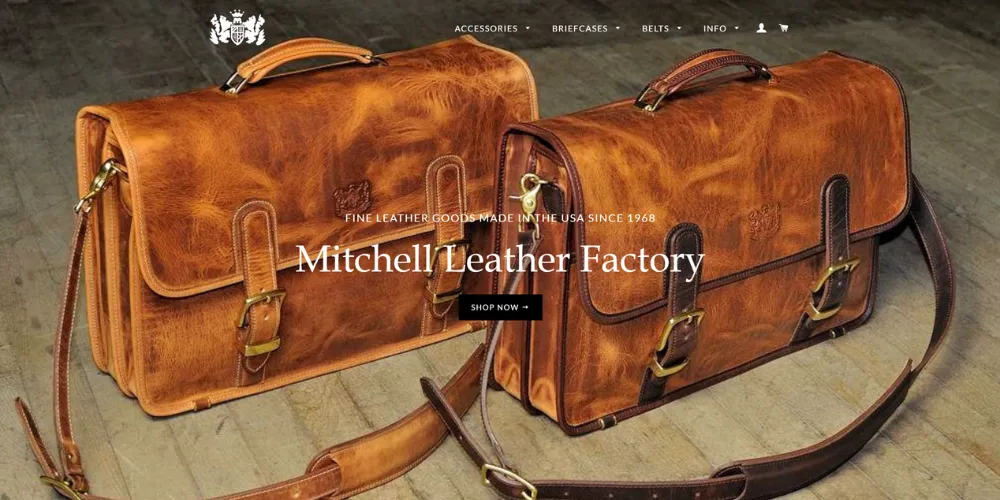
Buyer role: Bespoke brand/manufacturer reference. Location context: Thiensville, Wisconsin.
Mitchell Leather describes a family workshop in Thiensville, outside Milwaukee, making briefcases, wallets and belts. Its page dates the business to 1968 and says genuine products are sold directly through its website and retail store. Bespoke retail work should not be confused with bulk private-label availability.
Procurement check: Its construction can inform a brief for small leather goods, but contact the workshop before assuming wholesale terms or production capacity. Timing can differ sharply between product categories; use a written quotation rather than transferring a retail lead time to a new design.
Official company or product information
17. Holtz Leather Co.
Buyer role: Personalization and gifting lead. Location context: Huntsville retail contact.
Holtz’s site lists wallets, journals, belts, bags and travel accessories, with corporate-gifting and wholesale routes. This makes it relevant when the purchasing task is a branded gift or a personalized existing product. The service does not by itself establish unrestricted custom-pattern OEM manufacturing.
Procurement check: Define whether you want a logo added to an existing model or an entirely new construction. Confirm the exact item’s production origin, artwork method, tooling charges and approval sample before ordering a branded gift program.
Official company or product information
18. Cut and Stitch
Buyer role: Contract manufacturing lead. Location context: USA and overseas factories.
Cut and Stitch identifies itself as a New York-based manufacturing partner with factories in New York City and internationally. Its public services cover development and leather goods. It is a relevant RFQ lead, provided the requested production route is stated in the quotation.
Procurement check: If domestic production is required, ask for the cutting, sewing and assembly locations, material sources and subcontracted operations. A US contact address alone does not settle origin. Confirm sample ownership, tooling ownership, MOQ and the production site before approval.
Official company or product information
19. GFG Bag Manufacturer
Buyer role: Custom sourcing/manufacturing lead. Location context: Knoxville office; Shishi, China locations.
GFG offers custom bags and promotional products. Its FAQ identifies an office in Knoxville, Tennessee, and locations in Shishi, China; its service description includes importation and delivery. It should therefore be screened as a custom sourcing lead with international operations.
Procurement check: Ask which factory will make your bag, whether the proposed material is leather or textile, and how the quotation handles origin and imports. Do not describe it as a verified Tennessee leather-bag factory based only on its US office.
Official company or product information
20. Portchester USA
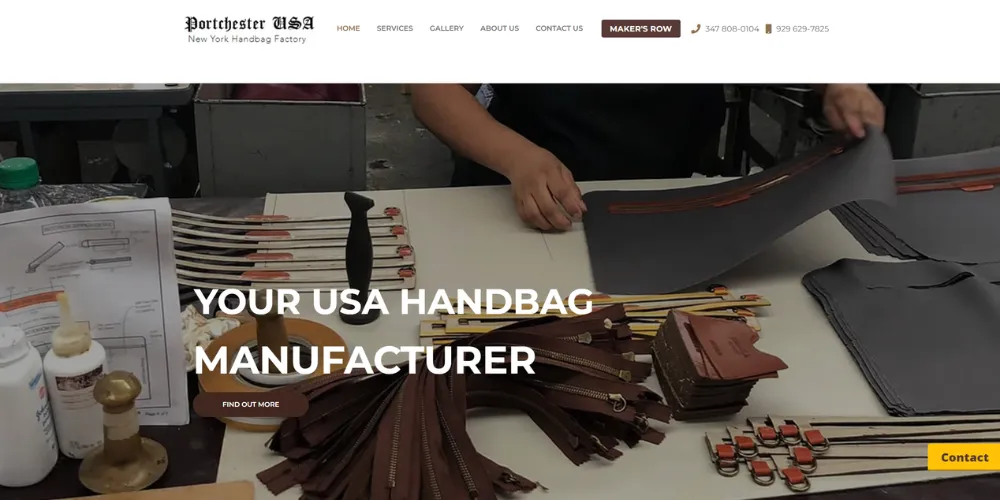
Buyer role: Handbag manufacturing lead. Location context: Long Island City, New York.
Portchester publishes pattern making, sample making, material sourcing and small or large production runs for handbags. Its official contact location is Long Island City, New York. These stated services make it a practical lead for buyers needing handbag development and production.
Procurement check: Submit the design and construction details, then verify current capacity and the exact operations included in the price. The company’s broad service description does not establish a standard MOQ, a guaranteed delivery date or suitability for every bag construction.
Official company or product information
21. Softline Brand Partners
Buyer role: Contract manufacturing lead. Location context: USA and overseas factories.
Softline states that it has cutting and sewing capacity in the USA and factories both domestically and overseas. Its offer includes design, sourcing and manufacturing. The factory proposed for the project determines its production route.
Procurement check: Ask for the proposed site, leather-specific equipment and sample work comparable to your product. Review any social or environmental audit for that facility and current period; a broad website audit claim does not establish certification or product compliance.
Official company or product information
22. Fifield, Inc.
Buyer role: Specialty fabric supplier. Location context: Packaging and display materials.
Fifield’s company history describes flannels, simulated suede, velvet and other fabrics developed for uses including packaging, displays and linings. These are material-purchasing capabilities. They do not establish a handbag or belt assembly service.
Procurement check: For a lining or presentation-box project, request the current material composition and a swatch. Evaluate backing, adhesive compatibility and color transfer for the intended use. A display fabric should not automatically be specified as a bag lining without checking performance.
Official company or product information
23. Silver Creek Leather Co.
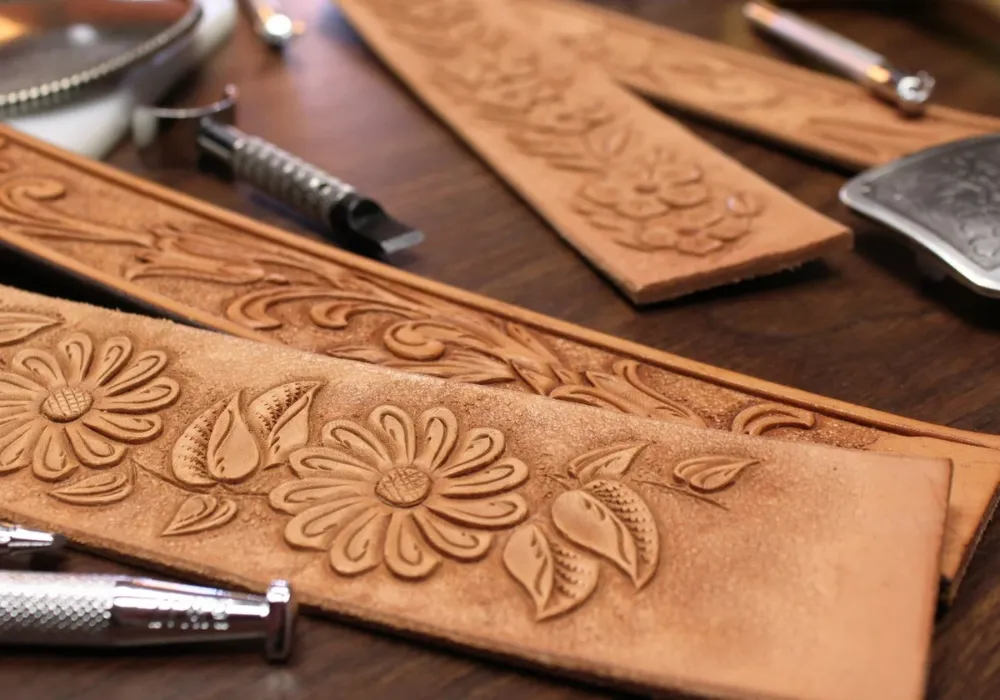
Buyer role: Components and craft supplies. Location context: Southern Indiana factory.
Silver Creek describes leather craft supplies, Realeather products and a leather-component manufacturing division. Its Southern Indiana operations include cutting, assembly and packaging with materials sourced internationally. It can be relevant for cut parts as well as craft supplies.
Procurement check: Send component drawings, tolerances and material requirements when requesting cut leather parts. Confirm whether the offer covers only components or completed products. Its component capability should not be presented as a general luxury-bag OEM service.
Official company or product information
24. American Leather
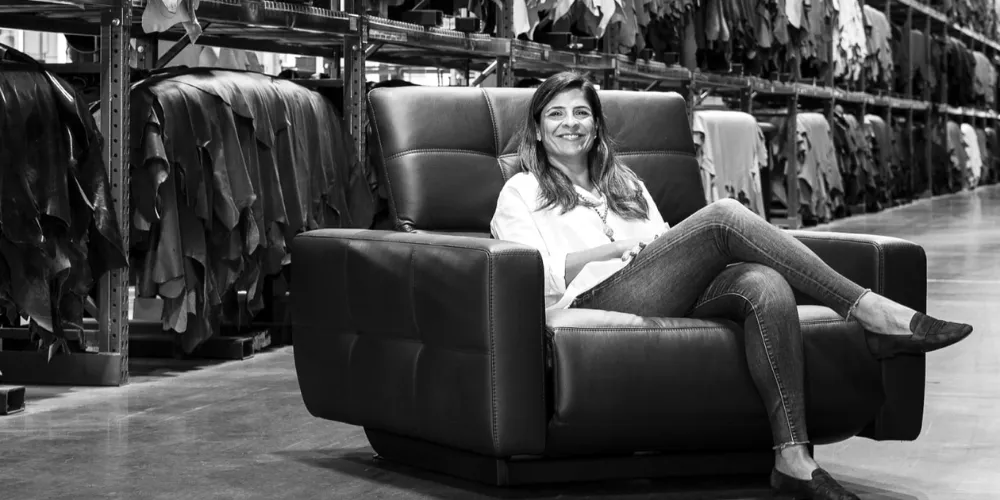
Buyer role: Furniture manufacturer. Location context: Dallas, Texas.
American Leather describes made-to-order furniture manufactured in Dallas, including sleeper sofas, seating and motion furniture. Its leather expertise is relevant to upholstery sourcing and furniture construction. It is outside a shortlist for confirmed handbag, wallet or belt OEM services.
Procurement check: Keep furniture and fashion-accessory procurement separate. A large upholstery factory’s cutting or sewing equipment does not establish the handling, hardware, edge finishing or small-part assembly needed for your accessory line.
Official company or product information
25. Ezra Arthur
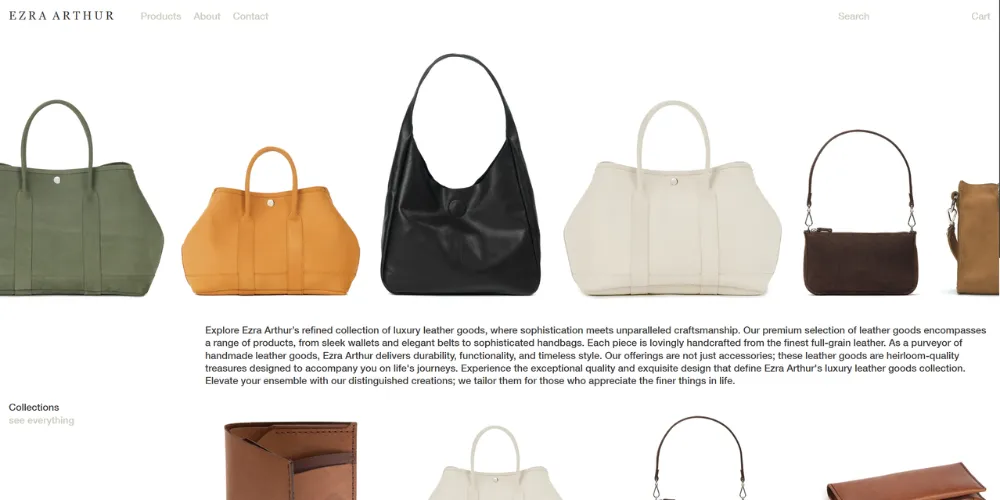
Buyer role: Brand/manufacturer reference. Location context: Phoenix, Arizona facility.
Ezra Arthur’s official account describes its Phoenix facility and handcrafted leather accessories. It explains material selection and offers workmanship support for stitching. That is evidence about its own goods, rather than a verified offer to produce unrelated brands’ designs.
Procurement check: Use a current product sample to examine slim construction and assembly choices. Ask separately about any business supply arrangement, and read warranty scope rather than treating a workmanship promise as a guarantee that leather cannot wear or age.
Official company or product information
Directory at a Glance
| Company | Purchasing role | Location or origin context |
|---|---|---|
| Horween Leather Company | Material supplier | Chicago tannery |
| Tanner Goods | Brand reference | Origin stated by product |
| Allen Edmonds | Brand reference | Origin stated by product |
| Saddleback Leather | Brand reference | Mexico production disclosed |
| Filson | Brand reference | Some products use qualified US-origin claims |
| Red Wing Shoes | Brand reference | Check the selected accessory |
| Coach | Brand reference | New York brand identity |
| Duluth Pack | Brand/manufacturer reference | Minnesota-made collection |
| Bosca | Brand reference | Italian leather; confirm assembly origin |
| Jack Georges | Brand/manufacturer reference | Passaic, New Jersey headquarters |
| Moore & Giles | Material supplier and brand | US and international tannery relationships |
| Ghurka | Brand reference | USA, Italy, Spain and South Africa |
| Tandy Leather | Craft materials and tools | Supply source; verify item origin |
| Ralph Lauren | Brand reference | Selected bags made in Italy |
| Odin Leather Goods | White-label/OEM lead | Lewisville, Texas workshop |
| Mitchell Leather | Bespoke brand/manufacturer reference | Thiensville, Wisconsin |
| Holtz Leather Co. | Personalization and gifting lead | Huntsville retail contact |
| Cut and Stitch | Contract manufacturing lead | USA and overseas factories |
| GFG Bag Manufacturer | Custom sourcing/manufacturing lead | Knoxville office; Shishi, China locations |
| Portchester USA | Handbag manufacturing lead | Long Island City, New York |
| Softline Brand Partners | Contract manufacturing lead | USA and overseas factories |
| Fifield, Inc. | Specialty fabric supplier | Packaging and display materials |
| Silver Creek Leather Co. | Components and craft supplies | Southern Indiana factory |
| American Leather | Furniture manufacturer | Dallas, Texas |
| Ezra Arthur | Brand/manufacturer reference | Phoenix, Arizona facility |
Material and Development Options to Evaluate
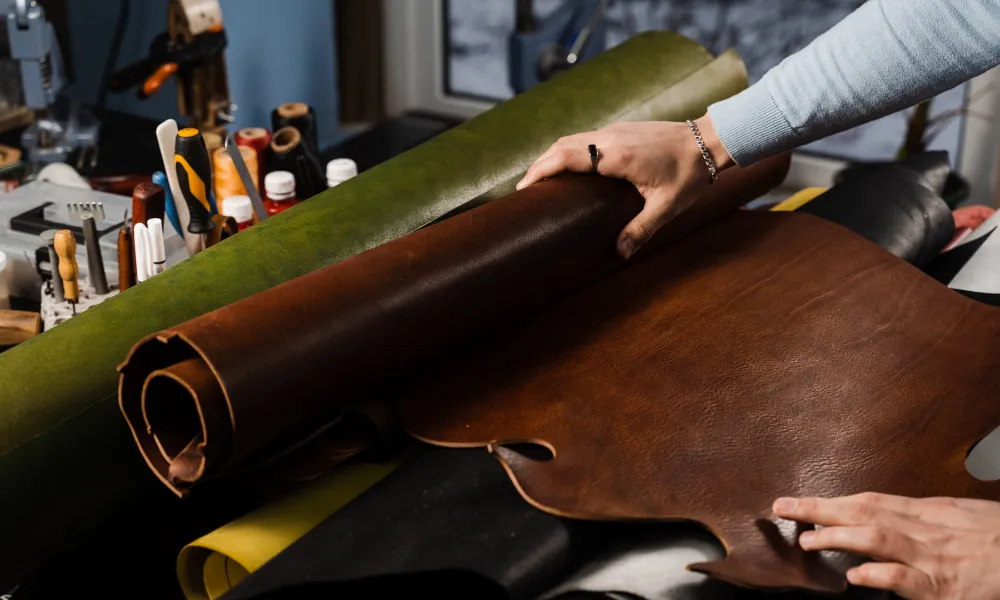
Recycled and bio-based materials
Ask for a material’s composition, recycled or bio-based content and relevant verification. A plant-derived feedstock does not establish biodegradability, recyclability or a lower environmental impact for the complete coated material. Test the proposed grade in the actual product construction.
Digital design and physical sampling
A digital model can help discuss proportions and component placement. It cannot establish leather temper, handle comfort, edge appearance or performance. Include physical material swatches and assembled samples in the approval process regardless of the design software used.
Leather and textile combinations
Hybrid bags can use textile body panels and leather handles or trim. Consider differential stretch, seam bulk, cleaning instructions and color transfer between components. Match the construction to the expected use rather than assuming that mixed materials are always lighter or more durable.
Local and international production choices
Compare actual production proposals for the same brief. A local route may simplify revisions; an international route may fit a particular material or production setup. Decide from the sample, capacity, total quotation and documented origin against your launch requirements.
Production Constraints to Resolve Before Ordering
Material availability
A particular leather color, zipper or buckle can determine the schedule. Ask what is in stock, what needs a minimum purchase and which substitutions would require approval. Domestic assembly does not remove dependence on an international material source.
Cost and construction tradeoffs
Compare like-for-like patterns and material specifications. A price change may result from panel yield, handwork, lining complexity or tooling rather than location alone. Ask the manufacturer to explain the construction change behind each cost option.
Capacity and specialist skills
Check whether the factory has recent experience with the specific seams, edge finishes and hardware in your design. Available sewing capacity does not automatically include pattern development or complex leather finishing. Confirm how sampling and production compete for the same team.
Consistency over a production run
Use a sealed sample, material-lot records and inspections appropriate to the order. Define acceptable grain variation and color limits. A workshop’s small size or a factory’s automation level does not eliminate the need for production control.
How to Manage the Manufacturing Partnership
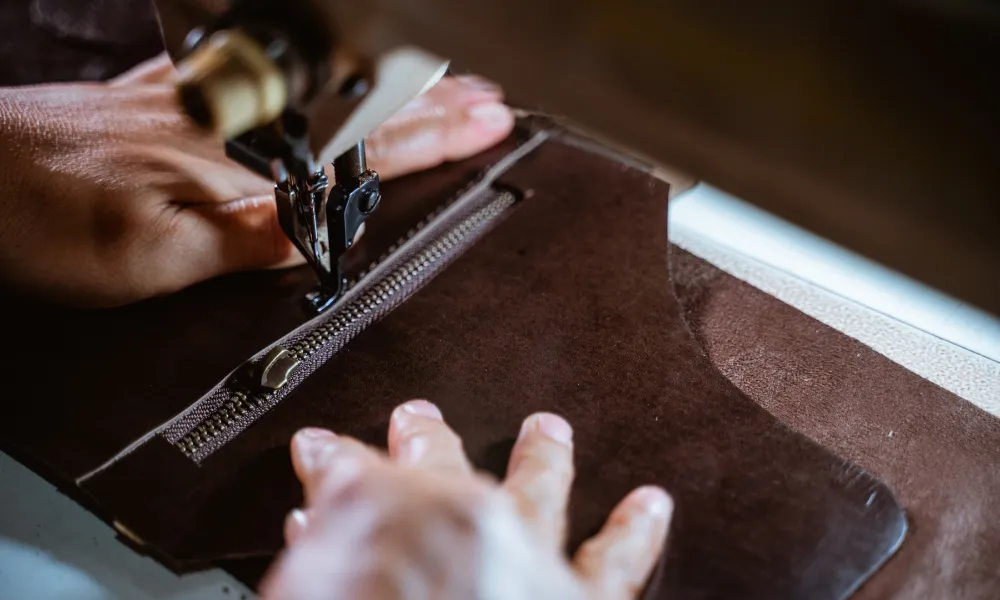
Send a usable RFQ
Include drawings, target quantities, materials, intended use and destination. Separate essential requirements from negotiable design features. Ask the supplier to state assumptions and exclusions so that a quotation can be compared fairly with other proposals.
Give measurable sample feedback
Identify the revision, photograph the issue and explain the desired change. “Softer handle” may need a material or construction change; “better quality” is too vague to act on. Confirm approved revisions before bulk materials are cut.
Review records for the actual facility
Where a project requires social-audit evidence, inspect the report scope, date and corrective actions. Sedex explains that SMETA is an audit methodology, not a certification: Sedex service information. Keep audit evidence separate from chemical and physical product testing.
Plan exceptions and delivery
Agree who authorizes a material substitution, how defects are handled and which documents accompany shipment. Keep production completion, inspection release and transport dates distinct. Written responsibilities make a problem easier to resolve when a shipment or component is delayed.
Hoplok: A China and Cambodia Manufacturing Option
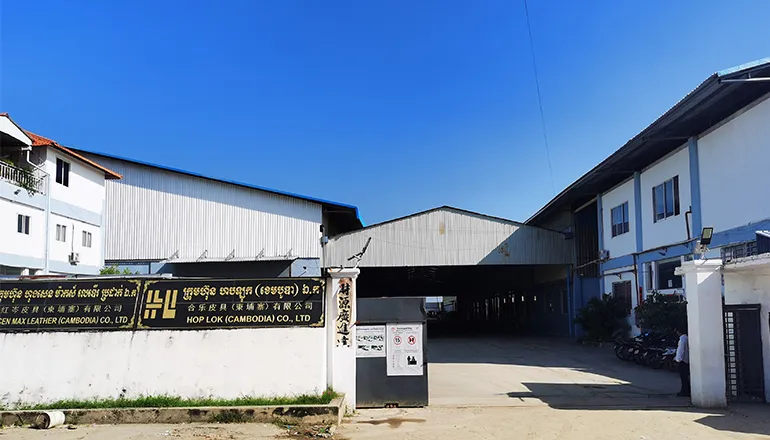
For buyers comparing overseas production with US manufacturing, Hoplok supplies private-label belts, bags and wallets through facilities in China and Cambodia. Compare this route with domestic quotations using the same specifications and acceptance criteria.
Facilities and leather finishing
Hoplok’s four factories total 19,000 m²: HongDing in China, 5,000 m²; the Hoplok bag factory in Cambodia, 4,000 m²; Hongcen Max belt factory, 5,000 m²; and ProPelli leather finishing, 5,000 m². ProPelli processes externally sourced crust leather. Its valid LWG Gold certification applies to that facility and scope, not to every product or all four factories.
Minimum orders and development
MOQ is 300 pieces for genuine-leather belts and wallets, 200 pieces for genuine-leather bags, and 1,000 pieces for PU belts, bags or wallets. Belt samples take 2–3 weeks and bag samples take 3–4 weeks. Confirm wallet and accessory sampling for the specific design.
Production planning
Bulk production takes 60–90 days; transport is quoted separately. Provide the product specification, quantities, target market and required tests so material, hardware and assembly options can be evaluated against the approved sample.
Discuss custom leather belts, custom leather bags or leather accessories with the relevant product brief. Pricing, performance criteria and inspection requirements are confirmed for the order.
Frequently Asked Questions for Sourcing Teams
Which listed companies offer outside-label manufacturing?
Odin describes white-label and co-branded work; Cut and Stitch, Portchester USA and Softline describe development and manufacturing services. Qualify the particular product and production site with each company. GFG is another custom sourcing lead, with a Tennessee office and China locations disclosed on its website.
Does an American brand mean a product is made in the USA?
No. A brand’s headquarters, design studio and assembly factory may be in different countries. Saddleback identifies Mexico production for its belts, Ralph Lauren lists the referenced Ricky bag as made in Italy, and Ghurka describes production in several countries. Check the selected SKU.
Can a leather supplier also make my finished bag?
Some companies offer more than one service, but leather, cut components and complete bags are distinct purchases. Horween is a tannery; Tandy supplies craft tools; Fifield supplies specialty fabrics; Silver Creek offers leather components. Confirm assembly capability instead of assuming it.
How should buyers compare domestic and overseas quotations?
Use the same bill of materials, approved sample, quantities, testing and packaging requirements. Compare the full production and delivery schedule, factory location and agreed delivery terms. Do not assume that nationality establishes quality, price or environmental performance.
Are US leather manufacturers automatically sustainable?
No. Assess material sourcing, process controls, facility evidence and the claim being made. Vegetable tanning, a domestic location or a social audit alone does not prove that a finished product has a lower environmental impact. Ask for evidence appropriate to the specific environmental statement.
Build a Shortlist Around the Service You Need
The useful distinction in this directory is purchasing role. Contact stated OEM leads for original development, approach brands for their available business programs, and use material suppliers for the components they actually sell. Confirm origin and factory capacity for the proposed order before paying for development.
A qualified shortlist combines an appropriate product sample with documented materials, a credible production plan and clear commercial responsibilities. Keep those requirements consistent when comparing a US workshop with an overseas manufacturer.
Prepare Your Leather-Goods Production Brief
Send Hoplok your drawings, material preferences, estimated quantities and target market to evaluate a China or Cambodia production proposal. Start with the relevant bag or belt manufacturing requirements and agree the sample and testing plan before bulk production.