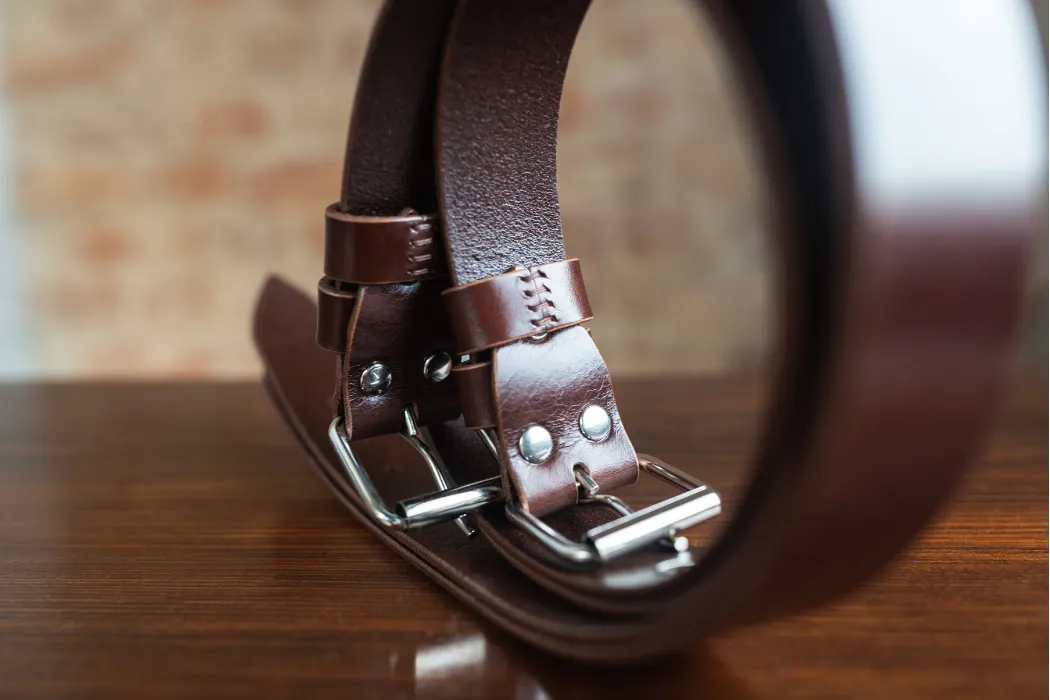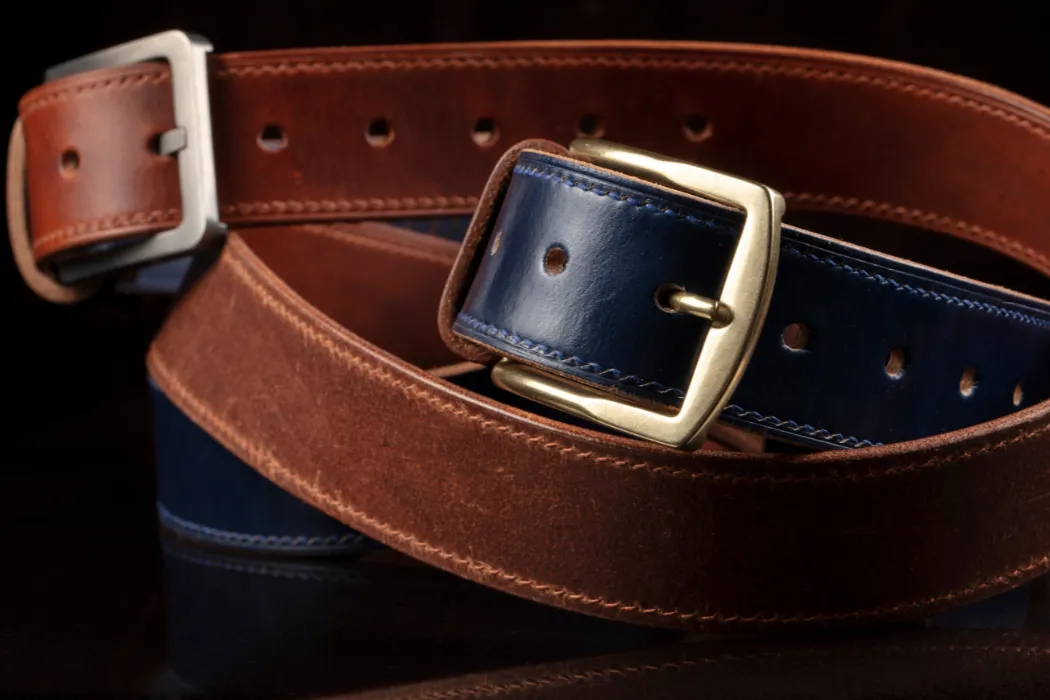
The choice between full grain vs corrected grain leather directly impacts your product’s failure rate and final profit margin. Selecting the wrong material leads to cracked surfaces and costly warranty claims, while overpaying for a high-volume dress belt line unnecessarily shrinks your cost advantage.
This analysis benchmarks both materials on durability, aesthetic consistency, and unit cost. We evaluate how LWG certified hides perform with specific Pro Pelli finishing techniques, giving you the data to match the right leather to your classic dress or heavy-duty belt lines.
What is Full Grain Leather?
Full grain is the highest grade of leather, using the complete outer layer of the hide. Its untouched surface preserves natural fibers, ensuring maximum strength and a unique patina.
Natural Markings and Patina Development
Full grain leather’s surface is left completely uncorrected. It shows every natural grain pattern, pore, and scar from the animal’s life. These unique markings are not defects; they are the hallmarks of authentic, high-quality leather. Each hide tells a different story.
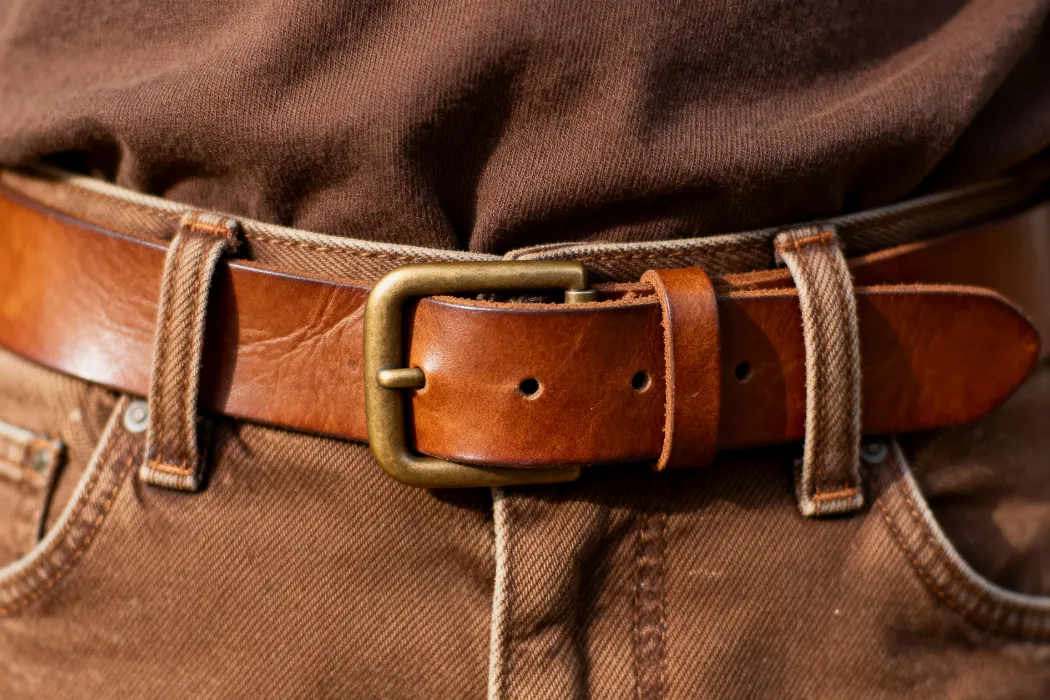
With time and use, the leather absorbs oils and develops a rich patina. This glossy sheen doesn’t diminish the product’s value but actually enhances its appearance, giving it a distinct character that corrected or synthetic materials can’t replicate.
Application in Heavy-Duty Belts
The dense, intact fiber structure of full grain leather gives it unmatched strength. This is why it’s the core material for our Work and Heavy-Duty belt lines. These products are built to withstand constant physical stress without stretching or breaking.
We source our full-grain hides exclusively from LWG (Leather Working Group) certified tanneries. The material’s inherent durability means a belt made from it isn’t a short-term accessory but a piece of equipment designed to last for decades.
What is Corrected Grain (Smooth) Leather?
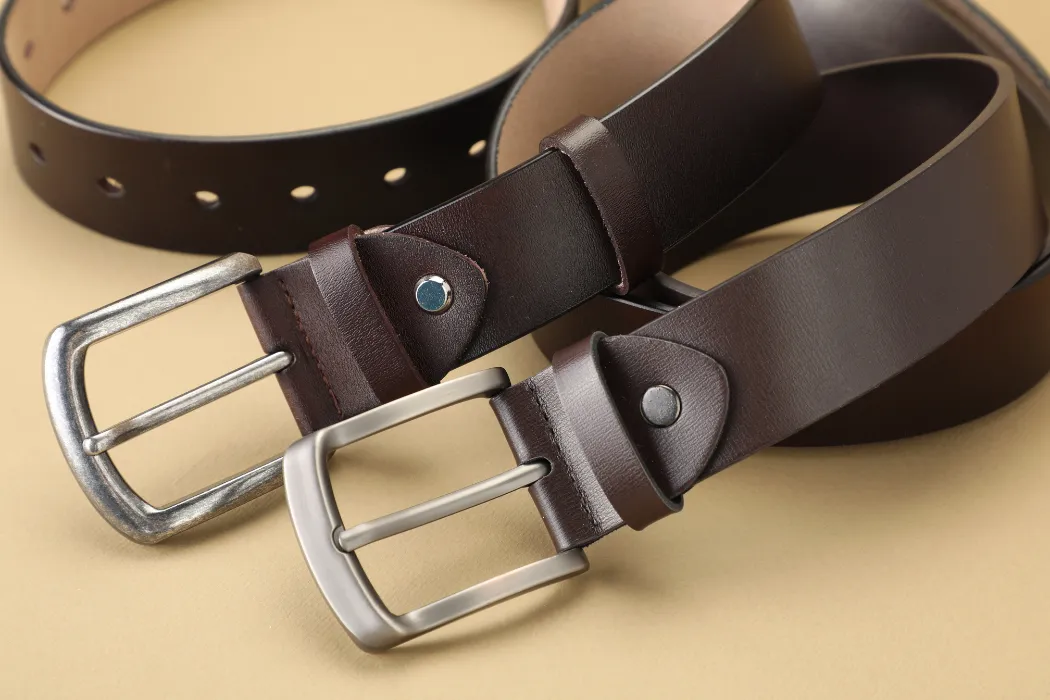
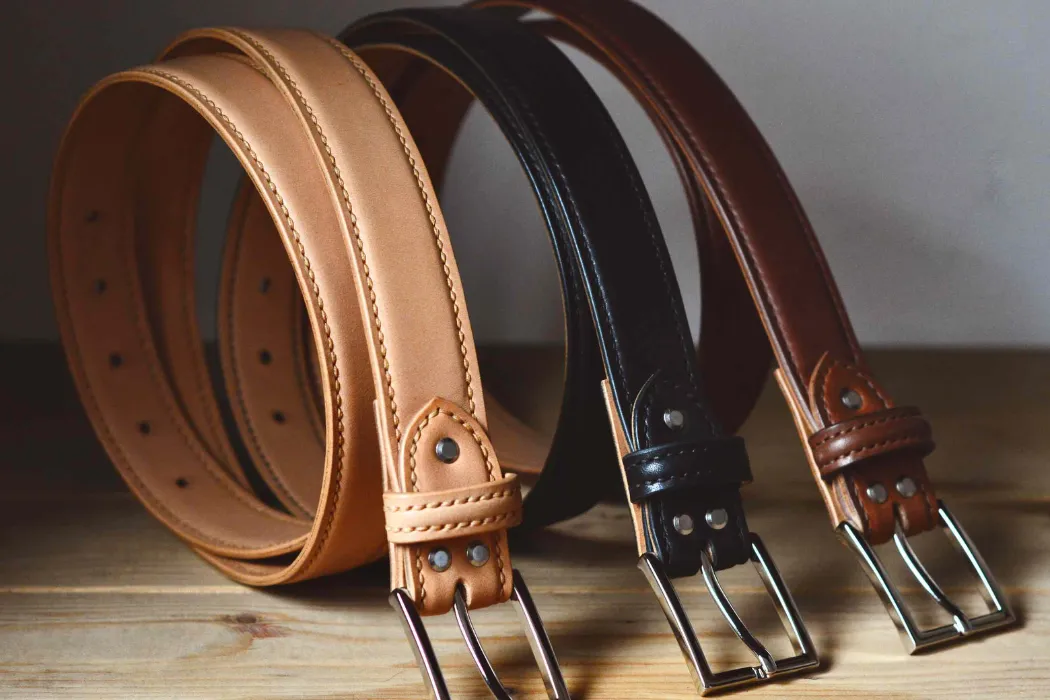
Corrected grain leather is top-grain leather sanded to remove imperfections. It’s coated with pigment and embossed with an artificial grain, creating a smooth, durable surface for dress belts.
Creating a Flawless Surface
The process starts with genuine top-layer hides that have natural blemishes like scars, insect bites, or wrinkles. These aren’t junk hides, just ones with cosmetic issues. Manufacturers sand or buff the surface to erase these defects, which creates a completely smooth and uniform canvas. After sanding, they apply a pigment coating for consistent color and emboss an artificial grain pattern onto the surface. This gives the leather its final, flawless look.
The Foundation for Classic and Embossed Belts
This perfectly uniform surface is a non-negotiable for professional Classic Dress Belts, where consistency across a large production run is key. For brand owners, it guarantees every belt looks the same. That smooth base is also the ideal starting point for applying unique embossed textures. It allows for sharp, clean impressions of patterns like crocodile, snake, or Saffiano. The pigmented topcoat also provides excellent stain resistance and makes the belt easy to clean, which are practical benefits for any everyday accessory.
Scale Your Brand with Premium Belts
Production Consistency: Why Corrected Grain is Easier
Corrected grain leather is buffed to remove natural flaws and embossed with a uniform pattern. This industrial process creates a standardized material ideal for consistent production.
Standardized Buffing and Embossing for Uniformity
For large-scale manufacturing, predictability is everything. Full grain leather is inconsistent by nature; every hide has unique scars, insect bites, or stretch marks. Corrected grain solves this problem through a standardized industrial process.
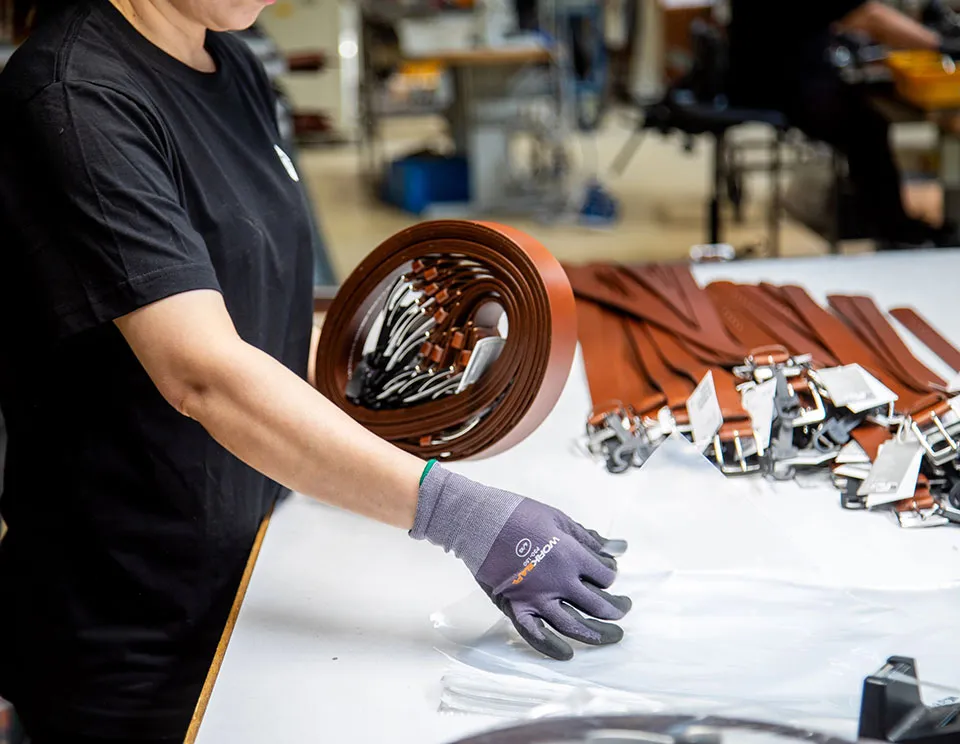
First, we use calibrated abrasives to buff or sand the leather surface. This removes the natural imperfections and creates a blank, uniform canvas. Then, we use heated plates to emboss an artificial grain pattern onto the surface. The result is a repeatable and predictable texture across thousands of hides, ensuring every product in a batch looks and feels the same.
Achieving Consistent Styles with Pro Pelli Embossing
We take this consistency a step further with our in-house Pro Pelli finishing facility in Cambodia. This vertical integration gives us direct control over the final aesthetic, allowing us to create unique embossed textures at scale for our B2B clients.
If your brand requires a specific, uniform look for a large production run, we can deliver. We consistently produce popular textures like Crocodile, Snake, and Saffiano patterns, ensuring your entire product line maintains a cohesive brand identity without the random variations of natural hides.
Durability Face-Off: Paint Cracking vs. Patina
Coated leather’s paint-like finish cracks and peels with use, a clear sign of failure. High-quality full-grain leather develops a rich patina, enhancing its look and signaling quality.
| Attribute | Coated / Corrected-Grain Leather | Full-Grain Leather |
|---|---|---|
| Aging Process | Degrades. The surface coating becomes brittle, leading to cracks and peeling. | Improves. Develops a natural patina—a soft sheen that adds character and depth. |
| Surface Integrity | Failure point. Cracking is a structural breakdown of the synthetic finish. | Hallmark of quality. Patina forms as the leather’s natural fibers absorb oils and wear. |
| Long-Term Value | Decreases. The product looks worn out and damaged as the coating fails. | Increases. A well-developed patina is highly desirable and signifies a premium product. |
Why Coated Leather Surfaces Can Crack
Many mass-market belts use corrected-grain leather. This material is sanded down to remove imperfections and then covered with a synthetic, paint-like coating to create a uniform look. The problem is that this top layer is inflexible.
Every time a belt is bent, flexed, and worn, that rigid surface coating is stressed. It eventually becomes brittle, leading to visible cracks and peeling. This isn’t a sign of character; it’s material failure that directly shortens the product’s usable lifespan.
How Full-Grain Leather Develops a Natural Patina
Full-grain leather ages differently. Instead of cracking, it develops a patina—a soft, rich sheen that comes from handling, exposure to natural oils, and the environment. This process doesn’t degrade the material; it enhances it, making each belt unique over time.
This is a key indicator of high-quality material. Our Full-Grain leather options are designed to age gracefully. In fact, specific finishes from our Pro Pelli facility, like Crazy Horse, Oil Tanned, and Pull-up, are formulated to accelerate and enrich this beautiful aging process, delivering a premium look that lasts.
Aesthetics: Natural Texture vs. Uniform Finish
Natural textures offer rustic authenticity that hides wear. Uniform finishes provide a sleek, modern look. The choice defines your belt collection’s market position.
The Appeal of Natural Grain and Character
A natural finish preserves the leather’s original surface, showcasing all its inherent variations, color shifts, and unique grain patterns. These are not defects; they are marks of authenticity that give each belt a distinct character. This look is ideal for creating the warm, organic aesthetic found in traditional, casual, or rustic belt collections.
From a practical standpoint, the textured surface is also more forgiving. It effectively disguises minor irregularities and is less likely to show small scratches from daily use, maintaining its appearance over time.
Achieving Specific Looks with Pro Pelli Finishing
Your brand’s aesthetic is not left to chance. Our in-house Pro Pelli finishing facility in Cambodia gives you direct control over the leather’s final look, whether you need authentic texture or perfect uniformity.
- Authentic Natural Textures: We produce sought-after effects like Crazy Horse, Oil Tanned, and Pull-up. These finishes are perfect for rugged casual and jeans belts that get better with age.
- Flawless Uniform Surfaces: For a modern, minimalist look, we create the perfectly smooth, consistent surfaces required for Classic Dress Belts.
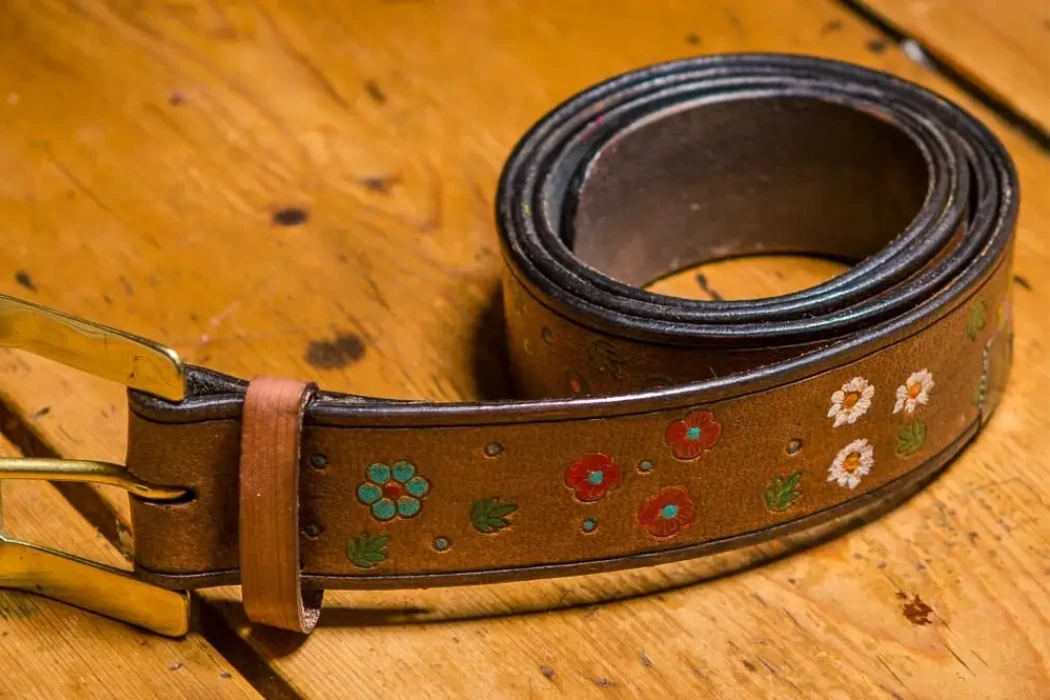
- Custom Embossed Patterns: We can apply highly specific fashion textures, including popular Crocodile, Snake, and Saffiano patterns, to match your design vision.
Price Difference: 20-30% Savings?
Forget 20-30%. The actual cost difference between full grain and corrected grain often hits 40-60%. The savings come from using lower-grade hides and a faster production cycle.
What Drives the Lower Cost of Corrected Grain
The price advantage isn’t a small discount; it’s built into the material and manufacturing process from the start. Corrected grain is fundamentally designed for cost-efficiency.
- Cheaper Raw Materials: It starts with lower-grade hides. These skins have natural imperfections like scars or insect bites, making them much less expensive to source than the flawless hides required for full grain.
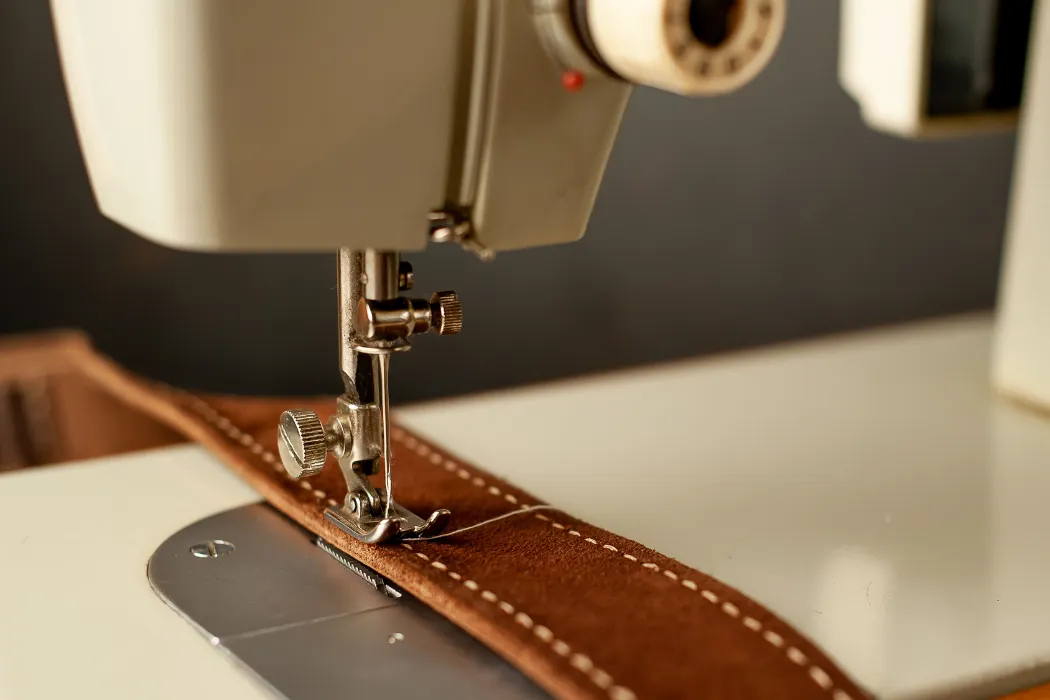
- Faster Processing: The production involves sanding down defects and applying a uniform pigment. This is significantly quicker and less labor-intensive than the lengthy, traditional tanning methods used for premium full grain leather.
- Reduced Waste: This method allows tanneries to salvage and use material that would otherwise be discarded. Buffing away imperfections turns a rejected hide into a uniform, usable product, which cuts material costs.
How Factory-Direct Sourcing Impacts Your Budget
Choosing the right material is only half the battle. Working directly with a manufacturer like Hoplok provides another layer of cost savings that middlemen absorb.
- Factory-Direct Pricing: You get our pricing without any intermediaries. Wholesalers, distributors, and agents add markups that you completely avoid by partnering with the source.
- Vertical Integration: We control the supply chain. Our in-house leather finishing facility, Pro Pelli, lets us manage material costs and quality from the very beginning, passing those efficiencies on to you.
- Potential Tariff Savings: For large-scale production, our Cambodia manufacturing option can offer significant duty-free advantages for importers in specific regions, directly reducing your landed cost.
The Final Verdict: Fashion vs. Uniforms
Use full-grain leather for unique, high-character products that build brand value. Use corrected-grain for large-scale production needing a flawless, consistent look and strict cost control.
Choose Full-Grain for Unique Character and Patina
Full-grain leather is the right choice when your brand’s identity is tied to authenticity and premium quality. It’s for customers who appreciate natural texture and want a product that lasts. Because it retains all the hide’s original markings, each belt has a distinct character. This leather develops a rich patina over time, making it ideal for casual, vintage, and workwear belt styles that get better with age. Choosing full-grain sends a clear message that you prioritize high-quality, authentic materials.
Choose Corrected-Grain for Flawless Consistency
Corrected-grain is the strategic choice when absolute visual consistency is non-negotiable. Its sanded and refinished surface provides a smooth, blemish-free finish required for formal dress belts. For large production runs, this process ensures every single belt is visually identical. This makes it perfect for corporate uniform programs or major retail orders where product variation is unacceptable. It also offers a significant cost advantage when you need a clean, professional look at scale.
Frequently Asked Questions
What is the difference between full grain and corrected grain leather?
Full grain leather retains the hide’s natural, unaltered surface, showing all original characteristics. In contrast, corrected grain leather has been sanded and buffed to remove imperfections, and then an artificial grain is often embossed onto it. While both come from the top layer of the hide, full grain develops a unique patina over time and is more breathable, whereas corrected grain has a uniform, manufactured appearance.
Is corrected grain leather real leather?
Yes, corrected grain leather is real leather. It comes from the same upper portion of an animal hide as full-grain leather. The key difference is in the processing; its surface is sanded to remove blemishes before an artificial grain is stamped on, making it a more uniform but still genuine leather product.
Does corrected grain leather peel?
Corrected grain leather is more prone to peeling than full-grain leather, especially if not maintained properly. The risk comes from the synthetic topcoat applied after the surface is sanded, which can become brittle and crack over time. With regular conditioning and care, peeling can be prevented for years.
What is the best leather for uniform belts?
Full-grain vegetable-tanned cowhide is considered the best for uniform belts. It offers exceptional durability, tensile strength, and resistance to stretching, which is critical for daily wear. This leather maintains its shape and professional appearance, often lasting over 15 years.
Why is full grain leather more expensive?
Full grain leather costs more because it uses only the highest-quality hides with minimal imperfections, leading to a smaller material yield. The production process is also more labor-intensive. Its superior durability and ability to develop a beautiful patina create high demand, which also increases the price.
How can you identify corrected grain leather?
You can identify corrected grain leather by its shiny, uniform, and sometimes plastic-like surface. It lacks the natural variations and visible pores found in full grain leather. The grain pattern looks artificial and consistent because it has been embossed onto the surface after the original was sanded away.
Final Thoughts
The 40-60% upfront saving on corrected grain is tempting, but it introduces the risk of surface cracking and customer returns. Our LWG-certified full-grain leather protects your brand’s reputation for quality. This is how you build a loyal dealer network that trusts your inventory.
The difference between a patina and a cracked finish is best seen firsthand. Request samples of both leather types to validate the material performance for yourself. Contact our team to discuss your private label requirements and get your samples on the way.