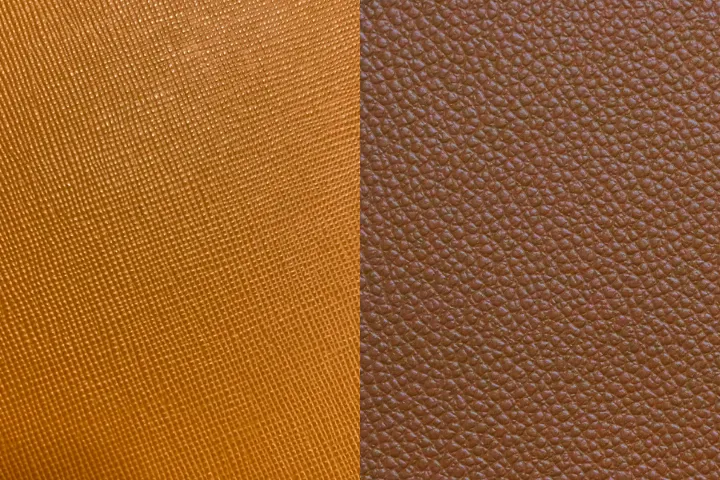
For a handbag collection, Saffiano and pebbled leather create different surface effects. The crosshatch of Saffiano can reinforce a clean, geometric design; a pebble texture can introduce a softer visual character. Choosing between them also involves the hide, finish, thickness, backing and bag construction.
Saffiano leather has an embossed crosshatch surface; Prada describes its own version as heat-embossed calfskin with a waxed finish. Pebbled leather has a rounded grain texture created or emphasised through milling, embossing, or a combination. Neither texture alone establishes a leather grade, scratch rating or service life.
This comparison covers production, texture, durability, care, product applications and sourcing costs. Use it to prepare comparable samples and a purchase specification for your brand.
What Are Saffiano and Pebbled Leather?
These names describe surface character. Confirm whether an offered material is animal leather, a coated split, or an imitation on a textile backing before comparing quality or price.
What Is Saffiano Leather and Its Key Features?
Prada describes Saffiano as calfskin distinguished by a heat-embossed texture and waxed finish. Commercial descriptions of a Saffiano-style texture do not establish that every supplier uses the same hide or coating recipe.
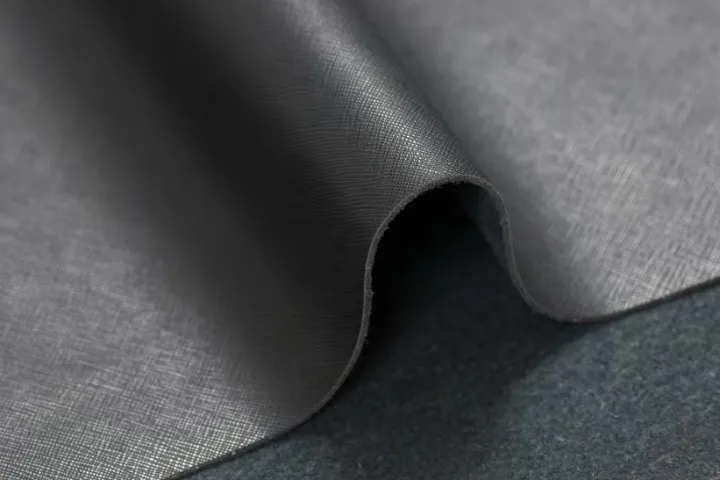
- Structured appearance: The fine crossing lines suit geometric handbags. Actual firmness depends on the leather’s temper, thickness and reinforcement.
- Finished surface: A coating can help manage surface marking, but scratch and water resistance must be evaluated on the supplied material.
- Pattern consistency: An embossed repeat can support a coordinated collection. Approve its scale, depth and direction as well as colour and gloss.
Is Saffiano leather high quality? It can be suitable for a premium product, but the name is not a quality certificate. Inspect the substrate, coating adhesion, handle and finished construction.
What Is Pebbled Leather and Its Signature Texture?
Pebbled leather has raised, rounded grain features. A milled hide may show natural variation, while an embossed surface can have a more regular repeat. The resulting leather can be soft or firm and can carry different finishing systems.
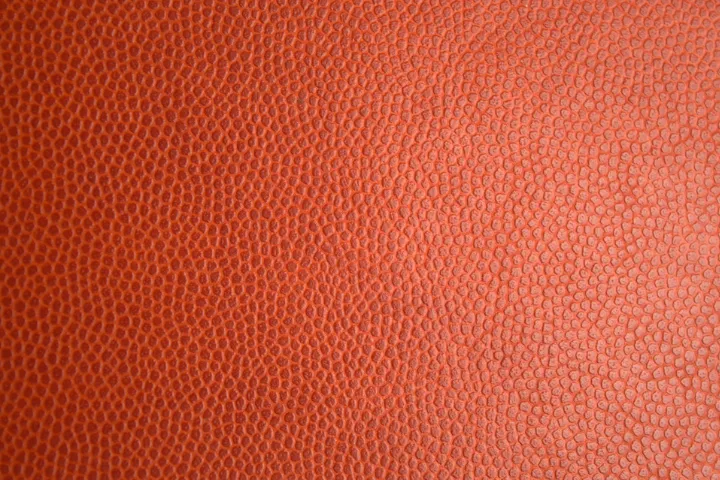
- Handle: A soft-temper version can drape in a relaxed tote; a firmer version may work in a structured body.
- Appearance of wear: A textured surface may make light marks less noticeable, but it does not prevent scratches or coating damage.
- Ageing: Colour change and patina depend on the tanning and finishing system. Pigmented pebbled leather need not age like lightly finished leather.
- Polished pebble: Treat this as a supplier’s finish description. Specify the required grain size and sheen instead of assuming a particular tumbling time.
Does pebbled leather look cheap? Its texture does not set the product’s market tier. A well-chosen grain, controlled panel matching, neat seams and suitable hardware affect the overall impression. Full-grain leather and pebbled leather are not mutually exclusive descriptions.
How Do Their Origins and Roots Differ?
Prada associates its Saffiano with Mario Prada and its Galleria bag. Pebbled leather is a broader commercial description for a grain effect, rather than a single proprietary recipe. For sourcing, the documented process and approved sample are more useful than an unverified origin date.
How Are Saffiano and Pebbled Leather Made?
The underlying hide is tanned and prepared before its final surface and handle are established. Colouring, softening and finishing choices affect the result as well as the texture-making operation.
What Processes Create Saffiano’s Unique Texture?
Embossing creates the crossing-line pattern. The sequence and formulation of finishing operations vary between suppliers, so a brand should approve the resulting material rather than prescribe an assumed universal recipe.
- Pattern development: Select the emboss repeat, scale and depth. Check how its direction looks on adjacent panels and folded edges.
- Surface finish: Agree colour, sheen and feel on a physical standard. Prada’s waxed Saffiano is a brand-specific reference, not proof of every material sold under the name.
- Production approval: Review a panel after cutting, folding and stitching. Include finish consistency and adhesion in the agreed checks. Obtain timing from the actual supplier; embossing does not add a universal percentage to production time.
How Is Pebbled Leather Produced for Durability?
Milling and embossing can create different grain effects. Neither operation by itself establishes a durability rating.
- Milling: Mechanical action can soften leather and emphasise its grain. Natural variation needs an agreed acceptance range, especially where large bag panels sit together.
- Embossing: A patterned surface can produce a more controlled pebble repeat. Review grain depth and appearance after flexing, as well as on the flat swatch.
Tanning and finishing are separate specification decisions. A vegetable-tanned version is not automatically environmentally preferable to another process. Compare documented sourcing, processing and product requirements instead of inferring impact from the texture.
How Do Saffiano and Pebbled Leather Differ in Texture and Finish?
The most immediate difference is the pattern: crossing lines versus rounded grain. Firmness, gloss and softness should be assessed separately. Samples bearing the same texture name can feel quite different.
What Makes Saffiano’s Cross-Hatch Stand Out?
The regular crossing lines give Saffiano a precise visual rhythm that works with clean seams and geometric silhouettes.
- Handle: Request the firmness needed for your design. A flat swatch cannot show whether a complete bag will hold its shape.
- Pattern: Compare line spacing and orientation across panels. Ask whether the emboss is consistent over the usable cutting area.
- Sheen: Approve gloss under consistent lighting. A waxy or glossy appearance is not a measured water-resistance result.
What Gives Pebbled Leather Its Bumpy Appeal?
The raised grain creates visual depth. It can complement either a relaxed bag or a more formal design depending on grain scale, colour and construction.
- Softness: A soft-temper version supports drape, while reinforcement can add shape where needed.
- Grain variation: Milled leather can differ between and within hides; embossed leather can show a repeated pattern. Define acceptable panel matching.
- Surface finish: Pebbled leather is available with different gloss and pigment levels. Approve a finish standard rather than assuming that every version is matte.
Texture & Finish: Saffiano vs. Pebbled Leather
| Feature | Saffiano leather | Pebbled leather |
|---|---|---|
| Texture | Crosshatch emboss | Rounded grain; milled, embossed or combined |
| Handle | Specify firm, medium or soft temper | Specify firm, medium or soft temper |
| Finish | Approve colour, gloss and coating system | Approve colour, gloss and coating system |
| Panel matching | Control pattern direction and depth | Control grain scale and acceptable variation |
Which Offers Better Durability and Longevity: Saffiano or Pebbled?
There is no supported universal winner. A finished bag must withstand rubbing, repeated flexing, handling and loads at seams and attachments. The texture name cannot predict all of these behaviours.
How Does Saffiano Perform Against Scratches and Water?
A suitable surface finish may resist light marking and make some spills easier to remove. That benefit must be confirmed for the selected leather. A sharp object can cut through the finish, and an edge, stitch hole or opening can admit water even when a panel performs well.
- Surface evaluation: Compare abrasion, colour transfer and finish adhesion using an agreed method and acceptance criteria.
- Longevity: Avoid converting a swatch result into a fixed number of years. Corner wear, handle construction, storage and customer use affect service life.
Is Pebbled Leather More Resilient to Everyday Wear?
A pebble texture can visually break up small marks. Concealing a mark is different from resisting the force that caused it, so appearance and physical performance deserve separate checks.
- Scuff appearance: Review the actual colour and grain after representative rubbing. Pale and dark finishes may reveal damage differently.
- Moisture exposure: Verify the supplied finish and complete bag construction. Pebbled leather is not inherently waterproof.
- Repeated movement: Examine folds, straps and gussets after flexing, including finish changes at raised grain features.
Full-grain leather vs. pebbled leather: The Leather Research Laboratory defines full grain by retention of the original grain surface. Pebbled describes texture. Neither label alone is a finished-bag durability test.
Durability Checks at a Glance
| Question | Saffiano sample | Pebbled sample |
|---|---|---|
| Will the surface mark? | Inspect crosshatch peaks and coating after agreed rubbing | Inspect raised grain and coating after the same method |
| Will colour transfer? | Test the approved colour and finish | Test the approved colour and finish |
| What happens when wet? | Check panel staining, edges and seams separately | Check panel staining, edges and seams separately |
| Does it survive construction? | Review folded edges and high-flex areas | Review folds, gussets and strap attachment areas |
Are Maintenance and Cleaning Methods Different for Saffiano and Pebbled Leather?
Care depends on the exact finish, not only the grain pattern. A cleaner suitable for one coated leather may change the colour or sheen of another. Ask for supplier care guidance and validate the care label on the approved finished sample.
What Is the Best Way to Clean and Care for Saffiano Leather?
- Routine cleaning: Remove loose dust with a soft cloth. For a spill, blot promptly and follow the maker’s method; do not assume every stain will wipe off.
- Products: Use only a cleaner or conditioner approved for that finish, after a discreet patch test. Oils may alter the appearance or leave residue.
- Conditioning: There is no universal once- or twice-yearly schedule. Some finished surfaces need a different care approach from absorbent leather.
How Do You Maintain Pebbled Leather Effectively?
- Dusting: Gently remove dust from the grain. Avoid harsh scrubbing of raised areas.
- Stains: Use the specified care method for the finish. Do not apply general household soap, solvent or a strong cleaner without approval.
- Conditioning: Follow the leather maker’s recommendation. Pebbled texture does not automatically mean the leather needs treatment every few months.
Storage: Support the bag’s shape without overstuffing it and store it in a clean, dry place. If damp, let it dry naturally away from radiators, hairdryers and direct sun. Leather Naturally’s care guide explains why care products and methods must suit the material.
Do Saffiano and Pebbled Leather Suit Different Product Types and Uses?
Both textures can be used in handbags and small leather goods. Product shape comes from the complete construction, including panel thickness, linings, reinforcement and seam placement.
Which Is Ideal for Structured Bags and Accessories?
A Saffiano crosshatch can complement a structured design, but the texture does not prevent sagging. Review the prototype with its intended contents before approving the construction.
- Handbags and briefcases: Check base support, corner folds and pattern direction on neighbouring panels.
- Wallets and cardholders: Check folded thickness, card-slot edges and flexibility; a firm sample may become bulky when layered.
- Brand example: Prada’s Galleria demonstrates a structured Saffiano application. It is a design reference, not a promise that another material or pattern will perform identically.
How Does Pebbled Leather Fit Casual or Slouchy Designs?
A soft-temper pebbled leather can support a relaxed silhouette. For a more defined shape, review reinforcement and lining rather than rejecting the texture.
- Totes and hobo bags: Assess drape and panel matching on the full-size sample. Check whether large panels show acceptable grain variation.
- Crossbody bags and backpacks: Evaluate areas that rub against clothing, together with strap and handle attachments.
- Collection consistency: Keep an approved range of grain and colour references so future orders match the intended look.
What Are the Advantages and Disadvantages of Each Leather Type?
These trade-offs concern design and specification. They are not a ranking of every Saffiano and pebbled material on the market.
What Are the Pros and Cons of Saffiano Leather?
- Advantages:
- Regular crosshatch can support a coordinated collection.
- Geometric texture works with structured product styling.
- An appropriate finish can offer practical surface cleanability when validated.
- Limitations:
- A firm version may need careful skiving and reinforcement choices at folds.
- Pattern direction and coating consistency require control.
- A heavily finished surface may show limited natural patina and can be difficult to repair invisibly if cut.
What Are the Pros and Cons of Pebbled Leather?
- Advantages:
- Grain texture creates visual depth in casual or formal designs.
- Soft-temper options can support draped silhouettes.
- Some textures make light surface marks less conspicuous.
- Limitations:
- Natural grain variation can complicate large-panel matching.
- Texture alone does not establish scratch or water resistance.
- The desired shape may require additional structure; care depends on the selected finish.
Is One More Fashionable, Luxurious, or Sustainable Than the Other?
Both textures can serve a premium collection. Visual positioning and environmental substantiation are separate decisions.
Which Leather Aligns with High-End Fashion Trends?
- Saffiano: The regular crosshatch can suit a clean, geometric aesthetic. Pair the texture with proportionate hardware and controlled edge finishing.
- Pebbled leather: Grain scale and temper allow different expressions, from a relaxed tote to a compact structured crossbody.
What is the highest quality type of leather? Full grain describes the retained grain surface, rather than a universal performance score. Select leather against the product’s design and tested requirements, including finish, thickness, colour transfer and construction.
How Do Sustainability Practices Compare?
Neither texture proves a lower environmental impact. Ask for evidence tied to the relevant facility, material and supply chain.
- LWG scope: The Leather Working Group operates certification programmes for defined supply-chain activities. Verify the facility and current scope; a facility rating is not a blanket certification of every finished bag.
- Tanning choices: Vegetable and mineral tanning describe processing routes. Their environmental comparison requires evidence about inputs, operations and the assessment boundary.
- Product claims: Keep material traceability and test records behind any published claim. Do not equate an embossed finish, natural-looking grain or a supplier logo with verified sustainability.
How Do Saffiano and Pebbled Leather Compare in Cost and Value?
Texture alone does not establish the price of a finished bag. Compare quotations for the same design, quantity and delivery terms to understand the effect of a material change.
What Factors Influence Their Pricing?
The material cost is one part of the quotation. Usable cutting yield, finishing requirements, hardware, lining, reinforcement, assembly and packaging also matter.
- Saffiano option: Ask about emboss availability, finish requirements and whether pattern direction changes cutting yield. Do not assume the texture always carries a premium.
- Pebbled option: Agree acceptable grain variation and panel matching. A visually selective cutting requirement can change material consumption even when the price per area is similar.
- Comparable quotations: Specify the same sample dimensions, substrate, thickness range, colour, tests and order quantity. Record any substitutions explicitly.
Assess value through suitability, consistency and the finished sample. A retail price range or an assumed lifespan does not establish manufacturing cost or a guaranteed return on investment.
Which Leather Should You Choose for Your Needs?
Begin with your bag design and target customer, then compare physical samples. Keep the texture choice connected to construction, care expectations and sourcing requirements.
How to Decide Based on Style, Functionality, and Preferences?
- Choose a Saffiano sample to explore:
- A regular crosshatch and geometric visual character.
- A coordinated surface across bags and small accessories.
- A structured brief that will be verified in the complete prototype.
- Choose a pebbled sample to explore:
- Rounded grain with the approved amount of variation.
- A soft or firm handle selected for the silhouette.
- A tactile surface whose wear appearance can be assessed alongside function.
For brands: Compare swatches on the same panel shapes, then make the selected design into a complete sample. Document substrate, temper, finish, colour, grain, construction and acceptance checks so the purchase order captures more than a texture name.
FAQ Section
Which is better: Saffiano or Pebbled leather?
Neither is universally better. Choose the texture and handle for the design, then compare actual materials against the same performance and construction requirements.
What is the difference between Saffiano and Pebbled leather?
Saffiano has a crosshatch emboss. Pebbled leather has a rounded grain effect that may be produced or emphasised through milling, embossing or both. Firmness and gloss vary within each group.
Is Saffiano leather real leather?
Prada’s Saffiano is calfskin. A similar texture can appear on imitation materials, so check the supplier’s complete material description rather than using the pattern to identify the substrate.
Does Pebbled leather scratch easily?
That depends on the hide and finish. Texture may make light marks less visible, but it does not prevent cuts, abrasion or coating damage.
How to tell if leather is Saffiano?
Look for a regular crosshatch texture. Appearance alone cannot authenticate a brand or determine whether the underlying material is animal leather.
Is Pebbled leather waterproof?
The name provides no waterproof rating. Evaluate the supplied finish and the bag’s seams, openings and edges before making a water-resistance claim.
What brands use Saffiano leather?
Prada describes Saffiano among its signature materials and uses it in its Galleria bags and small leather goods. Brand examples illustrate a design application, not a generic quality guarantee.
Conclusion
Saffiano and pebbled leather provide distinct surface choices. A successful selection combines the desired grain with an appropriate substrate, handle, finish and bag construction. Approve those details on a physical sample and use comparable checks before committing to bulk production.
For a Hoplok custom bag enquiry, share the design, dimensions, texture reference, quantity and target market. Confirmed minimums are 200 pieces for leather bags and 1,000 for PU bags; bag sampling is typically 3–4 weeks and bulk production 60–90 days, with project details confirmed in the quotation. Contact the Hoplok team to review material options and the development brief.