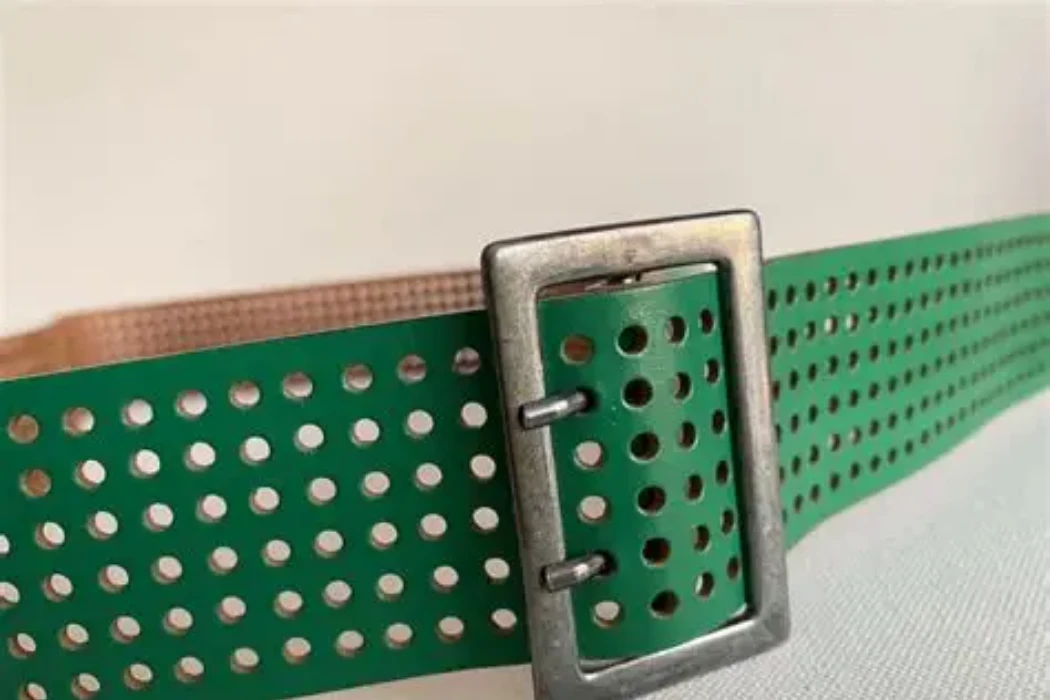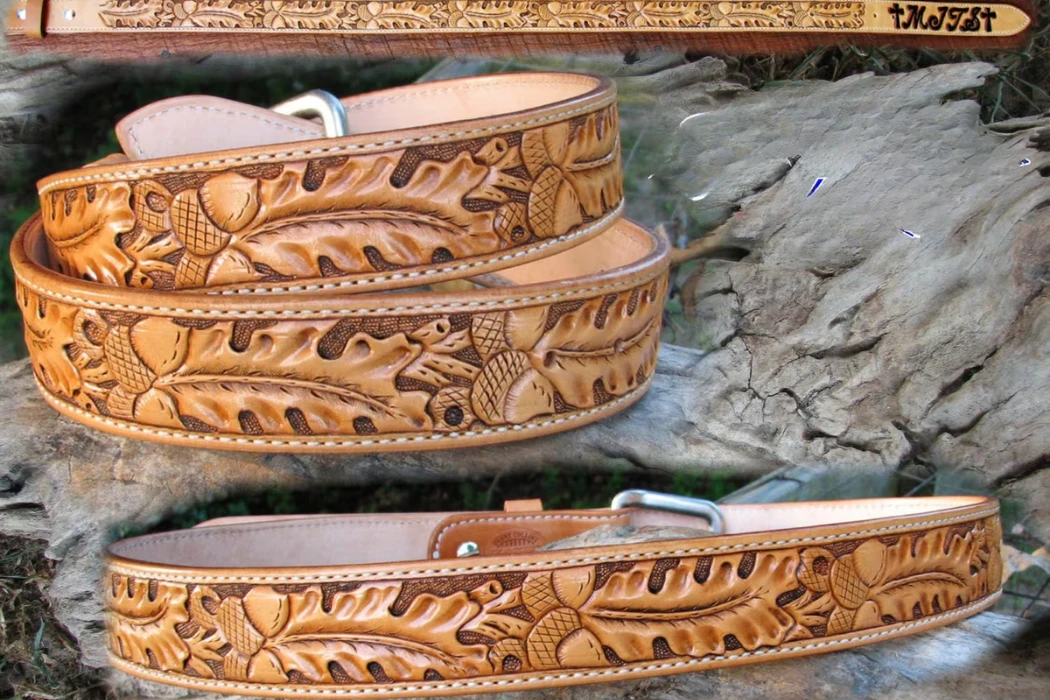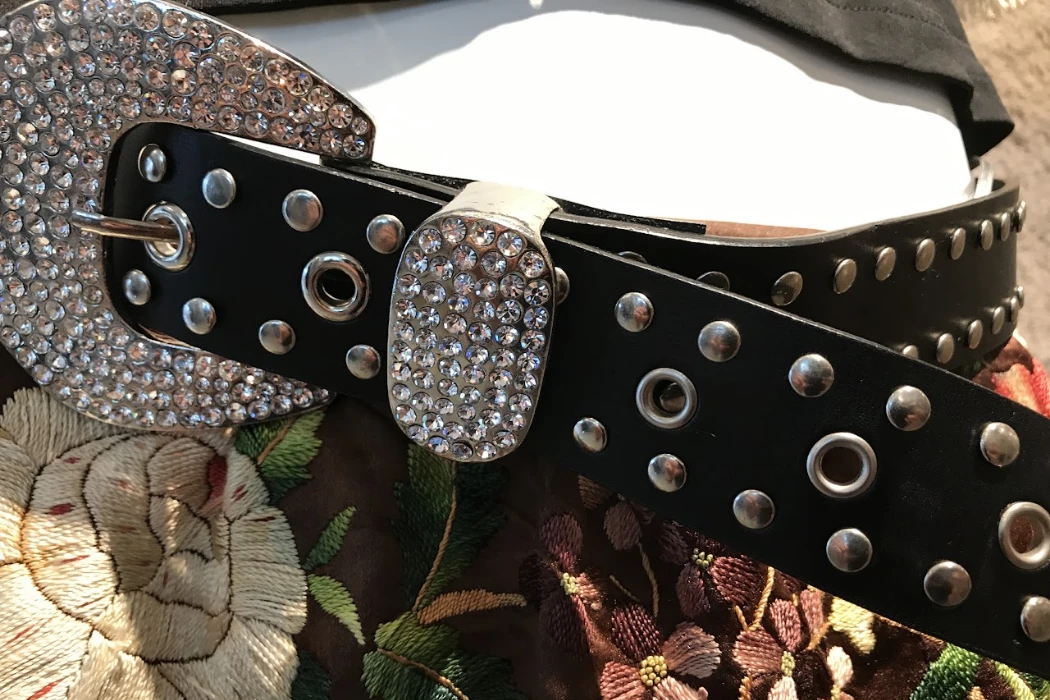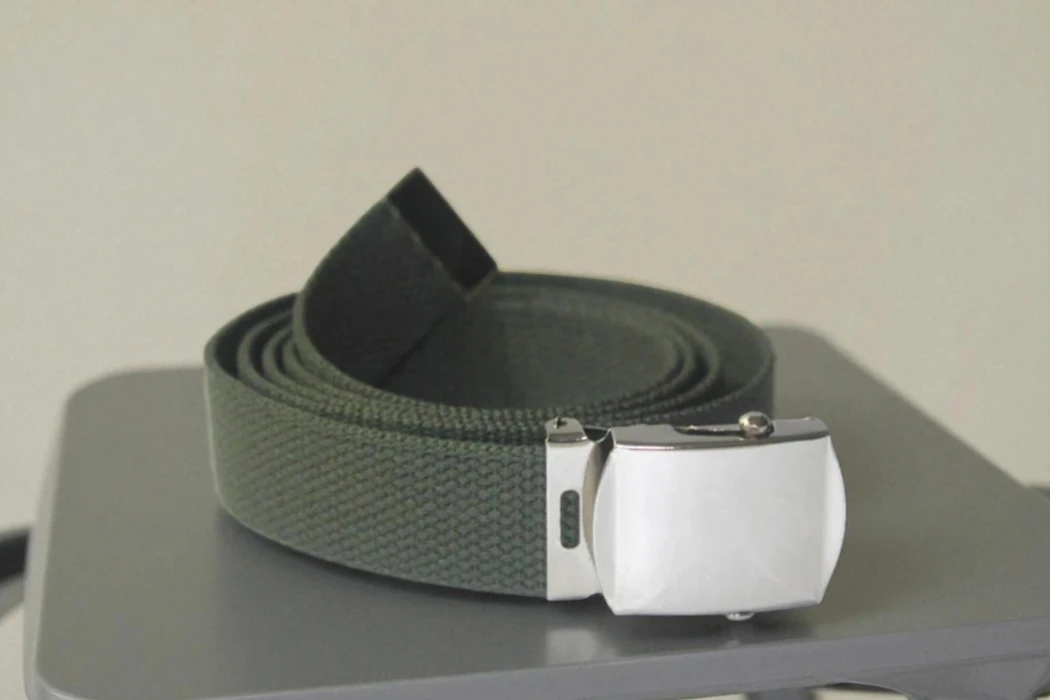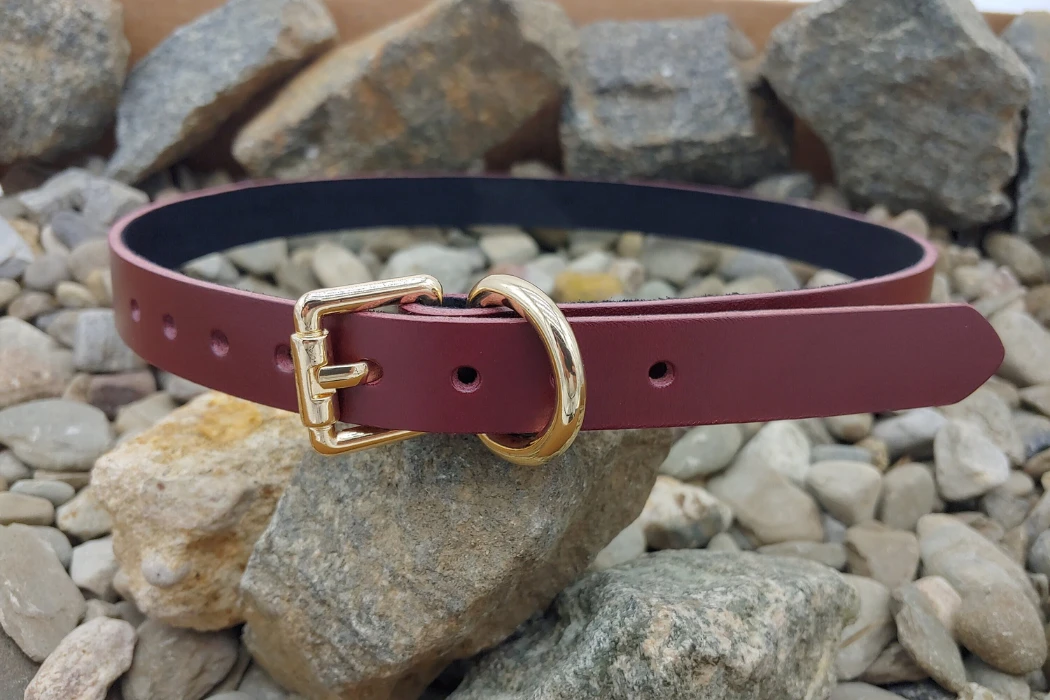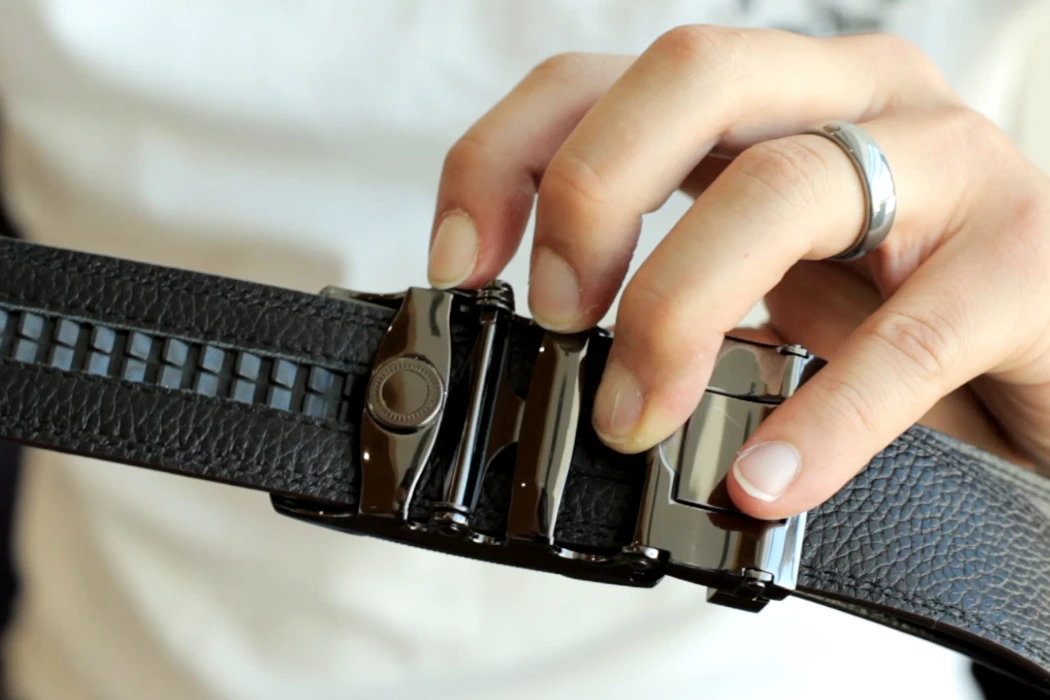
Full-grain and corrected-grain leather can both be suitable for belts. They describe how the grain surface has been treated, rather than two guaranteed levels of durability, price or service life. The finish and assembled construction matter alongside the grain description.
For a sourcing decision, compare appearance, acceptable variation, use-related performance and a quotation for equivalent specifications. This guide explains the material differences and the questions to resolve with samples before approving a belt programme.
What Is Full-Grain Leather?
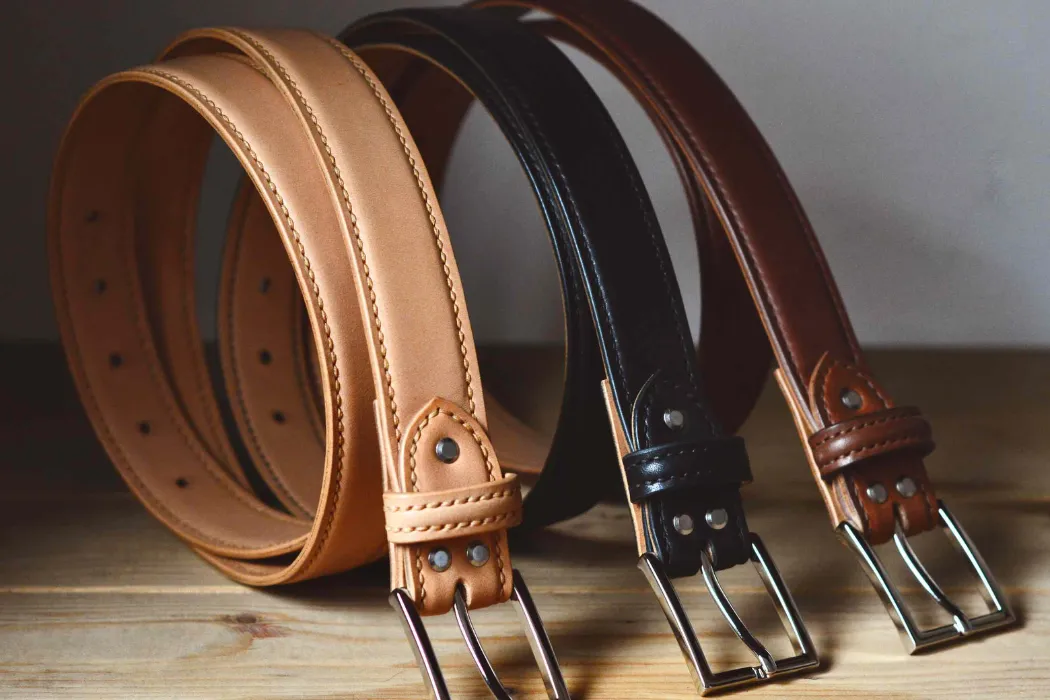
Full-grain leather retains the grain surface without corrective removal. It can still be dyed, finished or split to a suitable thickness. Full-grain does not mean an entirely untreated, full-thickness hide.
Natural Markings and Patina
The visible character depends on hide selection and finish. Some natural marks may be acceptable, while others may be rejected for appearance or structural reasons. A scar is not automatically a quality feature, and an absence of conspicuous marks does not prove the grain was corrected.
With use, some finishes develop colour and sheen changes commonly called patina. The extent depends on the material, finish, handling and care. Patina is an appearance preference, not proof that a belt cannot crack, stretch or wear out.
Use in Everyday and Rugged-Looking Apparel Belts
A suitable full-grain leather can work well for casual, jeans or uniform-style clothing belts. Select thickness, temper and construction for the buckle and intended fit. The material name does not establish a load rating or guarantee decades of service.
Review strap and attachment performance on the actual assembly. Decorative workwear styling should not be confused with protective or load-bearing equipment. Approve the intended apparel use and product claims together.
What Is Corrected-Grain Leather?
Corrected-grain leather has undergone surface correction, commonly by buffing, before finishing. It is real leather. A smooth finish and an embossed finish are possible choices; neither is mandatory for every corrected-grain article.
Creating a More Uniform Surface
Leather Naturally’s manufacturing guide explains buffing and finishing of corrected grain. The degree of correction and the finish system affect the result. They should be specified rather than inferred from the word “corrected.”
Correction can reduce visible irregularity, but does not make every hide flawless or identical. Ask what variation remains acceptable and inspect sample material under consistent lighting. Colour, gloss, texture and feel all contribute to the comparison.
Classic Dress and Embossed Belt Designs
A controlled pigmented or embossed finish may suit a dress-belt collection that needs a consistent appearance. Full-grain leather can also be used for dress belts; corrected grain is not a compulsory construction for formal styles.
Embossed crocodile-, snake- or Saffiano-style patterns describe surface design. Confirm the actual species or synthetic substrate. Hoplok can discuss embossed ordinary leather options and does not offer genuine exotic skins.
Compare Materials for Your Belt Range
Production Consistency: What Correction Can Change
Surface correction and controlled finishing can support a repeatable look. Material selection, processing and inspection still need agreed limits. “Uniform” should mean compliance with those limits, not an impossible promise of zero variation.
Buffing, Finishing and Embossing
Specify the intended texture, colour and gloss with a retained physical reference. Where a pattern is embossed, agree its scale and acceptable registration. A supplier’s process should be suitable for the substrate and finish.
Compare sample material with initial production and repeat batches. A grain description alone does not control shade drift, coating thickness or temper. Record changes so the next order does not rely on an outdated reference.
Coordinating ProPelli Finishing
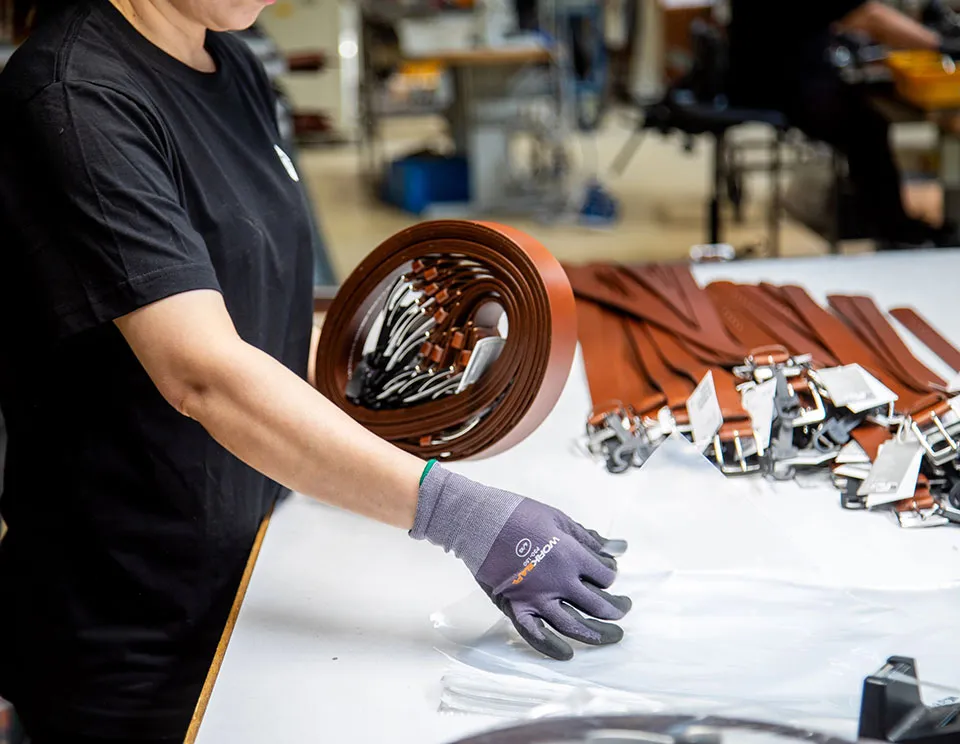
Hoplok’s ProPelli facility in Cambodia receives crust leather for finishing. It is not a tannery. This finishing stage can be coordinated with the proposed belt design, subject to material and process confirmation.
Provide the actual effect required and approve it on the chosen leather. An in-house operation does not remove natural variation or guarantee that every finish is feasible on every substrate. Confirm tooling, colour development and acceptance criteria during sampling.
Durability: Finish Integrity, Wear and Patina
Corrected grain does not inevitably peel, and full-grain leather is not immune to finish failure. Evaluate the actual finish and construction under relevant use conditions. Normal appearance change and functional damage should be defined separately.
| Attribute | Corrected-grain construction | Full-grain construction |
|---|---|---|
| Appearance with use | Depends on coating, texture and wear | Depends on finish, handling and exposure |
| Potential failure modes | Finish cracking, adhesion loss or structural damage can occur | Finish cracking, drying, stretching or structural damage can occur |
| Approval evidence | Relevant flex, rubbing and construction checks | The same use-specific checks for the proposed design |
| Value | Depends on suitability, quality and customer preference | Natural character may be desirable, but is not a life guarantee |
Why a Coating Can Crack or Peel
Finish compatibility, adhesion, flexibility, processing and use can affect failure. A well-designed finish need not be rigid or brittle. Full-grain leather can also carry a coating, so grain preservation alone does not rule out coating problems.
Assess the finished sample after relevant flexing and rubbing. ISO 11640 provides a leather rubbing test method; agree appropriate conditions and acceptance criteria rather than claiming a general label predicts the result.
How Patina Develops
Handling, light, wear and changes in oils or waxes can alter colour and sheen. Lightly finished aniline leather often shows these changes more visibly than a heavily pigmented surface. The Leather Naturally care guide distinguishes the behaviour of different finishes.
Waxy or pull-up effects can give a changing appearance, but a trade name such as Crazy Horse does not specify a universal grain grade. Approve acceptable colour movement and rub behaviour. Do not describe cracking or loose layers as desirable patina.
Aesthetics: Natural Character and Controlled Finish
Choose the look around the customer and collection. Natural variation, smooth surfaces and embossed textures can each be deliberate design choices. None is a reliable visual test of overall belt quality.
The Appeal of Natural Grain
A visible natural surface can suit a casual or vintage direction. Define which marks and colour differences are acceptable, especially when multiple belts will be displayed together. Some lightly finished leathers show scratches or water marks readily rather than hiding them.
Provide clear product photography and care information that match the approved material. This helps customers understand expected variation without presenting every flaw as an authenticity feature.
Specifying the Finished Appearance
For a subdued dress belt, agree smoothness, gloss and edge treatment. For a textured design, approve pattern scale and the relationship between strap, keeper and buckle. For a waxy effect, evaluate colour movement and touch.
Ask ProPelli and the belt development team to confirm the proposed substrate and process. The sample should demonstrate the complete appearance, including edges and bends, rather than only a flat swatch.
Price Differences: Compare Equivalent Specifications
There is no universal percentage saving for corrected grain. Leather selection, thickness, tannage, finish, yield and order terms can change the comparison. Obtain matched quotations and compare total cost per acceptable belt.
What Can Influence Material Cost?
Surface correction can allow the use of hides with cosmetic variation, which may affect input cost. It also adds processing and finishing operations. Full-grain does not require a unique slow tanning method, and corrected grain is not automatically faster to make.
Define the same thickness, usable area, quality limits and performance requirements when comparing prices. A lower quoted material price may be offset by yield or processing differences, while a more expensive finish may serve a specific design purpose.
How Factory-Direct Sourcing Affects the Quotation
Direct communication can help align materials and production, but it does not guarantee the lowest price. Compare development support, tooling, testing, packaging, logistics and service as well as the unit figure.
For a Cambodia proposal, have the importer or customs broker verify classification, origin evidence, destination rules and entry-date treatment before including any duty preference. ProPelli’s integration does not mean the entire upstream supply chain is owned or that material prices cannot change.
Choosing Materials for Fashion and Uniform-Style Belts
Both materials can suit apparel belts when the finish, construction and performance match the brief. Use the intended look and evidence from samples to choose, rather than a fixed fashion-versus-uniform rule.
Choose Full-Grain When Natural Character Fits
Consider full-grain where grain preservation and visible character are part of the design. Specify the finish and acceptable variation, then assess comfort, flex and attachment performance. A premium position still needs a well-made belt.
Review whether expected patina supports the brand’s promise. If customers need colour consistency over repeat orders, define how that will be maintained rather than assuming a natural finish is exempt from quality control.
Choose Corrected Grain When Its Finish Fits
Consider corrected grain where the proposed finish supports the desired appearance and price. It may suit a coordinated uniform-style or retail range, but production must still meet defined limits.
Approve the actual material rather than assuming every corrected-grain leather has the same coating or performance. Do not require visual identity beyond what the agreed process can reliably achieve.
Frequently Asked Questions
What is the difference between full-grain and corrected-grain leather?
Full-grain retains the grain surface without correction; corrected grain has undergone surface correction before finishing. Both can be dyed or finished. Ask for the actual grain treatment, coating and construction.
Is corrected-grain leather real leather?
Yes. Surface correction does not make the material synthetic. Confirm the complete construction separately, including any lining, coating or composite layers.
Does corrected-grain leather peel?
It can if the finish fails, but peeling is not inevitable. Finish design, adhesion, flexing and use all matter. Conditioning is not a universal repair for a delaminating coating.
What is the best leather for uniform belts?
Choose for appearance, comfort, fit and the agreed daily-use requirements. Full-grain and corrected-grain options can both be suitable. No material label guarantees a fixed service life.
Why can full-grain leather cost more?
Selection and usable yield can influence price, along with tannage, finish, thickness and supply. The actual comparison needs equivalent quotations; full-grain is not always priced above every corrected-grain leather.
How can you identify corrected grain?
A uniform pattern or coated appearance can suggest finishing, but is not conclusive. Request a material specification and process description. Where necessary, use competent material examination rather than a smell, water or scratch test.
Final Material Approval
Compare complete belt samples with the same buckle, size and finishing requirements. Review appearance, relevant performance results, quotation and care instructions together. Neither a promised saving nor a grain label should replace that evidence.
Hoplok’s ProPelli operation holds valid facility-level LWG Gold certification. LWG explains that certification does not guarantee an absence of restricted-substance failures; it also does not grade a belt’s durability. Share the intended material and private-label requirements with the team to confirm the product and documentation for your order.