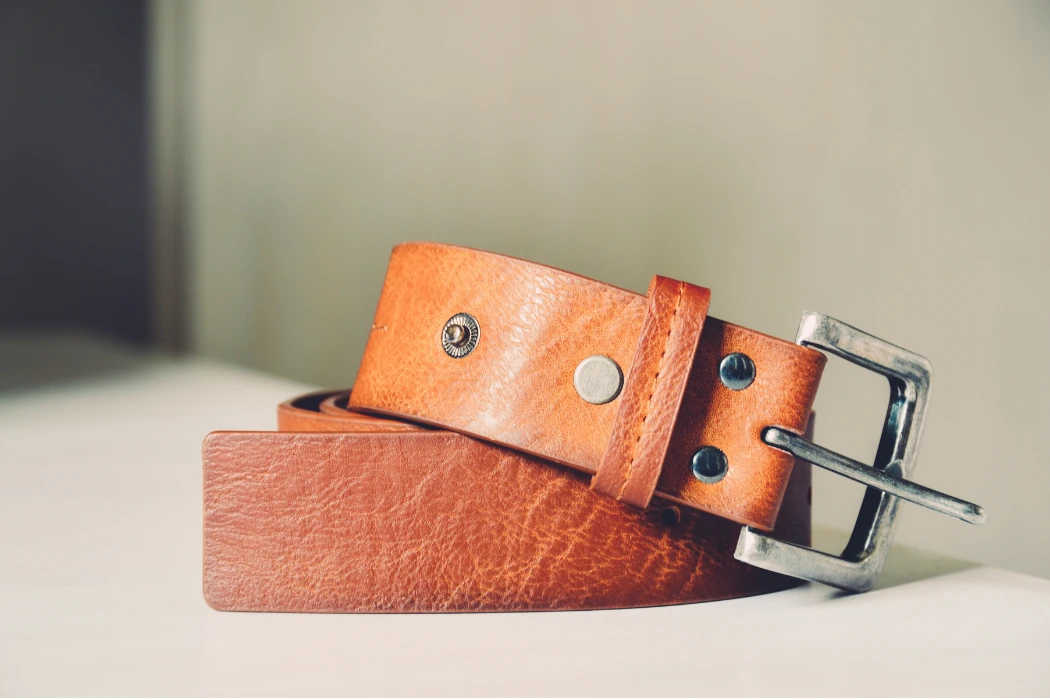
Yes, “Pebbled Leather” is typically real leather, but the term refers to a texture finish, not a specific animal hide. The distinctive raised, bumpy surface can be created naturally through a tumbling process known as “milling,” which shrinks the hide, or it can be artificially manufactured by “embossing” a pattern onto the surface with heat and pressure. Therefore, you can find this texture on high-end Full-Grain Cowhide, but you can also find it stamped onto low-quality “Genuine Leather” or even synthetic PU plastic. The key to quality lies in identifying the base material beneath the texture.
Why do brands like Kate Spade and Coach rely so heavily on Pebbled Leather for their best-selling collections? It isn’t just an aesthetic choice. This finish is a “bulletproof” solution for daily use—it hides scratches, resists scuffs, and maintains a pristine look far longer than smooth leather. It is the ultimate marriage of function and fashion.
This guide will take you behind the scenes of the tannery. We will dissect the two distinct manufacturing processes—Milling vs. Embossing—and teach you how to use your senses of touch and sight to distinguish a luxury natural grain from a cheap plastic imitation.
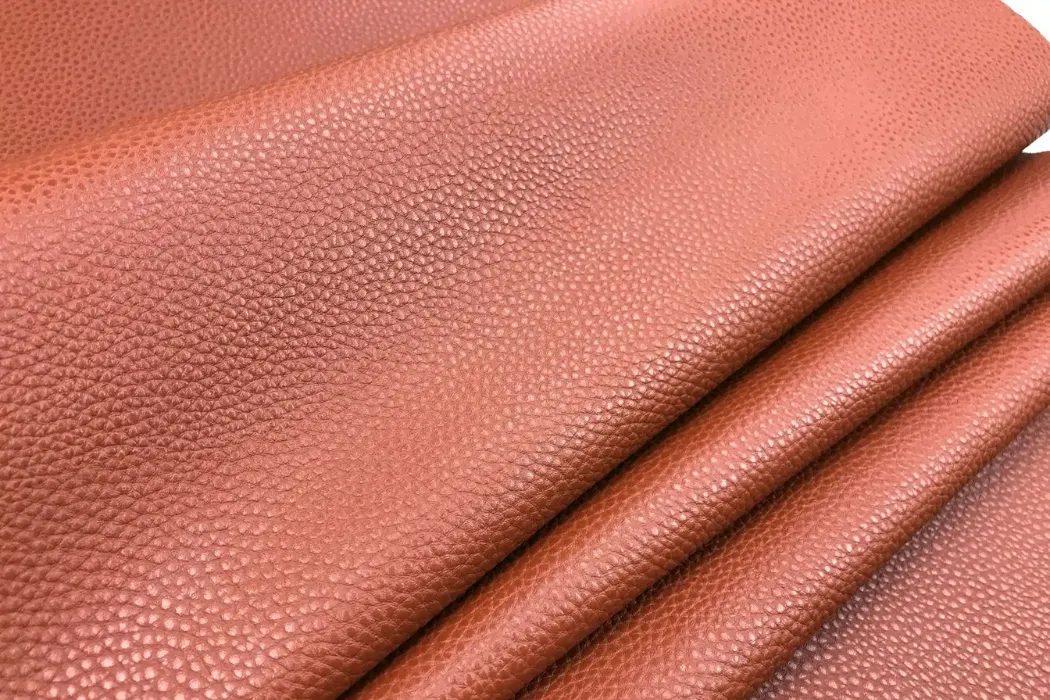
How Is Pebbled Leather Made? (Two Distinct Processes)
The “pebbled” texture is achieved through two primary manufacturing methods. The premium, artisanal method is Milling (Tumbling), where hides are spun in large drums to naturally shrink and soften, creating a unique, organic grain. The industrial mass-market method is Embossing, which uses heated metal plates to stamp a uniform pattern onto the surface. While milled leather is softer and more expensive due to shrinkage, embossed leather offers higher uniformity and allows manufacturers to utilize lower-grade hides.
Method A: Natural “Milling” (The Luxury Choice)
This process, often referred to as “Tumbled” or “Shrunken Grain,” creates the most desirable and expensive form of pebbled leather.
- The Process: After tanning, the dry hides are placed inside massive rotating drums (similar to industrial clothes dryers) and tumbled for 8 to 24 hours.
- The Physics: The repeated impact and friction cause the collagen fibers to relax and the hide to physically shrink in surface area by 10-20%. This shrinkage forces the grain to bunch up into raised bumps or “pebbles.”
- The Result: Because it is natural, the texture is random—the pebbles on the neck will look different from the belly. The resulting leather is incredibly soft, pliable, and has a “buttery” hand-feel.
Method B: Mechanical “Embossing” (The Industrial Choice)
This is the standard for most mid-range luxury bags and accessories (like those from Michael Kors or Kate Spade) because it guarantees consistency.
- The Process: A massive hydraulic press is equipped with a metal plate engraved with a specific pebble pattern. The plate is heated to over 200°F (93°C).
- The Physics: The press stamps the pattern into the leather under tons of pressure. The heat sets the shape and often “irons” the surface flat before the texture is applied.
- The Result: A perfectly uniform, repetitive pattern. Because the fibers are compressed by heat and pressure, embossed pebbled leather is stiffer, harder, and more water-resistant than milled leather, but lacks the natural softness.
Manufacturer’s Insight (Hoplok): Why Brands Choose Embossing. At our ProPelli tannery, we often utilize embossing technology to solve the “yield” problem for brands. Natural milling shrinks the hide, which increases the cost per square foot. Embossing allows us to use Grade B or C hides by effectively masking minor natural imperfections like tick bites or healed scars under the textured pattern. This increases the cutting yield to 85-90%, enabling brands to offer genuine, durable leather products at a much more accessible price point.
Pebbled Leather vs. Smooth Leather: Which is Better?
For sheer durability and daily resilience, Pebbled Leather wins. While Smooth Leather (often called Box or Aniline) offers a higher level of formality and elegance, it is unforgiving; a single scratch on a smooth surface is a permanent scar. In contrast, the raised texture of Pebbled Leather acts as “optical camouflage,” effectively hiding the minor scratches, scuffs, and stains that occur during daily use, making it the preferred choice for commuter bags and high-traffic accessories.
The “Scratch Camouflage” Effect
The primary advantage of pebbled leather is not just physical hardness, but visual forgiveness. This makes it the ideal “daily driver” material.
- Light Reflection: On smooth leather, light reflects evenly off the flat surface. Any interruption (a scratch) creates a high-contrast shadow that is immediately visible to the eye.
- Texture Hiding: On pebbled leather, the surface is already full of peaks and valleys. A minor scratch gets lost in the existing “noise” of the texture. Manufacturer data suggests that a pebbled bag can visually hide 80% of the daily abrasion marks that would ruin the aesthetic of a smooth leather bag within months.
Stiffness vs. Softness
The texture method often dictates the “temper” (stiffness) of the final product, affecting how the bag feels and functions.
- Milled Pebble (Soft): Because it has been tumbled to loosen the fibers, Milled leather is naturally “floppy” and drapes well. It is perfect for slouchy hobo bags that need to collapse against the body.
- Embossed Pebble (Stiff): Because it has been heat-pressed under tons of pressure, the fibers are compressed and locked in place. This leather holds its shape rigidly, making it ideal for structured totes that need to stand up on a desk.
- Smooth Leather (Variable): While smooth leather can be stiff (Bridle) or soft (Nappa), it generally shows creases and wrinkles much faster than pebbled leather, which hides flex lines in its grain.
Pebbled vs. Smooth Leather Comparison
Use this matrix to decide which finish suits your product’s lifestyle.
| Feature | Pebbled (Milled/Embossed) | Smooth (Box/Aniline) |
|---|---|---|
| Scratch Resistance | High (Hides marks well) | Low (Shows every mark) |
| Water Resistance | Medium-High (Pigments repel water) | Low-Medium (Prone to spotting) |
| Formality | Casual to Smart-Casual | Formal / Business Professional |
| Maintenance Level | Low (Wipe clean) | High (Requires polishing) |
Is Your “Pebbled Leather” Actually Plastic (Faux)?
Because the “pebbled” texture is a mechanical finish, it can be applied to any material. Consequently, the market is flooded with PU (Polyurethane) and PVC (Polyvinyl Chloride) synthetic leathers that mimic this grain perfectly. To distinguish genuine hide from plastic, you must look beyond the surface pattern. The most reliable indicator is the Backing (Flesh Side): real leather has a fibrous suede back, while faux leather relies on a woven fabric mesh. Furthermore, the “Press Test” is crucial: pushing your finger into real leather creates tiny, radial wrinkles like human skin; pushing into faux leather causes a smooth, balloon-like depression with no texture change.
The Backing Test: Suede vs. Fabric
This is the most reliable non-destructive test, assuming you can see the back or a raw edge of the material.
- Real Leather: The back is the “flesh side” of the animal. It will always be a rough, fuzzy, suede-like surface with loose collagen fibers. Even if the front is heavily painted, the back is organic.
- Faux Leather: The back is a man-made substrate. Look for a woven white or black fabric grid, a knit jersey, or a compressed “felt” material. If you see threads or a perfect grid pattern on the back, the “pebble grain” on the front is 100% plastic.
The “Pore” Inspection
Even when leather is embossed with a pebble pattern, the natural hair follicles (pores) are often still visible under magnification. Faux leather is a sheet of plastic; it has no pores unless they are artificially stamped.
- The Pattern Repeat: Real leather is organic; the pore structure is random. Faux leather is made by a machine roller. If you look closely, you will see the exact same cluster of “pebbles” repeating every 10 to 12 inches (the circumference of the embossing roller). A repeating pattern is a guarantee of a synthetic product.
- The Depth: In faux leather, the “valleys” between the pebbles are often too shallow and smooth, looking like molded plastic. In real milled leather, the valleys are deep and show the fiber structure.
The Fire & Water Test (Cautionary)
While these tests are definitive, they can damage the product, so use them with caution on a sample swatch.
The Water Test: Place a small drop of water on the surface.
– Real Leather (Milled): It will absorb the water and darken within 10-30 seconds (unless heavily coated).
– Faux Leather: The water will bead up and roll off instantly, as plastic is non-porous.
The Fire Test: Hold a flame near the edge.
– Real Leather: It will resist burning for a few seconds, then char and smell like burnt hair.
– Faux Leather: It will melt, curl away from the flame instantly, and smell like burning plastic or chemicals.
What Types of Animal Hides are Used for Pebbled Leather?
While Cowhide is the standard substrate for over 90% of the market due to its availability and embossability, pebbled texture is also characteristic of Bison and Buffalo, which possess a naturally deep, “shrunken” grain that is difficult to replicate artificially. Pigskin is another common source, easily identified by its grouped pores. In the ultra-luxury sector, Calfskin is often lightly milled to create a “micro-pebble” grain that offers a softer hand than standard cowhide.
Cowhide & Calfskin (The Standard)
When you buy a pebbled leather handbag from a major designer brand, it is almost certainly cowhide or calfskin.
- Cowhide: This is the industry workhorse. It is typically split to a uniform thickness (e.g., 1.4mm – 1.6mm) and then heavily embossed with a metal plate to ensure every bag looks identical. It provides excellent structure and durability at a reasonable cost.
- Calfskin: Sourced from younger animals, calfskin has a much tighter, finer fiber structure. When milled (tumbled), it creates a “micro-pebble” texture that is significantly softer and more flexible than adult cowhide. This is the material of choice for bags priced over $1,000.
Bison & Buffalo (The Natural Pebble)
For a more rugged, authentic look, manufacturers turn to North American Bison or Water Buffalo. These hides are unique because their pebbled texture is often natural, not stamped.
This is called “Shrunken Grain.” During the tanning process, specific astringents are added to shrink the hide by up to 30%. This condensation forces the grain to bunch up into deep, pronounced wrinkles and pebbles. Because the fibers are condensed, Bison leather is typically 40% stronger than cowhide of the same thickness, making it ideal for heavy-duty boots and moto gear.
Pigskin (The Football Texture)
Pigskin is widely used but often disguised. It is naturally tough and inexpensive. However, it has a tell-tale sign that cannot be hidden by embossing: The Pore Structure.
If you look closely at the surface, Pigskin hair follicles are grouped in distinct triads (clusters of 3 dots). Even if a manufacturer stamps a pebble pattern over it, these 3-dot clusters often remain visible. While durable, it is generally considered less luxurious than cowhide and is frequently used for footballs, gloves, or as a lining material for high-end bags.
Pros and Cons of Pebbled Leather for Handbags and Accessories
For handbags and accessories, Pebbled Leather offers a distinct trade-off between **utility and formality**. Its primary **pros** are **low maintenance** and **anti-aging** properties; a pebbled bag does not require the “babying” of smooth calfskin and often looks brand new even after 3-5 years of daily use. The main **cons** are that it can lack the sleek **formality** required for evening wear (appearing too casual) and, if heavily embossed on low-grade split leather, can feel stiff and plasticky rather than luxurious.
Why It’s the “Daily Driver” Champion
Pebbled leather is the undisputed king of the “Everyday Bag” category (totes, satchels, and crossbodies). This is due to its mechanical resilience against the chaos of daily life.
- Impact Resistance: When a smooth bag bumps against a doorframe, the fibers compress and leave a dent. On a pebbled bag, the raised “bumps” absorb the impact, protecting the valleys of the grain.
- Structure Retention: Embossed pebbled leather (like Saffiano or standard Pebble) has been heat-pressed. This process stiffens the fibers, allowing a tote bag to stand upright on a desk without sagging, a key requirement for professional work bags.
The Cleaning Advantage (and Disadvantage)
The textured surface changes the cleaning protocol. Because it is often finished with a protective topcoat, pebbled leather is highly resistant to stains from rain or coffee spills.
- The Pro: You can usually wipe it clean with a damp cloth and mild soap in seconds. It does not water-spot easily.
- The Con: The texture creates thousands of tiny valleys. Over time, dust, lotion, and foundation makeup can accumulate in these crevices, making the bag look dull. Unlike smooth leather which can be buffed with a cloth, pebbled leather requires a soft horsehair brush to agitate the dirt out of the grain pattern during cleaning.
Material Selection Guide
Use this table to determine if pebbled leather is the right choice for your specific product type.
| Product Type | Recommended Texture | Reason |
|---|---|---|
| Everyday Tote / Commuter | Pebbled (Embossed) | Resists subway/office scuffs; holds structure. |
| Evening Clutch | Smooth (Box/Satin) | Pebbled is too casual; smooth reflects light elegantly. |
| Travel Duffel | Heavy Pebble (Bison/Shrunken) | Rugged aesthetic; hides airport conveyor belt damage. |
| Men’s Wallet | Micro-Pebble (Milled) | Adds grip in the hand; flexes better in pockets than stiff smooth leather. |
Frequently Asked Questions
1. Is pebbled leather real leather?
Yes, in most high-end goods, it is real. However, “pebbled” refers to the texture, not the material. While it is traditionally made from Cowhide or Calfskin, the same texture can be stamped onto synthetic PU or PVC. Always check the label for “Genuine Leather” or “Full-Grain Leather” to confirm the material origin.
2. Is pebbled leather better than smooth leather?
For durability, yes. While Smooth (Box) leather is considered more formal and elegant, Pebbled leather is functionally “better” for daily use. Its raised texture deflects scratches and hides scuffs that would ruin a smooth bag. It typically retains its appearance for 3-5 years longer than smooth leather under heavy use.
3. How do I clean pebbled leather?
Cleaning requires getting into the crevices. Unlike smooth leather, a cloth might miss dirt trapped in the valleys of the grain. Use a soft horsehair brush with a mild leather cleaner or saddle soap to gently agitate the surface, lifting dirt from the texture. Wipe away the foam with a damp cloth and let it air dry.
4. Does pebbled leather scratch easily?
No, it is highly scratch-resistant. It is not scratch-proof, but the texture acts as optical camouflage. A scratch that would be glaringly obvious on a flat surface disappears into the random pattern of the bumps. This makes it the ideal choice for items that get thrown into cars or under desks.
5. What is “Shrunken Grain”?
Shrunken Grain is the highest quality form of pebbled leather. Instead of being stamped with a metal plate, the hide is tumbled in a drum with specific tanning agents that cause the fibers to constrict and shrink by up to 20%. This creates a deep, natural, and permanent pebble texture that is denser and stronger than the original hide.
6. Is Coach pebbled leather real?
Yes. Coach is famous for its “Polished Pebble Leather.” This is typically a high-quality Full-Grain or Top-Grain cowhide that has been tumbled (milled) for softness and then finished with a slight topcoat for color consistency and stain resistance. It is one of the most durable leathers in the accessible luxury market.
Conclusion: Look Beyond the Surface
Pebbled leather is a fascinating study in the intersection of nature and engineering. It can be the result of a natural, time-consuming milling process that shrinks the hide to create a dense, buttery luxury material. Or, it can be a clever embossing solution used to mask the imperfections of a lower-grade hide, offering consumers a durable, uniform product at an accessible price point.
For the consumer, the takeaway is simple: touch it. If it feels plastic and looks perfectly repetitive, it’s likely embossed. If it feels warm, soft, and organic, it’s likely milled. Both have their place, but they are not equal in value.
For brand managers, the choice defines your product’s positioning. Are you selling the “Natural Hand” of a milled tote, or the “Uniform Durability” of an embossed commuter bag?
Hoplok Leather offers the full spectrum of texturing capabilities. Our ProPelli tannery is equipped with both industrial milling drums for creating natural shrunken grain and high-pressure hydraulic plates for precise embossing. Whether you need to replicate the rugged texture of Bison or the refined cross-hatch of Saffiano, we can engineer the exact surface finish your design requires. Contact Hoplok Leather today to receive a comparison kit of our different pebbled textures.