The latest trends in white designer handbags for 2025 mark a definitive shift towards year-round versatility, breaking the old “no white after Labor Day” rule. Key silhouettes include the structured revival of vintage Doctor Bags and the slouchy, nostalgic appeal of Y2K-style Hobos featuring heavy padlocks. In terms of materials, designers are moving beyond standard leather to explore rich textures like White Suede and high-gloss Patent Leather, positioning the white bag as a sophisticated winter staple rather than just a summer accessory.
For decades, the white handbag was strictly a seasonal affair—a summer fling to be stored away come September. In 2025, that rule has been obliterated. From Miu Miu to Chloé, the runways are proving that a crisp white bag is the ultimate power move against a dark winter wardrobe. It is no longer just about a color; it is about a new approach to contrast, texture, and silhouette.
This guide analyzes the top trends defining the 2025 market, from the rise of the “East-West” silhouette to the persistence of “Quiet Luxury.” Crucially, we will look at these trends through a manufacturer’s lens, revealing the technical challenges of producing pristine white leather—such as preventing yellowing and dye transfer—and how brands are solving them to create products that stay immaculate season after season.
What Key Silhouettes Are Defining the 2025 Market?
The 2025 handbag market is defined by a sharp contrast between structure and slouch. On one end of the spectrum, we see the return of rigid, vintage-inspired shapes like the Doctor Bag and the structured Top-Handle, representing a return to formality. On the other end, the Slouchy Hobo and the elongated “East-West” silhouette offer a relaxed, effortless elegance. For brands, this means a collection must balance architectural lines with soft, drape-heavy designs.
The Structured Revival: Doctor Bags & Top-Handles
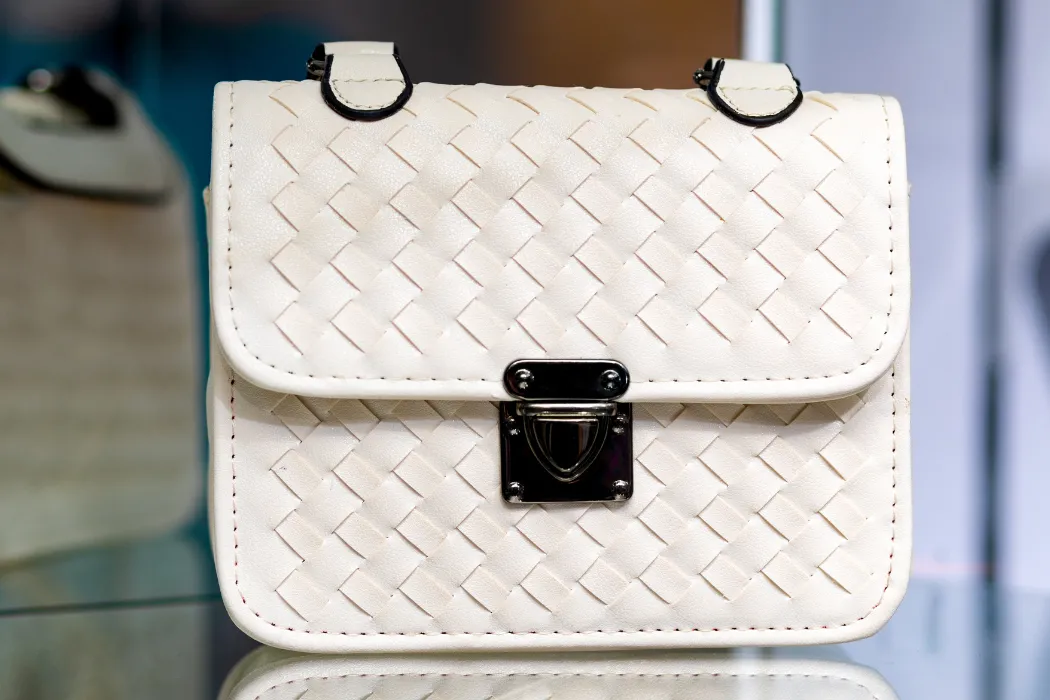
The Doctor Bag is the breakout silhouette of the year, marking a 30% increase in structured bag searches (according to recent trend data). This style demands precise engineering to maintain its boxy form without collapsing.
- Architectural Spec: These bags typically feature a rigid rectangular base with a hinged metal frame opening that extends 180 degrees.
- Leather Requirement: To hold this shape, manufacturers must use stiff, Vegetable-Tanned or firm Chrome-Tanned leather with a minimum thickness of 2.0 – 2.5mm.
- Internal Structure: A “boning” material (like Salpa or Bontex) is often sandwiched between the lining and the outer shell to ensure the curved top edge never sags, even after years of use.
The Slouchy Aesthetic: Hobo Bags & Crossbodies
Countering the structure is the Slouchy Hobo. This isn’t the unstructured boho bag of 2005; it is a calculated “sculptural slump.” The trend is exemplified by designs that look liquid in motion.
- The “Drape” Factor: The luxury of this silhouette relies on the leather’s ability to fold like fabric. This requires ultra-soft Nappa or Drum-Dyed Calfskin that is skived down to 1.0 – 1.2mm thickness.
- Hardware Balance: Heavy hardware (like the 200g+ metal rings seen on Chloé bags) is used to weigh down the soft leather, creating distinct, intentional fold lines.
- Construction: These bags often lack internal stiffeners entirely, relying solely on the quality of the leather grain to prevent wrinkling.
The “East-West” Slimline Shape
The “East-West” bag is the modern evolution of the baguette, characterized by an exaggerated horizontal profile.
- The Ratio: The defining feature is a width-to-height aspect ratio of roughly 3:1 (e.g., 30cm wide by 10cm high).
- Engineering Challenge: This shape is prone to “bowing” in the middle when loaded. To prevent this, high-end versions utilize a concealed metal or plastic bar in the top seam.
- Capacity Logic: Despite their length, the shallow depth (often only 4-6cm) requires precise interior pocket placement to accommodate modern smartphones (which average 15-16cm long) without bulging.
2025 Handbag Silhouette Matrix
Use this matrix to plan your collection’s balance between structure and softness.
| Silhouette | Style Key | Rec. Leather | Example Brand |
|---|---|---|---|
| Doctor Bag | Vintage, Architectural, Rigid | Firm Calfskin / Veg-Tan | Miu Miu, The Row |
| Hobo Bag | Slouchy, Effortless, Soft | Soft Nappa / Suede | Chloé, Loewe |
| East-West | Elongated, Sleek, Modern | Smooth Box Leather | Prada, Alaïa |
| Crossbody | Functional, Hands-Free | Pebbled Leather / Nylon | The Row, Lemaire |
How Are “Y2K Nostalgia” and “Quiet Luxury” Coexisting?
The 2025 handbag market is defined by the coexistence of two polarized trends: the loud, hardware-heavy Y2K Nostalgia and the understated, logo-free Quiet Luxury. For Y2K styles, the focus is on “jewelry for bags”—heavy padlocks, keys, and buckles (exemplified by the Chloé Paddington reissue). Conversely, Quiet Luxury relies entirely on the visual purity of the white leather itself, demanding flawless skins without the distraction of metal hardware.
Y2K Details: Padlocks, Keys, and Multiple Pockets
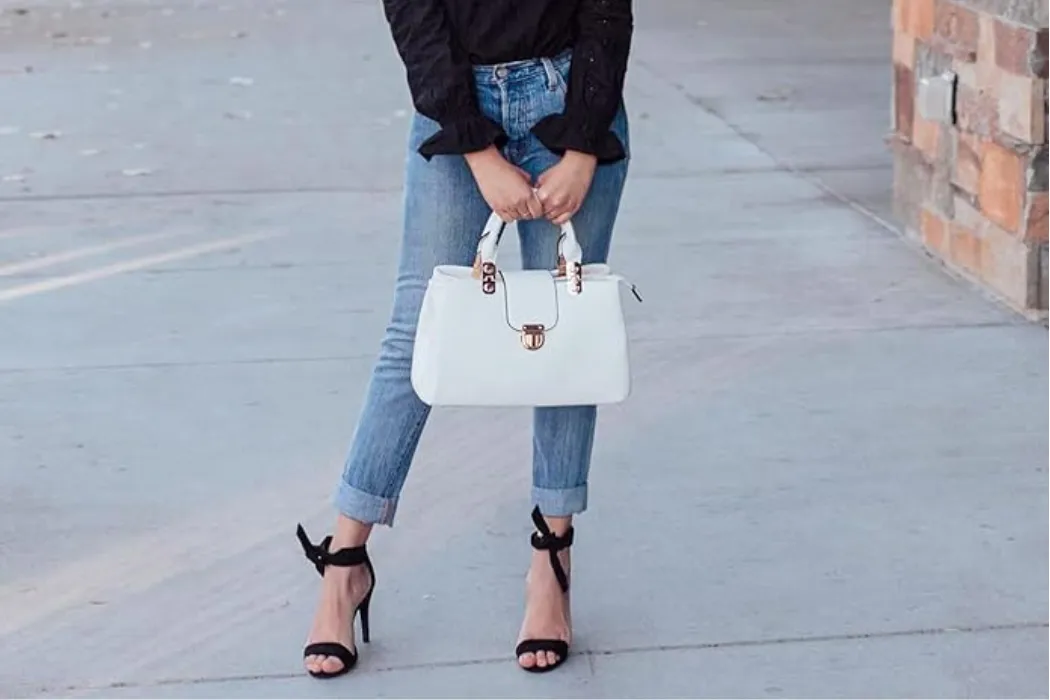
The early 2000s revival has brought back “functional decoration.” This trend is not about printed logos, but about tactile, metal hardware that serves as the bag’s focal point.
- The Padlock Trend: Heavy, functional padlocks are the centerpiece. From a manufacturing standpoint, these must feel substantial (often weighing 100g – 150g) to convey luxury. Hollow, lightweight locks feel cheap and fail the “heft test.”
- Multi-Pocket Construction: Bags feature external cargo pockets with buckles. This increases the labor cost by 30-40% due to the complex pattern cutting and precision edge finishing required for each small pocket.
- Hardware Quality Risks: To avoid staining pristine white leather, brands are moving away from standard zinc alloy. They are specifying PVD-coated or solid brass hardware to prevent oxidation, which can leave green or black marks on white leather over time.
Quiet Luxury: The Focus on Material Over Logo
Quiet Luxury (or “Stealth Wealth”) remains the dominant force for high-net-worth consumers. In the context of white handbags, this trend significantly raises manufacturing standards.
- Zero-Defect Requirement: Without large logos, heavy hardware, or pockets to distract the eye, the white leather surface must be absolutely flawless. Brands must source Grade A Full-Grain hides, as even a minor scar or insect bite is glaringly visible on a white surface.
- Blind Embossing: Branding is often reduced to a subtle “blind emboss” (stamped without foil) or placed discretely on the interior, placing 100% of the value proposition on the leather’s grain consistency and hand-feel.
Manufacturer’s Insight (Hoplok): To meet the Y2K trend, Hoplok offers custom mold-making services to manufacture solid, heavy-weight padlocks and key components. Crucially, for white bags, we use a specialized high-micron electroplating process (typically 0.5 – 1.0 microns of real gold or palladium) to ensure the hardware is chemically stable. This prevents the metal from reacting with the tanning agents in the white leather, eliminating the risk of chemical staining that plagues cheaper productions.
Which Materials Are Trending Beyond Smooth Leather?
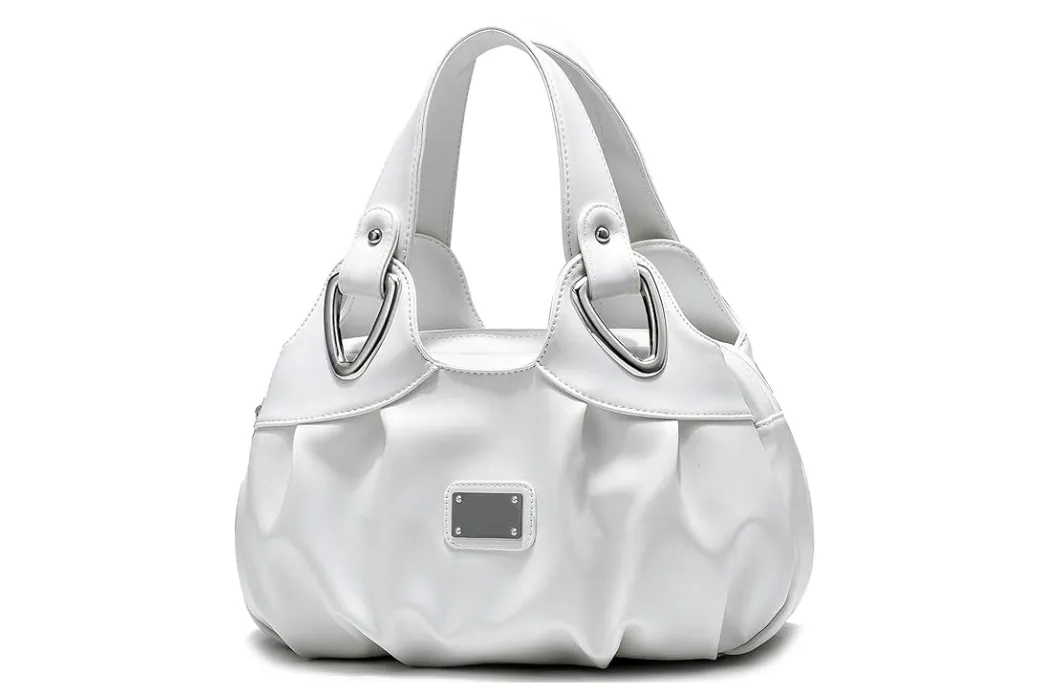
In 2025, white is not just a color; it is a texture. While smooth box calfskin remains a classic, designers are aggressively exploring materials that add visual depth and tactile warmth to the starkness of white. The three breakout stars are White Suede (for ultimate luxury), Quilted Nappa (for volume), and High-Gloss Patent (for futuristic shine). These materials transform a simple white bag into a complex, multi-dimensional statement piece.
The Rise of White Suede
White suede is arguably the most luxurious—and risky—trend of the year. Championed by brands like Khaite and The Row, it offers a soft, velvety light absorption that smooth leather cannot match.
- The Aesthetic: It softens the “clinical” look of bright white, turning it into a warm, inviting cream or chalk tone.
- The Manufacturing Challenge: White suede is a nightmare for production. It attracts dust instantly on the factory floor. To produce it successfully, manufacturers must use “anti-static” finishing agents and strict clean-room protocols.
- The Consumer Reality: It is high-maintenance. Brands marketing white suede often sell it with a dedicated cleaning brush included, acknowledging its fragility.
Patent Leather & High-Gloss Finishes
On the opposite end of the spectrum is the return of White Patent Leather. This high-gloss finish fits perfectly with the 60s-mod and Y2K revivals.
- The “Shield” Effect: Unlike suede, patent leather is sealed with a thick polyurethane or acrylic coating. This makes it nearly impervious to liquid stains (coffee wipes right off).
- The Dye Transfer Risk: However, patent leather is chemically unstable. It is notorious for “dye migration.” If a white patent bag rests against a dark denim jacket for an hour, the blue dye can migrate into the plastic coating, creating a permanent stain that cannot be cleaned.
Quilting and Matelassé
Quilting adds shadow and volume to white leather, breaking up the flat surface. The Miu Miu Wander bag is the prime example of the “Matelassé” technique.
- Construction: This involves stitching two layers of soft Nappa leather with a layer of batting (padding) in between.
- Visual Impact: The stitching creates peaks and valleys. In white, this catches the light beautifully, creating natural grey shadows that define the bag’s shape without needing logos.
White Material Pros & Cons
This table helps buyers and product managers weigh the aesthetic value against the practical durability of trending white materials.
| Material | Visual Effect | Mfg. Challenge | Durability Score |
|---|---|---|---|
| Smooth Calfskin | Clean, Minimal, Reflective | Requires Grade A hides (shows all scars). | High (Easy to clean/repair) |
| White Suede | Soft, Matte, Warm, Velvety | Dust magnet; hard to keep clean during sewing. | Low (Stains easily, hard to clean) |
| Patent Leather | High-Gloss, futuristic, “Wet” look | Prone to cracking in cold; Dye migration risk. | Medium (Wipeable but risky) |
| Quilted Nappa | Plush, 3D Volume, Shadow play | Stitching tension must be perfect to avoid puckering. | Medium-High (Stitching can snag) |
The 2025 White Bag Edit: 6 Icons Defining the Trend
The white handbag trends of 2025 are defined by specific, market-moving “It Bags.” The Row Margaux has redefined the soft-structure doctor bag; the Miu Miu Beau is leading the “East-West” elongation trend; and the return of the Chloé Paddington marks the peak of Y2K padlock hardware. These bags are not just fashion statements; they are masterpieces of leather engineering that set the manufacturing standard for the entire industry.
The Doctor Bag Icon: The Row Soft Margaux
Often called “the new Birkin,” the Margaux in white leather is the benchmark for the “Soft Doctor Bag” trend.
- The Spec: A massive, 15-inch or 17-inch bag with belted gussets.
- Why It Works: It defies the traditional rigidity of a doctor bag. It uses a heavy-weight but tumbled grain calfskin that collapses slightly under its own weight. Manufacturing this requires precise “skiving” (thinning) at the gussets so the thick leather can fold elegantly without bulking.
The East-West Icon: Miu Miu Aventure / Beau Bag
Miu Miu has single-handedly revived the “East-West” shape with these two styles.
- The Spec: A distinct, horizontally elongated box shape with a vintage, lived-in finish.
- Why It Works: The key here is the leather finish. Miu Miu uses a “Distressed White” or “Crackled” leather. This removes the fear of ruining a pristine white bag, as the leather is pre-scuffed. Achieving this finish requires a specialized tumbling process at the tannery to break the topcoat intentionally.
The Y2K Icon: Chloé Paddington
The Paddington is back, and it proves that heavy hardware is trending.
- The Spec: A soft, unstructured hobo dominated by a massive, functional padlock weighing nearly 0.5 lbs.
- Why It Works: It creates a “slouch” through gravity. The weight of the lock pulls the soft leather down, creating the bag’s shape. This requires hardware with a high-quality, thick plating (often PVD Gold) to ensure the heavy metal doesn’t leave grey oxidation marks on the cream leather.
The Texture Icon: Khaite Lotus
This bag is the reason white suede is a major trend.
- The Spec: A sculptural, unlined tote made from a single circle of leather.
- Why It Works: It showcases the raw material. Because it is unlined, the backside (the “flesh” side) of the suede must be finished as perfectly as the front. This requires “double-face” tanning, a premium and expensive process.
The Craft Icon: Bottega Veneta Andiamo
The Andiamo showcases the power of woven leather in white.
- The Spec: A tote made from hand-woven strips (fettuccine) of Nappa leather.
- Why It Works: White leather often shows dirt easily. The complex Intrecciato weave breaks up the visual surface, hiding minor scuffs and stains within the shadows of the weave. It turns a delicate color into a durable daily driver.
Analyzing the “Bill of Materials”
When we analyze these bestsellers, we see that the common thread is not the logo, but a unique material language.
Manufacturer’s Insight (Hoplok): Brands often come to us wanting to “copy” a look. We tell them: you can’t copy the look without the spec. To achieve the Miu Miu look, we source “Vintage-Effect” drum-dyed hides that have a specific oil content for that ‘lived-in’ drape. To match the Chloé hardware, we cast solid brass locks rather than hollow zinc. Hoplok can help your brand source these specific “Hero Materials” to build a collection that rivals these icons in quality and feel.
Why Is Manufacturing White Leather So Difficult?
Manufacturing pristine white leather is the ultimate stress test for any tannery or factory. It requires the use of Grade A raw hides because, unlike black or brown leather, white pigment possesses low opacity and cannot mask natural scars, veins, or tick bites. The three primary chemical challenges are Yellowing (caused by UV oxidation of natural fats), Dye Migration (color bleeding from linings or edge paint), and Hardware Reactivity. Achieving a stable, bright white requires specific synthetic tannins and UV-blockers, which typically increase raw material costs by 15-20% compared to standard colors.
The Chemistry of “Anti-Yellowing”
The biggest fear for any brand selling white bags is that they will turn a sickly cream or yellow color while sitting in a warehouse. This is a chemical reaction called oxidation.
- The Cause: Natural “fatliquors” (oils used to soften leather) oxidize when exposed to heat or UV light, similar to how a sliced apple turns brown.
- The Solution: To produce a stable white, tanneries must use expensive synthetic, non-oxidizing oils and specific bleaching syntans (synthetic tannins) instead of vegetable tannins, which are naturally brown.
- The Test: High-quality white leather must pass a Xenon Arc Light Fastness Test (ISO 105-B02) with a score of at least 4/5 to ensure it remains white under store lighting.
The Risk of Hardware Reaction
White leather is highly reactive to metals. If a brand uses cheap hardware on a white bag, they risk a chemical disaster known as “spew” or staining.
- Copper Migration: If the base metal of a rivet or buckle contains copper or brass and is not properly sealed, metal ions can migrate into the leather, creating permanent green or black rings around the hardware.
- Sulphur Reaction: White pigments often contain titanium dioxide. If this reacts with sulfur residues in the air or packaging, it can cause pinking or graying. Hardware must be sealed with a high-grade electrophoretic lacquer to prevent this contact.
The “Clean Room” Process
For a manufacturer, white is unforgiving. A single spec of dust in the edge paint or a dirty fingerprint during assembly ruins the unit.
Manufacturer’s Insight (Hoplok): At Hoplok, we treat white production like a medical operation. We implement a “Clean Room” protocol:
1. Separation: White products are cut and assembled on dedicated lines, physically separated from black or red leather production to prevent airborne fiber contamination.
2. Hygiene: Artisans wear fresh white cotton gloves changed every 2 hours.
3. Formulation: Our ProPelli tannery uses a proprietary “High-Light” anti-yellowing formula that guarantees color stability for 5+ years, ensuring your inventory retains its value.
How to Style and Maintain White Bags?
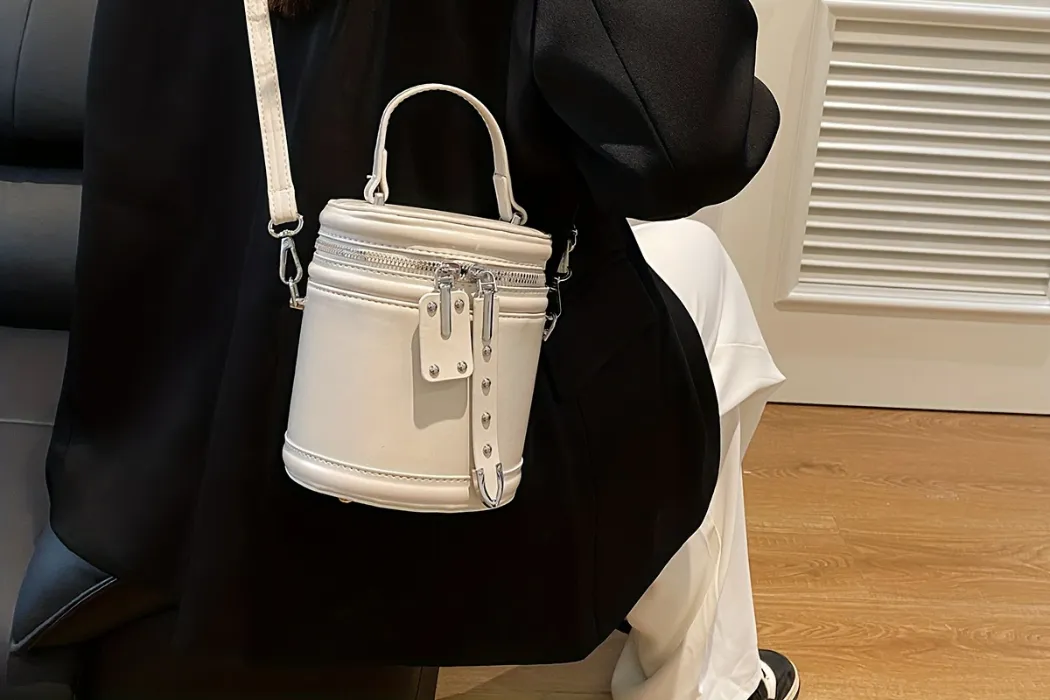
Styling a white bag in 2025 relies on the principle of “High Contrast.” It acts as a visual palate cleanser against dark winter coats or earthy tones. However, owning a white bag requires a defensive mindset. The number one enemy is Denim Dye Transfer, which is chemically aggressive and often irreversible on white leather. To maintain the pristine look, owners must pre-treat the leather with hydrophobic sprays and store it religiously in breathable dust bags away from sunlight to prevent UV yellowing.
Styling Tips: The Power of Contrast
The white bag is the ultimate statement piece because it draws the eye immediately.
- Monochromatic Neutral: Pair a white The Row Margaux with a full beige, cream, or oatmeal linen outfit. This “tonal” look is the definition of Quiet Luxury.
- Seasonal Pops: As noted in 2025 trend reports, mix your white bag with trending soft pastels like Sage Green or Soft Pink. The white leather makes these subtle colors pop without clashing.
- Dark Contrast: For a sharp, modern look, wear a structured white doctor bag against a navy or charcoal wool coat. The contrast creates an architectural silhouette.
Year-Round Versatility: Breaking the Seasonal Rule
The old rule of “no white after Labor Day” is dead. In 2025, the “Winter White” aesthetic is a dominant trend.
A white bag is arguably more impactful in winter than in summer. In summer, it blends with light fabrics. In winter, a white suede or shearling bag brings a texture of warmth and luxury to heavy knits and dark outerwear. The key is choosing the right material: white suede or grainy calfskin feels warmer and more appropriate for winter than a summery canvas tote.
The #1 Enemy: Maintenance Against Denim Transfer
This is the most critical warning for any white bag owner.
If you wear new, dark-wash jeans, the indigo dye is unstable. Friction against your white bag causes the dye to migrate into the leather’s topcoat. Once this happens, it is usually permanent. This is called “dye migration.”
The Fix: Prevention. You must spray your white bag with a high-quality leather protector (like Collonil Carbon Pro) before you ever use it. This creates a sacrificial barrier that the dye sits on top of, rather than penetrating.
Cleaning and Storage Essentials
White bags don’t hide neglect.
- Storage: Never store a white bag in a plastic box; it needs to breathe to prevent yellowing. Always use a white (not colored) cotton dust bag. Keep it stuffed with acid-free tissue paper to prevent creases, as dirt collects in creases first.
- Cleaning: For smooth leather, use a white eraser or a gentle leather wipe immediately after use. For white suede, use a clean, dry brush to remove dust daily. Never use harsh chemicals like bleach, which will turn the leather yellow instantly.
White Bag Care Cheat Sheet
Use this table to diagnose and treat common white leather issues.
| Issue | Prevention Strategy | Immediate Action | Professional Help? |
|---|---|---|---|
| Denim Transfer | Protector Spray (Monthly) | Wipe with leather cleaner instantly. | Yes (if settled) |
| Yellowing | Store in dark; UV Protection | None (Chemical oxidation is permanent). | Maybe (Re-dyeing) |
| Water Spots | Hydrophobic Spray | Dab dry; let air dry (do not rub). | No |
| Oil/Grease | Handle with clean hands | Cover with Cornstarch (overnight). | Yes (if deep) |
Frequently Asked Questions
1. Are white bags in style for 2025?
Yes, white bags are a dominant trend for 2025. However, the style has shifted from “summery beach totes” to structured, year-round statement pieces. The most popular silhouettes are the Doctor Bag, the East-West shoulder bag, and the Slouchy Hobo. It is now considered a “power color” for winter wardrobes, worn in contrast to dark coats.
2. Does white leather turn yellow?
Yes, it can turn yellow over time. This is caused by oxidation. The natural fats and oils inside the leather react with oxygen and UV light (sunlight), turning the surface a creamy yellow color. To prevent this, high-end brands use specific synthetic oils and UV-resistant finishes during the tanning process. Always store your white bag in a dark place inside a breathable dust bag to slow this reaction.
3. What is a “doctor bag”?
A doctor bag is a vintage-inspired handbag silhouette characterized by a flat, rectangular bottom, rounded sides, and a hinged metal frame opening at the top. It was originally designed for physicians to carry medical equipment. In 2025, designers like Miu Miu and The Row have revived this shape, using softer leathers to make it less rigid while keeping its distinctive architectural profile.
4. How do I clean white suede?
With extreme caution and no water. White suede is very delicate. Water will leave permanent stains. You should use a clean, dry suede brush to lift dust and a specialized white suede eraser to gently rub away scuffs. For serious stains, consult a professional leather cleaner immediately. Do not attempt to wash it at home.
5. Is gold or silver hardware better on white bags?
It depends on the aesthetic you want to achieve. Gold hardware (especially heavy, jewelry-like chains) creates a warmer, “Bohemian Luxury” look, popularized by brands like Chloé. Silver hardware creates a cooler, sharper, and more modern “Futuristic” look, often seen in Prada or Balenciaga designs. From a durability standpoint, ensure the hardware is PVD coated to prevent the metal from oxidizing and staining the white leather green or black.
6. What is the “East-West” trend?
The “East-West” trend refers to handbags that are elongated horizontally rather than vertically. They are wide and short, resembling a stretched baguette. This silhouette offers a sleek, streamlined look that sits comfortably under the arm and is a key shape for 2025 collections from Alaïa and Bottega Veneta.
Conclusion: Manufacturing the Immaculate
The white handbag trends of 2025 represent a fascinating convergence of opposites: the playful, hardware-heavy nostalgia of Y2K meets the disciplined, architectural lines of Quiet Luxury. Whether it is a slouchy suede hobo or a rigid doctor bag, the unifying theme is that white is no longer a seasonal “summer fling.” It has evolved into a powerful, year-round statement of sophistication.
For fashion brands, capitalizing on this trend requires more than just a design sketch; it demands manufacturing excellence. Producing a white leather bag that remains pristine on the shelf and durable in the customer’s hand is a technical feat. It requires a partner who understands the chemistry of anti-yellowing, the precision of clean-room assembly, and the sourcing of flawless Grade A hides.
Hoplok Leather is that partner. With our dedicated “clean room” production lines and proprietary ProPelli anti-oxidizing tanning formulas, we solve the inherent risks of white leather manufacturing. We help you deliver the trend—from heavy Y2K padlocks to soft white suede—without the quality control nightmares. Contact Hoplok Leather today to develop a flawless, non-yellowing white sample for your 2025 collection.