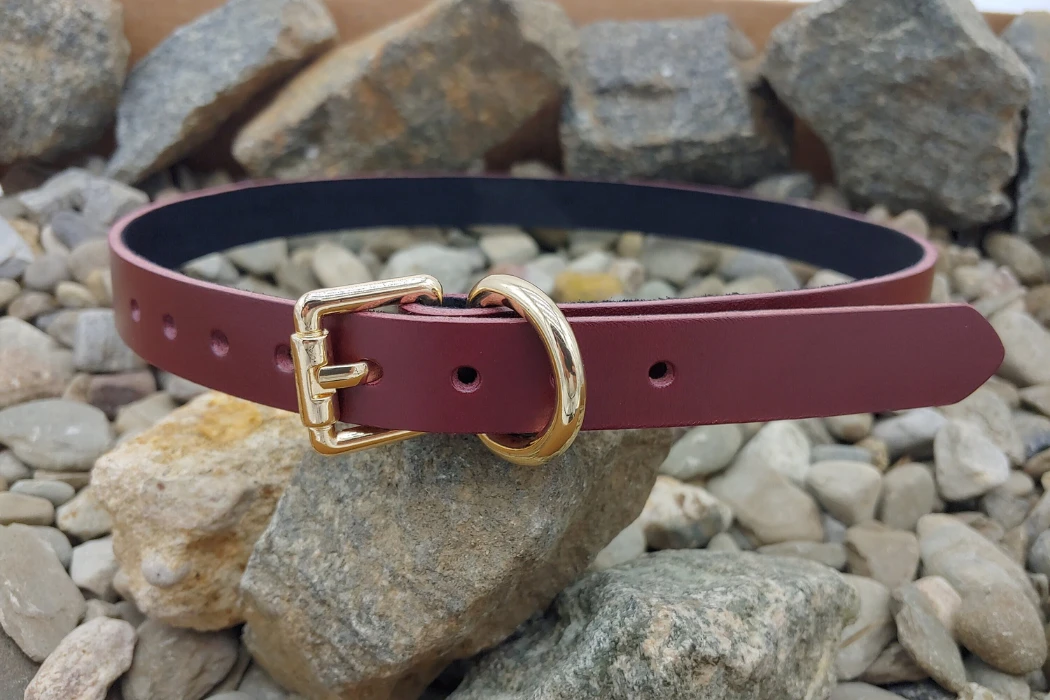
Physical wallet types include bifolds, trifolds, cardholders, long wallets, zip-around designs, coin purses and travel organizers. Choose between them by the cards, notes, coins and documents they must hold, and where the wallet will be carried.
For a brand developing leather or PU small goods, the style name is only the start. The useful specification defines the pocket layout, intended contents, closed thickness, access and care. This guide focuses on physical wallets; payment apps and cryptocurrency software are different products.
Everyday wallet formats
| Type | Layout and intended use | Sample check |
|---|---|---|
| Bifold | One fold with panels for cards and usually notes | Does it close correctly with the intended contents? |
| Trifold | Three sections created by two folds | Do overlapping pockets create excessive bulk? |
| Cardholder | A compact set of card sleeves | Can cards be inserted and removed without poor retention? |
| Slim wallet | A reduced layout for selected essentials | Is its advertised capacity realistic in use? |
| Money-clip wallet | Cards combined with a note-retaining component | Does the clip work for the specified note arrangement? |
| Coin purse | A compartment focused on loose change | Can coins escape at the closure or lining? |
These categories can overlap: a slim wallet may also be a bifold, and a cardholder may include a coin pocket. Avoid fixed capacity claims based on the type alone. A slot designed for one card should not be photographed stuffed with several cards to suggest extra storage.
Long wallets and travel organizers
| Type | What distinguishes it | What to specify |
|---|---|---|
| Long or continental wallet | An elongated layout that can hold notes flat | Target currency dimensions, compartments and carrying location |
| Zip-around wallet | A perimeter zipper encloses the contents | Opening access, corner clearance and filled closure |
| Wristlet | A small wallet or pouch with a wrist strap | Strap attachment, contents and carrying expectation |
| Travel or passport wallet | Space for travel documents and selected essentials | Actual passport/document dimensions and layout |
| Breast-pocket wallet | A long, relatively flat format for a jacket | Closed dimensions and contents without excess pocket bulk |
| Key or accordion organizer | Hooks or expanding compartments for particular items | Contact with cards, expansion and closure when filled |
A phone-sized clutch or wristlet is not guaranteed to fit every phone. Record the actual device with its case. Likewise, a travel organizer should be checked against the documents and note sizes of the target market.
Specify capacity by contents, not slot count alone
List each intended card, note group and coin compartment. Pack the sample in that arrangement, close it and assess its thickness, fold and fastener operation. Check whether extracting one card disturbs another or whether a lining edge catches the card.
Review both a new sample and any agreed functional assessment of pocket retention. The aim is a usable balance: excessively tight access and insecure contents are different problems. Record the accepted layout and materials so that a later thickness substitution does not change the fit unnoticed.
Materials and layer thickness
Select the leather or PU reference, lining and reinforcement together. The closed profile depends on overlapping layers, fold allowances and local skiving, not simply the outer-panel thickness. See the leather thickness guide for component and stack planning.
A material label does not establish a fixed lifespan. Compare appearance, feel and relevant performance evidence for the finished construction. If recycled content or another environmental claim matters, obtain the documentation for the specific material rather than treating “vegan” as proof of a lower environmental impact.
Features that need their own evidence
A chain, closure or concealed pocket should not be promoted as theft-proof. If a design includes a radio-frequency shielding claim, specify the relevant frequency, configuration and evidence for that product; it is not a guarantee against every form of fraud. Do not add the feature as a universal requirement for all travelers.
A slot for a separately supplied tracker also does not make a wallet a GPS device. Confirm the physical accessory fit and keep any electronic function outside the claim unless it is actually provided and verified.
Approve the details customers handle daily
- Check every pocket with the intended contents.
- Inspect stitching, edges and lining at the openings.
- Operate the closure in the filled condition.
- Verify branding placement and its effect on pocket access.
- Match care instructions to the shell and lining.
For aftercare, use the wallet cleaning guide. For a custom wallet range, Hoplok’s confirmed MOQ is 300 leather pieces or 1,000 PU pieces, with bulk lead time of 60–90 days. Send the layout through the contact page and confirm the sampling schedule for the design.
Frequently asked questions
How many cards does a bifold hold?
There is no fixed number for the category. State and check the intended card arrangement for the actual design.
Is a trifold always better when more storage is needed?
Not necessarily. More overlapping sections can change bulk and access; compare the filled samples.
Does an RFID claim make a wallet theft-proof?
No. Any shielding claim needs specific evidence and does not address every form of theft or fraud.