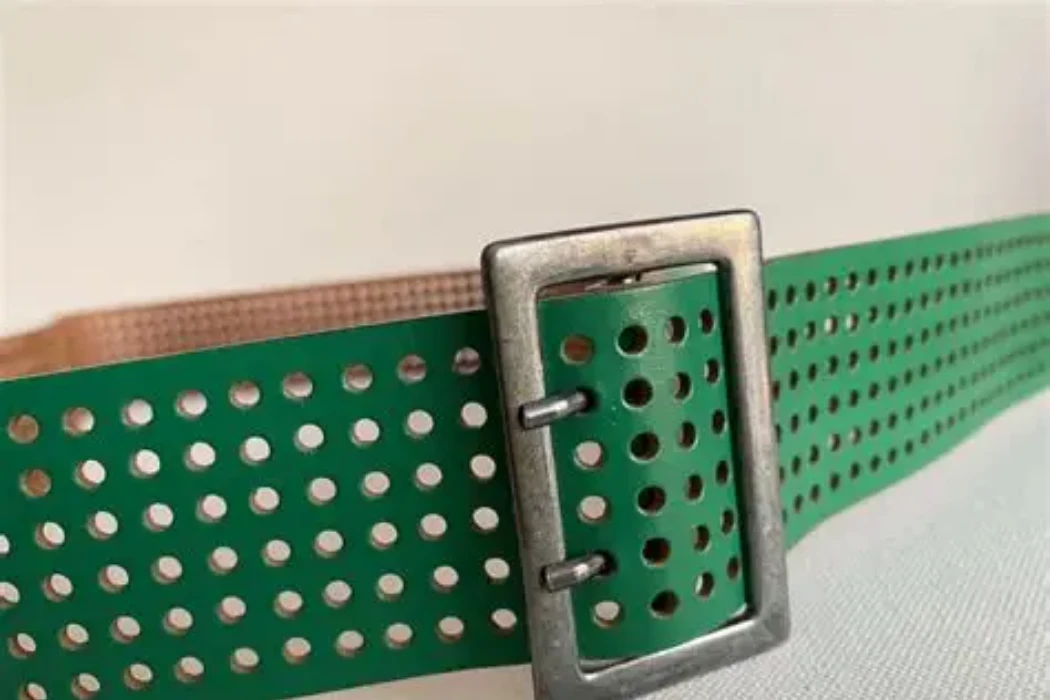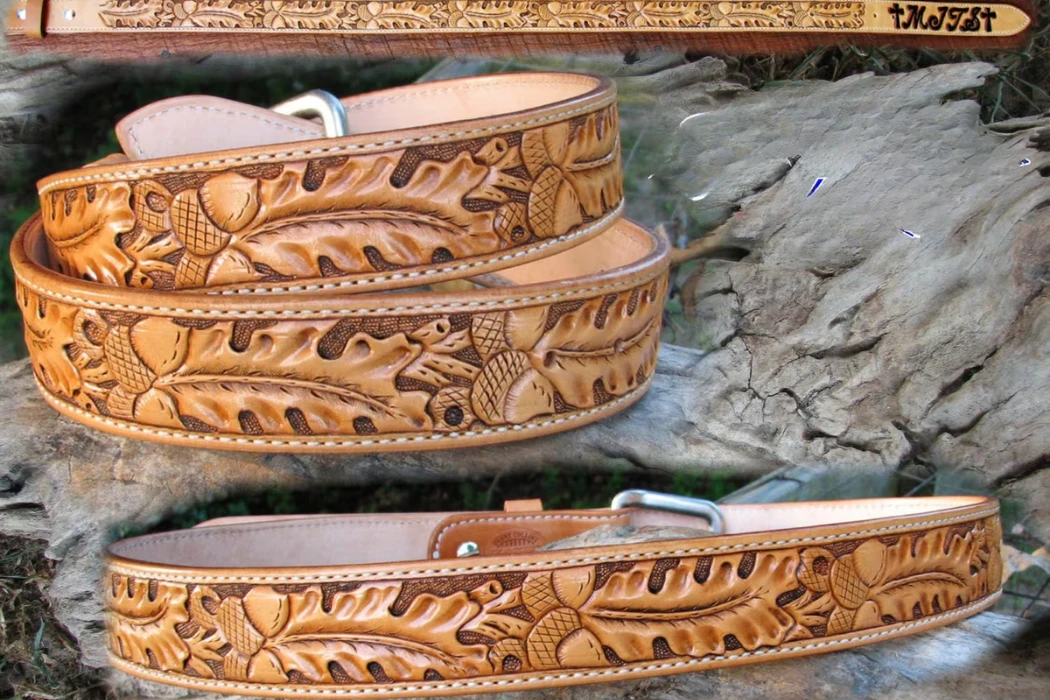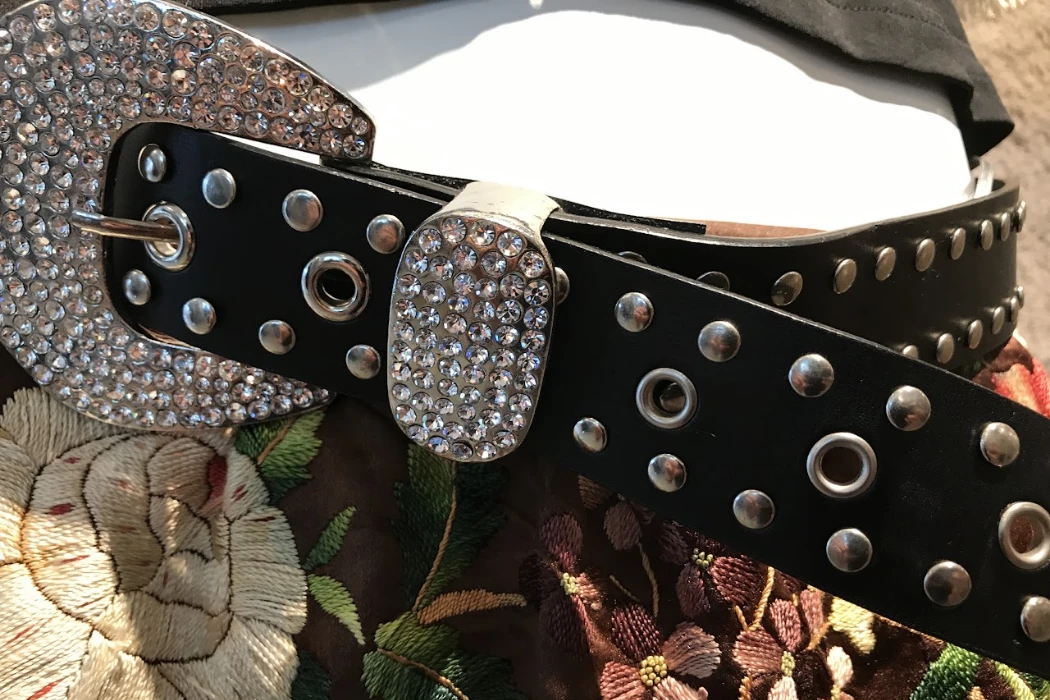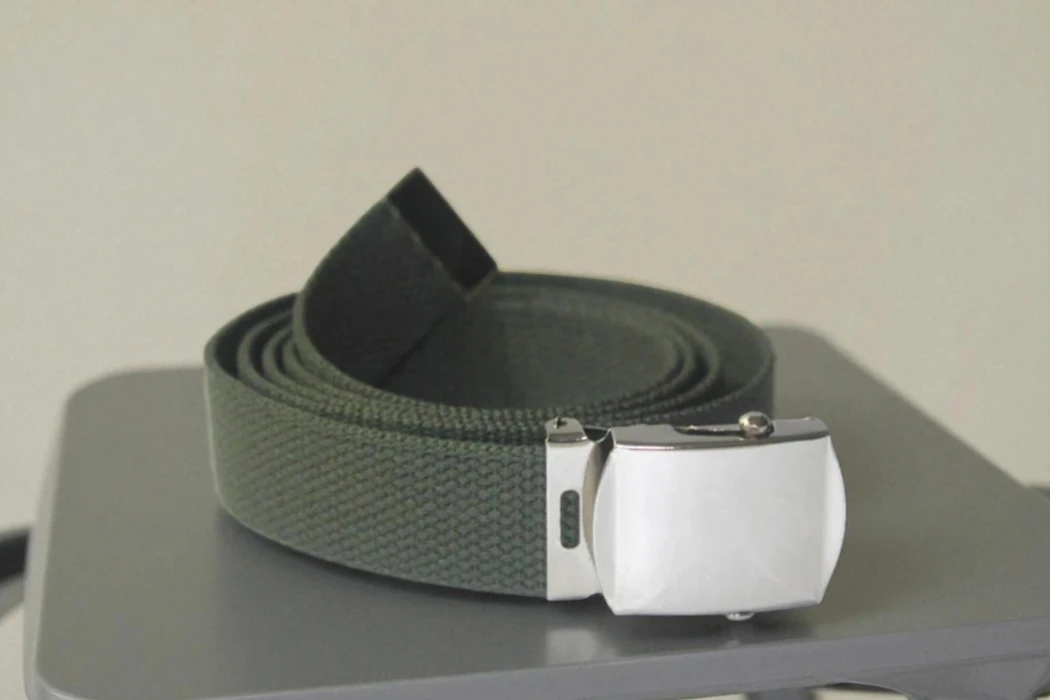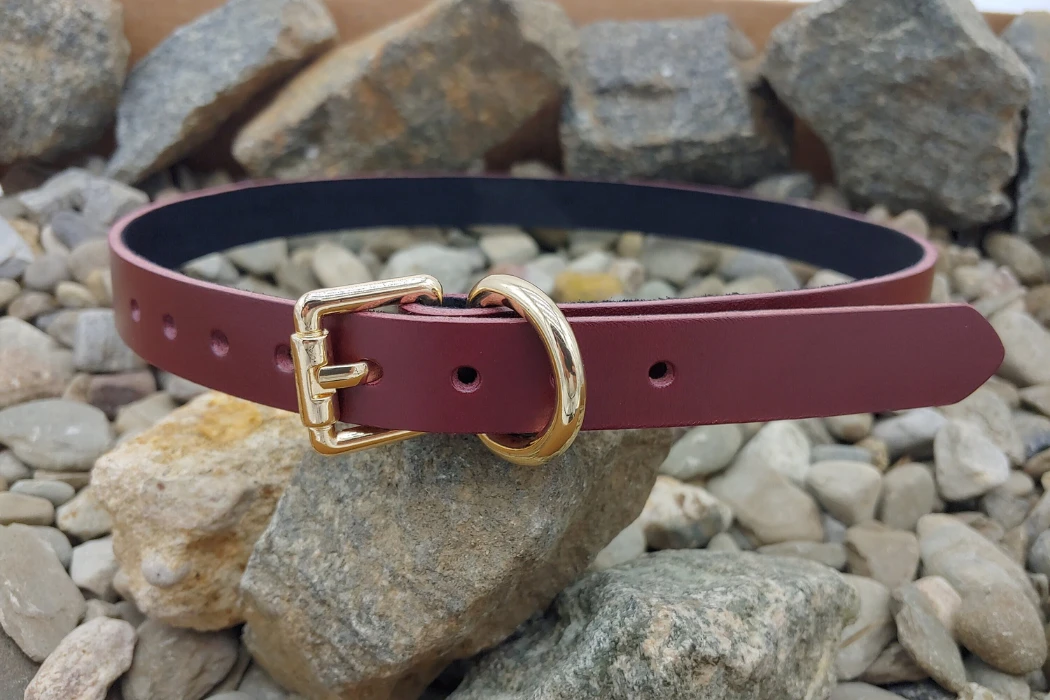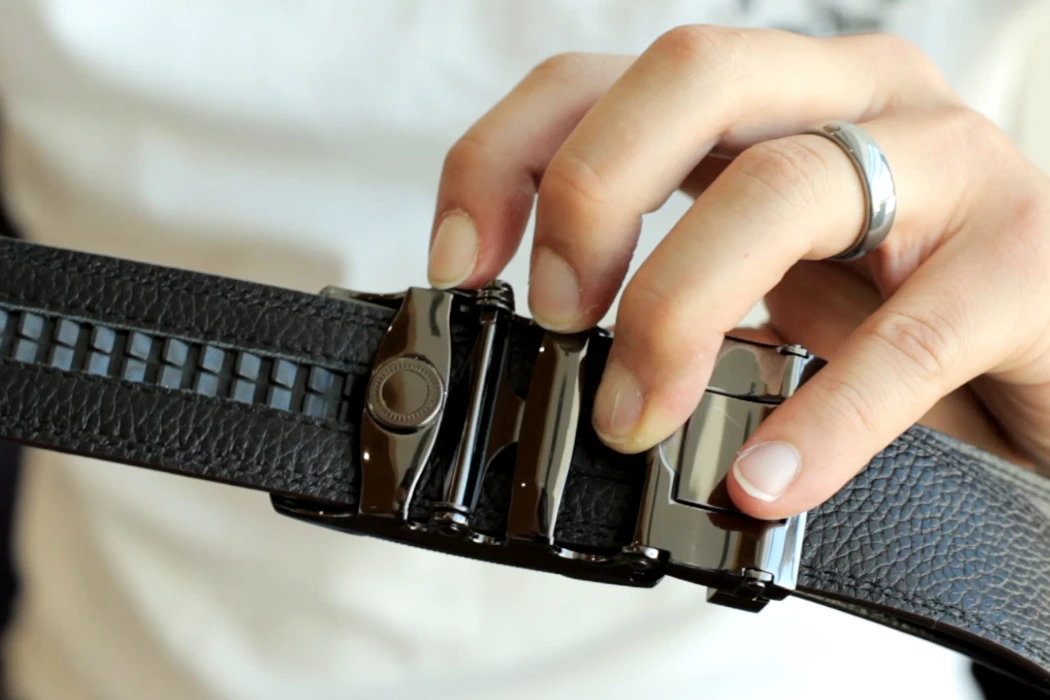
Belt materials influence appearance, feel, assembly and how the finished belt behaves at its buckle and adjustment points. For a brand developing a collection, the useful comparison includes the complete construction: outer material, lining or core, edge treatment, stitching and hardware.
This guide compares leather descriptions, textile fibres, coated materials, braids and newer composites. It also explains exotic-look textures as design references. Material names are starting points for a specification; they are not universal grades, lifetime guarantees or environmental ratings.
Use the material-by-material notes to build a shortlist, then compare samples for the intended fashion use. Hoplok does not offer real exotic skins or aviation, load-bearing, tactical, tool or powerlifting belts. Specialty materials and constructions require project-specific feasibility confirmation.
Why Belt Material Matters
Material selection must work with the belt width, thickness, buckle, holes, keeper and intended fit. A surface that looks good as a swatch may behave differently after folding around hardware or being assembled over a core.
The six categories below overlap. Cotton is a fibre and canvas is a fabric construction; full grain and corrected grain describe leather surfaces. Bonded material is a separate composite, not another intact-hide layer.
| Category | Descriptions covered |
|---|---|
| Leather and leather-containing composites | Full grain, top grain, genuine, corrected grain, split and bonded |
| Textiles | Canvas, cotton, linen, nylon, polyester, silk and wool |
| Synthetic materials | PU, PVC, rubber and microfiber-backed options |
| Exotic-look references | Snake, crocodile, ostrich, stingray and shark surface effects |
| Braided, rope and straw constructions | Natural and synthetic strands; plaited and woven effects |
| Content-led alternatives | Piñatex, mycelium-based and apple-based composites, cork, bamboo descriptions, recycled PET and organic cotton |
Natural Leather Materials
Leather can be supplied with different thicknesses, tempers and finishing systems. The six terms below are not a descending quality ladder. Specify the actual material and assembly, and distinguish intact leather from reconstituted composites.
The Leather Research Laboratory defines full grain by retention of the original grain surface and notes variation in top-grain terminology. Its corrected-grain explanation describes surface buffing and subsequent finishing.
Full-Grain Leather
Full-grain leather retains the original grain surface. Natural marks may remain visible, depending on the finish. The term does not mean the leather cannot be split to a required thickness from the flesh side, and it does not establish a finished-belt lifespan.

- Useful qualities: Retained grain can support a collection that values natural character. A suitable temper can provide the intended belt feel without relying on surface appearance alone.
- Limitations: Clean cutting areas and acceptable marking ranges affect yield. Patina, stretching and resistance to cracking vary with leather and finish.
Common uses: Dress or casual leather belts where the approved grain, thickness and construction suit the design.
Care: Follow the finish supplier’s guidance; do not apply conditioner at an arbitrary interval. Keep away from prolonged wet storage and direct heat.
Suitability and purchasing check: Approve the usable grain range and check buckle folds, holes, colour transfer and edges on an assembled sample. Do not substitute “full grain” for those acceptance criteria.
Top-Grain Leather
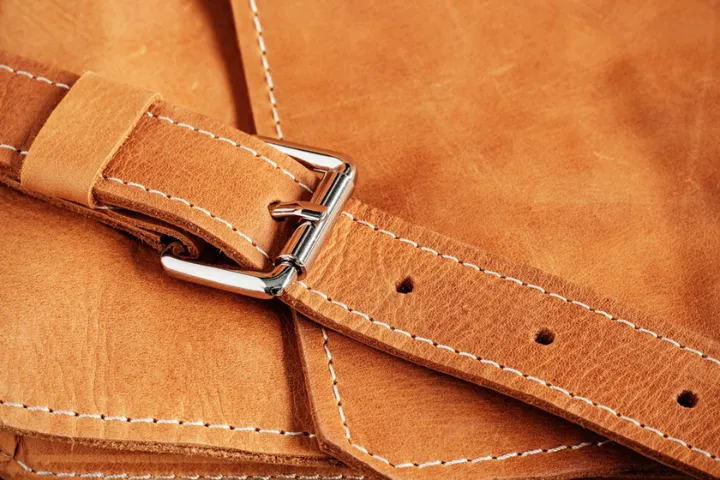
Top grain refers to leather from the grain-bearing part of the hide, but usage varies between suppliers. It is often used commercially for corrected leather and is also used synonymously with full grain. It is not a reliable label for a fixed second-best grade.
| Aspect | Details |
|---|---|
| Useful qualities: | Can provide the desired surface and handle when the actual finishing method is specified. Corrected versions may offer a controlled visual appearance. |
| Limitations: | A quotation saying only top grain leaves grain removal, finish and thickness unclear. It does not establish a lower price or better stain resistance. |
| Common uses: | Dress and casual belts using the specific approved material, with lining or reinforcement as required. |
| Care: | Use instructions matched to the surface finish; a polished coating and an absorbent finish may need different methods. |
| Suitability and purchasing check: | Ask whether the grain has been buffed, how the surface is finished and whether any coating is applied over a split. Compare those details with the physical sample. |
Genuine Leather
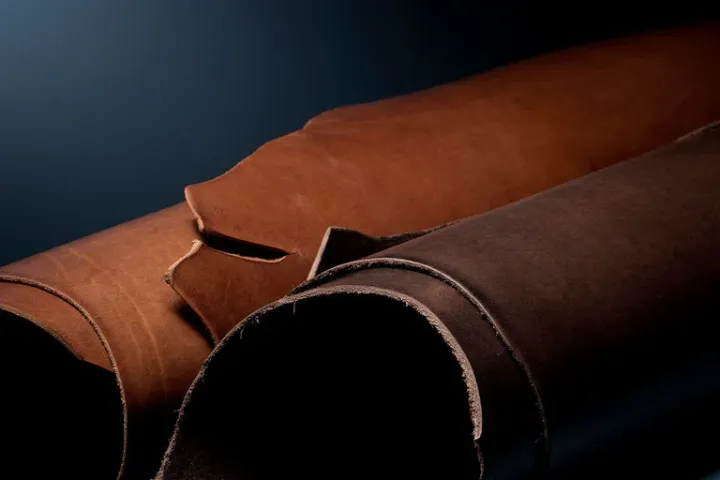
Genuine leather is a broad description of animal leather. It does not identify a layer beneath top grain, and it should not be used to imply that reconstituted leather fibres are an intact hide. Ask what leather the supplier means.
- Useful qualities: The category includes a range of surfaces, handles and prices. A complete specification can turn a vague description into a comparable offer.
- Limitations: The term alone does not tell you grain condition, backing, coating or strength. Marketing labels may obscure material substitutions.
Common uses: Leather belt constructions whose substrate and finish are fully described.
Care: Choose a method for the actual finish rather than a generic “genuine leather” conditioner.
Suitability and purchasing check: Request the species, layer, finish, thickness, backing and construction. Compare a cross-section and the finished prototype; do not assume that a genuine-leather label makes a belt low quality or guarantees high quality.
Corrected-Grain Leather
Corrected-grain leather has had some grain-surface irregularities removed, commonly by buffing, followed by finishing that may include embossing. The degree of correction and the coating system can differ.
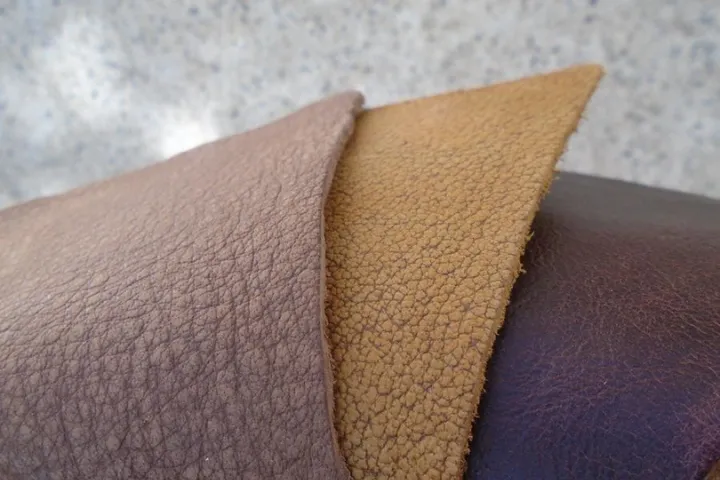
- Useful qualities: A controlled surface can support colour and pattern consistency. Embossing provides different design effects when specified clearly.
- Limitations: Uniform appearance does not prove resistance to scratching, water or flexing. Damage to a finished surface may remain visible.
Common uses: Coordinated dress or fashion belts where a more consistent face is desired.
Care: Follow coating-specific cleaning guidance. Do not prescribe silicone or other surface products without approval.
Suitability and purchasing check: Approve the surface grain, gloss and colour under consistent lighting. Assess coating adhesion and repeated bending at the buckle fold, and check that the edge finish works with the selected layers.
Split Leather
Split leather comes from a layer separated below the grain-bearing surface. It may be supplied with a suede surface or with a finish or coating; a smooth-looking split is not full-grain leather.
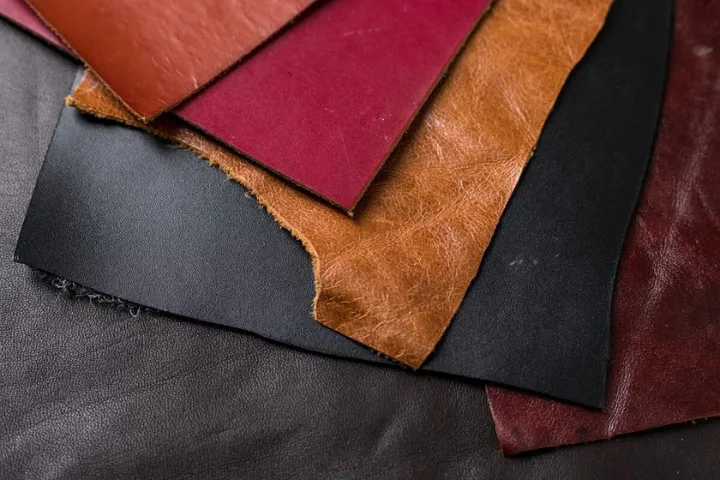
- Useful qualities: Offers different surface and construction options depending on finish. It can be assessed as one component of a layered belt.
- Limitations: Performance depends on the particular split and coating, not a universal thinness or flexibility. Smooth coatings need suitable adhesion and flex behaviour.
Common uses: Lined or laminated fashion belt designs and suede effects where the material meets the specification.
Care: Use suede guidance for a napped surface or coating guidance for a finished one. Do not treat both as interchangeable.
Suitability and purchasing check: Specify substrate, backing and any coating. Examine holes, edge layers and buckle folds, and check whether the complete assembly resists delamination under the agreed evaluation.
Bonded Leather
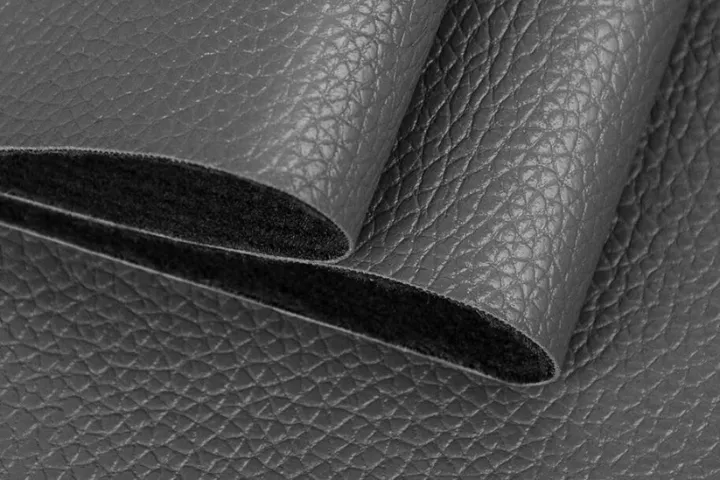
Bonded or reconstituted leather materials contain leather fibres or particles combined with binders and may have a backing or surface coating. They are not an intact layer of hide. A PU binder does not make a leather-containing composite vegan.
| Aspect | Details |
|---|---|
| Useful qualities: | A uniform sheet can offer a particular appearance and cutting format. Its suitability should be considered at the assembly level. |
| Limitations: | Composition and layer structure vary. The term does not establish a predictable price or service life, and unsupported leather or vegan claims can misdescribe the material. |
| Common uses: | Only belt constructions where the composite is transparently specified and meets agreed performance requirements. |
| Care: | Use the material producer’s cleaning method; oils intended for intact leather may affect the binder or coating. |
| Suitability and purchasing check: | Request composition by component, coating and backing details. The FTC Leather Guides distinguish truthful leather descriptions from misleading representations of reconstituted material. |
Comparison Table of Leather Types for Belts
| Description | What it establishes | What remains to verify |
|---|---|---|
| Full grain | Original grain surface retained | Thickness, finish, temper and assembled performance |
| Top grain | Grain-layer terminology; usage varies | Whether corrected; supplier definition and finish |
| Genuine leather | Broad animal-leather description | Species, layer, backing and coating |
| Corrected grain | Surface correction and refinishing | Degree of correction and coating behaviour |
| Split | Layer below the grain-bearing surface | Napped or coated finish; layer adhesion |
| Bonded | Leather-containing composite | Composition, labelling and flex performance |
Fabric and Textile Options
Textile belts may use woven straps, wrapped cores or braids. The fibre name is only one part of the specification: yarn size, weave, density, thickness, finishing and hardware attachment affect the result.
CottonWorks’ material library illustrates how construction and fibre blend create different fabrics. Apply the same distinction when comparing a fabric swatch with a finished belt.
Canvas Belts
Canvas is a woven fabric construction, commonly cotton or a blend. Specify its actual fibre composition and weight; it should not be confused with a braided belt simply because both have a casual textile appearance.
- Useful qualities: The woven surface can support prints, colours and contrasting trim. A wrapped or reinforced construction can be developed for the desired body.
- Limitations: Fraying, dimensional change and colour transfer depend on processing and assembly. Canvas is not automatically water-resistant.
Common uses: Casual fashion belts and fabric-faced designs, subject to feasibility review.
Care: A washable fabric does not mean the assembled belt is machine washable. Hardware, leather ends, adhesives and cores need compatible care.
Suitability and purchasing check: Check edge containment, buckle attachment and hole reinforcement. Compare fabric specification, usable width and the result of the agreed sample evaluation.
Cotton Belts
Cotton is a seed fibre used in woven webbing, braided structures and other textiles. The same fibre can produce a soft braid or a firm strap, so cotton alone does not describe the construction.
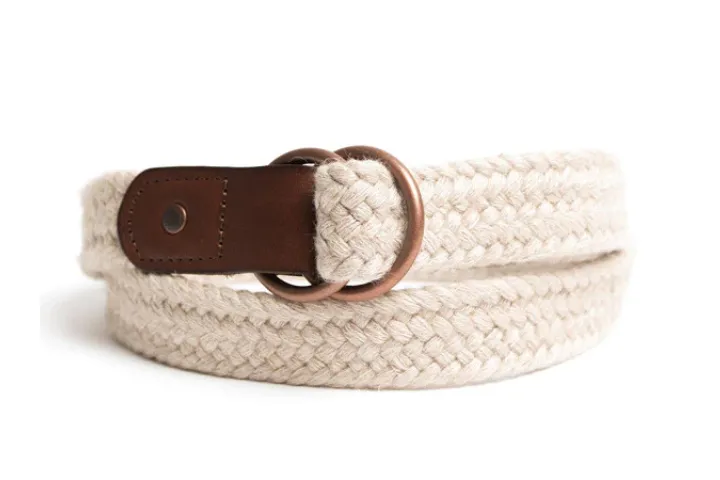
- Useful qualities: Offers different colours, surface textures and handles. Can combine with leather or synthetic ends after assembly review.
- Limitations: Cotton-containing belts may absorb moisture, and shrinkage or colour change depends on finishing. Finished belts are not automatically biodegradable or hypoallergenic.
Common uses: Casual fabric belts, rope-like styles and braid constructions where the prototype provides the required fit.
Care: Validate spot cleaning or washing on the complete belt. Avoid heat that can affect attached leather, coatings or adhesives.
Suitability and purchasing check: Document fibre blend and braid or weave structure. Assess fit, buckle slip and length change using the actual hardware and intended tension.
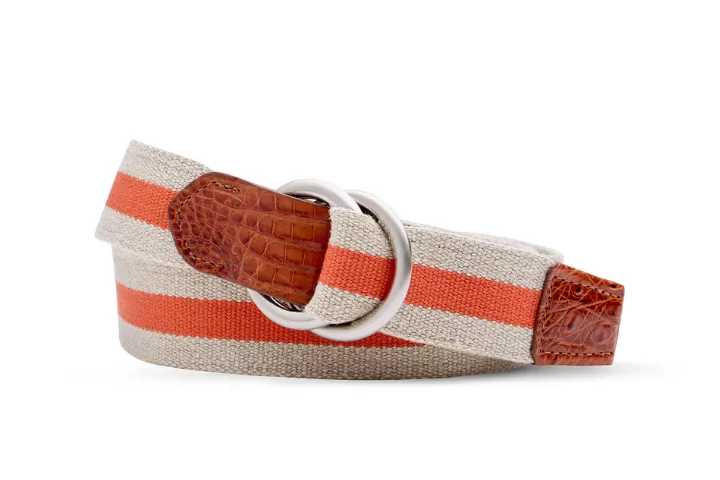
Linen Belts
Linen is made from flax fibre and may be blended with other fibres in a belt fabric. Its visible texture can suit a relaxed collection, but the lining or core may supply much of the finished belt’s structure.
| Aspect | Details |
|---|---|
| Useful qualities: | Creates a textile appearance that can coordinate with warm-season clothing. Yarn and weave choices allow different surface effects. |
| Limitations: | Creasing, abrasion and dimensional behaviour vary by fabric. Linen is not universally weaker than cotton, nor is every linen belt suitable for wet use. |
| Common uses: | Fabric-faced dress-casual belts and seasonal fashion designs after construction review. |
| Care: | Follow instructions for the complete construction; do not automatically iron or hand-wash a belt because its face contains linen. |
| Suitability and purchasing check: | Approve the natural slub range, edge treatment and colour consistency. Check the fabric where it folds through the buckle and meets leather or coated ends. |
Nylon Belts
Nylon is a family of synthetic polyamide fibres used in woven straps and braids. Denier, weave and finish should be specified alongside fibre content; the name does not establish a safety rating.
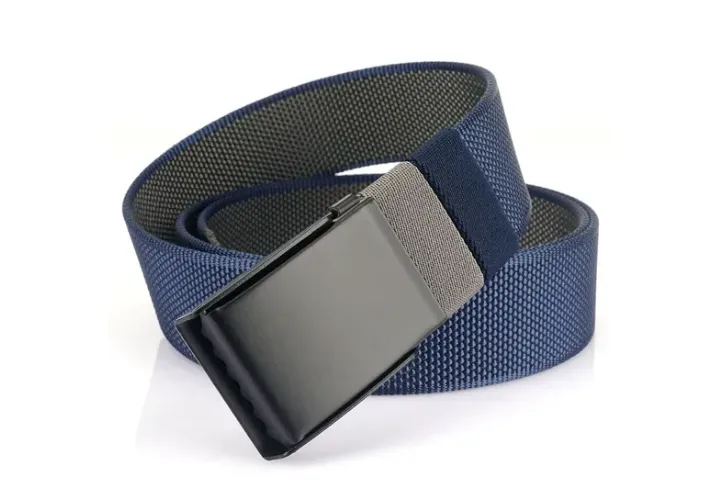
- Useful qualities: Can provide a flexible textile strap in different colours and constructions. Suitable versions can support sport-inspired fashion styling.
- Limitations: Abrasion, snagging, water behaviour and UV stability depend on the supplied material. Do not use ordinary fashion webbing as proof of load-bearing capability.
Common uses: Casual and sport-inspired fashion belts. Tactical, aviation, tool and load-bearing products are outside Hoplok’s scope.
Care: Check the approved cleaning method for the webbing, ends and buckle. Avoid assuming all nylon assemblies can be washed.
Suitability and purchasing check: Evaluate buckle grip and slippage, attachment security and colour transfer. Report the exact material and finished-belt method if any performance claim is made.
Polyester Belts
Polyester can be used in woven webbing, braids and fabric faces. Yarn, weave and finishing control the final handle and appearance; some constructions include other fibres for a particular fit.
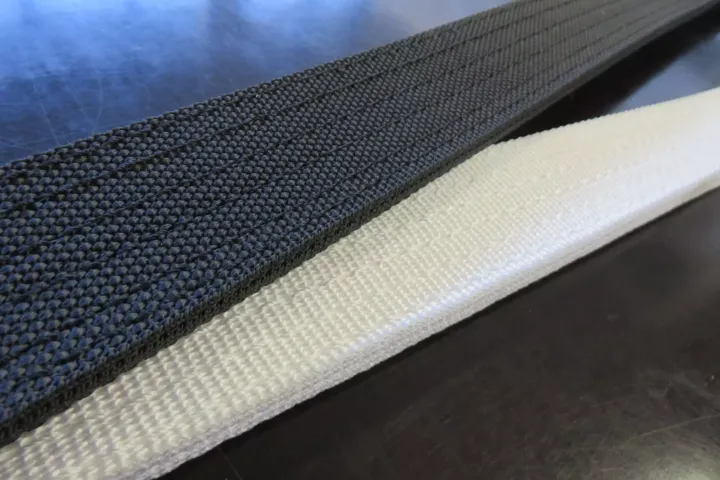
- Useful qualities: Supports a range of colours and print or pattern options. It can be assessed for a coordinated fashion line.
- Limitations: The fibre name alone does not prove stretch recovery, colourfastness or resistance to shrinking. Claims about recycled content require separate evidence.
Common uses: Casual fabric belts and patterned straps using a construction suited to the buckle.
Care: Confirm cleaning with the complete belt assembly. Do not use a general fabric-care claim to cover glued ends or coated trims.
Suitability and purchasing check: Specify the actual blend and test length stability, grip at the buckle and surface wear. Compare against the approved sample rather than assigning polyester a universal durability score.
Silk Belts
Silk textiles are typically made from silkworm-derived fibre, not commercial spider silk. For a belt, silk may provide the visible face, sash or decorative layer while another component supports the construction.
- Useful qualities: A selected weave can give a smooth sheen or a patterned appearance. It can work as a decorative fashion element.
- Limitations: Snagging, colour transfer and surface wear need consideration. The term does not guarantee hypoallergenic performance or one universal cleaning method.
Common uses: Fashion sashes, fabric-covered belts and occasion-wear details where feasibility is confirmed.
Care: Use the fabric and trim suppliers’ approved method. A blanket dry-clean-only or hand-wash recommendation is inappropriate without the complete composition.
Suitability and purchasing check: Evaluate contact points at closures and folds, and ensure the core or backing supports the intended fit. Approve colours and any pattern alignment on a full sample.
Wool Belts
Wool may be used in a woven fabric face or a blended textile construction. It is a fibre description, not a reference to a suede-like surface; the fibre blend should be confirmed from the material specification.
| Aspect | Details |
|---|---|
| Useful qualities: | Textured fabrics can coordinate with seasonal clothing and provide a different surface from smooth leather. |
| Limitations: | Pilling, felting, dimensional change and abrasion vary with blend and processing. A warm handle does not establish belt performance. |
| Common uses: | Fabric-faced fashion belts and decorative textile details, subject to material and assembly review. |
| Care: | Confirm cleaning for the blend and complete belt. Avoid automatic washing, ironing or steaming instructions. |
| Suitability and purchasing check: | Require a fibre-content description and evaluate surface rubbing against clothing, edge finishing and buckle folds. Approve a representative material swatch and retain its composition record. |
Comparison Table of Fabric & Textile Options for Belts
| Material | Useful specification detail | Sample focus |
|---|---|---|
| Canvas | Fibre blend, weave and weight | Fraying and buckle attachment |
| Cotton | Woven versus braided construction | Length stability and care |
| Linen | Blend, weave and backing | Creases, panel appearance and edges |
| Nylon | Yarn, weave and finish | Buckle grip and rubbing |
| Polyester | Blend, weave and finish | Grip, length change and colour |
| Silk | Weave, face layer and core | Snagging and closure contact |
| Wool | Blend, surface and backing | Pilling, care and edge finish |
Synthetic Materials
PU, PVC, rubber and microfiber-based composites cover many formulations. Ask for each layer’s composition and thickness. Animal-free, durability and environmental claims need their own evidence; none follows automatically from a surface name.
PU (“Vegan Leather”)
PU refers to polyurethane. A leather-like material often has a PU coating over a textile base, but PU can also coat animal leather. Verify the complete construction before describing a belt as vegan.
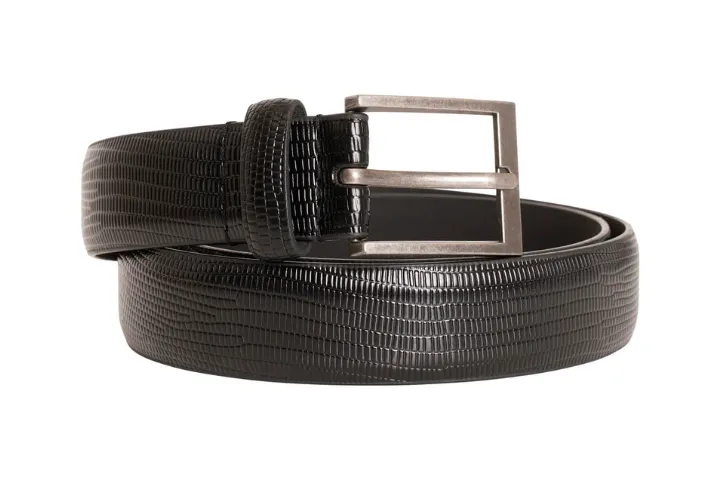
- Useful qualities: Offers different emboss patterns, colours, gloss levels and handles. Roll-based materials can support controlled appearance when correctly specified.
- Limitations: Coating, backing and adhesive choices affect flexing and ageing. Neither low price nor short service life is universal across PU materials.
Common uses: Fashion belts where the selected laminate and buckle construction meet the brief.
Care: Follow the coating supplier’s advice. Leather oils and conditioners may leave residue or alter the finish.
Suitability and purchasing check: Check coating adhesion, bending at buckle folds, hole edges and storage-related ageing as appropriate. Review the full bill of materials, including lining and adhesives, for an animal-free claim.
PVC Belts
PVC is polyvinyl chloride, supplied as flexible sheet or a coating on a backing. Formulation and thickness affect transparency, flexibility and appearance.
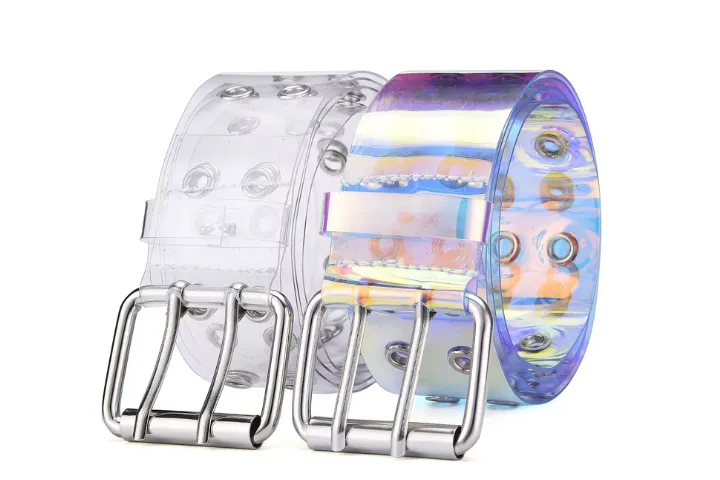
- Useful qualities: Can create clear, coloured and gloss effects for fashion designs. Suitable thickness and reinforcement can be developed around the buckle.
- Limitations: Water-resistant sheet does not prove a waterproof assembly. Cold flexibility, surface blocking, odour and restricted substances require material-specific review.
Common uses: Fashion belts with transparent or coated effects, subject to market and product requirements.
Care: Use the supplier’s approved cleaning process and check compatibility with printing, coating and metal hardware.
Suitability and purchasing check: Specify composition, dimensions and required chemical testing for the destination market. Do not assume every PVC formulation is appropriate for children or that the category has one fixed environmental profile.
Rubber Belts
Rubber describes a family of elastomeric materials, not one belt specification. Natural and synthetic rubbers and their blends can behave differently, as can solid and foamed constructions.
- Useful qualities: A selected formulation may provide a flexible or sculpted fashion effect. Moulded surface detail and colour can be assessed for the design.
- Limitations: Stretch, recovery, ageing and skin-contact requirements need specific evaluation. An ordinary fashion design should not be marketed for diving, tool support or protective use.
Common uses: Decorative or flexible fashion concepts only after feasibility review; no powerlifting, load-bearing or tactical offer is implied.
Care: Obtain a formulation-specific care method. Do not prescribe chlorine rinsing or cleaning chemicals for all rubber materials.
Suitability and purchasing check: Assess fit recovery, tearing around hardware and compatibility with adjacent layers. Confirm available manufacturing and tooling for the particular project before treating the material as an offered product.
Microfiber Belts
Microfiber refers to fine fibres rather than a complete material recipe. Leather alternatives may use a microfiber nonwoven base with a PU finish. They are not necessarily woven textiles, and the composition must be identified.
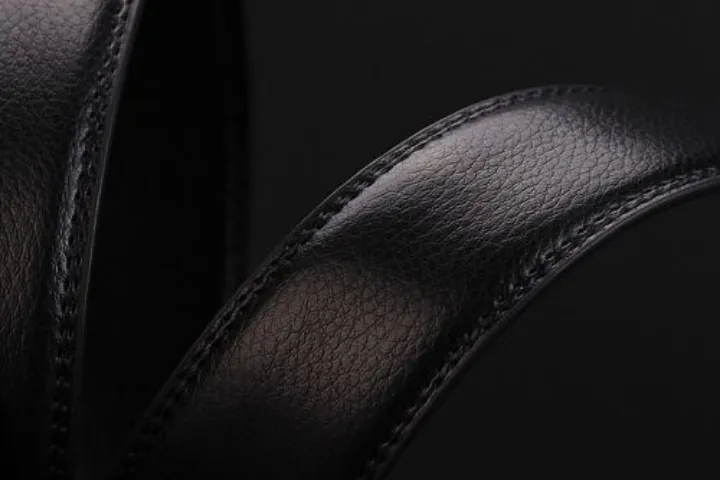
- Useful qualities: A suitable composite can provide a controlled leather-like surface and handle. Different backings and coatings offer design choices.
- Limitations: The word microfiber does not guarantee better strength, breathability or lifespan than leather or other PU materials. Supplier product data must match the exact grade.
Common uses: Dress or casual synthetic belts with an approved multilayer construction.
Care: Follow guidance for the finished composite rather than applying general leather conditioner.
Suitability and purchasing check: Compare thickness, backing, coating adhesion and flex behaviour with other candidates. Inspect holes and folded buckle ends after assembly; use the same evaluation when comparing alternatives.
Specification Comparison: Synthetics vs. Animal Leather
| Material | Identify first | Evaluate on the complete belt |
|---|---|---|
| PU composite | Coating, backing, adhesives and layer thickness | Adhesion, flexing and hole edges |
| PVC | Formulation, thickness and any backing | Flexibility, grip and chemical requirements |
| Rubber | Elastomer formulation and construction | Recovery, hardware interface and ageing |
| Microfiber composite | Fibre base and finish | Surface wear, adhesion and bending |
| Animal leather | Species, layer, finish and temper | Holes, stretch, rubbing and buckle fold |
Exotic-Look and Specialty Surface References
Snake, crocodile, ostrich, stingray and shark names appear in belt searches, but Hoplok does not offer real exotic skins. Use these texture references to brief an embossed cowhide or synthetic alternative.
A photograph cannot verify an animal species or whether a texture is embossed. The images illustrate appearance only and do not represent Hoplok exotic-skin supply. Describe an imitation accurately in the quotation and retail material label; do not transfer supposed strength or lifespan claims from an animal name to a surface pattern.
Snakeskin-Look Belts
A snakeskin-look design uses scale-like patterning. For a fashion belt, approve the pattern on an accurately named cowhide or synthetic substrate.
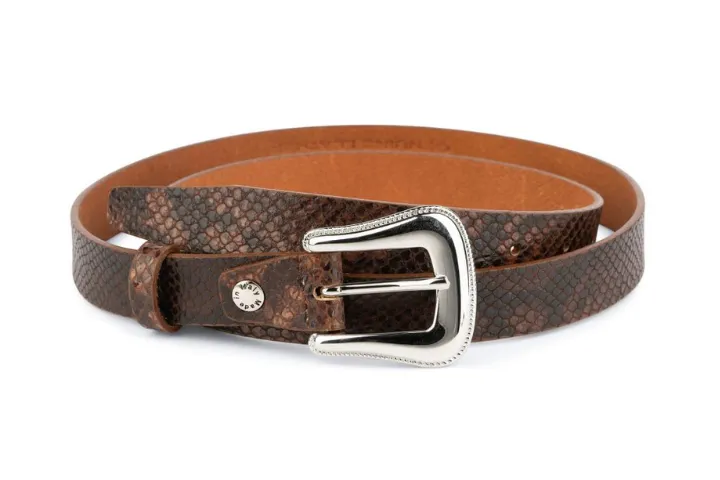
Appearance reference only; real exotic skins are not offered by Hoplok. The photograph does not verify the base material.
- Design brief: Specify scale size, direction and repeat.
- Material choice: Request the feasible embossed cowhide or synthetic substrate, including backing, thickness and finish.
- Sample check: Check whether the repeat looks consistent along a narrow strap and whether colour at the scale edges survives the approved rubbing method.
Care and suitability: Follow the actual substrate and finish guidance. Confirm the finished belt’s fit, colour transfer and flexing, without assuming an exotic-look texture is a performance upgrade.
Crocodile-Look Belts
A crocodile-look emboss uses a scale pattern to create a distinctive surface. An embossed cowhide or synthetic version must be labelled as that material, not sold as crocodile leather.
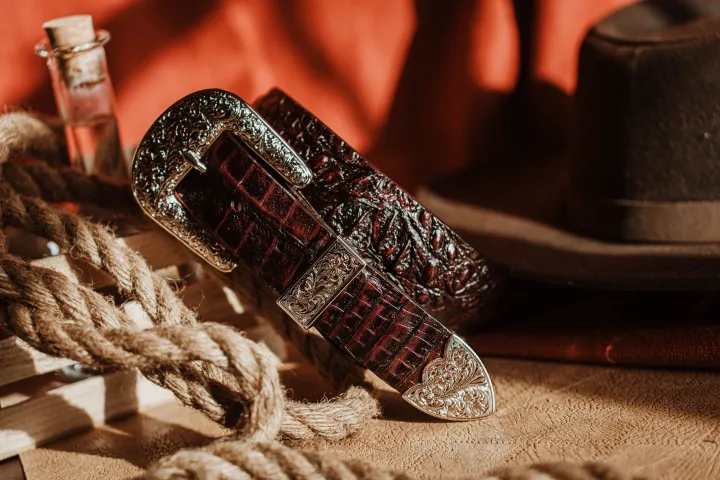
Appearance reference only; real exotic skins are not offered by Hoplok. The photograph does not verify the base material.
- Design brief: Specify scale layout, depth and central alignment.
- Material choice: Request the feasible embossed cowhide or synthetic substrate, including backing, thickness and finish.
- Sample check: Position the pattern on the belt width before cutting. Inspect emboss depth at holes, folds and the keeper; a deep pattern can affect the appearance of those details.
Care and suitability: Follow the actual substrate and finish guidance. Confirm the finished belt’s fit, colour transfer and flexing, without assuming an exotic-look texture is a performance upgrade.
Ostrich-Look Belts
An ostrich-look surface imitates the dotted or quill-mark appearance associated with ostrich leather. The texture can be a design reference without a real exotic hide.
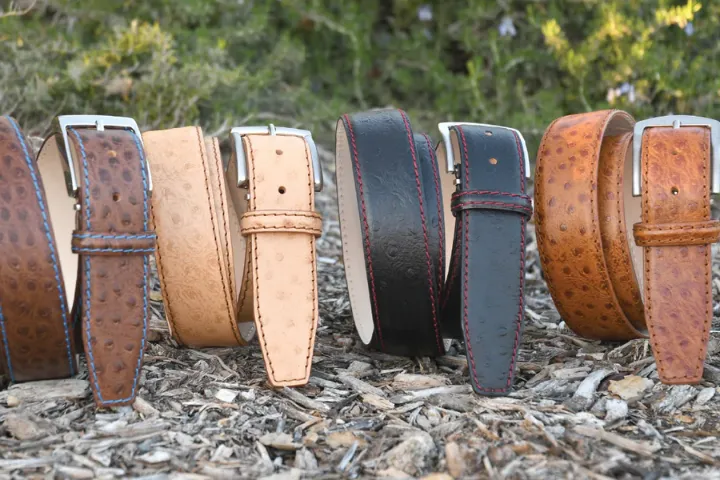
Appearance reference only; real exotic skins are not offered by Hoplok. The photograph does not verify the base material.
- Design brief: Specify dot size, spacing and surface gloss.
- Material choice: Request the feasible embossed cowhide or synthetic substrate, including backing, thickness and finish.
- Sample check: Approve the regularity of the pattern and its appearance next to stitching. Do not describe an imitation as having the tensile properties of an ostrich hide.
Care and suitability: Follow the actual substrate and finish guidance. Confirm the finished belt’s fit, colour transfer and flexing, without assuming an exotic-look texture is a performance upgrade.
Stingray-Look Belts
A stingray-look surface uses a fine beaded or granular effect. A central contrasting area is a design feature that needs deliberate placement if included.
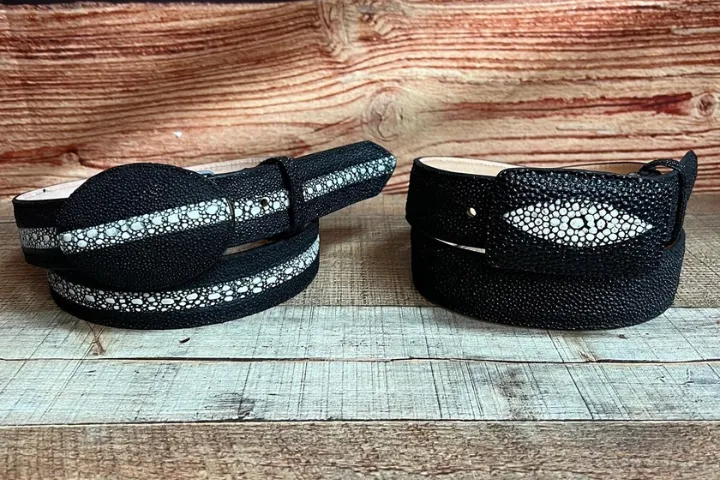
Appearance reference only; real exotic skins are not offered by Hoplok. The photograph does not verify the base material.
- Design brief: Specify grain fineness, contrast and panel placement.
- Material choice: Request the feasible embossed cowhide or synthetic substrate, including backing, thickness and finish.
- Sample check: Review the tactile surface against clothing and check whether cutting and folded edges produce the desired appearance.
Care and suitability: Follow the actual substrate and finish guidance. Confirm the finished belt’s fit, colour transfer and flexing, without assuming an exotic-look texture is a performance upgrade.
Shark-Look Belts
A shark-look reference can describe a ridged or textured surface effect. For Hoplok enquiries, translate the visual reference into an embossed cowhide or synthetic brief.
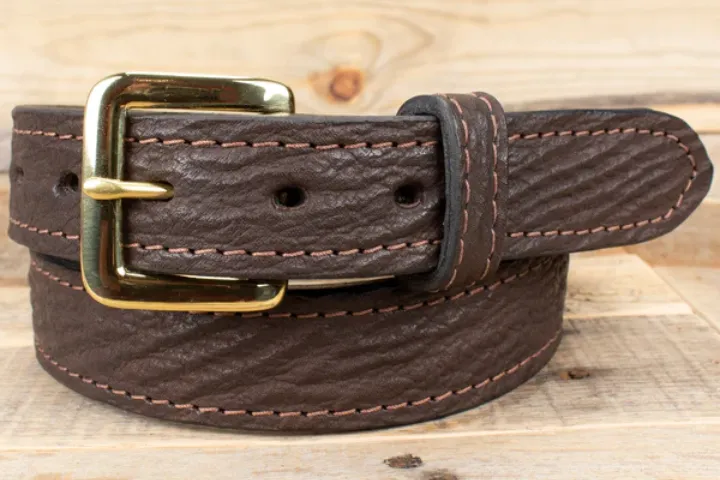
Appearance reference only; real exotic skins are not offered by Hoplok. The photograph does not verify the base material.
- Design brief: Specify ridge direction, repeat and finish.
- Material choice: Request the feasible embossed cowhide or synthetic substrate, including backing, thickness and finish.
- Sample check: Check pattern direction along the strap and the surface around the buckle fold. The image and trade name do not establish material composition or a strength advantage.
Care and suitability: Follow the actual substrate and finish guidance. Confirm the finished belt’s fit, colour transfer and flexing, without assuming an exotic-look texture is a performance upgrade.
Comparison of Exotic-Look Surface Briefs
| Look reference | Brief for an imitation | Avoid claiming |
|---|---|---|
| Snake | Scale repeat and direction on a named substrate | Shed-skin origin or real snakeskin content |
| Crocodile | Scale placement and depth | Real crocodile or a lifetime guarantee |
| Ostrich | Dot pattern and gloss | Real ostrich or superior tensile strength |
| Stingray | Granular texture and contrast placement | Real stingray or a universal wear ranking |
| Shark | Ridge direction and surface finish | Real shark or a durability rating |
Braided, Rope & Straw Constructions
Braiding and weaving describe how strands are assembled. Fibre content, strand thickness, any elastic core and the ends determine fit and performance. A braid is not necessarily elastic, and a straw-like appearance does not prove a natural fibre.
Cotton & Hemp Braids
Cotton and hemp strands can be braided into a rope-like or flat structure. The braid geometry and any added elastic influence how the belt changes length under tension; natural fibres alone do not guarantee stretch recovery.
- Useful qualities: The visible strand pattern suits casual styling. Different braid widths and colours can be explored with leather or synthetic ends.
- Limitations: Fraying, strand displacement and buckle grip require checks. Coatings, cores and trims prevent automatic biodegradability claims for the finished belt.
Common uses: Casual fashion belts using the approved braid and attachment design.
Care: Confirm care for the entire assembly. Machine washing can affect ends, cores, adhesives or metal finishes even if the loose fibre can be washed.
Suitability and purchasing check: Check length change, buckle slip and end attachments. Approve braid tightness and appearance at the keeper.
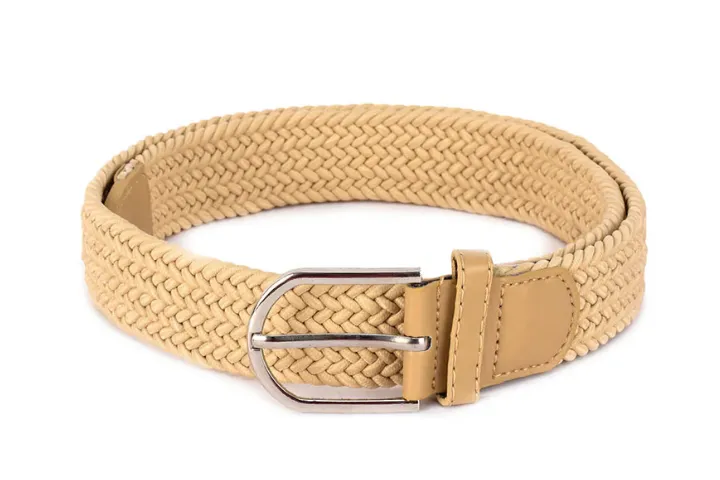
Braided construction reference; fibre content requires supplier confirmation.
Synthetic Braids
Synthetic braids may use polyester, nylon or blends, with or without an elastic component. Specify each component and the structure rather than assuming every synthetic braid behaves alike.
- Useful qualities: Strand colours can create patterns without a printed face. Suitable designs can offer a flexible fashion fit.
- Limitations: Elastic recovery and permanent length change depend on construction. Synthetic braid does not establish tactical or safety suitability.
Common uses: Casual and sport-inspired fashion belts where the hardware and braid provide the intended fit.
Care: Use cleaning validated for strands, elastic and end pieces. Avoid high heat unless specifically approved.
Suitability and purchasing check: Test extension and recovery against an agreed method and fit target. Examine strand wear where the buckle passes through the braid and inspect the end attachments.
Straw Belt
Straw-like belts may use raffia, plant strands or synthetic strips. Identify the actual material. Plaiting interlaces strands, while coiled or woven constructions use different assembly approaches and need different edge handling.
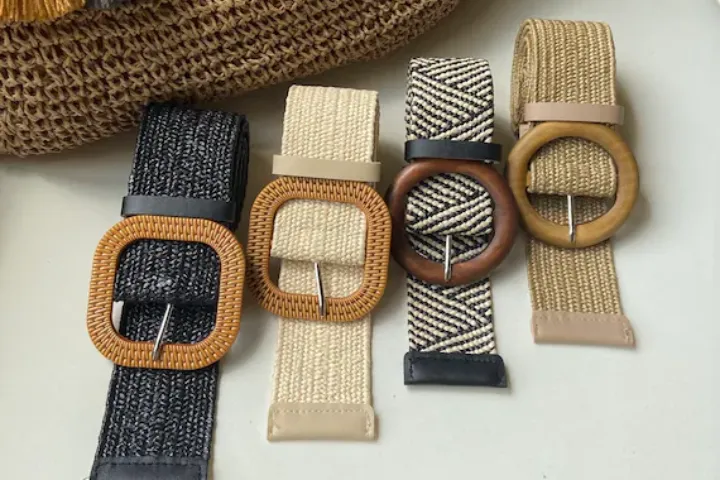
- Useful qualities: An open or textured structure can suit resort-style clothing. Colour, weave width and buckle shape provide visual choices.
- Limitations: Brittle strands, fraying and permanent creases can affect the design. A natural-looking belt is not proof of biodegradable content.
Common uses: Seasonal fashion belts, with feasibility and end attachment confirmed for the particular construction.
Care: Keep to the validated cleaning method. Do not prescribe protective sprays without testing their effect on colour and flexibility.
Suitability and purchasing check: Assess the edges against clothing, handling at the buckle and storage shape. Confirm any lining or backing needed to support the weave.
Styling & Durability Tips
- Plaited styles: Approve strand width, braid tightness and how the buckle interacts with the openings.
- Rope styles: Review comfort, knot or closure design and resistance to slipping in the intended fit.
- Straw-like styles: Check edge containment and handling after packing; avoid sharp creases unless the construction tolerates them.
- Mixed materials: Choose one care procedure that is compatible with every component. A strap’s fibre content does not determine the care of leather ends or glued details.
Comparison Table of Braided, Rope & Straw Belt Constructions
| Construction | Specify | Check |
|---|---|---|
| Cotton or hemp braid | Fibre content, braid geometry and any core | Fit, length change and fraying |
| Synthetic braid | Yarns, elastic content and braid tightness | Recovery and buckle interaction |
| Rope style | Strands, diameter and closure | Comfort and slippage |
| Straw-like weave | Actual fibre or polymer and backing | Creasing, edge containment and attachment |
Materials with Organic, Recycled or Plant-Based Content Claims
These options are often marketed with environmental claims. Separate the claimed attribute—such as organic fibre or recycled content—from whole-product performance and impact. Many plant-based leather alternatives are composites containing polymers, coatings and backing fabrics.
Request the exact material technical sheet, current availability and evidence behind the intended claim. Hoplok material feasibility is confirmed for the project; this list is not a promise that every named specialty material is stocked or offered.
Piñatex (Pineapple Leather)
Piñatex is a branded nonwoven composite using pineapple leaf fibres. Ananas Anam distinguishes its collections and their components; it is not simply a sheet of pineapple fibre or animal leather.
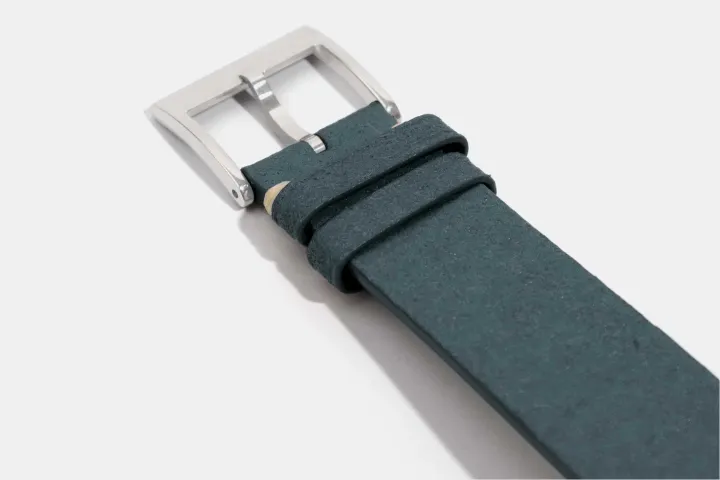
- Useful qualities: Offers a recognisable fibre-based surface and a documented feedstock description. Different collections can support different visual effects.
- Limitations: The finished material is not automatically plastic-free or fully biodegradable. A source material MOQ is not Hoplok’s finished-belt MOQ.
Common uses: Fashion belt concepts where a specific collection and construction pass feasibility and sample review.
Care: Use the collection-specific guidance from Ananas Anam. Avoid substituting generic leather care.
Suitability and purchasing check: Obtain the current composition and technical sheet. Check folding, holes, adhesion and edge finish, and confirm sourcing availability before approving a production brief.
Mushroom Leather
Mushroom or mycelium-based leather alternatives are a group of supplier-specific materials using fungal growth structures. Mycelium is not a plant root, and one brand name should not be treated as the definition of the whole category.
- Useful qualities: Can offer a distinct development route and surface aesthetic. Actual properties depend on the particular material and finishing.
- Limitations: Coatings, binders and backing may alter composition and disposal. Availability, scale and lead time must be confirmed with the named producer.
Common uses: Concept or fashion projects only after source material and manufacturing feasibility are established.
Care: Follow the producer’s exact instructions; no universal conditioning method applies to all mycelium composites.
Suitability and purchasing check: Request a full composition, test data and purchasable grade. Do not promise biodegradability, a fixed growing time or commercial availability on the basis of the category name.
Apple Leather
Apple-based leather alternatives are composites using apple-derived inputs alongside other components. The coating, binder and backing differ by supplier, and the trade description does not disclose the percentage of apple-derived content.
- Useful qualities: May support a specific verified by-product-content story. Surface finish and colour can be evaluated against the design brief.
- Limitations: Plant input does not mean plastic-free, biodegradable or inherently lower impact. Performance cannot be inferred from the fruit name.
Common uses: Fashion concepts where the supplied composite and complete belt construction meet the brief.
Care: Obtain the producer’s care instructions for the exact grade.
Suitability and purchasing check: Ask for total composition and how any claimed percentage is calculated. Evaluate coating flex, holes and edges as with other composites, and confirm the source can support the proposed order.
Cork Belts
Cork-faced belt materials combine a cork surface with supporting layers. The backing, adhesive and any protective treatment are part of the material specification, even when the visible face is cork.
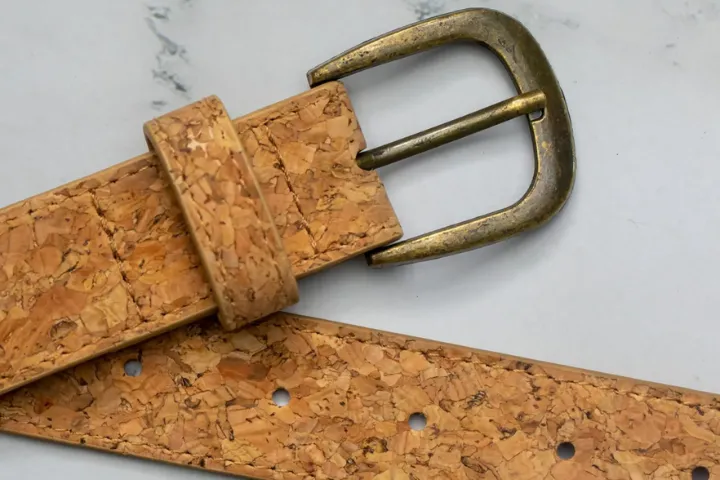
- Useful qualities: Provides a distinctive mottled surface and can support a natural-texture design direction. The complete laminate can be developed for the required handle.
- Limitations: Cork origin alone does not establish a compostable belt or guarantee flexibility. Grain and surface cracking need review at bends and holes.
Common uses: Fashion belt concepts with a suitable laminate, lining and buckle assembly.
Care: Use the laminate supplier’s approved cleaning method and patch-test any product.
Suitability and purchasing check: Check the backing, bond and edge appearance as well as the visible cork. Confirm material-content documentation and avoid transferring claims about raw cork to every assembled component.
Bamboo Belts
Bamboo can mean actual mechanically processed bamboo fibre or rayon/viscose made using bamboo as a feedstock. These are different material descriptions and must not be used interchangeably.
- Useful qualities: A specified textile can offer the desired appearance or handle. The benefit comes from the actual fibre and construction, not the bamboo name alone.
- Limitations: The FTC explains US bamboo textile labelling. Its guidance does not support assuming rayon retains bamboo’s natural antibacterial properties.
Common uses: Textile-faced fashion concepts after the composition and construction are identified.
Care: Use care instructions for the actual fibre blend and assembly.
Suitability and purchasing check: Require accurate fibre-content wording and evidence for any antimicrobial claim. Compare dimensional stability, rubbing and buckle interaction without using an unsupported wellness or environmental rating.
Recycled PET Belts
Recycled PET can be processed into polyester yarn or other material forms. Feedstock may differ, so a recycled claim should identify the verified input and content rather than assuming every material comes from used drink bottles.
- Useful qualities: Can support a documented recycled-content objective while offering different textile constructions.
- Limitations: Recycled origin does not establish superior strength or biodegradability. Coatings, elastic and trim may have different compositions.
Common uses: Casual webbing or braided fashion belts using the specific approved construction.
Care: Validate care on the assembled belt, including end pieces and coatings.
Suitability and purchasing check: Check chain-of-custody and transaction evidence for the intended claim. Textile Exchange distinguishes recycled-content standards; performance still needs separate evaluation.
Organic Cotton Belts
Organic cotton refers to certified agricultural origin, not a weave, fabric weight or finished-belt durability level. It may be used in webbing, braids or a fabric face.
- Useful qualities: Supports a documented organic-content requirement when the supply chain and claim are appropriate. Many construction options remain possible.
- Limitations: Organic does not mean chemical-free, hypoallergenic or automatically compostable as a finished belt. Dyes, finishes, elastic and trim still matter.
Common uses: Casual textile belts whose actual material and assembly meet the specification.
Care: Follow care validated for the complete construction, rather than prescribing machine washing solely because cotton is present.
Suitability and purchasing check: Check the applicable certificate scope and records. GOTS addresses certified fibres and processing stages; organic yarn alone does not make every finished belt GOTS-certified.
Comparison of Content Claims and Material Checks
| Material description | Evidence to request | Separate performance check |
|---|---|---|
| Piñatex | Collection-specific full composition | Folds, holes, edges and care |
| Mycelium-based | Named producer, grade and composition | Availability and assembly suitability |
| Apple-based | Verified content, coating and backing | Flex and layer adhesion |
| Cork composite | Surface, backing and binder | Bend and edge appearance |
| Bamboo description | Actual fibre identity and accurate label | Dimensions and rubbing |
| Recycled PET | Content and supply-chain records | Grip, recovery and wear |
| Organic cotton | Organic content and certification scope | Construction, shrinkage and care |
How to Choose the Right Belt Material
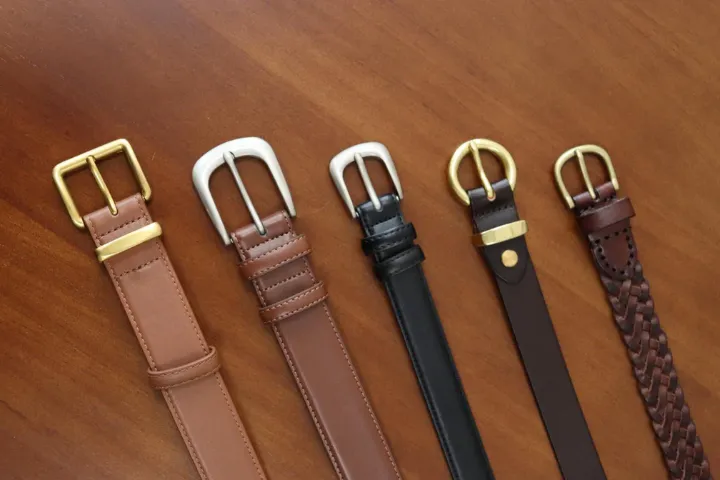
Start with the intended fashion use, target cost and design language. Then develop the complete belt around the material. A shortlist is useful only when the options are compared at the same width, length, thickness, construction and hardware specification.
Matching Material to Occasion
- Formal: A smooth or controlled embossed leather or synthetic surface can support a refined look. Review buckle proportion and finished thickness.
- Business casual: Consider leather or a suitable composite with the desired handle and restrained detailing.
- Sport-inspired fashion: Evaluate webbing or braid for fit and grip, without implying tactical or protective performance.
- Summer and resort: Explore textile or straw-like texture with suitable edges and attachments.
- Content-led collections: Choose the actual documented attribute before deciding what environmental language can be supported.
Budget Considerations
Set a target manufacturing cost and obtain like-for-like quotations. Unsupported retail bands do not show what a brand will pay for a specific production order.
- Material: Compare usable area or width, cutting yield and minimum source quantities.
- Construction: Include cores, lining, edge treatment, stitching and assembly work.
- Hardware: Separate standard components from any custom tooling and finish requirement.
- Commercial scope: Align order quantity, packaging, testing and delivery terms before comparing totals.
A lower initial material price can be offset by added reinforcement or reduced yield. A higher price does not guarantee a longer service life.
Brand Positioning
| Design direction | Options to evaluate | What supports the positioning |
|---|---|---|
| Refined leather collection | Approved smooth, grain or embossed leather | Material clarity, neat edges and consistent finish |
| Contemporary synthetic collection | Specified PU or microfiber composite | Controlled colour, handle and complete composition |
| Documented content story | Relevant organic or recycled materials | Traceable evidence and accurate claims |
| Casual texture | Webbing, braids or straw-like structures | Fit, grip, edge containment and styling |
Prototyping & Sampling with Hoplok
Before bulk production, review the material in the intended belt construction.
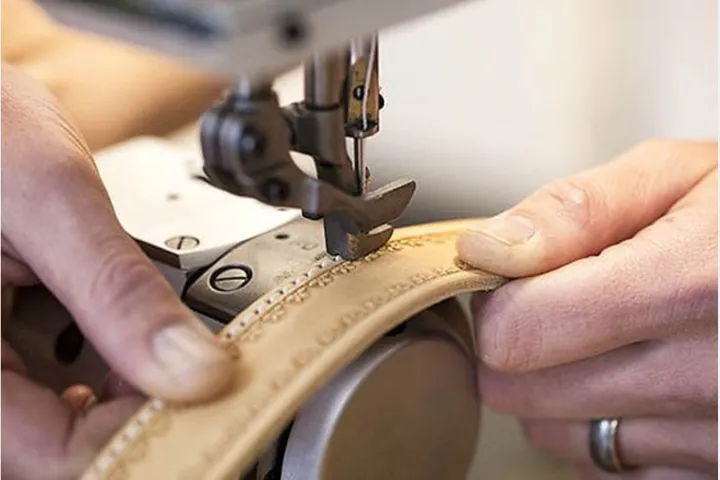
- Share the brief: Include dimensions, material reference, buckle, lining, edge detail, quantity and target market.
- Compare swatches: Review colour and handle under consistent lighting, with full composition and finish details.
- Build the sample: Hoplok belt sampling is typically 2–3 weeks; confirm the development scope and any custom-hardware timing.
- Evaluate the complete belt: Check fit, buckle operation, slippage, holes, folds, edge wear and colour transfer using agreed methods.
- Approve and document: Record accepted appearance, dimensions, materials and revisions so bulk production follows a controlled reference.
Final Decision Checklist
| Decision | Record before approval |
|---|---|
| Material identity | Full composition, leather layer or fibre blend |
| Design match | Texture, colour, handle and construction |
| Cost comparison | Equivalent quantity, hardware, packaging and terms |
| Performance | Agreed method, sample result and acceptance criteria |
| Care | Instructions validated for the complete belt |
| Claims | Evidence tied to the actual material and supply chain |
Conclusion
There is no single best belt material for every collection. The strongest purchasing decision combines a clear material description with a construction that meets the design, fit, care and budget requirements.
Key Takeaways
- Define the material: Separate fibre, construction, finish and leather-layer descriptions.
- Compare the assembly: Check the buckle, holes, edges and any bonded layers together.
- Substantiate claims: Material names do not supply lifetime, test or environmental evidence.
- Control the reference: Approve a full sample and record permitted variation before bulk production.
Next Steps & Hoplok Leather Samples
For a Hoplok custom belt enquiry, send the design and quantity with your preferred material and target market. For a woven strap design, see the braided belt specification guide. Confirmed minimums are 300 pieces for leather belts and 1,000 for PU belts. Belt sampling is typically 2–3 weeks and bulk production 60–90 days; specialty materials, hardware and revisions are confirmed in the project quotation.
Contact Hoplok about belt development to review the specification and available material options. Swatch availability and sample charges should be confirmed for the enquiry.
Frequently Asked Questions (FAQ)
What Is the Most Durable Belt Material?
There is no universal winner based on a material name. Compare the actual leather or textile, finish, core, lining, hardware and assembly against the intended fashion use. A strength result for one component is not a lifespan guarantee for the belt.
How Do I Care for Leather vs. Fabric Belts?
Use care validated for the complete construction. Leather care depends on its finish, while a fabric belt may contain leather ends, adhesives or coatings that cannot be washed. Do not apply a fixed conditioning schedule or machine-wash instruction from the main material name alone.
Are Vegan Leather Belts as Long-Lasting as Real Leather?
Performance varies in both groups. Compare matched samples for flexing, adhesion, colour transfer and wear at the buckle and holes. An animal-free claim requires the full bill of materials and does not establish how long the belt will last.
Which Materials Work Best for Formal vs. Casual Belts?
Formal styling often benefits from a controlled surface and proportionate hardware. Casual styling can use texture from grain, webbing or braids. Either direction still needs the right thickness, handle and assembly; real exotic skins are not part of Hoplok’s offer.
How Can I Test a New Material Before Bulk Ordering?
Review swatches, then build the actual belt with its intended buckle, lining, ends and finish. Agree methods and acceptance criteria for dimensions, fit, slippage, flexing, hole condition and colour transfer. Keep the approved prototype and material references for production comparison.