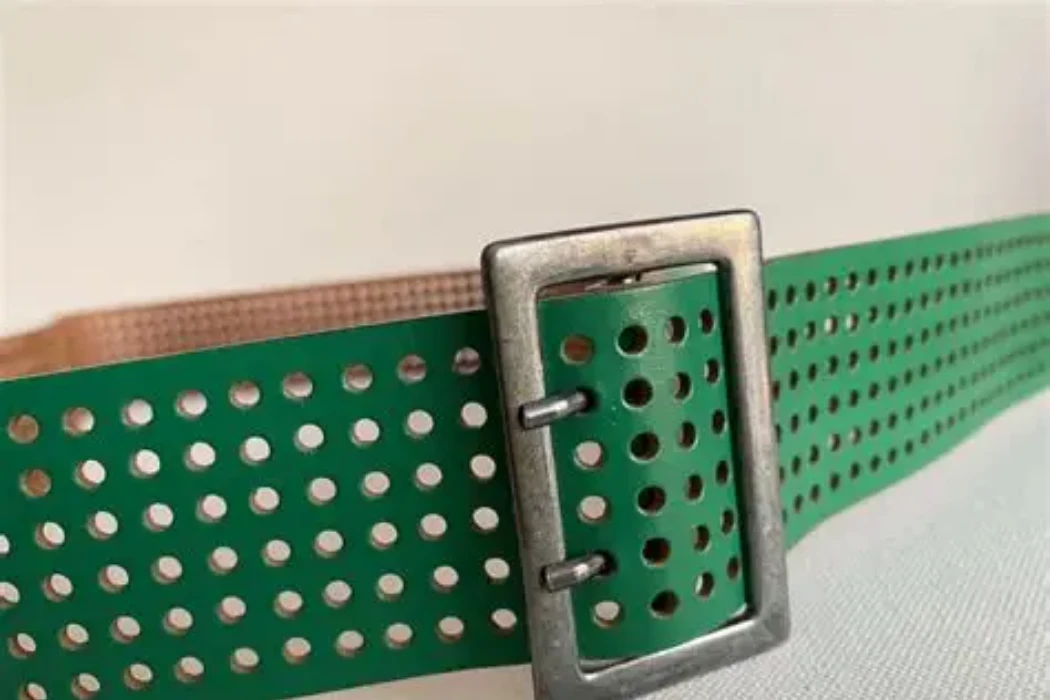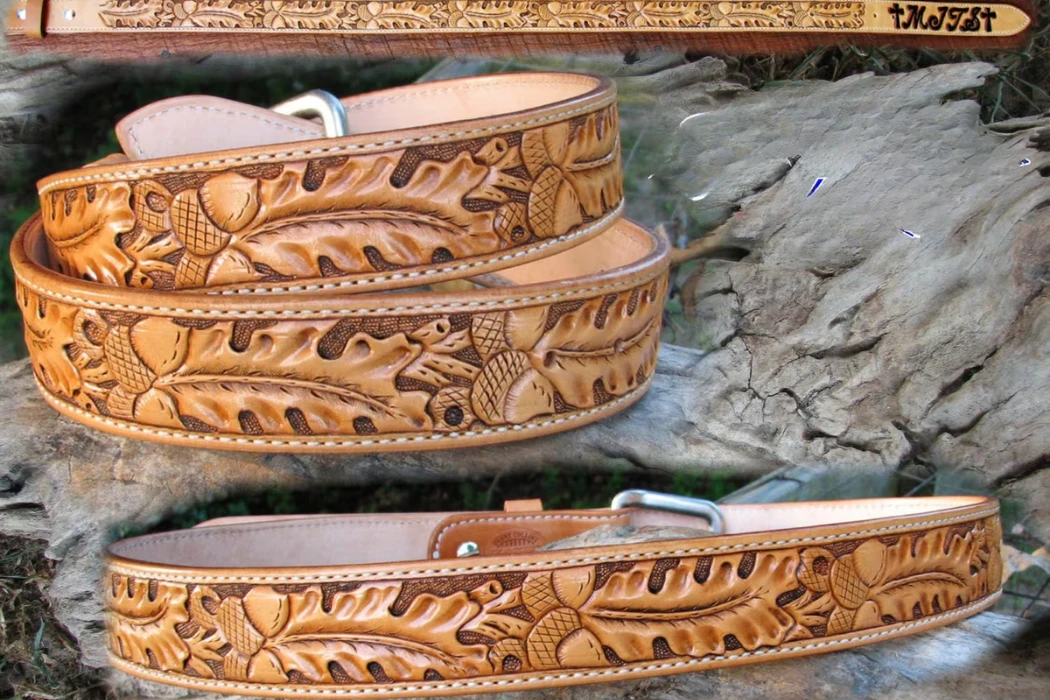
Leather “weight” in ounces is commonly used as a thickness designation. One leather ounce corresponds to approximately 1/64 inch, or 0.4 mm. It is not a reliable instruction to weigh a square foot of an unknown leather and treat that mass as its thickness.
For bags, wallets and belts, specify millimetres together with the measuring method, sampling locations and acceptable variation. Then check the assembled construction: several thin layers can create a bulky fold even when each layer meets its individual specification.
Leather ounces to millimetres
The following values are approximate conversions of the conventional leather thickness unit, rounded for practical reading. A supplier’s “3–4 oz” designation describes a range, not a guarantee that every point measures the same thickness. Tandy Leather’s conversion guide explains this leather ounce convention.
| Leather thickness designation | Approximate millimetres |
|---|---|
| 1 oz | 0.4 mm |
| 2 oz | 0.8 mm |
| 3 oz | 1.2 mm |
| 4 oz | 1.6 mm |
| 5 oz | 2.0 mm |
| 6 oz | 2.4 mm |
| 7 oz | 2.8 mm |
| 8 oz | 3.2 mm |
| 9 oz | 3.6 mm |
| 10 oz | 4.0 mm |
For production, write the agreed metric range directly on the technical pack. If another unit such as “irons” appears on a legacy drawing, obtain its definition and convert explicitly; do not assume its numerical value is interchangeable with ounces. If shipping mass or finished product weight matters, measure that separately.
How to measure thickness consistently
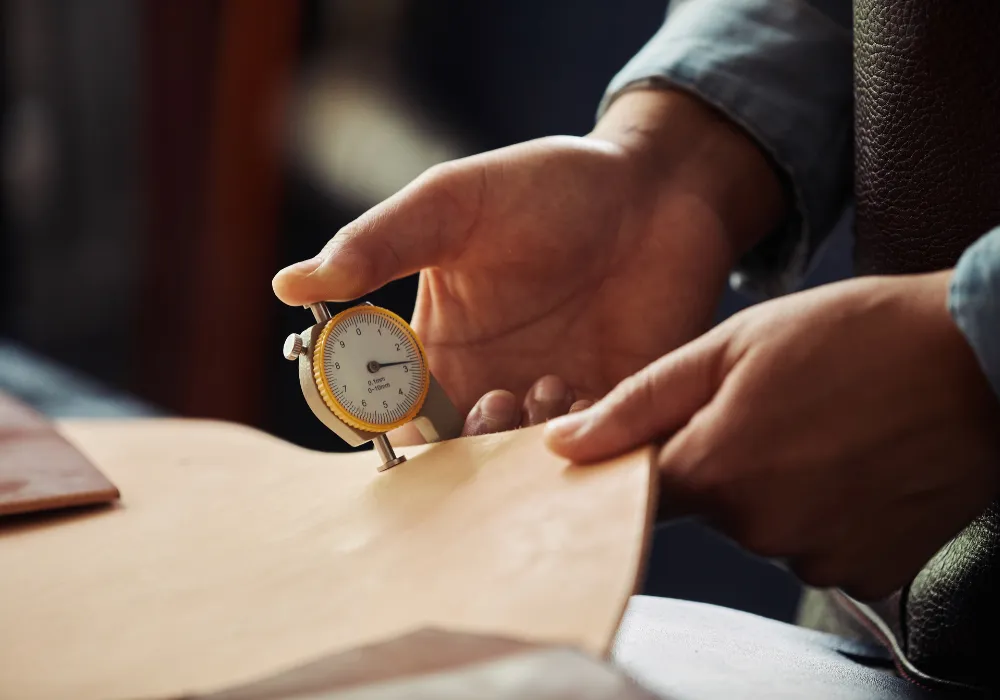
Leather is compressible and may vary across a hide. Instrument contact area, pressure, location and material condition can affect the reading. A handheld caliper may be useful for a quick workshop comparison, but that alone does not demonstrate compliance with a standardized leather thickness method.
ISO 2589:2016 specifies a method for measuring leather thickness. If it is named in your specification, obtain the applicable method and agree who will perform it. Record the instrument and procedure rather than simply writing “measured by ISO” beside a number.
- Identify the material, finish, batch and whether it is before or after splitting or skiving.
- Agree representative locations and the number of measurements for your inspection plan.
- Measure consistently using the agreed instrument and conditions.
- Record individual results, not just an average that could hide thin or thick areas.
- Compare results with the approved range and disposition rule.
There is no Hoplok universal tolerance of plus or minus ten percent for every leather article. Set the allowable variation for the actual component, process and assembly requirements.
Choose thickness by component, not just product name
| Component | Design question | Check on the sample |
|---|---|---|
| Belt strap | Single layer or lined construction; intended bend and hand feel | Buckle fit, hole area, keeper and edge profile |
| Belt buckle fold | Can the folded stack fit and operate correctly? | Fold bulk, fastener seating and local reinforcement |
| Bag body panel | Soft drape or supported shape? | Panel behaviour with lining, reinforcement and intended contents |
| Bag handle or strap | What is the complete layered construction? | Finished dimensions, edges, stitching and attachment |
| Wallet outer panel | How should the closed wallet bend and sit? | Fold behaviour and closed profile |
| Wallet card pockets | How many layers overlap in the design? | Pocket mouths, edge bulk and intended card loading |
A thicker leather is not automatically more durable or more premium. Excess thickness can create an awkward fold or prevent a buckle from working as intended. A thinner component can be appropriate when supported by a suitable construction; its performance still needs evaluation.
Splitting, skiving and the finished stack
Splitting reduces thickness across a material area. Skiving reduces selected areas, such as an edge or fold, to control assembly bulk. State where each requirement applies. A general body-panel thickness should not be mistaken for the target at a skived seam allowance.
Consider a drawing example with three overlapping leather layers each specified at 0.8 mm: the arithmetic sum is 2.4 mm before accounting for adhesive, lining, folds, finish and compression. This is an illustration of stack planning, not a recommended wallet construction or a finished measurement. Measure the actual assembled sample to validate the design.
Mark skived zones and transitions clearly, keeping them consistent with stitch placement and the intended function. Avoid solving a bulky sample by thinning every area indiscriminately. A local change may also affect edge appearance or how an attachment sits.
What to put on a thickness specification
Include component name, material reference, nominal range in millimetres, stage of measurement, measurement method, locations, and any separate skived-zone requirements. Add a drawing section where multiple layers overlap. Keep the finished assembly dimensions alongside the material dimensions.
When a sample feels wrong despite matching thickness, compare stiffness, stretch, surface finish and reinforcement before requesting a thicker or thinner material. Thickness is one variable within the specification.
Review thickness before the bulk order
Inspect the sample in the state in which it will be used: a wallet with its intended contents, a belt with the selected buckle or a bag with its specified support structure. Record the approved construction and any material substitutions that require another review.
For belts, bags or wallets, send a component drawing, material reference and intended thickness range to Hoplok. Resolve thickness, hand feel and fold bulk during sampling rather than relying on an ounce label alone.
Frequently asked questions
Does one ounce of leather mean a square foot weighs one ounce?
In common leather thickness terminology, one ounce denotes approximately 1/64 inch of thickness. Actual mass depends on more than thickness and should be measured separately.
Is a caliper reading automatically an ISO 2589 result?
No. Standard compliance requires the specified method, apparatus and conditions. A quick comparison reading is not sufficient evidence.
Should I choose the thickest leather for durability?
No. Match thickness to the construction and assess the finished product. Excess bulk can impair fit, folding or assembly.