Introduction
Nappa is a familiar name on soft leather bags, clothing and upholstery. For a buyer, however, the name leaves important questions open: which animal supplied the hide, what grain and finish are present, and how will the material perform in the intended product?
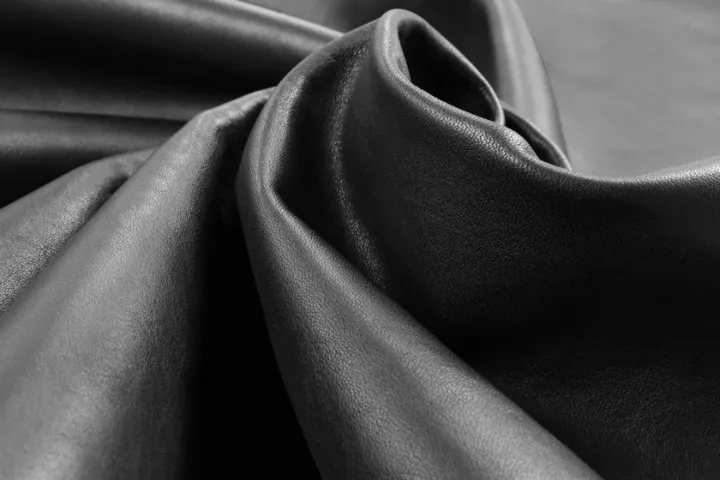
Nappa leather generally describes soft, supple, smooth leather. It is not an animal species, a synthetic polymer or a complete purchase specification. Confirm the substrate, grain, tannage, finish and test requirements separately instead of treating the name as a universal quality grade.
This guide follows its historical background, production, finishes, uses and care, then explains how to compare actual materials. The aim is to help brands translate a desired soft handle into a clear material brief.
What Is the History of Nappa Leather?
The name is linked to Napa, California. The City of Napa identifies Sawyer Tannery as the birthplace of Nappa leather and notes that makers elsewhere adopted the name. Modern use therefore does not establish where a leather was produced.
Nappa’s Foundational Origins
Sawyer Tannery was founded in 1869, according to the city’s historical record. The history connects the name with a place and manufacturing tradition, but it does not define the specifications of every material now marketed as Nappa.
The American Leather Chemists Association dictionary records a traditional Napa definition involving drum-coloured sheepskin glove leather and several possible tannages. This historical meaning is more specific than much modern commercial usage.
Developments in Soft-Leather Production
Softness is achieved through a combination of material selection, tanning, retanning, lubrication and mechanical processing. Different combinations can produce a supple handle. The name alone cannot tell a buyer which chemical route was used or whether a particular surface treatment is present.
Cultural and Global Influences
Nappa appears in fashion and automotive product descriptions, reflecting demand for a soft tactile surface. Those uses are examples of applications, not proof that all Nappa grades share one performance level. A garment leather and a car-seat leather may have very different requirements.
Modern Sourcing of Nappa
Ask for production origin and supplier records rather than assuming Nappa is Italian or Californian. Country of production, grain condition and finish are separate facts. A premium country label also does not establish an automatic price uplift or environmental advantage.
Historical Context at a Glance
| Context | Documented point | Meaning for buyers |
|---|---|---|
| Sawyer Tannery | Founded in Napa in 1869; city identifies it with Nappa’s origin | The historical name has a geographic connection |
| Traditional terminology | ALCA describes a sheepskin glove-leather category | Historical definitions may be narrower than marketing usage |
| Adoption elsewhere | Napa records use of the name by other makers | The label alone does not establish origin |
| Current purchasing | Soft leathers are offered for different applications | Confirm the actual construction and performance brief |
How Is Nappa Leather Produced?
Soft leather production combines a suitable hide or skin with tanning, retanning, dyeing, fatliquoring and mechanical softening. The finished surface may be aniline, semi-aniline or pigmented. Nappa does not require a single universal recipe.

Hide Sourcing and Preparation
Specify the animal species and grain requirement before comparing samples. Cow, calf, sheep and other suitable skins differ in size and structure, while variation also exists within each category. Do not use softness alone to identify species or grain.
- Selection: Agree acceptable surface characteristics and usable cutting areas for the design.
- Preparation: Match thickness, handle and intended construction rather than assuming every Nappa product must use flawless young-animal skins.
Tanning Techniques for Nappa
Chrome tanning is one route to soft leather, and other tannages or combinations can also be used. Tanning stabilises the hide; subsequent operations influence handle and finish. A tannage name does not establish one softness, colour range or environmental outcome for every material.
Ask the supplier to identify the actual route when it matters to the product brief or chemical requirements. Do not confuse aniline colouring or finishing with the tanning process itself.
Dyeing and Finishing Processes
Dyes and pigments have different roles. Soluble dyes colour leather without themselves forming an opaque pigment layer; pigmented finishes provide surface colour and coverage. “Water-soluble pigments” is not an accurate description of aniline dyeing.
Fatliquoring introduces lubricating agents to influence handle, alongside drying and mechanical softening. It is not simply a final application of natural oil. Finishing then balances appearance, touch and the required protection.
- Aniline: Emphasises visible natural character; confirm the actual protective treatment and care needs.
- Semi-aniline or pigmented: Offers different levels of coverage; approve the resulting handle and performance on a sample.
Environmental Aspects of Production
Assess chemical management, water and energy use, emissions and waste controls for the actual production route. Chrome-free or vegetable-tanned does not automatically mean lower impact across every category. Request evidence with clear boundaries when environmental performance influences material selection.
Production at a Glance
| Stage | Action | Buyer checkpoint |
|---|---|---|
| Selection | Choose skin or hide and grain specification | Species, appearance range and usable areas |
| Tanning and retanning | Develop stability and material characteristics | Actual tannage and relevant requirements |
| Dyeing and softening | Develop colour and handle | Shade reference and softness of approved material |
| Finishing | Apply the chosen surface system | Appearance, rub fastness, flex and care compatibility |
What Are the Defining Characteristics of Nappa Leather?
A soft, supple handle is the central expectation. Strength, stain resistance, breathability and ageing still depend on the exact leather and finish. Evaluate those properties separately rather than assigning all Nappa a fixed score.

Texture and Sensory Qualities
Compare drape, surface drag, compressibility and the way the material folds in the hand. These observations help specify a desired handle but do not authenticate the grain. Retain an approved swatch and, for a bag, an assembled sample because lining and reinforcement change the feel.
Durability and Strength Profile
A soft material is not automatically weak or strong. Thickness, fibre structure, finish and construction affect tensile, tear and flex behaviour. Request relevant tests for the intended product instead of a generic five-to-fifteen-year lifespan.
Pay particular attention to seams, straps, corners and folding areas in the finished design. A soft face leather may need reinforcement at a handle attachment even if it performs well in a material test.
Breathability and Flexibility
The finish and full assembly influence moisture transfer and comfort. Do not assume that every Nappa is uncoated or that every synthetic alternative is impermeable. Where breathability is a purchasing requirement, specify a suitable method and compare equivalent constructions.
- Clothing or gloves: Evaluate the relevant material properties together with the lining and fit.
- Bags and wallets: Check folding, shape retention and reinforcement; maximum softness is not the objective for every component.
Moisture Handling
More open finishes can mark readily when exposed to water or oils. A protective surface can change that response but does not automatically make the article waterproof. Review the actual finish and seams, and agree suitable care instructions.
Ageing and Appearance
Some leathers develop visible patina, while others mainly show wear in the finish. Nappa does not guarantee beautiful ageing or immunity to peeling: a coating on real leather can crack or lose adhesion. Compare an aged or wear-tested sample where that behaviour matters.
Characteristics Comparison
| Characteristic | What Nappa indicates | What full-grain indicates | What to verify |
|---|---|---|---|
| Handle | Expectation of softness and suppleness | Not a softness specification | Approved swatch and assembled feel |
| Durability | No universal result | No fixed lifespan or test score | Method-specific material and product evidence |
| Breathability | Depends on finish and assembly | Depends on finish and assembly | Relevant measured property when required |
| Stain resistance | Finish-specific | Finish-specific | Surface response and recommended care |
What Are the Different Types of Nappa Leather?
Grain condition and finish describe different aspects of leather. Full-grain Nappa may have different surface finishes; aniline, semi-aniline and pigmented describe appearance and coverage rather than separate animal species or universal durability grades.

Full-Grain Nappa Variants
Full-grain means the original grain surface has not been removed by sanding or buffing. It does not mean untreated or necessarily uncoated. If full-grain is required, state it explicitly alongside the Nappa handle and finish reference. Leather and Hide Council guidance explains the grain terminology.
Aniline Nappa Styles
Aniline leather keeps natural surface character visible and can have a particularly open feel. It may show variation and be more sensitive to marking. Review the supplier’s precise finish description instead of assuming every aniline article has absolutely no protective treatment.
Semi-Aniline Nappa Options
Semi-aniline finishes balance visible character with light pigmentation or protection. The exact amount and performance vary. Approve colour uniformity and handle together, especially if the design pairs panels from different areas of a hide.
Pigmented Nappa
Pigmented finishes can provide a more uniform appearance and help meet particular care or wear requirements. Their presence does not automatically remove softness. Assess the actual coating rather than assuming every pigmented leather is stiff or every thicker finish is better.
The Council’s finish definitions provide a useful basis for describing these options in a material brief.
Perforated and Embossed Versions
Perforation or embossing adds another specification layer. Check hole or pattern size, repeat and placement, then review its effect on appearance and the assembled design. A perforated sample’s behaviour cannot automatically be inferred from an unperforated report.
Finish Options at a Glance
| Finish | Visual aim | Potential benefit | Trade-off to review | Quote basis |
|---|---|---|---|---|
| Aniline | Visible natural character | Open-looking surface | Marking and shade variation | Species, selection, thickness and exact finish |
| Semi-aniline | Character with some coverage | Balance of appearance and protection | Actual handle and uniformity | Same specification and quantity as other candidates |
| Pigmented | More uniform colour | Finish tailored to use requirements | Surface feel, adhesion and wear | Coating system and required evidence |
How Does Nappa Compare with Other Materials?
Nappa, genuine leather and full-grain are not three mutually exclusive quality grades. Compare handle, grain and finish separately. Suede, nubuck and synthetic materials introduce different surface or substrate characteristics that also need their own specification.

Nappa vs. Genuine Leather
Genuine leather is a broad real-leather description, not an automatic term for low-quality split leather. Nappa made from leather is genuine leather too. Ask what the supplier means by the label and obtain the actual grain and construction details before comparing prices.
Nappa vs. Nubuck or Suede
Nappa usually presents a smooth surface, while nubuck and suede have a nap. Nubuck is buffed on the grain side; suede generally exposes a fibrous flesh-side or split surface. Their tactile and visual differences do not create a universal ranking of quality. Review the Council’s suede and nubuck definitions when specifying the surface.
Nappa vs. Full-Grain Leather
A leather can be both Nappa and full-grain. Full-grain refers to retained grain; Nappa communicates a soft style or handle. Full-grain is not raw, untreated hide and need not be stiff. Put both terms in the specification only when both accurately describe the required material.
Nappa vs. Synthetic or Faux Leather
Natural leather and coated textiles have different substrates. Synthetic alternatives can vary in handle, coating and backing and are not all cheap, shiny or waterproof. Compare equivalent thicknesses, surface requirements and assemblies, then use the correct material description in retail copy.
Comparison at a Glance
| Term | What it describes | What it does not establish | Buyer check |
|---|---|---|---|
| Nappa | Soft, supple smooth-leather expectation | One species, finish or performance grade | Detailed material specification |
| Genuine leather | Broad leather description | Automatic low quality or split construction | Grain and layer declaration |
| Nubuck or suede | Napped leather surfaces | Universal high maintenance or low strength | Surface type, care and relevant tests |
| Synthetic leather | Leather-like non-leather construction | One polymer, fixed price or waterproof article | Coating, backing and assembly |
What Are the Pros and Cons of Nappa Leather?
The main attraction is a supple tactile surface. The main trade-offs depend on the selected finish and product: marking, shape support, cutting variation and cost should be assessed on actual candidates.

Primary Advantages
- Softness: Can support a comfortable or fluid design where a rigid material would work poorly.
- Appearance: Smooth surfaces and suitable finishes offer different levels of natural character or colour uniformity.
- Design flexibility: A soft face material can work with a chosen lining and reinforcement to create the intended shape.
- Colour options: Confirm the offered colours and approval process rather than assuming every shade is available.
Notable Disadvantages
- Marking: Open finishes may be less forgiving of spills and handling. Set the appearance expectation with the buyer.
- Construction: Softness can require support at pockets, edges or attachments, adding material and work.
- Cost: Species, selection, usable area and finish affect the quote. Nappa is not a fixed price category.
- Care: Instructions must match the actual finish and any decoration.
Is Nappa Leather Worth It?
It can be a good choice when the soft handle contributes to the product’s intended experience and the construction meets its requirements. Compare the complete cost and approved sample. A hypothetical bag price and ten-year life do not prove value for a different product.
What Are the Common Uses of Nappa Leather?
Soft leather is used in bags, wallets, clothing, footwear, upholstery and automotive interiors. Each application needs a suitable grade. A car-seat specification should not automatically be transferred to a handbag or glove.

Automotive Applications
Automakers use Nappa in some interior specifications. For example, BMW’s 2021 5 Series announcement listed Nappa as an upholstery option. This is a documented application example, not evidence of current availability in every model or a general belt-and-bag material standard.
Fashion and Accessory Roles
For handbags and wallets, assess the balance between softness and support. Handle anchors, card slots and folded edges can need different construction details even when they use the same face leather.
- Bags: Check drape, panel shape, reinforcement and seam appearance on the assembled sample.
- Small goods: Check fold bulk, pocket retention and edge finishing rather than judging only the flat swatch.
For a sourcing brief, compare custom leather bag construction or custom wallet development against the approved material.
Furniture and Interior Uses
Upholstery requires its own performance and care specification. A soft touch does not establish resistance to sunlight, repeated contact or cleaning. Furniture is an application example here; confirm a supplier’s actual product scope separately.
Uses Overview
| Application | Design interest | Main specification question |
|---|---|---|
| Automotive interiors | Surface feel and appearance | Automaker’s application requirements |
| Handbags | Drape and tactile handle | Panel support, attachments and wear |
| Footwear | Flexibility and fit | Footwear-specific construction and tests |
| Furniture | Comfort and appearance | Upholstery use and cleaning requirements |
How Do You Care for Nappa Leather?
Identify the finish and follow the product maker’s instructions. Start gently, test approved products in an inconspicuous area and avoid soaking or direct heat. There is no universal conditioner or three-to-six-month schedule for every Nappa item.
Routine Cleaning
Use a clean soft cloth for loose dust where suitable. A damp cloth or cleaner should be used only as recommended for the actual finish; an absorbent aniline surface may mark with water. Avoid strong rubbing and household-cleaner experiments.
Stains and Scratches
Blot a fresh spill gently rather than spreading it. For persistent stains or surface damage, seek advice appropriate to the finish. Rubbing fingers or applying oil can darken some leathers and is not a general scratch-repair method.
Conditioning
Condition only when the care instructions recommend a compatible product. A heavily protected surface and an open finish can respond differently. Follow the product’s application and removal instructions rather than a fixed absorption time.
Water Protection
A protective spray is not automatically suitable for all Nappa and does not make the finished item waterproof. Check compatibility with the leather, colour and any decoration before use. Keep damp goods away from heaters and follow the maker’s drying advice.
Care Plan
| Task | Method | When | Key check |
|---|---|---|---|
| Dust removal | Suitable clean soft cloth | As needed | Avoid abrasive particles and hard rubbing |
| Cleaning or conditioning | Finish-compatible product if recommended | According to maker’s guidance | Test inconspicuously first |
| Protection and storage | Suitable storage and any approved treatment | According to use conditions | No automatic waterproof claim |
Leather Naturally’s care guidance provides general principles; the product’s specific finish and manufacturer’s instructions remain important.
Is Nappa Leather Sustainable?
Nappa’s name, price and softness do not establish sustainability. Review sourcing, manufacturing controls, material use, expected service and end-of-life evidence for the actual product. Separate facility certification from product and animal-welfare claims.
Production’s Environmental Footprint
Compare the actual tannage, finishing route and facility controls. Water, chemicals, energy, emissions and waste all matter. A chrome-free label does not by itself prove a lower footprint, and a high selling price cannot substitute for process evidence.
Ethical Sourcing Practices
LWG’s Leather Manufacturer Standard assesses facilities against its defined scope. Check the current certificate, facility and relevant records. Do not treat an LWG rating as a blanket animal-welfare certificate, complete farm traceability or proof of every finished-product chemical requirement.
What Determines Nappa Pricing?
Ask for a current quote stating species, grain, thickness, finish, colour, quantity, usable area and delivery terms. Compare quotations on the same unit and specification. A fixed dollar-per-square-foot range or automatic Italian premium cannot describe every Nappa offer.
Sustainability Potential
Designing a product that meets its intended function, using material efficiently and providing suitable care can support responsible use. Substantiate recycled, traceability or environmental claims individually. A forecast lifespan should not be presented as measured evidence without a basis.
Frequently Asked Questions
For buying decisions, translate the word Nappa into a full material description and an approved sample. The questions below separate the name from grain, performance and care.
What is Nappa leather?
It generally describes soft, supple smooth leather. Historical definitions are more specific, while commercial usage varies. Ask for animal species, grain, tannage and finish to identify the actual material.
Is Nappa leather the highest quality?
There is no universal ranking in which Nappa wins every property. Judge its suitability by the intended handle, appearance, construction and test requirements. Softness alone does not prove durability.
Nappa leather vs. genuine leather?
They are not opposing grades. Nappa made from leather is genuine leather. The broad genuine-leather label does not establish whether a product is full-grain, corrected-grain or split.
How should I care for Nappa leather?
Follow the maker’s finish-specific instructions, use gentle cleaning and test approved care products inconspicuously. Do not apply conditioner or protective spray on a fixed schedule without checking compatibility.
Is Nappa leather waterproof?
The name does not establish waterproofing. Surface treatment may improve resistance to marking, but the complete item’s seams and openings matter too. Keep it away from unnecessary water exposure.
What does Nappa leather cost?
The quote depends on species, selection, thickness, finish, colour, quantity and commercial terms. Compare actual offers against the same specification rather than relying on one market-wide price range.
Conclusion
Nappa is useful shorthand for a desired soft-leather experience, but it leaves grain, finish, performance and origin to be specified. Build the purchase brief around those facts, retain an approved sample and review changes before production.
Develop a Product Around the Right Soft Leather
Send Hoplok the intended bag or wallet design, desired handle, material requirements and quantity. Confirm the proposed grade and finished construction during sampling. Leather bag minimums are 200 pieces, leather wallet minimums 300 pieces; PU versions have 1,000-piece minimums. Bag sampling takes 3–4 weeks and bulk production takes 60–90 days. Confirm the wallet development schedule by project.