Sourcing managers today face a complex balancing act. You need to secure high-quality leather belts that meet aesthetic demands, but you also must strictly adhere to tightening environmental regulations. If you ignore these standards, you risk severe penalties, supply chain disruptions, or retail bans in key markets like Europe and the USA. This is where the Leather Working Group (LWG) Gold certification becomes your most critical asset. It represents the absolute pinnacle of environmental stewardship, awarded only when a tannery achieves a minimum score of 85% across 17 distinct audit categories, including water usage, energy consumption, and chemical management.
Major global brands now treat this certification as a non-negotiable entry ticket rather than an optional bonus. Understanding these protocols is essential for risk management. For a broader view of the entire process, a sustainable belt manufacturing guide is a valuable resource. However, knowing the specifics of the Gold rating itself ensures you select the right partners for your long-term supply chain.
What Exactly Is the Leather Working Group (LWG) Audit?
The Leather Working Group (LWG) audit is the global standard for assessing the environmental performance of leather manufacturers. It is a rigorous on-site inspection conducted by approved auditors to verify sustainable practices. The protocol evaluates a tannery across 17 critical sections, ranging from water and energy usage to chemical management and waste treatment. This certification gives brands proof that their leather supply chain respects the planet.
The Scope of the Environmental Audit
In the past, brands had to trust a factory’s word regarding their environmental impact. Now, the LWG audit replaces trust with data. Founded in 2005 by major brands and technical experts, the group designed a protocol that covers every step of the leather-making process. The audit examines how raw hides are turned into finished leather while minimizing the ecological footprint. It is not a one-time pass; tanneries must be re-audited every 24 months to maintain their status.
- Water Usage Tracking: Auditors calculate the exact water consumption per square meter of leather produced. Factories must demonstrate they are reducing water waste year over year.
- Energy Management: The audit measures total energy intake, encouraging tanneries to switch to renewable sources like solar or biomass.
- Chemical Safety (RSL): Strict management of restricted substances ensures that no banned chemicals, such as Chrome VI, enter the final product or the environment.
- Effluent Plant (ETP) Performance: This is often the most critical section. It verifies that all wastewater is thoroughly treated and cleaned before it leaves the factory grounds.
- Air and Noise Emissions: The facility must control what it releases into the air, ensuring local air quality remains safe for workers and the community.
- Raw Material Traceability: You must prove where your hides come from. This prevents the sourcing of hides from areas associated with deforestation, such as the Amazon biome.
This holistic approach means that an LWG-certified facility has full control over its inputs and outputs. Because the audit covers these 17 sections in detail, a brand can be confident that the leather is safe, traceable, and made with respect for the environment.
How Is the LWG Gold Rating Actually Calculated?
Achieving a medal rating is not about getting a good average score; it is about consistent excellence across the board. The audit assigns a percentage score to each of the 17 sections. To secure a specific medal, a tannery must meet the minimum percentage requirement in every single critical section. This prevents factories from hiding poor waste management behind high energy efficiency scores.
Understanding the Medal Thresholds
The LWG classifies compliance into four distinct levels, with Gold being the standard for premium global brands. Each level represents a significant step up in environmental control and operational discipline.
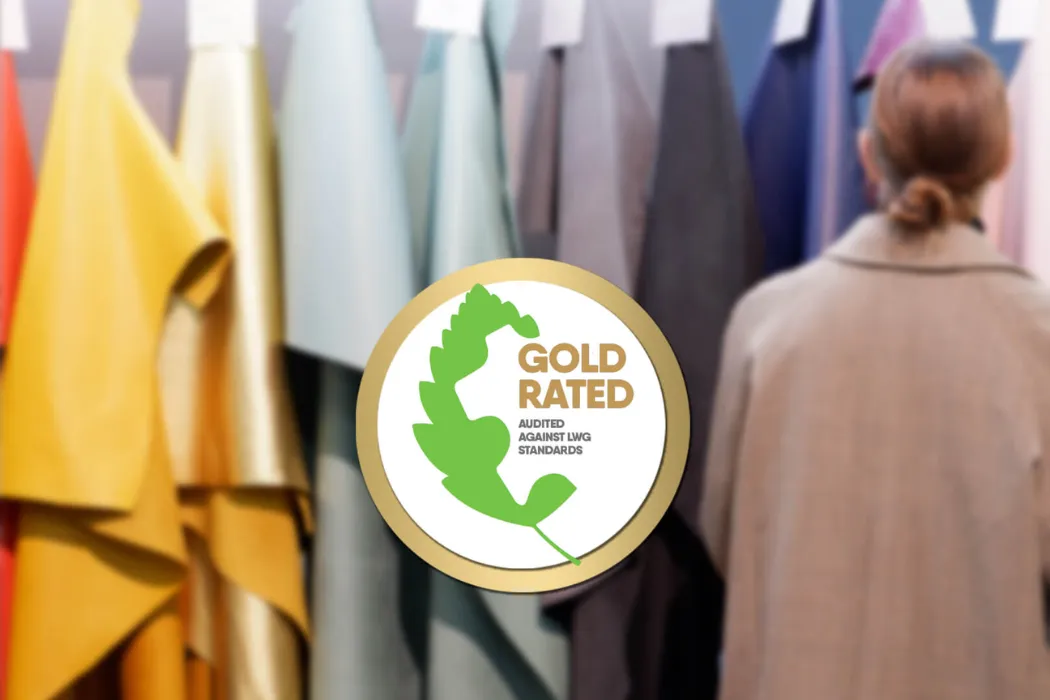
- Gold Rated (85% min): The facility must score at least 85% in all critical sections. This indicates industry-leading environmental practices.
- Silver Rated (75% min): The facility must score at least 75%. This is a respectable standard but often insufficient for top-tier luxury clients.
- Bronze Rated (65% min): The facility must score at least 65%. This shows basic compliance but leaves room for significant improvement.
- Audited (Lower than 65%): The tannery passed the minimum standards to be rated but did not achieve a medal score.
Most luxury and major retail brands now mandate Gold or Silver status to ensure their corporate social responsibility (CSR) targets are met.
| Medal Level | Minimum Score Required | Critical Section Rule |
|---|---|---|
| Gold | 85% | Must pass ALL critical sections |
| Silver | 75% | Must pass ALL critical sections |
| Bronze | 65% | Must pass ALL critical sections |
The Strict “Fail One, Fail All” Mechanism
The most challenging aspect of the LWG audit is its refusal to compromise on critical data. A tannery cannot compensate for a poor water treatment score by having excellent air emission data.
- Critical Sections: Areas like the Effluent Treatment Plant (ETP) and Chrome VI management are non-negotiable.
- Automatic Failure: If a tannery scores 90% overall but drops to 50% in just one critical section, they lose their medal status entirely.
- Continuous Improvement: This rule forces manufacturers to address their weakest links rather than just polishing their strengths.
This rigor is why an LWG Gold certificate is so valuable. It guarantees that there are no hidden environmental liabilities in your supply chain.
Why Do Major Fashion Brands Require LWG Gold Belts?
For global fashion giants, demanding LWG Gold leather is not just about saving the planet; it is a calculated business decision to protect their bottom line. By sourcing exclusively from Gold-rated tanneries, brands insulate themselves from legal liabilities, bad press, and locked markets. It serves as a comprehensive insurance policy against the hidden risks of leather manufacturing.
Mitigating the Risk of Toxic Chemical Scandals
The biggest nightmare for a fashion brand is a product recall due to toxic chemicals. If a belt is found to contain banned substances like restricted azo dyes, the damage to the brand’s reputation is instant and costly.
- Restricted Substance List (RSL) Adherence: Gold-rated tanneries have the strictest chemical management systems. They document every chemical used, ensuring full compliance with international regulations like REACH (Europe) and California Prop 65 (USA).
- Chromium VI Prevention: Poorly managed tanning can result in the formation of Chromium VI, a known allergen and carcinogen. LWG audits specifically check for the controls that prevent this chemical transformation.
- Zero Discharge of Hazardous Chemicals (ZDHC): Many Gold tanneries also align with ZDHC guidelines, ensuring that the wastewater released back into the environment is free from harmful toxins.
Sourcing from a certified facility drastically reduces the chance of your products failing testing at the border. It shifts the burden of chemical safety from the brand’s internal checks to the manufacturer’s verified process.
Validating “Sustainably Sourced” Marketing Claims
Modern consumers are skeptical of greenwashing. They demand proof. Using LWG Gold leather provides the verified data needed to back up sustainability claims on product hang tags and marketing campaigns.
- Verifiable Claims: Brands can legally and confidently state that their leather comes from environmentally responsible manufacturers.
- Investor Appeal: Publicly traded companies must report on their Environmental, Social, and Governance (ESG) performance. High percentages of LWG-certified leather improve these scores, attracting ethical investors.
- Market Access: Some major retailers now refuse to stock leather goods that do not carry a recognized sustainability certification. LWG Gold is the “VIP pass” into these high-end retail channels.
Ultimately, this certification transforms leather from a liability into a marketing asset. It tells the customer that the brand cares about quality and the environment in equal measure.
Does LWG Certification Guarantee Chemical Safety and Traceability?
This is a common misconception among buyers. While LWG certification is the gold standard for environmental processing, it is not a substitute for product safety testing on the final goods. It certifies the factory’s process, not the individual chemical content of every single belt strap produced. However, it does enforce a rigorous framework that makes chemical safety much easier to achieve.
The Difference Between Process Audits and Product Testing
The LWG audit verifies that a tannery has the correct systems in place to manage dangerous chemicals. It checks that the factory knows exactly what chemicals are entering the building and how they are stored.
- Chemical Management Systems: The audit requires a tannery to have a dedicated team managing the Restricted Substances List (RSL). They must prove they purchase chemicals only from approved suppliers who comply with ZDHC (Zero Discharge of Hazardous Chemicals) standards.
- The Chromium VI Risk: The audit specifically assesses the conditions that prevent Chromium VI formation, such as controlling the pH levels and storage temperature of the leather. A Gold-rated tannery has verified controls to prevent this carcinogen from forming.
- Gap in Batch Testing: An LWG certificate does not test every batch of leather for lead or cadmium. Brands still need to conduct random product testing (often using third-party labs) to ensure the final product meets specific market regulations like REACH.
Think of LWG as ensuring the kitchen is clean and the ingredients are safe, but you still need to taste the dish before serving it.
Traceability: Knowing Where the Hide Came From
One of the most powerful aspects of the LWG audit is its focus on traceability. To get a high score, a tannery must prove the origin of its raw materials.
- Physical Tracing: High-scoring tanneries use laser marking or physical stamps to trace hides back to the specific slaughterhouse.
- Deforestation Control: This data is crucial for proving that your leather did not come from cattle raised on deforested land in the Amazon.
- Scoring Weight: Traceability is a heavily weighted section. A tannery cannot achieve Gold status if they simply buy hides from unknown traders without documentation.
| Audit Scope | What LWG Verified (YES) | What LWG Does NOT Verify (NO) |
|---|---|---|
| Environment | Water use, Energy, Waste treatment | Carbon footprint of the transport logistics |
| Chemicals | Storage safety, RSL management systems | Lab testing of every finished product batch |
| Social | Basic health & safety within the tannery | Detailed worker wages or fair labor (Requires SMETA/BSCI) |
| Traceability | Hide origin to slaughterhouse/region | Animal welfare practices at the farm level |
Understanding these distinctions prevents compliance gaps. You use LWG to secure the facility’s quality, but you still need separate protocols for social compliance (like BSCI) and final product safety testing.
Will Sourcing LWG Gold Leather Increase Your Product Costs?
There is a persistent myth that sustainable leather is prohibitively expensive. While there may be a small upfront premium for certified materials, the long-term reality is that LWG Gold manufacturing is often more efficient and cost-effective for large-scale programs.
The Economics of Efficiency vs. Premium
Gold-rated tanneries are, by definition, highly efficient. To achieve their high scores, they must drastically reduce water and energy consumption.
- Reduced Overhead: A factory that recycles 50% of its water and uses solar power pays less in utility bills than an outdated, wasteful facility. These operational savings often offset the cost of compliance.
- Avoiding Compliance Fines: The “hidden cost” of cheap leather is the risk of recalls. One shipment blocked by customs due to Chrome VI contamination can cost more than a year’s worth of material premiums.
- Stable Supply Chains: Gold-rated facilities are stable businesses. They are less likely to be shut down by local governments during environmental crackdowns, ensuring your orders are delivered on time.
When you calculate the “Total Cost of Ownership”—including risk, delays, and brand reputation—LWG Gold leather is the smarter financial choice for any serious brand.
Frequently Asked Questions About LWG Certification
Here are answers to the most common questions sourcing teams ask when evaluating leather suppliers.
What is the difference between LWG Gold and Silver?
The primary difference is the score threshold. Gold requires a minimum of 85% in all critical sections, while Silver requires 75%. Gold implies top-tier environmental excellence, whereas Silver is compliant but with room for improvement.
Is LWG leather genuine leather?
Yes. LWG certification applies to the manufacturing process of genuine animal leather. It does not certify synthetic or “vegan” alternatives, although LWG is expanding its scope to cover other materials in the future.
How long is an LWG certificate valid for?
An LWG audit certificate is typically valid for 24 months. After two years, the tannery must undergo a full re-audit to maintain or upgrade its medal status.
Does LWG certification cover vegan leather?
Currently, the core LWG audit is designed for animal-derived leather. However, the organization is developing standards for alternative materials to ensure they meet similar environmental benchmarks.
Can a brand be LWG certified or just the factory?
Historically, only leather manufacturers (tanneries) were certified. However, LWG now offers membership for brands and retailers, allowing them to claim membership support, but the “Gold/Silver” rating applies strictly to the manufacturing facility.
What is the minimum score for LWG Bronze?
A facility must achieve a minimum score of 65% in all critical sections to be awarded a Bronze medal. Anything below this, but still audited, is classified simply as “Audited.”
Conclusion: The Smart Path to LWG Compliance
Sourcing LWG Gold leather is no longer just a trend; it is the industry standard for risk management, compliance, and premium brand positioning. It protects you from chemical scandals, validates your sustainability claims, and ensures your products are welcome in every major global market.
However, securing this standard requires a manufacturing partner who doesn’t just buy leather but understands the science behind it. This is where Hoplok Leather excels. With our own leather finishing facility, Pro Pelli (Cambodia), and deep partnerships with Gold-rated tanneries, we provide fully compliant, traceable, and scalable belt manufacturing solutions. We ensure that your commitment to sustainability is backed by verified data, every step of the way.