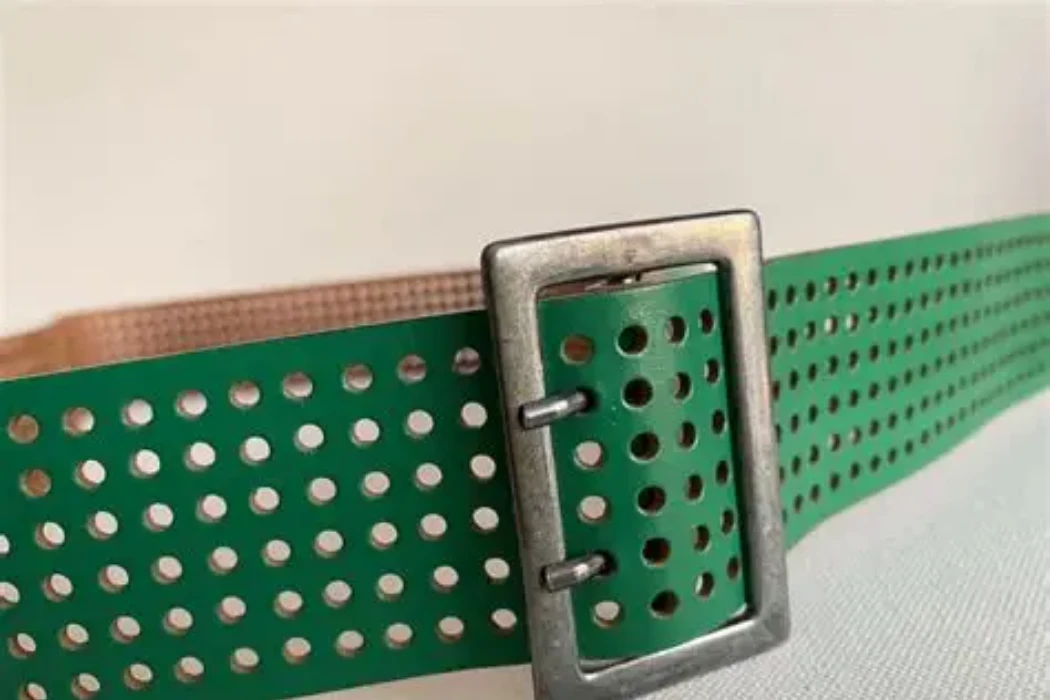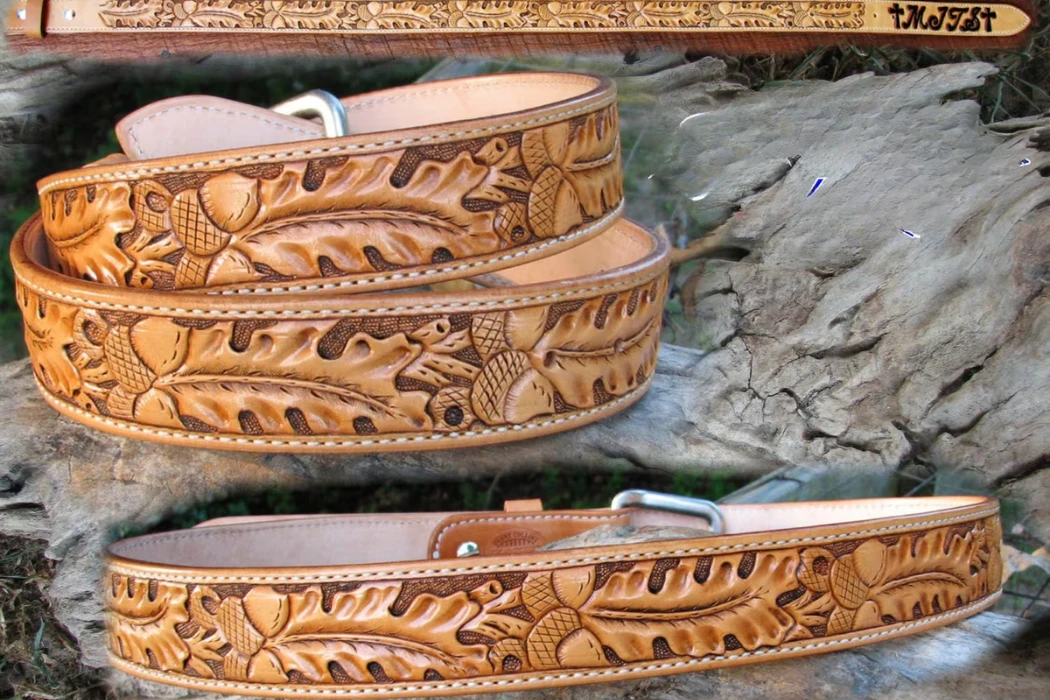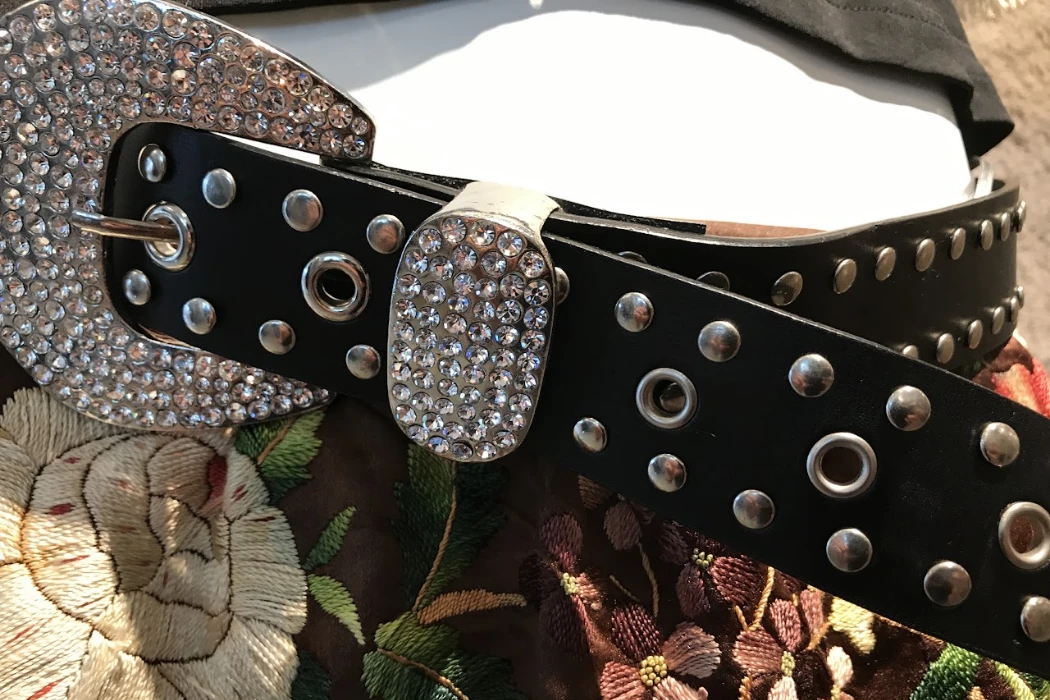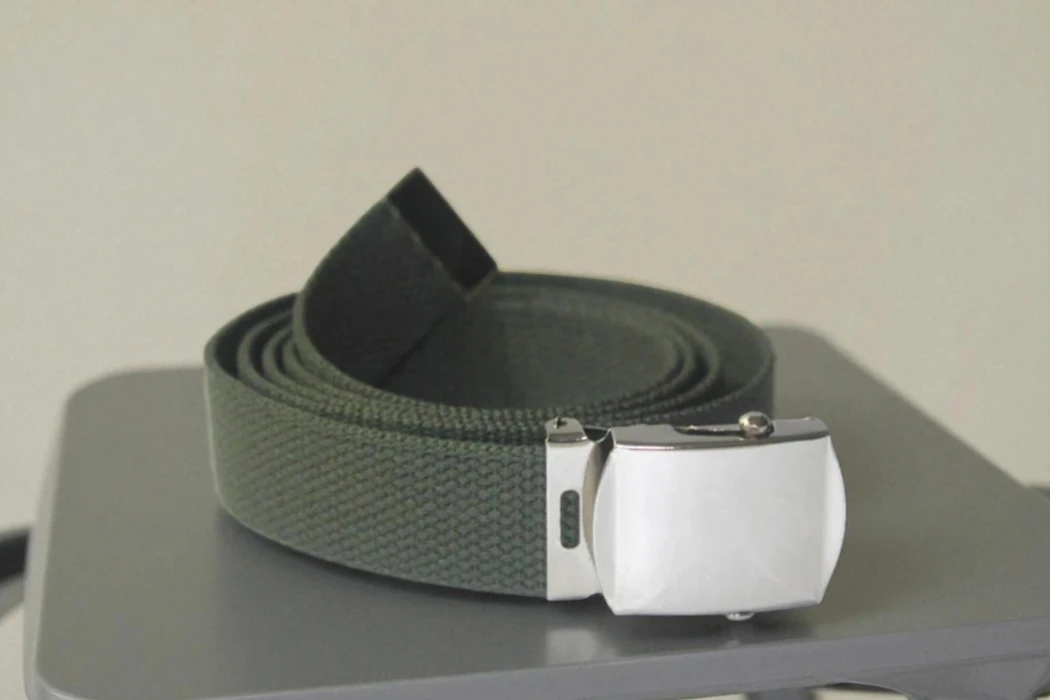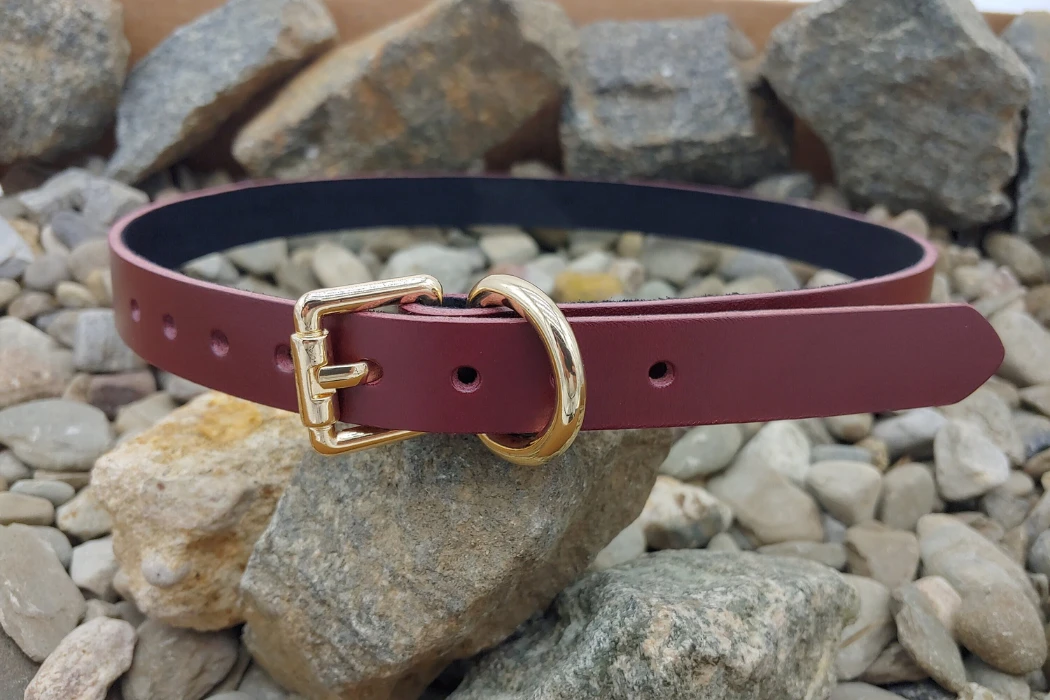
A men’s belt collection needs a clear specification for each intended use, from tailored clothing to casual wardrobes. Buyers should connect strap proportions, materials, buckle function and sizing to approved samples so repeat orders have a consistent reference.
This guide addresses collection-level choices for men’s fashion belts. Dimensions below are specification fields, not global mandatory standards. For detailed documentation, connect the selected design to a tech pack and agreed inspection plan.
How to design a men’s belt line that balances formal and casual needs?
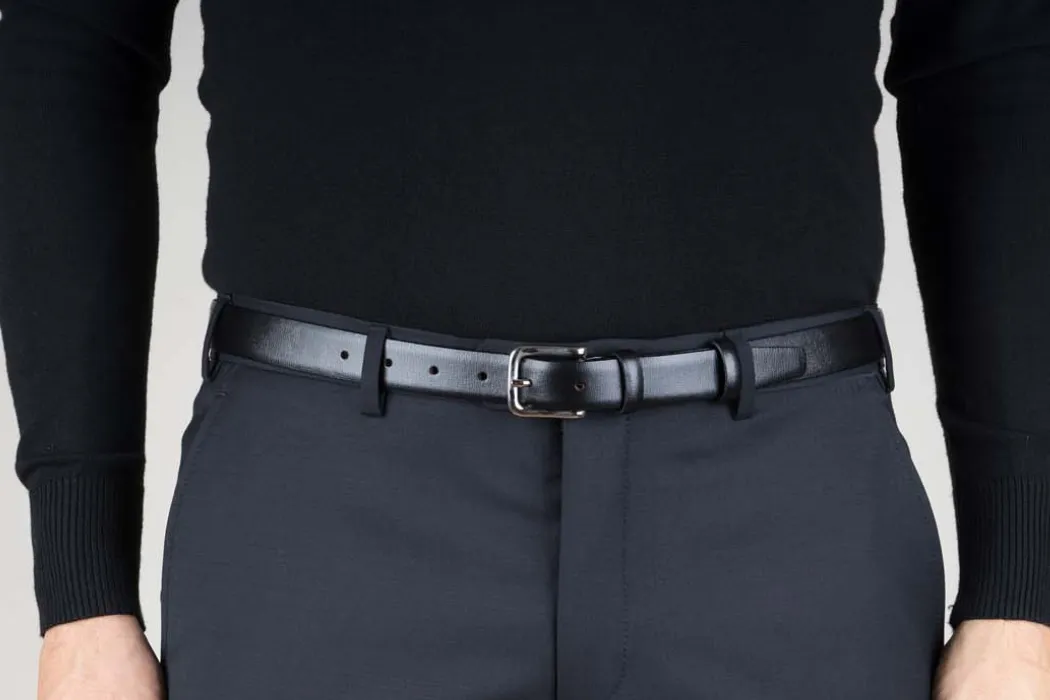
Define the role of each style before fixing dimensions. A dress-oriented style may emphasize a restrained buckle and smooth surface, while a casual style may use more texture or a stronger visual presence. Approve these choices against the intended garments and customer.
Core design principles for bridging formal and casual aesthetics
Review width, buckle scale, surface gloss, texture and edge treatment as one design. Check the actual garment-loop clearance rather than assuming a particular width fits most trousers. A shared color palette or hardware family can connect the collection without forcing every style into the same construction.
Technical specifications and modular features for a balanced belt line
For interchangeable buckles, define compatible strap widths and thicknesses, attachment geometry and any user adjustment procedure. Validate each combination on a sample. Reversible construction adds its own mechanism and edge requirements; it should not be treated as an automatic extension of a standard pin belt.
What are the standard sizing and width specs for global men’s markets?
Use a size convention that the brand and factory define explicitly. The unit system does not determine the measurement anchor or wearing fit. Keep nominal fastening length, adjustment range and overall strap length separate.
| Field | Buyer decision |
|---|---|
| Nominal size | Named anchor to selected fastening point |
| Adjustment | Hole count/spacing or track range |
| Width | Finished strap width and hardware clearance |
| Thickness | Finished assembly and component targets |
| Units | Exact conversion, rounding and tolerance |
Global Belt Length Standards and Conversion Rules
An inch is exactly 2.54 cm. Therefore, two inches is 5.08 cm, which is not identical to a 5 cm grade. Select one master measurement chart and document rounding. A trouser label plus two inches is a consumer rule of thumb that cannot replace fit development for the brand.
Width Specifications for Formal and Casual Belt Categories
Choose width in relation to the garment, fastening system and visual proportion. Confirm clearance at the buckle, keeper and belt loops with the finished assembly. Do not infer comfort or strength from width alone; evaluate the material stack and relevant performance requirements.
Why is the choice between pin buckles and ratchet systems critical?
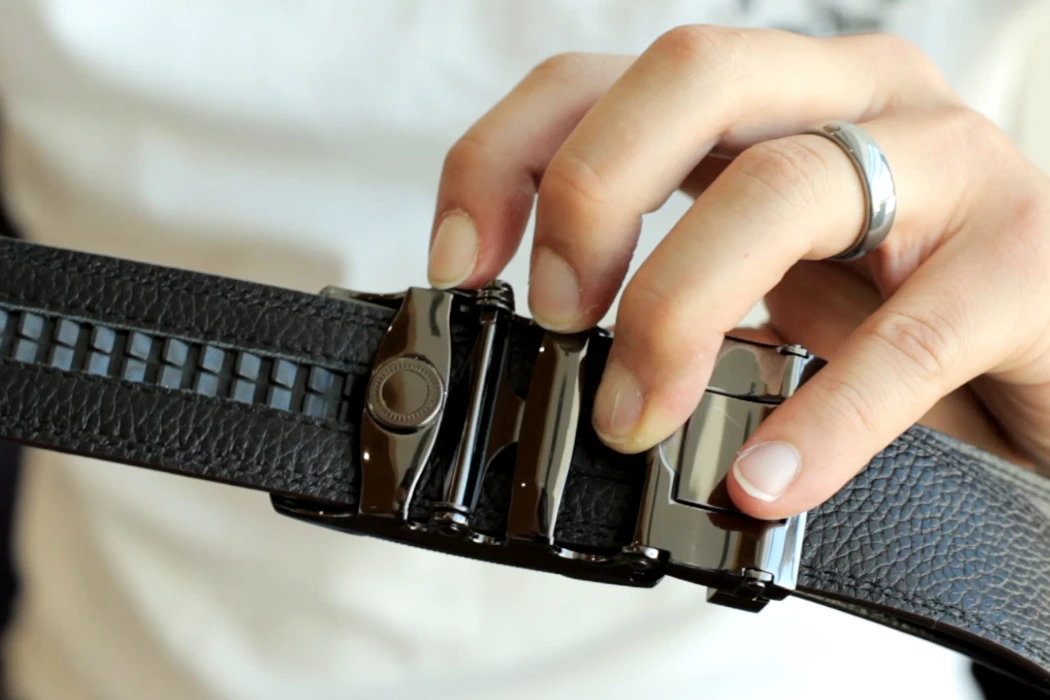
The mechanism determines the strap details and inspection requirements. A pin buckle uses holes; a ratchet uses a compatible track and locking/release assembly. Neither mechanism has a universal durability advantage.
| Mechanism | Specification focus | Sample checks |
|---|---|---|
| Pin | Prong, holes, bar, fold and keeper | Engagement, clearance, hole deformation and attachment |
| Ratchet | Track, lock, release and strap attachment | Adjustment range, secure engagement, release and wear |
Functional Differences Between Pin and Ratchet Buckles
Specify hole count and spacing for a pin belt or actual track pitch and usable range for a ratchet belt. Increment sizes vary by design. Test operation on the assembled sample rather than assuming every ratchet has the same fine adjustment or every pin belt has five holes.
Engineering, Durability, and Material Considerations
Record the actual alloy, finish and dimensions of the selected buckle. Ratchet housings are not inherently aerospace-grade, and added mechanism complexity does not prove longer life. Inspect attachment, moving parts, surface condition and agreed corrosion or operation tests.
Custom Leather Belts That Elevate Your Brand
Discuss your custom leather belt design, material, size range and test requirements with Hoplok. Confirm feasibility, samples and the production schedule for the specific order.
Explore Custom Belts →
What are the benefits of using rugged finishes like “Crazy Horse” leather?
“Crazy Horse” is a trade description commonly associated with a waxed or oiled, distressed appearance. It does not by itself establish the leather layer, tannage, thickness or water resistance. Approve an identified material sample and its acceptable appearance changes.
Understanding the Unique Character of Crazy Horse Leather
A pull-up or waxed surface can show lighter areas where bent or rubbed. Review this effect with the brand so normal visual variation is distinguished from damage. Do not describe visible scratch blending as self-healing structural damage.
Technical Benefits and Applications in Men’s Belts
Specify the leather base, finish and construction independently of the trade name. Check rub transfer, flexing, finish behavior and any claimed moisture resistance under an agreed method. Choose thickness from the assembled design; wax treatment does not prove that fibers become denser or guarantee years of service.
How should buyers validate everyday men’s belt durability?
For everyday men’s fashion belts, agree performance checks for the selected construction and expected use. Hoplok’s fashion-belt scope does not include load-bearing safety belts, tactical equipment, powerlifting belts or construction tool belts.
Core Principles of Fashion Belt Durability Testing
Identify likely failure points: strap damage, attachment movement, hole deformation, edge separation and buckle malfunction. Select material and finished-product tests that address those risks. Laboratory cycles are controlled comparisons, not a direct conversion to months or years of use.
Testing Standards and Practical Procedures
Use a laboratory to select applicable methods and acceptance criteria. ISO 2419 concerns leather conditioning for physical and mechanical testing; it is not a tensile or tear test. Record sample identity, preparation, test conditions and results, and evaluate the actual finished attachment separately where needed.
How should buyers specify gunmetal and matte hardware finishes?
Gunmetal describes a color appearance, while matte describes low gloss; a finish can be both. Compare physical references against the brand’s current assortment and buyer feedback instead of treating either as a verified market leader.
Style and Market Appeal of Gunmetal vs. Matte Finishes
Define the color, gloss and texture separately, with an approved hardware sample. Compare the finish next to the chosen strap and other collection components. Use the brand’s sales and customer evidence to determine quantities; a finish name alone does not establish demand.
Durability, Maintenance, and Manufacturing Considerations
Ask the component supplier to identify the base material and finishing process. Agree appearance variation and relevant corrosion, abrasion or adhesion checks. A matte surface may alter the visibility of marks, but it does not guarantee less wear or maintenance.
How to engineer reversible belts to avoid mechanical failure?
A reversible fashion belt needs both faces, the edge and the buckle mechanism to function together. Confirm how the buckle rotates or detaches, how it locks, and whether both strap orientations fit correctly.
Principles of Reversible Belt Design and Material Selection
Specify both face materials, lining or reinforcement, bonding and stitching. Check the finished thickness against the rotating or detachable buckle. Approve color transfer and edge appearance on both sides.
Mechanical Specifications and Failure‑Prevention Methods
Inspect pivot play, locking engagement, strap retention and release operation. Define an agreed repeated-operation test and inspect the assembly afterward for loosening, surface damage or separation. Do not infer a service-life guarantee from a cycle count.
Approval Records for Reversible Construction
Use results from the actual reversible fashion-belt construction to approve it. A mechanism change, new lining or different adhesive can affect the result and may require renewed sampling. Keep the drawing, sample and test report linked to the same revision.
What are the standard men’s belt sizing charts for US and EU markets?
Build the chart from the target fit and agreed measurement convention. Letter sizes and regional units do not establish identical physical dimensions across brands. Show the fastening range and give the retail team the same anchor definition used in production.
Understanding the core logic behind US and EU belt size measurements
Draw the starting point at the buckle or strap and name the hole or fastening point that represents nominal size. For ratchet belts, identify the reference position and usable track range. This definition matters more than labeling a chart “US” or “EU.”
Technical specifications and conversion details between US and EU standards
Convert the master chart consistently and record rounding. For example, 34 inches equals 86.36 cm; whether a label rounds that number must be an explicit brand decision. Check the smallest and largest sizes physically so tail length and keeper function remain acceptable.
How to scale men’s belt production for large-scale retail programs?
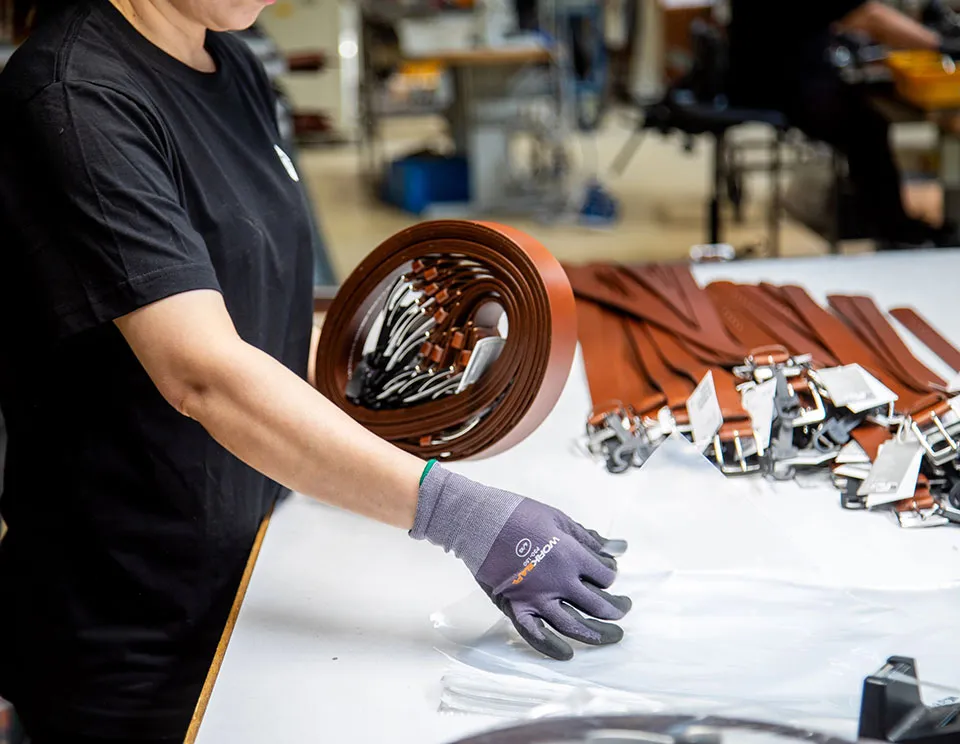
Freeze approved materials, dimensions and construction before scheduling the bulk order. Confirm quantities by style, color and size, component availability and the release plan. Available factory capacity must be confirmed for the order rather than inferred from a generic production-cycle benchmark.
Core principles for scaling leather belt production
Use the same approved measurement chart and material references across cutting, assembly and inspection. Select the size ratio from the buyer’s demand plan rather than a universal assortment formula. Validate substitutions before use and record first-piece approval for each relevant setup.
Technical setup, production benchmarks, and packaging standards
Hoplok’s stated monthly belt capacity is 200,000–300,000 genuine leather belts and 600,000–800,000 PU belts. Its ProPelli operation finishes externally sourced crust leather; it is not a raw-hide tannery. Agree actual production allocation and packaging quantities with the order, including protection, labels and carton limits.
Final Thoughts
Develop the men’s collection around explicit style roles, compatible hardware and a consistent size definition. Submit the specification and order mix for Hoplok custom belt development. MOQ is 300 genuine leather belts or 1,000 PU belts; sampling is 2–3 weeks and bulk production 60–90 days, subject to the agreed project schedule.
Frequently Asked Questions
What is the standard men’s belt width?
There is no single required width. Choose the finished width from the target garment, buckle clearance and visual proportion, then record its tolerance in the specification.
How do you measure a men’s belt size?
Use the brand’s defined buckle or strap anchor and nominal fastening point. Show that convention on the drawing and retail chart; do not substitute an automatic trouser-size-plus-two rule.
What leather is best for men’s belts?
Select the actual leather layer, thickness, finish and construction for the desired appearance and test requirements. A full-grain label alone does not establish the finished belt’s performance.
How many holes are in a men’s belt?
Specify the hole count, spacing and usable fastening range for the design. Check nominal size and tail behavior on the sample rather than treating one pattern as mandatory.
What is a ratchet belt?
A ratchet belt uses a track and locking/release mechanism instead of conventional holes. Specify the actual adjustment pitch, usable range and compatible strap construction.
How should buyers coordinate belt colors within a collection?
Approve belt colors and hardware finishes alongside the intended footwear or clothing assortment where coordination is part of the brief. State acceptable variation using physical references and the agreed lighting conditions.