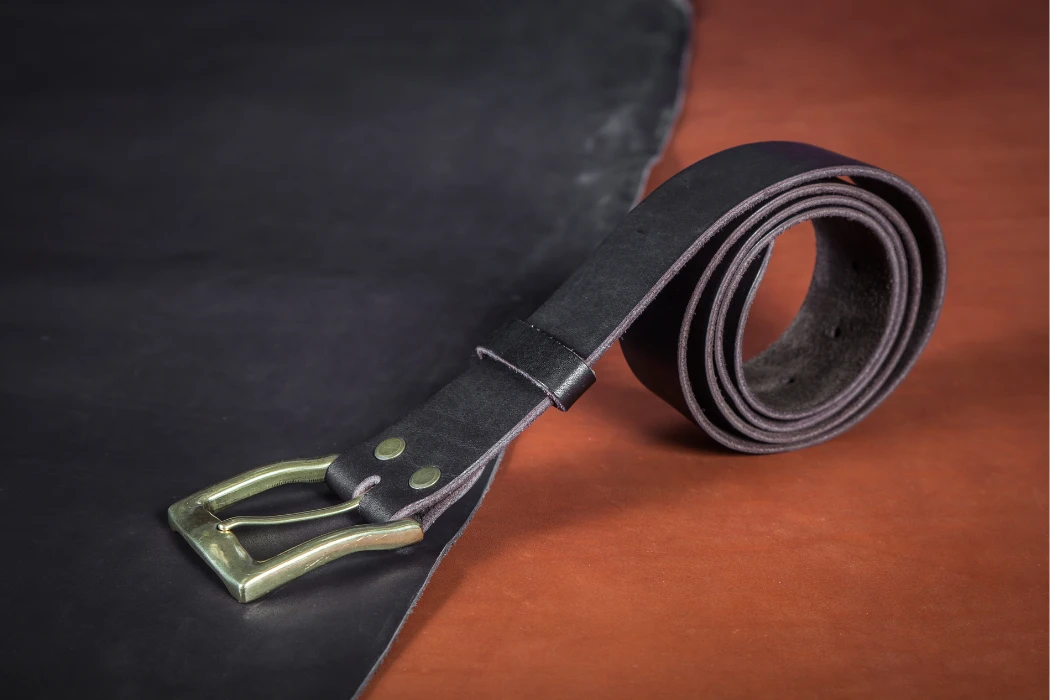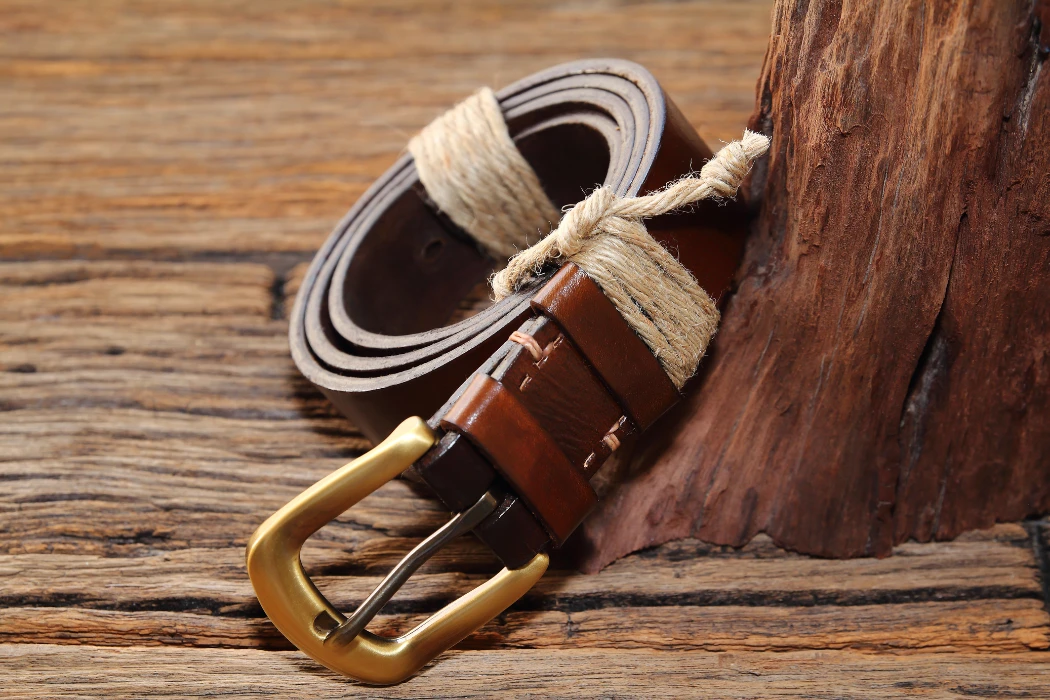
There is no “one-size-fits-all” in the world of leather. Making a structured luxury handbag requires a completely different engineering skillset than crafting a waterproof, Goodyear-welted boot. A brand that dominates the runway might produce mediocre footwear, while a heritage shoemaker might make the best belt you will ever own. To find the best, you must understand specialization.
In this ultimate buyer’s guide, we have categorized the leather market into four distinct pillars: Global Luxury Icons, Affordable Modern Classics, Heritage Footwear Specialists, and Iconic Outerwear. We have ranked the 30 most popular brands for 2025, not just by their marketing budgets, but by their dedication to specific crafts.
As manufacturing experts with over 20 years of experience in the leather industry, we look at the raw materials behind the logo. We will explain why the supple, pebbled Togo calfskin used by Hermès is the gold standard for bags, while the dense, indestructible Shell Cordovan is the only choice for top-tier footwear. Whether you are looking for a briefcase, a biker jacket, or a pair of boots, this list directs you to the masters of each trade.
What Defines a Top-Tier Leather Brand?
In an industry flooded with “Genuine Leather” labels and influencer marketing, discerning true quality requires a technical eye. A logo can be printed on anything, but manufacturing excellence cannot be faked. Beyond the brand prestige, we evaluate every contender on this list based on six quantifiable pillars of production. Here is what separates the masters from the mass market.
Material Sourcing & Provenance
Top-tier brands do not simply buy leather; they control the source. The gold standard is traceability. For instance, Hermès owns its own alligator farms to ensure zero scarring, while heritage brands like Schott NYC specify heavyweight steerhide from American herds for maximum abrasion resistance.
- Vertical Integration: The best brands often own their tanneries or have exclusive contracts with world-renowned houses like Horween (USA) or Haas (France).
- Selection Grade: They use only the top 10% of hides, rejecting skins with bug bites or wire fence scratches, whereas lower-tier brands cover these defects with heavy pigments.
Tanning Processes (Chrome vs. Vegetable)
Understanding the chemistry is crucial. Chrome Tanning (used in 80% of goods) utilizes mineral salts to create soft, supple, and water-resistant leather that holds vibrant colors—ideal for luxury handbags like Chanel. In contrast, Vegetable Tanning uses tree barks to create a stiff, organic leather that develops a rich patina over time—the preferred choice for belts and boots.
- Chrome Tanned: Best for fashion bags and garments requiring drape and color stability.
- Vegetable Tanned: Best for goods that need structure and character, like wallets and footwear.
- The Test: A top brand chooses the correct tannage for the product’s function, not just the cheapest option.
Craftsmanship & Construction
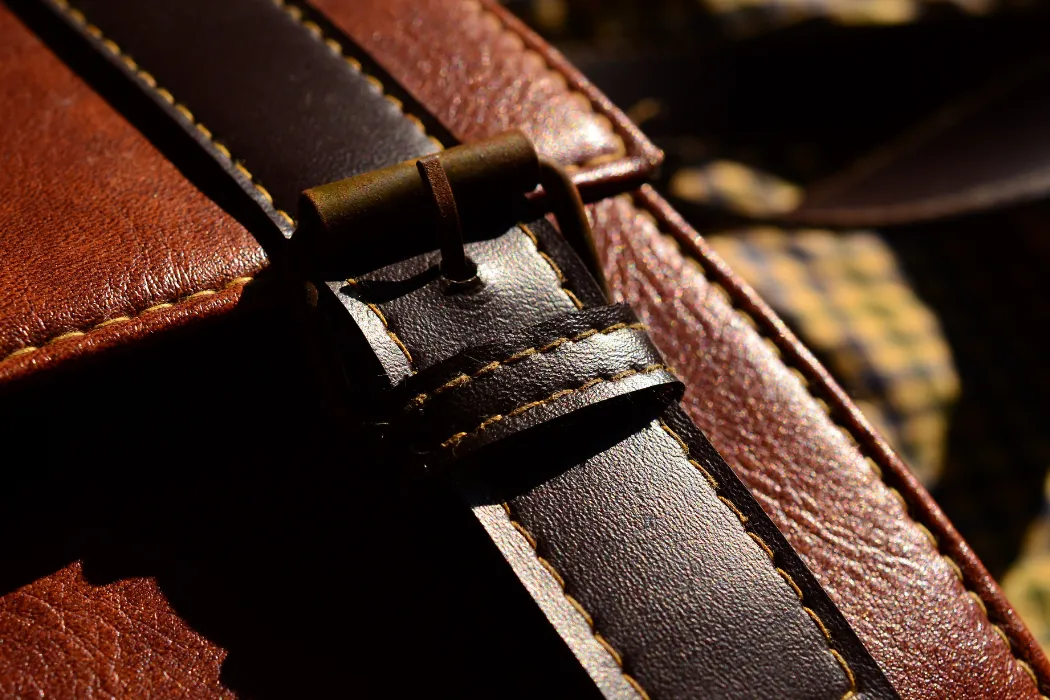
How a product is assembled determines its lifespan. In footwear, we look for Goodyear Welt or Stitchdown construction, which allows soles to be replaced. In handbags, the benchmark is the Saddle Stitch—a dual-needle hand-sewing technique where the seam holds even if one thread breaks.
- Stitch Density: High-end goods feature a high SPI (Stitches Per Inch), creating a refined, durable seam.
- Edge Finishing: Look for hand-painted edges (applied in 3-5 layers) or turned edges, rather than raw cut edges coated in cheap rubber paint that peels off.
Hardware Quality & Plating
Hardware is the jewelry of the leather world, and it is often the first thing to fail on cheap products. Top-tier brands use Solid Brass or Stainless Steel as a base, often treating it with PVD (Physical Vapor Deposition) plating. This industrial coating bonds color at a molecular level, preventing the gold or silver finish from rubbing off after years of handling.
- Zippers: The industry standard for luxury is Riri (Swiss) or YKK Excella (Japan), known for individually polished teeth that glide smoothly without jamming.
- Weight: Hardware should feel substantial and cold to the touch, not hollow or plastic-like.
- Durability: Cheap zinc alloy hardware will pit and snap; solid brass will only develop character.
Repairability & Warranty
True luxury is the antithesis of disposable fashion. A defining characteristic of a top-tier brand is the design intent for repairability. Brands like Allen Edmonds or Saddleback Leather engineer their products to be taken apart and fixed. They offer recrafting services to replace soles, stitch ripped seams, or re-glaze worn edges.
- Serviceability: Can a cobbler fix it? A glued-sole sneaker is disposable; a welted boot is renewable.
- Warranty: A lifetime or multi-year warranty signals that the manufacturer stands behind the structural integrity of their work.
- Legacy: The best brands aim for their products to be inherited, not replaced.
Design Consistency & Heritage
Finally, a top brand is defined by its Iconic Silhouettes. Designs like the Hermès Birkin, the Schott Perfecto, or the Red Wing Moc Toe have remained virtually unchanged for decades. This consistency proves that the design works functionally and aesthetically.
- Timelessness: These products transcend trend cycles. Buying an icon ensures your investment won’t look outdated next season.
- Resale Value: Because the design is permanent, the secondary market value remains high. A seasonal “trend” bag drops in value instantly; an icon holds its worth.
Specialization Matters: Why You Shouldn’t Buy Boots from a Handbag Brand
In the era of “Lifestyle Brands,” companies try to sell you everything from perfume to parkas. However, manufacturing expertise is rarely transferable. A brand that makes the world’s best silk scarves does not necessarily have the engineering know-how to build a waterproof hiking boot. To get the best value, you must buy from specialists, not generalists.
The “Fashion House” Trap
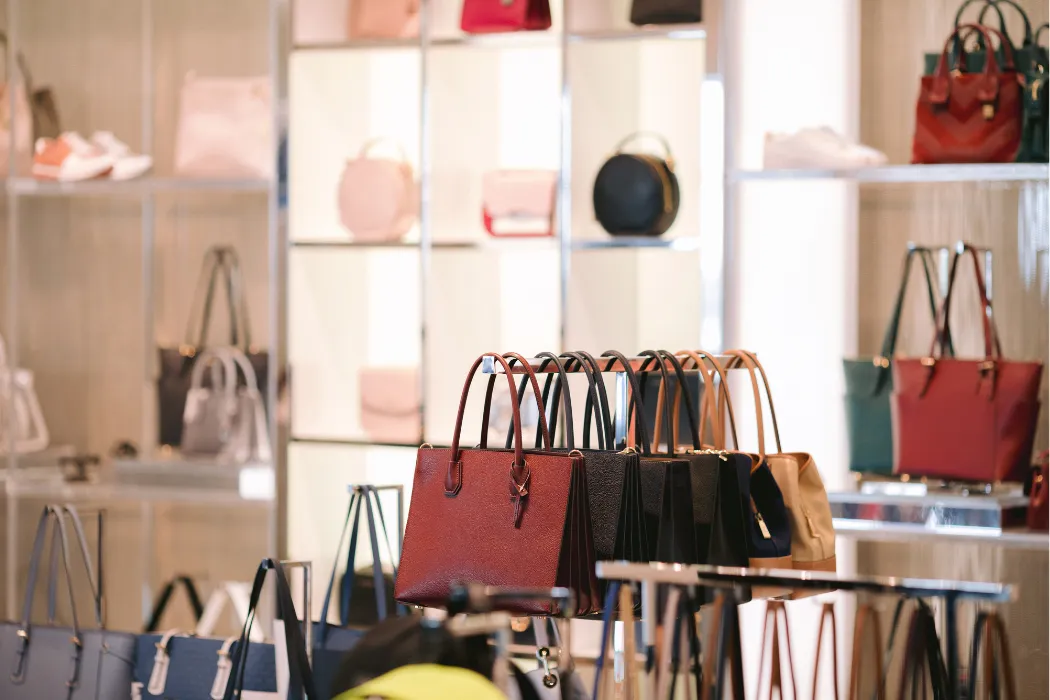
Many luxury fashion houses function as design studios rather than manufacturers. When they expand into new categories—like a handbag brand launching a shoe line—they often outsource production to third-party factories (White Labeling). The result is often a $900 pair of boots constructed with cheap glue (cementing) rather than stitching.
- The Cost of Logo: You are paying for the brand’s cachet, not the construction. A specialist like Crockett & Jones offers superior Goodyear-welted shoes for the same price as a glued Gucci loafer.
- Repairability: Fashion footwear is often designed to be disposable after a few seasons; specialist footwear is designed to be resoled and repaired for decades.
The “Heritage Specialist” Advantage
Brands that have focused on a single category for 50 or 100 years possess invaluable proprietary data. A jacket specialist like Schott NYC understands how heavy steerhide drapes on a moving body better than a runway designer ever could. A bootmaker like Red Wing has refined their lasts (foot molds) over decades to ensure ergonomic comfort.
- Fit Engineering: Specialists own unique patterns and lasts that have been field-tested by generations of users.
- Material Knowledge: They know exactly which tannery produces the best leather for their specific product’s stress points, rather than using a generic “luxury” leather for everything.
Vertical Integration vs. Licensing
The gold standard of quality is Vertical Integration—where the brand owns the factory. When you buy from Allen Edmonds or Louis Vuitton (for trunks), you are buying from a manufacturer that controls every step of the process. In contrast, many designer brands “license” their name to accessory conglomerates.
- Quality Control: Factory ownership allows for strict QC at every stage, ensuring that no corner is cut to save a few cents.
- Transparency: Integrated brands can tell you exactly where their materials came from and who stitched them. Licensed products are often opaque about their origins.
Decoding Leather Grades Across Categories
A common mistake consumers make is assuming that “thick” means “good” or that “soft” means “luxury.” In reality, the definition of top-tier leather changes entirely depending on the product. A leather suitable for a biker jacket would make a terrible briefcase, and vice versa. Here is how to judge quality based on the category.
Bags & Luggage: The Pursuit of Perfection
For high-end handbags, the priority is a Flawless Finish. Brands like Celine or Prada use skins that have been heavily selected to be free of scars, bug bites, or wrinkles. The leather must be stiff enough to hold the bag’s architectural shape but smooth enough to feel expensive.
- The Standard: Full-Grain Calfskin or Epsom/Saffiano (embossed). These offer a uniform, pristine look that resists scratching.
- What to Avoid: “Genuine Leather” splits that are coated in heavy polyurethane to look like calfskin. They feel plastic-like and will crack at the fold points.
Jackets & Outerwear: The Art of Drape
For leather jackets, the priority is Drape and Hand-Feel. You do not want a jacket that stands up on its own; you want one that molds to your body like a second skin. Top brands like AllSaints or Schott NYC use specific tanning recipes to break down the stiffness of the fibers without sacrificing strength.
- The Standard: Lambskin (for fashion) or Naked Cowhide (for riding). Lambskin is buttery soft instantly; Naked Cowhide has no finish, allowing it to breathe and soften rapidly.
- The Test: Scrunch the sleeve. It should wrinkle softly and bounce back, not crease like paper or feel stiff like cardboard.
Boots & Footwear: Thickness & Resilience
For heritage footwear, the priority is Tensile Strength and Thickness. A boot leather must withstand constant flexing, water exposure, and abrasion against concrete. Aesthetics are secondary to structural integrity.
- The Standard: Chromexcel (oil-stuffed) or Shell Cordovan (horse rump). These leathers are thick (2.0mm+) and saturated with oils/waxes to be self-healing. Scuffs can be rubbed out.
- The Reality: A good boot leather might look “rustic” or show scratches easily, but it will never tear. It is designed to protect your foot, not just look pretty.
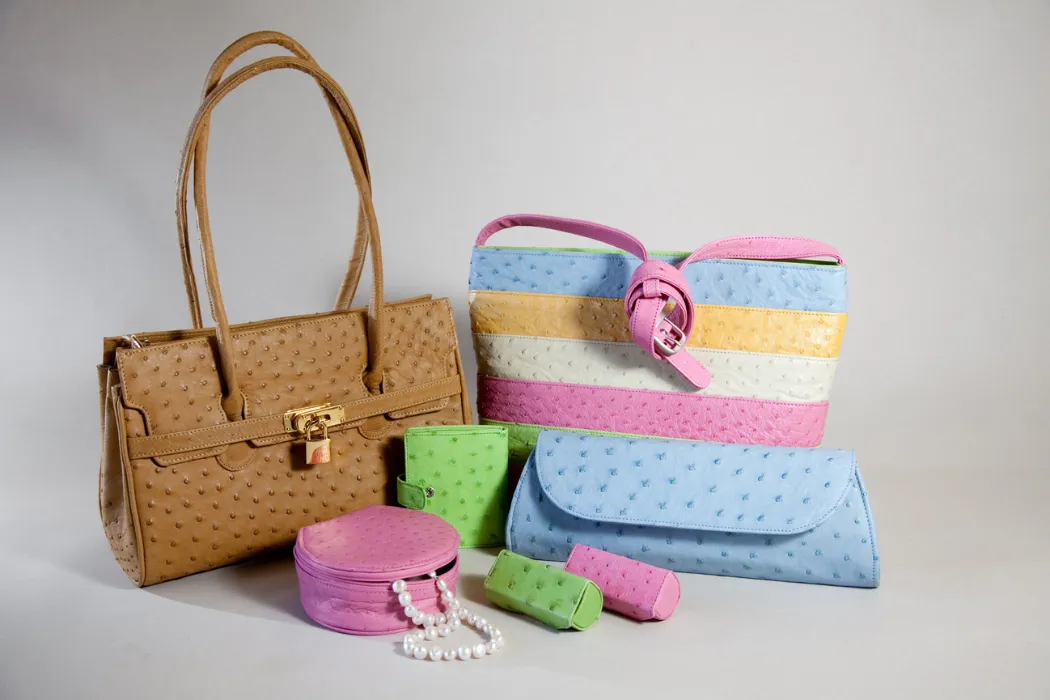
The 30 Most Popular Leather Brands (Summary List)
Here is our definitive ranking for 2025. To help you navigate, we have grouped the brands into four specialist categories: Global Luxury Icons, Affordable Modern Classics, Heritage Footwear, and Iconic Outerwear.
| Rank | Brand | Category | Signature Item | Price Range (USD) |
|---|---|---|---|---|
| Category A: The Global Luxury Icons (Investment Grade) | ||||
| 1 | Hermès | Bags & Accessories | Birkin / Kelly | $10,000+ |
| 2 | Chanel | Bags & Accessories | Classic Flap | $5,000 – $10,000+ |
| 3 | Louis Vuitton | Bags & Travel | Speedy / Keepall | $1,500 – $4,000 |
| 4 | Bottega Veneta | Bags & Shoes | The Cassette | $2,500 – $4,500 |
| 5 | Gucci | Bags & Accessories | Jackie 1961 | $1,700 – $3,500 |
| 6 | Prada | Bags & Accessories | Galleria Bag | $2,400 – $4,000 |
| 7 | Celine | Bags & Accessories | Triomphe Bag | $2,500 – $4,200 |
| 8 | Saint Laurent | Bags & Accessories | Loulou Bag | $1,800 – $3,200 |
| Category B: Affordable Luxury & Modern Classics (Daily Carry) | ||||
| 9 | Coach | Bags & Accessories | Tabby Shoulder Bag | $250 – $600 |
| 10 | Polène | Bags & Accessories | Numéro Dix | $350 – $550 |
| 11 | Longchamp | Bags & Travel | Le Pliage (Leather) | $200 – $550 |
| 12 | Tory Burch | Bags & Accessories | Lee Radziwill Bag | $300 – $800 |
| 13 | Mansur Gavriel | Bags & Accessories | Bucket Bag | $450 – $750 |
| 14 | Cuyana | Bags & Accessories | System Tote | $250 – $450 |
| 15 | Michael Kors | Bags & Accessories | Hamilton Satchel | $150 – $400 |
| 16 | Kate Spade | Bags & Accessories | Sam Icon Bag | $150 – $350 |
| Category C: Heritage Footwear Specialists | ||||
| 17 | Allen Edmonds | Dress Shoes | Park Avenue Oxford | $395 – $495 |
| 18 | Red Wing | Work Boots | Iron Ranger | $300 – $380 |
| 19 | Berluti | Luxury Footwear | Alessandro Oxford | $2,000+ |
| 20 | Church’s | English Footwear | Consul Oxford | $900 – $1,200 |
| 21 | Tod’s | Casual Footwear | Gommino Loafer | $550 – $750 |
| 22 | Dr. Martens | Boots | 1460 Boot | $170 – $200 |
| 23 | Clarks | Casual Footwear | Desert Boot | $140 – $180 |
| 24 | Timberland | Work Boots | 6-Inch Premium Boot | $170 – $220 |
| Category D: Iconic Outerwear & Jackets | ||||
| 25 | Schott NYC | Biker Jackets | Perfecto Motorcycle | $800 – $1,200 |
| 26 | Belstaff | Waxed/Leather Jackets | Trialmaster Panther | $1,200 – $1,800 |
| 27 | AllSaints | Fashion Jackets | Dalby / Balfern | $450 – $650 |
| 28 | Acne Studios | Shearling/Leather | Velocite Jacket | $2,500 – $3,200 |
| 29 | Avirex | Bomber Jackets | A-2 Flight Jacket | $900 – $1,500 |
| 30 | The Jacket Maker | Custom Jackets | Bespoke Biker | $250 – $450 |
Category A: The Global Luxury Icons (Investment Grade)
These brands represent the pinnacle of the leather pyramid. They do not follow trends; they set them. Characterized by vertical integration (owning their supply chains), proprietary tanning recipes, and exceptional resale value, these are the brands you buy to pass down to the next generation.
1. Hermès
Origin: France | Price: $10,000+
Hermès sits alone at the summit of leather craftsmanship. Originally a harness workshop, they still use the traditional saddle stitch for their most iconic bags. The brand controls its entire supply chain, from alligator farms to textile mills, ensuring zero defects.
- Signature Leather: Togo (baby calf) and Clemence (bull calf) are famous for their scratch resistance and ability to hold shape.
- Why It’s Top Tier: An Hermès bag is a liquid asset. The scarcity and 48-hour hand-construction process justify the price tag.
2. Chanel
Origin: France | Price: $5,000 – $10,000+
Chanel redefined the handbag with the 2.55, introducing the shoulder strap to women’s fashion. The brand is synonymous with quilted leather, a technique originally inspired by equestrian stable boy jackets. Their prices increase annually, making them a hedge against inflation.
- Signature Leather: Caviar (pebbled calfskin) is the gold standard for durability, while Lambskin offers unmatched softness and sheen.
- Craftsmanship: The leather-woven chain strap is an engineering marvel that balances jewelry-like aesthetics with structural strength.
3. Louis Vuitton
Origin: France | Price: $1,500 – $4,000
While famous for canvas, Louis Vuitton’s leather mastery is underrated. As a trunk maker since 1854, durability is their core DNA. Their proprietary leathers like Epi (textured) and Empreinte (embossed) are virtually indestructible.
- Innovation: Epi Leather was the first colored leather line, created in the 1920s to withstand rigorous travel conditions.
- Quality Control: LV is vertically integrated, meaning every bag is made in their own workshops (not outsourced), ensuring perfect stitch consistency.
4. Bottega Veneta
Origin: Italy | Price: $2,500 – $4,500
Bottega Veneta proves that technique can replace logos. Their signature Intrecciato weave creates a double-layered leather structure that is stronger than a single hide. Under the “Stealth Wealth” philosophy, the quality of the Nappa leather speaks for itself.
- Technique: The “Fettuce” (strips of leather) are hand-woven, a labor-intensive process that creates a unique, flexible, and durable fabric-like leather.
- Feel: Known for the softest hand-feel in the industry, often compared to silk or butter.
5. Gucci
Origin: Italy | Price: $1,700 – $3,500
Gucci blends Florentine craftsmanship with high-octane fashion. Their history in saddle-making is evident in their heavy, horsebit-inspired hardware. The brand excels at reinventing archival designs like the Jackie 1961, using robust leathers that hold their curve.
- Material: Guccissima (heat-debossed leather) offers a durable, textured surface that resists scratches while flaunting the brand identity.
- Hardware: The piston closures and horsebits are solid, heavy, and plated to resist tarnishing for decades.
6. Prada
Origin: Italy | Price: $2,400 – $4,000
Prada invented modern utility luxury with Saffiano Leather. This heat-pressed, cross-hatch textured calfskin is wax-coated to be water-repellent and scratch-proof. It transformed leather goods from delicate accessories into daily workhorses.
- The Saffiano Revolution: Originally patented by Mario Prada, this material allows bags to retain a rigid, architectural shape forever.
- Best For: Corporate environments where a bag must look pristine despite daily commuting abuse.
7. Celine
Origin: France | Price: $2,500 – $4,200
Celine represents Parisian minimalism. Whether under Philo or Slimane, the focus remains on clean lines and flawless skins. The Box Calf leather used in their classic bags is smooth, glossy, and notoriously difficult to work with, requiring perfect hides.
- Finish: The “Liege” finish (a subtle grain) offers a balance between the glass-like fragility of Box Calf and the ruggedness of pebbled leather.
- Structure: Celine bags are engineered with rigid internal stiffeners, ensuring they never slouch or lose their geometric silhouette.
8. Saint Laurent
Origin: France | Price: $1,800 – $3,200
Saint Laurent brings a rock-and-roll edge to luxury leather. They heavily utilize Grain de Poudre (textured) leather, originally a tuxedo fabric texture translated into calfskin. It is matte, tough, and resists fingerprints and oil.
- Durability: Their quilted bags (like the Loulou) use a unique tanning process that keeps the leather puffy and soft but resistant to flattening.
- Hardware: The YSL metal logo is heavy and interlocked, acting as a structural focal point that anchors the design.
Category B: Affordable Luxury & Modern Classics (Daily Carry)
This category represents the “Sweet Spot” of the leather market. These brands offer high-quality materials—often sourced from the same tanneries as the luxury giants—but without the astronomical markup. They prioritize functionality, durability, and accessibility for the modern professional.
9. Coach
Origin: USA | Price: $250 – $600
Coach is enjoying a massive renaissance by returning to its roots. The brand built its reputation on Glove-Tanned Leather, a process inspired by the suppleness and durability of baseball mitts. Their “Originals” collection showcases leather that is thick, smooth, and heals scratches when rubbed.
- Construction: Coach bags are famous for their heavy-duty hardware and turned edges. The stitching is robust, designed for decades of daily abuse.
- Value: Arguably the best price-to-quality ratio in the market. You get full-grain leather and solid brass hardware for under $500.
10. Polène
Origin: France | Price: $350 – $550
Polène has disrupted the market by offering “Hermès-esque” aesthetics at a fraction of the cost. Manufactured in Ubrique, Spain (a town famous for leather artisans), their bags feature sculptural, organic folds that require pliable yet structured leather.
- Leather: They use Full-Grain Calfskin exclusively. The “Textured” version is highly scratch-resistant, while the “Smooth” version offers a delicate, matte finish.
- Design: The complex pattern-making (like the Numéro Dix) proves their mastery of leather manipulation, creating shapes that hold without heavy internal stiffeners.
11. Longchamp
Origin: France | Price: $200 – $550
While famous for nylon, Longchamp’s leather expertise is formidable. Their Le Pliage Cuir line uses a unique “Metis” leather (a hybrid of lamb and goat) that is incredibly lightweight and foldable, yet tough. It defies the rule that leather must be heavy to be durable.
- Innovation: They engineered a leather that can be folded into a tiny square thousands of times without cracking the grain or peeling the finish.
- Utility: The ultimate travel leather brand. Their bags pack flat and weigh almost nothing.
12. Tory Burch
Origin: USA | Price: $300 – $800
Tory Burch has evolved from a logo-heavy brand into a serious leather contender. The Lee Radziwill line is a testament to this shift, featuring unlined, raw-edge construction that showcases the impeccable quality of the hide itself (no lining to hide flaws).
- Material: They use Italian leather that is treated for scratch resistance without losing its natural hand-feel. The “glazed” finishes are particularly resilient.
- Hardware: The T-logo lock mechanisms are complex and substantial, adding a jewelry-like element to the structural leather.
13. Mansur Gavriel
Origin: USA | Price: $450 – $750
Mansur Gavriel launched the minimalist wave with their Vegetable Tanned Bucket Bag. They were one of the first contemporary brands to champion stiff, shiny, natural leather that patinas over time. While they now offer soft lambskin, their “Cammeo” veg-tan remains a purist’s favorite.
- Philosophy: “Naked” interiors. Instead of cheap fabric lining, they spray the suede side of the leather with a contrasting color, reducing weight and bulk.
- Aging: Their vegetable-tanned bags are meant to scratch and darken, developing a personal character unique to the owner.
14. Cuyana
Origin: USA | Price: $250 – $450
Built on the philosophy of “Fewer, Better Things,” Cuyana focuses entirely on material sustainability. They source LWG Gold-Certified Italian pebbled leather that is buttery soft but thick enough to drape beautifully on their signature totes.
- Ethics: A leader in transparent sourcing. They prioritize tanneries with closed-loop water systems.
- Texture: Their pebbled grain is distinct—large, soft, and inviting—making their unstructured bags feel like a hug.
15. Michael Kors
Origin: USA | Price: $150 – $400
Michael Kors Collection (the premium runway line) maintains a high standard of Italian craftsmanship. However, even the accessible MICHAEL line popularized Saffiano Leather for the masses. It remains the go-to brand for corporate workhorses that need to look professional rain or shine.
- Durability: Their Saffiano and Crossgrain leathers are virtually waterproof. You can spill coffee on a MK tote and wipe it off without a trace.
- Consistency: As a global giant, their QC is rigorous—every bag looks exactly the same, with precise stitching and uniform color.
16. Kate Spade
Origin: USA | Price: $150 – $350
Kate Spade proves that leather can be fun. While known for novelty shapes, their core manufacturing relies on robust Saffiano and box leathers that hold vibrant dyes without fading. It is the gateway brand for many into the world of quality leather goods.
- Color Fastness: They excel at stabilizing bright, neon, and pastel colors on leather, preventing them from rubbing off or yellowing over time.
- Structure: Their bags are often heavily reinforced to maintain crisp, graphic shapes (like boxes or hearts) that do not collapse.
Category C: Heritage Footwear Specialists (Shoes & Boots)
Shoemaking is a distinct discipline from bag making. It requires an understanding of orthopedics, weight distribution, and tensile stress. These brands are not “fashion labels” that make shoes; they are dedicated shoemakers who engineer footwear to protect your feet and last for decades.
17. Allen Edmonds
Origin: USA | Price: $395 – $495
Allen Edmonds is the standard-bearer for American dress shoes. They famously use a 360-degree Goodyear Welt, a construction method that makes the shoe incredibly stable and allows for infinite resoling. Their 212-step manufacturing process in Port Washington is legendary.
- Key Model: The Park Avenue Cap-Toe Oxford, worn by four US Presidents for their inaugurations.
- Material: They use premium calfskin that molds to the foot’s shape. Their cork footbed creates a custom imprint of your foot over time.
18. Red Wing
Origin: USA | Price: $300 – $380
Red Wing Heritage boots are built like tanks. Unique among shoe brands, they own their own tannery (S.B. Foot Tanning Co.), allowing them to control the oil content of their leather perfectly. Their “Oil-Tanned” leathers are water-resistant and sweat-resistant without synthetic coatings.
- Key Model: The Iron Ranger, featuring a double-layer leather toe cap originally designed for miners.
- Durability: The triple-stitch construction and heavy Puritan stitching mean these boots often last 20+ years with proper resoling.
19. Berluti
Origin: France/Italy | Price: $2,000+
Although now a full luxury house, Berluti began as a bespoke shoemaker. They invented the seamless Wholecut Oxford (Alessandro), made from a single piece of leather with no stitching. Their expertise lies in the Venezia Leather, a raw, unfinished hide that acts as a canvas for their hand-applied patina.
- Craftsmanship: The “Alessandro” shoe has no seams to irritate the foot, a feat of lasting (shaping leather over a mold) that few can replicate.
- Artistry: Each pair is hand-dyed and polished with champagne and specialized waxes to achieve a depth of color impossible in factory-dyed leather.
20. Church’s
Origin: UK | Price: $900 – $1,200
Based in Northampton, the holy land of English shoemaking, Church’s represents the strict British tradition. Their “Custom Grade” shoes are Goodyear-welted and often feature Polished Binder leather—a high-shine treatment that makes the shoe almost waterproof and easy to clean, though stiffer than calfskin.
- Key Model: The Consul, a classic Oxford that defines the London business look.
- Structure: Known for being stiff and heavy initially, breaking in to become incredibly supportive and virtually indestructible.
21. Tod’s
Origin: Italy | Price: $550 – $750
Tod’s invented the concept of the luxury driving shoe. Unlike the stiff English shoes, Tod’s prioritizes extreme softness and flexibility. Their signature “Gommino” sole features 133 rubber pebbles integrated directly into the leather, requiring precise hand-stitching to align.
- Leather: They use the softest semi-nubuck and suede leathers that feel like a glove.
- Use Case: These are specialized leisure shoes. The exposed leather on the sole means they are for driving and carpeted offices, not walking on concrete.
22. Dr. Martens
Origin: UK/Global | Price: $170 – $200
Dr. Martens revolutionized footwear with their air-cushioned sole (AirWair). The upper and sole are heat-sealed together at 700°C and then stitched, creating a bond that is far stronger than glue. For purists, the “Made in England” line uses superior Quilon leather and traditional techniques.
- Key Model: The 1460 Boot. Its smooth, corrected-grain leather is stiff and notoriously painful to break in, but once molded, it is armor for the feet.
- Resilience: The leather is often coated to be resistant to acid, oil, and fat, making it a favorite in industrial environments.
23. Clarks
Origin: UK | Price: $140 – $180
Clarks created the definitive casual shoe: the Desert Boot. Their secret weapon is their partnership with the Charles F. Stead tannery in Leeds, which supplies the world’s finest suede. This suede is thick, nappy, and holds color brilliantly, unlike cheap suedes that look bald.
- Construction: The stitch-down construction (where the upper is flipped out and stitched to the sole) makes the shoe flexible and comfortable instantly.
- Sole: The natural crepe rubber sole offers distinctive cushioning and grip, though it wears down faster than hard rubber.
24. Timberland
Origin: USA | Price: $170 – $220
Timberland changed the industry with Injection Molding technology, which fuses the sole to the leather upper without stitching, creating a genuinely waterproof seal. Their iconic “Yellow Boot” uses nubuck leather that is impregnated with silicone during the tanning process to repel water permanently.
- Key Model: The 6-Inch Premium Boot.
- Material Science: Their nubuck is not just for looks; it is engineered to withstand snow, salt, and mud while remaining breathable thanks to Primaloft insulation.
Category D: Iconic Outerwear & Jackets (Apparel)
A leather jacket is the ultimate wardrobe investment. Unlike shoes or bags, it covers a significant portion of your body, meaning the “drape” (how the leather hangs) is critical. These brands have mastered the alchemy of tanning hides that are tough enough for protection but soft enough to wear.
25. Schott NYC
Origin: USA | Price: $800 – $1,200
Schott NYC is American history in wearable form. In 1928, Irving Schott invented the first motorcycle jacket with a zipper, the Perfecto. Today, they still manufacture in New Jersey using heavy, stiff American steerhide that requires a serious break-in period but offers unparalleled protection.
- Icon: The Perfecto 118 (Naked Cowhide) or 618 (Steerhide) defines the rebel look popularized by Marlon Brando.
- Leather: Their “Naked Cowhide” has no finish, allowing it to breathe and soften naturally with body heat, molding to the rider’s shape like armor.
26. Belstaff
Origin: UK | Price: $1,200 – $1,800
Belstaff defines the British motorsport aesthetic. Famous for the Trialmaster (originally in waxed cotton, now in leather), their jackets are designed for speed and weather protection. They utilize a unique “hand-waxing” process on their leather, giving it a water-repellent finish and a distinct, pre-worn vintage look.
- Function: Features like high collars with throat latches and belted waists are engineered to block wind while riding.
- Material: Their hand-waxed leather is soft but dense, offering a unique matte finish that looks better with scratches and wear.
27. AllSaints
Origin: UK | Price: $450 – $650
AllSaints brought the leather jacket to the masses without sacrificing the “cool” factor. Based in East London, they specialize in washed lambskin. By tumbling the leather with stones and enzymes, they achieve a buttery-soft, vintage drape right off the rack, eliminating the stiff break-in period of heritage brands.
- Fit: Known for slim, rock-and-roll cuts (like the Dalby or Balfern) that fit like a second skin.
- Leather: They use lighter weight sheepskin, prioritizing comfort, layer-ability, and fashion over heavy-duty road protection.
28. Acne Studios
Origin: Sweden | Price: $2,500 – $3,200
Acne Studios transformed the shearling jacket into a high-fashion icon. The Velocite jacket is oversized, architectural, and incredibly warm. They use the finest heavyweight shearling (sheepskin with the wool attached), turning functional warmth into an avant-garde statement piece.
- Construction: Thick leather straps and heavy buckles contrast with the soft wool, creating a structural silhouette that stands away from the body.
- Warmth: Unlike unlined biker jackets, these are genuine winter coats capable of withstanding sub-zero temperatures.
29. Avirex
Origin: USA | Price: $900 – $1,500
Avirex is the undisputed king of the Bomber Jacket. Famous for supplying the US Air Force and featuring in Top Gun, their jackets are maximalist celebrations of Americana. They use “Antique Lamb” or thick cowhide covered in intricate embroidery and patches.
- Heritage: Authentic A-2 and G-1 flight jacket silhouettes that adhere to military specs, including knitted cuffs and map linings.
- Detailing: Known for high-quality appliqué and embroidery that doesn’t fray, making each jacket a collector’s item.
30. The Jacket Maker
Origin: USA (DTC) | Price: $250 – $450
The Jacket Maker disrupts the industry by solving the biggest problem with leather jackets: fit. They offer a Made-to-Measure service, cutting the leather to your exact body measurements. By cutting out the middleman, they offer full-grain leather and decent hardware at a fraction of the retail price.
- Customization: You can choose the leather type, color, and lining, or request bespoke designs based on your preferences.
- Value: The best entry point for a real leather jacket that fits perfectly, even if it lacks the heritage pedigree of Schott.
How to Choose the Right Brand for Your Specific Needs
Now that you have seen the top 30 brands, the challenge is selection. A brand that makes a perfect evening bag might make a terrible commuter tote. To make a smart purchase, you must ignore the marketing hype and focus entirely on your Use Case. Here is how to match the brand to your lifestyle.
For Investment & Resale (The Asset Class)
If you view your purchase as a financial instrument, your options are extremely limited. Only a handful of brands—specifically Category A giants—consistently beat inflation. A bag must have scarcity and a history of annual price hikes to hold value.
- The Winners: Hermès (Birkin/Kelly) and Chanel (Classic Flap) are the only true “blue-chip” stocks. Louis Vuitton canvas holds steady due to high demand.
- The Reality: Most other brands, including Bottega Veneta or Saint Laurent, will depreciate by 30-50% the moment you walk out of the store. Buy these for love, not profit.
For Daily Abuse & Commuting (The Armor)
If your bag lives on the floor of a subway or gets thrown into the passenger seat daily, delicate lambskin is a financial mistake. You need leather that has been “armored” through specific finishing processes.
- Materials to Look For: Saffiano (Prada, Michael Kors) or Pebbled Leather (Coach, Tory Burch). These textures deflect scratches and hide wear.
- Best Brands: Coach and Longchamp are the undisputed champions of the daily grind. Their construction is over-engineered to withstand weight, friction, and spills without losing structural integrity.
For Performance & Weather (The Elements)
Leather and water are natural enemies, unless the manufacturing process intervenes. For footwear and outerwear, “fashion” leather will rot or stain in snow. You need hydrophobic tanning recipes.
- The Tech: Look for Oil-Tanned leather (Red Wing) or Injection-Molded soles (Timberland). The oil saturation repels water naturally, while fused soles prevent leaks.
- The Jacket: Belstaff’s waxed leather or Schott NYC’s naked cowhide are built to protect you from road rash and rain. Do not buy a fashion lambskin jacket if you plan to ride a motorcycle in the rain.
For Minimalist vs. Statement Style (The Aesthetic)
Your leather goods should be an extension of your wardrobe’s existing vocabulary. Mismatched brand DNA is the primary reason expensive items sit unworn in the closet.
- The Minimalist: If you wear monochrome, architectural clothing, look for brands that hide their logos. Polène, Cuyana, and Mansur Gavriel offer clean lines where the silhouette is the star.
- The Statement Maker: If you prefer maximalism, brands like Gucci or Versace (not listed but relevant) use logos as a texture. The hardware and monogram become the focal point of the outfit.
For Ethical & Sustainable Values (The Conscience)
Modern luxury implies responsibility. If you care about the environmental impact of heavy metals used in chrome tanning, you must look for specific certifications and tanning methods.
- The Standard: Look for LWG (Leather Working Group) Gold-Rated tanneries. Brands like Cuyana and Timberland are leaders in transparency.
- The Method: Prioritize Vegetable Tanned products (common in Category C footwear). This process uses organic plant tannins instead of chromium sulphate, making the product biodegradable at the end of its life.
For Travel & Versatility (The Nomad)
The heavy, structured leather briefcase is dying. The modern traveler needs leather that is lightweight, collapsible, and multi-functional. “Heavy” does not always mean “durable.”
- Packability: Longchamp is the king here; their leather folds flat. Louis Vuitton’s canvas Keepall is legendary because it is lightweight and waterproof.
- Hands-Free: Look for brands that prioritize modular straps. Tory Burch and Coach often include detachable crossbody straps with their totes, which is essential for navigating airports.
The Sustainability Factor: Vegetable vs. Chrome Tanning
Sustainability is no longer a niche concern; it is a driving force in the 2025 leather market. The environmental footprint of a leather product is largely determined by its tanning method. Understanding the difference between “Veg-Tan” and “Chrome-Tan” allows you to align your purchase with your values and performance expectations.
The Patina of Veg-Tan (The Purist’s Choice)
Vegetable Tanning is an ancient, organic process utilizing tannins found in tree barks like chestnut, oak, and mimosa. It is a slow, artisanal method taking up to 60 days, resulting in leather that feels stiff, robust, and smells distinctly earthy.
- The Appeal (Patina): Its defining characteristic is the development of a Patina. Unsealed veg-tan leather absorbs oils, sunlight, and moisture, darkening and developing a rich, glossy sheen over time. It records the user’s life history.
- Sustainability: It is biodegradable and free from heavy metals, making it the preferred choice for eco-conscious consumers buying heritage boots, belts, and wallets.
The Consistency of Chrome (The Fashion Standard)
Chrome Tanning, developed in the 19th century, uses chromium salts to tan hides in less than 24 hours. While it requires strict water management to be eco-friendly, it offers properties that natural tannins cannot achieve: extreme softness, thermal resistance, and color stability.
- Performance: Chrome-tanned leather does not discolor or stain easily. A pastel pink handbag will remain pastel pink for years, whereas veg-tan would turn brown.
- The Trade-off: It is generally not biodegradable. However, it is essential for lightweight garments and luxury handbags that require a pristine, unchanging finish.
Ethical Sourcing & LWG Certification
The “Chrome vs. Veg” debate is secondary to how the tannery operates. The industry benchmark for environmental stewardship is the Leather Working Group (LWG). This organization audits tanneries based on energy use, waste management, and water treatment.
- The Gold Standard: Brands labeled as sourcing from LWG Gold-Rated tanneries (like Mulberry or Timberland) ensure that harmful chemicals are recycled and water is purified before returning to the ecosystem.
- Traceability: Beyond the factory, ethical brands now demand traceability to the farm to ensure zero deforestation and humane animal treatment, moving towards a fully transparent supply chain.
Leather Care 101: Extending the Life of Your Purchase
A common misconception is that “leather is leather” when it comes to care. In reality, a leather jacket requires a completely different maintenance protocol than a Goodyear-welted boot. Different tanning methods and stress points mean that treating them all the same can actually cause damage. Here is the category-specific care guide.
Bag Care: Structure & Storage
Gravity is the enemy of handbags. Never hang a heavy leather bag by its straps for long periods when not in use, as this stretches the handles and distorts the D-ring connections. Instead, store it upright on a shelf.
- Stuffing: Always stuff the bag with acid-free tissue paper or a custom bag pillow to maintain its shape and prevent deep creases from forming in the leather.
- Denim Defense: For light-colored bags, the biggest threat is dye transfer from jeans. Pre-treat the back of the bag with a high-quality protectant spray (like Collonil Carbon Pro) to create a barrier against dye absorption.
Shoe Care: The Rule of Rotation
Footwear faces a unique challenge: moisture from the inside (sweat) and abrasion from the outside. The golden rule is to never wear the same pair two days in a row. Leather needs 24 hours to dry out naturally.
- Shoe Trees: Insert raw cedar shoe trees immediately after taking off your shoes. They absorb internal moisture and exert pressure to smooth out the “vamp” (toe) creases, doubling the shoe’s lifespan.
- Maintenance: Brush with a horsehair brush after every wear to remove abrasive dust. Condition and polish every 10-15 wears to keep the leather flexible at the flex points.
Jacket Care: The Hanger Matters
A leather jacket’s weight creates significant downward tension. Storing it on a thin wire or plastic hanger will ruin the shoulders, creating permanent bumps (“hanger nipples”) and stretching the hide.
- Support: Always use a wide, contoured wooden hanger (suit hanger) that mimics the shape of human shoulders to support the jacket’s weight evenly.
- Less is More: Unlike shoes, jackets do not need frequent conditioning. Over-conditioning can clog the pores, making the leather heavy, limp, and unable to breathe. Condition once a season at most, and consult a professional cleaner for stains.
Conclusion: The Trinity of a Great Brand
As we have explored across these 30 brands, a great leather company is not defined by its advertising budget. It is defined by a holy trinity: Unique Materiality (proprietary leathers like Togo or Shell Cordovan), Iconic Design Language (silhouettes that don’t change with trends), and Consistent Craftsmanship (engineering that lasts). Whether you choose the investment-grade luxury of Hermès or the rugged utility of Red Wing, you are buying into a philosophy of excellence.
Manufacture Your Own Leather Collection with Hoplok
Building a leather brand that rivals the names on this list requires more than just a sketch; it requires a supply chain that understands the nuances of each category. Whether you aim to create the next Polène-style minimalist handbag or an Allen Edmonds-level heritage belt, the key to success lies in Specialized Manufacturing Expertise.
At Hoplokleather, we are the silent partner behind many successful global brands. We offer a unique, vertically integrated solution that covers the entire spectrum of leather goods:
- Cross-Category Expertise: Unlike factories that only do one thing, we have dedicated production lines for Bags, Belts, and Small Leather Goods. This allows you to launch a cohesive lifestyle collection where the belt leather matches the bag leather perfectly.
- Material Diversity: Our in-house ProPelli Tannery gives you access to a library of finishes. We can replicate the rigid cross-grain of Saffiano, the buttery drape of Lambskin, or the rugged patina of Vegetable-Tanned leather, customized to your brand’s DNA.
- Full-Service ODM: We take you from concept to shelf. Our team handles technical drawings, hardware molding, prototyping, and bulk production, ensuring your product meets international luxury standards.
Do not let supply chain fragmentation hold your brand back. Partner with a manufacturer that understands the art and engineering of leather.
Ready to start your journey? Contact our team today to discuss your collection and request samples.