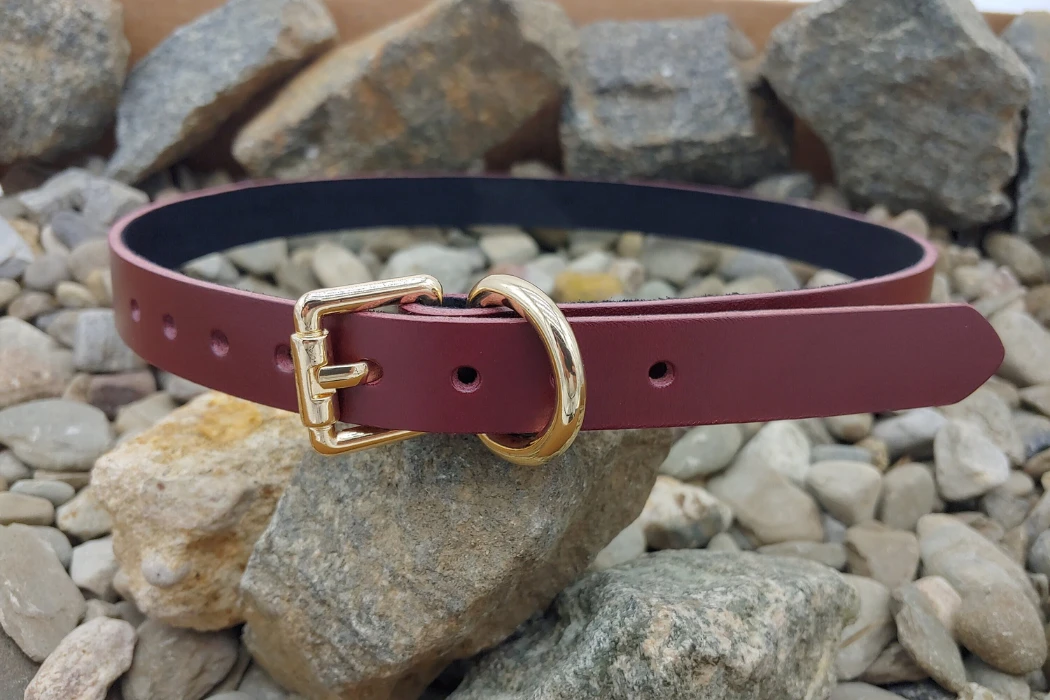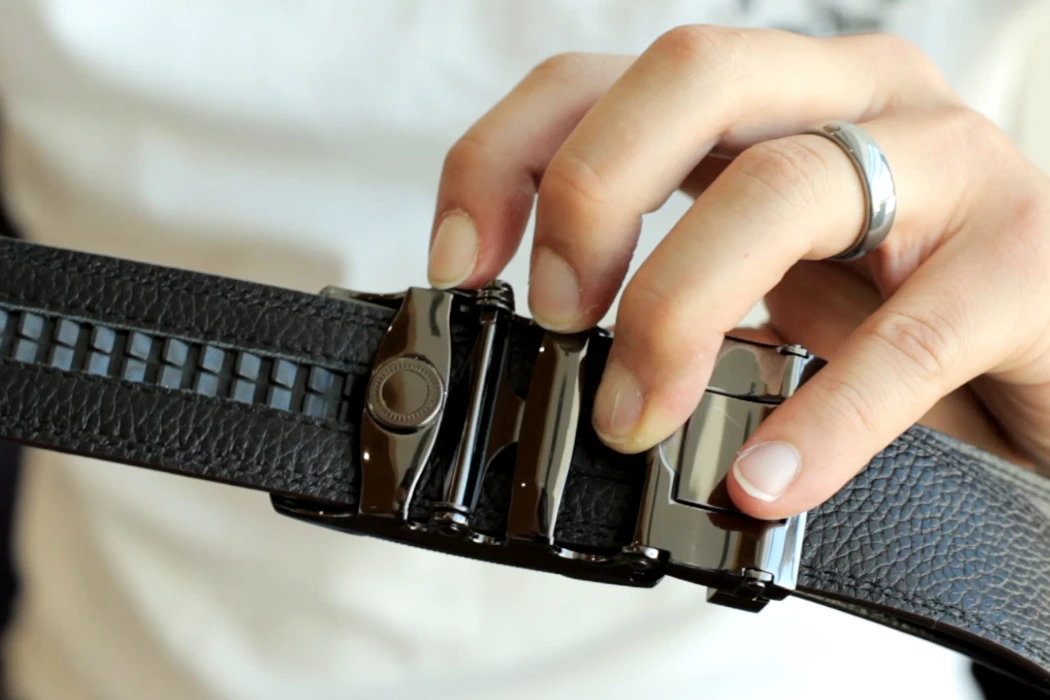
Vegetable-tanned and chrome-tanned leather are two options for a fashion-belt collection. The tanning route influences the material, but the finished article also depends on retanning, lubrication, thickness and surface finish. Compare the actual offers against the design and intended use rather than assigning a lifespan or environmental ranking to the tanning name.
Vegetable tanning uses plant-derived tannins; chrome tanning uses chromium(III) tanning agents. Both are chemical processes. Each can be followed by different treatments and finishes, so neither name alone guarantees firmness, color stability, water resistance or durability.
This guide compares the processing routes, belt performance questions, environmental evidence and purchasing choices. It separates general process descriptions from properties that need to be confirmed on the proposed material and complete belt.
What Are the Technical Differences in the Tanning Process?
Tanning stabilizes the hide’s collagen structure. Vegetable and chrome tanning use different agents, and their processing requirements differ. For a buyer, the useful specification identifies the named leather article, tanning and retanning route, thickness and finish.
The Organic Chemistry of Vegetable Tanning
Vegetable tanning uses extracts containing tannins from plant sources. It can involve different equipment and process arrangements; it should not be described as always taking place in a long pit-soaking cycle.
- Production time: Obtain the schedule for the actual leather article, including retanning, drying and finishing. A tanning-stage duration is not the same as the finished-belt lead time.
- Tannin sources: Ask the material supplier to identify the tanning system where this matters to the product brief or sourcing claim.
- Material development: The recipe and subsequent operations influence the final feel and behavior. Avoid using a simple “fiber filling” analogy as proof of strength.
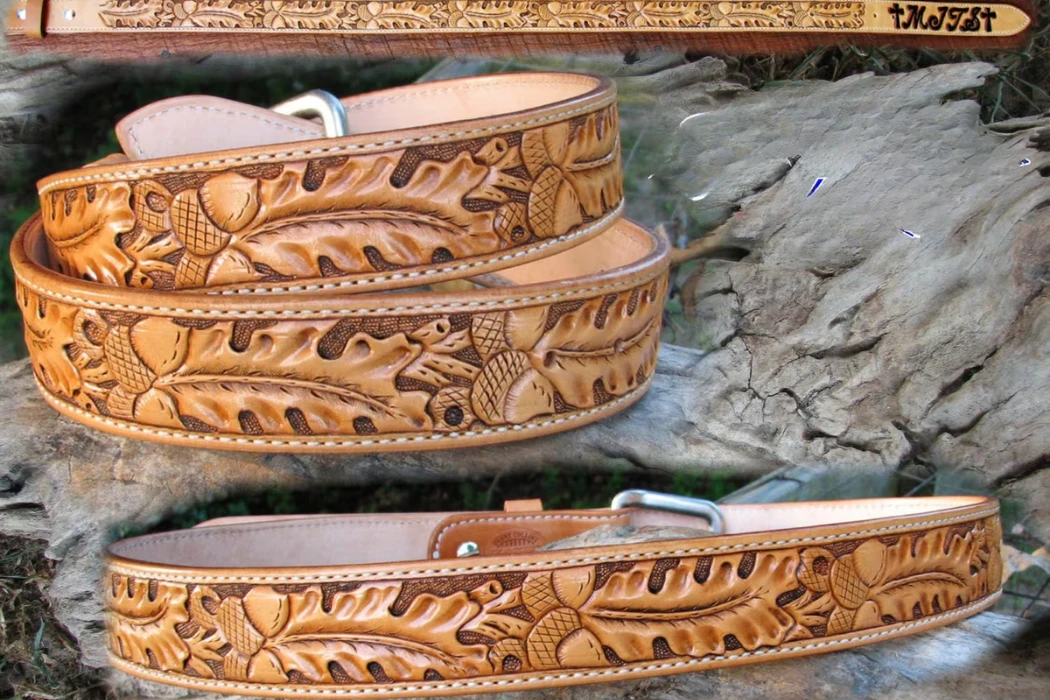
- Product characteristics: Confirm the offered thickness, firmness, grain treatment and finish. Vegetable tanning does not automatically preserve a full-grain surface or define a heavy-duty rating.
A vegetable-tanned article may suit a firm fashion-belt brief, but dimensional stability still needs to be assessed on the selected material and construction.
The Mineral Efficiency of Chrome Tanning
Chrome tanning uses chromium(III) agents, commonly chromium sulfate systems. Chromium(III) used in tanning must be distinguished from restricted chromium(VI), which can form under certain conditions. The tanning name is not a substitute for process controls or product evidence.
- Production time: Request the full material schedule. A rapid tanning step does not mean that every finished leather article is available within one or two days.
- Process control: Review the supplier’s material specification and relevant chemical controls rather than assuming that a faster reaction guarantees quality.
- Thermal behavior: If heat exposure matters to the application, specify a suitable test and acceptance requirement for the actual article. Shrinkage temperature is not a universal safe-use temperature for a belt.
- Color development: Wet blue is an intermediate chrome-tanned state. Final color and fastness depend on later coloring and finishing operations.
Verify the applicable chemical requirements for the supplied article and market. Correct processing supports compliance, but it does not by itself prove that all relevant limits have been met.
Structure, Firmness and Flexibility
Firmness and resistance to extension depend on the leather article and construction. Do not infer a fixed fiber density or a no-deformation guarantee from vegetable tanning or one strap thickness.
Chrome-tanned articles can be developed for different feels and applications. Compare them with the proposed vegetable-tanned option at a suitable thickness and finish, using relevant sample checks instead of a universal dense-versus-loose fiber ranking.
| Comparison Metric | Vegetable Tanned | Chrome Tanned |
|---|---|---|
| Primary Agent | Natural Plant Tannins | Trivalent Chromium Salts |
| Material lead time | Confirm complete article schedule | Confirm complete article schedule |
| Firmness / flexibility | Assess the offered article | Assess the offered article |
| Thermal behavior | Application-specific evidence required | Application-specific evidence required |
| Color / finish | Confirm reference and performance | Confirm reference and performance |
Why Does Tanning Method Impact Long-Term Belt Durability?
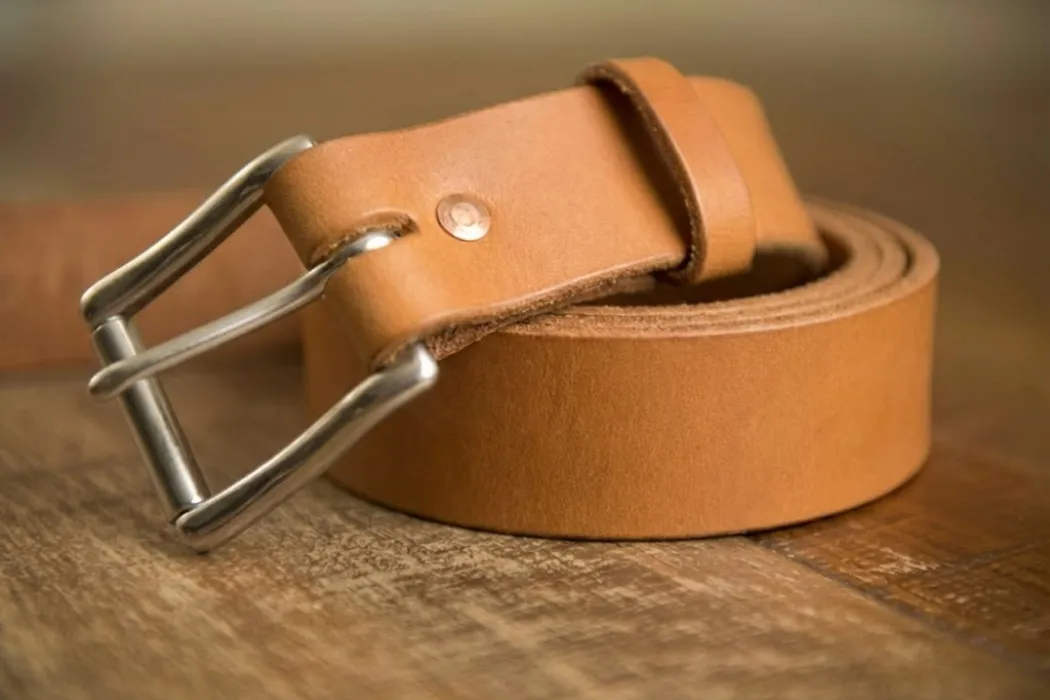
A fashion belt needs to perform under the handling, bending and fastening expected in use. Tanning is one input; seams, layers, edges and buckle attachment also matter. Fashion belts should not be assigned tool-carrying or safety loads without a separate product design and qualification.
Tensile Strength and Resistance to Stretching
Tensile strength describes stress in a defined test, while extension and permanent deformation are separate questions. Test the actual leather or assembled belt with the appropriate method and conditioning.
- Material comparison: Compare articles on a consistent thickness, sample direction and test basis.
- Thickness: Measure the material against the specification; a nominal gauge does not guarantee that it will remain unchanged for years.
- Shape retention: Check the complete belt around folds, holes and fastening areas for the intended use.
Choose the firmness that suits the design and wearer. A stiff hand feel is a design characteristic, not proof of superior waist support or longer life.
Pliability and Internal Fiber Lubrication
Fatliquoring is a leather-processing operation used to influence fiber lubrication and feel. It is not exclusive to chrome-tanned leather. The amount, type and later processing affect the offered article.
- Flexibility: Assess bending and surface condition on the actual material and assembled belt.
- Initial feel: Approve the hand feel and fit on a sample rather than promising that every chrome-tanned belt needs no break-in.
- Moisture response: Confirm the finish and care instructions. Neither the tanning salt nor an oil treatment guarantees resistance to water spots.
Do not apply a fixed lifetime stretch percentage to all chrome-tanned belts. Define the relevant extension or shape-retention checks for the specific product.
Aging Characteristics and Patina Development
Color and surface appearance can change with light, oils, handling and wear. Some finishes are designed to show these changes and others to limit them. Patina is an appearance characteristic, not a protective or self-healing layer guaranteed by a tanning route.
- Surface change: Inspect how the selected finish responds to rubbing and minor marking; do not promise that scratches repair themselves.
- Service life: There is no dependable 20–30-year lifespan for a whole tanning category. Material, construction, care and use all matter.
- Color stability: Chrome-tanned leather can also change or develop wear characteristics. An unchanged five-year appearance is not a valid universal promise.
Use finished samples to choose the aging appearance and color performance for the collection. The tanning name can guide discussion, but it cannot replace that evaluation.
How Do These Methods Compare in Environmental Sustainability?
An environmental comparison needs an identified material, production data and compatible assessment boundaries. Leather Naturally’s comparison of tanning methods emphasizes evaluating the whole process rather than treating the vegetable name as proof of lower impact.
Biodegradability and End-of-Life Realities
A plant-derived tanning input does not establish that a coated leather belt is compostable or readily biodegradable in ordinary disposal conditions.
- Degradation claim: Request the test method, conditions, timescale and exact material or product covered.
- Disposal: Consider coatings, adhesives, hardware and local waste routes. Do not describe either leather as automatically safe for landfill or home compost.
- Circular design: Consider durability, repair, component separation and realistic recovery routes for the finished product.
Compare end-of-life claims only when the evidence covers equivalent products and conditions. A tanning label alone cannot rank their disposal impacts.
Water Consumption and Effluent Management
Water consumption and wastewater loads depend on the facility, process recipe and controls. Compare measured data on the same production basis rather than assuming every vegetable process uses more water than every chrome process.
- Water data: Ask what operations are included, how consumption is measured and what output the result is normalized against.
- Recovery claims: Request facility-specific evidence for any claimed chemical or water recycling rate; do not use a universal ninety-percent figure.
- Effluent controls: Review treatment arrangements and relevant monitoring results for the actual operation and permit requirements.
A facility audit can provide evidence within its scope. It does not by itself prove that two tanning routes have the same impact or that all plants use particular recovery technology.
Chemical Safety and Heavy Metal Regulations
Define the product, intended user and destination before agreeing chemical testing. EU REACH restrictions and US children’s-product requirements have specific scopes; neither is a generic tanning certificate.
- Chromium(VI): Distinguish restricted chromium(VI) from the chromium(III) tanning agent. Assess the applicable leather requirement and relevant process controls; pH control alone is not a complete compliance strategy.
- Vegetable-tanned articles: Do not assume they are metal-free, hypoallergenic or automatically compliant. Dyes, finishes and other components still need to meet the relevant requirements.
- Third-party evidence: Check what the named scheme, certificate or laboratory report covers, its validity and whether it applies to the material being supplied.
For children’s accessories or skin-contact claims, evaluate the complete specification and applicable requirements. A vegetable or chrome-free description cannot establish safety on its own.
| Environmental Metric | Vegetable Tanning | Chrome Tanning |
|---|---|---|
| Biodegradability | Require product-specific evidence | Require product-specific evidence |
| Water Intensity | Facility/process-specific data | Facility/process-specific data |
| Heavy Metal Use | Plant tannins; verify whole article | Chromium(III) tanning; verify whole article |
| Compliance Profile | Applicable requirements and reports needed | Applicable requirements and reports needed |
| Effluent Profile | Review actual treatment and monitoring | Review actual treatment and monitoring |
Which Tanning Method Best Suits Specific B2B Market Needs?
Choosing a tanning method is a strategic business decision. It balances production cost, lead times, and brand identity. B2B buyers must align their material choice with their target retail price point and consumer expectations.
Cost-Efficiency and High-Volume Retail
For a volume program, compare available leather articles, supplier capacity and the complete finished-product schedule.
- Unit cost: Obtain matched quotations for thickness, finish, selection and order quantity. There is no dependable category-wide percentage discount.
- Lead time: Separate material procurement, sample approval, belt production and transport.
- Capacity: Confirm the material and belt factory’s available allocation for the actual order.
An appropriate article and controlled production can support repeat supply, but the tanning route does not guarantee retail margins or consistency across every unit.
Luxury Positioning and Heritage Branding
A heritage collection may favor a particular vegetable-tanned article for its look and feel. The premium positioning still needs to be supported by the finished product and accurate claims.
- Process claims: Use “hand-finished” or another operation claim only when it describes the actual production method.
- Appearance: Approve the expected surface variation and aging behavior on representative samples.
- Longevity claims: Do not anchor a brand story to an unsupported decades-long service life.
Compare the material’s cost with the design value it provides and the customer evidence you have. A more expensive tanning route does not automatically improve satisfaction.
Customization and Color Versatility
The ability to achieve specific aesthetic goals often dictates the tanning method used.
- Color: Request samples of the required shade and finish, then agree the viewing conditions and acceptable variation.
- Surface effects: Confirm compatibility of the chosen base with foil, gloss, napped or other finishes. The process needs to be assessed for the actual article.
- Embossing: Test the pattern on the proposed material and finish. A vegetable-tanned label alone does not guarantee the sharpest result.
Different articles can be used within a collection when they meet their respective design and performance requirements. Keep their specifications and claims distinct.
Can a Hybrid Approach Solve Performance Gaps?
Retanning and finishing can adjust a leather’s properties, but they should be described precisely rather than treated as a guaranteed solution to every performance gap.
Combination Tanning and Retanning
A chrome-tanned leather may be retanned with vegetable tannins. Ask the supplier what “semi-vegetable” or another commercial description means for the offered article, including the initial tanning route and subsequent treatment.
- Material balance: Evaluate the actual firmness, flexibility and appearance instead of assuming it combines only the advantages of each route.
- Cost and schedule: Compare the specific offer. A combination route is not automatically faster, cheaper or more premium.
Material Selection Strategy
| Market Segment | Material options to evaluate | Key Reason |
|---|---|---|
| Mass Retail / Fast Fashion | Available articles meeting the specification | Compare total cost, capacity and repeatability |
| Luxury / Heritage Goods | Articles with the approved feel and aging appearance | Support craftsmanship and material claims with evidence |
| Firm Casual Fashion Belts | A suitable firm article from the proposed supplier | Validate construction and shape retention; no tool or safety rating |
| Children’s Accessories | Article meeting the applicable product requirements | Verify complete-product requirements; no automatic metal-free safety |
| Premium Mid-Market | Compare specified conventional or retanned articles | Approve feel, finish, cost and performance together |
Keep the material specification, approved sample and relevant evidence together. Use them to compare quotations and verify that the finished belt matches the agreed requirements.
Frequently Asked Questions
Is vegetable-tanned leather better for the skin?
Not necessarily. A vegetable-tanned label does not establish hypoallergenic or metal-free performance. Consider the full material and finish, intended contact and relevant requirements; avoid a sensitive-skin claim without suitable evidence.
Does vegetable-tanned leather crack more easily?
Cracking depends on the article, finish, construction and use. Follow the maker’s care instructions; conditioners can alter some finishes and are not a universal preventive treatment.
Why is vegetable-tanned leather more expensive?
It is not always more expensive. Compare current quotations for the same thickness, selection, finish, quantity and terms. Process duration and material inputs can affect cost, but no fixed category price ratio applies.
Can chrome-tanned leather develop a patina?
Yes, chrome-tanned leather can change in color or surface character with use, depending on its finish. Patina and color stability should be assessed on the actual article rather than inferred solely from tanning.
Which leather suits a firm casual fashion belt?
Select an article with the desired feel and validate its construction, fastening and shape retention. Hoplok’s fashion belts are not tool-carrying, industrial safety or other load-rated equipment.
What is LWG certification?
LWG assesses leather-supply-chain facilities under its standards. Its claims guidance distinguishes facility certification from product claims. Verify the named facility, scope and certificate validity; it is not a guarantee of every belt’s quality or chemistry.
Conclusion
Choose the leather article that meets the belt’s design, performance, cost and sourcing requirements. Vegetable and chrome tanning describe different routes, while the complete material and construction determine the result. For a custom leather-belt project, Hoplok can review the material and finish brief. ProPelli carries out finishing on externally supplied crust leather, rather than tanning. Confirm the proposed article and sample requirements with the team before approving production.