“Made in Italy” is more than just a label sewn into a lining; it is a centuries-old promise of quality. However, in today’s saturated market, distinguishing between true Tuscan heritage and mere marketing has become increasingly difficult. Is that wallet truly crafted by artisans in Florence, or is it simply finished in Italy to earn the tag?
In this guide, we journey into the heart of Italy’s tanning districts to rank the 15 best Italian leather wallet brands for 2025. We have looked beyond the glossy advertisements to evaluate these brands based on the authenticity of their materials, the precision of their edge finishing, and their adherence to traditional techniques.
As manufacturing experts with over 20 years of experience in the leather industry, we understand the chemistry behind genuine Vegetable Tanning and the tactile difference of authentic Vachetta. Whether you are looking for a world-famous luxury icon or a hidden gem from a family-run workshop, this list represents the pinnacle of Italian craftsmanship.
What Defines “Authentic” Italian Leather Craftsmanship?
The phrase “Made in Italy” is legally protected, but the quality varies significantly. True Italian craftsmanship, particularly from the Tuscany region, adheres to specific historical methods that prioritize the life of the leather over mass-production speed. Here are the four pillars of authenticity.
The Tuscany Tradition (Vegetable Tanning)
The heart of Italian leather production lies in the “Leather District” of Santa Croce sull’Arno in Tuscany. Here, artisans use Vegetable Tanning, an ancient method that utilizes natural tannins extracted from chestnut, quebracho, and mimosa trees. Unlike chemical chrome tanning which takes a few days, this process takes up to 40 days. The result is a leather that is firm, smells earthy (never chemical), and develops a rich, unique patina—darkening and becoming glossier as it absorbs oils from your hands over years of use.
- Natural Tannins: Uses organic plant extracts, making it eco-friendly and hypoallergenic.
- Patina: The hallmark of veg-tan; it ages gracefully rather than wearing out.
- Structure: Offers a firm temper ideal for wallets that hold their shape.
Full-Grain vs. “Genuine”
A top-tier Italian wallet is almost invariably made from Full-Grain Leather (often referred to as Vachetta in its untreated state). This utilizes the outermost layer of the hide without sanding or buffing, retaining the maximum density of fibers. In contrast, many “designer” wallets use “Genuine Leather”—a marketing term for split leather that has been heavily coated with polyurethane to hide defects. Authentic Italian leather celebrates natural imperfections like wrinkles or pores as proof of the material’s integrity and strength.
- Strength: Full-grain retains the epidermis, providing maximum tear resistance.
- Breathability: Porous nature allows moisture to escape, preventing mold.
- Longevity: Can last decades, whereas coated splits peel within 1-2 years.
Certification Marks (The Handprint)
To verify authenticity, look for the trademark of the Consorzio Vera Pelle Italiana Conciata al Vegetale (The Genuine Italian Vegetable-Tanned Leather Consortium). This quality seal features a distinct logo of a handprint inside a hide. It guarantees that the leather was produced in Tuscany according to strict environmental and artisanal standards. Brands like Il Bussetto and traditional Florentine workshops often include a numbered certificate with this logo, ensuring traceability back to the specific tannery.
- The Logo: Look for the “Handprint” icon on tags or warranty cards.
- Guarantee: Ensures no toxic metals (like chrome) were used in tanning.
- Traceability: Numbered tags fight counterfeiting and verify origin.
Edge Finishing (Costola vs. Riboccatura)
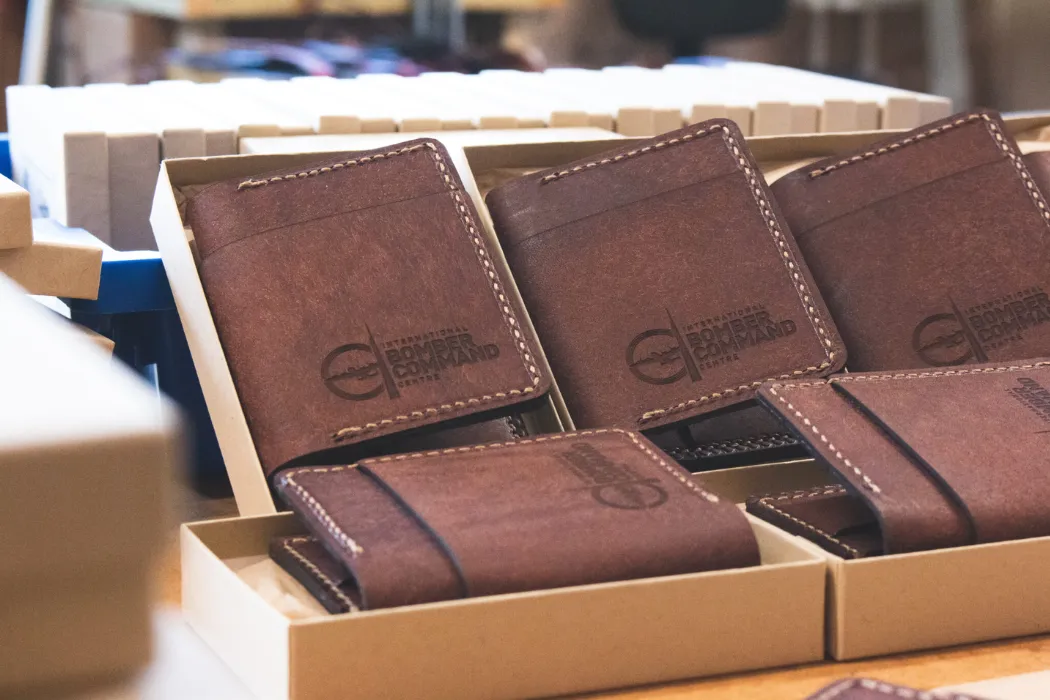
Italian edge finishing is world-renowned. There are two primary techniques. Costola (cut edge) involves hand-painting the raw edge with multiple layers of dye and wax, followed by vigorous burnishing to seal the fibers. Riboccatura (turned edge) involves thinning the leather edge (skiving) and folding it over for a seamless finish. Both require immense skill. If you see a thick, rubbery paint that sits on top of the edge rather than fused with it, it is likely a mass-produced imitation, not true Italian craft.
- Costola: Hand-painted and burnished for a natural, sealed look.
- Riboccatura: Folded edges for a refined, dressy appearance.
- Warning Sign: Avoid thick, plastic-like edge kote that peels off.
Wallet Construction 101: Styles & Durability
Even the best Italian leather will fail if the wallet’s architecture doesn’t match your lifestyle. The construction style dictates not just capacity, but also the lifespan of the item.
- The Classic Bifold: The gold standard for durability. With only one major fold point, there is minimal stress on the leather. It offers the best balance of slimness and capacity (6-8 cards + cash). Ideal for back or jacket pockets.
- The Trifold: Offers maximum capacity but at the cost of bulk. The two fold points create double the stress on the leather grain, often leading to faster wrinkling or cracking at the creases. Best for those who carry significant cash but store the wallet in a bag.
- The Zip-Around: Provides total security for coins and receipts. However, the zipper tape is a mechanical failure point. High-end Italian brands use premium zippers (like Raccagni or Lampo) that glide smoothly, whereas cheap zippers will jam and ruin the wallet’s functionality.
The 15 Best Italian Leather Wallet Brands (Summary List)
Here is our curated ranking of the top 15 Italian brands for 2025. We have organized them by their craftsmanship reputation, specific region of origin, and signature materials.
| Rank | Brand | Origin (Region) | Signature Leather / Style | Price Range (USD) |
|---|---|---|---|---|
| 1 | Bottega Veneta | Veneto | Intrecciato Woven Nappa | $550 – $900 |
| 2 | Gucci | Florence | Guccissima / Horsebit 1955 | $450 – $650 |
| 3 | Valextra | Milan | Millepunte Calfskin (No Logo) | $495 – $750 |
| 4 | Prada | Milan | Saffiano (Cross-Hatch) | $525 – $720 |
| 5 | Salvatore Ferragamo | Florence | Hammered Calfskin / Gancini | $395 – $550 |
| 6 | Tod’s | Marche | T Timeless Leather | $350 – $500 |
| 7 | Il Bussetto | Milan | Seamless Vegetable Tanned | $90 – $130 |
| 8 | The Bridge | Florence | Amber Full-Grain Veg-Tan | $180 – $280 |
| 9 | Luca Faloni | Bergamo (Materials) | Full-Grain Veg-Tan | $175 – $250 |
| 10 | Cuoieria Fiorentina | Florence | Mimì Veg-Tan / Embossed | $120 – $180 |
| 11 | Maxwell Scott | Tuscany (Production) | Classic Veg-Tan (25yr Warranty) | $150 – $250 |
| 12 | Chiarugi | Florence | Traditional Veg-Tan | $90 – $150 |
| 13 | Old Angler | Florence | Hand-Dyed Veg-Tan | $100 – $160 |
| 14 | Pratesi | Florence | Aged “Radica” Leather | $110 – $190 |
| 15 | Von Baer | Italy (Production) | Premium Full-Grain | $150 – $220 |
1. Bottega Veneta
Origin: Veneto | Price: $550 – $900
Bottega Veneta sits at the throne of Italian leathercraft. Without a visible logo, their luxury is defined entirely by the Intrecciato weave—a labor-intensive technique where strips of Nappa leather are hand-woven to create a structure stronger than a single hide. It is the ultimate symbol of “stealth wealth” and tactile superiority.
2. Gucci
Origin: Florence | Price: $450 – $650
Founded in Florence in 1921, Gucci is the global ambassador of Italian fashion. Their Horsebit 1955 and Guccissima embossed wallets blend heritage with modern flair. While often flashy, the construction remains top-tier, utilizing substantial full-grain leathers and heavy, jewelry-grade hardware that honors their equestrian saddlery roots.
3. Valextra
Origin: Milan | Price: $495 – $750
Known as the “Italian Hermès,” Valextra is a master of Milanese architectural minimalism. Their wallets feature the signature Millepunte calfskin—a multidimensional pebbled texture that is incredibly resilient. Famous for their “Costa” lacquered edges, hand-painted in multiple layers, Valextra offers a crisp, graphic look for the design purist.
4. Prada
Origin: Milan | Price: $525 – $720
Prada revolutionized the industry with Saffiano leather, a heat-pressed, cross-hatch calfskin invented by Mario Prada. This treatment renders the leather virtually scratch-proof and water-resistant. A Prada wallet is the definitive choice for the pragmatist who demands a luxury item that looks brand new after years of daily abuse.
5. Salvatore Ferragamo
Origin: Florence | Price: $395 – $550
Ferragamo brings a shoemaker’s precision to small leather goods. Their wallets often feature hammered calfskin, offering a soft, pebbled texture that hides wear effectively. The iconic Gancini metal hardware is integrated subtly, offering a classic Florentine aesthetic that pairs perfectly with formal business attire.
6. Tod’s
Origin: Marche | Price: $350 – $500
Tod’s is synonymous with the Italian “Dolce Vita” lifestyle. Famous for their driving shoes, their wallets carry the same DNA: exceptional softness and relaxed elegance. The T Timeless line uses high-grade, drum-dyed leathers that feel supple from day one, prioritizing sensory touch over rigid structure.
7. Il Bussetto
Origin: Milan | Price: $90 – $130
Il Bussetto preserves a rare, ancient Milanese technique: seamless leather molding. Their iconic Tacco coin cases and wallets are shaped on wooden forms from wet vegetable-tanned leather, eliminating stitching entirely. This results in a smooth, sculptural object that is durable, unique, and deeply rooted in Italian tradition.
8. The Bridge
Origin: Florence | Price: $180 – $280
The Bridge is the definition of “Retro Tuscan” style. Since 1969, they have used only full-grain vegetable-tanned leather that is hand-buffed to a glowing Amber finish. These wallets are built like tanks, with thick stitching and unlined interiors, designed specifically to develop a heavy, personalized patina over decades.
9. Luca Faloni
Origin: Bergamo (Materials) | Price: $175 – $250
Luca Faloni is a modern success story, bringing a Direct-to-Consumer model to luxury craftsmanship. They source full-grain vegetable-tanned leather exclusively from Santa Croce, Tuscany. Their wallets are hand-made by skilled artisans, offering a perfect balance of traditional Italian quality and contemporary, functional design without the retail markup.
10. Cuoieria Fiorentina
Origin: Florence | Price: $120 – $180
Deeply rooted in Florence, Cuoieria Fiorentina embodies the region’s artistic flair. Their signature Mimì collection features embossed vegetable-tanned leather that is both durable and distinct. They focus on classic shapes with a touch of Florentine elegance, offering excellent value for a genuinely Italian-made product.
11. Maxwell Scott
Origin: Tuscany (Production) | Price: $150 – $250
Maxwell Scott combines British design sensibility with authentic Italian manufacturing. Every wallet is handcrafted in Tuscany using premium vegetable-tanned leather. They are so confident in their quality that they offer a 25-year warranty. Their style is strictly classic and corporate, perfect for the traditional gentleman.
12. Chiarugi
Origin: Florence | Price: $90 – $150
Famous for their iconic leather doctor bags, Chiarugi applies the same rugged construction to their small leather goods. They use vegetable-tanned leather that retains a natural, slightly rustic character. These wallets are unpretentious, focusing entirely on the tactile quality of the hide and robust stitching.
13. Old Angler
Origin: Florence | Price: $100 – $160
Old Angler is a family-run business that prides itself on the “Tamponato” hand-dyeing technique. This manual process gives their wallets a rich, uneven color depth that machines cannot replicate. Their designs are timeless and functional, appealing to those who appreciate the “human touch” in their accessories.
14. Pratesi
Origin: Florence | Price: $110 – $190
Pratesi is unique for its Radica leather—a proprietary aging process that gives their wallets a distinct, vintage wood-grain appearance. Founded in 1948, they maintain a very traditional aesthetic. If you want a wallet that looks like it has already lived a full life from the day you buy it, this is the brand.
15. Von Baer
Origin: Italy (Production) | Price: $150 – $220
Von Baer focuses on creating the ultimate modern classic. They source premium full-grain leather from Italian tanneries and manufacture strictly in Italy. Their wallets are designed to be slim yet durable, stripping away unnecessary bulk while maintaining the luxurious feel and smell of authentic Italian leather.
How to Identify a High-Quality Italian Leather Wallet
With the market flooded with “Genuine Leather” stamped products, knowing how to spot authentic Tuscan quality is a valuable skill. True luxury isn’t just about the brand name; it’s about sensory details that cheap manufacturing cannot fake. Here are the three expert tests to perform.
The Smell Test (Vegetable Tanning)
Authentic Italian vegetable-tanned leather has a distinct, unmistakable aroma. It smells earthy, woody, and sweet—a result of the natural tannins (chestnut, quebracho) used in the 40-day tanning process. If you open the box and smell chemicals, plastic, or a sharp acrid scent, it is a sign of cheap chrome tanning or heavy polyurethane coatings. A true Italian wallet should smell like nature, not a factory.
The Burnish Check (Edge Finishing)
Run your finger along the edge of the wallet. In high-end Italian craftsmanship, the edges are hand-burnished (polished with wax) or hand-painted until they feel smooth as glass. This seals the leather fibers against moisture. Cheap wallets often have “fuzzy” raw edges or a thick, rubbery paint that feels distinct from the leather. If the edge feels rough or looks like a separate layer of plastic, it will likely peel within months.
The Stitching Line (Saddle Stitch)
Inspect the stitching closely. Mass-produced wallets use a “Lock Stitch” done by machine, which looks perfectly straight. Artisanal Italian wallets often use a “Saddle Stitch” (or machine simulation of it), where the stitches sit at a slight angle. This angled aesthetic is not just beautiful; it indicates a tighter hold. Furthermore, look for thread ends that are back-stitched or melted securely, not just glued. The thread should sit slightly recessed in the leather to avoid abrasion.
| Feature | Authentic Quality Sign | Red Flag (Avoid) |
|---|---|---|
| Smell | Earthy, woody, organic aroma. | Chemical, plastic, or acrid smell. |
| Touch | Warm, textured, and “grippy”. | Slick, cold, or overly uniform/plastic feel. |
| Edges | Smooth, fused, and glass-like. | Rough, fuzzy, or peeling rubber paint. |
| Structure | Firm but flexible (Vegetable Tanned). | Floppy (Chrome Tanned) or Stiff (Bonded). |
Matching the Wallet Architecture to Your Lifestyle
Even the finest Tuscan leather is wasted if the wallet’s design doesn’t fit your daily routine. Italian artisans craft specific silhouettes for specific contexts. Choosing the wrong architecture can lead to overstuffing, ruining the leather’s shape, or creating uncomfortable bulk in your pocket.
The Classic Bifold vs. Coat Wallet
The **Classic Bifold** is the universal standard for everyday carry, fitting perfectly in a back pocket with space for 6-8 cards. However, for formal business settings, the **Coat Wallet** (Breast Pocket Wallet) is superior. Taller and thinner, it holds banknotes without folding them. Crucially, it slides seamlessly into the inner breast pocket of a suit jacket without creating a visible bulge, preserving the clean lines of your tailoring where a bulky bifold would ruin the silhouette.
The Zip-Around Security
For travelers, the **Zip-Around** offers peace of mind—nothing can fall out. However, the zipper is a mechanical stress point. Top-tier Italian brands specify premium zippers from **Raccagni** or **Lampo**. These feature individually polished teeth that glide effortlessly around corners without snagging. A cheap zipper will eventually jam, rendering the entire wallet useless regardless of the leather quality. If you choose this style, ensure the hardware matches the pedigree of the hide.
RFID Protection vs. Traditional Feel
Modern security often clashes with traditional tactility. **RFID-blocking** wallets contain a metallic mesh layer between the leather and lining to block signals. While functional, this layer makes the wallet feel stiffer and can create a “crinkly” sound, interfering with the natural pliability of vegetable-tanned leather. If you prioritize the soft, molding nature of Italian leather and the development of a deep patina, we recommend a traditional non-RFID wallet, using a separate blocker card if necessary.
The Coin Pocket Dilemma
European designs frequently include a snap-button coin pouch inside the bifold. While practical for Euro coins, this adds significant thickness, often doubling the wallet’s profile even when empty. For a sleek, minimalist aesthetic, we strongly advise avoiding the coin pocket. If you must carry change, consider a separate **Tacco** (horseshoe coin case) from a brand like Il Bussetto. This keeps your main wallet slim and prevents coins from leaving unsightly circular indentations in the fine leather.
| Wallet Style | Best Use Case | Pros & Cons |
|---|---|---|
| Classic Bifold | Daily Commute / Casual | Pro: Balanced capacity. Con: Can get bulky in back pockets. |
| Coat Wallet | Formal Events / Suits | Pro: Slimmest profile; holds crisp bills. Con: Requires a jacket to carry. |
| Zip-Around | Travel / Heavy Carry | Pro: Total security. Con: Thickness; zipper failure risk. |
| Coin Pocket Bifold | Cash-Heavy Economies | Pro: Utility. Con: Adds significant bulk and indents leather. |
Caring for Italian Vegetable-Tanned Leather
Owning a vegetable-tanned wallet is like owning a living organism. Unlike chrome-tanned leather, which is sealed and static, veg-tan leather reacts to its environment. It absorbs oils, darkens in the sun, and scratches easily. This is not a defect; it is the journey of developing a personal Patina.
The Art of Patina (Letting it Age)
The goal of owning an Italian wallet is not to keep it looking “new,” but to make it look “yours.” The oils from your hands are the best conditioner. Regular use will darken the color (especially on natural/tan shades) and create a glossy sheen that hides minor surface scratches. Do not baby it excessively; let the friction of your pocket polish the surface naturally over time.
The Water Enemy (Hydrophobia)
Vegetable-tanned leather is highly porous and hydrophilic. Raindrops can leave permanent dark spots if not treated immediately. Rule #1: Never use a hairdryer. If your wallet gets wet, pat it dry with a clean cloth and let it air dry at room temperature. Artificial heat will shrink the fibers and cause the leather to crack or become brittle.
Conditioning Routine
Because it has no synthetic coating, veg-tan leather can dry out. Apply a high-quality, natural leather cream (like Saphir or Smith’s) every 6 months. Avoid heavy waxes or silicone-based products that clog the pores and prevent the leather from breathing. A light layer keeps the fibers flexible and prevents the fold points from cracking.
Conclusion: An Investment in Living Art
An authentic Italian leather wallet is the antithesis of fast fashion. It is an object that improves with age, telling the story of its owner through every scuff and shine. Whether you choose the woven mastery of Bottega Veneta or the rugged simplicity of The Bridge, you are investing in a tradition that values patience over production speed.
Source Authentic Italian-Quality Leather Goods with Hoplok
Many brands aspire to offer the rich tactility and scent of Tuscan leather but are constrained by the prohibitive manufacturing costs in Europe. At Hoplokleather, we bridge this gap, offering a solution that combines Italian material standards with scalable manufacturing efficiency.
We don’t just manufacture; we replicate the soul of the craft:
- Global Sourcing: Our in-house ProPelli tannery imports raw hides and natural tannins directly from the same supply chains used by Italian consortiums, allowing us to produce vegetable-tanned leather that smells, feels, and patinas just like the Florentine original.
- Artisan Training: Our 4,500 artisans are trained in specific European finishing techniques, including the meticulous Turned Edge (Riboccatura) and hand-applied Costola edge painting, ensuring your products have that high-end “hand-finished” look.
- Cost Efficiency: By leveraging our dual-country manufacturing facilities in China and Cambodia, we deliver “Made in Italy” quality levels at a price point that allows your brand to remain competitive in the global market.
If you are a brand looking to launch a collection of premium vegetable-tanned wallets that rival the best of Tuscany, we are your ideal partner. We offer comprehensive OEM/ODM services with flexible MOQs.
Bring the Italian standard to your brand. Contact our team today to start your custom project.