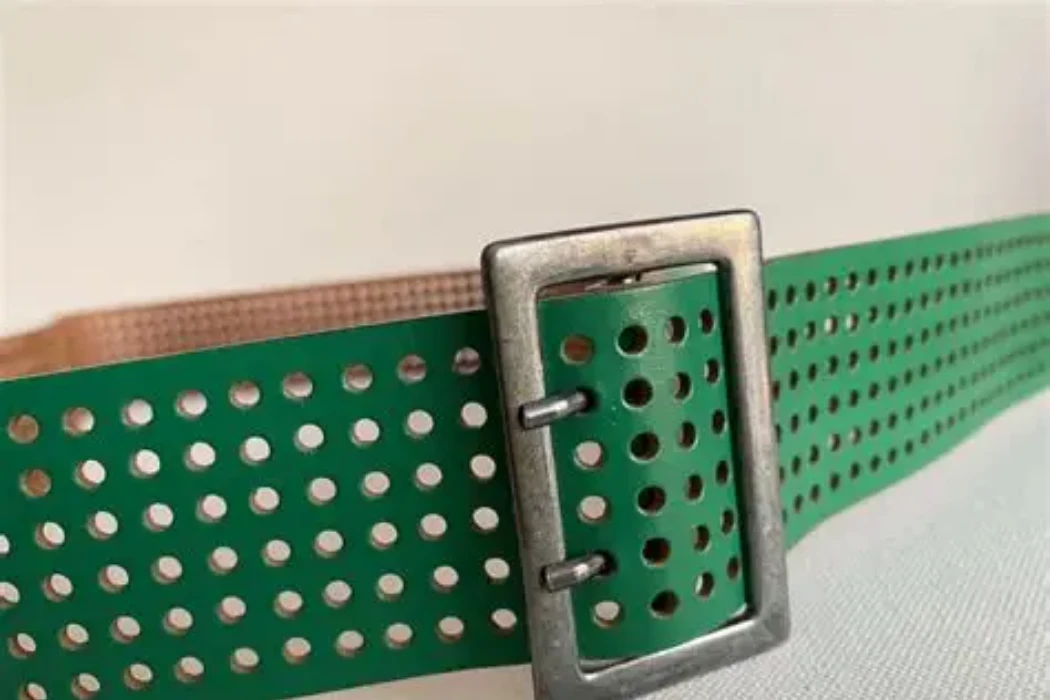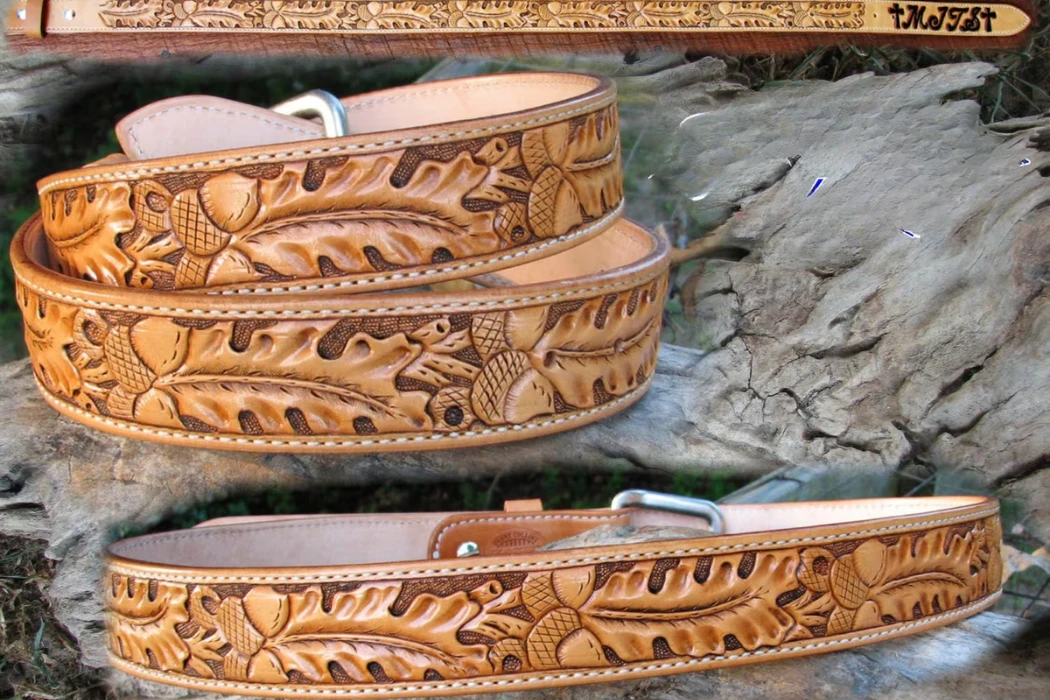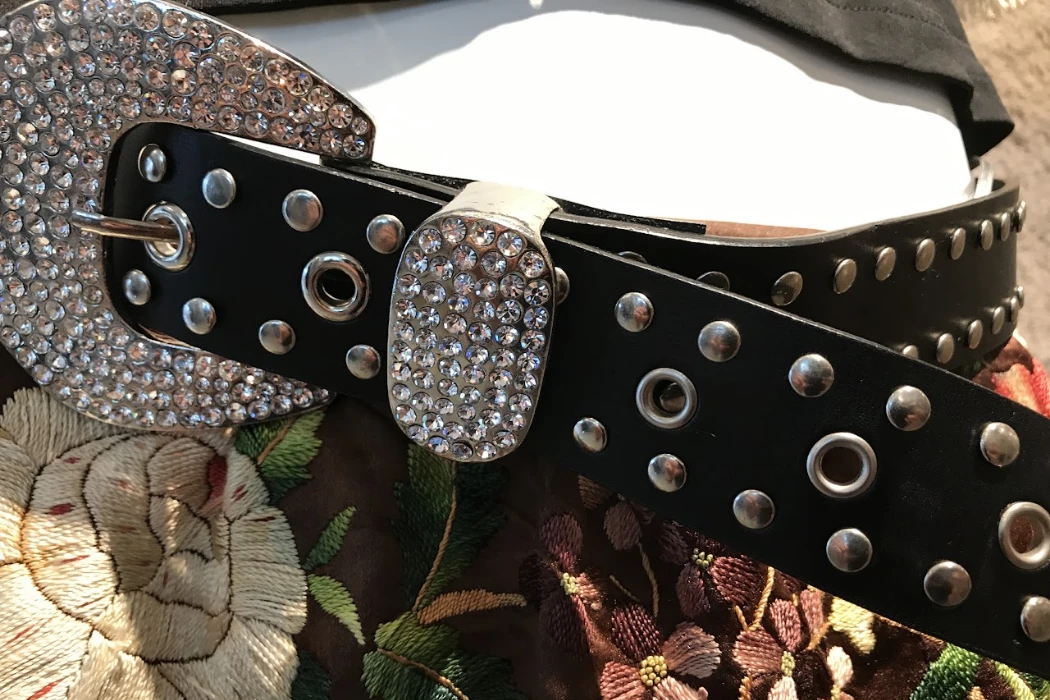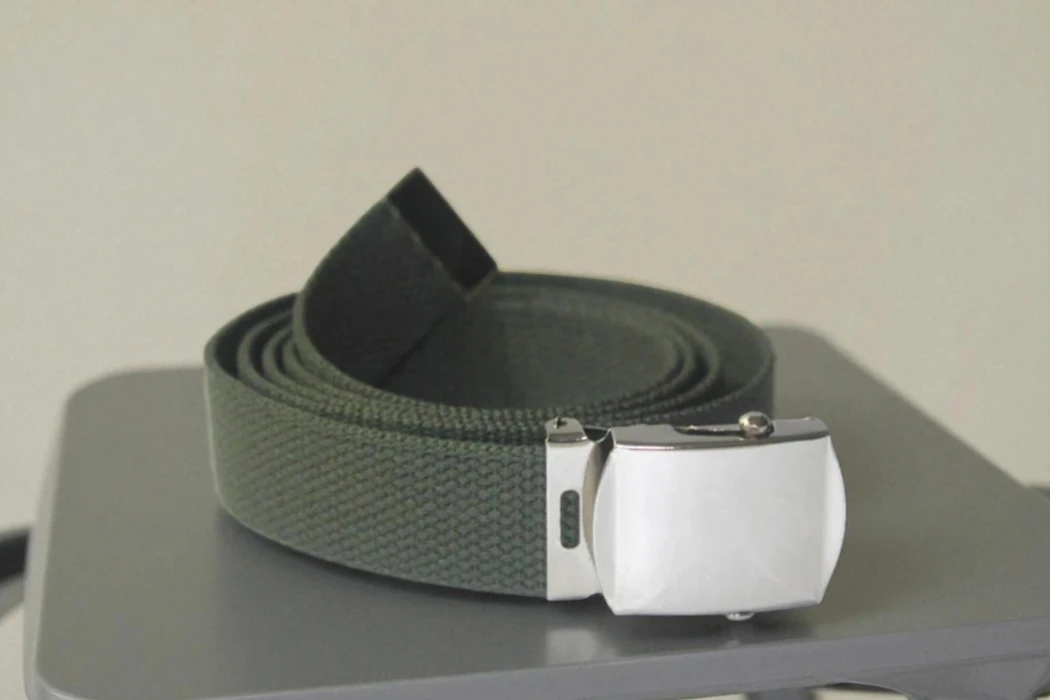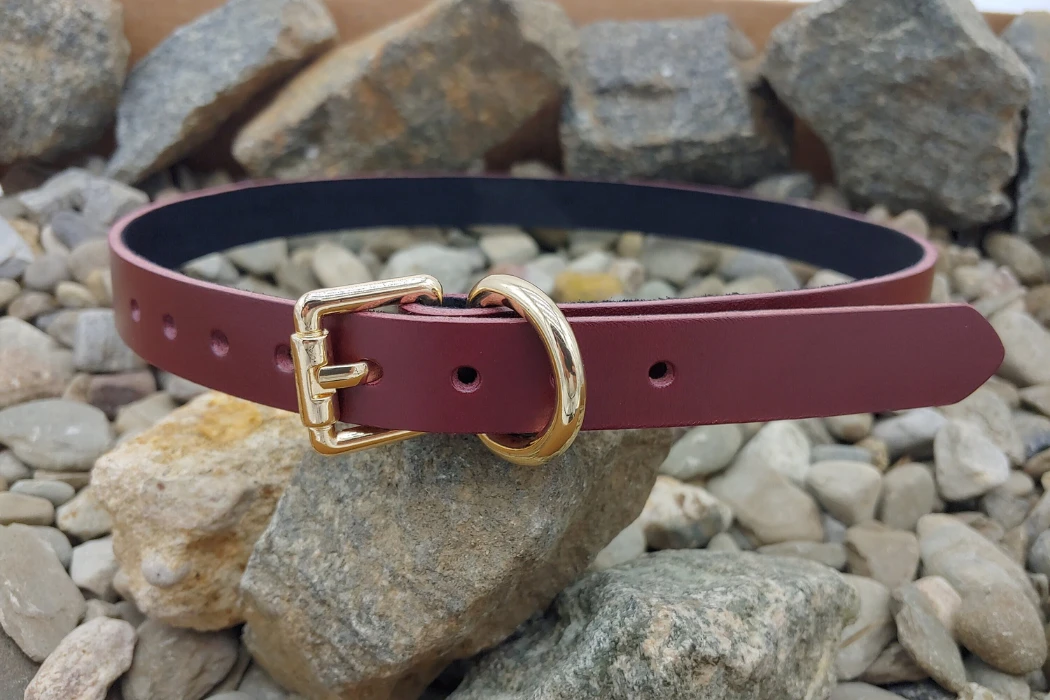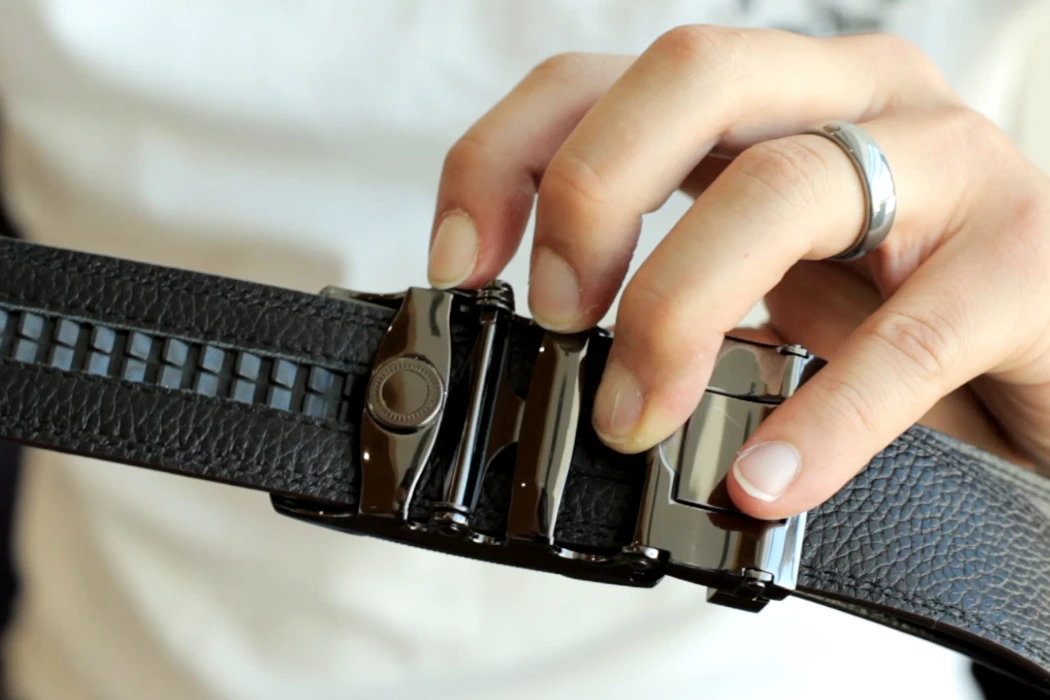
For a single-layer casual belt, a firm leather article with suitable thickness and controlled stretch is a practical starting point; full-grain vegetable-tanned cowhide is one option to evaluate. Dress, reversible and softer fashion belts can use other tannages and layered constructions. There is no universally best combination for every belt.
A material label cannot establish years of use. The leather article, cutting area, thickness, backing, edge treatment, holes and buckle attachment all affect the finished belt. “Genuine leather” does not mean a specific low-grade split, and bonded material should be identified by its actual composition.
This guide explains how a sourcing team can compare those choices using a bill of materials, a representative sample and product-specific acceptance criteria. The focus is ordinary fashion belts.
Which Leather Description Fits the Belt Specification?
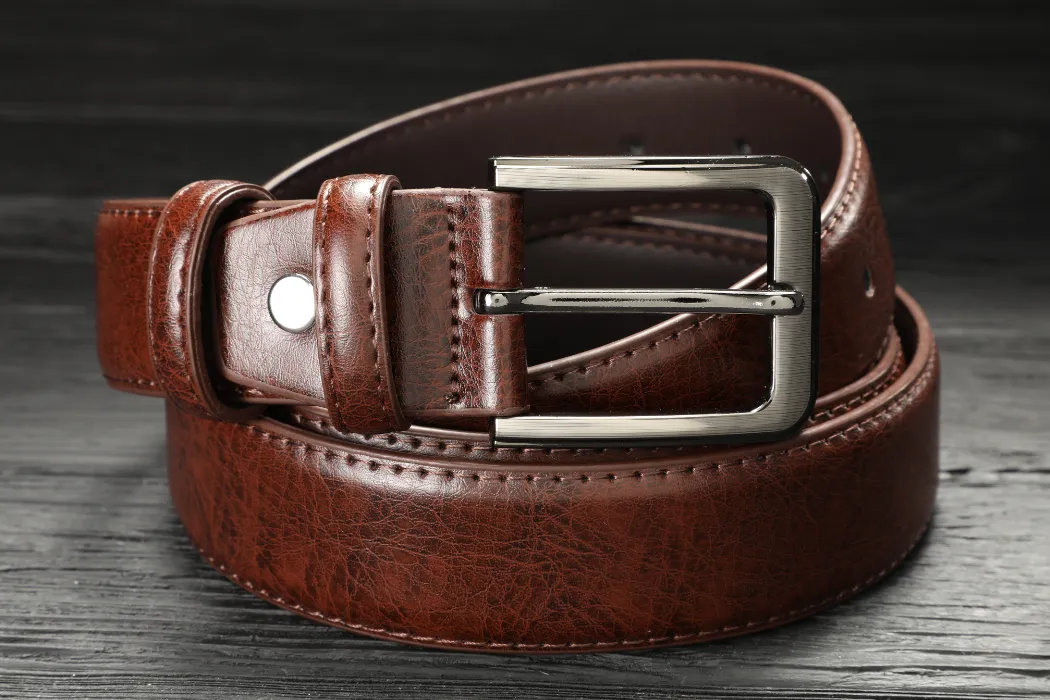
Full-grain, corrected-grain, split and bonded descriptions address different material structures. They are not a universal strength or lifespan ranking. Identify the exact article and assess it in the intended strap construction.
Full-grain leather
Full-grain leather retains its original grain surface without corrective sanding. It can suit a belt where natural variation is part of the design. Tanning, finish, thickness and cutting area still need specification; an intact grain surface alone does not guarantee low stretch, moisture resistance or durability.
Top-grain and corrected-grain descriptions
Top-grain is used inconsistently in trade. Ask whether the grain has been corrected, embossed or coated and how the supplier defines the term. Corrected-grain leather can provide a more controlled surface appearance, but the amount of correction and finish should be assessed through the sample. No standard sanding depth or fixed years-to-cracking applies.
Genuine leather and split leather
Genuine identifies leather rather than a universal grade. Split leather is a separate material description for a lower hide layer. A coated split may be used in a specified layered belt construction, but its coating, backing, holes and flex performance require assessment. It should not be represented as full-grain leather.
Bonded or reconstituted material
A material made from disintegrated leather fibers and binder is different from an intact leather layer. Request the fiber, binder and backing composition and use an accurate description. Evaluate the declared material and its intended role in the belt construction.
| Description | What to establish | Belt sample check |
|---|---|---|
| Full-grain | Retained grain; tannage, finish, thickness and temper | Natural variation, stretch, holes and edge behavior |
| Corrected-grain | Extent of correction and applied finish | Flex appearance, coating adhesion and color transfer |
| Split leather | Layer, finish and any reinforcement | Layer bonding, holes, flexing and strap function |
| Bonded/reconstituted material | Declared composition and backing | Suitability for the proposed component and truthful labeling |
See the LWG material definitions when agreeing terminology in the bill of materials. Test evidence should identify the same material and construction as the order.
How Do Tanning and Finishing Affect a Belt?
Tanning matters, but temper is also affected by retanning, oils, drying, thickness and finishing. Vegetable-tanned leather can be firm or supple, and chrome-tanned leather is not automatically unsuitable for belts. Specify the finished article rather than treating tannage as a complete performance specification.
Vegetable-tanned options
Vegetable tanning uses plant-derived tannins. A suitably firm article can be useful for a single-layer casual strap and for particular tooling or edge-finishing effects. Check the proposed leather’s stretch, flexibility, dye behavior and response to the intended finish. Neither the tanning time nor the ability to hold an impression is identical across all articles.
Chrome-tanned and combination-tanned options
Chrome-tanned leather can be retanned and finished for different uses. As a product example, Red Wing’s Style 96550 belt identifies chrome tanning with vegetable retannage. This demonstrates why a blanket exclusion of chrome-tanned belt leather is misleading; approve the actual article and construction.
Bridle and latigo descriptions
Bridle and latigo names can point to particular tanning and dressing traditions, but the supplier’s formulation remains important. Request the tannage, temper, oil/wax treatment and suitable end use. Horween’s glossary explains combination tanning and hot stuffing; the terms do not establish that all such leathers share one performance level.
Hoplok material development
Agree tannage, thickness, temper and finish with the sourcing team. ProPelli processes crust received from external tanneries and performs leather finishing. Review the finished swatch and assembled belt against the approved specification; finishing capability should not be described as raw-hide tanning.
How Should Cutting Area and Hide Yield Be Controlled?
Leather can vary across a hide and between hides. Long straps make variation in temper, thickness and stretch particularly important. A named cutting area can help communicate a purchasing requirement, but it does not guarantee that every strap will stay straight or stretch by a fixed amount.
Specify suitable strap areas
Ask which hide areas are proposed and inspect representative straps. Assess firmness, grain looseness, defects and length in relation to the pattern. Back or butt areas may be considered, but shoulders and other usable areas need to be evaluated rather than rejected by a universal ranking.
Control variation along the strap
Check thickness at agreed positions and examine both faces. Assess the strap’s behavior in the direction it will be used, particularly around the adjustment holes and buckle fold. Cutting direction, temper and construction can matter alongside the nominal hide area.
Agree cutting and yield requirements
Ask the supplier to explain usable yield, offcut handling and any restricted cutting zones. A larger rejected area does not automatically prove better quality. Establish Hoplok’s approved cutting specification and dimensional requirements for the order.
- Define permitted surface variation and prohibited defects on an approved sample.
- Specify minimum usable strap length and thickness tolerance.
- Agree treatment of loose grain or unusually stretchy sections.
- Record any required cutting-area limitation in the production specification.
Match the Material to the Fashion-Belt Design
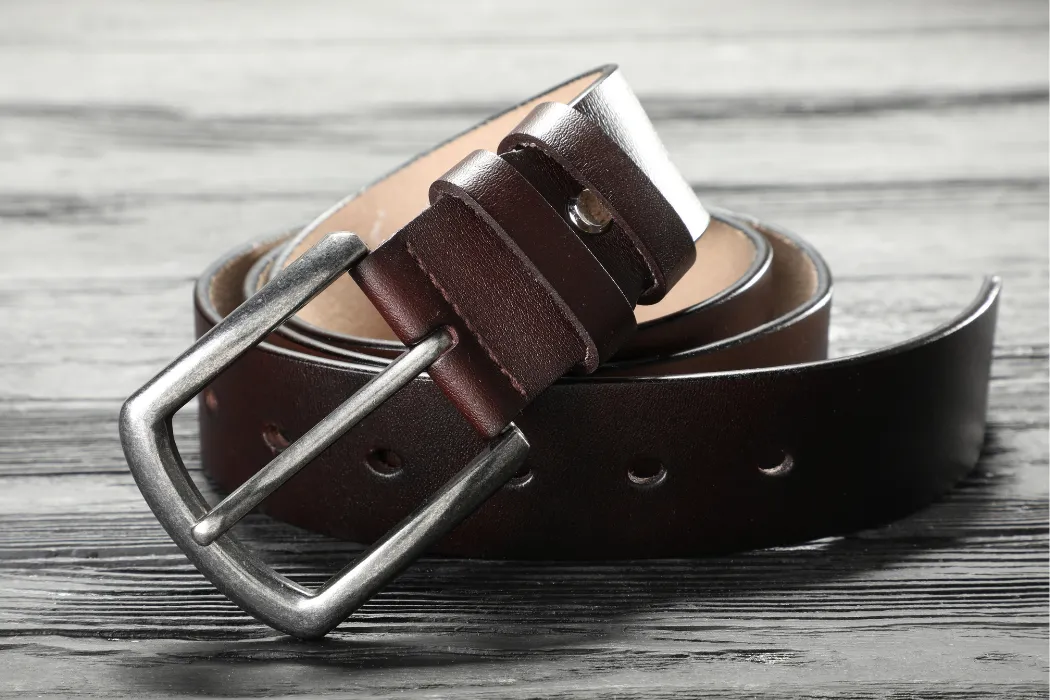
Belt style determines the desired surface, profile, flexibility and buckle proportions. The examples below concern ordinary casual and dress belts. Product appearance does not qualify a belt for carrying tools, a holster, supporting body weight or other specialist uses.
Casual belts
For denim or casual trousers, compare strap firmness, width, thickness and surface finish with the intended belt loops and buckle. Cowhide, including full-grain articles, offers several design options. Approve the actual wear sample rather than specifying a universal thickness as proof that the belt cannot roll or stretch.
Dress belts
A lined construction can combine a chosen surface leather with a backing and any specified reinforcement. Calfskin or another smooth leather may suit the intended appearance, but a flawless grain or high polish is not automatic. Check seam bulk, edge finish, flexibility and the finished profile.
Bison, buffalo and specialty leather descriptions
Ask for the actual animal source; bison and buffalo should not be treated as interchangeable specification terms. Evaluate strength against the proposed cowhide under the same conditions. If a specialty article such as shell cordovan is proposed, confirm availability, cutting yield and construction. Horween describes shell cordovan as coming from a particular part of horsehide; it is not a promise of permanent shine or unlimited life.
Embossed and textured options
An embossed conventional leather or PU surface can provide a patterned look. Specify the base material and finish accurately; a reptile-like pattern does not mean real exotic skin. Hoplok does not offer real crocodile, python or other exotic skins, so those should not be included as manufacturing options.
| Belt style | Material approach | What to approve |
|---|---|---|
| Single-layer casual | Firm leather article with suitable thickness | Strap behavior, holes, buckle fold and edge finish |
| Lined dress | Surface leather, backing and reinforcement as specified | Finished profile, bonding, stitching and flexing |
| Reversible fashion | Two specified faces with a suitable buckle system | Layer adhesion, edge finish and repeated reversal |
| Textured fashion | Embossed conventional leather or PU | Pattern consistency, truthful material description and finish durability |
How Should Belt Thickness Be Specified?
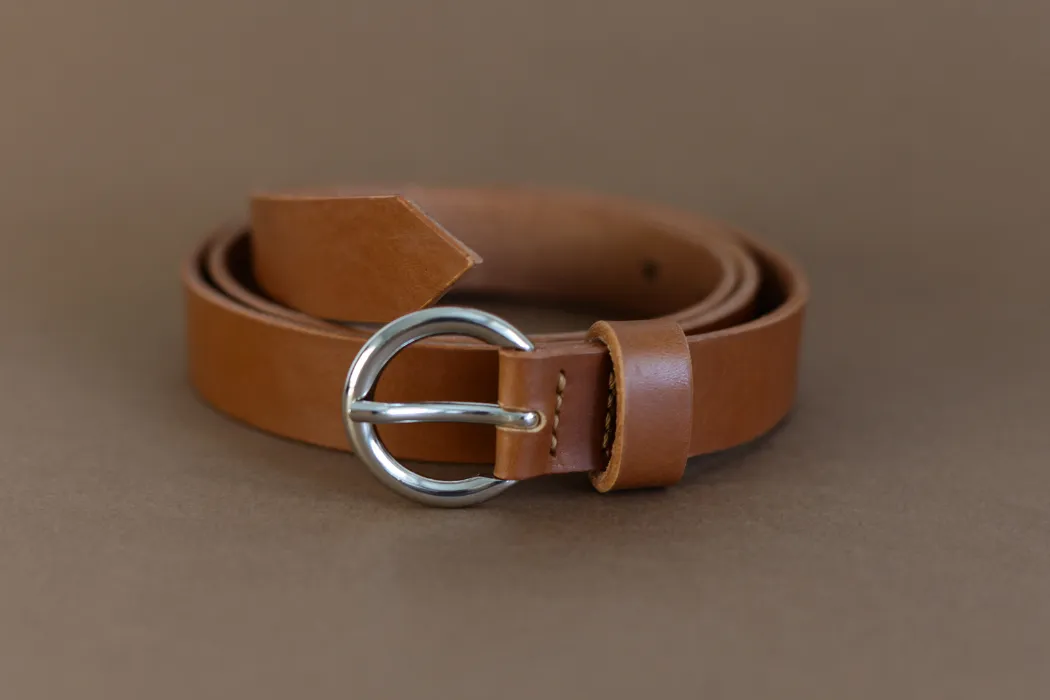
Thickness is important, but it is not a standalone quality rating. Define the layer thicknesses and finished strap thickness, then match them to the buckle, holes, loops and intended handling. A thin layered belt and a thicker single strap can both be appropriate designs.
Ounces and millimeters
In leathercraft, an ounce designation can refer to thickness: approximately 1/64 inch, or 0.4 mm, per ounce. Tandy’s conversion guide explains the convention. Use millimeters and a tolerance on the production specification so the requirement is clear.
| Leather designation | Approximate thickness | Interpretation |
|---|---|---|
| 6 oz | 2.4 mm | Conversion only; not a dress-belt requirement |
| 8 oz | 3.2 mm | Conversion only; not a quality threshold |
| 9 oz | 3.6 mm | Conversion only; not a universal casual-belt standard |
| 10 oz | 4.0 mm | Conversion only; not evidence of specialist load capacity |
Single-layer construction
Assess the strap’s temper, grain, stretch and thickness together. Check the buckle fold, hole edges and keeper. A minimum ounce label cannot establish performance without the actual material and geometry.
Lined construction
Specify the face leather, backing, any core, adhesive and stitch design. The overall thickness depends on the assembled and finished layers, not only the nominal sum of raw materials. Bonding and stitching require approval; they do not automatically eliminate stretch or delamination.
Measure the finished sample
Record thickness at agreed locations, including areas that are skived or folded. Check the largest and smallest sizes and any tapered sections. Fit the final buckle and keeper before approving the strap specification.
How to Assess a Belt Sample Before Production
Use the material declaration and construction drawing alongside the sample. Smell, squeaking, weight and a fingernail scratch are not reliable ways to establish leather grade. Avoid damaging a saleable sample as a supposed authenticity test.
Inspect the surface and material records
Compare the sample with the specified leather article and finish. Observe grain, coating, embossing and color variation under consistent lighting. Natural variation is not automatically a defect, and a uniform surface is not proof of synthetic material.
Examine the edge and layers
An exposed cross-section or agreed cut sample can help confirm the construction. Burnished, painted and folded edges serve different designs; edge paint is not by itself a sign of a concealed low-quality core. Review the actual bill of materials, edge coverage and adhesion.
Check holes, buckle attachment and fit
Assess hole position and finish, pin alignment, keeper fit and the buckle fold. Flex the sample in the manner agreed for inspection and look for damage or functional problems. Establish any repeated-use test and acceptance criteria before making a durability claim.
Review finish performance and care
Request relevant color-transfer, flexing or other results for the proposed article and construction. Where a failure occurs, identify whether it is in the leather, coating, adhesive or assembly. Use finish-specific care instructions; oils from fingers or a conditioner do not make a scratch test conclusive.
Frequently Asked Questions for Belt Sourcing
What is the strongest leather for a belt?
Strength depends on the specified leather, thickness, cutting direction and belt construction. Define the required test and acceptance criteria. A species or full-grain label alone cannot establish a universally strongest strap, and this guide does not qualify specialist load-bearing belts.
Is buffalo leather good for belts?
It may be an option if the particular article meets the design and performance requirements. Confirm the animal source, finish, thickness and temper. Compare it with the proposed cowhide under the same test conditions rather than relying on a fixed strength percentage.
Do leather belts stretch over time?
Leather can change with repeated load, moisture and wear. The amount depends on the article and construction. Specify the permitted dimensional change and test conditions; neither belly nor butt location establishes a universal lifetime stretch percentage.
Can a reversible belt be good quality?
Yes, a reversible design can be evaluated through its materials, layer bonding, edge finish and buckle mechanism. Reversible construction is not synonymous with bonded leather fiber material. Check repeated reversal and use against the agreed requirements.
How long does a full-grain belt last?
There is no fixed service life from the material label. Use, environment, construction, finish and care affect durability. Product-specific evidence and a defined warranty are more useful than promising a set number of years.
Why is a belt cracking?
The visible crack may involve the leather, coating, edge paint or a layered construction. Inspect the affected part and review the material and process records. Do not assume that every crack proves split leather or that conditioner repairs a failed coating or bond.
Approve a Complete Belt Specification
A suitable belt combines a defined leather article with the right cutting, thickness, construction and finish. Full-grain vegetable-tanned leather can be a useful starting point for a firm casual strap; other tannages and layered designs also deserve evaluation against the intended product.
For Hoplok, specify the material, finish, thickness, sizes, buckle and target market. ProPelli finishes externally sourced crust and does not make every leather choice or cutting area automatically suitable. Agree the production specification and test evidence against an approved belt sample.
| Attribute | Decision to document | Evidence to review |
|---|---|---|
| Leather | Animal source, layer, tannage and finish | Material declaration and swatch |
| Cutting | Permitted areas, defects and usable strap length | Cutting specification and samples |
| Construction | Layers, backing, adhesive and stitching | Bill of materials and cut sample where needed |
| Dimensions | Width, thickness, holes and size grading | Drawing and measured finished sample |
| Performance | Product-relevant tests and limits | Reports for the actual material and construction |
| Commercial scope | Quantities, sampling, production and tooling | Project quotation and approved schedule |
Hoplok MOQ is 300 genuine-leather belts or 1,000 PU belts. Belt sampling takes 2–3 weeks and bulk production takes 60–90 days; shipping is separate. Send your specification through the custom leather belt manufacturing page to discuss the material and sample plan.