As of 7 September 2026, the EU has not established a blanket 2027 Digital Product Passport deadline for every leather belt. The Ecodesign for Sustainable Products Regulation (ESPR) provides the framework, while product-specific measures determine the applicable scope and requirements.
Brands can prepare useful supplier and product records now. The six steps below are procurement preparation, not a final statutory checklist for belts. Keep planned measures separate from rules already applicable to the product.
1. Establish the Applicable DPP Scope and Timeline
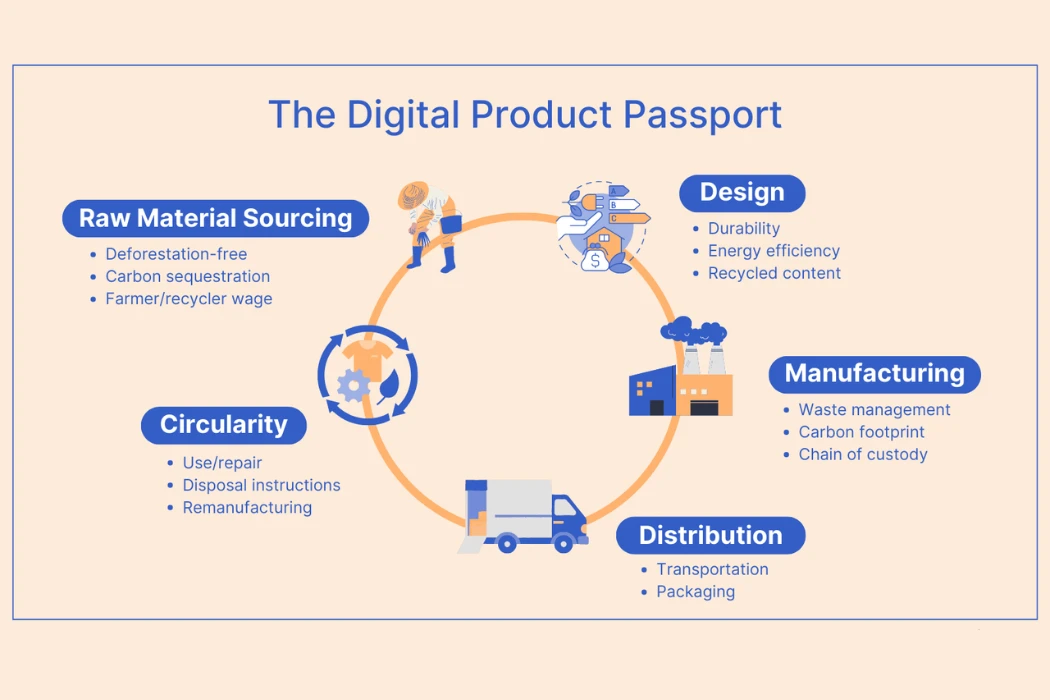
Concept diagram: the illustration above shows possible information themes across a product lifecycle. It is not a list of enacted mandatory fields for leather belts, proof of deforestation-free sourcing or a certification of any Hoplok product.
A Digital Product Passport links a product identifier to relevant digital information. Under the ESPR framework, Articles 9–11, the applicable delegated act determines whether the information relates to a model, batch or item and defines access rights. It is therefore inaccurate to assume a unique public file containing the entire history of every individual belt.
Distinguish adoption from application
The European Commission’s textile apparel DPP page gives Q4 2027 as the planned adoption of a textile delegated act. It says the exact information requirements will be defined in the future act and supporting specifications. Planned adoption is not the same as a confirmed application date for all leather or PU accessories.
Create a scope record
For each product family, record the intended EU market, product description, relevant classification and responsible economic operator. Track the applicable measures and the evidence used to decide whether the product is covered. Review the record when the legal text or product changes.
| Status question | What to record |
|---|---|
| Framework | Relevant legislation and official source |
| Product-specific measure | Whether adopted and whether the product is covered |
| Timing | Adoption date, application date and transition provisions |
| Required information | Fields and level of identification in the applicable measure |
| Responsible parties | Who prepares, supplies, checks and maintains the information |
Use dated official sources for this record. A provider’s sales presentation or a general fashion-industry timeline should not be treated as the final legal scope for a belt.
2. Map the Product and Supplier Records You Already Need

Start with the product specification and supply chain you actually use. Reliable records help sampling, repeat orders and substantiated claims even before any future belt-specific DPP obligation is established. The tasks here are a practical preparation plan, not a requirement to install live tracking on every machine.
Map components and processing stages
Identify the strap face, lining, reinforcement, buckle, other hardware, thread and relevant finishing operations. Link each to an article code and supplier. Distinguish the source of the hide, tanning, finishing and final assembly; a single country label may conceal those different stages.
Keep evidence connected to the component
A laboratory report or declaration should identify the material or product it covers. Record the version, date, supplier and any limits to its scope. Where materials or finishes change, review whether the existing document still supports the new supply.
Separate chemical requirements from passport preparation
REACH obligations exist independently of a future DPP. For example, the chromium VI restriction for leather in skin contact concerns chromium VI at or above 3 mg/kg of dry leather weight. It is not a limit on all chromium or every tanning agent. Select applicable requirements and tests for the actual article; there is no established universal rule here to upload every report within 30 days of production.
Separate environmental claims from data collection
If a buyer requests a footprint, agree the method, system boundary, allocation and evidence. Do not calculate an apparently exact belt footprint from an unsupported generic water-use number per hide or square foot. A software platform cannot supply missing measurements by itself.
Deforestation due diligence and DPP preparation are also distinct legal questions. Confirm the current scope of the relevant legislation for the product and operator before requesting a particular traceability dataset as mandatory.
3. Build a Preparation Dataset with Clear Evidence Status

The following table is a suggested buyer record, not a final mandatory belt-passport schema. Keep confirmed values, supplier declarations and unresolved gaps distinguishable. Avoid filling an unknown field with an estimate that later appears to be verified.
| Suggested record | Evidence or qualification to retain |
|---|---|
| Product identity | Style, revision, component list and approved sample |
| Materials | Article codes, composition and the parts covered |
| Suppliers and locations | Named entities and the processing stage performed |
| Relevant compliance | Applicable requirements, reports and declarations with scope |
| Care and repair | Instructions validated for the completed product |
| Disassembly or end-of-life | Practical instructions and the basis for any recovery claim |
| Environmental information | Method, boundary, measurement period and evidence |
| Record ownership | Who provides, verifies, updates and approves the field |
Use a field dictionary
Define the meaning, unit, format and source of each field. For example, identify whether “origin” means hide source, leather processing location or final assembly. Keep the supplier’s article code alongside a buyer-facing material description so the two can be reconciled.
Control public and restricted information
Plan how approved consumer information will be separated from supplier-sensitive or authority-facing records. Access rights are not the same as publishing every chemical recipe, factory record or commercial document on a public QR webpage.
Make end-of-life information practical
Only describe a disassembly, collection or recycling route when it is appropriate and supported. A detachable buckle can simplify one operation, but it does not prove that the complete belt is recyclable in every market. Avoid declaring that a digital record guarantees recovery or prevents landfill.
Keep a gap list with an owner and next action. This makes it possible to improve the record without falsely representing a provisional supplier response as a legally complete passport.
4. Review Audit and Certification Scope
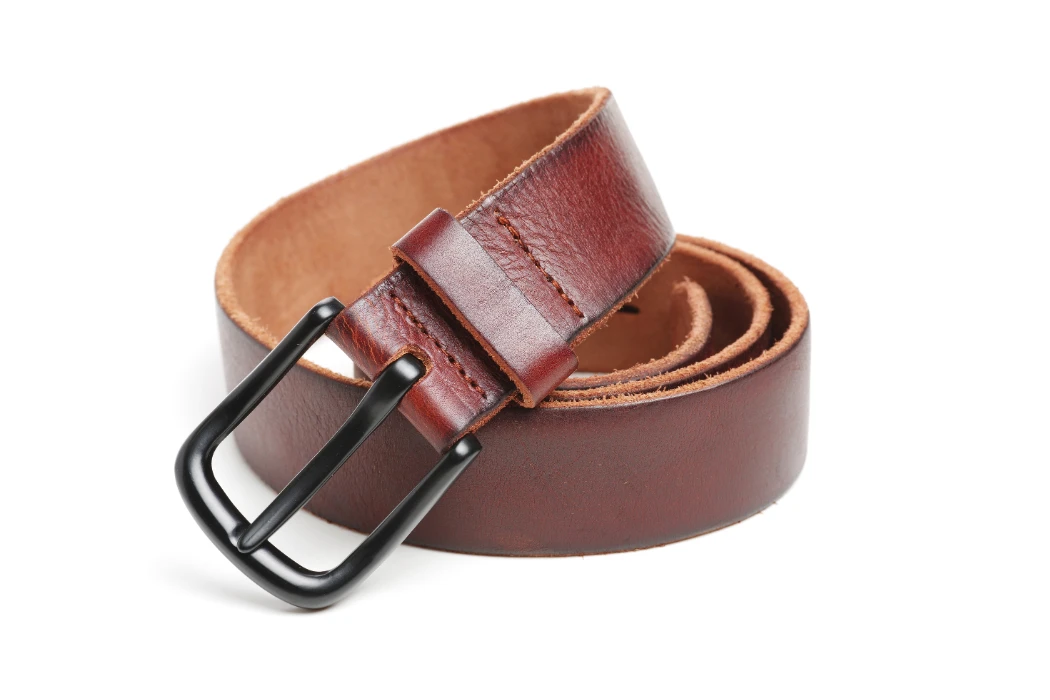
Certificates, audit reports and test results can support particular parts of a supplier review. They are different documents with different scopes. None automatically supplies every future DPP field or proves that a finished belt complies with all applicable rules.
Leather Working Group
Check the named facility, activity, rating, validity and permitted claims. LWG claims guidance distinguishes facility-related claims from claims about products. Do not describe every belt as LWG-certified or assume that a rating establishes complete farm-level traceability for every supplied lot.
Management-system certificates
Where a supplier provides a management-system certificate, verify its issuer, entity, sites, scope and validity. It should not be read as a finished-product guarantee, a universal requirement for digital-only records or a fixed three-to-five-year retention rule. Hoplok ISO certification is not asserted here.
Social audits
Review the actual assessment, date, findings and corrective actions. BSCI and SMETA are audit frameworks, not a guarantee that no labour issue exists. Do not assume a universal annual renewal rule or that uploading an audit proves every worker receives a living wage.
| Document | Buyer review |
|---|---|
| Facility certification | Entity, site, activity, validity and allowed claim |
| Management-system certificate | Covered organisation and scope |
| Social audit | Assessment scope, findings and follow-up |
| Product or material test | Sample identity, method, result and applicability |
| Supplier declaration | Exact claim, supporting evidence and responsible issuer |
Use the documents to answer specific questions. Where an upstream origin or composition field remains unknown, retain that gap rather than treating an unrelated certificate as a substitute.
5. Agree a Data Handoff and Update Process
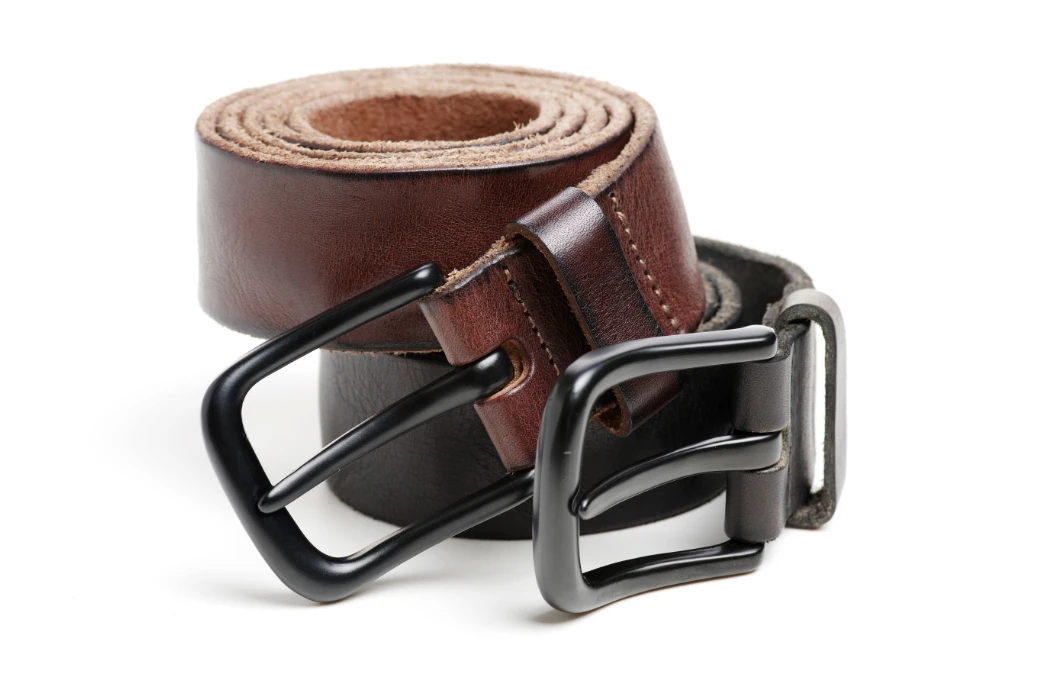
Assign owners before selecting software
State who supplies each field, who checks it and who approves its release. Begin with a controlled record format the participants can use. A digital platform can help organise information, but it cannot make an inaccurate input true or remove the need for review.
Use traceable revisions
Link the approved product revision to the supplier documents and sample. Record changes to materials, sites or finishes and decide which fields need updating. Keep dates and approval status visible to the people maintaining the record.
Test a representative handoff
Choose a product and ask the relevant suppliers for the agreed dataset. Check whether identifiers, units and document scopes match. Resolve missing fields and conflicting versions before scaling the workflow. Do not assume data can move in 24 hours or that one platform reduces errors by a fixed percentage.
Choose a carrier after defining the purpose
A QR code, NFC or another carrier is an access mechanism. Select and validate the carrier and location against the applicable requirements when known and the intended user interaction. Scanning should reach the correct record, while updates should preserve the connection to the approved product.
Blockchain is not a requirement established by this guide and does not verify the truth of a supplier’s original entry. Likewise, a generated identifier does not prove data completeness. Confirm export, access, maintenance and business-continuity arrangements with any provider.
Clarify Hoplok’s manufacturing scope
Hoplok operates four facilities totalling 19,000 m²: HongDing’s 5,000 m² belt factory in China, and in Cambodia the 4,000 m² Hoplok bag factory, 5,000 m² Hongcen Max belt factory and 5,000 m² ProPelli leather-finishing facility. ProPelli finishes externally sourced crust leather; it is not a raw-hide tannery.
ProPelli’s current LWG Gold status applies to ProPelli’s facility scope. It does not certify all Hoplok products or factories and does not fill upstream data gaps automatically. Agree the available project records and handoff method; no customer ERP API, EDI or live production-data integration is offered here.
6. Budget Preparation from Actual Quotations

Prepare a budget for the chosen scope and workflow. Costs can arise from supplier data collection, document review, testing, software, carrier production and ongoing maintenance. The amount depends on what the project needs and what records already exist.
Separate one-off and recurring work
Ask which setup, mapping and sample-carrier costs occur once and which service, update or hosting charges recur. State who pays for correcting missing or inconsistent supplier data. Include the cost of revising records when materials or components change.
Quote tests and audits by scope
Obtain quotations based on the actual sample, methods, substances, facilities and services. A single price for “a REACH test” is misleading because REACH is not one universal test package. LWG and social audits also cannot be assigned one global fee.
Do not promise automatic savings
Better records may help a buyer investigate defects or reconcile supply information, but waste reductions and administrative savings require project evidence. Do not budget on unsupported percentages or assume software will pay for itself.
Keep retail-price claims separate
Traceable information may support substantiated product communication. It does not establish that shoppers will pay a fixed premium or that a named retailer will approve a supplier. Compare the cost and business purpose without turning passport preparation into an unverified sales guarantee.
Frequently Asked Questions
Is every leather belt required to have a DPP in 2027?
No blanket requirement is established by the current official textile timeline. It refers to planned adoption of a textile delegated act in Q4 2027. Confirm the final scope, requirements and application dates for the product.
Does a DPP requirement automatically apply to PU belts?
Material alone does not settle the question. Check whether the product falls within an applicable measure and what that measure requires. Do not treat all physical goods as subject to one immediate passport obligation.
Will consumers see the entire supplier record?
Access depends on the applicable requirements and user rights. A carrier can provide access to relevant information, but it should not be assumed that every commercial or compliance document must be publicly visible.
Can non-EU brands be affected?
Yes, where their products are placed on the EU market or put into service within the scope of applicable measures. The responsible operator and obligations depend on the legal and commercial circumstances, not just the brand’s headquarters.
Does a DPP replace REACH compliance?
No. Chemical requirements and passport information obligations are distinct. A webpage or QR code does not prove that a material meets the applicable chemical restriction.
How can a smaller brand begin?
Start with a product and supplier record, identify missing evidence and agree a manageable handoff process. Obtain quotations for the required services. A certified supplier does not automatically provide a complete or free passport system.
For Hoplok belt development, share the product brief, intended market and requested supplier records. Confirm what evidence is available for the specific materials and processing locations, then resolve gaps before making public claims. Treat DPP preparation as a documented project requirement rather than a promise of effortless compliance.