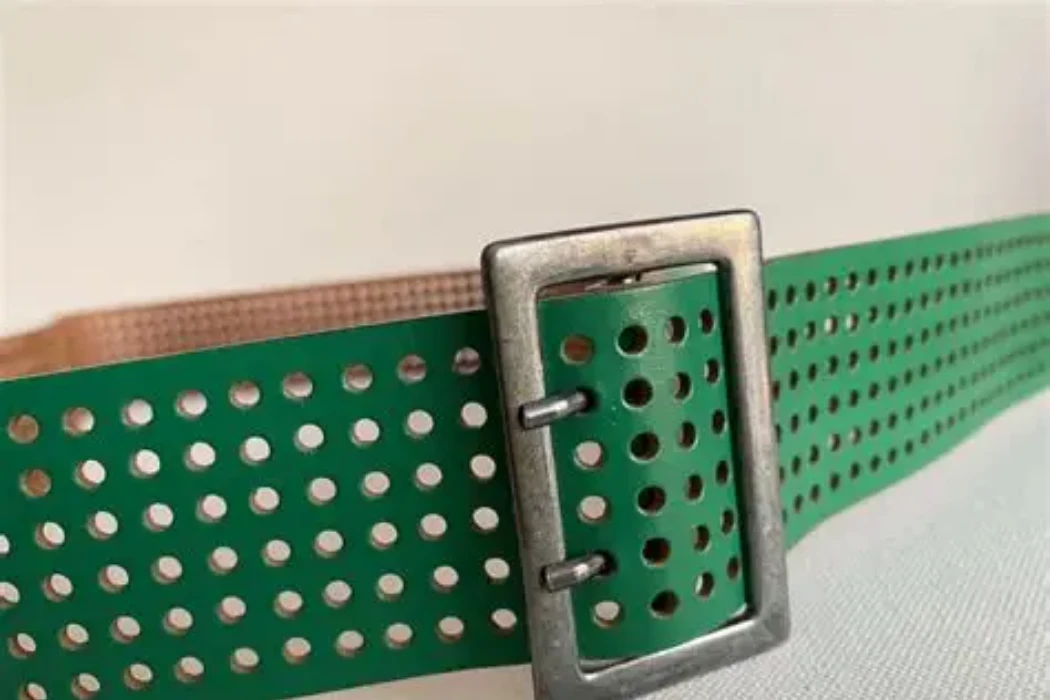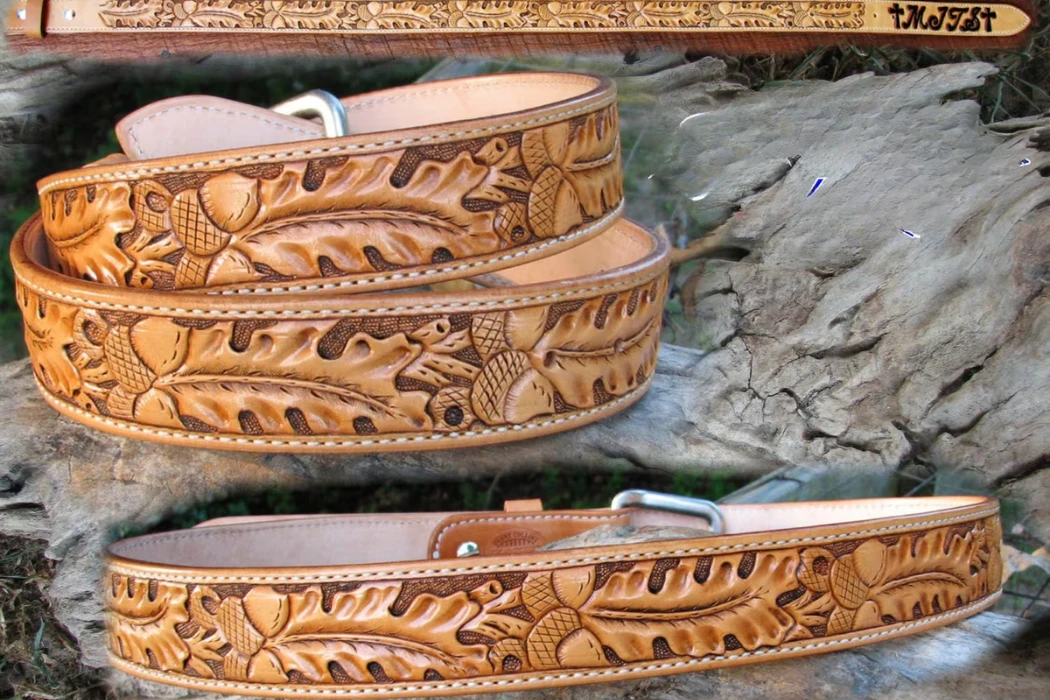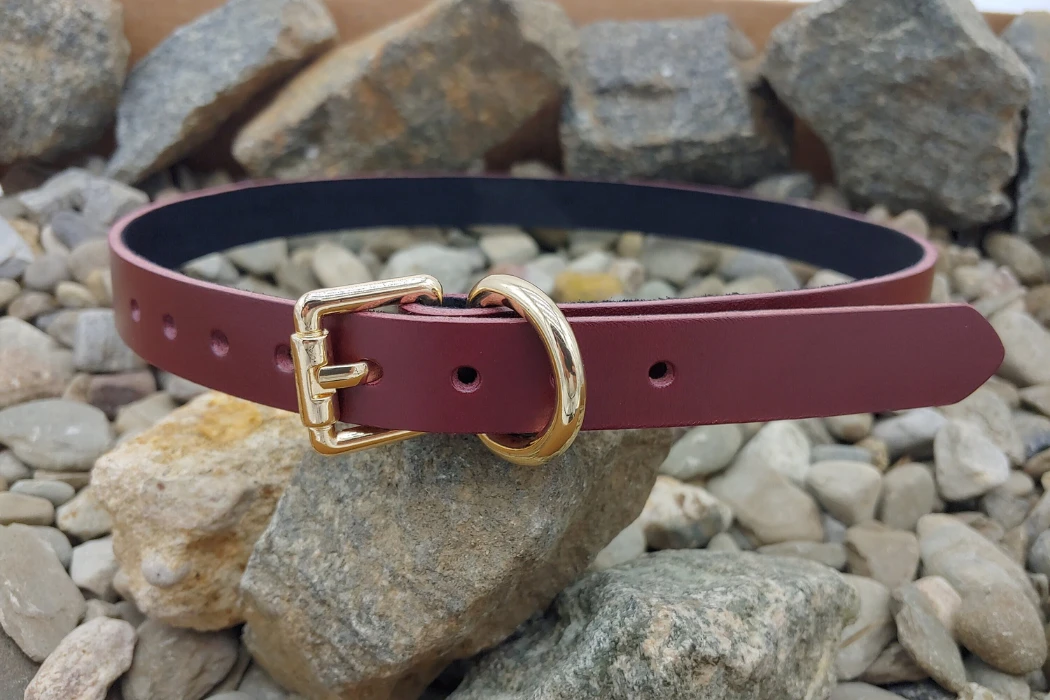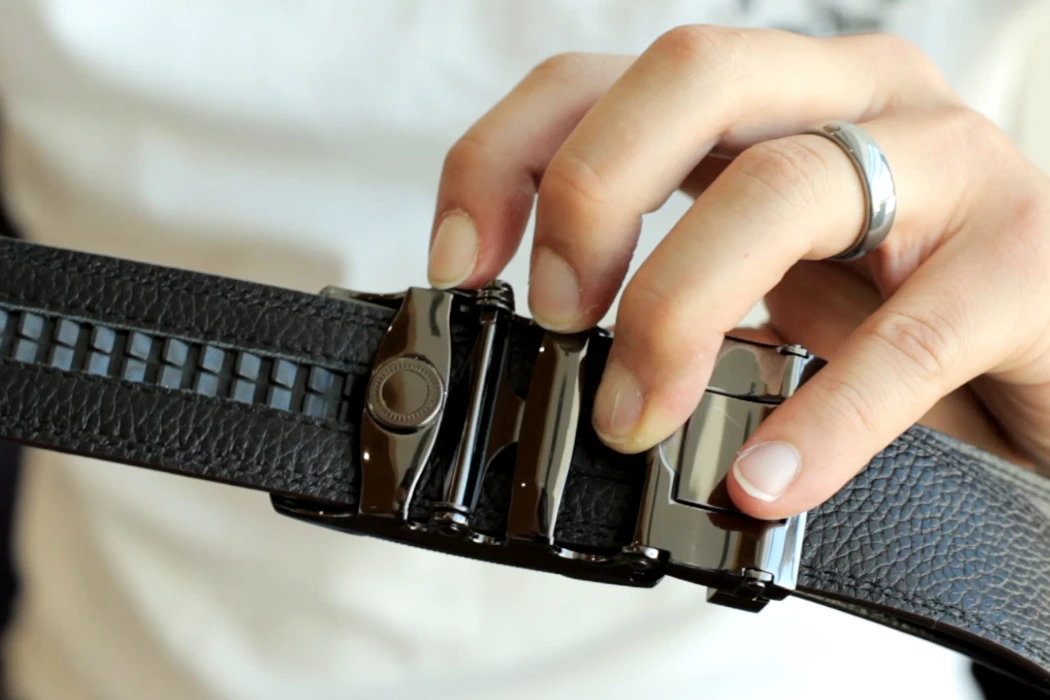
For a leather-belt buyer, stitching is a construction decision as well as a visual detail. The seam needs to suit the leather layers, buckle area and intended use. Hand sewing can support a craftsmanship brief, while machine sewing can support repeatable production; either still needs sample approval.
Hand saddle stitching uses two needles on opposite ends of one thread. A conventional machine lockstitch interlocks a needle thread with a bobbin thread. These are different constructions, but neither name establishes a guaranteed lifespan. In particular, a lockstitch should not be described as inevitably unzipping after one break, and a damaged saddle stitch is not permanently fail-safe.
This guide compares the methods, thread selection, repair considerations and production trade-offs. It also explains which visible details help with inspection and why appearance alone cannot verify a hand-sewn claim.
What Is Hand-Sewn Saddle Stitching?
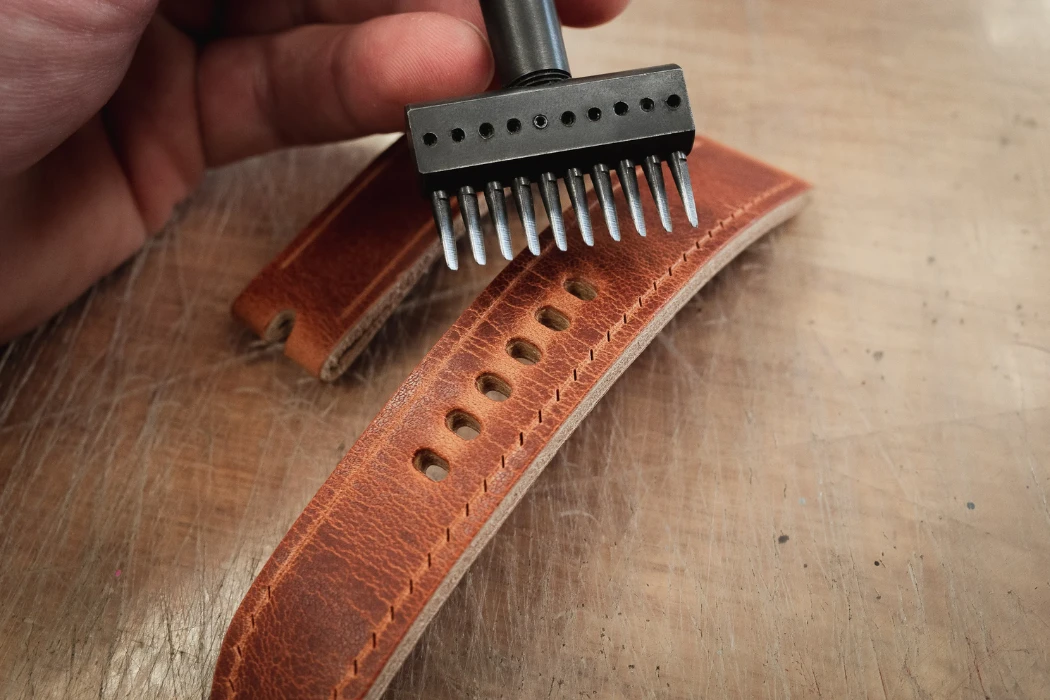
In the traditional hand saddle stitch, two needles attached to opposite ends of a single thread pass through each prepared hole from opposite directions. The craftsperson controls the thread path and tension. Tandy’s saddle-stitching demonstration shows the hand process; it should not be interpreted as a lifetime performance guarantee.
The Classic Two-Needle Technique
The physical process of creating a saddle stitch requires precision and specific hand tools.
- Mark the stitch line and spacing. A groove is an optional design choice, not a requirement for every leather or finish.
- Prepare holes with suitable tools, matching the hole shape and size to the leather stack and thread.
- Pass the two needles through the same hole from opposite directions, taking care not to pierce the thread already in the hole.
- Set the spacing and tension against an approved sample. There is no universal stitches-per-inch value that defines a luxury belt.
Inspect for balanced appearance without loose loops, excessive indentation or damaged edges. Hand tension needs control; it does not automatically produce a protected or stronger seam.
Ideal Thread Types for Hand Sewing
The strength of a hand-sewn belt relies heavily on the physical properties of the thread used during production.
- Choose thread size together with the leather thickness, hole size and intended stitch appearance.
- Waxed linen is one hand-sewing option. Wax treatment does not establish that the seam or finished belt is waterproof.
- Suitable polyester threads are another option. Obtain the actual thread specification instead of assigning a decades-long service life to the fiber name.
- Check that the needle and thread pass through the prepared holes cleanly without unacceptable fraying or surface damage.
Approve the thread color, size and finish on the actual construction. Tandy’s thread and needle selection guidance is a starting point for matching these components; a belt still needs its own sample assessment.
What Happens If a Saddle Stitch Is Cut?
The thread path can help a hand-sewn seam remain locally held after damage, but the extent depends on the construction and where the thread breaks.
- Inspect the cut location, remaining thread and condition of the leather holes.
- Check whether the layers separate or neighboring stitches loosen when handled normally.
- Do not assume that an apparently small break is the only damaged area.
- Arrange repair before continued use worsens an opening or damaged edge.
For procurement, agree how seam defects will be assessed and repaired. A claim that every cut remains isolated indefinitely needs evidence for the actual belt, not just a description of the stitch.
How Does Machine Lock Stitching Work?
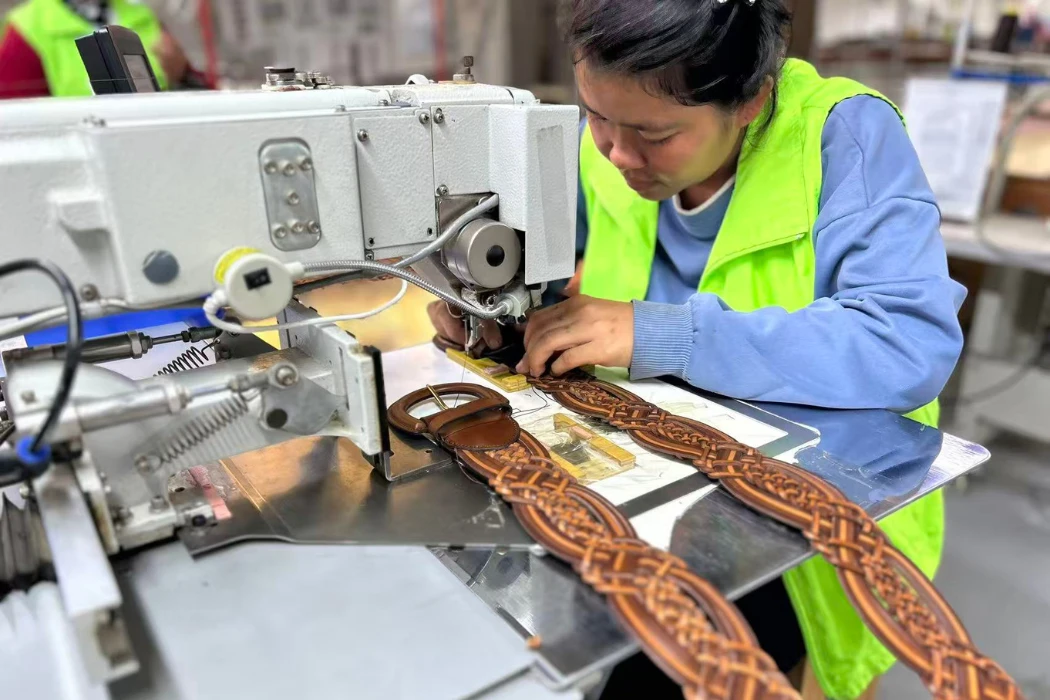
In a conventional lockstitch machine, the needle carries the upper thread through the material and the hook mechanism interlocks it with the bobbin thread. Coats identifies type 301 as the common single-needle lockstitch. Its construction supports compact seams, but the machine setup and material combination determine the result.
The Top and Bobbin Thread System
The lock stitch relies on precise mechanical timing between two separate thread sources.
- The needle carries the upper thread through the material stack.
- As the needle rises, a thread loop forms for the hook mechanism to pick up.
- The hook interlocks the needle-thread loop with the bobbin thread; mechanisms can use rotary or oscillating arrangements.
- Tension is adjusted so the interlocking point is properly positioned within the material, rather than pulled visibly to one surface.
Check both faces of the sample. A balanced lockstitch can look similar on the front and back; different-looking faces are not an inherent requirement of machine sewing.
Speed and Efficiency in Belt Production
Machine sewing can make repeated belt seams practical at production scale. Actual output must be measured for the design and equipment being quoted.
- Ask the factory to time the complete operation, including handling, turns, bobbin changes and finishing.
- Specify the stitch spacing from the approved sample rather than adopting a universal casual-belt setting.
- Confirm that the feed arrangement handles the leather stack without unacceptable layer movement or marking.
- Compare labor and setup costs on the same seam length, materials, order quantity and inspection scope.
For repeat orders, retain the sewing specification and approved sample. Machine capability helps only when setup, operator control and inspection reproduce the required seam.
Assessing Thread Breaks in a Lockstitch
A broken lockstitch needs inspection. One break does not automatically establish rapid failure along the entire type 301 seam; assess the actual thread and material condition.
- Check the broken thread, nearby stitches, seam ends and any layer separation.
- Look for abrasion, loose tension, skipped stitches or damaged leather that could affect the repair.
- Determine how far the actual damage extends instead of assuming the whole seam has unraveled.
- Agree an appropriate repair or rejection decision based on the belt’s condition.
Select thread and needle together and validate the sewn assembly. A bonded thread may suit a particular machine application, but the word “bonded” alone does not establish the seam’s performance.
| Feature | Hand-Sewn Saddle Stitch | Machine Lock Stitch |
|---|---|---|
| Thread Configuration | Single thread, two needles | Two separate threads (Top & Bobbin) |
| Thread path | Two ends of one thread pass through prepared holes | Needle and bobbin threads interlock |
| Failure Mode | Inspect damage; local security is not guaranteed indefinitely | Inspect damage; automatic whole-seam unraveling is not inherent |
| Production Speed | Manual operation; time depends on construction | Machine operation; verify actual production time |
Which Stitch Type Offers Better Durability for Belts?
Neither method is universally more durable for every belt. Leather condition, thread, hole size, edge distance, tension, seam ends and intended use all matter. Compare representative sewn samples under the same agreed checks rather than treating a stitch label as a test result.
Handling Daily Tension and Bending
The buckle region and curved sections deserve particular attention because the assembled belt bends and is handled repeatedly.
- For a saddle-stitched sample, inspect tension, thread damage and the condition of the prepared holes.
- Check the buckle fold and transitions between different material thicknesses.
- For a machine sample, inspect stitch formation and both thread faces through the same areas.
- Check for layer movement, surface marking and loose or skipped stitches.
Use the same acceptance criteria where the designs are comparable. Record seam opening, visible damage and appearance after the agreed handling or performance assessment; do not convert the result into an unsupported years-of-life promise.
Sewing Through the Complete Leather Stack
Choose tools and equipment for the actual assembled thickness, including folds, lining and any reinforcement.
- Measure the components and the thickest sewn area instead of assuming that every premium belt uses one thickness range.
- For hand work, match the prepared hole and needle to the thread and leather.
- For machine work, confirm the equipment’s usable material and thread range with the supplier.
- Both hand tools and machine needles pierce the material. Tool condition, point geometry and settings can affect the hole and surrounding leather.
Neither process automatically preserves every fiber or prevents damage. Groz-Beckert’s leather-processing guidance discusses selecting needles for the material and desired seam; validate the choice on the actual belt.
Long-Term Repairability and Maintenance
Repairability depends on the remaining leather, accessible seam and availability of compatible thread as well as the stitch type.
- A repairer should assess whether a saddle-stitched area can be repaired locally and secured appropriately.
- Inspect neighboring holes and layers before deciding that the rest of the seam can remain.
- A machine-stitched belt may also allow a local repair; removing the entire seam is not automatically required.
- If restitching is appropriate, plan how to use the existing seam path without creating avoidable new perforations or damaging weakened leather.
Agree the repair scope and appearance expectations in advance. A repairable construction can be useful, but it does not justify promising a lifetime of use.
How Do You Identify the Stitching Type on a Belt?
Close inspection helps identify defects and compare samples, but it does not reliably prove hand versus machine production by itself. For a purchasing claim, request the stitch construction and process evidence alongside the physical sample.
Analyzing the Angle of the Stitch Hole
Hole shape affects appearance, but angled stitching is not exclusive to hand sewing.
- Hand tools can create different hole shapes and angles depending on the tool and technique.
- The resulting thread slant also depends on how the stitch is formed and tensioned.
- Machine needles are available with different cutting-point geometries for leather.
- Some machine needle points deliberately produce a slanted decorative seam.
Groz-Beckert describes machine needle points that create slanted or straight seam appearances. A diagonal line therefore cannot authenticate a saddle-stitch claim.
Inspecting the Backside of the Belt
Inspect the reverse face for quality and consistency, while allowing for the specified material and seam design.
- Hand saddle stitching uses the same thread from both ends, but the two faces need not look identical.
- Depth and indentation depend on material preparation and tension; a deep groove is not proof of hand work.
- A correctly balanced machine lockstitch can have a similar appearance on both faces.
- Different upper and bobbin threads may be specified in some constructions, but a visible size difference is not mandatory.
Compare both faces with the approved sample. Treat differences as inspection findings to explain, rather than a definitive test of production method.
Confirming the Thread Construction
When the method matters to the product description, verify it through documentation or a controlled sample review.
- Request a seam diagram identifying the thread path and, for machine sewing, the stitch type.
- Ask which operations are performed by hand and which are performed by machine.
- Where needed, review an agreed sample section or witness the sewing process with the supplier.
- Do not pull damaged threads or force open holes in a saleable belt as an authentication shortcut.
Record the evidence supporting any “hand-sewn” claim and use wording that matches the actual operation. A visual resemblance to hand stitching is a separate design attribute.
| Visual Feature | Hand-Sewn Saddle Stitch | Machine Lock Stitch |
|---|---|---|
| Stitch angle | Depends on hole preparation and technique | Can be straight or slanted, depending on needle and setup |
| Backside Appearance | Varies with technique, tension and leather | Can resemble the front when balanced |
| Construction evidence | Confirm two-needle hand process and thread path | Confirm needle/bobbin interlock and stitch type |
| Damaged seam | Inspect and assess repair; appearance is not proof | Inspect and assess repair; appearance is not proof |
Are Machine Stitched Belts Still Considered Luxury?
Machine sewing is compatible with a premium belt brief when the material, construction and finish meet the agreed standard. A luxury positioning does not itself prescribe the stitch method. Assess the actual execution and support any craftsmanship claims with evidence.
Advanced High-End Machine Techniques
Machine details should be chosen to achieve the approved appearance and functional requirements.
- Set the stitch length and edge distance for the design; a higher stitch count is not automatically better.
- Control turns and thickness transitions so the seam remains properly formed. Unintended skipped stitches are a defect to investigate.
- Choose an appropriate cutting point when a slanted seam appearance is required, then inspect the sample for material damage.
- Assess edge finishing separately. Edge paint does not establish that the seam or belt is waterproof.
Approve a representative sample and retain clear workmanship criteria for bulk inspection. Automation does not replace these controls.
Balancing Production Cost and Premium Quality
Brand developers must evaluate the financial impact of their manufacturing choices when designing a new product line.
- Request separate quotations for hand and machine options using the same design and inspection requirements.
- For hand sewing, include hole preparation, sewing and finishing in the labor estimate.
- For machine sewing, include setup, handling, bobbin changes and any manual finishing.
- Compare the total finished-product cost together with the visual result and available production capacity.
Avoid fixed minutes-per-belt claims unless they come from an actual timed operation matching the order. A useful quote explains the scope behind the price.
Matching the Stitch Method to the Brand Strategy
The final choice between hand or machine stitching always comes down to the specific goals of the fashion brand.
- For a craftsmanship-led collection, confirm whether the proposed hand operation supports the intended claim and price.
- For repeat volume, confirm that the supplier can reproduce the approved seam and deliver the required quantity.
- For decorative patterns, review samples made with the proposed tools or equipment and confirm repeatability.
- For either method, specify the product’s intended use and inspect complete samples. Raw-material quality alone does not establish the finished belt’s service life.
Ultimately, buyers must align the stitching technique with their production volume, target price, and brand identity.
Frequently Asked Questions
Can a sewing machine replicate a true saddle stitch?
A conventional type 301 lockstitch is different from a hand saddle stitch. Machines can produce a similar slanted appearance. If a supplier describes a machine process as saddle stitching, request the actual thread path and equipment details before accepting the claim.
Why is saddle stitching so much more expensive?
Hand sewing adds manual operations, but the price difference depends on the seam, preparation, labor and quantity. Compare specification-matched quotations instead of assuming a fixed time or cost ratio.
Does thick full-grain leather require hand stitching?
No. Suitable industrial equipment can sew many leather-belt constructions. Check the complete material stack, needle, thread and machine capability on a sample; hand sewing is not automatically less damaging to the leather.
How long does a saddle-stitched leather belt last?
The stitch name does not establish a service life. Materials, construction, use, care and damage affect durability. Broken stitching should be assessed rather than treated as harmless indefinitely.
What thread is best for luxury leather belts?
There is no single best size or fiber for all luxury belts. Select the thread with the leather, hole or needle, appearance and performance requirements, and approve the combination on a sewn sample.
Is a broken machine stitch easy to fix?
It depends on the damage and construction. A repairer may be able to repair a local area; removing the entire seam is not always necessary. Inspect the leather and adjacent stitches before deciding the repair scope.
Do high-end fashion brands use machine stitching for belts?
Machine stitching can meet a premium belt specification. For a particular brand or model, verify the stated process rather than assuming that all luxury brands use the same construction.
Conclusion
Choose the stitch method around the belt design, production requirements and claims you can support. Hand saddle stitching and machine lockstitching use different thread paths, but both require controlled workmanship and sample validation. For a custom leather-belt project, send Hoplok the construction brief, sample references, quantity and target appearance. Confirm the available sewing method and sampling plan before approving the production specification.