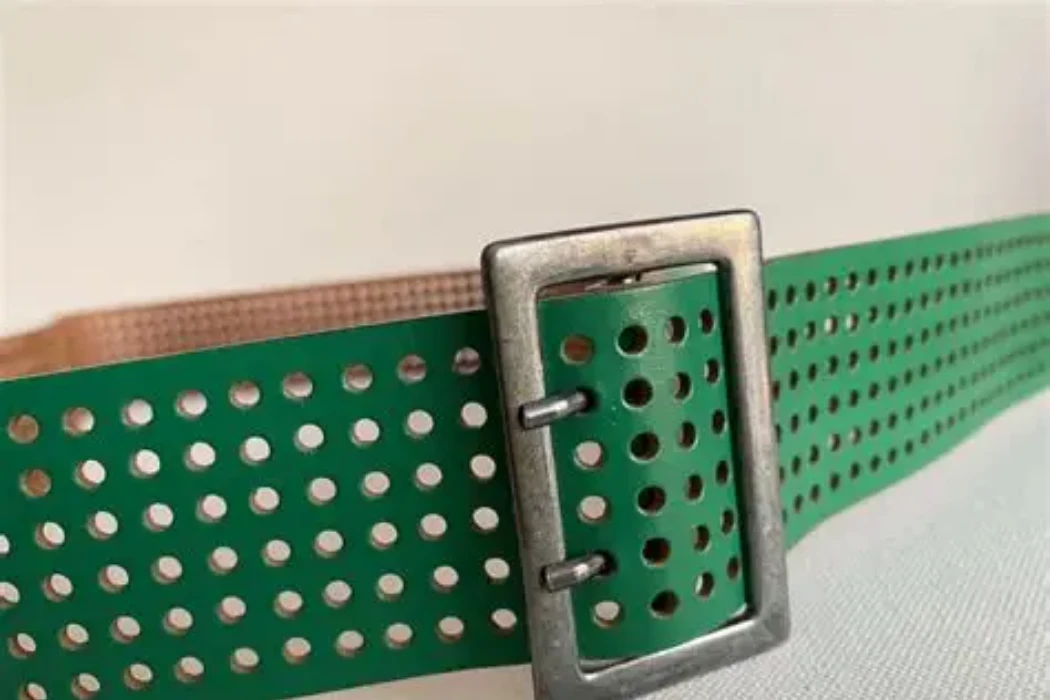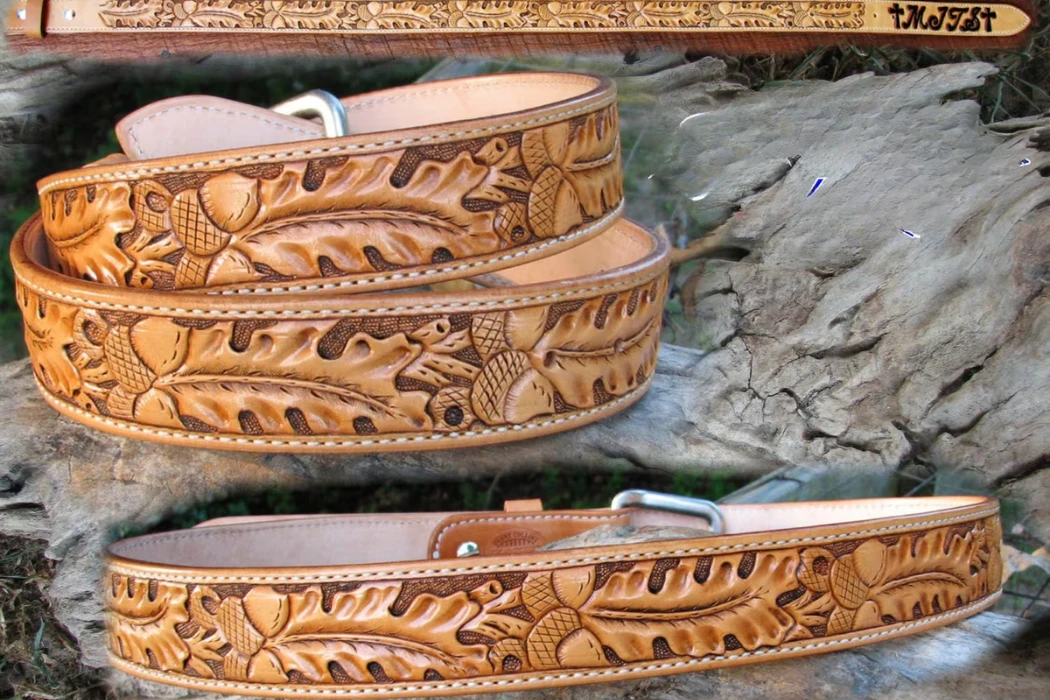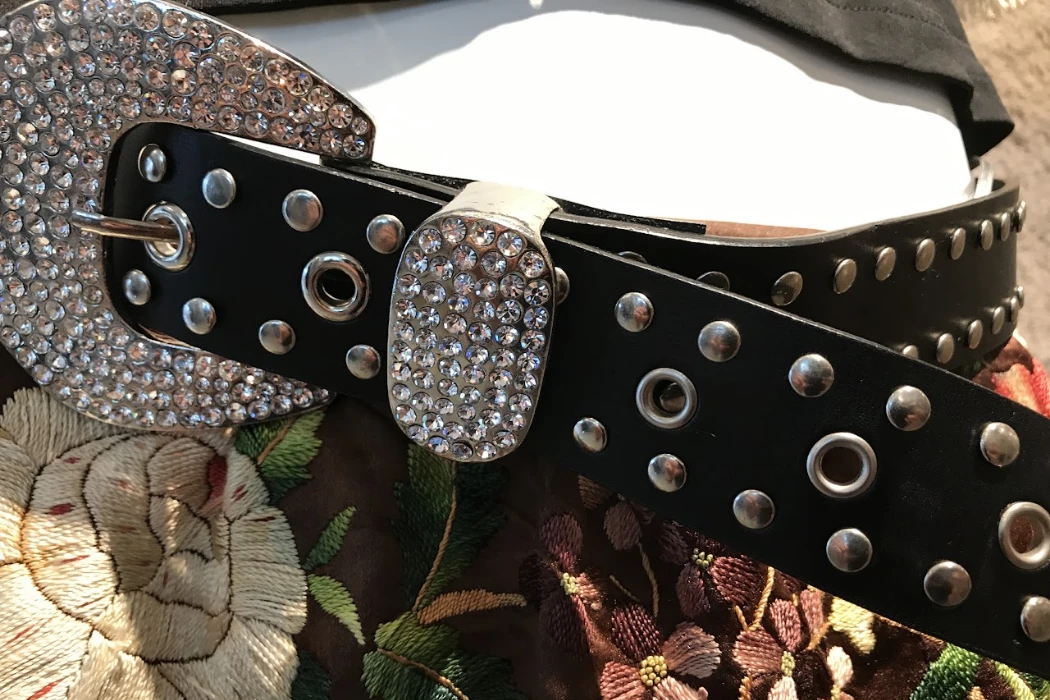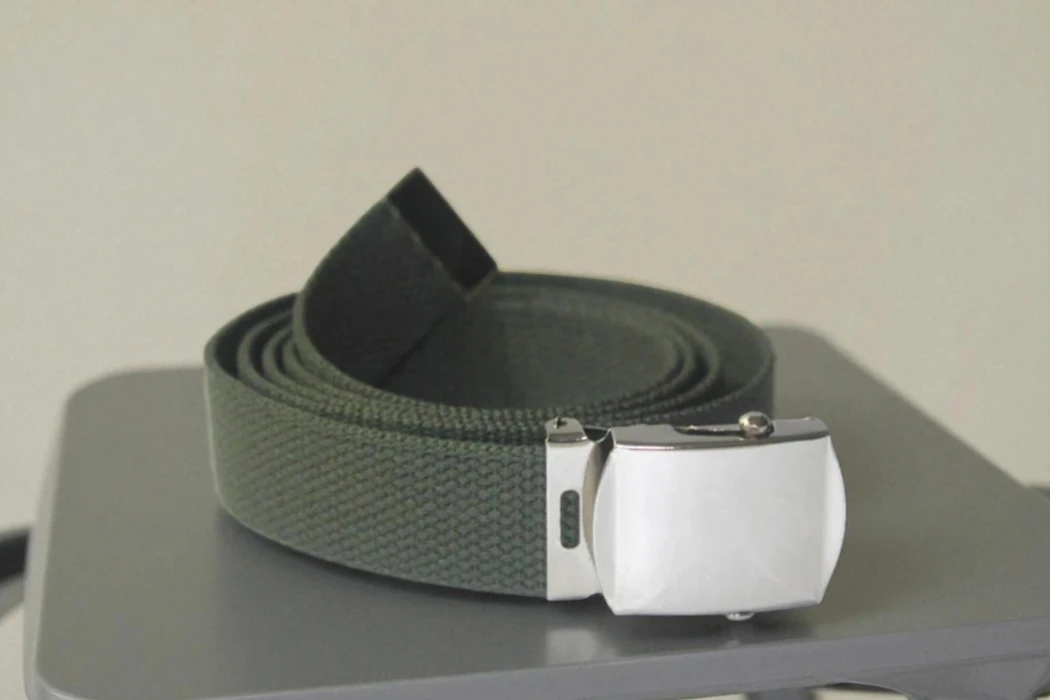
A corporate uniform belt needs to fit the clothing, maintain the approved appearance and remain practical through repeated daily wear. Hotel and other service teams may use the same design across many employees, so sizing, replacement orders and consistency matter as much as the first sample.
A uniform purchase specification should define the material, buckle, dimensions, branding and relevant quality checks. These are ordinary clothing accessories unless a separate specialist requirement has been established. No leather grade or buckle material automatically provides airport-security approval, protective performance or a fixed service life.
Scaling a uniform program brings practical challenges: collecting a reliable size assortment, approving material and color variation, reserving production capacity and planning replacement stock. This guide explains how buyers can organize those decisions for ordinary corporate and hospitality belts.
Why Do Corporate and Hospitality Buyers Need a Defined Belt Specification?
An approved uniform specification gives purchasing, production and distribution teams a common reference. It should identify the intended job and clothing context without assuming that a belt sold at retail is inherently weaker. Compare candidate products using the actual wear and appearance requirements.
Daily Wear and Tear Challenges
Describe the movements, clothing and care conditions the belt will encounter. Use those details to select a sample evaluation rather than applying a generic “heavy-duty” label.
- Repeated movement: Bending, sitting and fastening can stress the strap and buckle attachment. Evaluate these areas in the intended construction; an assumed weekly flex count is not a substitute for evidence.
- Replacement planning: Use the buyer’s service records or a wear trial to establish a replacement policy. There is no universal three-to-six-month life for retail belts.
- Construction: A lining, insert or reinforced attachment may help meet the design brief. Confirm its composition and assess permanent stretch, layer adhesion and stiffness in the finished sample.
Approve the construction together with its test and inspection criteria. Reinforcement is a design choice whose effectiveness must be checked, not an automatic guarantee of longer use.
Brand Identity and Professional Appearance
A uniform program needs an agreed appearance standard that can be repeated on future orders. Define acceptable variation in color, gloss, texture, edges and hardware.
- Frayed or peeling leather quickly makes luxury hotel staff or airline crews look unprofessional.
- Color: A Pantone reference can communicate the target, but approve the match on the actual material under agreed lighting. A code does not guarantee an exact match across leather, PU and metal.
- Branding: A discreet strap mark or branded buckle may suit the uniform. Approve its size, position, legibility and finish before tooling or bulk production.
Therefore, a high-quality belt acts as a sharp finishing touch that elevates the entire corporate image.
Workplace and Security Requirements
Some employers or secure sites have specific accessory requirements. Obtain those instructions from the buyer before selecting the buckle and any other metal components.
- Screening procedures: A belt may be subject to inspection or removal according to the site’s process. TSA guidance notes that generally permitted items can still receive additional screening. This does not provide approval for a particular staff-uniform belt.
- Material description: Non-magnetic does not mean metal-free, and a zinc-alloy buckle cannot be promised to bypass a detector. If the buyer requests a metal-free construction, verify the whole belt, including fasteners, reinforcement and trim.
- Skin contact: Nickel-release requirements have specific market and contact scopes. A nickel-free description or clear coating does not guarantee freedom from allergy. Agree the applicable evidence for the actual hardware.
Keep workplace approval separate from the normal fashion-belt quality file. Hoplok’s scope here is ordinary clothing belts, with any project-specific acceptance requirements to be established before an order.
Which Materials Work Best for High-Volume Corporate Belts?
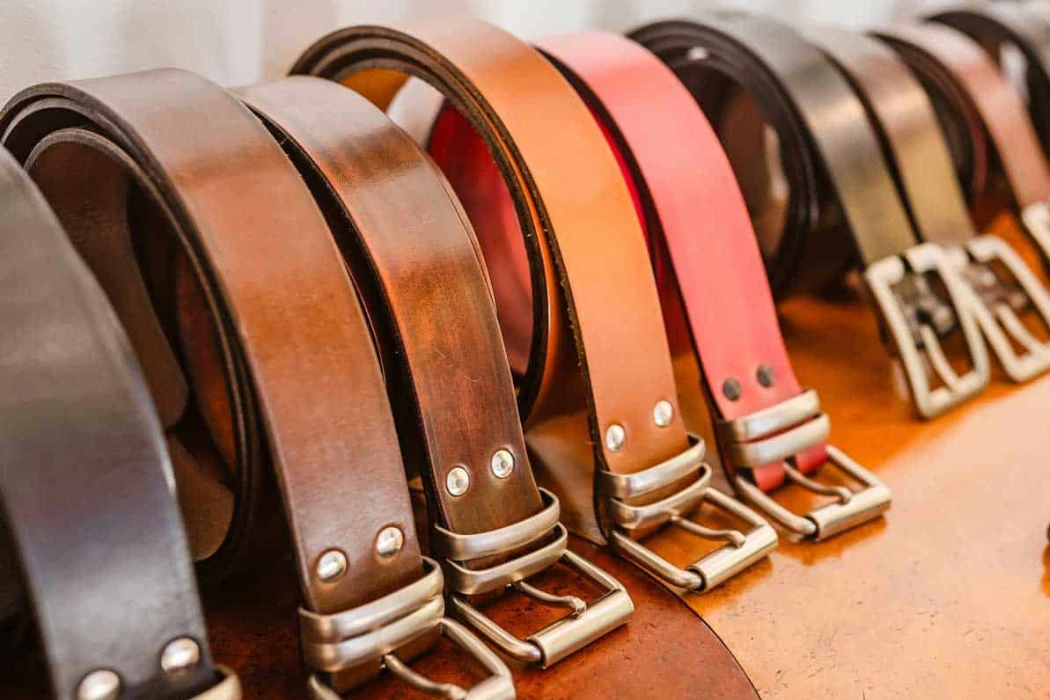
Select a material by the appearance, handle, budget, care and performance requirements of the program. Full-grain, corrected-grain, split and PU-coated constructions vary within their categories. Compare actual samples instead of assigning a mandatory material to a particular job title.
Full-Grain Leather for a Visible-Grain Design
Full-grain may suit a uniform that welcomes natural grain and the selected finish. Confirm whether the appearance standard permits visible markings and change with wear.
- Description: Full-grain retains the original grain surface without corrective buffing. It is not a stand-alone strength rating.
- Thickness: Set thickness and tolerance for the complete belt, its buckle and the uniform’s loops. No one thickness optimizes every uniform design.
- Wear: Some finishes develop patina, while others change differently. Full-grain can still crack, abrade or suffer finish damage; test the proposed leather and construction.
A physical appearance sample helps determine whether this option fits the program. The employee’s seniority does not establish the appropriate leather grade.
High-Quality PU Leather for Cost-Efficiency
Massive workforces need durable uniforms that fit within strict corporate spending limits.
- Cost: PU-coated materials can offer useful price and appearance options. Compare quotations for the actual construction rather than assuming every PU belt is less expensive than every leather belt.
- Surface performance: Evaluate rubbing, flexing, relevant aging and the approved cleaning method. Resistance to water spills does not establish compatibility with every cleaning spray.
- Capacity: Hoplok reports monthly PU-belt capacity of 600,000–800,000 across its operations. Available allocation for a particular order still depends on the design, material readiness and production schedule.
Approve PU on the same defined quality basis as other materials. The decision should consider replacement records and user requirements alongside the purchase price.
Corrected Grain and Split Leather Options
Many companies want the feel of real leather without the premium price tag of full-grain hides.
- Corrected grain: The grain surface has been corrected for the intended appearance. It should not be confused with a lower split layer.
- Split leather: Comes from a lower layer after splitting and may use a coating or backing. Ask for the exact layer and finish description, then assess the assembled belt.
- Specification: Record thickness, lining, coating and reinforcement. Evaluate color consistency, bending and adhesion on the actual construction.
These options should be compared through samples and test evidence. Neither name guarantees an ideal balance of cost and durability.
| Material Type | Appearance brief | Construction check | Cost comparison |
|---|---|---|---|
| Full-Grain Leather | Visible natural grain as approved | Thickness, finish and assembled performance | Current material and production quote |
| Corrected grain or split (distinguish) | Specified corrected or coated appearance | Confirm layer, finish, backing and thickness | Current material and construction quote |
| High-Quality PU Leather | Specified coated appearance and handle | Confirm backing, layers and aging performance | Current material and construction quote |
How Do Factories Scale Production for Thousands of Employees?
Large orders need a controlled specification, trained production teams, appropriate equipment and clear inspection checkpoints. The process may combine automated and manual operations. Assess the actual production plan rather than assuming automation guarantees identical output.
Cutting and Dimensional Control
A uniform order needs repeatable strap dimensions and clear rules for handling material variation. Identify the measurement points and tolerances before cutting.
- Cutting route: Confirm the proposed method for the selected material and any layers. Sample evidence should show straightness, clean edges and consistent dimensions.
- Tolerance: Agree width and length limits that suit the buckle, garment loops and wearing range. Demonstrate them on production trials; there is no universal 0.5 mm rule for every belt.
- Setup: Match tooling and handling to the material thickness, finish and construction, and review settings after a material change.
Check a size set with the actual uniform before approving bulk production. Machine precision alone cannot resolve an incorrect size chart or incompatible garment loops.
Streamlined Edge Finishing and Stitching
The edge design affects appearance and repeated bending. Choose a cut, painted, burnished or turned construction suited to the material and uniform brief.
- Edge process: Confirm the sequence of preparation, finishing and drying or curing. Manual and automated operations should meet the same approved appearance and performance requirements.
- Coating: Select the edge-paint system and application conditions for the material. Coat count alone does not establish adhesion or flexibility.
- Stitching: Specify stitch type, thread, spacing and edge distance, then assess the seam on the actual stack. A fixed SPI value does not define every uniform belt.
Allow production time for the selected finish and checks. A faster line does not remove the need to evaluate edge cracking, abrasion or layer separation.
Managing High-Volume Quality Control
Producing massive orders requires catching tiny errors before the belts leave the factory floor.
- Incoming material: Check identity, dimensions, appearance and relevant test evidence before release to production. Select exposure tests for the intended product rather than requiring undefined “extreme” conditions.
- Assembly: Agree a pull or retention test with defined fixtures, loading and acceptance criteria. There is no universal 200 N pass value for all uniform belts.
- Final inspection: Compare the finished product with the approved drawing and master sample under the agreed sampling or full-inspection plan. Record the scope and results.
Use findings to correct the process and decide the lot’s disposition. Inspection reduces uncertainty but does not guarantee that every defect is eliminated.
Which Buckle Styles Suit Ordinary Uniform Belts?
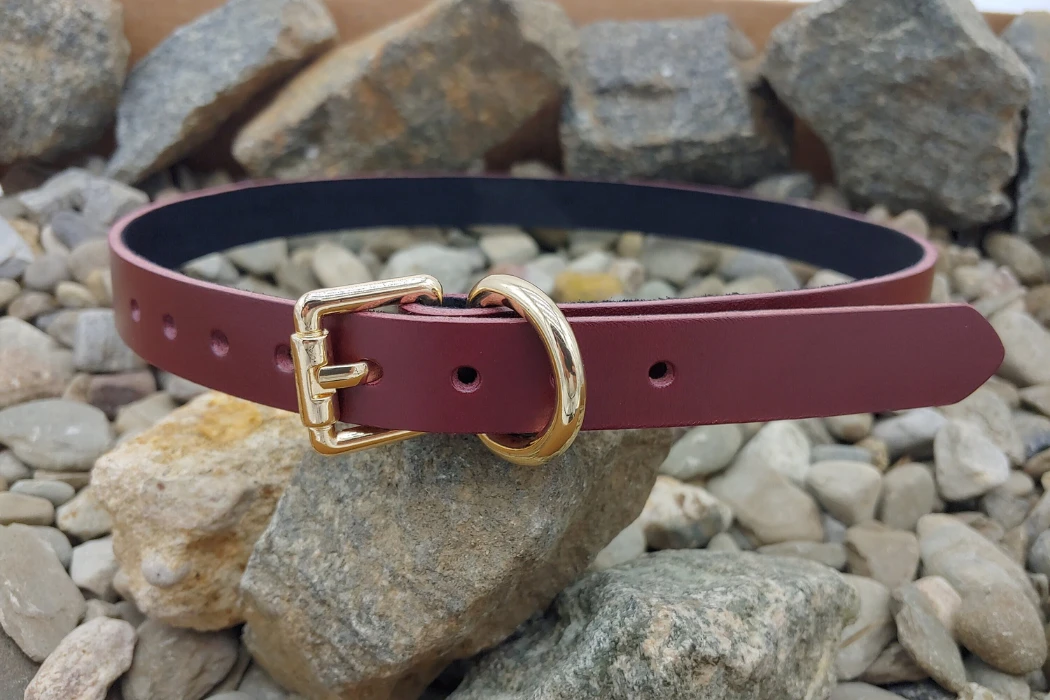
The buckle should fit the strap, clothing and user’s adjustment needs. Evaluate appearance, ease of fastening, release, retention and wear on the actual assembly. Three useful comparison groups are pin buckles, ratchet systems and non-metal options where the brief requests them.
Classic Pin Buckles for Traditional Uniforms
A pin buckle can provide a familiar appearance and straightforward operation. Confirm the pin and frame geometry with the proposed strap.
- Material: Identify the alloy or other base material and finish. Test the actual buckle and attachment rather than assuming brass or zinc cannot break.
- Hole layout: Define the hole count, shape, spacing and relation to the nominal size. Neither five-to-seven holes nor one-inch spacing is mandatory for every program.
- Adjustment: Check that the chosen hole layout covers the required wearing range and that the tail remains manageable in the keeper.
Approve the complete fastening action with representative users. A traditional appearance does not replace a fit and function check.
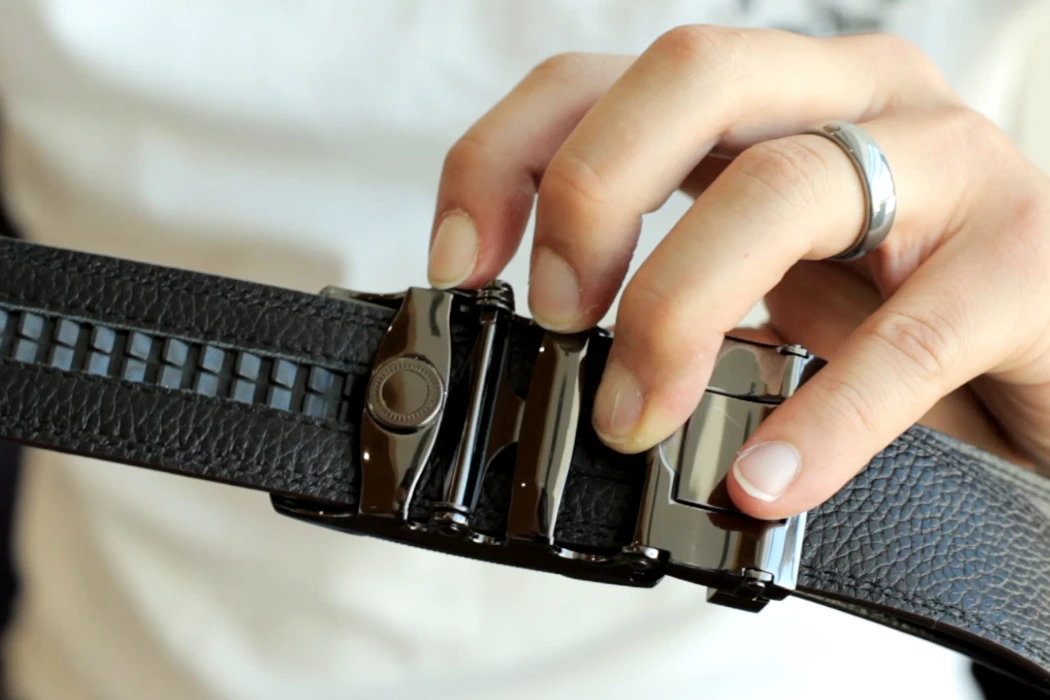
Ratchet Buckles for Micro-Adjustments
Workers who bend and lift frequently need a belt that adapts to their moving bodies.
- Ratchet buckles completely remove the need for traditional punched holes on the leather strap.
- Track: Confirm the material, attachment and usable range of the particular ratchet system. Designs differ in their number of positions.
- Increment: Measure the actual adjustment step and assess release effort and retention. A quarter-inch increment is not universal.
A ratchet can offer smaller adjustment steps than a particular pin-hole layout. Confirm whether the users find the mechanism practical and whether replacement parts will remain available.
Non-Metal Options and Skin-Contact Evidence
Where the buyer requests a non-metal buckle, confirm the reason and the complete product specification before selecting a resin or composite.
- Scope: A request may concern appearance, weight, workplace policy or component composition. Document the exact requirement instead of promising to avoid all security alarms.
- Construction: Check every relevant part, including pins, springs, screws and hidden attachments. A non-magnetic component is not evidence that the assembly is metal-free.
- Nickel release: For applicable EU direct and prolonged skin contact, assess the relevant REACH requirement and coating durability conditions. Use a report for the actual hardware; applying a clear coating is not automatic compliance.
Confirm any workplace-specific acceptance with the employer. These ordinary belt options should not carry unsupported security or allergy-prevention claims.
| Buckle Style | Primary Material | Design consideration | Key Functional Benefit |
|---|---|---|---|
| Classic Pin Buckle | Zinc Alloy / Brass | Uniforms using a pin-hole layout | Traditional Professional Look |
| Ratchet System | Specified buckle and compatible track | Uniforms using incremental adjustment | Adjustment step confirmed for the selected system |
| Non-metal option (if specified) | Documented resin/composite and attachments | Buyer-defined clothing requirement | Component composition and fit verified; no screening guarantee |
How Do You Ensure Consistent Sizing for Global Uniform Programs?
A global workforce needs a project size system that is clearly measured and consistently labeled. Collect the intended wearing range and garment requirements, then validate the size set before ordering. Regional clothing labels should not be assumed to mean the same belt dimensions.
Creating a Project Size Chart
Define a shared measurement method and unit system for the program. It can be used across locations without claiming that a universal men’s or women’s belt chart exists.
- Coverage: Build the size range from the workforce and uniform fit information. Include any additional sizes required rather than assuming one fixed range covers everyone.
- Measurement: Mark the buckle reference point, nominal size, tail length and tolerances. Verify the method on the approved sample.
- Identification: Agree size marking and packing labels that match the purchase order and distribution system. Confirm mark placement and legibility.
Distribute one approved chart and measurement diagram to all ordering locations. This reduces ambiguity when the same size names are used differently.
Implementing Cut-to-Fit Belt Designs
A cut-to-fit option can reduce some size decisions, but it requires a suitable attachment system and clear instructions. Compare its benefits and limitations with a conventional size assortment.
- Starting length: Select the available strap lengths from the actual coverage needed. One extra-long strap does not necessarily fit every employee.
- Trimming: Follow the buckle maker’s instructions and confirm which end can be shortened, suitable tools and reattachment checks. Ordinary scissors are not appropriate for every construction.
- Trial: Check that trimming preserves retention, appearance and the usable adjustment range. Track actual fitting and exchange results if the program uses this approach.
Do not assume a fixed return reduction or elimination of fitting errors. A wrongly cut strap may be difficult to recover, so distribution instructions and responsibility matter.
Managing Inventory for Diverse Workforces
The size assortment affects stock complexity and employee coverage. Use actual issue and replacement data when deciding which sizes to hold.
- Adjustment options: Wider adjustment or cut-to-fit designs may reduce the number of stocked lengths, subject to fit and user trials.
- Stock plan: Determine quantities by the workforce’s size distribution and replacement demand. There is no universal change from fifteen sizes to two or three lengths.
- Packing: Agree carton quantities, weight, size/color separation and labels with the buyer’s distribution team. Keep any required individual identification readable.
Review replacement stock and material continuity alongside the initial order. An approved substitute or reorder process helps maintain consistency when demand changes.
Frequently Asked Questions About Corporate Uniform Belts
How long should a corporate uniform belt last?
There is no universal service life for leather or PU uniform belts. Establish the replacement policy using the actual construction, wear trial, care conditions and service records. Specify performance checks without converting them into unsupported months of use.
Can uniform belts be customized with company logos?
Logo options may include a strap impression, foil, label or branded hardware. Confirm the available process for the chosen material and approve the mark’s position and wear behavior on a sample.
What is the standard thickness for a uniform belt?
Thickness depends on the strap materials, layers, buckle and garment loops. Define the complete construction and tolerance, then approve the fitted sample; there is no single standard range for all uniform belts.
Are PU leather belts good for daily hotel staff uniforms?
A suitable PU construction can meet a hotel-uniform brief. Assess its surface, backing, edge, buckle attachment and care compatibility against the agreed requirements rather than assuming that a “high-grade” label guarantees resistance.
Do airline staff belts need special airport-friendly buckles?
The employer and airport determine their applicable procedures and accessory requirements. Obtain those instructions and verify the proposed belt accordingly. Metal-free or non-magnetic descriptions do not guarantee that a wearer can bypass screening.
How do you measure belt sizes for a large company uniform program?
Collect the intended wearing range, define the buckle reference point and size chart, and approve a size set with the uniform. Cut-to-fit is an option only where the attachment system and instructions support it.
Equipping Your Global Workforce
For an ordinary corporate or hospitality custom belt program, prepare the material brief, logo, size assortment, quantities and delivery target. Hoplok’s China and Cambodia operations can review the project; current starting MOQs are 300 for leather belts and 1,000 for PU belts. Belt samples generally take 2–3 weeks and bulk production 60–90 days, subject to confirmation. Contact Hoplok to agree the construction, quality scope and schedule. Aviation-security, protective and load-bearing qualifications are outside this ordinary fashion-belt offer.