Creating high-end exotic leather belts is a very precise and difficult craft. Global luxury brands demand perfect quality because these belts often sell for premium prices in retail stores. But, working with rare materials like crocodile, alligator, or ostrich skin is incredibly challenging. The natural patterns are unique, so making a consistent product requires deep technical knowledge.
To successfully manufacture these belts, any premium leather belt manufacturer must rely on highly skilled artisans instead of just automated machines. Exotic leathers require careful chemical tanning, precise hand-cutting, and specialized edge finishing. Standard factory machines often ruin the delicate scales and natural grain patterns. So, experts must assemble the belt straps by hand. This careful manual process ensures the final belt is strong, flexible, and visually stunning.
Understanding this complex manufacturing process helps retail brands source better and more reliable products. Also, knowing exactly how tanneries process the raw skins and how workers stitch the leather layers together prevents costly production mistakes. Let us look at the exact steps, quality tests, and hardware materials used to build luxury exotic leather belts.
What Are the Best Exotic Leathers for Luxury Belts?
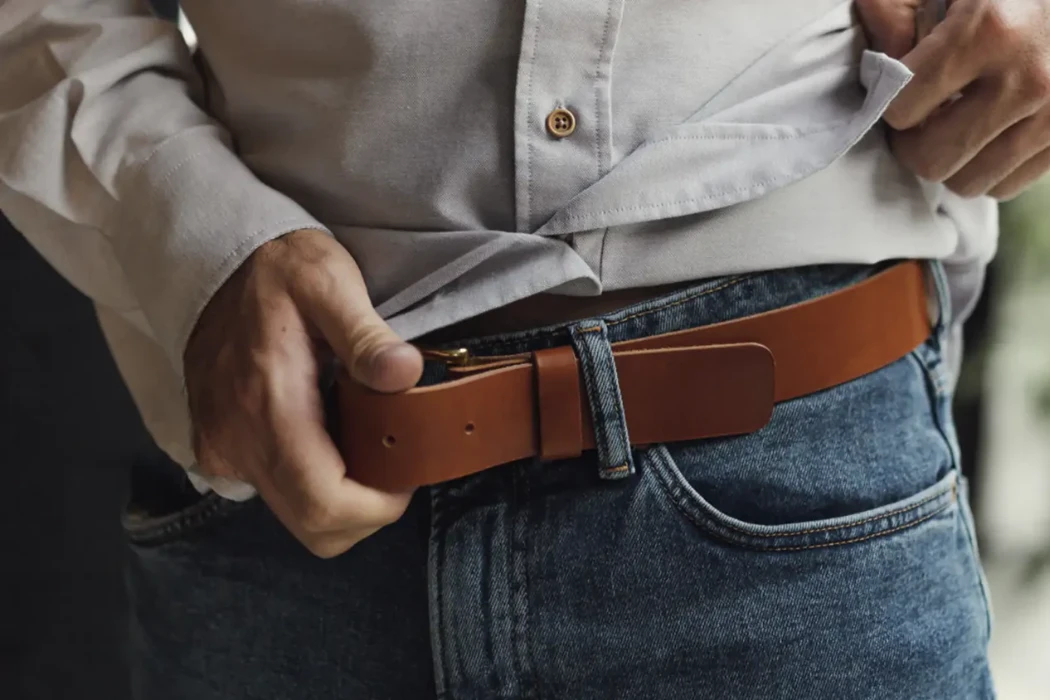
The best exotic leathers for luxury belts are crocodile, alligator, ostrich, and python. Brands choose these skins because they offer unique natural textures and high tensile strength. Crocodile and alligator provide stiff, glossy durability. Ostrich offers extreme wear resistance with its distinct quill patterns. Python delivers lightweight flexibility for fashion designs. Selecting the right skin depends strictly on the belt’s purpose and target retail price.
Crocodile and Alligator Hide Traits
Crocodile and alligator skins are the top choices for formal luxury belts because they display highly symmetrical scale patterns.
- Thickness: These reptilian hides are naturally thick and rigid, so workers often split them down to 1.2mm to 1.5mm before adding a backing leather.
- Flexibility: The square belly scales bend easily around the waist, but the bony hornback ridges require specialized machine skiving so the belt folds smoothly without cracking.
- Dye Absorption: The natural scales absorb liquid pigment unevenly, so tanners use manual hand-wiping techniques to create rich, two-tone colors.
- Finish: Tanneries apply heavy glazing under high friction to create a glossy surface that naturally resists water drops and scratches.
These exotic leathers build a highly rigid belt strap that comfortably holds its shape for decades.
Ostrich Leather Durability
Ostrich leather is famous for its bumpy quill marks and incredible natural fiber strength.
- Tensile Strength: Ostrich skin fibers cross each other in a dense network, making the leather survive over 50,000 flex cycles without tearing.
- Natural Oils: The skin contains very high levels of natural oils, so it actively resists cracking even in harsh dry climates.
- Stretch Resistance: Unlike soft calfskin, the unique ostrich fiber structure does not stretch out over time, so the punched belt holes retain their exact round shape.
- Thickness: Crafters usually skive bumpy ostrich skins down to 1.0mm to wrap smoothly around a heavier structural leather core.
Ostrich leather feels surprisingly soft to the touch but easily outlasts standard cowhide under daily wear.
Python and Snake Skin Flexibility
Python skins offer dramatic geometric patterns but require very delicate handling during the factory assembly process.
- Thickness: Snake skin is extremely thin, usually measuring just 0.4mm to 0.6mm, meaning it strictly needs a solid backing material to function as a belt.
- Scale Direction: The natural scales overlap heavily, so manufacturers must cut the belt strap exactly with the grain to prevent the scales from peeling backward.
- Core Bonding: Because the skin is too fragile to hold a metal buckle, engineers glue the python skin to a sturdy vegetable-tanned cowhide core.
- Flexibility: The raw skin naturally bends without structural resistance, making it ideal for soft and highly flexible casual belt styles.
Python builds a lightweight and visually striking belt, but it requires careful edge stitching to secure the fragile scales permanently.
| Leather Type | Tensile Strength | Standard Thickness | Key Feature |
|---|---|---|---|
| Crocodile / Alligator | Very High | 1.2mm – 1.5mm | Symmetrical belly scales and rigid structure |
| Ostrich | Exceptional | 1.0mm | High oil content and bumpy quill marks |
| Python / Snake | Moderate | 0.4mm – 0.6mm | Ultra-thin profile with overlapping geometric scales |
How Do Tanneries Process Exotic Skins for Belts?
Tanneries process exotic skins through a complex series of chemical baths and mechanical treatments. First, workers carefully descale the raw hides to preserve the natural patterns. Then, they use either vegetable or chrome tanning chemicals to stabilize the skin fibers. Finally, technicians apply specialized finishes like heavy glazing or matte waxes. This careful process transforms fragile raw skins into durable, belt-ready leather.
Descaling and Softening Stages
Before tanning begins, workers must completely remove the hard outer scales and soften the stiff raw hides.
- Chemical Liming: Technicians soak the hides in mild alkaline solutions at exactly 25 degrees Celsius for 48 to 72 hours to safely break down the keratin in the scales.
- Manual Scraping: Because machines can easily tear the delicate skin, artisans use curved hand knives to scrape away residual scales without damaging the underlying grain.
- Bating Process: Workers add special enzymes to the water vats to dissolve unwanted proteins, which dramatically softens the dense exotic skin.
- Thickness Control: After softening, precision machines shave the flesh side down to an initial 2.0mm to ensure the tanning chemicals penetrate evenly from front to back.
This gentle preparation stage prevents the exotic skin from snapping or cracking during the heavy chemical tanning process.
Vegetable vs. Chrome Tanning for Exotics
Tanneries choose specific tanning chemicals based on how the final luxury belt needs to look and bend.
- Chrome Tanning Speed: Chromium salts penetrate the exotic skin rapidly in just 24 hours, creating a very soft and highly flexible leather that naturally resists water damage.
- Vegetable Tanning Rigidity: Natural tree bark extracts take up to 40 days to slowly soak into the hide, building a much stiffer structural leather with a tensile strength exceeding 20 megapascals.
- Color Absorption: Chrome-tanned skins absorb bright chemical dyes very evenly, but vegetable-tanned skins develop a natural, rich patina over time as they age.
- Belt Application: Engineers usually prefer vegetable-tanned crocodile for rigid dress belts and chrome-tanned python for soft, casual strap designs.
Selecting the correct tanning method directly determines if the final belt will feel stiff and formal or soft and casual.
Color Dyeing and Hand-Staining
Applying color to exotic leather is much more difficult than dyeing standard cowhide because the textured scales absorb liquids differently.
- Drum Dyeing: Technicians place the skins inside large rotating drums with liquid aniline dyes for 6 to 8 hours to completely color the core fibers.
- Hand Wiping: Artisans manually wipe darker pigments over the textured scales and then quickly rub the raised areas clean to create a striking two-tone contrast.
- Color Fastness: To prevent the dye from bleeding onto clothing, workers apply a clear chemical fixative and successfully test the skin against 1,000 dry rubs.
- Drying Process: The wet skins hang in climate-controlled rooms at exactly 40 degrees Celsius so the fibers shrink tightly and lock the color pigments permanently inside.
This precise coloring process guarantees the exotic leather belt will retain its deep, rich colors even after years of daily sun exposure.
Glazing and Matte Finishing Techniques
The final finishing stage gives the exotic leather its iconic visual shine and protective surface layer.
- Agate Stone Glazing: To create a mirror-like shine, operators run a solid agate stone across the skin under high pressure, which permanently compresses and flattens the fibers.
- Temperature Control: The heavy glazing friction generates heat up to 80 degrees Celsius, so workers must carefully control the machine speed to avoid burning the expensive hides.
- Matte Finishing: For a quiet luxury look, technicians spray natural waxes and oils onto the skin and then tumble the hides in wooden drums for 8 to 10 hours.
- Foil and Metallic Treatments: Factories sometimes apply a 0.05mm metallic foil film using a heated press machine to create striking, modern fashion designs.
These specialized finishing techniques protect the raw hide and highlight the unique, expensive geometry of the exotic scales.
Why Is Artisanal Assembly Crucial for High-End Belts?
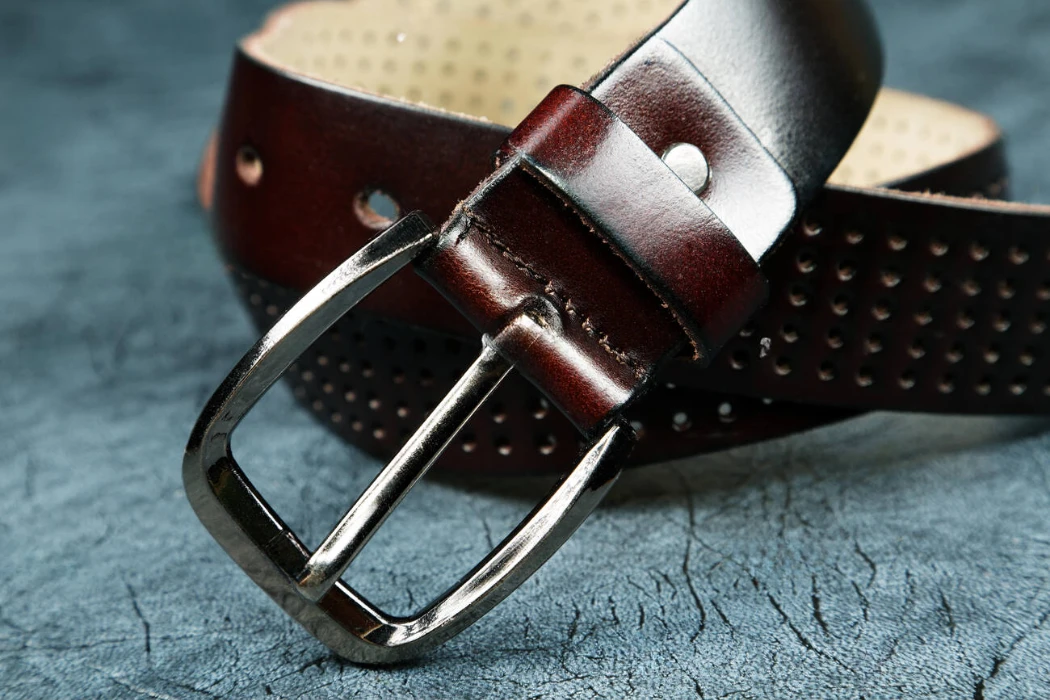
Artisanal assembly is crucial for high-end belts because machines cannot read the unpredictable natural patterns of exotic skins. Skilled workers must hand-cut each strap to perfectly center the scales. Also, human hands easily adjust to the changing thickness of reptile hides during stitching. Machine assembly often crushes fragile scales or creates crooked lines. So, manual craftsmanship guarantees a visually balanced and structurally safe luxury belt.
Hand-Cutting Alignment and Grain Matching
Crafters must cut the exotic leather by hand to ensure the natural patterns align perfectly down the center of the belt.
- Visual Balance: Workers physically place clear acrylic templates over the skin to lock the geometric scales exactly in the middle of a standard 35mm strap.
- Waste Management: Because each animal hide is completely unique, artisans actively plan cuts to limit expensive material waste to under 15 percent.
- Grain Direction: Operators strictly cut snake and python skins matching the natural growth direction so the overlapping scales do not peel backward during daily wear.
- Blade Control: Technicians use surgical-grade steel knives because heavy automated stamping presses routinely crush the raised hornback ridges on crocodile hides.
This intense manual cutting stage prevents ugly off-center patterns that instantly ruin the retail value of a luxury belt.
Skiving the Edges for a Flat Profile
Workers must carefully thin the edges of the thick exotic skin so the belt does not feel heavy or look bulky.
- Edge Thinning: Artisans push the leather edges through a specialized skiving machine to reduce the border thickness down to a precise 0.8mm.
- Folding Space: Thinning the edges creates the exact physical space needed to fold the exotic skin smoothly over the vegetable-tanned backing leather.
- Avoiding Bumps: Because ostrich and alligator skins have natural bumps, workers manually adjust the cutting blade angle to avoid slicing through the valuable surface grain.
- Core Integration: This step guarantees the heavy 3.0mm center core stays thick for strength while the edges remain sleek and elegant.
Proper skiving makes the final luxury belt feel incredibly comfortable and sit flat against the waist.
Saddle Stitching vs. Machine Stitching
Engineers heavily prefer manual saddle stitching over fast machine stitching to secure the fragile exotic leather layers permanently.
- Thread Integrity: Saddle stitching uses two needles crossing through the same hole. So, if one thread breaks, the remaining thread actively holds the 20-pound tension load.
- Machine Flaws: Standard sewing machines use a fast locking stitch mechanism that completely unravels the entire seam if just one single loop fails.
- Hole Spacing: Crafters manually punch the stitching holes exactly 3.0mm apart, safely adjusting the spacing if a hole lands directly on a fragile reptile scale.
- Thread Quality: Workers coat thick linen threads with natural beeswax to prevent water rot and actively stop the thread from slicing into the soft exotic skin.
Hand stitching takes much more time, but it builds an indestructible seam that safely protects the expensive exotic leather layers.
| Assembly Metric | Manual Artisanal Assembly | Automated Machine Assembly |
|---|---|---|
| Scale Alignment | Perfectly Centered (Visual adjustment) | Random (Blind cutting dies) |
| Stitch Durability | Independent Loops (Will not unravel) | Interlocked Loops (High unravel risk) |
| Edge Skiving Precision | Adjustable (Reacts to bumpy textures) | Fixed Depth (Often cuts through grain) |
How Do Makers Finish Belt Edges on Exotic Leathers?
Makers finish belt edges by physically sanding the rough leather flat, then applying multiple coats of liquid edge paint. They also use heated iron tools to melt the paint deeply into the fibers. This manual process takes hours of waiting between coats. It creates a smooth, rounded border that stops moisture from ruining the inside of the belt.
Sanding and Beveling the Raw Edges
First, artisans must shape the sharp leather corners to prevent the edges from feeling rough against the skin.
- Beveling: Workers use a small steel edge beveler tool to slice off exactly 1.0mm of the sharp top and bottom corners.
- Sanding: They actively rub the raw edges with 400-grit to 800-grit sandpaper to remove any loose exotic skin fibers.
- Fiber Flattening: Because reptile skins splinter easily, technicians apply a natural tragacanth gum liquid to stick the loose fibers together safely.
- Profile Shaping: This physical shaping creates a perfect semi-circle profile so the final edge paint looks completely round and elegant.
Careful sanding guarantees the liquid edge paint sticks directly to the solid leather core instead of flaking off later.
Applying Edge Paint Layers
Next, painters apply specialized liquid edge dye to completely seal the exposed leather fibers.
- Base Coat: Workers roll on a thick chemical primer that actively bonds the top exotic skin with the bottom backing leather.
- Multiple Layers: High-end belts require exactly 3 to 5 layers of premium Italian edge paint to build a thick, protective bumper.
- Drying Time: Each liquid layer needs 20 to 30 minutes of air drying in a climate-controlled room before adding the next coat.
- Color Matching: Technicians mix the paint colors by hand so the edge border perfectly matches the unique dye of the crocodile or python skin.
Building multiple thin layers creates a flexible rubber-like edge that actively bends with the belt without cracking.
Heat Burnishing and Hand Polishing
Finally, engineers use heat and friction to melt the painted edges into a solid, glass-like finish.
- Heated Irons: Artisans run a specialized electric iron heated to 60 degrees Celsius along the painted edge to melt the paint deep into the leather pores.
- Friction Burnishing: They rub the edge aggressively with a wooden slicker tool to create high physical friction.
- Wax Sealing: Workers apply a block of natural beeswax over the warm edge to create a final waterproof barrier.
- Polishing: A soft cotton cloth actively buffs the wax layer until the edge reflects light like a polished mirror.
This intense heat treatment ensures the belt edge stays perfectly smooth and survives years of daily friction against rough clothing.
Which Hardware Materials Match Luxury Belt Straps?
Luxury belt straps require dense, heavy metals that do not bend or rust over time. Engineers mostly use solid brass or stainless steel for the buckle core. Then, factories plate these metals with precious palladium or real gold to stop oxidation. High-quality hardware guarantees the heavy exotic leather strap stays securely fastened.
Solid Brass Buckle Properties
Solid brass is the traditional choice for luxury buckles because the metal is dense and highly malleable.
- Casting: Factories pour molten brass into specialized sand molds to create solid, heavy buckles without any weak hollow air pockets.
- Weight: A high-quality brass buckle usually weighs over 45 grams, giving the belt a premium and balanced feel.
- Corrosion Resistance: Brass naturally resists rust, so the metal will not degrade even if the outer plating wears off after years of use.
- Polishing: Workers aggressively buff the raw brass by hand to create a perfectly smooth base before adding any chemical plating.
Brass builds a classic, heavy buckle that feels incredibly expensive and lasts for decades.
Stainless Steel Core Strength
Engineers use medical-grade stainless steel when the luxury belt needs maximum physical strength and a modern look.
- Tensile Strength: Stainless steel is significantly harder than brass, meaning the buckle pin will not bend even under 50 kilograms of pulling force.
- Hypoallergenic: Factories specifically use 316L stainless steel because it naturally stops allergic skin reactions.
- Machining: Because the steel is so hard, technicians must use expensive CNC milling machines to slowly cut the exact buckle shape.
- Durability: The raw metal naturally resists deep scratches, so it actively survives heavy daily impacts against desks or car doors.
Stainless steel provides ultimate structural safety for heavy crocodile and alligator belt straps.
Palladium and Gold Plating Thickness
To protect the base metal and create a brilliant shine, factories apply thin layers of precious metals using electricity.
- Electroplating: Technicians submerge the buckles in chemical baths and use electrical currents to bond the precious metal atoms directly to the brass or steel core.
- Plating Thickness: Luxury standards dictate exactly 0.5 to 2.0 microns of plating thickness to prevent the color from quickly rubbing off.
- Palladium Use: Brands frequently use palladium instead of cheap nickel because it creates a bright silver finish that never oxidizes or turns black.
- Gold Application: For a warm luxury tone, factories apply real 18-karat to 24-karat gold over a hard titanium base layer to stop surface scratches.
Proper precious metal plating ensures the belt buckle looks flawless and retains its high retail value.
| Hardware Material | Primary Benefit | Standard Specs | Best Belt Application |
|---|---|---|---|
| Solid Brass | Heavy, classic weight | 45+ grams | Traditional formal dress belts |
| 316L Stainless Steel | Extreme strength and scratch resistance | Will not bend at 50kg force | Modern or heavy casual belts |
| Precious Metal Plating | Oxidation resistance and color | 0.5 to 2.0 microns thick | All high-end luxury retail belts |
What Quality Tests Do Exotic Leather Belts Face?
Factories must physically test exotic leather belts to guarantee they survive daily wear. Engineers use specialized machines to pull, bend, and rub the finished belts. These strict tests prove the glue, stitching, and leather fibers will not fail. Skipping these tests easily leads to broken buckles or peeling skin. So, laboratory testing safely protects both the retail brand and the final customer.
Tensile Strength and Pull Testing
Engineers use heavy mechanical machines to pull the belt apart and measure its ultimate breaking point.
- Buckle Pull: Machines hook the buckle and pull the leather strap with exactly 50 kilograms of force to ensure the metal pin holds securely.
- Hole Tear: Technicians pull the punched buckle holes specifically to verify the exotic leather does not rip under a 20-kilogram load.
- Seam Strength: The testing machine actively tries to rip the two leather layers apart to confirm the saddle stitching survives 30 pounds of pressure.
- Core Integrity: This test proves the inner vegetable-tanned core actively supports the fragile outer python or crocodile skin.
Pull testing guarantees the belt will safely hold up heavy trousers without suddenly snapping.
Flexing and Bend Resistance
Workers must prove the exotic leather will not crack when the customer bends it around their waist every single day.
- Flex Cycles: A mechanical arm bends the belt strap back and forth for 50,000 flex cycles to simulate years of daily use.
- Cold Flexing: Technicians freeze the belt down to -20 degrees Celsius and bend it to ensure the edge paint does not shatter in winter climates.
- Delamination: Bending heavily tests the internal glue, ensuring the top exotic skin does not separate from the bottom backing leather.
- Crease Recovery: Quality inspectors check if the stiff crocodile belly scales successfully return to a flat shape after spending 24 hours folded.
Extreme flexing tests ensure the belt always looks brand new instead of developing deep, ugly wrinkles.
Color Fastness to Rubbing (Dry and Wet)
Laboratories physically rub the dyed exotic leather to verify the rich colors will not bleed onto expensive clothing.
- Dry Rub: A specialized machine rubs a piece of dry white cotton against the colored scales for exactly 1,000 cycles.
- Wet Rub: Engineers soak the cotton pad in water or artificial sweat and rub the belt for 500 cycles to simulate hot summer days.
- Scale Crevices: Because dye often hides deep between the bumps of ostrich skin, inspectors use magnifying glasses to check for tiny paint flakes.
- Fixative Verification: Passing this test proves the factory applied the clear chemical fixative perfectly during the final tanning stage.
Color fastness testing gives brands deep confidence that a dark leather belt will never ruin a light-colored shirt.
Frequently Asked Questions
How long does an exotic leather belt last?
A well-made exotic leather belt easily lasts 10 to 20 years. Crocodile and ostrich skins naturally resist heavy friction, so they easily outlast standard cowhide. You must keep the leather conditioned to prevent the scales from drying out.
How can you tell if a crocodile belt is real?
Real crocodile skin has unique, irregular scale shapes and tiny pores near the edge of each scale. Fake stamped leather repeats the exact same pattern perfectly. Also, real exotic leather bends differently and feels much stiffer than printed cowhide.
What is the best backing leather for a luxury belt?
Full-grain nubuck or vegetable-tanned cowhide are the absolute best backing leathers. These materials absorb sweat easily and feel very soft against the body. They also provide a thick, solid foundation to support fragile skins like python.
Do exotic leather belts require special care?
Yes, exotic skins require special reptile leather conditioners. Standard shoe polish often ruins the clear glossy finish on alligator hides. You should simply wipe the belt with a dry cloth and keep it away from direct heat.
Why do luxury belts use hand-painted edges?
Hand-painted edges completely seal the raw leather fibers from water and sweat. Machines cannot paint the edges cleanly because reptile skins have highly bumpy textures. Manual painting builds a smooth, durable, and beautiful rubber-like bumper.
How thick should a high-end leather belt be?
A high-end luxury belt usually measures between 3.0mm and 4.0mm thick. This specific thickness allows the belt to slide easily through pant loops while remaining structurally strong enough to hold its shape securely.
Conclusion
Building a luxury exotic leather belt requires intense technical precision. Tanneries must carefully prepare the fragile skins using exact chemical baths. Then, skilled artisans must hand-cut the scales, saddle-stitch the layers, and physically burnish the painted edges. Finally, strict laboratory tests prove the belt will survive decades of daily wear. For retail brands seeking these exact high-end manufacturing standards, Hoplok Leather provides the complete OEM solution. Hoplok actively combines expert artisanal assembly with strict quality control to deliver flawless custom belts for the global luxury market.