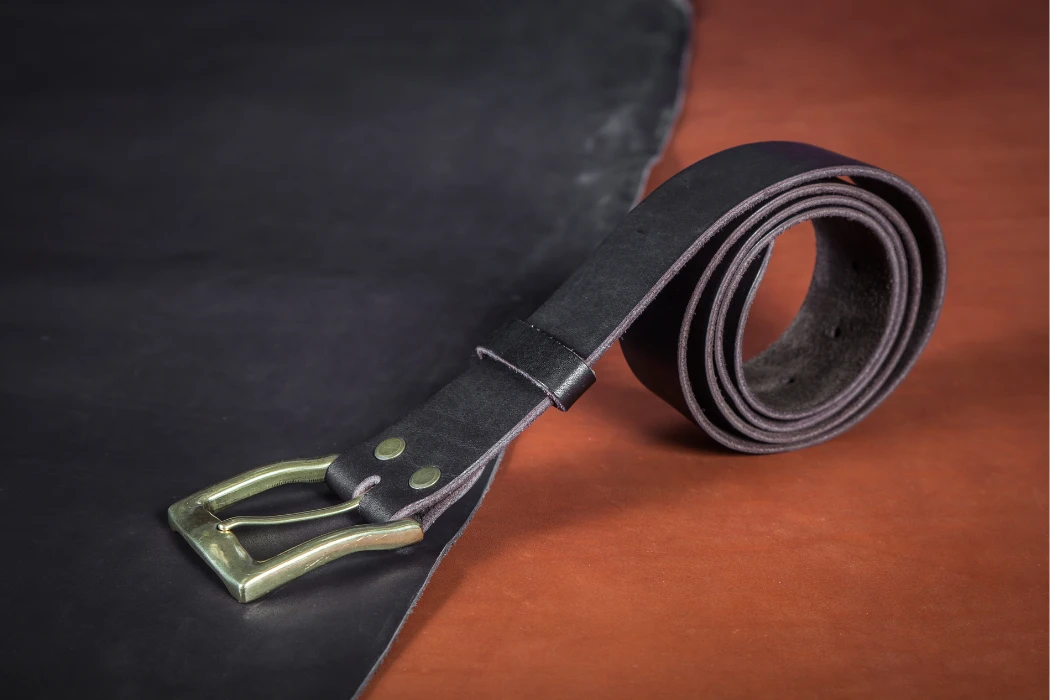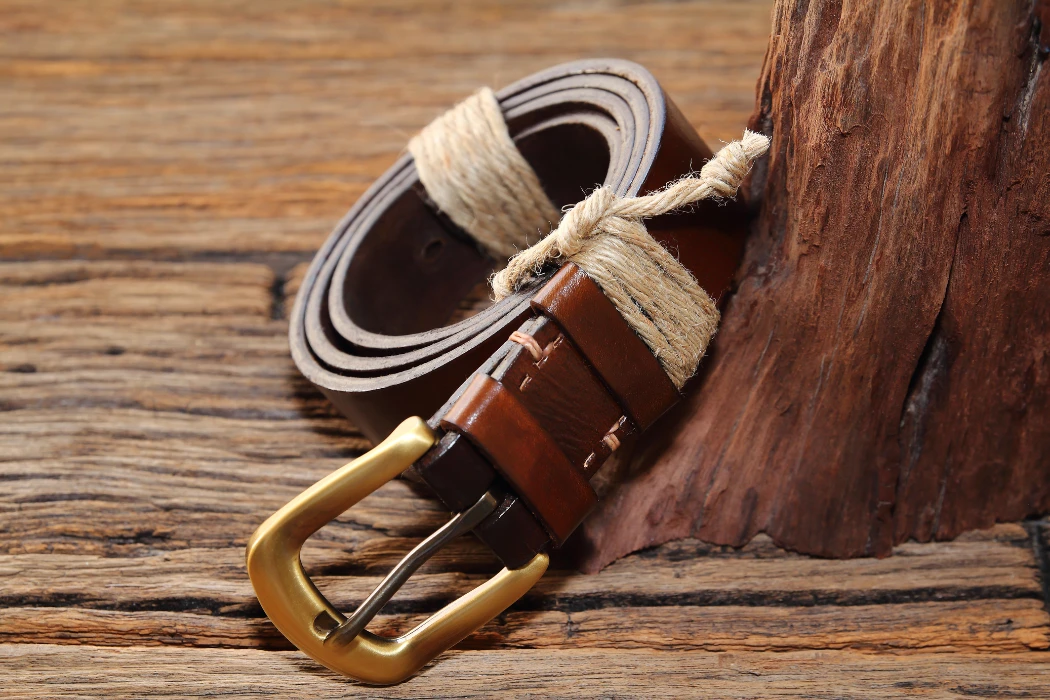
Marketing departments have done an incredible job rebranding plastic. Terms like “Vegan Leather,” “Eco-Leather,” and “Faux Leather” conjure images of ethical, natural alternatives. However, if you place these materials under a microscope, the illusion vanishes. You won’t find the complex, interwoven collagen structure of nature; you will simply find Petroleum.
At Hoplok, our expertise lies in processing natural skin—a material designed by evolution to protect a living organism. In contrast, the “substitutes” flooding the market are technically classified by engineers as Coated Fabrics. Understanding this chemical distinction is critical. When a customer asks why their belt is peeling like a sunburn, the answer isn’t “bad luck”; it is the inevitable failure of a plastic coating struggling to cling to a fabric sheet.
The fundamental difference is manufacturing: Real leather is grown; fake leather is Extruded. A synthetic belt is a multi-layer composite material consisting of a textile backing (the scaffold), a chemical binder (the glue), and a plastic surface (the paint). It relies on weak chemical bonds rather than biological fiber locks.
In this engineering breakdown, we will analyze the chemical structures of PU and PVC, reveal the hidden synthetic binders in “plant-based” leathers, and explain why, physically speaking, a chemical bond can never replicate the tensile integrity of a biological fiber.
What is the Core Anatomy of a Synthetic Belt?
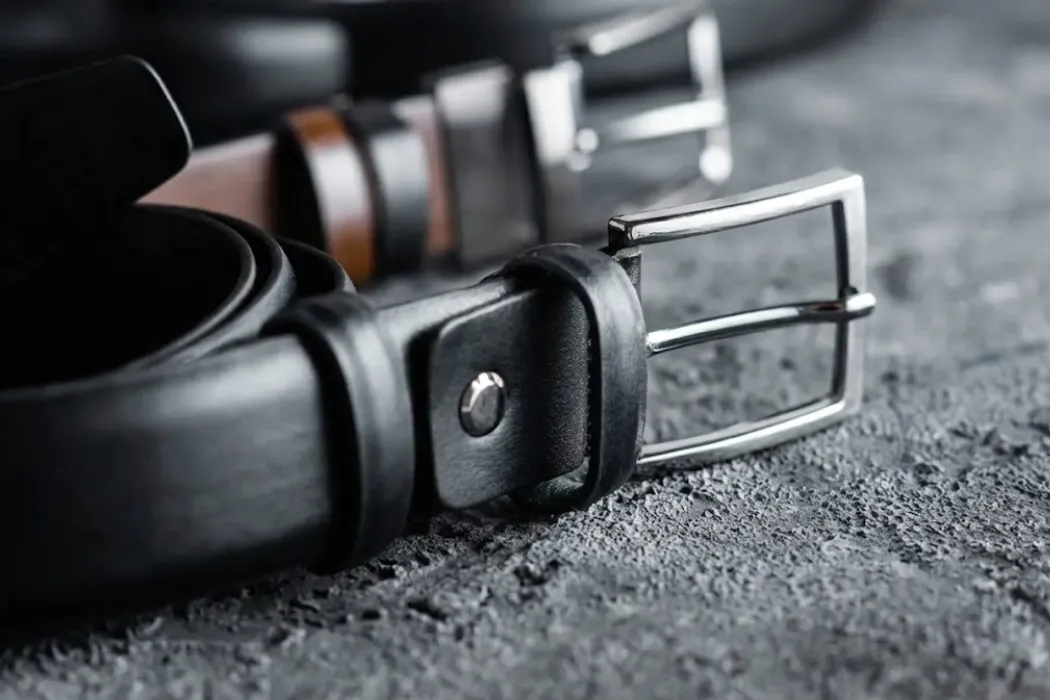
If you slice a synthetic belt in half, you won’t see a solid mass; you will see a sandwich. A fake leather belt is essentially a textile strap painted with plastic. Its structural integrity does not come from the “leather” surface, but from the fabric hidden underneath. This disconnect between the surface look and the structural core is why these belts eventually delaminate (peel apart).
The Textile Scaffold (The Backbone)
The strength of a fake belt comes entirely from cloth. Manufacturers use a woven or non-woven fabric base to provide tensile strength.
- The GSM Factor: Most commercial faux leather relies on a 200–300 GSM (Grams per Square Meter) backing made of polyester or cotton. This fabric layer handles 100% of the mechanical load holding your pants up.
- The Failure Point: Because the fabric is flexible and the plastic coating is rigid, they move at different rates. Over time, this shear force breaks the adhesive bond between the two layers.
The Polymer Skin (The Look)
The “leather” part is actually a liquid veneer applied to the fabric. It is purely cosmetic.
- Micron-Thin Aesthetics: The actual layer of PU or PVC is incredibly thin, typically ranging from 0.1mm to 0.5mm. This is thinner than a fingernail. It is embossed with a grain pattern while hot to mimic the texture of animal pores, but it has no structural depth.
- Surface Erosion: Since this layer is just a thin film, abrasion (like rubbing against belt loops) wears through it quickly, exposing the white or grey fabric underneath.
The Chemical Cocktail (Additives)
Raw PVC is hard and brittle (think PVC pipes). To make it flexible enough to wear, chemists must alter its molecular structure.
- Plasticizers: Manufacturers add phthalates or adipates to soften the plastic. However, these chemicals are not permanently bound to the polymer.
- Plasticizer Migration: Over time, these additives migrate to the surface or evaporate. This is why cheap fake leather becomes sticky or tacky after about 12 months—the plasticizers are leaking out, leaving the remaining material brittle and prone to cracking.
| Component | Biological Hide (Full-Grain) | Synthetic Composite (Faux) |
|---|---|---|
| Structural Base | Interwoven Collagen Fibers | Woven Polyester/Cotton Fabric |
| Binding Agent | Natural Protein Bonds | Chemical Adhesive / Glue |
| Surface Layer | Epidermis (Integrated) | Polymer Film (0.1–0.5mm) |
| Breathability | High (Porous) | Zero (Solid Plastic Barrier) |
What is Polyurethane (PU) Leather?
Polyurethane (PU) is the reigning monarch of the fake leather industry. If you buy a “vegan” belt at a fast-fashion retailer, it is almost certainly PU. While it mimics the soft hand-feel of leather better than older plastics, it suffers from a fatal chemical flaw: it is inherently unstable when exposed to moisture.
Chemical Composition
From a molecular standpoint, PU is a polymer formed by reacting diisocyanates with polyols. Unlike PVC, which requires additives to be soft, PU molecular chains are naturally flexible. This makes it the preferred material for fashion belts because it drapes somewhat like real skin, fooling the consumer in the fitting room.
Hydrolysis Susceptibility
The biggest enemy of a PU belt is not wear; it is the water in the air.
- The Hydrolysis Reaction: PU polymers contain ester bonds that are chemically susceptible to water. Hoplok laboratory data indicates that at 70% Relative Humidity, water molecules begin to attack and break these bonds.
- The 3-Year Wall: This chemical breakdown (hydrolysis) causes the polymer chains to snap. Within 2–3 years, even if the belt is never worn, the coating will disintegrate into sticky flakes. This is why “vintage” PU items do not exist.
Why It Peels
Peeling is a mechanical failure caused by the “sandwich” construction we discussed earlier.
- Shear Force Differential: When you wrap a belt around your waist, the outer surface must stretch further than the inner surface. The fabric backing stretches easily, but the cured PU coating is relatively rigid.
- Delamination: This difference creates Shear Force at the adhesive layer. Over thousands of bend cycles, the glue bond fails, and the top “skin” separates from the fabric “muscle,” creating the unsightly peeling effect common in budget belts.
What is Polyvinyl Chloride (PVC) Leather?
Before PU dominated the market, Polyvinyl Chloride (PVC)—often called Vinyl—was the standard for fake leather. While less common in fashion today due to its stiffness, it is still widely used in “heavy duty” work belts because it is cheap and virtually indestructible until it cracks. If PU is a plastic bag, PVC is a plastic pipe.
The Chlorine Factor
PVC is chemically distinct because it contains chlorine groups. This gives it a very different physical profile compared to PU.
- Specific Gravity: PVC is denser and heavier than PU. Manufacturers often use it for cheap “work belts” because its heft mimics the weight of real leather better than lightweight PU.
- The “Cold” stiffness: Despite the weight, PVC lacks the drape of skin. It feels stiff and “boardy” in the hand. In cold weather, it hardens significantly, sometimes becoming rigid enough to dig into your hips.
Phthalates and Rigidity
In its raw state, PVC is rigid (think white plumbing pipes). To make a belt out of it, chemists must add massive amounts of liquid plasticizers, specifically Phthalates.
- Chemical Volatility: These plasticizers are not chemically bound to the vinyl; they are suspended in the matrix. Over time, they evaporate (off-gas). This leads to the belt becoming brittle.
- Catastrophic Cracking: Once enough phthalates have evaporated, the material reverts to its natural rigid state. This is why old vinyl belts snap cleanly in half rather than peeling like PU.
The “Sweat” Effect
From an ergonomic standpoint, PVC is the worst possible material for a waistband.
- Zero Permeability: PVC is effectively a solid plastic barrier. It allows zero moisture transport.
- Thermal Trap: Wearing a PVC belt creates a localized greenhouse effect. Field tests show that the skin temperature under a PVC belt can rise 2–4°C higher than the ambient temperature, leading to excessive sweating and discomfort that real leather (which breathes) naturally prevents.
| Feature | Polyurethane (PU) | Polyvinyl Chloride (PVC) |
|---|---|---|
| Chemical Base | Isocyanates + Polyols | Chlorine + Ethylene |
| Flexibility | High (Drapes like skin) | Low (Stiff and boardy) |
| Breathability | Low (Micro-porous variants exist) | Zero (Solid barrier) |
| Typical Lifespan | 2–3 Years (Peels/Hydrolysis) | 5+ Years (Cracks/Brittleness) |
| Environmental Toxicity | Moderate | High (Releases Dioxins if burned) |
Are “Bio-Leathers” Actually Natural? (Greenwashing Check)
The latest trend in the synthetic market is “Plant-Based” or “Bio-Leather.” Brands market belts made from pineapple leaves, cactus, or mushrooms as if they are sliced directly from the plant. This is a masterclass in Greenwashing. From a chemical engineering perspective, these materials are simply agricultural waste dust suspended in a plastic matrix. They are not growing on trees; they are manufactured in petrochemical plants.
The Binder Problem
Plant fibers cannot form a cohesive sheet on their own; they fall apart. To turn pineapple fiber (Piñatex) or cactus slurry into a belt, you need glue.
- The 50% Plastic Reality: Most bio-leathers are composed of 30% to 50% Polyurethane (PU) resin or bio-plastic binders. Without this petrochemical “glue,” the material would have no structural integrity.
- Not Compostable: While the marketing claims “made from plants,” the final composite material is not biodegradable. You cannot throw a cactus leather belt in your garden compost; the plant matter might rot, but the PU resin will remain intact for centuries.
Structural Limits of Plant Fibers
There is a physical reason why animal hide is tough: collagen fibers are long, complex, and interwoven.
- Cellulose Shortcomings: Plants are made of cellulose, which consists of short, brittle fibers. Even when compressed, they lack tensile elasticity.
- Tear Strength (< 50 Newtons): Without a heavy synthetic backing, most bio-leathers have a tear strength of less than 50 Newtons. This is insufficient for a belt hole, which endures constant torque. This is why “vegan” belts almost always require a thick, non-woven synthetic backing to prevent the buckle prong from ripping through.
Microplastic Residue
The environmental footprint of these hybrids is often murkier than pure plastic. When they eventually break down in landfills, they create a specific pollution vector.
- The “Ghost” Plastic: As the organic plant matter decomposes, it releases the microscopic plastic binding agents into the soil and water table. This creates Microplastic Residue that is nearly impossible to filter out, contrasting sharply with vegetable-tanned leather, which decomposes into harmless organic elements.
Why Do Fake Leather Belts Fail Mechanically?
When a customer brings us a broken belt, we don’t just throw it away; we perform an autopsy. Mechanical failure in synthetic belts is predictable because it is a failure of adhesion, not material density. While real leather is a single, cohesive mass that gets stronger under tension, fake leather is a laminate that fundamentally wants to separate.
Hole Elongation (The Stretch)
The buckle hole is the highest stress point on any belt. This is where the difference between a woven backing and a fibrous hide becomes undeniable.
- Hoplok Pull Test Data: When we apply tensile load to the hole of a synthetic belt, the woven fabric backing begins to unravel. The threads slide past each other, causing the hole to distort from a circle into a long oval, eventually tearing through completely.
- The Self-Locking Effect: In contrast, Full-Grain Leather possesses a “self-locking” property. Under tension, the collagen fibers tighten around the buckle prong, reinforcing the hole rather than yielding to the pressure.
Delamination (The Separation)
Peeling is the hallmark of a cheap belt. This happens because the glue simply stops working under dynamic stress.
- Peel Strength Decay: In cyclic flex testing, a belt is bent back and forth to simulate daily wear. Our data shows that after just 5,000 bend cycles (roughly 6 months of use), the adhesive bond strength between the PU coating and the fabric backing drops by over 80%. This loss of adhesion causes the top layer to bubble and flake off.
UV Embrittlement
Plastic polymers hate sunlight. Photodegradation attacks the chemical bonds that keep the material flexible.
- Polymer Chain Scission: Ultraviolet (UV) light acts like a molecular knife, cutting the long polymer chains of PVC and PU. Lab results indicate that after 100 hours of direct sun exposure, the surface tensile strength drops significantly, leading to discoloration and immediate surface cracking (crazing) when flexed.
How Does the Manufacturing Process Differ from Real Leather?
The distinction between real and fake is ultimately a distinction between growth and manufacturing. One is a slow, organic maturation process; the other is a rapid industrial assembly line designed for speed and uniformity.
Extrusion vs. Tanning
Time is the most expensive ingredient in leather production, and it is the first thing synthetic manufacturers cut.
- The 4-Hour Extrusion: Synthetic leather is produced on massive rollers. Liquid polymer is extruded onto a moving fabric sheet, cured in an oven, and rolled up. The entire process from raw chemical to finished roll takes a few hours.
- The 6-Week Cure: Real vegetable-tanned leather, like the kind Hoplok uses, undergoes a slow-tanning process involving natural tree barks. Hides soak in pits for 4 to 6 weeks to allow the tannins to fully penetrate and preserve the collagen matrix. This time creates density that plastic cannot rush.
The “Repeat Pattern” Stamp
Since fake leather is a continuous sheet, the grain texture must be applied mechanically via a metal roller.
- The Roller Limit: The embossing rollers used to stamp the grain have a fixed circumference, typically 12 to 24 inches (30–60 cm). If you look closely at a long synthetic belt, you will spot the exact same “imperfection,” scratch, or pore cluster repeating at regular intervals. Real leather has no repeating pattern because nature doesn’t copy-paste.
Edge Sealing Necessity
Real leather has nothing to hide; fake leather has everything to hide.
- The Raw Edge Test: You can leave the edge of a full-grain belt raw or lightly burnished, and it looks distinctively fibrous and beautiful. If you leave the edge of a fake belt raw, you expose the white fabric sandwich.
- Thick Paint Camouflage: This is why synthetic belts always feature thick, rubbery Edge Paint. It is not primarily an aesthetic choice; it is a structural necessity to seal the fabric core from fraying and to hide the visual evidence of the composite layers.
| Comparison Factor | Real Vegetable-Tanned Leather | Synthetic / Faux Leather |
|---|---|---|
| Production Time | 4–6 Weeks (Slow Cure) | Hours (Rapid Extrusion) |
| Raw Material Origin | Animal Hide (Food Industry Byproduct) | Petroleum / Fossil Fuels |
| Biodegradability | High (Decomposes organically) | None (Persists as Microplastics) |
| Carbon Footprint Source | Methane (Livestock rearing) | Extraction & Refining (Oil industry) |
Is There Any Scenario Where Synthetic Belts Are Superior?
As materials engineers, we must remain objective. While synthetic leather fails to match the structural integrity and longevity of full-grain hide, it does possess specific properties—mainly derived from its plastic nature—that make it advantageous in niche applications where cost or environmental sterility is the priority.
Uniformity for Mass Production
For fast-fashion brands, consistency is more important than quality. Synthetic materials offer a predictable supply chain.
- Cutting Yield (100% vs. 70%): Synthetic leather comes in perfect, continuous rectangular rolls. Manufacturers achieve nearly 100% cutting yield with zero waste. Real leather hides are irregular shapes with natural scars and bug bites; the usable cutting yield is typically only 70%, increasing the material cost significantly.
Vegan Ethical Stance
For consumers who strictly avoid animal products for ethical reasons, the challenge is finding a synthetic that doesn’t disintegrate instantly.
- The Microfiber Exception: While we advise against standard PU/PVC, high-end Microfiber Leather is the only synthetic that approximates the non-woven fiber structure of skin. It is lighter and more consistent than leather, making it the superior choice for strict vegans compared to cheap bonded alternatives.
Extreme Water Exposure
Leather is hydroscopic; plastic is hydrophobic. In environments where the belt will be completely submerged, biology is a disadvantage.
- Hydrophobic Stability: Vegetable-tanned leather swells and stiffens if soaked in saltwater. PVC is effectively waterproof. For marine applications or industrial jobs involving chemical splashes, a PVC belt offers superior dimensional stability because it does not absorb fluids.
Frequently Asked Questions
Is “Vegan Leather” just plastic?
Yes, in over 90% of cases. Unless explicitly stated as laboratory-grown collagen (which is rare and expensive), “Vegan Leather” is simply a marketing term for Polyurethane (PU) or Polyvinyl Chloride (PVC). Even plant-based alternatives like cactus or pineapple leather typically require a 30–50% petroleum-based resin binder to hold the fibers together, meaning they are still technically composite plastics.
Why does my belt smell like chemicals?
That smell is “off-gassing.” The sharp, acrid odor characteristic of cheap belts comes from Volatile Organic Compounds (VOCs). It is a cocktail of residual solvents used to liquefy the plastic and phthalate plasticizers evaporating from the material. Real vegetable-tanned leather smells essentially of tree bark and earth; if it smells like a swimming pool liner or gasoline, it is synthetic.
Can bonded leather be repaired?
No, it is structurally impossible. Bonded leather is akin to particleboard; it is sawdust held together by glue. Once the surface coating peels or the material snaps, you cannot stitch it back together because there are no long fibers to hold the thread. The material will simply crumble around the repair site. It is a disposable product.
Is synthetic leather waterproof?
Yes, but this is a double-edged sword. PVC and PU are chemically hydrophobic, meaning they repel water perfectly. While this makes them easy to wipe clean, it also means they have zero breathability. Wearing a waterproof plastic belt against your waist traps heat and sweat, often leading to discomfort and dampness that breathable full-grain leather naturally wicks away.
Do fake leather belts stretch?
They stretch, but they do not recover. This is known as “plastic deformation.” When you pull tight on a synthetic belt, the plastic coating and fabric backing stretch out permanently. Unlike real leather, which has elastic memory and returns to its shape, a stretched fake belt hole remains distorted and oval-shaped forever, compromising the fit.
The Verdict: A Photograph, Not a Skin
Synthetic leather is undeniably a marvel of modern chemical engineering. It allows for mass production, color uniformity, and a price point that democratizes fashion. However, let us be clear about the trade-off: You are buying a photograph of leather, not the material itself. Like a photo, it looks perfect on the surface, but it lacks the depth, structural integrity, and life of the original subject.
Hoplok’s Take
We believe that no matter how many additives chemists pour into a vat, they cannot replicate the millions of years of evolution that designed animal skin. Skin is a biological armor; plastic is a petrochemical byproduct. One is designed to heal and toughen; the other is designed to degrade. At Hoplok, we choose biology over chemistry every time.
Eliminate the “Plastic Feel” from Your Brand
If you are a brand manager or designer tired of fielding customer complaints about “plasticky” belts that peel after six months, it is time to return to the source. Hoplok supplies 100% Organic Structure Full-Grain Vegetable-Tanned Leather strips. No hidden sandwich layers, no fabric fillers, no plasticizers. Just solid, honest hide that gets better with age. Contact our team to request a sample kit and feel the structural difference.