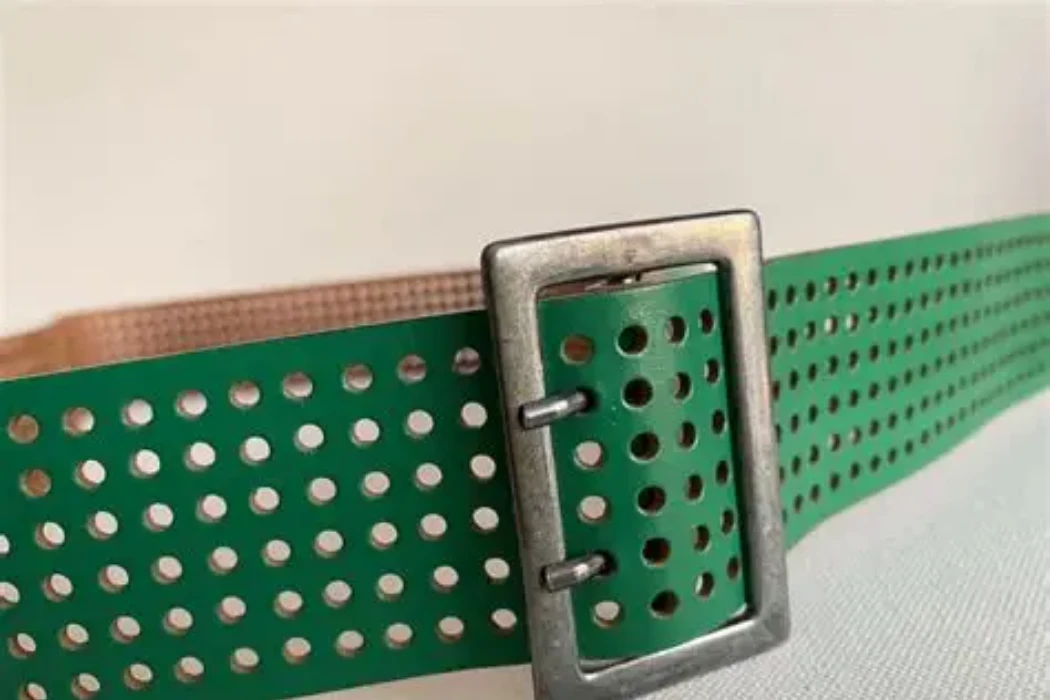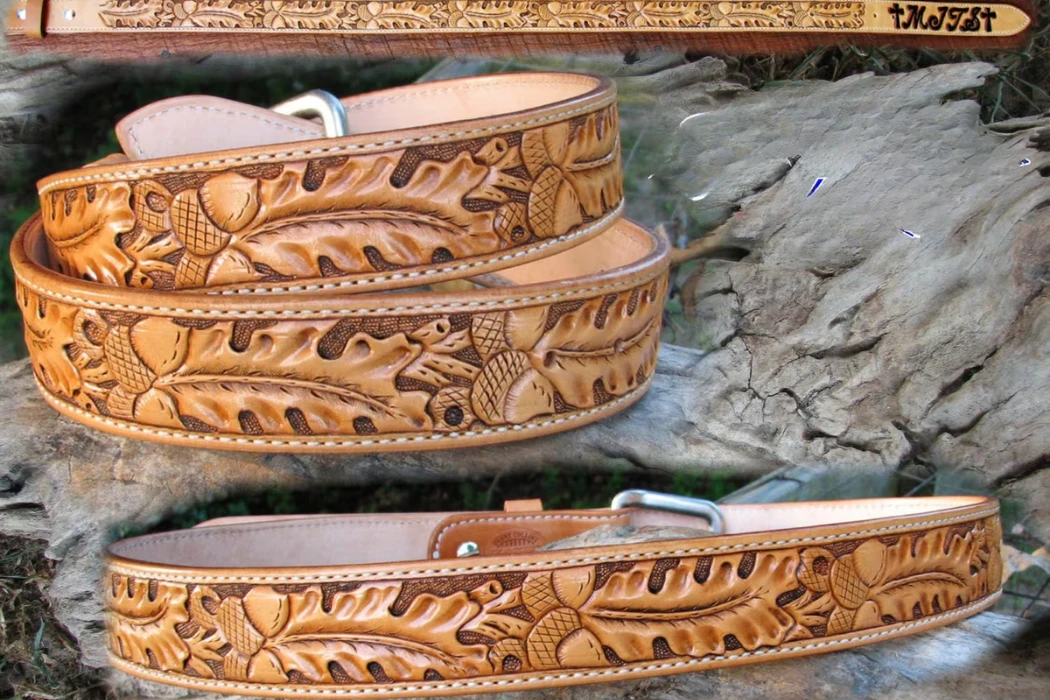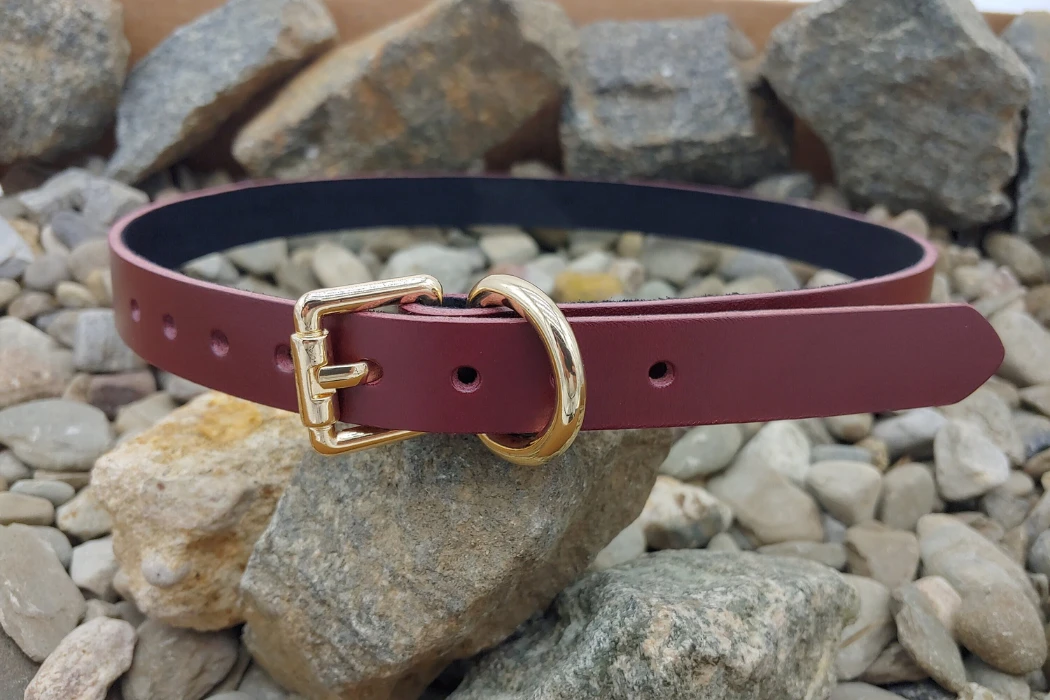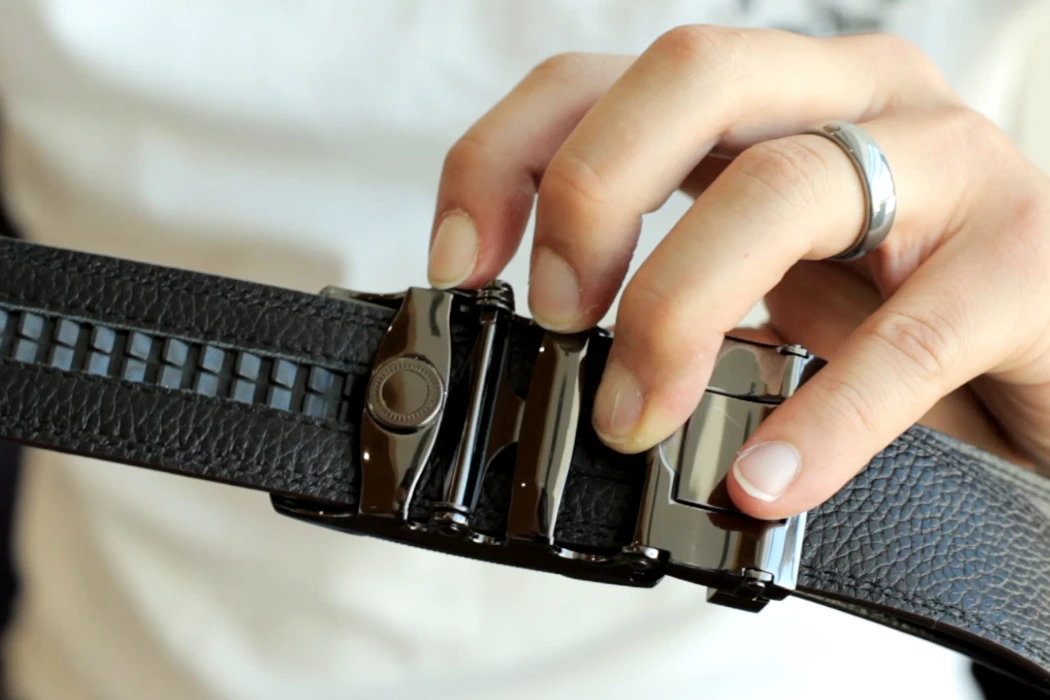
Faux-leather belts can be made from PU- or PVC-coated materials, microfiber composites and newer materials containing plant-derived ingredients. These descriptions are useful starting points, but they do not disclose the complete belt. A buyer also needs to know the backing, lining, reinforcement, adhesive and edge construction.
Hoplok develops both leather and PU belt programs. For either route, approval should connect the material declaration to a finished sample and a clear performance specification. A peeling surface calls for investigation of the coating, interface and exposure conditions; it does not establish that every belt in that material category will fail in the same way.
Leather is made by processing animal hide or skin, while many faux-leather materials are manufactured as coated or laminated sheets. A synthetic belt may combine a textile backing, polymer surface and additional lining or reinforcement. These parts can contribute differently to strength, flexibility and appearance.
This guide explains what PU, PVC and plant-based descriptions mean for sourcing. It then follows the practical checks: composition, layer adhesion, hole deformation, aging, cutting yield and claims. Material names alone cannot predict the service life or environmental impact of the finished belt.
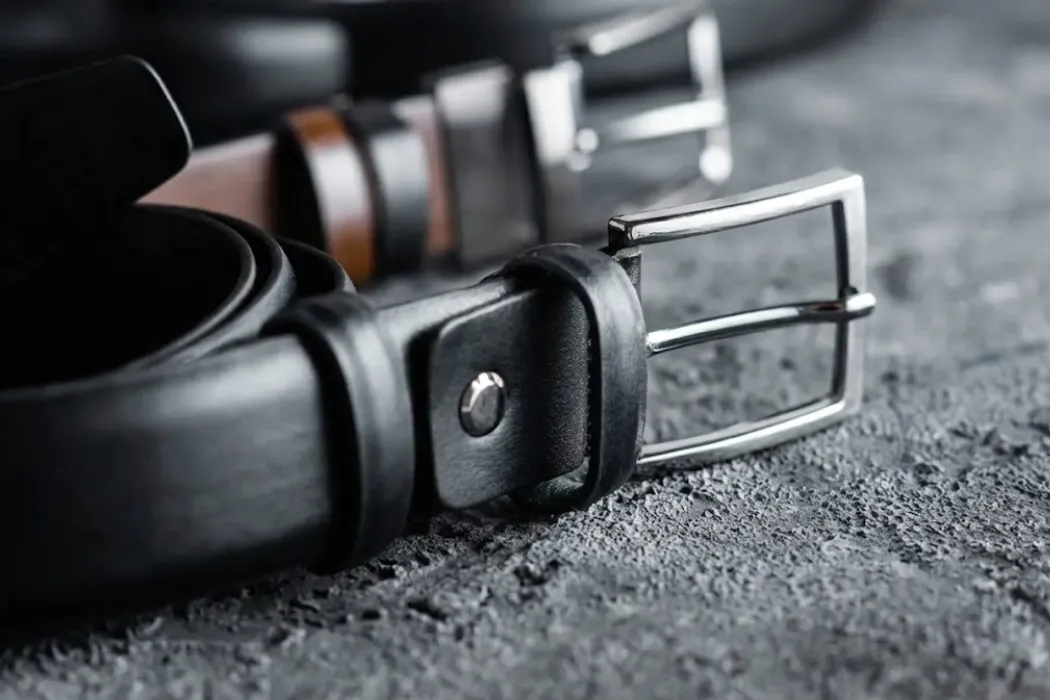
What is the Core Anatomy of a Synthetic Belt?
A cross-section of the proposed belt helps reveal how it is built. Many faux-leather constructions combine a coated surface with a woven, knitted or nonwoven backing, but extra layers may be added during belt assembly. Obtain the full stack specification and inspect the buckle fold and hole area, where reinforcement can differ from the rest of the strap.
The Textile Scaffold (The Backbone)
The backing can make an important contribution to tensile and tear behavior. Ask for its fiber composition and construction, and check whether the belt uses any additional insert or reinforcement. Strength should be measured for the complete stack rather than assigned entirely to one layer.
- Backing specification: Record mass per area, thickness and construction where relevant. There is no universal 200–300 GSM backing requirement for faux-leather belts. Two backings of the same mass can behave differently under tension or around a punched hole.
- Interface performance: Repeated bending stresses the layers and their interfaces. Compare the coating, backing and adhesive as a system, including after relevant conditioning. Different movement between layers is a design consideration, not proof that separation is inevitable.
The Polymer Skin (The Look)
The polymer surface supplies color, texture and much of the contact surface behavior. Depending on its formulation and construction, it can also affect flexibility, resistance to abrasion and moisture transport.
- Surface specification: Ask for the coating type, thickness or coating mass, texture and topcoat details. A fixed coating-thickness range does not describe all PU and PVC materials. Approve an actual sample and check consistency between the roll and finished belt.
- Abrasion: Repeated contact with belt loops and the buckle can change gloss, remove color or expose an underlying layer. Specify the test and acceptable change for the intended product. A smooth-looking initial surface is not evidence of long-term abrasion resistance.
Additives and Material Performance
Flexible PVC formulations use additives to achieve the required processing and performance. The additive package should be identified through supplier documentation and assessed against the destination-market requirements.
- Plasticizers: Several chemistries are available, including non-phthalate options. Do not assume every flexible PVC material contains the same phthalates. Request a formulation declaration and the relevant restricted-substance reports for the actual material.
- Migration and aging: Plasticizer loss or migration can affect some formulations, but sticky surfaces may have more than one cause. Evaluate compatibility, storage and aging behavior with the supplier. There is no universal twelve-month point at which PVC becomes tacky or brittle.
| Component | Full-grain leather | Synthetic Composite (Faux) |
|---|---|---|
| Structural Base | Processed collagen-fiber structure | Specified textile or other backing and reinforcement |
| Construction | Leather, possibly with additional finish or belt layers | Specified coating/lamination and belt assembly |
| Surface Layer | Retained grain surface, with the selected finish | Specified polymer surface and topcoat |
| Moisture transport | Depends on leather, finish and construction | Depends on coating, backing and construction |
What is Polyurethane (PU) Leather?
PU is used in many coated and composite materials with a leather-like appearance. It is a family of formulations, not one fixed material grade. To compare offers, identify the backing, coating and topcoat, and request test evidence for the actual material code and finished belt.
Chemical Composition
Polyurethanes are commonly produced through reactions involving polyols and isocyanates. The choice of chemistry helps determine the resulting properties. A soft hand does not establish the polymer formulation, hydrolysis resistance or overall quality of a belt.
Hydrolysis Susceptibility
Humidity and heat aging can be relevant for PU-containing constructions, especially when the product will face prolonged humid storage or use. The test needs to reflect the material and intended conditions.
- Formulation matters: Polyester- and polyether-based polyurethane systems can differ in hydrolysis resistance. BASF’s TPU technical guidance illustrates this distinction; its grade-specific data must not be treated as a result for every coated belt material.
- Request relevant evidence: Ask for the aging method, temperature, humidity, exposure duration and results for the quoted material. Inspect appearance, flexibility and adhesion after conditioning. Neither a universal humidity trigger nor a two-to-three-year expiry applies to all PU belts.
Why It Peels
Peeling describes a failure at or within a surface layer. It can involve an interface, a coating or an aged polymer, so the failure location should be identified before changing the material specification.
- Bending: The outside and inside of a curved strap experience different deformation. A well-matched coating and backing can accommodate the intended bending. Evaluate tight bends at the buckle as well as the broader curve around the waist.
- Delamination: Separation may relate to material compatibility, surface preparation, bonding, curing or exposure. Compare unaged and conditioned samples where relevant. A cycle count is meaningful only with its test method and acceptance criteria, not as a universal forecast of peeling.
What is Polyvinyl Chloride (PVC) Leather?
PVC, often called vinyl, is another polymer used in leather-like coated materials. Its properties depend on the formulation, backing and finish. For fashion-belt sourcing, compare the actual handle, weight, bending and chemical documentation instead of treating PVC as either indestructible or automatically unsuitable.
Weight and Cold Flexibility
PVC and PU have different polymer chemistries, but the finished belt includes more than its surface polymer. Specify the complete material construction before drawing conclusions about weight or flexibility.
- Weight: Compare the mass of equal-size samples and finished belts. Coating thickness, foaming, backing, inserts and hardware all affect the result; a polymer name alone is insufficient to rank the finished products.
- Cold flexibility: If low-temperature use or transport matters, agree a conditioning and bending evaluation for the proposed material. Room-temperature handle does not establish how that formulation will behave when cold.
Plasticizers and Restricted Substances
Plasticizers can make PVC suitable for flexible applications, and phthalate-free options exist. The supplier should identify the relevant material formulation and support any “phthalate-free” or related claim with an appropriate definition and evidence.
- Compatibility: Evaluate contact with the selected lining, edge finish, adhesive and packaging. Migration or interaction between materials can cause staining, softening or tackiness, so approval of one isolated swatch may miss a finished-product problem.
- Aging checks: Record hardening, cracking, surface change and adhesion after the agreed exposure. PVC does not have one inevitable failure mode; investigate the actual formulation and construction if a sample changes.
Moisture and Wearing Comfort
A belt’s comfort depends on width, stiffness, fit, underside and how it is worn over clothing. Avoid assigning a universal comfort ranking to PVC, PU or leather without comparable product evidence.
- Moisture transport: A continuous coating can reduce transport through a material, while other structures behave differently. Request a suitable measurement if this property is important to the design; “zero breathability” is not a universal result for all synthetic constructions.
- Wear trial: Evaluate the intended width, clothing combination, lining and adjustment range with a fitted sample. Do not use unsupported temperature increases as proof that a material will be uncomfortable in every belt.
| Feature | Polyurethane (PU) | Polyvinyl Chloride (PVC) |
|---|---|---|
| Chemical Base | Polyurethane formulation | Polyvinyl-chloride formulation |
| Flexibility | Depends on chemistry and complete construction | Depends on formulation and complete construction |
| Breathability | Evaluate the selected material | Evaluate the selected material |
| Aging assessment | Relevant humidity/heat, flex and surface checks | Relevant compatibility, flex and surface checks |
| Chemical and environmental evidence | Component reports and substantiated claims | Component reports and substantiated claims |
What Does “Plant-Based” Mean in a Belt Material?
Plant-based materials are not one composition. The term may refer to plant fibers, plant-derived polymer content or other ingredients combined with coatings and backings. A sourcing team should ask which fraction the claim describes and whether it applies to the surface material or the whole belt.
Binders, Coatings and Backings
A plant-derived ingredient may be only one part of the sheet. Obtain the layer-by-layer composition, including coatings and backing, and distinguish a bio-based ingredient from a claim that the complete product is biodegradable or animal-free.
- Composition example: Ananas Anam describes Piñatex base material as pineapple-leaf fiber and PLA, with finishes differing between collections. Check the collection-specific technical sheet. This is not evidence of one PU percentage for all plant-based materials.
- End-of-life claim: A plant ingredient does not make the assembled belt compostable. Require evidence for the complete claimed product, the disposal environment and any conditions. Adhesives, coatings, backing and hardware must be considered when assessing the statement.
Mechanical Suitability for Belt Construction
The relevant question is whether the selected material and reinforcement meet the intended belt design. Compare measured performance under the same method instead of ranking all plant fibers against all leather.
- Fiber and construction: Plant fibers vary in type, length and processing. The sheet architecture, binder and backing affect the result. Obtain the actual material data rather than assuming all cellulose fibers are short or brittle.
- Hole and tear behavior: Test the finished stack around the intended buckle pin, hole spacing and edge distance. There is no universal sub-50-newton tear value for plant-based materials. Any reinforcement should be specified and approved as part of the belt.
Environmental Claims Beyond Plant Content
Environmental comparisons require a defined product and evidence boundary. A plant-derived ingredient does not establish lower total impact, and a fossil-derived ingredient does not by itself quantify the impact of the finished belt.
- Claims review: Avoid blanket claims that one material decomposes harmlessly while another remains unchanged for centuries. Use evidence for the actual composition and disposal conditions. The FTC Green Guides summary explains why environmental claims need qualification and substantiation.
How Should Buyers Investigate Mechanical Failures?
Inspect the failed area before assigning a cause. A belt may fail at the hole, buckle fold, seam, edge or surface interface, and more than one factor may contribute. Record the construction, batch, exposure and use conditions, then reproduce the relevant stress on comparable samples where possible.
Hole Elongation (The Stretch)
The buckle hole concentrates load around a small area. Its behavior depends on the pin, hole shape and size, material stack, reinforcement and distance to nearby holes or edges.
- Inspection: Record whether the hole has elongated, torn through, frayed or separated between layers. A synthetic backing can be woven, knitted or nonwoven, so the visible failure should guide the investigation rather than an assumed unraveling mechanism.
- Comparison: Test alternative constructions with the same geometry and procedure. Leather holes can also stretch or tear; full-grain leather does not automatically tighten around a pin or become stronger under load.
Delamination (The Separation)
For a separating layer, distinguish loss of adhesion from failure within the coating or backing. That distinction helps determine whether the correction belongs in the bonding process, material formulation or belt design.
- Flex and peel evidence: Compare the relevant samples before and after agreed conditioning or repeated bending. Record the method, result and failure mode. A laboratory cycle count cannot be converted into months of use without supporting correlation data, and no general percentage of adhesion loss should be assumed.
UV Embrittlement
Light exposure can change some colors and polymer systems. Formulation, stabilizers, finish and exposure conditions influence the outcome; test the selected material when light resistance is relevant.
- Light-aging assessment: Agree the exposure method and assess color, surface condition and flexibility afterward. Artificial light exposure and direct sunlight are not interchangeable measurements. Avoid assigning an unsupported hundred-hour failure threshold to all PU or PVC materials.
How Does the Manufacturing Process Differ from Real Leather?
Leather and synthetic sheet materials follow different processing routes. Both require controlled manufacturing, and both may receive coatings or other finishes. Compare the material specification and available supply schedule rather than treating production speed as a quality score.
Coating, Lamination and Tanning
The time needed to supply a material includes raw-material availability, processing, finishing, testing and scheduling. It cannot be inferred from one operation in the production line.
- Synthetic sheet production: Coating, transfer, lamination or other processes can combine a polymer surface with a backing. The route depends on the material. Request the supplier’s production and replenishment lead time; there is no single four-hour process covering every finished faux-leather material.
- Tanning and material selection: Vegetable-tanned leather is made with vegetable tannins, but processing time and finished properties vary by tannery and specification. Hoplok sources leather inputs from partner tanneries; ProPelli carries out leather finishing on crust leather rather than tanning raw hides.
What Repeated Grain Patterns Can Tell You
A leather-like texture may be formed using release paper, plates, rollers or other processing. The pattern is an appearance feature, not a reliable stand-alone identification test.
- Identification limit: Repetition may indicate an applied pattern, but real leather can also be embossed. A natural-looking grain does not prove animal origin either. Use supplier declarations and appropriate material identification when composition is in doubt.
Edge Construction
The edge treatment should match the material stack and desired appearance. Both leather and synthetic belts can use painted, folded or other edge constructions.
- Cross-section review: An exposed edge can reveal layers and fibers, but backing color is not a universal test for synthetic material. Compare the section with the declared construction and assess whether reinforcement continues through critical areas.
- Finish selection: Edge paint, binding or a turned edge may improve appearance and protect the construction. Synthetic belts do not all require thick paint. Approve the edge after bending and rubbing, and check the buckle fold as well as a flat strap section.
| Comparison Factor | Real Vegetable-Tanned Leather | Synthetic / Faux Leather |
|---|---|---|
| Supply planning | Tannery, finishing and inventory schedule | Material production, finishing and inventory schedule |
| Raw Material Origin | Animal hide plus processing and finishing inputs | Declared polymer, backing and other ingredients |
| Biodegradability | Requires evidence for the actual product and conditions | Requires evidence for the actual product and conditions |
| Environmental comparison | Defined life-cycle boundary and product data | Comparable life-cycle boundary and product data |
When Might a Synthetic Belt Fit the Buying Brief?
A synthetic construction can suit an animal-free range, a specific surface effect or a target cost and consistency requirement. Approve it on the same basis as other materials: composition, design suitability, performance and supportable claims. There is no need to assume that one category always outlasts another.
Uniformity for Mass Production
Roll materials can help buyers control pattern and color consistency, but defects, shade changes and cutting loss still need management. Repeatability should be documented with material codes and approved production samples.
- Cutting yield: Compare actual nesting layouts, roll width or hide size, defect allowances and usable areas for the belt design. Neither zero waste for synthetic rolls nor a fixed 70% yield for leather is a reliable universal quotation basis.
Animal-Free Product Requirements
For an animal-free brief, identify the scope of the claim and obtain declarations for the face, lining, adhesive, reinforcement and other relevant components. A surface described as vegan does not automatically verify the assembled belt.
- Microfiber options: Some synthetic materials use a fine-fiber nonwoven structure. This can be one option to sample, but the name does not guarantee a particular weight or durability. Compare it with other qualified constructions using the same product requirements.
Water Exposure and Care
A wipe-clean surface can be useful, but water resistance of the surface does not establish waterproofing of the belt. Edges, seams, layers and hardware may respond differently to moisture.
- Care validation: Confirm the supplier’s cleaning instructions and evaluate the intended exposure on the finished belt. Do not infer chemical protection or suitability for safety, industrial or marine equipment from a fashion-belt material description.
Frequently Asked Questions
Is “Vegan Leather” just plastic?
Some animal-free materials use PU or PVC, while others combine different polymers and plant-derived ingredients. The term does not disclose a fixed plastic percentage. Request a complete composition and verify the particular claim rather than assuming that all vegan materials are identical.
Why does my belt smell like chemicals?
Odor may come from several components or processes, including finishes, adhesives and packaging. It cannot reliably identify leather or establish chemical safety. Investigate the affected batch, storage and component records, and use suitable testing when required.
Can bonded leather be repaired?
It depends on the damage and remaining structure. A minor cosmetic defect may be treated differently from widespread layer separation or a torn buckle hole. A repair cannot be assumed to restore the original strength; assess whether replacing the damaged part or belt is more appropriate.
Is synthetic leather waterproof?
Some synthetic surfaces resist water, but that does not make every assembled belt waterproof. Check the declared construction, edges, seams and care instructions, and test the relevant exposure. Water resistance and moisture-vapor transport are separate properties.
Do fake leather belts stretch?
They can stretch, with recovery depending on the materials, reinforcement, load and duration. Leather can also undergo permanent deformation. Compare the finished constructions under the agreed procedure, including hole elongation and residual change after unloading.
Choosing by Composition and Evidence
PU, PVC, microfiber and plant-containing materials offer different construction choices. A useful purchase decision identifies exactly what is supplied, where it fits the design and how it performs after relevant testing. Appearance alone cannot answer these questions.
Hoplok’s Take
Hoplok supports leather and PU belt development. The appropriate route depends on the buyer’s design, price target, animal-origin requirements and performance specification. Sample approval should include the complete belt and the evidence needed for its intended market.
Specify Your Next Belt Program
For a custom leather or PU belt program, send the design, quantities, target market and material requirements. Current starting MOQs are 300 for leather belts and 1,000 for PU belts, with belt samples generally taking 2–3 weeks and bulk production 60–90 days, subject to project confirmation. Contact Hoplok to review the construction and schedule.