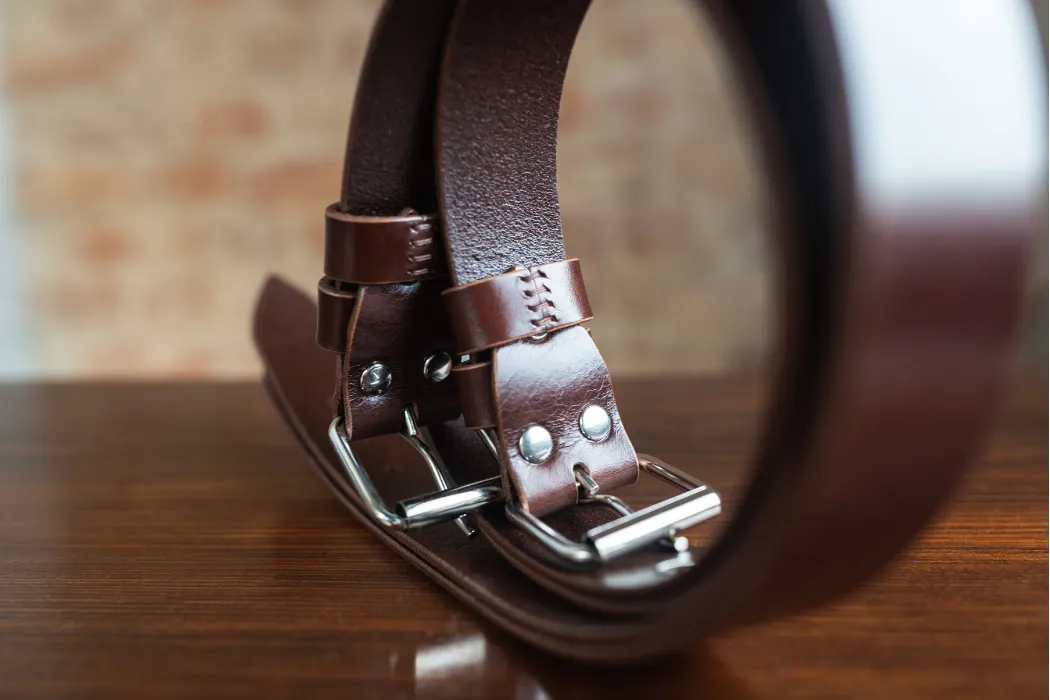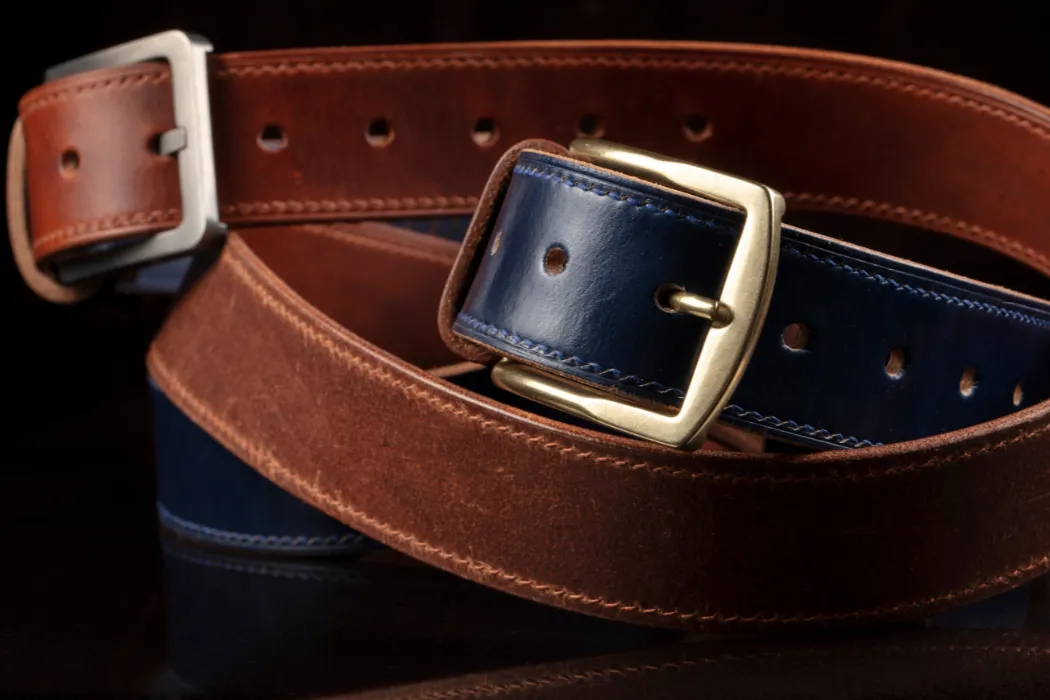
A belt buckle is an everyday piece of hardware you probably use at least twice a day. But it’s also the most critical component of your belt. A high-quality, solid brass buckle can last for 10 years or more. A cheap, plated zinc buckle might start to chip and peel within 6 to 12 months, making the entire belt look bad.
Belt buckles work by using either mechanical locking or friction. The most common “prong” buckle uses a mechanical pin that fits into a pre-set hole to lock the strap. “D-ring” buckles use no holes. They secure the belt by weaving the strap through the rings, using friction and tension to hold it in place. Other types, like ratchet buckles, use an internal track and a locking clasp.
The buckle can account for 30% to 50% of a luxury belt’s total cost. Understanding how it works is the key to telling a $9 belt from a $90 one. This guide will unlock the mechanical secrets behind every common buckle type. We’ll show you how they work, how to fasten them, and how to swap them like a pro.
How Do Belt Buckles Work? (The 3 Core Mechanical Principles)
Belt buckles primarily work in one of three ways: mechanical locking (a pin through a hole), friction locking (using tension to grip the strap), or ratchet locking (a pawl on a track). Over 70% of men’s dress belts use the reliable “pin-and-Hole” mechanical system. The method used defines the belt’s function, adjustability, and style.
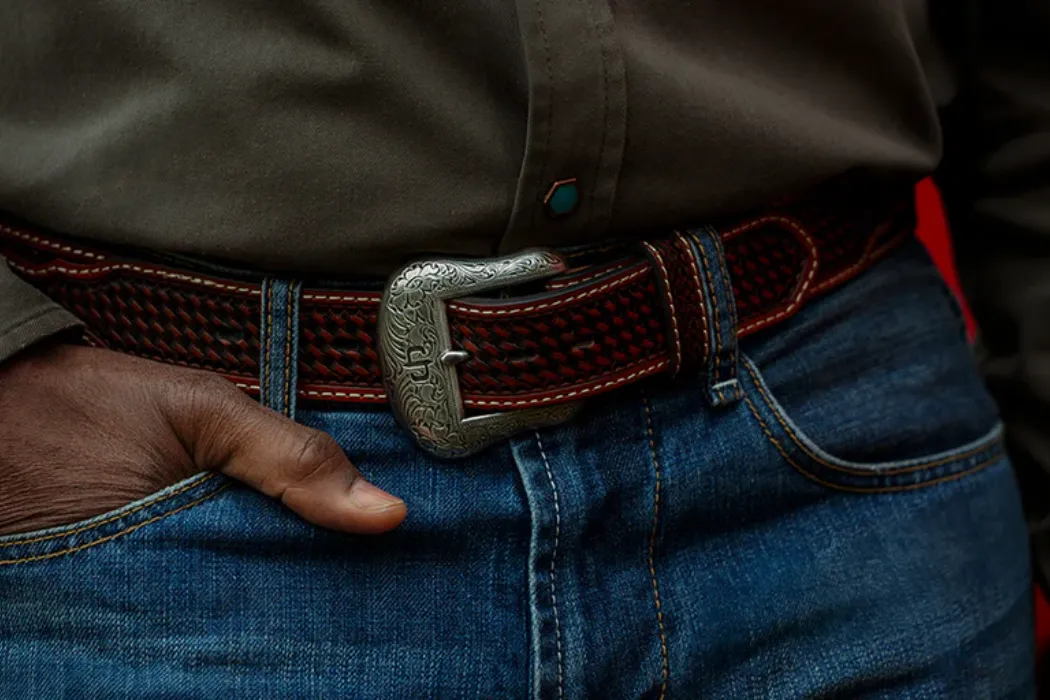
Principle 1: The “Pin-and-Hole” (Used in >70% of Belts)
This is the oldest and most common principle, used for over 2,000 years. It’s a simple, robust mechanical lock. The strap of the belt has a series of holes, and the buckle has a “prong” or “pin” that goes through one of these holes. The tension of the belt pulls the hole against the pin, creating a secure lock that cannot slip.
This design is the standard for most formal dress belts and high-quality leather belts. Why? Because it is mechanically foolproof. It doesn’t rely on grip strength; it relies on a physical barrier. The only way it can fail is if the leather hole tears or the pin breaks, both of which are rare in a well-made product. Its one limitation is adjustability; you are limited to the standard 1-inch spacing of the holes.
Principle 2: The “Friction and Tension” (Allows for Infinite Adjustment)
This principle uses no holes at all. Instead, it relies on physics. This method is most famously seen in D-Ring or O-Ring buckles, which are common on casual fabric or canvas belts. To fasten it, you weave the belt strap through both rings, then loop it back over the top ring and through the bottom one. When you pull the strap tight, the tension creates an incredibly strong friction lock on the rings, preventing the strap from slipping.
The main advantage is infinite micro-adjustment. You are not limited by pre-punched holes, so you can get a perfect fit every time. This principle is used in over 90% of fabric belts and is a popular choice for casual or utility wear where a precise fit is valued over formal aesthetics.
Principle 3: The “Track and Clamp” (Offers Micro-Adjustments, often 1/4 inch)
This is the “newest” principle, patented in the late 20th century and popularized by ratchet or “click” belts. This is a modern, hole-less mechanical lock. The buckle has a small, spring-loaded lever (a “pawl”) inside it. The back of the belt strap has a hidden plastic or rubber track with a series of small “teeth,” often spaced only 1/4 inch (about 6mm) apart.
As you slide the strap into the buckle, the pawl clicks along the teeth and locks, preventing the belt from sliding back out. To release it, you simply lift a small lever on the buckle that disengages the pawl. This system combines the security of a mechanical lock with the micro-adjustment of a friction belt, offering up to 40 adjustment points compared to the 5-7 holes on a traditional belt.
What Are the Most Common Buckle Types? (A Data-Driven Comparison)
The most common buckle type is the Frame-Style (Prong) buckle, used on the vast majority of dress and casual leather belts. Ratchet buckles are increasingly popular, especially in business casual wear, as they offer 1/4-inch (6mm) micro-adjustments. D-ring and Compression buckles are mainly used for casual or functional fabric belts.
The Frame-Style (Prong) Buckle: The 2,000-Year-Old Standard
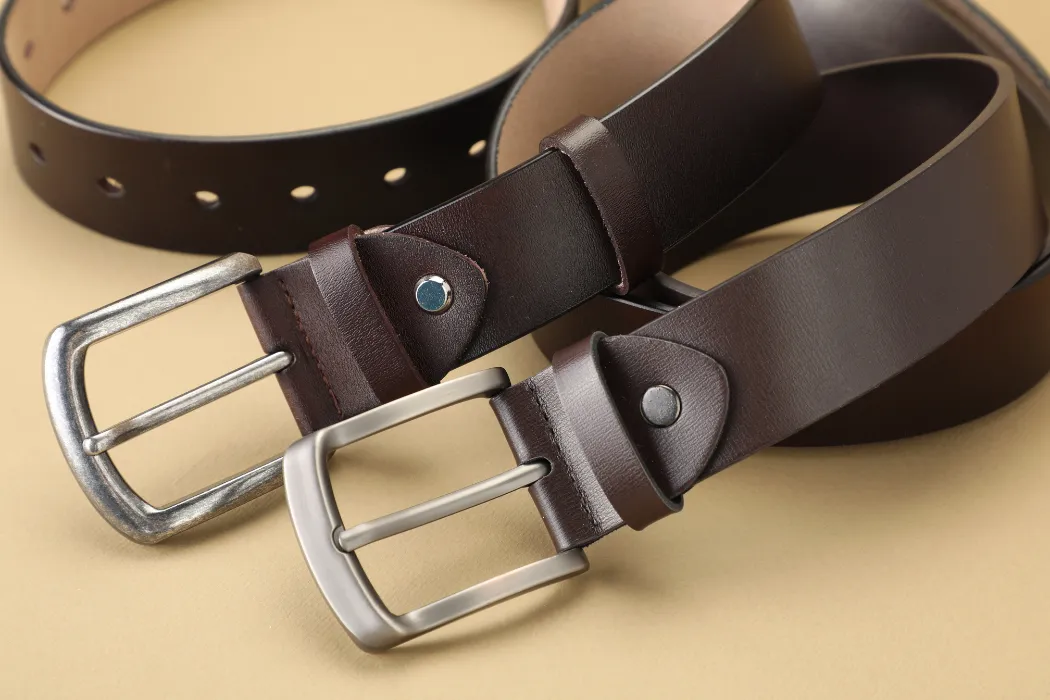
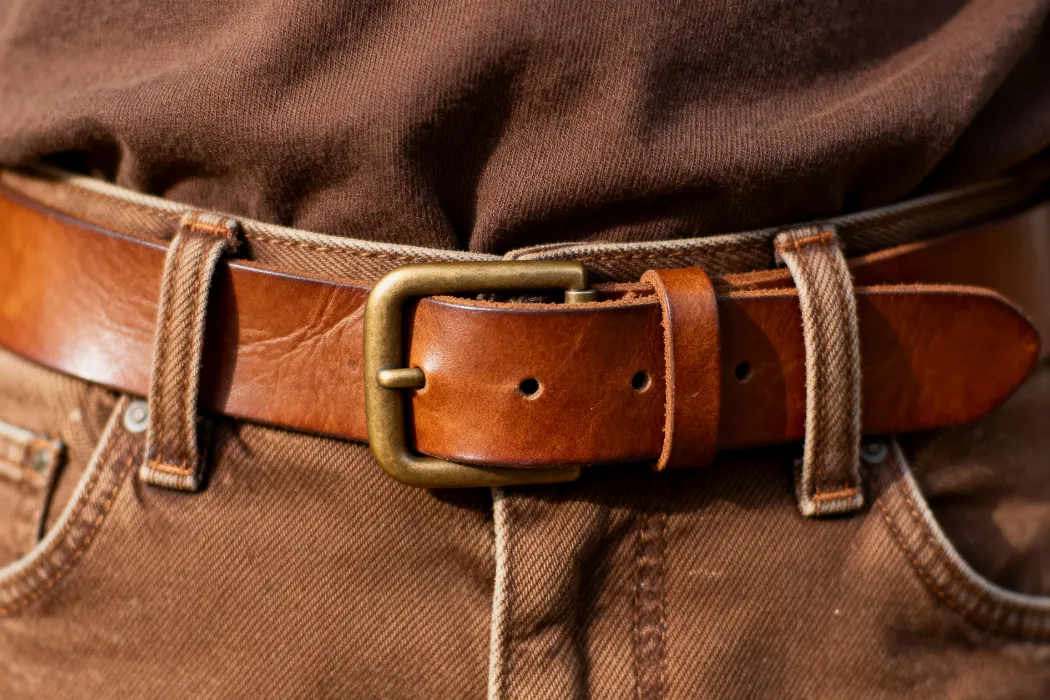
This is the buckle you most likely picture in your head. It’s the timeless standard for over 90% of formal leather dress belts and the majority of high-quality casual belts. It consists of a simple “frame” (the buckle body) and a “prong” (the pin).
How it works:
- Thread the end of the belt strap (the “tail”) through the frame.
- Pull the strap until it is comfortably tight.
- Push the prong through the nearest hole in the leather.
- Secure the tail by tucking it into the first “keeper loop” on the belt.
This design’s simplicity is its strength. It has barely any moving parts and is mechanically foolproof. Its only “con” is that its adjustability is limited to the 1-inch spacing between the holes.
The Ratchet / Automatic Buckle: The 1/4-Inch Micro-Adjustment
Ratchet belts are a modern innovation and a game-changer for comfort. They have no holes. Instead, the back of the leather strap features a hidden plastic track with 20-40 small “teeth”, typically spaced 1/4 inch (6mm) apart.
How it works:
- To fasten: You simply push the belt strap through the buckle. A small, spring-loaded “pawl” (a lever) inside the buckle clicks along the track and locks automatically, preventing the belt from sliding back out.
- To release: This is what confuses new users. You must lift a small lever, usually on the side or bottom of the buckle, which disengages the pawl and allows the strap to slide out smoothly.
This buckle’s main advantage is its incredible precision. It allows for tiny adjustments throughout the day, which is why it’s a popular choice for business casual wear.
The O-Ring / D-Ring Buckle: The Friction-Lock Standard
This is the most common buckle you’ll find on casual, non-leather belts (like canvas or fabric). It usually consists of two metal rings, shaped like the letter “D” or “O”.
How it works: This buckle uses 100% friction. There are no pins, holes, or moving parts.
- Thread the belt strap *through both* rings, from bottom to top.
- Separate the two rings. Loop the strap *over* the top ring and *under* the bottom ring.
- Pull the strap until it is tight. The tension pulls the rings together, pinching the strap and creating a very secure friction lock that will not slip.
The Plate-Style Buckle: From 1800s Military to Modern Fashion
A plate buckle is typically a solid, flat piece of metal, often with a decorative design (like a large logo or a Western-style engraving). This style was standard on US military uniforms in the mid-1800s.
How it works: The fastening mechanism is hidden on the back of the buckle. It’s a “pin-and-hook” system. The back of the solid plate has a small prong or hook that you insert into one of the holes on the strap. The tension of the belt then pulls the strap tight against the back of the plate, holding it in place. The tail of the belt is then tucked *behind* the strap.
Buckle Type Comparison
| Buckle Type | How it Works | Common Widths | Adjustability | Best For |
|---|---|---|---|---|
| Frame-Style (Prong) | Pin-and-Hole (Mechanical Lock) | 1.25″ (30-35mm) | Low (1-inch holes) | Formal, Dress, & Casual Belts |
| Ratchet (Automatic) | Track-and-Clamp (Mechanical Lock) | 1 3/8″ (35mm) | Very High (1/4-inch) | Business Casual, Smart Wear |
| D-Ring / O-Ring | Friction-Lock (Tension) | 1.5″ (38mm) | Infinite (Precise) | Casual Fabric / Canvas Belts |
| Plate-Style | Pin-and-Hook (Mechanical Lock) | 1.5″ – 1.75″ | Low (1-inch holes) | Fashion / Western Belts |
Can You Change a Belt Buckle? (Stitched vs. Swappable)
It depends on the belt’s construction. If the strap is attached to the buckle with snaps or a small screw, you can easily swap the buckle in about 2 minutes. However, if the buckle is stitched into the leather, it is permanent. Over 90% of high-end luxury dress belts are stitched for a cleaner, more minimalist look, making them unchangeable.
Identifying a Swappable Belt: Look for Snaps or Screw Posts
Before you buy a new buckle, you must check your belt. Lay your belt flat and look at the back of the buckle end (the “fold”). You will see one of two things:
- Swappable (Replaceable): You will see one or two heavy-duty metal snaps, or a small, flat-head screw post (often called a “Chicago screw”). If you see either of these, congratulations! You can change your buckle.
- Permanent (Stitched): You will see a line of heavy stitching holding the leather fold together. There are no metal fasteners. The buckle is sewn in permanently and cannot be removed without the help of a professional cobbler.
Why Over 90% of Luxury Dress Belts are Stitched
You might wonder why most expensive dress belts have permanent buckles. The reason is all about aesthetics and durability. For a formal, sleek suit belt, a stitched loop is the cleanest and slimmest option. It creates a seamless look with no extra bulk from snaps.
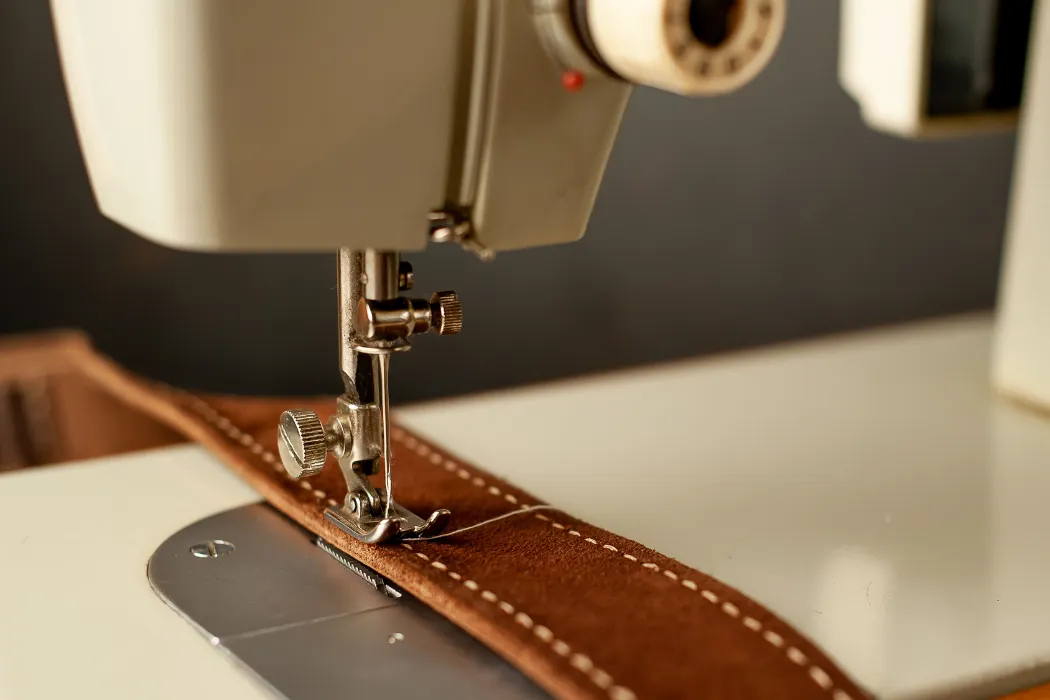
A stitched fold is also incredibly strong. While snaps are durable, a proper box stitch (an “X” inside a rectangle) done with heavy nylon thread is a permanent bond that will almost never fail. This is why high-end brands prefer this construction method for their flagship dress belts.
The trade-off is simple: luxury brands are selling a complete, finished design. They are prioritizing a sleek look and maximum durability over the option to customize.
The Rise of “Snap Belts” for Customization
So, where do swappable belts come from? The “snap belt” concept is extremely popular in casual and Western wear. This market is driven by customization. People love to collect unique and artistic buckles, from large sterling silver Western designs to branded fashion plates.
A “snap belt” is simply a high-quality leather strap sold without a buckle, designed to be paired with a customer’s personal collection. This allows for endless customization. This trend has moved from Western wear into the general fashion market, with hundreds of brands now offering straps and buckles separately. It’s a fantastic way to get more value and personality from a single, high-quality leather strap.
How to Put a New Buckle on a “Snap Belt” Strap (A 5-Minute Guide)
Changing a buckle on a swappable belt is a simple 5-minute process. If your belt has snaps or a screw post, you can easily do it at home. You just need to open the fastener, remove the old buckle and keeper loop, slide the new buckle on, replace the keeper, and re-secure the fastener. It’s one of the easiest ways to give an old belt new life.
Step 1: Gather Your Tools (A Small Screwdriver is Often All You Need)
You don’t need a complex toolkit. In over 80% of cases, you won’t need any tools at all. Lay your belt on a flat, clean surface and identify your fastener type:
- For Snap Belts: Your fingers are the only tool you need.
- For Screw Post Belts: You will need a small flat-head screwdriver. If the post spins, you may need a second screwdriver or a pair of pliers to hold the back of the post steady while you unscrew the front.
That’s it. You’ll also want your new buckle and a clean cloth handy.
Step 2: Removing the Old Buckle and Keeper Loop
This is the quick and easy part. Once you have your tool (if any), open the fastener.
- For Snap Belts: Simply pull the snaps open with your thumbnail. They are typically very strong, so you may need to use firm pressure.
- For Screw Post Belts: Use your screwdriver to turn the screw counter-clockwise until it comes free from the post. Keep the screw and the post together so you don’t lose them.
Once the fastener is open, the leather fold will open up. Slide the old buckle off. Then, slide off the small leather loop called the “keeper.” The keeper is the loop that holds the belt tip down after you buckle it. Do not lose this piece!
Step 3: Attaching aggravate New Buckle (Ensuring the Correct Orientation)
This is the most common place to make a mistake. You must attach the new buckle in the correct direction, or your belt will be backward. It’s simple to get right if you pay attention.
First, slide the new buckle onto the end of the leather strap. The key is to ensure the prong (the pin) of the new buckle is facing the right way. The curved tip of the prong should be pointing *away* from the “good” side (the outside) of your belt. When you fold the leather back over, the prong should rest nicely in its cutout.
Pro Tip: Before you fasten anything, “test drive” the buckle. Hold the belt around your waist as if you were wearing it to make sure the buckle is facing the right direction and the prong moves freely.
Step 4: Securing the Fastener (The Final Check)
Once you are 100% certain the buckle is on correctly, it’s time to close it up. This step is the reverse of Step 2.
- Slide the Keeper Back On: This is the most forgotten step! Before you close the fold, slide the leather keeper loop back onto the strap. It should be positioned right behind the new buckle.
- Close the Fold: Fold the leather end back over.
- Secure the Fastener: If you have snaps, press them together firmly until they “click” into place. If you have a screw post, push the post through the back hole and screw the top down firmly with your screwdriver.
You’re done. You have successfully changed your belt buckle in under 5 minutes and given your leather strap a completely new look.
How Do You Match a Buckle to a Strap? (The Sizing & Material Guide)
The single most important rule for matching a buckle to a strap is getting the width correct. A buckle’s size, such as 40mm, must exactly match the belt strap’s width, which is typically 1.5 inches for casual belts. For materials, solid brass is a 100% rust-proof, premium option, while zinc alloy offers the best value for most fashion belts.
The Golden Rule: Strap Width MUST Match Buckle Width
This is a simple, non-negotiable rule. A buckle’s size is not its length or height, but the width of the opening where the strap goes. This width is measured in millimeters or inches. A belt strap’s width must be the same size or *slightly smaller* to fit.
For example:
- A 1.5 inch (which is 38mm) casual belt strap needs a buckle that is listed as 1.5″ or 40mm. The extra 2mm on the buckle provides just enough room for the leather to slide through easily.
- You cannot fit a 1.5″ (38mm) strap into a 1.25″ (30mm) dress buckle.
Before you buy any buckle, measure your strap’s width with a ruler or tape measure. 90% of casual belts are 1.5 inches (38mm-40mm), and over 80% of formal dress belts are 1.25 inches (30mm-35mm).
Standard Belt Width Sizing Chart
| Strap Width (Millimeters) | Strap Width (Inches) | Common Use / Style |
|---|---|---|
| 30mm | ~1.2″ | Formal Dress Belts (for suits) |
| 35mm | ~1.38″ | Business Casual Belts (versatile) |
| 38mm – 40mm | 1.5″ | Standard Casual Belts (for jeans) |
| 44mm+ | 1.75″+ | Wide Fashion or Utility Belts |
Understanding Materials: Zinc Alloy vs. Solid Brass vs. Stainless Steel
The buckle’s material determines its weight, durability, and price. A buckle that costs $2 and one that costs $50 may look the same at first, but they will perform very differently over time.
- Zinc Alloy: This is the most common material for fashion buckles. It is a cost-effective metal that is easy to melt and cast into complex shapes (like logos). Its main weakness is that it is a softer metal and its finish (the plating) can chip or wear off over 1-3 years of heavy use.
- Solid Brass: This is the premium, traditional choice. It is a heavy, dense metal that is 100% resistant to rust. It will not chip, as it is solid metal all the way through. A solid brass buckle can easily last for 10-20 years and will develop a beautiful, rich patina over time.
- Stainless Steel: This is another high-durability, 100% rust-proof option. It is incredibly strong (often stronger than brass) but has a distinct silver color. It is a popular choice for modern or minimalist designs where a silver finish is desired.
Buckle Material Comparison
| Material | Cost Rating (1-5) | Durability | Rust-Proof? | Best For |
|---|---|---|---|---|
| Zinc Alloy | 1 (Lowest Cost) | Low-Medium | No (Can oxidize) | Fashion & Value-Priced Belts |
| Solid Brass | 4 (High Cost) | Very High | Yes | Premium / Heritage Belts |
| Stainless Steel | 3 (Medium Cost) | Highest | Yes | Modern & Utility Belts |
Frequently Asked Questions (FAQ)
Q1: How do belt buckles work?
Belt buckles work in three main ways. 1) Pin-and-Hole: A metal prong goes through a hole in the leather to lock it. 2) Friction-Lock: A D-ring or O-ring buckle pinches the belt strap, using tension to hold it. 3) Ratchet-Lock: A lever in the buckle clicks into a track on the strap for a hole-free, precise fit.
Q2: How do you put a belt buckle on a belt?
First, check if your belt has snaps or a screw. If it does, open the fastener and slide the old buckle and keeper loop off. Slide the new buckle on (making sure the prong faces the right way). Slide the keeper loop back on behind it. Finally, close the snaps or screw the post back together tightly.
Q3: How do ratchet belts work without holes?
Ratchet belts work using a hidden track of teeth on the back of the belt strap. The buckle contains a small, spring-loaded lever called a pawl. As you slide the belt in, the pawl clicks along the teeth and locks. This allows for very precise 1/4-inch adjustments, much smaller than the 1-inch spacing on traditional belts.
Q4: How do you use a D-Ring belt properly?
It’s simple once you know the trick. Thread the end of the belt through both D-rings. Then, separate the rings and loop the belt back *over* the ring closest to you and *under* the second ring. Pull the strap tight. The tension creates a secure friction lock.
Q5: What is the leather loop next to the buckle called?
That loop is called the “keeper.” Its job is to keep the “tail” or tip of the belt flat after it has been buckled. Almost all belts have at least one keeper. Wider belts (1.5 inches or more) sometimes have a second keeper further down the strap for extra security.
Q6: Can I change a buckle that is stitched on?
Not easily. A stitched-on buckle is considered permanent and is a sign of a formal dress belt. It cannot be removed without cutting the stitches. A professional cobbler or leather worker can do this for a fee (often $20-$40), but it is a complex repair, not a simple swap.
Q7: How do I know what size buckle to buy?
You must match your strap width. Measure the width of your leather strap in millimeters or inches. Buy a buckle with the exact same corresponding size. For example, a 1.5 inch strap (the most common casual size, ~38mm) needs a 1.5″ or 40mm buckle. A 1.25″ strap needs a 1.25″ or 30mm buckle.
Q8: Are magnetic buckles secure?
It depends on the quality. Low-cost magnetic buckles (under $10) are often weak and can pop open. However, high-end magnetic buckles (like those from brands like Fidlock) are engineered for utility and can have a tensile strength of over 100 lbs, making them extremely secure for tactical or heavy-duty use.
Conclusion: The Mark of Quality is in the Mechanics
As we’ve seen, a belt buckle is a clever device that perfectly blends function and form. Whether it’s through a simple pin and hole, pure friction, or a precise ratchet track, understanding how it works allows you to better use and maintain your leather goods.
This reveals a deeper insight for brands: a buckle is never just a piece of hardware. It is the core interactive component a customer touches every single day. A cheap, plated buckle (often with a plating thickness under 0.5 microns) can begin to chip and peel within 6 to 12 months, dragging down the entire brand’s image. In contrast, a high-quality buckle—one with a solid feel, a smooth finish, and reliable mechanics (like a 30,000-click lifespan on a ratchet)—silently defines the customer’s perception of quality.
For brands dedicated to providing customers with a premium product that is flawless from leather to hardware, choosing a partner who obsesses over every component is critical. At Hoplok Leather, we have over 22 years of experience sourcing and assembling durable, high-touch hardware from 4.8-star+ rated suppliers for global brands. Contact us today for a free design and manufacturing consultation, and let’s build a classic product that shows its quality in every single mechanical detail.