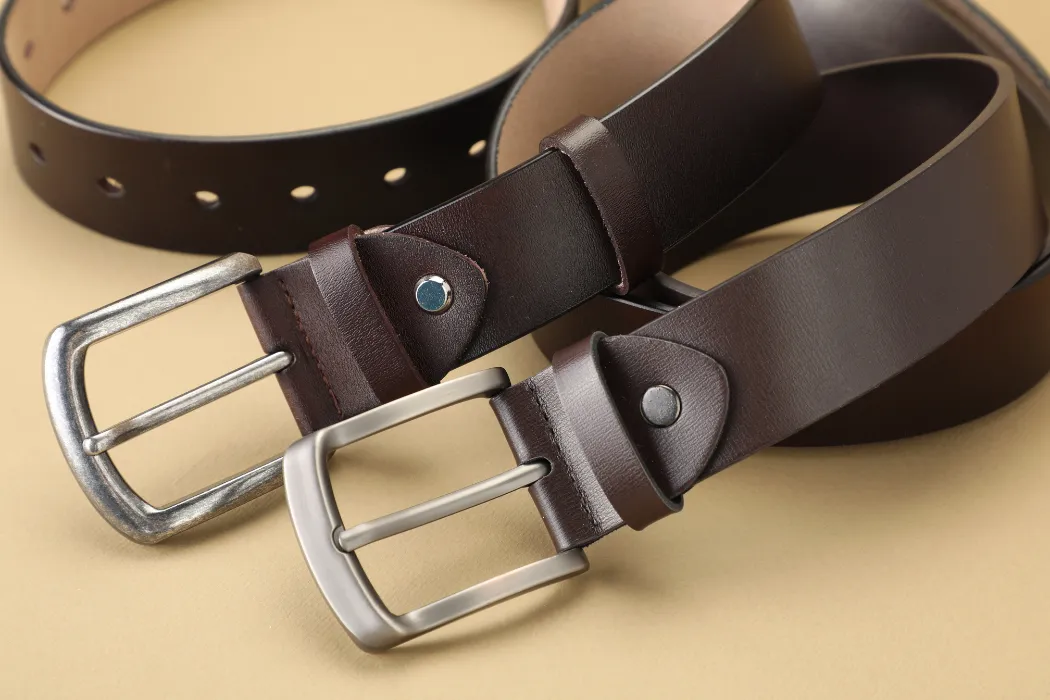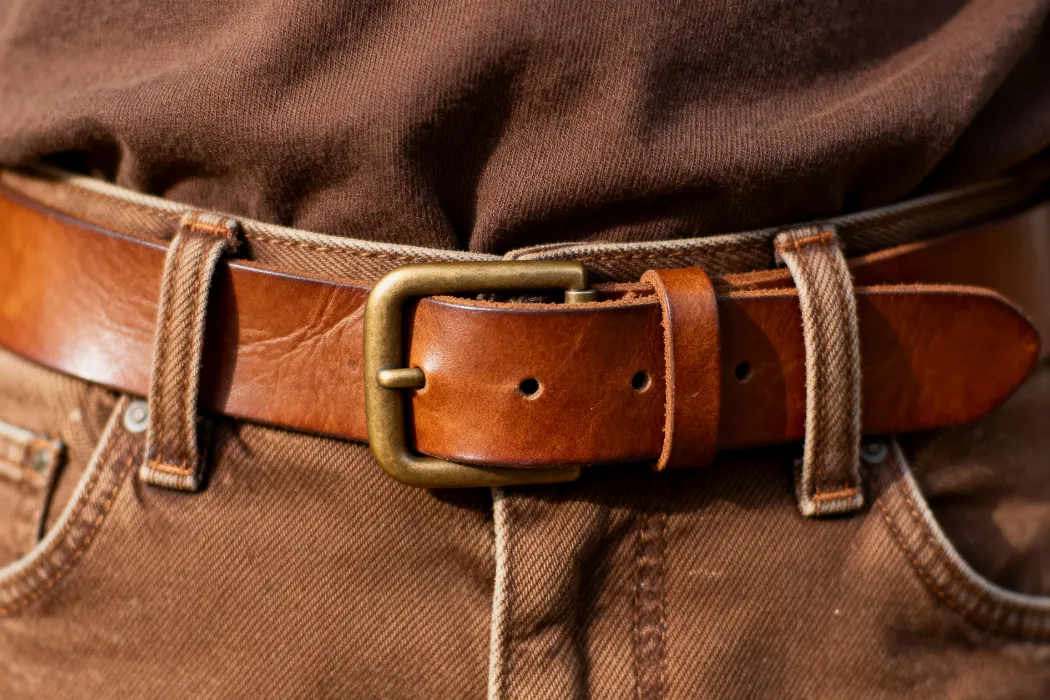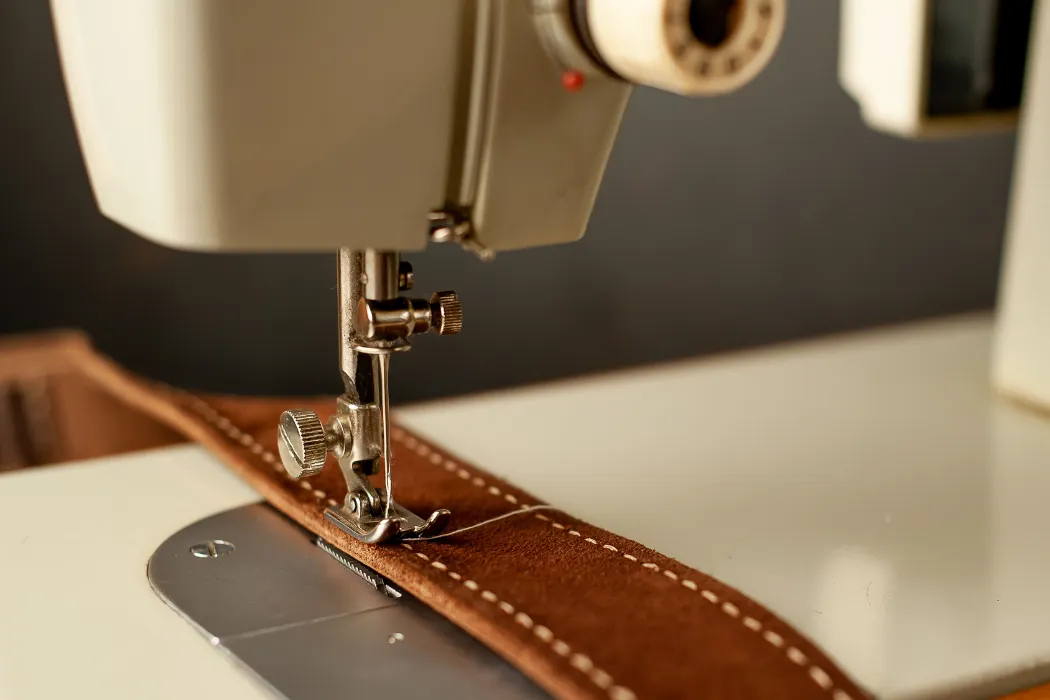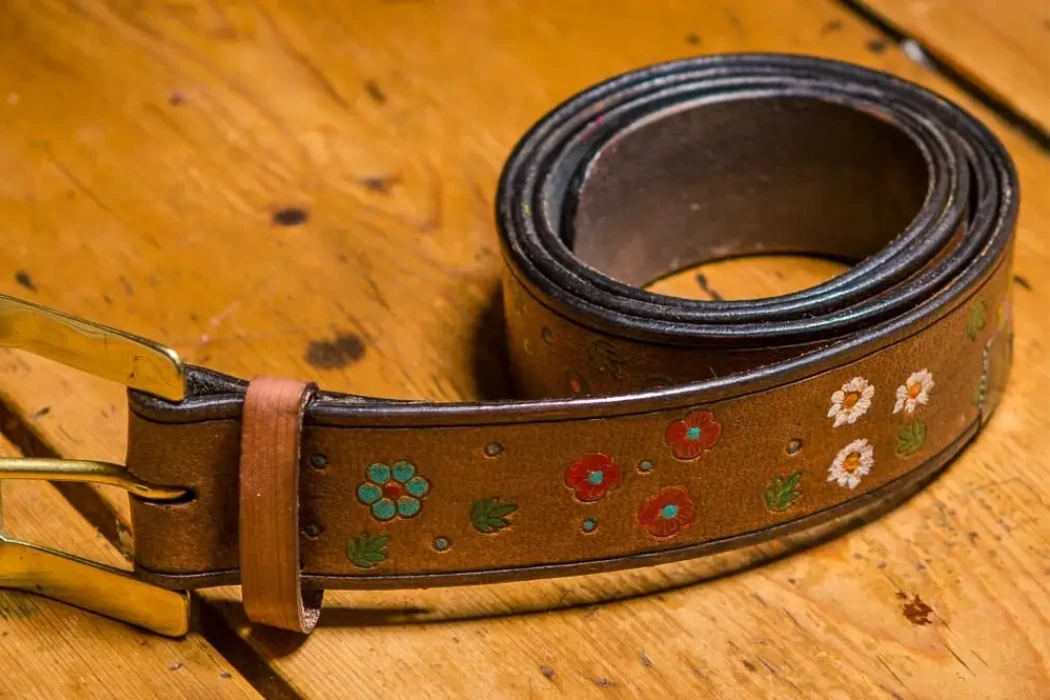
For fashion brands and retail buyers, the term “Genuine Leather” is often the most expensive trap in the sourcing process. It serves as a vague marketing label rather than a technical specification, frequently masking the use of heavily coated split leathers that crack within three months of daily wear. When a consumer returns a premium belt because the strap has delaminated or the buckle has oxidized, the financial loss is compounded by irreversible damage to brand reputation. Sourcing a reliable manufacturing partner requires moving beyond glossy digital catalogs to conduct a forensic audit of the production line itself.
Securing a scalable, high-quality supply chain is an engineering challenge, not merely a procurement task. It necessitates a deep dive into the manufacturer’s vertical integration—scrutinizing everything from the environmental ratings of the partner tanneries to the specific chemical composition of the hardware. Brands must demand verifiable data on edge paint adhesion, stitch density, and leather endurance. Reliance on superficial aesthetics without understanding the underlying material science is the primary cause of supply chain failure in the leather goods industry.
This guide presents a rigorous 7-point quality audit designed to validate a manufacturer’s true technical capabilities. By examining critical metrics ranging from ASTM D2097 flex testing to ISO 9227 salt spray standards, we provide the operational framework to distinguish a temporary vendor from a strategic partner equipped for global expansion. The following chapters detail the exact specifications and questions required to vet a factory’s ability to deliver consistent, retail-ready products.
Auditing the Leather Source: Beyond “Genuine Leather”
The first step in auditing a manufacturer is to disregard the marketing term “Genuine Leather” and demand the technical specification of the raw material. A reliable partner does not simply “buy leather”; they manage a supply chain. You must determine if the factory acts as a passive purchaser of finished hides from local markets or if they possess the vertical integration required to control the tanning and finishing processes from the crust stage.
Vertical Integration vs. Market Sourcing
Inconsistency in color and hand-feel is the most common complaint in belt manufacturing. This occurs when factories practice “Market Sourcing”—buying finished leather batches from different third-party tanneries based on the lowest spot price.
- Market Sourcing Risk: Different tanneries use varying fatliquoring recipes, resulting in inconsistent oil content and break patterns. A “Vintage Brown” belt ordered in March may differ significantly from a re-order in September.
- The Vertical Advantage: Superior manufacturers purchase “crusts” (semi-processed hides) or “wet blues” and operate an in-house finishing facility. This allows them to control the application of oils, waxes, and topcoats.
- Data Benchmark: A vertically integrated facility can maintain a color consistency of Delta E < 1.0 across production batches, whereas market-sourced leather often fluctuates above Delta E 2.5.
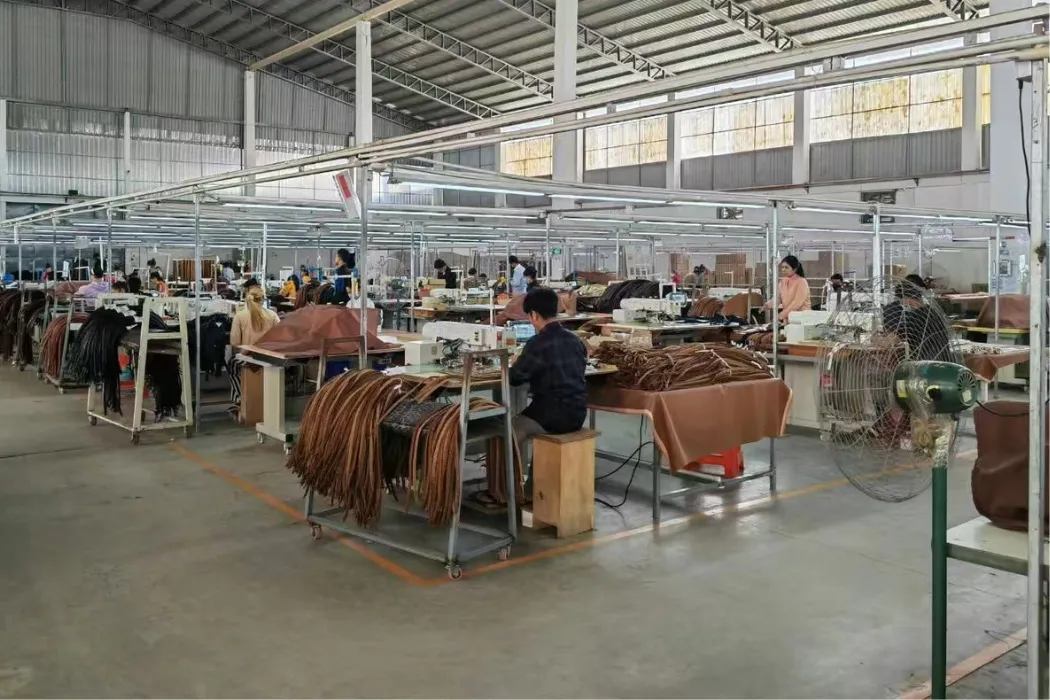
Demand to see the manufacturer’s finishing drums and spray lines. If they only show sewing machines, they have zero control over the leather’s chemical stability.
Traceability and LWG Certification
Modern supply chains require transparency regarding the origin of the hide to meet global sustainability standards and chemical regulations.
- LWG Certification: Verify if the manufacturer sources from tanneries audited by the Leather Working Group (LWG). This ensures the leather meets strict environmental protocols regarding water usage and chrome management.
- Chemical Compliance: LWG-rated tanneries are mandated to adhere to the ZDHC MRSL (Zero Discharge of Hazardous Chemicals Manufacturing Restricted Substances List), significantly reducing the risk of Chrome VI formation during transport.
- Traceability Level: Ask for the physical traceability rating. Can they trace the hide back to the slaughterhouse (Level A) or just the country of origin?
Do not accept a photocopy of an LWG certificate. Request the unique URN (Unique Reference Number) and verify it directly on the LWG website to ensure the certificate is active and applies to the specific supplier.
The “Split” Deception: Technical Distinctions
Many “Genuine Leather” belts are actually Split Leathers coated with a heavy polyurethane (PU) layer. While cost-effective, these lack the structural integrity of the grain.
- Structural Integrity: Full Grain and Top Grain leathers utilize the “corium” and the grain layer, providing high tensile strength. Split leather is the fibrous bottom layer, which relies entirely on the coating for cohesion.
- The Failure Point: Split leather belts often suffer from “delamination” or “cracking” at the holes. This happens when the PU coating (often thicker than 0.3mm) detaches from the fibrous base during flexing.
- Testing Standard: Specify the ASTM D2097 (Maeser Flex Test) in your tech pack. High-quality Top Grain leather should withstand 50,000+ flex cycles without cracking. Coated splits often fail under 10,000 cycles.
- Finish Adhesion: Use SATRA TM55 to test the adhesion of the finish to the leather. A result below 2.5 N/mm indicates a high risk of peeling.
Engineers must specify “Full Grain” or “Top Grain” explicitly. If the specification sheet only says “Real Leather,” the manufacturer is legally permitted to use low-grade splits that will degrade rapidly.
Hardware Quality: The Buckle Stress Test
Hardware failure accounts for nearly 40% of premium belt returns. A shiny buckle on a sample tells you nothing about its longevity. The audit must shift from aesthetics to metallurgy, focusing on the base metal’s purity and the electroplating’s micron thickness to prevent the dreaded “green skin” effect or structural snapping. A robust quality audit treats the buckle not as an accessory, but as a mechanical component.
Material Composition: Zinc Alloy vs. Brass vs. Steel
Manufacturers often default to low-grade Zinc Alloy (“Pot Metal”) to cut costs unless specified otherwise. This material is brittle and prone to snapping under torque.
- Zinc Alloy (Zamak): The industry standard for the mass market. However, you must ensure the factory uses high-grade Zamak 3 or Zamak 5, which offers superior tensile strength compared to recycled zinc scrap. Recycled zinc is porous and leads to surface pitting.
- Solid Brass: The gold standard for heritage and luxury brands. Brass develops a patina rather than rusting. It is heavier, more expensive, and virtually unbreakable under normal use.
- Stainless Steel (304/316L): Mandatory for brands making “hypoallergenic” claims. Steel requires specialized CNC machining or casting capabilities that smaller factories often lack.
- Action Item: Request a XRF (X-ray Fluorescence) Analysis report. This verifies the base metal composition and ensures Lead (Pb) content is under 90ppm, complying with US CPSIA and EU REACH standards.
Plating Thickness and Corrosion Resistance (ISO 9227)
The lifespan of a buckle’s finish is determined by the thickness of the electroplating layer and the quality of the protective lacquer. “Tarnishing” is simply oxidation occurring because the plating was too thin.
- The Salt Spray Test: This is the non-negotiable standard (ISO 9227) for testing corrosion resistance. A buckle is placed in a chamber and subjected to a saline mist.
- Performance Tiers: A “Fashion Grade” buckle may only survive 12 hours before showing Red Rust. A “Premium Grade” buckle must withstand 24 to 48 hours without visible oxidation.
- Plating Specs: Demand a minimum plating thickness of 0.5 – 3.0 microns depending on price point, sealed with an electrophoretic lacquer (E-coating) for durability.
| Quality Tier | Base Material | Salt Spray Test (ISO 9227) | Typical Plating Thickness |
|---|---|---|---|
| Fast Fashion | Recycled Zinc | 12 Hours | < 0.1 µm (Flash Plating) |
| Mid-Range Retail | Zamak 3 Alloy | 24 Hours | 0.5 – 1.0 µm |
| Luxury / Heritage | Solid Brass / SS 304 | 48+ Hours | 3.0 µm + E-Coat |
Mold Ownership and IP Protection
When developing a custom buckle, you will typically pay a “Mold Fee.” The critical audit question is: Who owns the mold?
- Exclusive Rights: Your contract must state that the mold is your exclusive property. Unethical factories often use client-paid molds to produce generic versions for other buyers.
- Storage & Maintenance: Verify where the molds are stored. A professional factory has a climate-controlled mold library (to prevent rust) with indexed cataloging.
- Branding Clarity: To secure IP, ensure the mold includes your logo debossed on the back of the buckle. This adds a layer of protection against counterfeiting that stock molds cannot offer.
Assessing Manufacturing Precision & Edge Work
Even the finest Italian Full Grain leather will fail if the construction engineering is flawed. The “Edge” and the “Stitch” are where manufacturing costs are most often cut, as these defects typically do not appear until 60-90 days of wear. A rigorous audit inspects the unseen layers of the belt—the glue, the thread chemistry, and the adhesion of the edge paint.
Edge Painting: The 3-Layer Rule vs. Single Pass
Edge paint peeling is the number one consumer complaint for casual belts. Cheap manufacturing involves a single thick coat of paint that looks smooth initially but cracks upon bending.
- The 3-Layer Protocol: A durable edge requires three distinct stages: Primer (for penetration), Base Coat (for body), and Top Coat (for finish). Demand to see the drying racks; if belts are only passing through the heat tunnel once, they are skipping steps.
- Adhesion Testing: Perform a “Cross-Hatch Test” on the edge. Score the paint with a blade in a grid pattern and apply tape. If the paint lifts off with the tape, the primer failed to penetrate the leather fibers.
- Feather Edge Alternative: For formal belts, the “Feather Edge” or “Turned Edge” technique (where the top leather wraps around the filler) eliminates edge paint entirely. This requires higher skilled labor (skiving precision to 0.4mm) but removes the risk of cracking.
Stitching Density and Thread Chemistry
The thread is the structural spine of a lined belt. Auditing the sewing floor reveals whether a factory prioritizes speed or durability.
- Thread Composition: Reject “Spun Polyester” thread, which fuzzes and breaks easily. Mandate Bonded Nylon 6.6 thread. It has high tensile strength, resists friction, and does not rot from sweat absorption.
- Stitches Per Inch (SPI): Consistency is key.
- Dress Belts: Should feature a high density of 9-10 SPI for a refined look.
- Casual Belts: Typically use heavier thread at 5-6 SPI.
Check the back of the belt. If the stitch line wanders or tension is uneven (loops visible), the machine operators are rushing or the equipment is poorly calibrated.
- Back-Tacking: Examine the buckle fold. The stitching must be “back-tacked” (doubled back) for at least 3 stitches to prevent unraveling at the high-stress point.
Lamination Strength and Glue Failure
Most belts are a “sandwich” of Top Leather, Filler (often recycled leather or fiber), and Lining. Delamination—where these layers separate and “bubble”—is caused by improper cementing.
- The Glue Spec: Water-based adhesives are eco-friendly but require strict curing times. Solvent-based glues offer stronger initial grab but high VOCs. Ensure the factory uses a “Heat Activation” process for the glue, not just cold pressing.
- Peel Strength Test (ASTM D2208): You do not need a lab for a rough test. Try to pull the lining away from the strap at the tip. It should require significant force and ideally tear the fiber before the glue releases.
- The “Crunch” Test: Bend the belt sharply by your ear. If you hear a “crunching” sound or feel the layers shifting, the glue has crystallized or failed, and the belt will delaminate within weeks.
Geography Strategy: China vs. Southeast Asia (Cambodia)
Sourcing strategy is no longer just about the “Factory Price” (FOB); it is about the “Landed Duty Paid” (LDP) cost. With fluctuating trade tariffs and geopolitical risks, relying on a single country for production is a vulnerability. A mature sourcing audit evaluates whether a manufacturer can offer a “Dual-Country Strategy”—leveraging China for speed and complexity, and Southeast Asia (like Cambodia) for volume and tariff advantages.
The Tariff and Duty Advantage
The primary driver for moving production to Southeast Asia is the significant reduction in import duties, particularly for the US and European markets.
- Duty Savings: Leather goods imported from China into the US are often subject to standard duties plus additional Section 301 tariffs (often totaling 25%+). In contrast, Cambodia often enjoys Most Favored Nation (MFN) status or GSP (Generalized System of Preferences) benefits, potentially lowering duties to 0% or standard rates depending on the current trade agreement.
- The Math: On a $10 FOB leather belt, a 25% tariff difference equals $2.50 per unit. For an order of 100,000 units, this is a $250,000 profit margin impact purely based on factory location.
- Rule of Origin: To qualify for these benefits, the “Substantial Transformation” must happen in Cambodia. Auditing the factory’s cutting and sewing lines ensures they aren’t just “re-packaging” Chinese goods, which is customs fraud.
Supply Chain Logistics: Speed vs. Cost
While Cambodia offers cost benefits, China remains the king of supply chain velocity. Brands must balance these two factors based on their collection type.
- China (The Speed Hub): The raw material supply chain (hardware, zippers, edge paint) is local. A China-based factory can procure custom hardware in 7 days. This is ideal for “Fast Fashion” orders, complex designs, or re-orders that need to hit stores in 4 weeks.
- Cambodia (The Volume Hub): Most raw materials (leather, buckles) are still imported from China or Italy, adding 14-21 days to the lead time. This region is best suited for “Core Collection” or “Basic” items planned 4-6 months in advance.
Skilled Labor Availability
Leather craftsmanship requires muscle memory. The quality of a hand-stitched detail or a burnished edge depends entirely on the worker’s experience.
- The Experience Gap: China has a 30-year history of leather manufacturing. It is easy to find workers with 10+ years of experience capable of executing complex “Turned Edges” or intricate braiding.
- Emerging Workforce: Cambodia’s workforce is younger and growing rapidly. While excellent for standardized, automated production runs (like 500k simple casual belts), they may require more intense QC supervision for high-complexity luxury constructions.
- The Hybrid Solution: The best manufacturers manage this by having a Chinese management and technical team stationed in their Cambodian factories to oversee training and Quality Assurance.
| Factor | China Manufacturing | Cambodia Manufacturing | Ideal Product Strategy |
|---|---|---|---|
| Lead Time | Fast (30-45 Days) | Standard (60-90 Days) | China for Trends; Cambodia for Basics |
| Duty/Tariff | High (Subject to Trade Wars) | Low / Duty-Free Potential | Cambodia for Margin Optimization |
| MOQ | Lower (Flexible, ~300 pcs) | Higher (Volume focused, ~1,000+ pcs) | China for Testing; Cambodia for Scaling |
Chemical Compliance and Safety Standards
A belt that looks perfect but contains restricted substances is not a product; it is a liability. Global regulations regarding chemical safety in leather goods are aggressive and strictly enforced. A single batch testing positive for prohibited chemicals can result in customs seizures, mandatory recalls, and lawsuits. Your audit must verify that the manufacturer treats chemical compliance as a daily operational standard, not an annual paperwork exercise.
The regulatory landscape is a minefield. Manufacturers must be fluent in the specific Restricted Substances List (RSL) for your target market.
- Chrome VI (The Silent Killer): Tanning often uses Chromium III, which is safe. However, under heat and humidity during shipping, it can oxidize into Chromium VI, a carcinogenic compound.
- EU Standard (REACH): Strictly limits Chrome VI to less than 3 mg/kg.
- Prevention: Ask the factory if they use specific anti-oxidizing agents during the fatliquoring stage to prevent this conversion.
- Lead and Cadmium (Hardware Risks): California’s Proposition 65 is the strictest standard globally.
- The Limit: Surface coatings and substrates must contain less than 90 ppm (parts per million) of Lead.
- The Trap: Cheap lacquers and recycled zinc often exceed 300 ppm. Ensure the factory tests every batch of buckles, not just the initial sample.
- AZO Dyes: Ensure that the dyes used for coloring the leather do not release aromatic amines, which are banned in the EU and increasingly regulated in the US.
Physical Testing Requirements: Color Fastness
Few things damage a brand’s reputation faster than a belt that stains a customer’s white dress shirt or khaki trousers. This is a chemical fixation issue known as “Crocking.”
- ISO 105-X12 (Color Fastness to Rubbing): This test uses a “Crockmeter” to rub a white cloth against the leather belt 10 times with 9N of force.
- Dry Rub: Should achieve a score of Grade 4/5 (minimal transfer).
- Wet Rub: Should achieve a score of Grade 3/4 (slight transfer allowed).
- Perspiration Resistance (ISO 105-E04): Belts absorb sweat. If the dye is not properly fixed, acidic perspiration will cause the color to migrate. Demand testing using both acidic and alkaline artificial sweat solutions.
- Water Spotting: High-quality aniline finishes should have a protective topcoat. If a drop of water leaves a permanent dark ring, the finish lacks sufficient cross-linking agents.
The Cost of Non-Compliance
Failing to audit chemical safety has tangible financial consequences beyond ethical concerns.
- Port Seizures: Customs agencies in the EU and US conduct random XRF screenings. If Lead is detected, the entire container is seized and destroyed at your expense.
- Retail Chargebacks: Major retailers (like Nordstrom or Costco) impose massive fines (chargebacks) if a product fails their internal third-party testing protocols.
- Brand Trust: In the age of social media, one viral post about a skin rash caused by a nickel-heavy buckle can permanently devalue your brand equity.
Audit Action: Do not rely on “generic” test reports from 3 years ago. Mandate that the factory provides a test report from an accredited lab (SGS, Intertek, BV) dated within the last 6 months for your specific material lot.
The Sample Room: Evaluating R&D Speed
In the current retail climate, “Speed to Market” is a critical metric. A 30-day sampling lead time effectively kills a trend-driven collection. The capability of a manufacturer’s sample room is the bottleneck that determines your agility. An audit of their R&D department should reveal whether they are true developers or merely “copiers” who require you to spoon-feed every detail.
From Sketch to Prototype: The 7-Day Benchmark
Time is the enemy of fashion. A high-caliber sample room operates independently from the bulk production line to ensure speed.
- The Industry Standard: Average factories take 14-21 days to produce a first prototype, often blaming material sourcing delays.
- The “Elite” Standard: A strategic partner should deliver a physical sample from a tech pack within 2-7 days. This velocity allows buyers to iterate designs twice within a single buying window.
- Audit Question: Ask for the ratio of “Pattern Makers” to “Sewers” in the sample room. A healthy ratio is 1:3. If one pattern maker is supporting 20 sewers, your sample will sit in a queue for weeks.
Design Support: True ODM vs. OEM
Does the manufacturer understand the difference between “Western Americana” and “European Minimalist,” or are they blindly following instructions? This distinction separates an Original Design Manufacturer (ODM) from a basic Original Equipment Manufacturer (OEM).
- Trend Intelligence: Top-tier manufacturers employ design teams based in fashion capitals (like New York or Milan) to bridge the gap between factory capabilities and retail trends. They should be able to provide you with seasonal Trend Recaps and Color Stories before you even ask.
- 3D Visualization: Modern R&D utilizes 3D CAD software (like CLO3D) to render buckle concepts and strap textures. This allows you to approve the “look” digitally before cutting a single inch of expensive leather, saving weeks of shipping time.
Material Inventory: The “Stocked Crust” Advantage
The biggest delay in sampling is waiting for the tannery to dye the leather. This is where vertical integration becomes a tangible asset.
- The Crust Inventory: Factories with in-house finishing facilities maintain a stock of “Crust Leather” (undyed, semi-processed hides). When you request a specific Pantone color (e.g., “19-4052 Classic Blue”), they can spray and finish the hide on-site in 24 hours.
- The Outsourcing Trap: Factories without this capability must order a minimum batch from a tannery, often waiting 3 weeks just for the raw material to arrive.
- Strategic Value: Partnering with a manufacturer who owns their finishing supply chain means you are never held hostage by raw material lead times during the critical prototyping phase.
Negotiating MOQs and Pricing Structures
The final phase of the audit is financial engineering. A “cheap” factory price often results in the most expensive final product once you factor in defect rates, late deliveries, and hidden surcharges. Negotiating a manufacturing contract requires a clear understanding of the “Total Cost of Ownership,” not just the FOB price listed on the invoice.
Analyzing the “Factory Price”: The Hidden BOM
When you receive a quote of $5.50 for a leather belt, you must dissect it. Amateur buyers accept a lump sum; professional buyers demand a Cost Breakdown.
- The BOM (Bill of Materials) Analysis: Ask the factory to split the cost into Leather, Hardware, Labor, and Overhead. If the leather cost is suspiciously low (e.g., under $1.50 per sq ft for “Full Grain”), they are likely substituting material without telling you.
- Hidden Surcharges: Clarify the costs that are often excluded from the initial quote:
- Mold Fees: Custom buckles typically incur a mold fee of $300-$500. Ensure this is a one-time cost and refundable after hitting a volume threshold (e.g., 10,000 units).
- Testing Fees: Who pays for the SGS/Intertek lab tests? A standard chemical test costs $150-$200 per colorway. This should be defined in the contract.
- Packaging: Does the price include a simple polybag or a retail-ready gift box? Custom packaging can add $0.50 – $1.50 per unit.
Flexible MOQs for Growth
Rigid Minimum Order Quantities (MOQs) are the enemy of modern retail inventory management. Old-school factories often demand 3,000 units per color, forcing brands to overstock.
- The “Tiered MOQ” Strategy: A scalable partner offers a tiered structure.
- Test Order (300 pcs): Higher unit price, but lower risk. Allows you to test market reaction to a new color or buckle.
- Production Run (1,000 – 5,000 pcs): The standard efficiency “sweet spot” for pricing.
- Volume Driver (50,000+ pcs): Unlocks the lowest raw material pricing and dedicated production lines (often leveraging Cambodia facilities).
- Hoplok’s Advantage: Look for manufacturers who support “aggregated production”—combining leather purchases across clients to lower the MOQ threshold for specific colors.
Payment Terms and Incoterms
Cash flow is as important as profit margin. The terms of trade define who carries the financial risk during transit.
- FOB (Free on Board) vs. DDP (Delivered Duty Paid):
- FOB: The factory hands goods over at the port (e.g., Shenzhen). You control the freight and customs. Preferred by large brands with their own logistics teams.
- DDP: The factory delivers to your warehouse door, handling all duties and customs. Ideal for smaller brands who want a fixed “landed cost” without administrative headaches.
- Standard Payment Structure: The industry standard is T/T 30% Deposit to start production (purchasing materials) and 70% Balance paid after a successful Third-Party QC Inspection but before shipment. Never pay the 100% balance until you see the QC report.
Frequently Asked Questions (FAQ)
What is the minimum order quantity (MOQ) for custom leather belts?
While industry giants demand 3,000 pieces, agile manufacturers like Hoplok offer flexible tiers. Expect an MOQ of 300 pieces per style/color for genuine leather belts to balance material yield, while PU or synthetic belts often require 1,000 pieces due to raw material roll sizes.
How do I identify high-quality full-grain leather?
Inspect the cross-section. Full-grain leather shows dense, tight fibers at the top and looser fibers at the bottom. Technically, ask for a Maeser Flex Test (ASTM D2097) report. If the manufacturer cannot provide endurance data, assume it is a corrected grain or split leather.
What is the difference between vegetable-tanned and chrome-tanned belts?
Vegetable-tanned leather uses natural tannins, creating a stiff, durable belt that develops a rich patina but is water-sensitive. Chrome-tanned leather is softer, more water-resistant, and holds vibrant colors better. For fashion belts, semi-veg (a hybrid) is often the ideal compromise.
Why do leather belt edges crack after use?
Cracking is caused by cheap edge paint (single layer) or using a filler material that is too stiff compared to the top leather. High-quality manufacturing uses a 3-layer edge paint process (Primer, Base, Top) and heat-bonds the layers to move with the leather, not against it.
How much does it cost to manufacture a private label leather belt?
Costs vary based on hardware and leather yield. A basic Full Grain belt typically ranges from $6.00 to $10.00 FOB. Luxury belts with solid brass hardware and Italian hides can range from $12.00 to $18.00 FOB. Always request a BOM breakdown to see where your money is going.
Can leather belt manufacturers replicate luxury brand quality?
Yes, provided they possess the right machinery (CNC for buckles, automated sewing). Many top-tier factories in China and Cambodia use the exact same equipment and tannery sources as European luxury houses. The difference lies in the QC standard you enforce.
What certificates should a leather belt factory have?
At a minimum: ISO 9001 for quality management and BSCI or SMETA for social compliance (crucial for Western retail). For environmental claims, look for LWG (Leather Working Group) certification for the tannery and GRS (Global Recycled Standard) if using recycled materials.
Conclusion: From Inspection to Partnership
Sourcing a leather belt manufacturer is not a treasure hunt for the lowest price; it is a search for engineering competence. The difference between a 5-star consumer review and a product recall lies in the invisible details: the micron thickness of the buckle plating, the penetration of the edge primer, and the chemical stability of the tanning agents.
When a manufacturer can transparently discuss ASTM flex cycles, offer dual-country production strategies to mitigate tariffs, and prove the origin of their hides via LWG certificates, they cease to be a vendor. They become a strategic asset to your brand’s growth.
At Hoplok Leather, we built our 22-year reputation on this exact technical foundation. With our self-owned Pro Pelli finishing facility ensuring material consistency and our integrated factories in China and Cambodia offering scalable duty advantages, we deliver the precision of a boutique atelier with the power of a global supply chain. If you are ready to audit your next partner, our engineers are ready to answer the tough questions.