Cambodia is one option for brands evaluating a second manufacturing country. Compare suppliers by relevant product capability, facility records, material sourcing and delivery. Verify import treatment for the destination rather than assuming GSP or zero duty from the location.
The supplier profiles below provide names to investigate for a Cambodia sourcing shortlist. Confirm the current factory, product scope, capacity and audit records directly before selection. Hoplok’s monthly capacity is 200,000–300,000 leather belts and 600,000–800,000 PU belts. Confirm the allocation available for the order.
Evaluate the cost of a Cambodia production proposal
Compare quotations on the same specification and delivery term. Record product cost, freight, insurance, clearance, applicable duties and inland delivery separately; subtract costs already included in the quotation. Compare the same material, construction, quantity and delivery point across locations.
Verify market access for the exact product
For US imports, confirm the complete HTS classification, origin, customs value and entry date, including any applicable Chapter 99 duties. Check the current US tariff schedule.
Cambodia’s EU EBA preferences are partially withdrawn for certain products. Check the exact commodity code, origin rule and documentation before claiming a preference. European Commission: Cambodia trade arrangements. Check UK and Canadian rules separately rather than transferring an exemption from another market.
Request a real production quotation
National wage figures do not establish a supplier’s labor cost, productivity or available capacity. Review the proposed work, material transfers and production schedule. Keep any quoted saving tied to that specification and validity period.
Criteria for a Cambodia Belt Supplier
Evaluate the facility that will handle your order, its experience with the proposed belt construction and the capacity available during your schedule. A handbag factory, a finishing facility and a belt assembly plant have different roles. Confirm the actual production site before treating a group’s general leather-goods experience as belt capability.
1. Leather sourcing and finishing
Ask who supplies the crust or finished leather, where finishing takes place and which operations are included in the quotation. Hoplok’s ProPelli facility finishes externally sourced crust in Cambodia and holds current LWG Gold status within its facility scope. It is not a raw-hide tannery, and the rating does not establish certification of every finished belt or all group factories.
- Agree the leather article, finish reference and permitted variation.
- Request a material development schedule; Hoplok belt sampling generally takes 2–3 weeks.
- Compare material, finishing, cutting yield and assembly costs without assuming a fixed saving from internal finishing.
2. Social-audit evidence
Better Factories Cambodia is part of the ILO–IFC Better Work programme and conducts assessments, advisory work and training. Programme participation is not a guarantee that a factory has no findings. Ask for the current site record, assessment scope, findings and corrective actions relevant to your onboarding requirements.
See Better Factories Cambodia’s programme and assessment overview. A SMETA report is a social audit; Sedex membership alone does not establish a factory certificate or product compliance. Retailer approval criteria must be obtained from the actual buyer.
3. Material availability
Request the proposed supplier, country of material origin, lead time and substitution policy. Do not assume that every Cambodia factory imports from the same countries, buys only LWG-certified leather or maintains several months of stock. If an environmental sourcing claim is required, review the evidence and its scope for the material supply chain.
4. Production allocation
Ask for a schedule tied to the style count, quantity, assembly steps and material readiness. Group capacity is not the same as free capacity at a particular factory. Hoplok’s monthly capacity is 200,000–300,000 leather belts and 600,000–800,000 PU belts; confirm the allocation and site for the proposed order. Do not infer a guaranteed seasonal ramp-up percentage.
5. Hardware development
Request the buckle drawing, alloy and finish specification, tooling quotation, ownership terms and sample milestones. Agree physical and chemical testing relevant to the intended user and destination. A salt-spray method or a “nickel-free” description is not a universal substitute for the buyer’s actual requirements. Review the finished buckle, attachment and complete belt together.
Belt Material Grades Explained
Material selection affects appearance, construction and cost, but there is no fixed material share of FOB price or universal durability score. Separate the leather layer from its surface finish, and compare quotations for the same construction. Split leather and bonded leather are different materials and should not be grouped into one grade.
| Material | What to specify | What to assess |
|---|---|---|
| Full-grain leather | Species, article, thickness and surface finish | Cutting consistency, stretch, holes, edges and finished belt performance |
| Corrected-grain leather | Grain leather with the specified surface correction and finish | Appearance, flexing, finish adhesion where applicable and construction |
| Split leather | Flesh or middle split, finish and any reinforcement | Suitability of the complete layered or unlayered belt |
| Bonded or reconstituted material | Leather-fibre/binder composition and backing | Accurate material description and performance of the proposed construction |
| PU material | Coating, backing and all relevant component declarations | Flexing, surface wear, storage behaviour and non-animal claims if required |
Full-grain leather retains the original grain surface; “top-grain” alone is not a complete finish specification. A PU-facing material does not establish that the entire belt is vegan. Review the bill of materials and the approved sample before making composition or durability claims.
Supplier Comparison: Confirm Product and Factory Scope
The following comparison separates confirmed belt offerings from broader leather-goods manufacturing leads. It is a sourcing starting point, not a ranking or a guarantee of available capacity. No third-party certification is assigned without current site-specific records.
| Supplier | Evidence available | Next qualification step |
|---|---|---|
| Hoplok Leather | Confirmed ordinary belt manufacturing in China and Cambodia; ProPelli leather finishing | Confirm Hongcen Max or HongDing allocation, materials and audit records |
| J.D. Belt Factory | Official site advertises belt OEM/ODM and lists a Cambodia factory | Confirm the Cambodia legal entity and the belt work assigned to that facility |
| JS Corporation | Official site identifies handbag manufacturing and two Phnom Penh factories | Obtain explicit confirmation of any proposed belt production |
| Superl Group | Official site describes leather handbags and hardware; Cambodia entity appears in a published brand supplier disclosure | Confirm legal entity, current site and belt capability |
| Simone | Cambodia entity appears in Better Factories Cambodia’s published travel-goods/bags list | Confirm current status and product scope before a belt RFQ |
A factory’s presence in a public supplier or programme list supports only what that record states. It does not establish that the factory accepts new orders, makes leather belts or meets your retailer’s approval requirements.
Supplier Profiles and Verification Gaps
Hoplok Leather: belt manufacturing and leather finishing
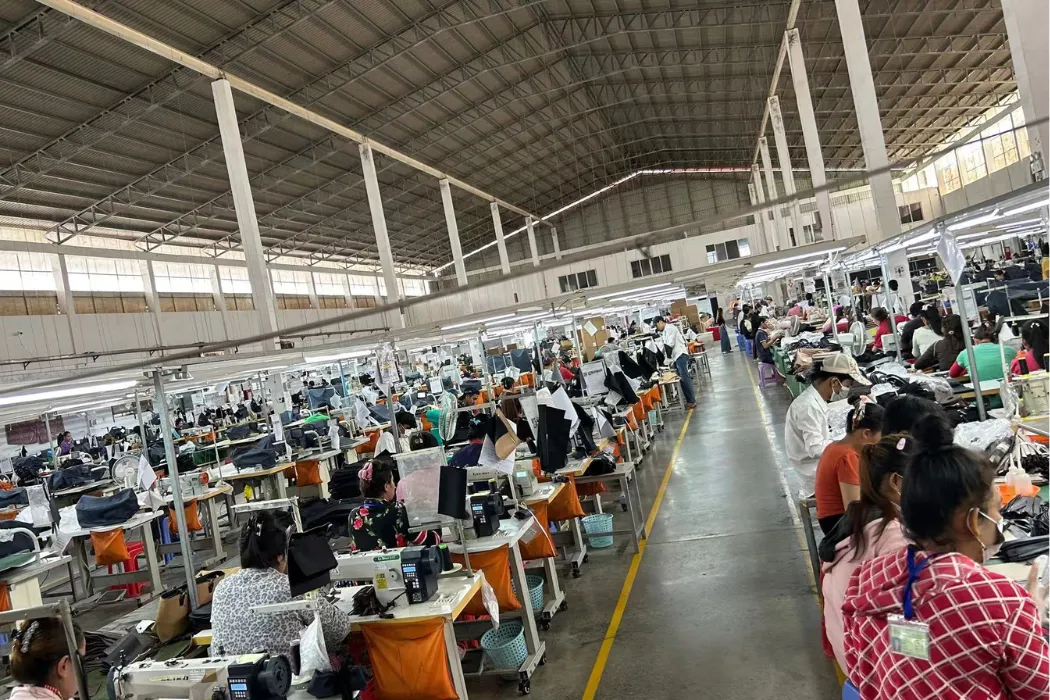
Hoplok operates four factories with a combined area of 19,000 m²: HongDing, a 5,000 m² belt factory in China; Hoplok’s 4,000 m² bag factory in Cambodia; Hongcen Max, a 5,000 m² Cambodia belt factory; and ProPelli, a 5,000 m² Cambodia leather finishing facility. Specify the proposed belt assembly location rather than treating all four operations as interchangeable.
For custom leather belts, minimum orders are 300 genuine-leather belts or 1,000 PU belts. Sampling generally takes 2–3 weeks and bulk production 60–90 days, with material approvals and shipping planned separately. The stated monthly group belt capacity is 200,000–300,000 leather belts and 600,000–800,000 PU belts; project allocation requires confirmation.
Request the intended strap construction, hardware specification, sample plan and current facility documents. ProPelli’s current LWG Gold status covers its facility scope. Review any additional audit or certification evidence for the exact site and order.
J.D. Belt Factory: a direct belt-manufacturing lead
The official J.D. site advertises leather and PU belts, custom OEM/ODM work and factories in China and Cambodia. Its Cambodia contact address is in Takaev Province. These statements make it a relevant belt enquiry lead, but the buyer still needs to verify which operations take place there and which legal entity will contract for the order.
Ask for recent examples of the intended ordinary belt construction, the current factory address, material sourcing plan, minimum quantity and sampling schedule. Verify any displayed audit or certification logo against the actual report and site; do not transfer a group logo to a factory or product automatically.
JS Corporation: established handbag operations, belt scope to confirm
JS Corporation’s official overseas-facility page identifies handbag manufacturing and lists first and second Phnom Penh factories. This supports a Cambodia manufacturing presence, but dedicated belt production and belt output require separate confirmation.
For a coordinated bag-and-belt programme, ask the company whether it accepts the belt design, where it would be made and whether subcontracting is involved. Obtain the proposed entity, capacity allocation and audit documents before comparing it with a specialist belt quotation.
Superl Group: leatherware and hardware, site scope to confirm
The Superl website states that the group was established in 2002 and describes leather handbag manufacturing. Its business overview also covers metal hardware. A Cambodia entity is listed in Capri Holdings’ 2025 supplier disclosure. That disclosure is a dated record, not confirmation of current belt production or future order availability.
Check the exact Cambodia site and legal entity, then request evidence for the proposed belt construction. Do not assume that group hardware operations are at the same location as leather assembly, or that a published brand relationship extends to every facility and product.
Simone: a Cambodia travel-goods and bags lead
Better Factories Cambodia’s July 2025 active-factory list includes Simone ACC. Collection (Cambodia) in the travel-goods and bags category. The dated listing is useful for identity checks but does not confirm a current belt line, production volume or a clean audit result.
Ask for current company and facility details and a response to the actual belt specification. Keep the candidate outside an approved belt supplier list until the company confirms product scope, quotation terms and the proposed manufacturing route.
Names requiring further identity checks
Wai Tat, Topy Enterprise, Relish Industrial, June Textile, Starlite and Qiway Leatherware require further identity and product checks before inclusion in a Cambodia belt RFQ. Current primary evidence for the claimed belt operations has not been established.
| Name to verify | Unresolved point |
|---|---|
| Wai Tat | Exact Cambodia legal entity, address and belt product scope |
| Topy Enterprise | Company identity and the claimed Cambodia belt operation |
| Relish Industrial | Company identity, Cambodia facility and belt capability |
| June Textile | Belt capability; a historical primary study describes June Textiles as a garment factory, which does not establish a current belt line |
| Starlite | Exact legal name; do not substitute a similarly named entity without a match |
| Qiway Leatherware | Cambodia entity and location; similarly named China businesses do not establish a Sihanoukville factory |
For June Textiles, the historical factory study concerns garment production and is not current belt-factory evidence. For any unresolved name, obtain a legal registration, verified company contact, factory address and relevant product evidence before sending a commercial RFQ.
How to verify quality in an offshore factory
Review the relevant facility
Request the current audit reports and certificates for the production site. Verify their scope, validity and follow-up findings with the issuing body where appropriate. A facility audit is distinct from finished-product testing.
Set a product test plan
Give the testing provider the material specification, intended use and destination. Agree relevant physical and chemical assessments, the specimens, conditions and pass criteria. Do not turn a general test method into an unsupported mandatory strength, cycle count or chemical threshold.
Check the report’s material reference, date and sample identity against the proposed order. Reassess the evidence when the material, finish or component changes. Laboratory accreditation should cover the relevant testing work.
Define release inspection
Record the lot size, sampling method, defect categories and acceptance numbers in the quality agreement. Inspect sizing, buckle operation, attachment, edge finish and packing against the approved sample. An AQL designation alone is not a guarantee of the lot’s defect percentage.
Obtain a route-specific freight quote and schedule, including inland collection, export clearance, any feeder leg, transshipment, destination clearance and final delivery. Compare the timing with the production and inventory plan. A customs preference, if available, does not establish a logistics saving.
Choose the route with the forwarder
Review the proposed sea port or air cargo gateway against the shipment date, cargo dimensions, booking availability and destination. Do not rely on an old airport name, a national port-share statistic or a fixed air-freight transit promise. Ask the forwarder to identify the actual route, cut-off dates and what its estimate includes.
Allocate time for the full delivery sequence
Separate sample approval, material readiness, production, inspection, booking, transport and clearance. A factory production estimate ends at a different point from delivery to the buyer’s warehouse. Record the delivery term and named place so costs and responsibilities can be compared.
- Confirm carton quantities, dimensions and gross weights before final booking.
- Match invoices, packing lists and origin evidence to the agreed legal entity and shipment.
- Review packaging and storage requirements for the leather and hardware.
- Keep a contingency for documented route or clearance risks rather than promising a universal delivery buffer.
Compare China, Cambodia and Vietnam on the Same Specification
Country location alone does not establish the lowest landed cost. Compare actual suppliers and the same belt specification, quantity and delivery point. A finishing operation in Cambodia can be relevant to a material plan without replacing all upstream sourcing.
| Factor | China proposal | Cambodia proposal | Vietnam proposal |
|---|---|---|---|
| Labor and overhead | Process-specific quotation | Process-specific quotation | Process-specific quotation |
| Import duties | Verify classification, origin and entry-date measures | Verify classification, origin and entry-date measures | Verify classification, origin and entry-date measures |
| Material readiness | Confirm exact supply route and approvals | Confirm crust/finished-leather route and any local finishing | Confirm exact supply route and approvals |
| Production schedule | Confirm proposed supplier schedule | Hoplok bulk production generally 60–90 days; confirm project conditions | Confirm proposed supplier schedule |
| Factory qualification | Review exact production site | Review exact production site | Review exact production site |
| Delivery cost | Quote the complete agreed route | Quote the complete agreed route | Quote the complete agreed route |
Build a Comparable Leather Belt Cost Breakdown
Ask each supplier to identify which costs are included in its price. The proportions vary with material, buckle, construction, volume, packaging and delivery term. A supposed industry margin or fixed percentage table is not a reliable basis for accepting a quote.
| Cost item | Information to request |
|---|---|
| Leather or PU strap | Article, thickness, cutting yield and any material-development charge |
| Buckle and other hardware | Alloy, finish, quantity, tooling and ownership terms |
| Assembly | Cutting, lining, edge treatment, stitching and attachment operations |
| Quality checks | Agreed inspection and testing scope, with external charges identified |
| Packaging | Cartons, retail packaging, labels and approved moisture-management measures |
| Commercial and delivery charges | Currency, price validity, payment milestones, delivery term and separately quoted freight or clearance |
Compare the total for the same approved sample and quantity. Avoid adding a separate charge that is already included in the supplier’s price. Confirm how a material, colour or quantity change affects both price and schedule.
Make a Documented Sourcing Decision
Build the shortlist around verified facility identity, relevant belt capability, an approved sample and a costed delivery plan. Separate a company’s public profile from the evidence needed to approve your order. No fixed landed-cost saving or quality advantage follows from Cambodia location alone.
For a Hoplok proposal, send the belt development team your drawing or reference sample, material preference, size range, hardware, order quantity and destination. Confirm the manufacturing site, available capacity, sample milestones and required testing in the quotation before allocating production.