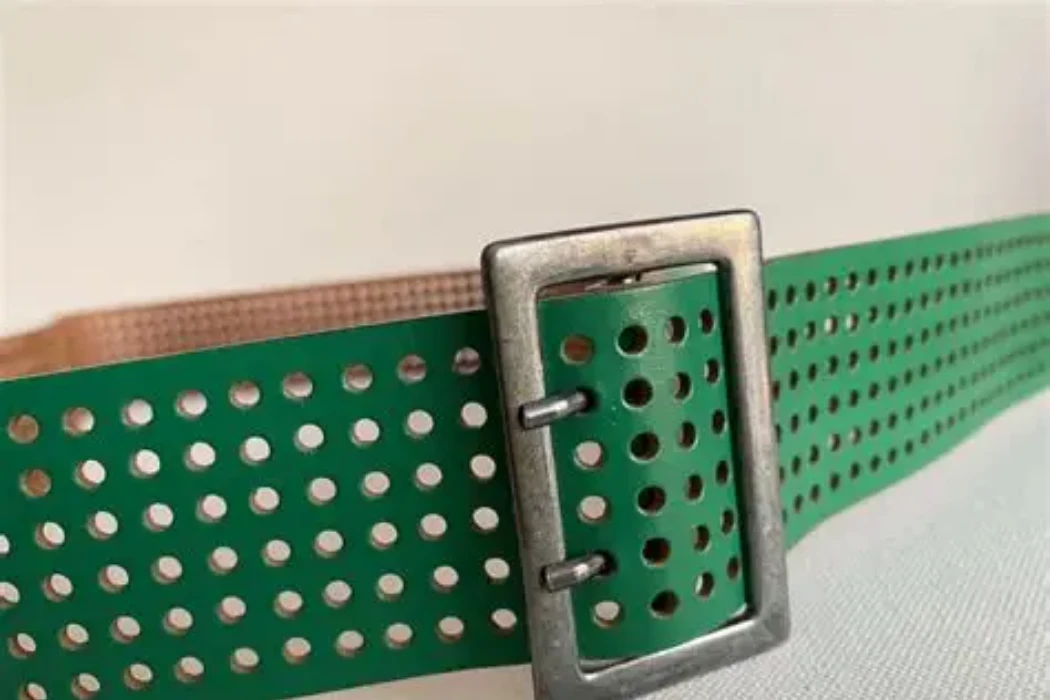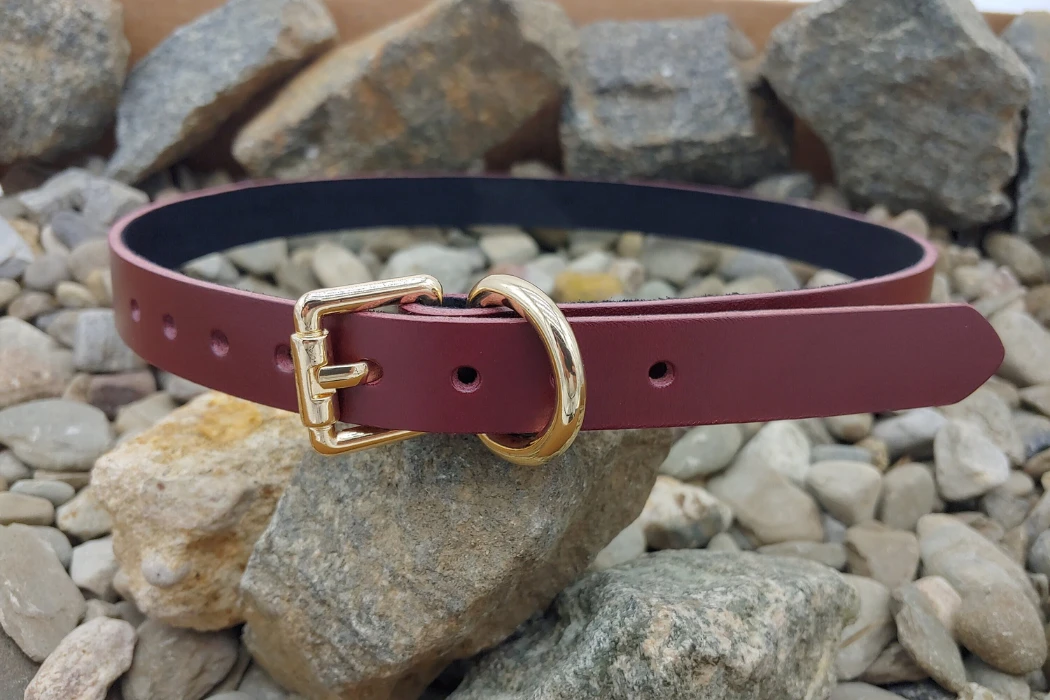
A suitable leather punch can add a clean hole to a belt that is designed and sound enough to accept the alteration. The important first decision is whether another hole belongs there at all. Check the buckle, strap construction, space between holes and remaining tail before making an irreversible cut.
For a brand, extra-hole instructions should be approved for the actual product. They should not tell customers to burn a hole, twist a knife through the strap or use an arbitrary drill bit. A leather-goods repairer is a practical option when the construction or tool use is uncertain.
When should a belt not receive another hole?
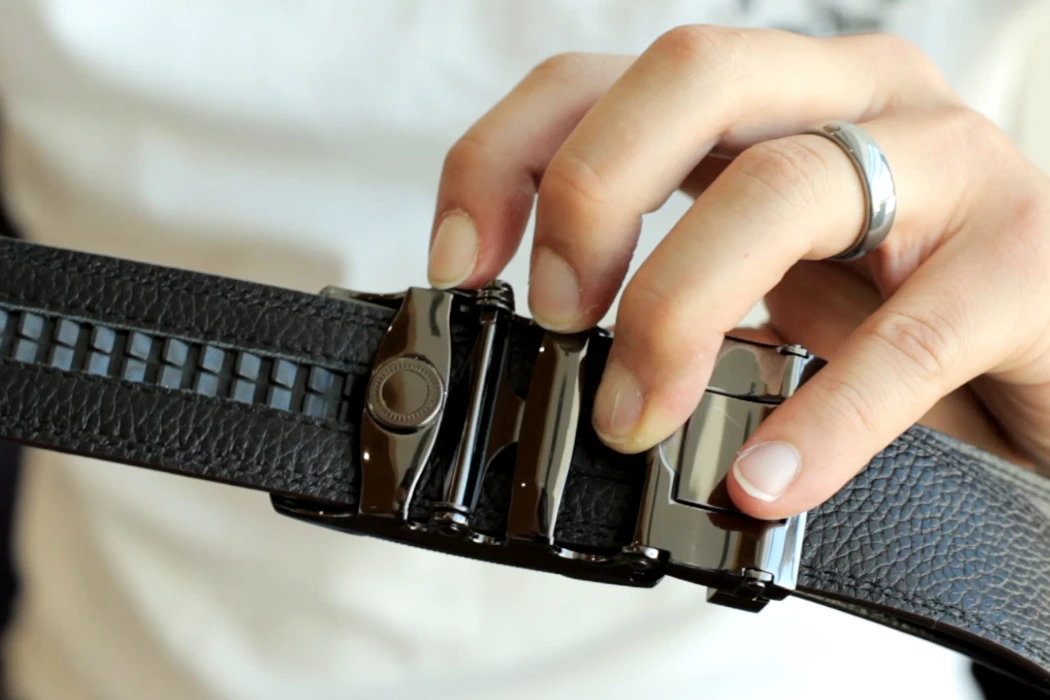
Do not punch through a crack, a weakened area, separating layers, a decorative fitting or a mechanism that does not use ordinary holes. A ratchet track or a specialised fastening needs its own adjustment method. A new hole close to an existing tear will not restore the strap.
Check whether the proposed position still leaves a useful tail that reaches the keeper without excessive overhang. Adding a hole changes a fastening position; it does not resolve every size or tail-length problem. Where the belt is new and unsuitable, discuss sizing or exchange before alteration.
Choose the hole geometry from the buckle and drawing
The hole must accommodate the actual pin or hook and its movement. Match the approved shape as well as the size: not every belt uses a round hole. Do not assume that the largest stretched hole on an old strap represents its original specification.
Use the product’s existing design or the brand’s drawing to determine spacing, centreline and usable positions. There is no universal hole spacing that applies to every fashion belt. A small difference may matter near a motif, edge stitch or laminated section.
| Detail | Check before punching |
|---|---|
| Hole shape and size | Compatibility with the buckle’s pin or hook |
| Position | Centreline, existing pattern and usable fit |
| Surrounding material | Clearance from edges, stitching, tears and adjacent holes |
| Finished fastening | Tail, keeper engagement and comfortable buckle operation |
Select a purpose-made tool for the construction
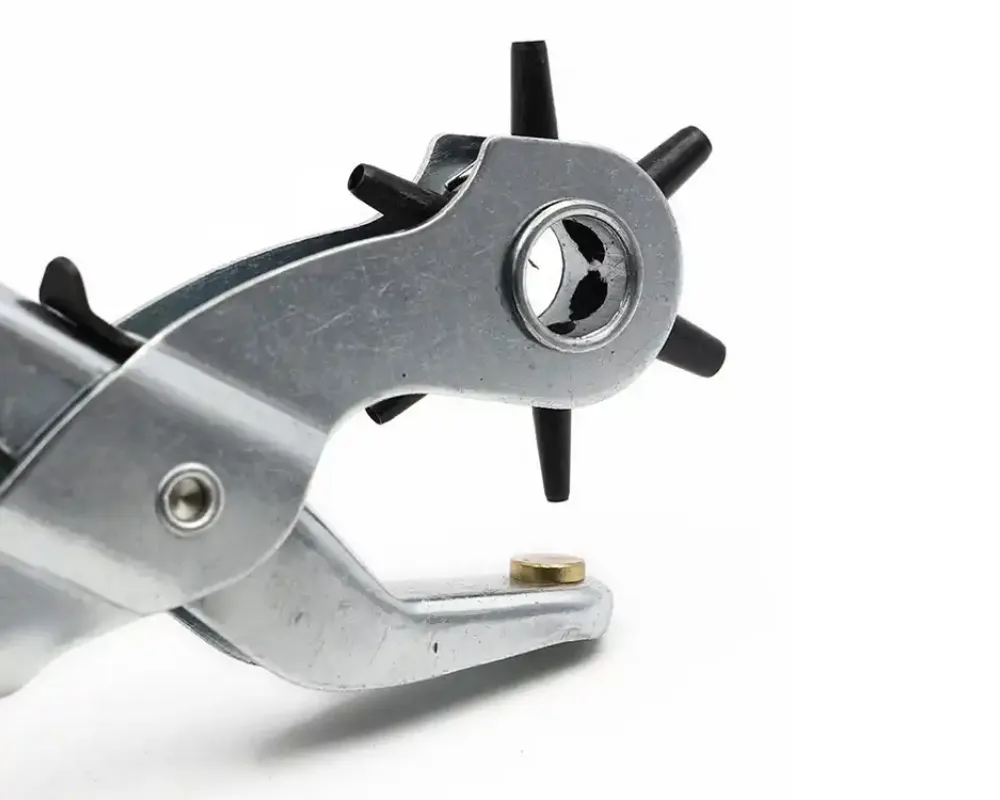
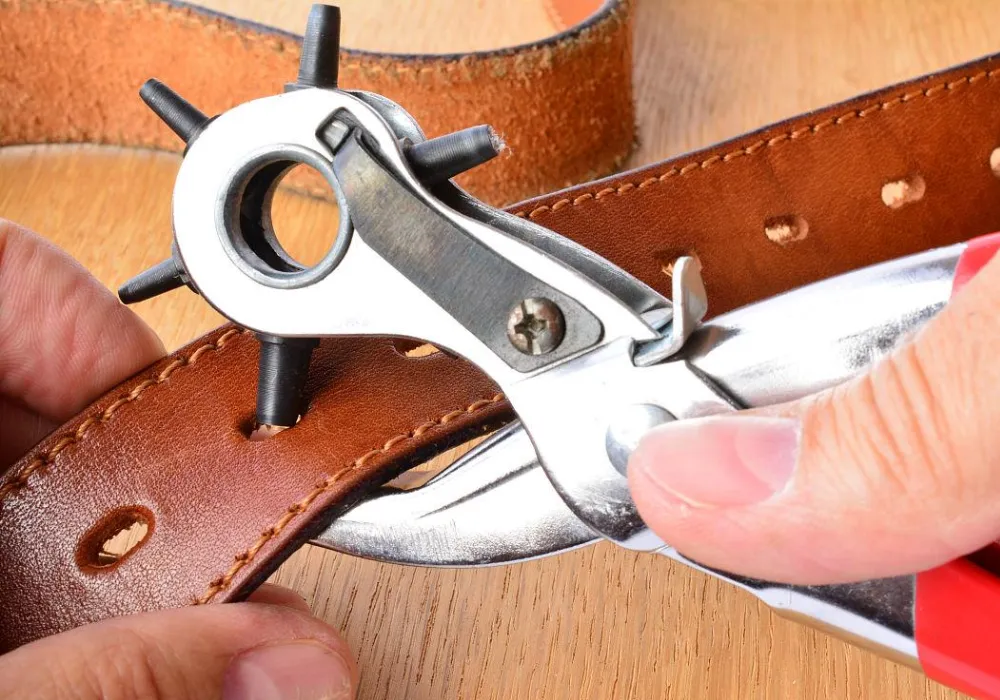
A rotary leather punch offers selectable tube sizes; a drive punch uses a matching cutting tube and the support and striking tool specified by its manufacturer. The Tandy Craftool rotary punch is an example of a tool intended for leather hole making.
Select the tool for the actual thickness and layered construction, not a supposed full-grain or genuine-leather quality ranking. Follow its capacity and operating instructions. A dull or misaligned cutter can damage a surface even when its nominal diameter is correct.
A controlled sequence for an approved alteration
- Confirm that the brand or a competent repairer considers the alteration suitable. Inspect the strap and record the intended hole position.
- Remove the belt from the wearer. Lay it without tension on the support specified for the tool.
- Mark the approved position with a method that will not leave a permanent mark outside the cut. Recheck the measurement, spacing and tail.
- Where a matching scrap is available, test the selected punch on that material before working on the product. Do not make a test hole in an unrelated part of the saleable strap.
- Keep fingers clear of the cutter and follow the tool manufacturer’s instructions for positioning, support and operation. Stop if the tool cannot cut within its intended capacity.
- Inspect both faces and the cut edge. Check the buckle’s operation without forcing it and look for tearing, lifting layers or a poor fit.
If the hole is misplaced or oversized, stop. Enlarging it further or cutting a slot towards the centre may create another weak area. Ask a repairer to assess whether the belt remains suitable.
Finishing a hole is material-specific
Some constructions need an approved local edge treatment. Others may be damaged by indiscriminate sanding, wax or conditioner. Follow the product specification instead of assuming every freshly cut edge needs the same coating.
A cleaner-looking edge is not evidence of restored strength. Conditioner and glue cannot make a torn hole equivalent to the original construction. Avoid heated nails, scissors used as an awl and improvised blades: they do not reproduce a controlled, specified hole.
What brands should approve before bulk production
Put the datum, hole shape, pattern and adjustment range on the technical drawing. Review the complete size range, not only a middle sample. If customers are allowed to add holes, define the permitted area and provide instructions validated on the finished construction.
Send the drawing and buckle reference through Hoplok’s project enquiry. A clear fit specification and approved belt sample help prevent an alteration becoming the standard remedy for an unsuitable size chart.