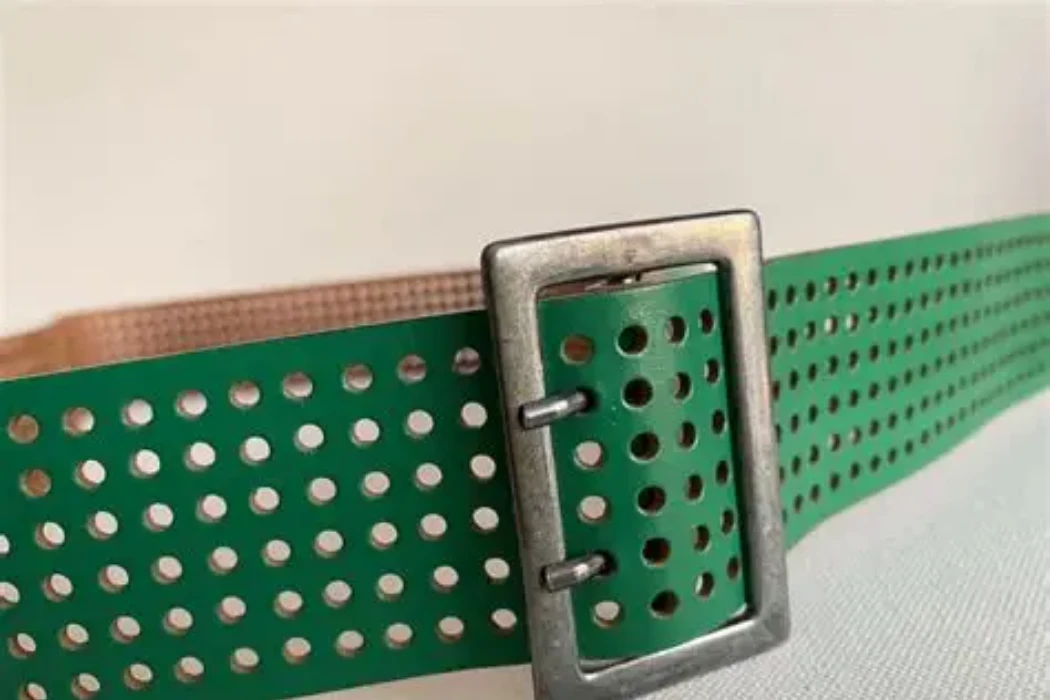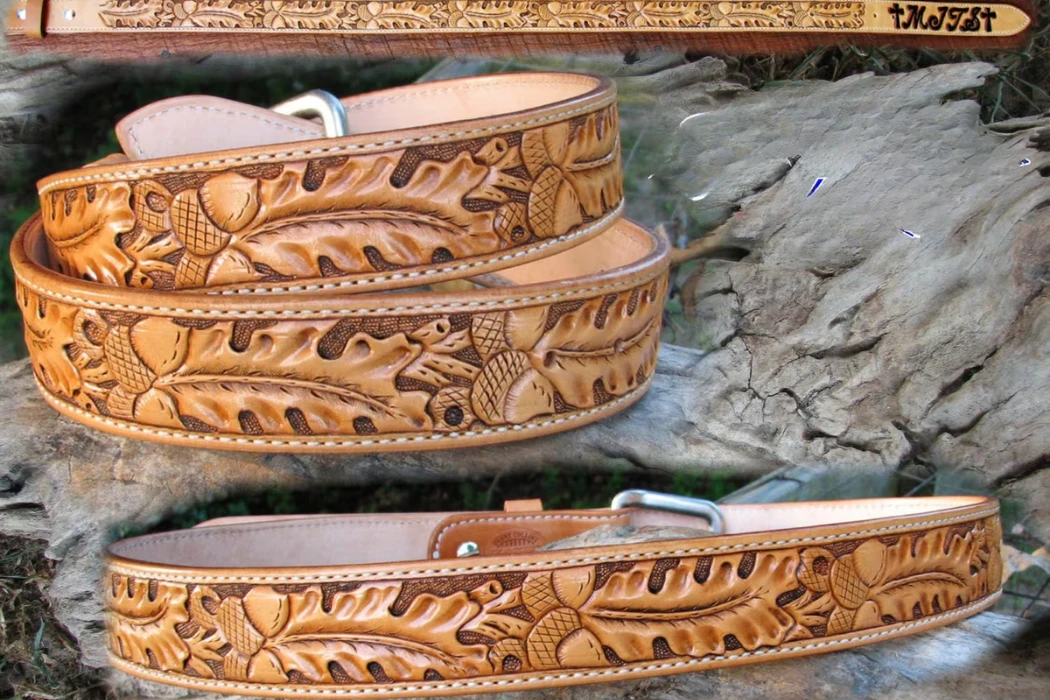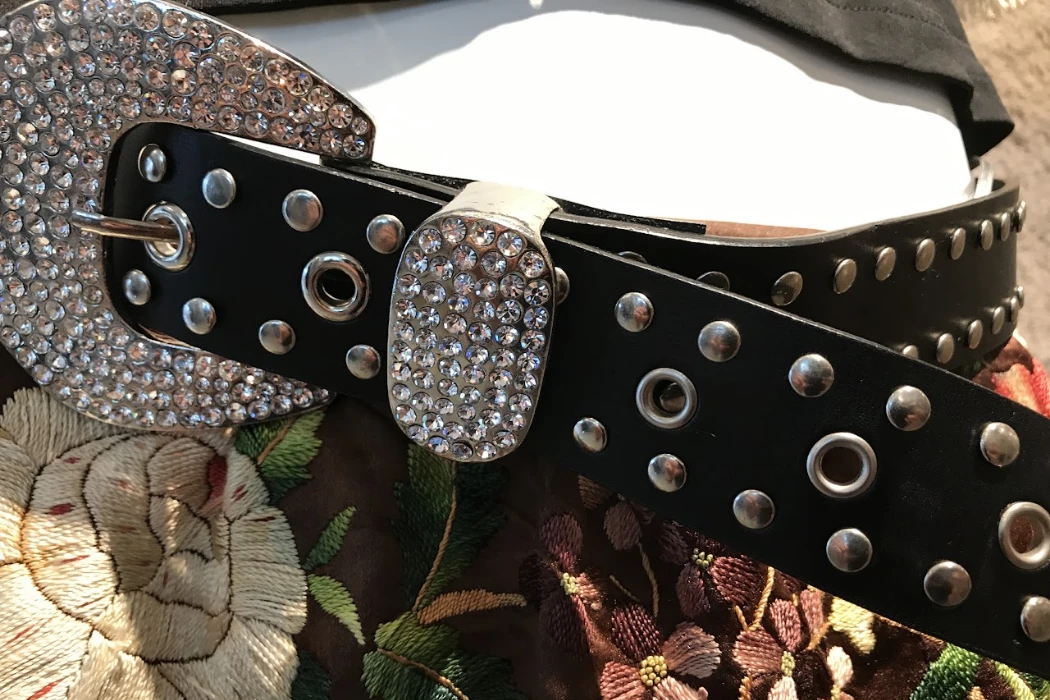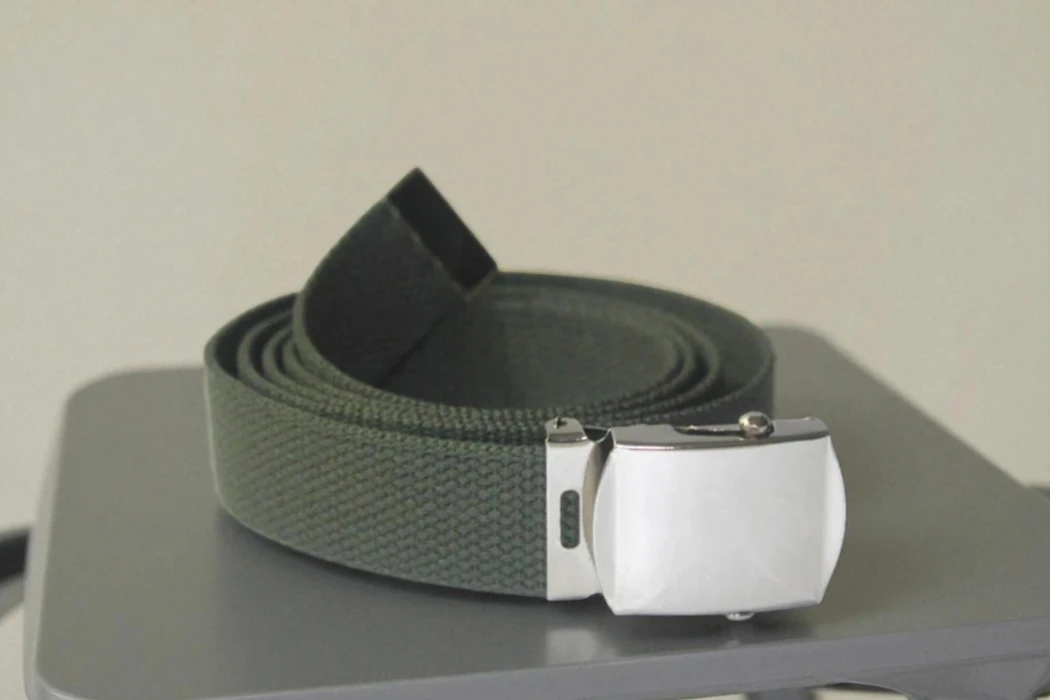
A belt size chart is useful only when the customer, the product team and the factory measure from the same points. For brands ordering leather belts, define the buckle reference, wearing hole and adjustment range before assigning a size label. Total strap length, trouser size and the number printed on the belt are different measurements.
This guide combines customer measuring instructions with the specification details a retailer needs for sampling, listings and returns. Its examples describe proposed measurement conventions; they are not universal size standards.
How to measure an existing belt
- Choose a belt that fits with the clothing and wearing position intended for the new belt.
- Lay it flat without stretching it. Identify the reference point shown in the new brand’s size diagram: this may be the leather fold or a specified point on the buckle.
- Measure from that reference to the centre of the hole actually used. Record the measurement in centimetres or inches and photograph both endpoints.
- Compare the result with that brand’s chart and its usable hole range. Do not compare a fold-to-hole measurement with a chart that includes a different part of the buckle.
For example, Belts.com’s measuring instructions use the leather fold at the buckle and the hole the customer wears. This is a useful example of a clearly stated convention, rather than a rule to impose on every brand.
How to measure without an existing belt
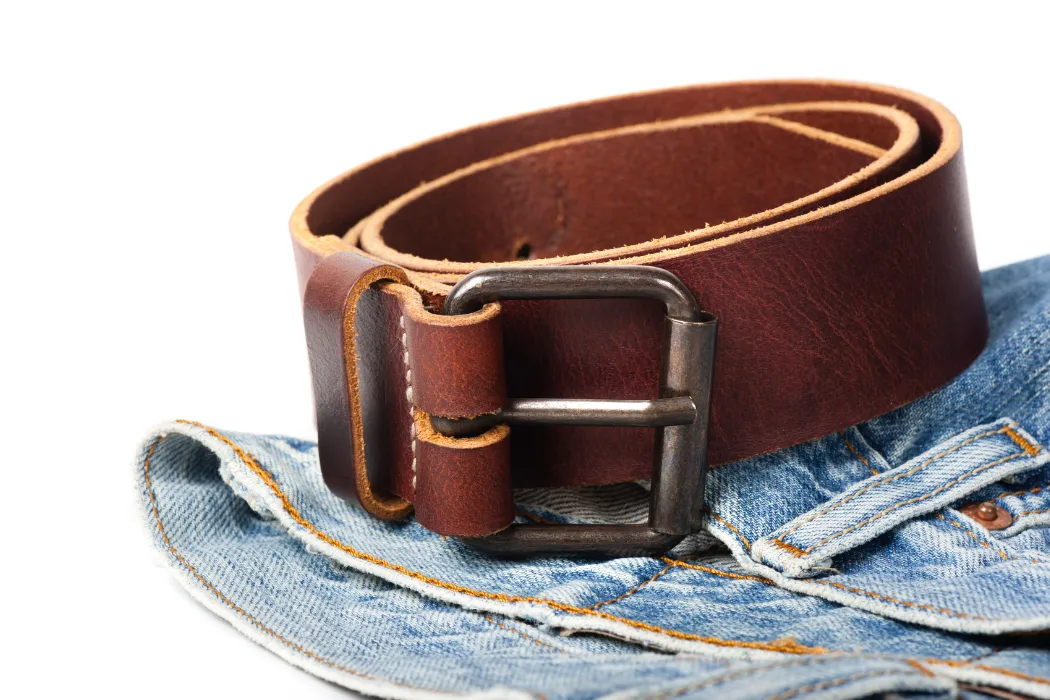
Use a flexible tape through the belt loops of the intended trousers, or around the position where a fashion belt will be worn. Stand comfortably and include the usual clothing layers. Record that circumference without adding an automatic allowance. The brand should explain how that body-over-clothing measurement maps to the finished belt.
Men’s, women’s and unisex ranges can use the same measuring method. The intended wearing position matters: a high-waist belt and a hip belt may require different lengths for the same person. Gender labels do not establish a common S, M or L measurement.
Does the “pants size plus two inches” rule work?
It can be a starting estimate when a brand expressly recommends it, but it cannot guarantee fit. Trouser labels, rise, clothing thickness and buckle designs vary. A measured belt or a measurement at the intended wearing position is a stronger basis for selection. Do not publish “always add two” or “always size up” as a substitute for your own chart.
Write the measurement convention into the technical pack
| Field | What the buyer should specify | Why it matters |
|---|---|---|
| Reference point | A labelled drawing showing the exact buckle or fold datum | Prevents two correct-looking measurements using different starting points |
| Nominal size | Reference-to-designated-wearing-hole distance | Connects the size label to a measurable finished article |
| Hole layout | Hole count, centre-to-centre pitch, shape and dimensions | Defines usable adjustment and buckle-prong compatibility |
| Tail length | Distance from the wearing hole to the tip, plus tip shape | Controls appearance and whether the tail reaches the keeper |
| Width and thickness | Finished dimensions and agreed tolerances | Checks passage through trouser loops, buckle and keeper |
| Buckle version | Drawing or approved physical sample | A changed buckle can change effective fit even when strap cutting length stays the same |
| Size label | Inches, centimetres or a defined letter-size mapping | Keeps carton labels, hangtags and online charts consistent |
Specify tolerances in the order documents. Do not borrow a leather thickness test method as proof of a universal belt-length standard. Material thickness, finished length and customer fit are separate checks.
Calculate the hole range, rather than guessing it
For equally spaced holes, the distance between the first and last holes is (number of holes − 1) × hole pitch. If the nominal wearing hole is in the middle, half that distance is available on either side.
Illustrative specification: five holes at 25 mm pitch, with the third hole 900 mm from the agreed datum, produce hole positions at 850, 875, 900, 925 and 950 mm. The first-to-last span is 100 mm. Seven holes at the same pitch produce a 150 mm span. These are arithmetic examples, not Hoplok’s default dimensions or a guaranteed body-size range.
More holes can expand adjustment, but they also change the visible tail and hole pattern. Approve the smallest and largest usable positions on a finished sample. An excessive tail is not solved merely by adding another hole.
Keep unit conversion separate from size conversion
One inch equals 2.54 cm. Unit conversion is exact; converting to a brand’s nearest sale size is a merchandising decision. An inch label and a rounded metric label may refer to different physical specifications.
| Measured length | Exact metric equivalent | Use in the chart |
|---|---|---|
| 32 in | 81.28 cm | State the actual approved nominal length |
| 34 in | 86.36 cm | Do not silently relabel it as 85 cm |
| 36 in | 91.44 cm | Do not assume every “90” belt is identical |
| 38 in | 96.52 cm | Show the usable range and reference diagram |
| 40 in | 101.60 cm | Confirm whether a rounded sales label is intended |
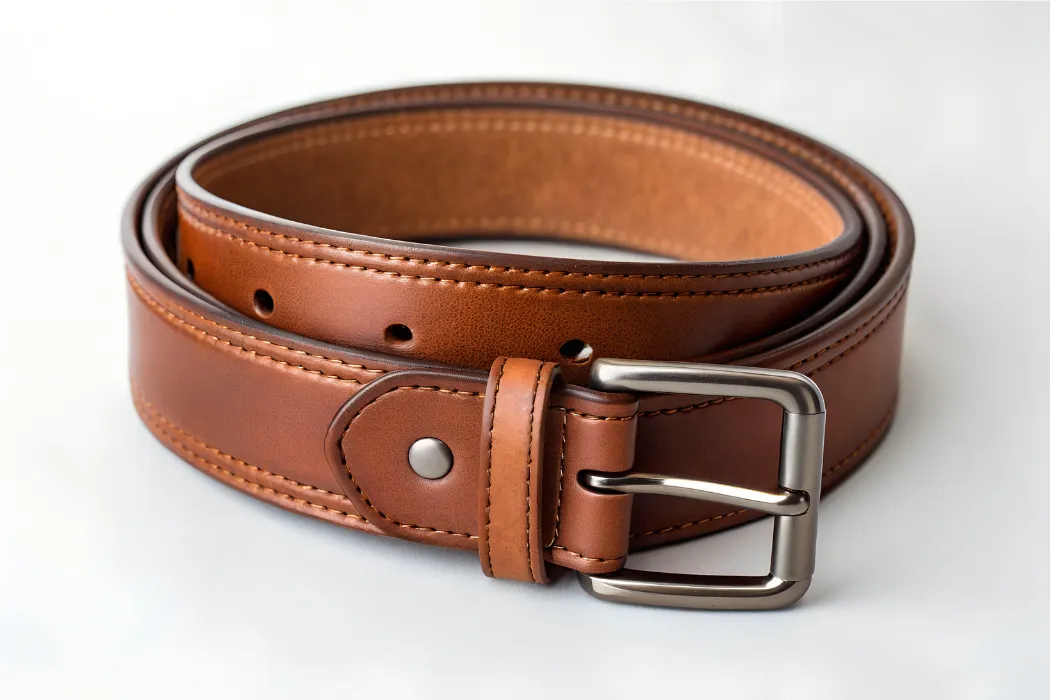
Check width, buckle and clothing together
A correctly labelled belt can still fail to fit through the intended trouser loops. Check the finished strap width and thickness against the narrowest relevant opening, including the buckle and keeper. Do not assume all jeans or all suit trousers share one loop dimension.
Evaluate the actual buckle model with the strap. Confirm that the prong enters and leaves the holes without excessive force, the keeper holds the tail, and the buckle lies as intended. For reversible or cut-to-fit designs, include their own fitting instructions. A removable buckle does not automatically mean the entire belt is approved for customer trimming.
Build a size chart that customer service can use
- Show a photograph or drawing with the same endpoints used by factory inspection.
- List each sale size, nominal measurement and usable hole range; keep units visible.
- Explain whether the belt is intended for waist, hip or trouser-loop wear.
- Show how to compare an existing belt and what to do between available sizes. Use actual adjustment ranges rather than unconditional rounding rules.
- Match the wording on product pages, packaging and customer-service replies.
For returns, record the size ordered, received label, measured nominal length, customer’s measuring method and intended wearing position. Separate an incorrectly labelled unit from a chart misunderstanding, an unsuitable buckle or a tail-length preference. This gives the product team something more useful than a single “too small” category.
Sampling and approval for a private-label belt range
Review representative sizes and the range endpoints before approving bulk production. Keep a signed size table and an approved finished sample. Confirm the measurement method again if the buckle, strap construction, hole array or label system changes.
For Hoplok custom belts, the confirmed minimum order quantity is 300 pieces for leather belts and 1,000 for PU belts. Belt sampling takes 2–3 weeks, and bulk lead time is 60–90 days; confirm the order schedule and size breakdown with the team. The scope of each MOQ across styles and colours should be specified in the quotation.
Send your size table, buckle reference and intended market through our contact page. Include your current return reasons if the project is replacing an existing range. See also our quality-control process and belt care guidance.
Questions retailers should settle before launch
What is the best leather belt length?
It is the length that places the intended wearer within the approved adjustment range and leaves the agreed tail. There is no single best tail length for every buckle, keeper and trouser design.
Can a belt be shortened or have another hole added?
That depends on its construction and the brand’s alteration policy. Treat resizing as a separate service decision. Do not advise a customer to cut, punch or stretch an unsuitable belt merely to make the size chart work.
Should we promise that leather will stretch to fit?
No. Approve fit in the supplied condition. Changes during use depend on the material and construction and are not a reliable substitute for the correct size.