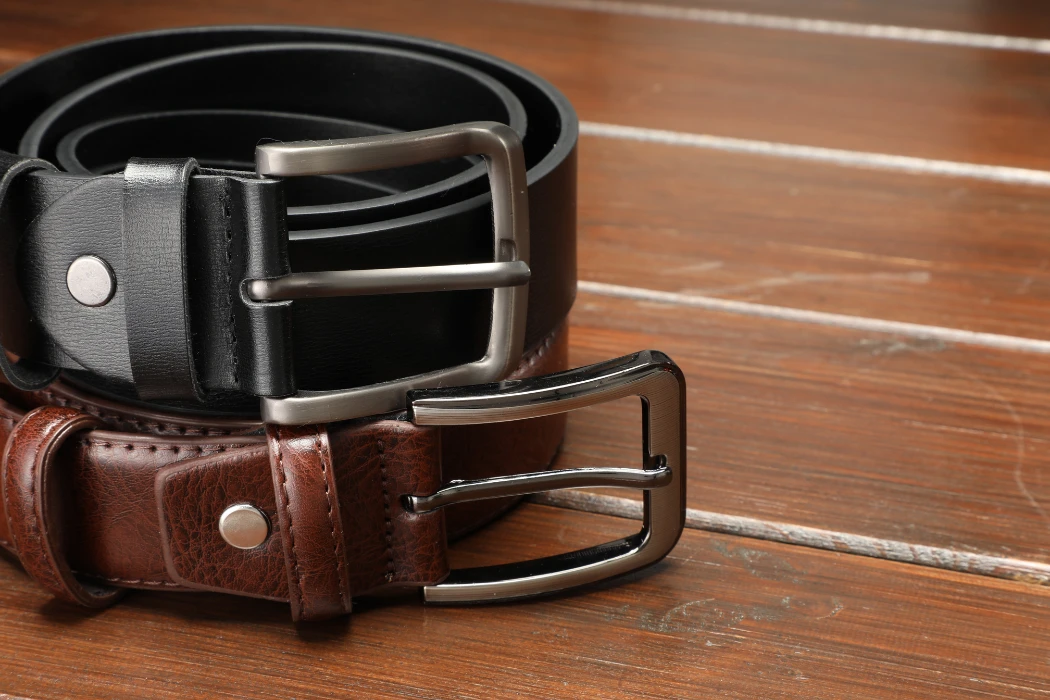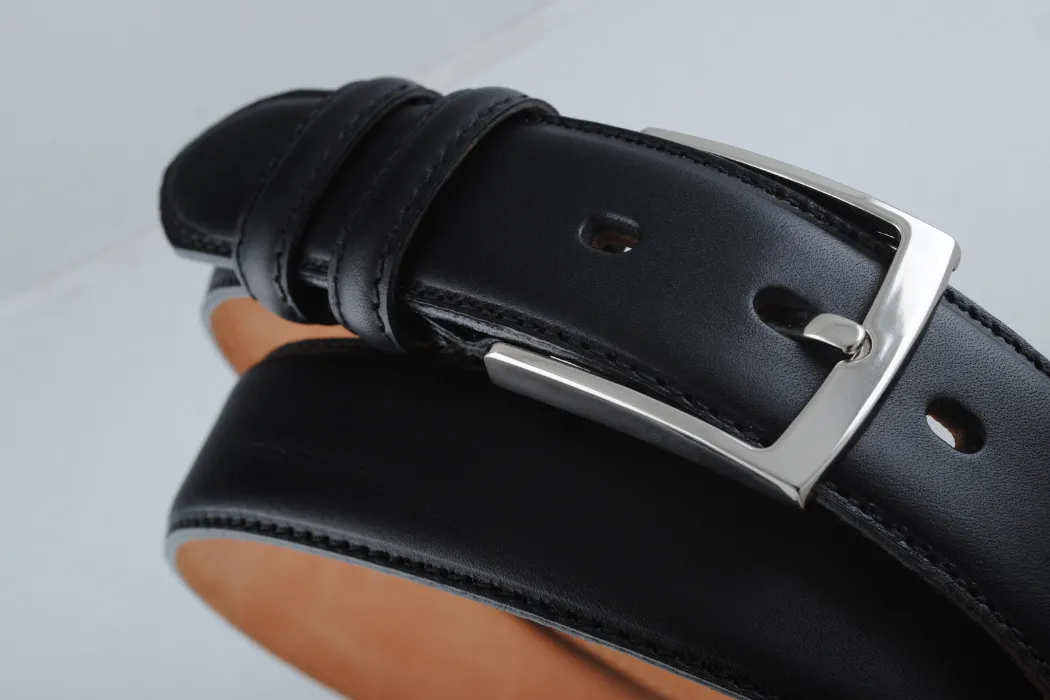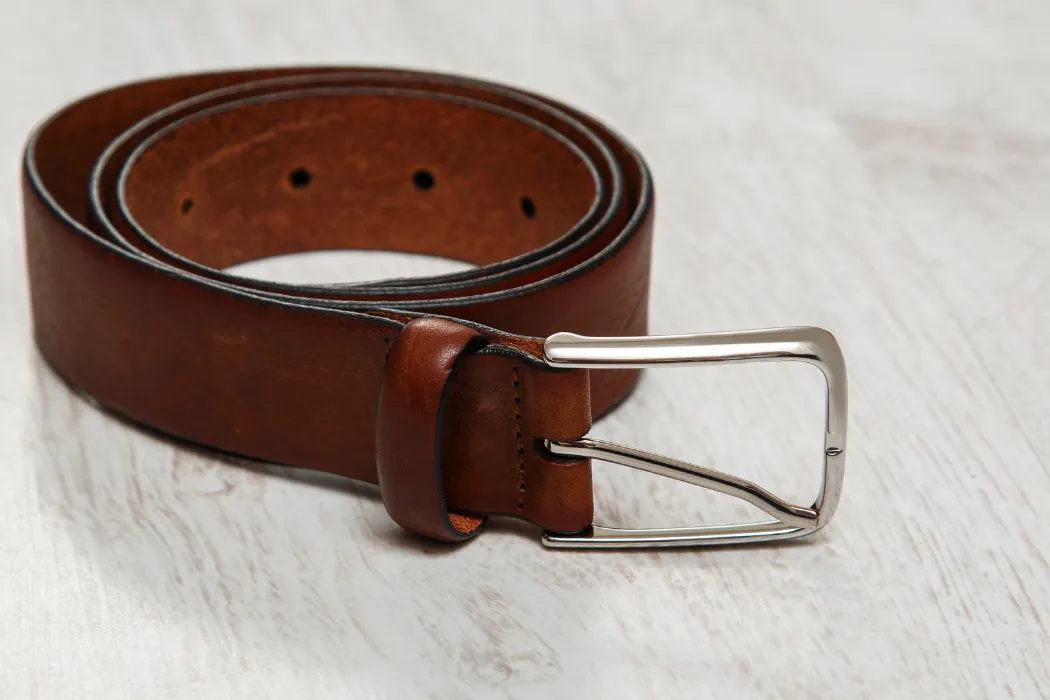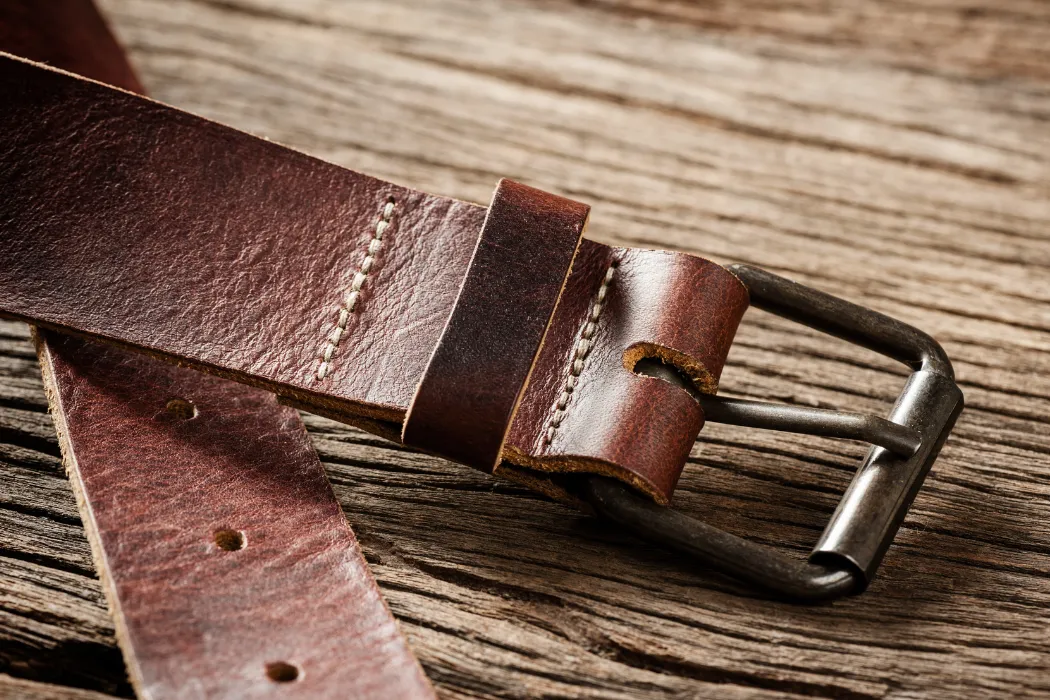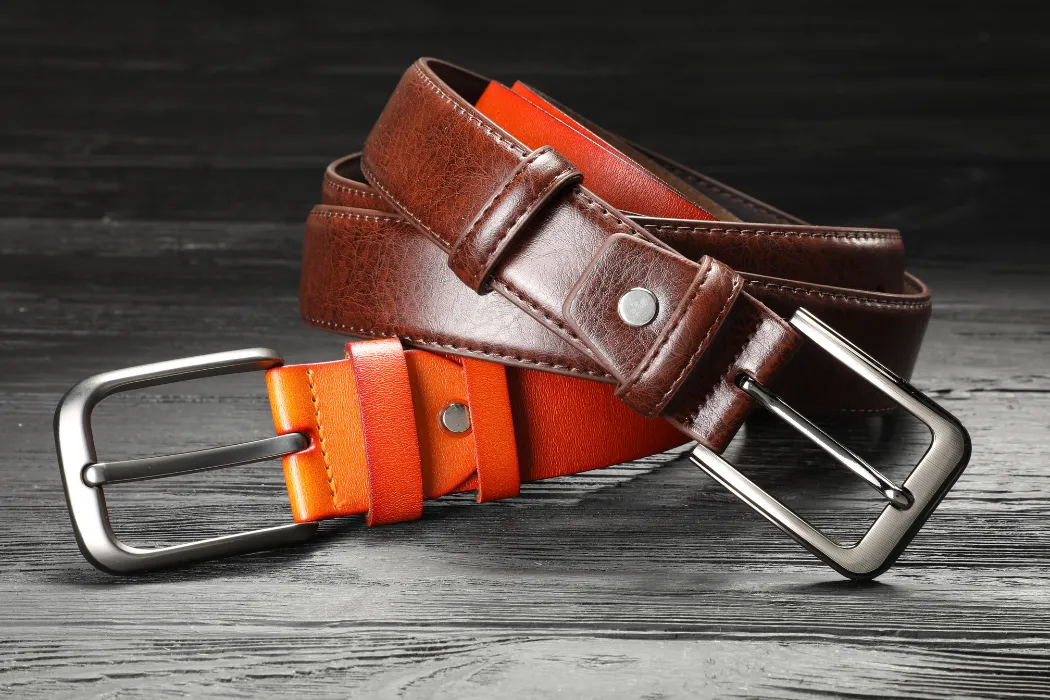
To identify a high-quality Mexican leather belt, first look for Full-Grain Vegetable-Tanned leather, which should possess a distinct, rich earthy aroma rather than a chemical plastic smell. Next, inspect the depth of the tooling (Cincelado); authentic hand-carved designs feature deep, 3D relief with slight natural variations, whereas machine embossing appears shallow and uniform. Finally, verify that the edges are burnished (smooth and polished) rather than painted, and check the reverse side for the hallmark “Hecho en México” stamp.
León, Guanajuato, is not just a city; it is one of the world’s premier leather capitals, processing over 70% of Mexico’s leather goods. An authentic Mexican belt is not merely an accessory; it is the crystallization of centuries of Charro (Mexican Cowboy) tradition, built to withstand the rigors of ranch life while displaying intricate artistry. However, the market is flooded with cheap imitations—cardboard cores wrapped in thin “Genuine Leather” spray-painted to look like the real thing.
This guide will teach you how to distinguish between a true Artisanal (Handcrafted) belt and a tourist trap souvenir. By learning to use your senses of touch, smell, and sight to evaluate the leather grade, the tooling depth, and the hardware quality, you will be able to invest in a piece of history that will last for decades.
What Are the Unique Styles of Mexican Leather Belts?
Mexican leather belts are primarily defined by two distinct, heritage-rich styles: Cincelado (Hand-Tooled) and Piteado (Pita Embroidery). Both styles require weeks of manual labor and are distinct from standard Western belts due to their deep cultural roots in the Charro (Mexican horseman) tradition.
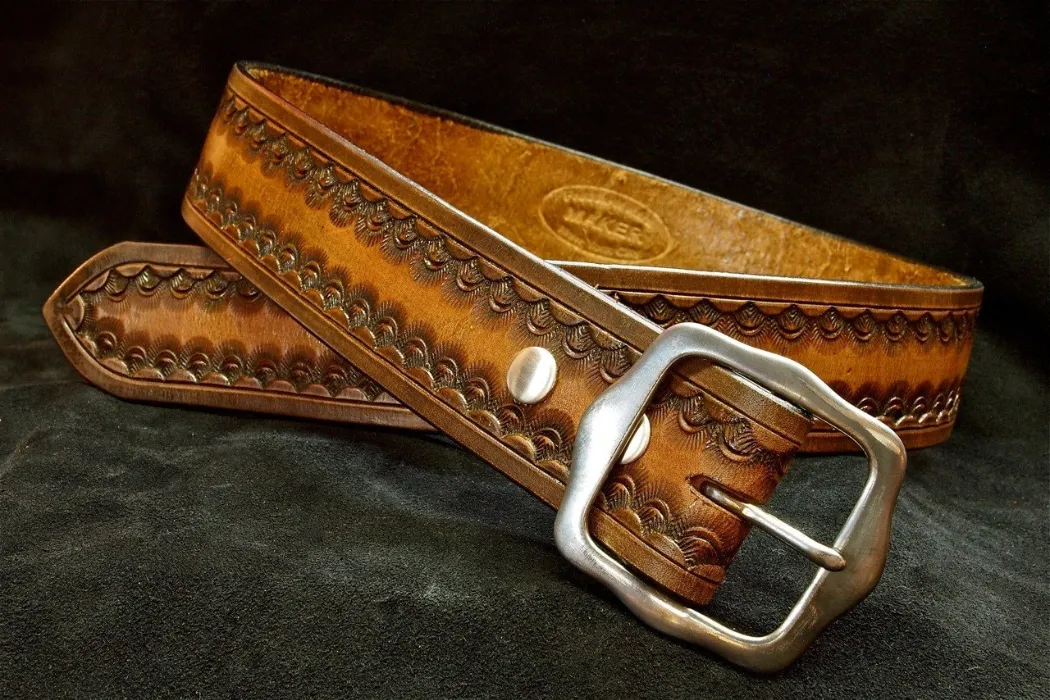
The “Cincelado” (Hand-Tooled) Belt
Cincelado is the art of subtractive leather sculpting. Unlike “stamping,” which uses a machine to press a shallow pattern into the surface, Cincelado is defined by specific manual processes:
- The Process: A “Talabartero” (master leatherworker) uses a swivel knife to cut the design outline into damp leather. Specialized beveling tools and hammers are then used to depress the background, causing the floral pattern to rise in 3D relief.
- Material Requirement: This technique requires leather that is incredibly thick and dense (typically 9-10 oz or higher) to hold the depth of the carving without cutting through.
- Authenticity Check: If you see a “tooled” belt that feels thin or flimsy, it is likely a machine-pressed imitation, not true Cincelado.
The “Piteado” (Cactus Fiber Embroidery) Belt
Piteado is one of the most labor-intensive leather crafts in the world, involving embroidery with “Pita,” a thread extracted from the Maguey cactus (agave). Its key characteristics include:
- The Fiber: Unlike cotton or nylon, Pita fiber is exceptionally tough, naturally waterproof, and has a distinct, creamy-white sheen that does not fade over time.
- The Technique: Because Pita fiber is thick, the leather must be pre-punched with thousands of tiny awl holes. The embroidery is structurally integrated into the hide, acting as a reinforcement grid.
- Time Investment: An authentic Piteado belt can take up to 30 days to embroider by hand, justifying its high price point compared to machine-stitched alternatives.
The “Charro” Aesthetic
Both styles are born from the Charro tradition—the elaborate dress code of the Mexican cowboy. In this aesthetic, the belt is a centerpiece:
- Width: Charro belts are typically wider than standard dress belts, often measuring 1.75 to 2 inches wide to support holster rigs or display artistry.
- Influence: While this bold aesthetic influenced modern “Western” fashion, original Mexican craftsmanship remains distinct for its intricacy and use of indigenous materials.
How Do You Distinguish Hand-Tooled from Machine-Embossed?
The most critical skill for a buyer is distinguishing between authentic Hand-Tooled (Cincelado) and cheap Machine-Embossed leather. The key difference lies in depth and irregularity. Hand-tooled designs are carved deep into the leather with a knife, creating sharp, vertical edges and high 3D relief that stands up 2-3mm from the background. Machine embossing uses a heated metal roller to press a pattern into the surface; the result is shallow, the edges are rounded and “soft,” and the pattern repeats perfectly without the slight, natural variations of a human hand.
The Depth Test: 3D Relief vs. Surface Pattern
Real Cincelado is a subtractive and compressive art. The “Talabartero” cuts the leather fibers with a swivel knife. This creates a physical separation between the flower petal and the background leaf. You should be able to run your fingernail along the edge of a petal and feel a distinct, sharp drop-off.
In contrast, machine embossing is purely compressive. It squashes the leather down. There are no cuts, only indentations. The result is a “puffy” look where the design seems to sit on the leather rather than rising out of it. Because heavy tooling requires removing or compressing significant material, authentic belts must be made from heavy-weight leather, typically 9-10 oz (3.6-4.0mm) thick, to maintain structural integrity. If the belt is thin (under 3mm), it is almost certainly embossed.
The “Tool Marks”: Looking for the Human Touch
Perfection is the enemy of authenticity. A machine-embossed pattern is mathematically perfect. Every rose is identical; every scroll has the exact same curve. Hand tooling is organic.
- Backgrounding Marks: Look closely at the textured background areas (the dark, recessed parts). In a hand-tooled belt, this texture is created by hitting a small “pear shader” tool thousands of times with a hammer. You should be able to see slight overlaps or variations in the depth of these tiny impacts.
- Undercuts: Skilled artisans use a “lifter” tool to pry up the edges of petals or leaves, creating a true undercut that shadows the background. A machine roller cannot physically replicate this undercut angle.
The Backside Check
Turn the belt over. This is often the easiest tell.
- Machine Embossed: The immense pressure of the hydraulic roller often pushes the pattern all the way through, leaving a “ghost” or negative impression on the back of the belt.
- Hand Tooled: While the hammering is forceful, the thick leather usually absorbs the impact. The back should be relatively smooth. Furthermore, high-quality Cincelado belts are often lined with a second layer of pigskin or calfskin to cover the back, making the belt thicker and more finished—a step rarely taken with cheap embossed belts.
Hand-Tooled vs. Machine-Embossed Matrix
Use this checklist to verify the belt’s authenticity in seconds.
| Feature | Hand-Tooled (Cincelado) | Machine-Embossed |
|---|---|---|
| Pattern Depth | Deep (2-3mm), high relief. | Shallow (< 1mm), flat profile. |
| Edge Sharpness | Sharp, vertical knife cuts. | Rounded, soft, “melted” edges. |
| Uniformity | Organic variations; no two flowers identical. | Perfect, repetitive mechanical pattern. |
| Backside | Smooth or Lined. | Often shows “ghost” impression. |
| Price Point | $80 – $200+ | $15 – $40 |
How Can You Test the Leather Quality with Your Senses?
Authentic Mexican belts rely on Vegetable-Tanned Full-Grain Leather. To test quality, use your fingernail to lightly scratch a hidden spot; full-grain leather will show a mark that can be rubbed away with your thumb’s oils, while plastic-coated fake leather feels slick and resists marking. Place a single drop of water on the surface; authentic veg-tan is porous and will absorb the moisture, darkening temporarily within 10-30 seconds, whereas water will bead up and roll off a painted or synthetic surface. Finally, the smell should be rich and earthy, never like chemical glue.
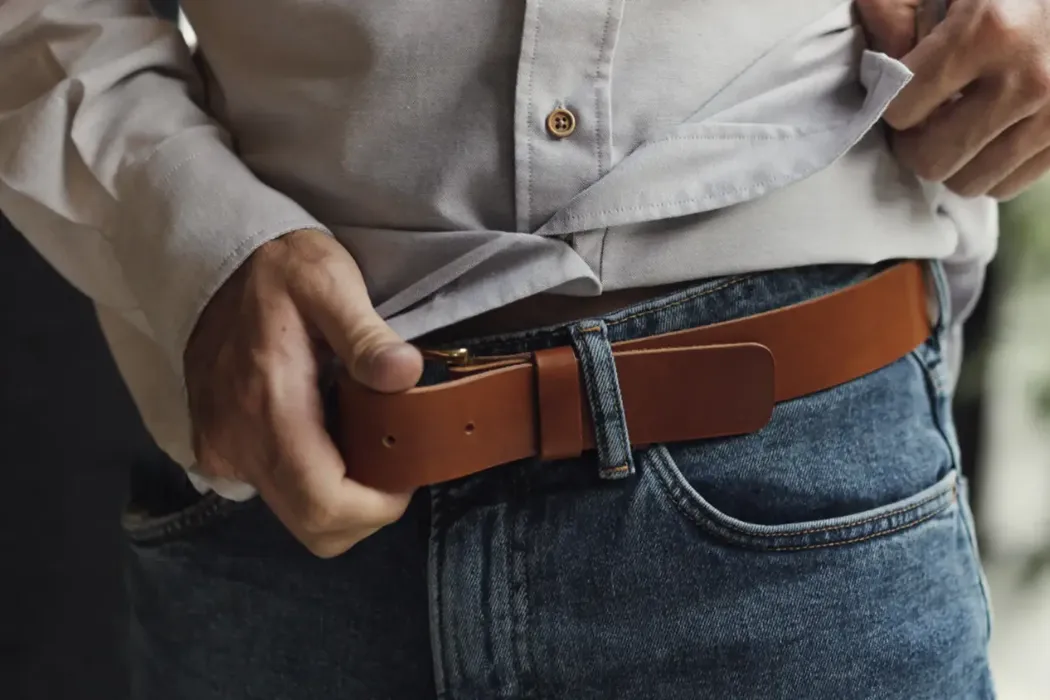
The Smell Test: Tannins vs. Chemicals
The nose is often the most reliable tool. Authentic Mexican leather is tanned using natural vegetable tannins, often derived from the local Cascalote tree or oak bark. This process, which takes weeks, impregnates the hide with a distinct, organic aroma.
- The Good Smell: A rich, earthy, slightly sweet scent. It smells like “nature.” This scent comes from the tannins binding with the collagen.
- The Bad Smell: A sharp, acrid odor of plastic, vinegar, or industrial glue. This indicates the belt is either made of synthetic PU, or it is a “bonded” leather belt held together by adhesive. If it smells like a swimming pool liner, put it back.
The Water Drop Test (Porosity)
High-quality tooling leather (veg-tan) is rarely sealed with heavy lacquers because it needs to breathe and patina. This makes the “water drop test” highly effective.
- The Procedure: Place one small drop of water on the back or an un-dyed portion of the belt.
- Authentic Reaction: The leather should absorb the water within seconds, creating a dark spot that will eventually dry and return to normal. This proves the pores are open and the grain is natural.
- Fake Reaction: If the water sits on top like a bead on a waxed car, the surface has been sealed with a heavy plastic paint or polyurethane coating. This is common in “Genuine Leather” belts designed to hide imperfections.
The Bend Test: Wrinkles vs. Smooth
Leather is skin; it behaves like it. When you pinch or bend your own skin, you see fine, natural wrinkles. High-quality leather should do the same.
- Full-Grain: Bend the belt backward (grain side out). You should see microscopic, natural wrinkles appear at the bend point. When you straighten it, they disappear. This indicates flexibility and fiber density.
- Low-Quality/Bonded: If you bend a cheap belt, the surface will often look unnaturally smooth and stretched (like bending rubber), or worse, you will see the painted topcoat begin to crack or turn white under the stress. This “white break” is a sign that the color is just a surface coating, not dyed through.
What Construction Details Signal High Quality?
Inspect the buckle attachment first. High-quality Mexican belts almost always feature Chicago screws or heavy-duty snaps that allow you to remove and interchange the buckle. If the buckle is stitched or riveted permanently in place, it is a sign of lower-end manufacturing. Additionally, check the edges; they should be burnished (polished to a smooth, sealed rounded edge) using friction, rather than simply painted with a thick layer of polymer to hide the internal structure of the leather.
Interchangeable Buckles (Snaps & Screws)
In Western and Mexican culture, the belt buckle is a trophy. Therefore, a high-quality belt is essentially a “chassis” designed to hold various buckles over its lifetime. The attachment method tells you everything about the maker’s intent:
- Chicago Screws: The gold standard. These are solid metal (often brass) threaded posts that screw together. They are incredibly secure but allow for easy buckle swapping in seconds.
- Heavy-Duty Snaps: Common on mid-range belts. They are convenient but can wear out after a few years of snapping and unsnapping.
- Permanent Stitching/Rivets: If you cannot remove the buckle, it is a red flag. This is typical of mass-produced fashion belts designed to be disposable. An authentic Talabartero knows you will want to swap your buckle.
Edge Finishing: Burnished vs. Painted
The edge of the belt reveals the truth about the leather’s core. Because authentic Mexican belts use vegetable-tanned leather, they have the unique ability to be “burnished.”
Burnishing is a process where the edge is sanded smooth and then rubbed vigorously with canvas or wood and a natural gum (like Tragacanth) until the fibers fuse together. The result is a smooth, hard, glossy edge that looks like polished wood. It is natural and permanent.
Cheap belts use Edge Paint. This is a rubberized acrylic paint applied to cover up the “sandwich” layers of bonded or split leather. If the edge looks like it has a thick plastic coating that might peel off (which it will in 6-12 months), it is not a high-quality artisan belt.
Stitching: Nylon vs. Cotton vs. Pita
Look closely at the thread used to stitch the layers together or secure the keeper loop.
- Pita (Maguey Fiber): As mentioned, this is the pinnacle. It is creamy white, thick, and feels almost like wire. It is virtually indestructible.
- Bonded Nylon: For standard heavy-duty belts, artisans use a thick, bonded nylon thread (typically size #138 or #207). This thread is shiny, resists rot, and is too thick to be used in a standard home sewing machine.
- Cotton/Poly Blend: If the thread looks thin, fuzzy, or like standard clothing thread, the belt is not built for longevity. It will likely fray and break under the tension of daily wear.
Manufacturer’s Insight (Hoplok): As a manufacturer, Hoplok provides this “Artisanal Grade” to our B2B clients at scale. We utilize automated edge-burnishing machines that replicate the heat and friction of a hand-rubbed finish, ensuring a sealed edge without the risk of peeling paint. Furthermore, we standardly equip our Western-style belts with solid brass Chicago screws, ensuring that even a mass-produced belt retains the soul and functionality of a handmade piece.
Where Should You Look for Authentic Mexican Belts?
León, Guanajuato is the undisputed leather capital of Mexico and one of the largest tanning hubs in the Americas. To ensure authenticity, look for products stamped with “Hecho en México” (Made in Mexico) and seek out specific terminology like “Talabartería” (saddlery workshop) rather than generic souvenir shops. When shopping online, be wary of listings priced below $30 that claim to be handmade; genuine craftsmanship commands a premium price reflecting the hours of labor involved.
León, Guanajuato: The Leather Capital
León is to Mexican leather what Milan is to Italian fashion. Located in the state of Guanajuato, it has a tanning history dating back to the 17th century. It is the epicenter of the industry for a reason:
- Scale: The city is home to thousands of tanneries and workshops, producing over 70% of the footwear and leather goods made in Mexico.
- Sourcing Advantage: Because the tanneries are local, artisans have direct access to the freshest, highest-quality vegetable-tanned hides without the markup of middlemen or shipping costs. A belt made in León starts with a significant material advantage over one made elsewhere using imported leather.
Understanding the “Talabartero” Tradition
The best Mexican belts do not come from fashion boutiques; they come from a “Talabartería.”
- The Definition: A “Talabartero” is a saddler. Their primary trade is making heavy-duty saddles, bridles, and chaps for the Charro (Mexican cowboy) tradition.
- The Quality Difference: Because their gear is designed to withstand the extreme stress of rodeo and ranch work, they use only the thickest, strongest full-grain leather. A fashion belt maker might use thin 3 oz leather; a Talabartero uses 9-10 oz saddle skirting. Buying from a saddler guarantees structural integrity that fashion brands cannot match.
Price Expectations: What Does “Too Good To Be True” Look Like?
Authenticity has a hard cost floor. The labor hours required for true Cincelado (carving) or Piteado (embroidery) make “cheap” impossible.
- The $30 Red Flag: If you see a “hand-tooled” belt for $25-$35, it is physically impossible for it to be hand-carved. It is a machine-pressed tourist item, likely made of bonded leather.
- The Real Cost:
- A basic, high-quality full-grain belt starts around $60 – $80.
- An authentic Hand-Tooled (Cincelado) belt typically ranges from $100 to $250.
- A genuine Piteado belt, embroidered with cactus fiber, can easily range from $300 to over $1,000, reflecting the weeks or even months of hand-embroidery required.
How Does Mexican Leather Compare to Italian or American Leather?
Mexican leather, particularly from León, is globally renowned for its thickness and rugged durability, making it the premier choice for Western styles and heavy-duty workwear. While Italian leather prioritizes softness and high-fashion surface finishes, Mexican leather focuses on structural integrity. Compared to American leather, it offers a similar level of toughness but often at a significantly better value, while retaining more traditional hand-tooling craftsmanship.
Ruggedness vs. Refinement (Mexico vs. Italy)
The primary difference is the intended use. Italian leather (often from Tuscany) is famous for being “refined.” It is typically split thinner (3-5 oz), has a flawless, smooth surface, and is tanned to be soft and pliable for luxury handbags, shoes, and dress belts. It is elegant but delicate.
Mexican leather is “rugged.” It is tanned to be stiff, thick (9-12 oz), and hard-wearing. It retains more natural grain character and is designed to break in over years of hard use, rather than looking perfect on day one. If you want a belt for a suit, buy Italian. If you want a belt for jeans, ranch work, or to hold a holster, buy Mexican.
The Tooling Advantage (Mexico’s Specialty)
Mexico has a specific advantage in “Saddle Skirting”—a specific type of vegetable-tanned leather designed for carving. American tanneries (like Wickett & Craig) produce exceptional skirting, but it is very expensive. Mexican tanneries produce a slightly drier, firmer skirting that takes water and holds a “cincelado” (carved) impression better than almost any other leather in the world. This is why even many American “Made in USA” western brands actually import their tooled strap blanks from Mexico.
Global Leather Characteristics Comparison
Use this table to understand where your leather likely comes from based on its feel and price.
| Region | Key Characteristic | Typical Product | Price Point |
|---|---|---|---|
| Mexico (León) | Thick, Stiff, Tooling-Ready Veg-Tan | Western Belts, Saddles, Boots | $$ (Best Value) |
| Italy (Tuscany) | Soft, Flawless, Refined Finish | Luxury Handbags, Dress Belts | $$$$ (Premium) |
| USA (Horween/Wickett) | Oily, Rich, Heritage Quality | Work Boots, Heritage Belts | $$$$ (Very High) |
| China (Mass Market) | Corrected Grain, Heavily Painted | Fast Fashion, Mall Brands | $ (Low) |
Frequently Asked Questions (People Also Ask)
1. What is piteado leather?
Piteado is a traditional Mexican artisanal technique where leather is hand-embroidered with the tough fibers of the Maguey cactus (also known as “pita”). Unlike cotton thread, pita fiber is naturally waterproof, incredibly strong, and has a distinct creamy-white sheen that does not fade. Authentic piteado is a sign of high luxury in Charro culture, as embroidering a single belt can take weeks of manual labor.
2. Are Mexican leather belts full grain?
Authentic ones are, but tourist souvenirs often are not. A belt bought from a reputable “Talabartería” (saddler) in León will almost certainly be made from thick, high-quality Full-Grain Vegetable-Tanned leather to support the tooling. However, cheap belts sold in tourist markets for $20 are often made of “bonded leather” (leather dust and glue) or cardboard sandwiched between thin layers of synthetic material. The “bend test” and “water drop test” are essential to tell the difference.
3. What does “Cincelado” mean?
In the context of leather, “Cincelado” translates to “chiseled” or “hand-carved.” It refers to the subtractive art form where a craftsman uses a swivel knife and hammer to carve and depress the leather, creating a deep, 3-dimensional relief pattern. This is distinct from “grabado” or embossing, which uses a machine to stamp a shallow pattern onto the surface.
4. How do I care for a tooled leather belt?
Tooled leather requires special care because dust and dirt can accumulate in the deep carved crevices, drying out the leather. Use a soft horsehair brush to gently sweep dust out of the tooling pattern. Apply a light coat of high-quality leather conditioner (like Neatsfoot oil or a wax-based cream), but use it sparingly to avoid clogging the details. Buff with a clean cloth.
5. Why do Mexican belts smell so strong?
That distinctive, rich aroma is the smell of natural vegetable tannins. Mexican tanneries often use local tree barks (like Cascalote) and natural fats/tallows in their curing process. Unlike chrome-tanned leather which smells chemical or neutral, this “earthy” scent is a hallmark of authentic, old-world tanning methods and is considered a mark of quality.
6. Can I wear a tooled belt with a suit?
Generally, no. A hand-tooled or piteado belt is deeply rooted in the “Western” or “Charro” aesthetic. It is rugged, wide (often 1.5 to 1.75 inches), and highly decorative. This clashes with the sleek, minimalist, and formal lines of a business suit. These belts are best paired with denim, chinos, or western wear.
Conclusion: Honoring the Craft
Identifying a high-quality Mexican leather belt is ultimately an exercise in sensory observation. It requires looking past the surface shine to find the rich aroma of vegetable-tanned leather, the 3D depth of true Cincelado carving, and the structural integrity of a burnished edge. Whether it is the rugged utility of a rancher’s belt or the intricate artistry of Piteado, these items represent a perfect marriage of function and culture.
For modern brands, the “Western Artisan” aesthetic is experiencing a powerful global resurgence. However, the challenge for B2B buyers is scalability: how do you capture the soul of a handmade Mexican belt without the inconsistency or limited volume of a small workshop?
Hoplok Leather provides the answer. We leverage our global sourcing network and advanced manufacturing techniques to industrialize these artisanal standards. We can help your brand develop a Western-style belt collection that features the authentic texture of hand-tooling and the uncompromised durability of full-grain leather, all while ensuring commercial viability and strict quality control. Contact Hoplok Leather today to infuse your next collection with this timeless, rugged craftsmanship.