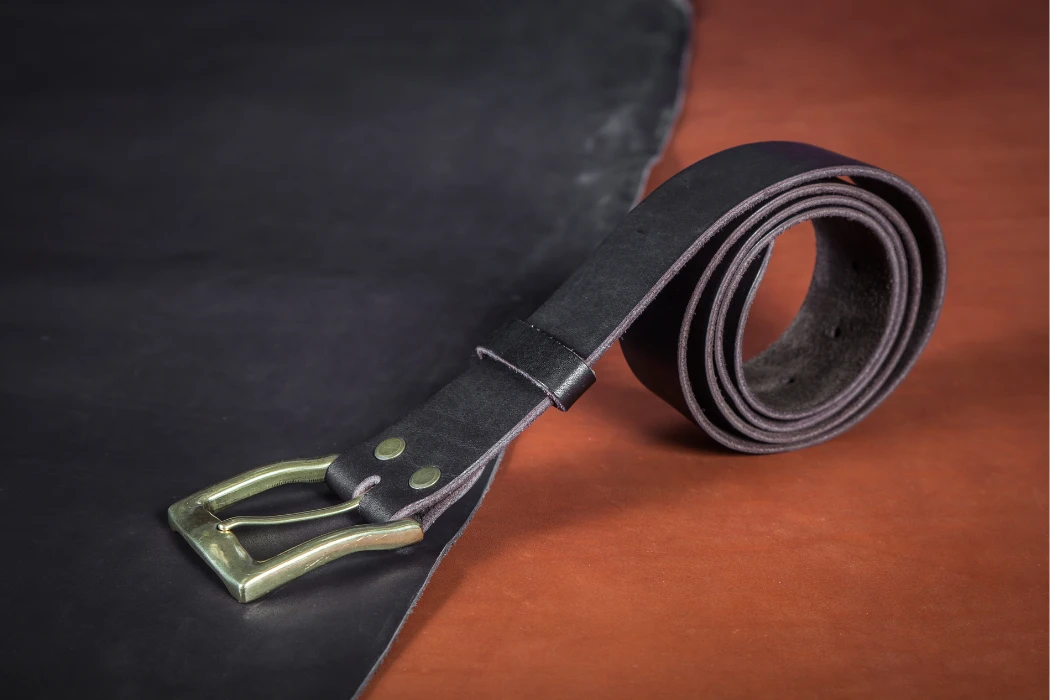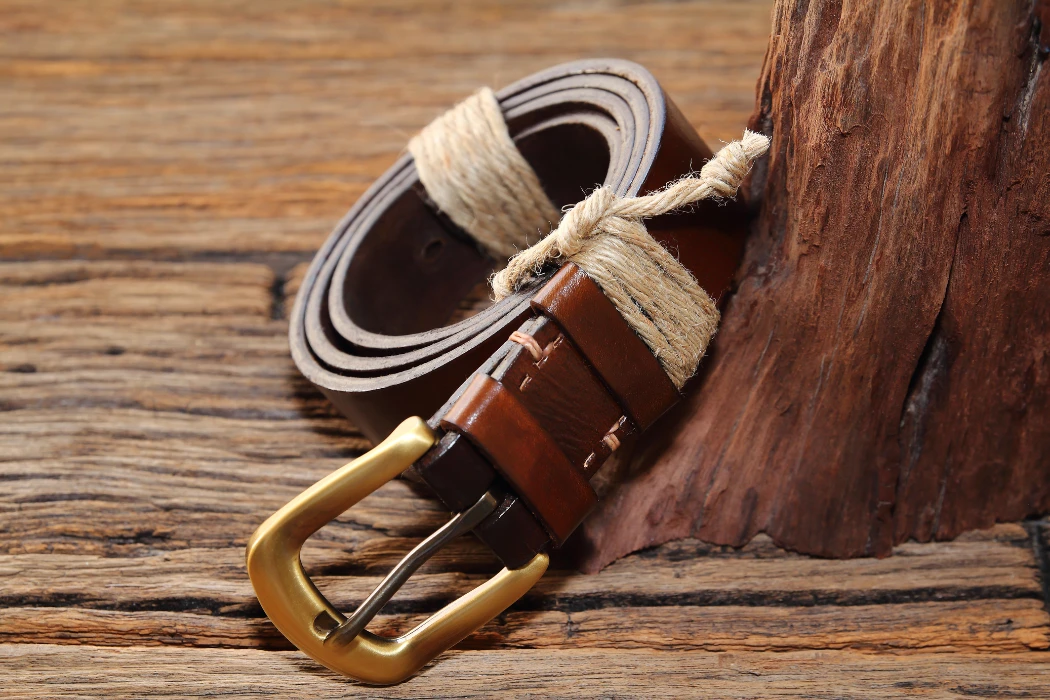
We have all experienced the same frustrating scenario: you invest in a “leather” belt that looks pristine and smells rich in the store, only to have it crack like a dry biscuit or peel like plastic sheeting six months later. This betrayal isn’t just bad luck; it is the result of increasingly sophisticated manufacturing techniques designed to mimic the visual aesthetics of animal hide while completely lacking its structural integrity.
For industry professionals who inspect raw hides daily, the difference is obvious, but for the consumer, modern faux technology has evolved to the point where synthetic grains can easily fool the naked eye. However, while manufacturers can fake the look, they cannot cheat the physics. Synthetic materials and bonded composites may pass a visual scan, but they inevitably fail Structural Stress Tests that real leather endures naturally.
True identification requires moving beyond the “Genuine Leather” stamp—which is often a misleading marketing term itself—and adopting an engineering mindset. To spot a fake, you must analyze the material’s Cross-section, Porosity, and Fiber Structure. In this guide, we will equip you with 5 professional-grade field tests to distinguish a solid strip of hide from a glued composite, ensuring you never pay premium prices for plastic again.
What Does “Genuine Leather” Actually Mean? (The Industry Trap)
The single biggest misconception in the leather goods market is that “Genuine Leather” is a statement of authenticity. In reality, it is a specific technical grade—and a low one at that. When you see this stamp, it doesn’t just mean “real”; it typically means “at least it’s not technically plastic.” Understanding the grading hierarchy is your first line of defense against paying premium prices for inferior products.
The Grading Hierarchy Explained
In the tannery world, hides are split into layers. The top layer is the strongest, and the layers underneath get progressively weaker.
- Grade 3 Status: “Genuine Leather” generally sits at the bottom of the real leather tier, just above bonded scraps. It is made from the split layer (the fibrous underside) that has been stripped of its natural grain. To look like leather, it requires a heavy coat of synthetic paint and an artificial grain pattern pressed onto the surface.
- The deceptive longevity: Because the surface is essentially paint, “Genuine Leather” belts do not develop a patina. Instead, the surface coating eventually cracks and peels away from the fibrous suede underneath within 1–3 years.
Real vs. Fake vs. Bonded
To identify what you are buying, you must understand the molecular composition of the strap.
- Full-Grain (100% Integrity): This is the unadulterated top layer of the hide. It contains the tightest, strongest fibers. It is never sanded or buffed, retaining 100% of the natural grain structure.
- Bonded Leather (The “Nugget”): Think of this as the “chicken nugget” of leather. It is composed of 50–60% leather dust and shavings mixed with polyurethane glue and pressed into sheets. It is technically “animal product” but lacks any structural fiber weave.
- PU / Faux (0% Animal): Polyurethane (PU) or PVC is entirely synthetic. It is a plastic sheet glued to a fabric backing. It mimics the look of leather perfectly but lacks the warmth, smell, and durability.
| Material Name | Composition | Avg. Lifespan | Typical Failure Mode |
|---|---|---|---|
| Full-Grain Leather | 100% Top-Layer Hide | 10–20+ Years | Stretches slightly, darkens (Patina) |
| “Genuine Leather” | Split Suede + PU Paint | 1–3 Years | Surface cracking, peeling paint |
| Bonded Leather | Leather Dust + Glue | 6–12 Months | Delaminates (splits in half), snaps |
| PU / Faux Leather | 100% Plastic on Fabric | 6–18 Months | Top layer flakes off like plastic |
The Visual Inspection: Analyzing Grain and Edges
Before you touch the material, your eyes can detect the telltale signs of synthetic manufacturing. Genuine leather is an organic material defined by irregularity and random pore structure, whereas fake leather is a manufactured product defined by repeating patterns and sealed edges. Learning to spot the difference between “natural chaos” and “industrial order” is your primary screening tool.
The “Perfect Imperfection” Rule
Nature rarely draws straight lines or perfect circles. When examining the surface grain, you are looking for the flaws that prove its origin.
- Random Pores: Real full-grain leather retains the hair follicles of the animal. Under a magnifying glass, these pores are unevenly spaced and vary in depth. Synthetic PU leather has a flat, non-porous surface or perfectly uniform “pores” stamped by a machine.
- The “12-Inch Repeat” Pattern: Fake leather is produced on massive rollers. If you look closely at a long belt, you will often see the exact same cluster of “wrinkles” or “scratches” repeat every 10 to 12 inches (25–30 cm). This is the circumference of the embossing roller—a dead giveaway of a fake.
The Cut Edge Test (The Cross-Section)
The edge of the belt is where the manufacturer’s secrets are exposed. This is why cheap belts often have thick, rubbery “edge paint” (Edge Kote) applied—to hide the layers inside.
- Fibrous Corium: If the edge is raw or lightly burnished, real leather looks like a dense, tangled forest of fibers (the corium). It should look like one solid, consistent mass from top to bottom.
- Fabric Backing: Fake leather is a veneer. On a cut edge, you will often see a thin top layer (the plastic), a layer of foam (for bulk), and a bottom layer of white or grey fabric mesh. This “sandwich” structure confirms it is synthetic.
- The “Paint” Trap: Be suspicious of heavy, rubberized edge paint. While high-end brands use edge paint for aesthetics, low-end brands use it to conceal the cardboard or fabric filler inside the belt.
The Backside (Flesh Side) Texture
Don’t just look at the front; flip the belt over. The backside (flesh side) is often harder to fake convincingly.
- Natural Nap (Suede): The back of a real single-layer leather belt should feel like suede. It is the “flesh side” of the hide and will have a rough, fibrous nap that changes direction when you rub it.
- The “Textile” Grid: Faux leather requires a stabilizer. If the back looks like a perfect grid, woven fabric, or is suspiciously smooth and plastic-like, it is likely a synthetic backing material glued to the surface layer.
The Physical Stress Tests (Touch & Flexibility)
If visual inspection is inconclusive, physics will provide the answer. Real leather is a skin structure containing collagen fibers that react to stress, heat, and pressure dynamically. Synthetic materials are polymers that react statically. By applying stress, you can force the material to reveal its true nature.
The Wrinkle Test (The “Fat Wrinkle”)
Just like human skin, real leather has elasticity and will wrinkle when compressed. This is often referred to in the industry as the “Fat Wrinkle” test.
- The Pinch Method: Pinch the belt strap firmly between your thumb and forefinger to create a fold. According to Hoplok inspection standards, real full-grain leather will produce a distinct, star-burst pattern of wrinkles that radiate from the pinch point. These wrinkles disappear immediately when released.
- The “Plastic” Resistance: Fake leather or heavily coated “Genuine” leather behaves like a plastic sheet. It will either remain perfectly smooth (too rigid to wrinkle) or buckle into a sharp, unnatural crease that looks like folded cardboard.
Thermal Conductivity (The Warmth Test)
This is the most underrated test in the field. Leather is a natural insulator with specific thermal properties.
- Heat Absorption (5–10 Seconds): Place your hand firmly on the leather surface for 5 to 10 seconds. Real leather is porous and will absorb your body heat, feeling warm to the touch almost instantly.
- The “Cold” Touch: Synthetic PU and PVC are plastics. They reflect heat rather than absorb it. Even after holding it, the material will feel cold, clammy, and lifeless, similar to touching a vinyl car seat in winter.
The Bend Test
A belt must wrap around your waist. Testing its flexibility under load reveals the quality of the surface coating.
- The 90-Degree Bend: Bend the strap back on itself at a sharp 90-degree angle. Real leather will curve smoothly with the grain pores opening slightly.
- Micro-Cracking: On cheap bonded or fake leather, this stress causes the stiff top coating to separate from the base. You will see a whitening effect or micro-cracks appearing at the bend point, indicating that the finish is brittle paint, not dyed skin.
| Test Method | Real Leather Reaction | Fake / Bonded Reaction |
|---|---|---|
| The Pinch Test | Radiating “star-burst” wrinkles | Perfectly smooth or sharp plastic crease |
| Touch Temp | Feels warm/organic within 5s | Feels cold/dead like plastic |
| Bend Test (90°) | Curves naturally, color stays rich | Turns white, cracks, or wrinkles stiffly |
| Surface Feel | Slightly draggy/grippy (skin-like) | Slippery smooth or artificially sticky |
The Chemical & Elemental Tests (Water & Fire)
Chemistry doesn’t lie. Because real leather is an organic material processed with natural tannins, and fake leather is a synthetic polymer derived from petroleum, they react oppositely when exposed to elemental forces like water and heat.
The Absorbency Test (Hydrophilic Properties)
Leather is skin, and skin has pores designed to absorb moisture. This is a quick test for unfinished or vegetable-tanned leathers.
- The 30-Second Drop: Place a small drop of water on the surface of the belt. On high-quality, full-grain vegetable-tanned leather, the water will soak into the fibers within 10 to 30 seconds, leaving a temporary dark spot. This confirms the material is porous and breathable.
- The Hydrophobic Bead: On fake leather (plastic) or heavily painted “Genuine” leather, the water will bead up and roll off immediately. Since plastic has no pores, it is inherently hydrophobic.
The Smell Test (Tannins vs. Petrochemicals)
Your nose is a highly sensitive chemical analyzer. The tanning process leaves a permanent olfactory signature.
- Vegetable Tannins: Real leather carries a distinct, earthy aroma derived from the oak, chestnut, or quebracho tree bark used in the tanning process. It smells rich, organic, and slightly musky.
- The Vinyl Stench: Fake leather smells like a chemistry lab. You will detect sharp notes of chlorine, glue, or vinyl. If a belt smells like a new shower curtain or gasoline, it is undoubtedly synthetic.
The Fire Test (Theoretical)
Safety Warning: This test is destructive and should only be performed on a scrap piece or a hidden area. We describe it here for educational purposes to demonstrate material composition.
- Carbonization (Real): Real leather is flame retardant. If you hold a flame to it for a few seconds, it will not catch fire. Instead, it will char slightly and smell like burnt hair (due to the keratin protein).
- Melting Point (Fake): Synthetic materials are oil-based plastics. Exposed to flame, they will catch fire rapidly, curl inwards, and melt into a black, sticky glob. The smoke will smell distinctly of burning plastic.
The “Sandwich” Scam: How Manufacturers Hide Fake Cores
Some manufacturers are clever. They know consumers look for the “Genuine Leather” stamp, so they create a composite product: a razor-thin layer of real leather glued on top of cardboard, foam, or fiberglass mesh. This is known in the industry as the “Sandwich” construction. It feels thick and looks real initially, but it has zero structural integrity.
Examining the Buckle Holes
The belt holes are the Achilles’ heel of a sandwich belt. While the edges of the strap are often sealed with heavy paint to hide the layers, the buckle holes are usually punched after the manufacturing process.
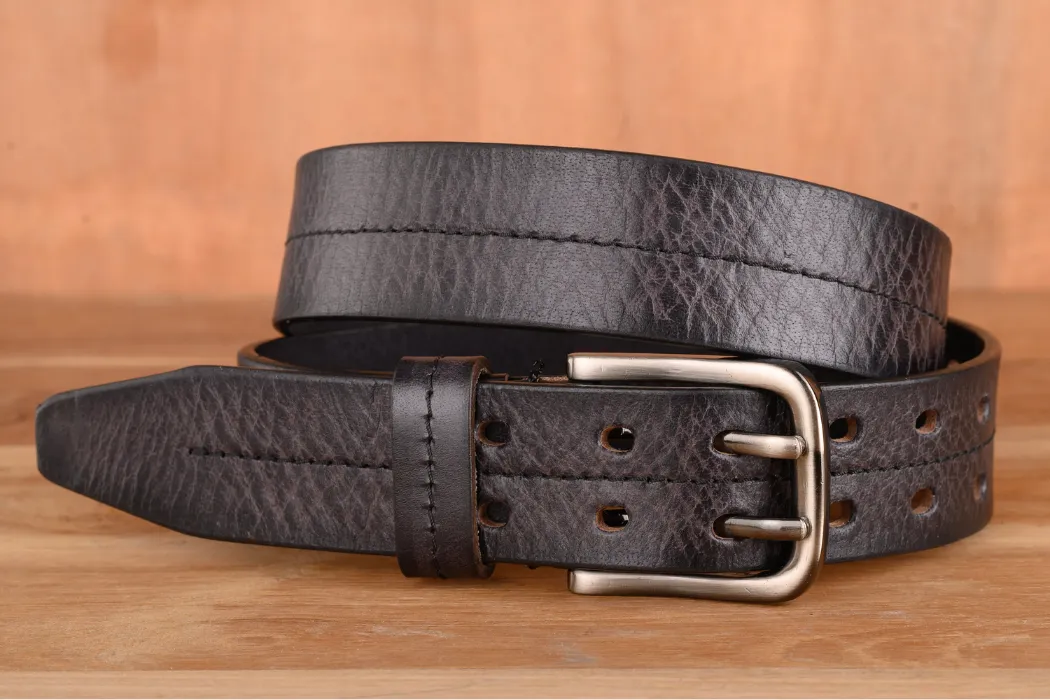
- The Layer Check: Look inside the raw edge of the buckle holes. On a solid full-grain belt, the inside of the hole will be the same color and fiber density as the rest of the hide. On a fake or sandwich belt, you will often see white fluff, grey foam, or distinct strata (layers) of different materials glued together.
- Filler Detection: Use a toothpick to press the inside of the hole. If it feels squishy or spongy, it is foam filler. Real leather should feel dense and woody.
Weight and Density
Leather is dense biological tissue. Synthetic fillers are mostly air and plastic.
- The Heft Test: Pick up the belt. A high-quality full-grain leather strip (standard 1.5″ width) should feel substantial, typically weighing 5 to 7 ounces (140–200 grams) depending on the buckle.
- The “Lightweight” Flag: If the belt feels suspiciously light, hollow, or airy given its thickness, it is likely a synthetic shell filled with paper or foam. Real leather has a specific gravity that plastics cannot mimic without adding lead weights.
| Metric | “Cheap” Bonded/Fake Belt | Hoplok Full-Grain Belt |
|---|---|---|
| Initial Cost | $20 – $40 | $80 – $120 |
| Years of Use | 0.5 – 1 Year | 10 – 20+ Years |
| Cost Per Year | $40.00 / Year (Recurring) | $6.00 / Year (One-time) |
| Resale Value | $0 (Trash) | 40–50% (Vintage Market) |
The Verdict: Trust Your Hands, Not the Label
In an era of hyper-realistic manufacturing, your eyes can be deceived, but your tactile senses and the laws of physics cannot. Real leather is defined by its imperfections, its warmth, and its fibrous density. If a belt looks too perfect, feels cold like plastic, or reveals a white core inside the holes, it is an imitation, regardless of what the gold foil stamp says.
Hoplok’s Guarantee
At Hoplok, we don’t sell “sandwiches.” We don’t use fillers, foams, or corrective paints to hide flaws. We believe that a belt should be a single, solid piece of organic architecture. Our straps are solid, uncorrected, breathing beasts that are engineered to hold your pants up for decades, not just until the warranty expires.
Stop Dealing with Delamination
If you are a B2B buyer tired of processing returns due to peeling straps and “biscuit cracking,” it is time to upgrade your raw materials. Hoplok supplies 100% Solid Full-Grain Vegetable-Tanned Leather strips that are ready for any cross-section inspection. Contact us to feel the difference of a material that has nothing to hide.